
Expert Advice · Skills · 13 min read
How to teach leave it to a dog step by step
A ladder, not a shouted no. Food and guests. The ration page stays the pay. Children stay managed.

Leave-it is a dog who orients off a prize on one cue and then gets paid from your other hand. It is a ladder: a closed fist, an open palm, a piece on the floor you can still cover, a guest with a plate. A shouted no after the swallow is not leave-it. It is a wish.
This is a skills page. Pay comes from the day’s ration. See food as a reinforcer. Guests and children are a management problem before they are a manners speech. See children and guests. Freeze, stare, or growl over food is not this ladder. That is resource guarding. I am not a veterinarian. I will not publish toxin doses.
What is leave-it as a skill?
Name the chain or you are wishing.
- A prize exists (food, tissue, a guest’s sandwich).
- You cue once.
- The dog orients off the prize: mouth comes away, eyes come up, or the body turns.
- You mark and pay from a different place, usually your other hand or a pouch.
- You decide whether the prize is released, picked up, or still forbidden.
“Leave it” is not “drop.” Drop is something already in the mouth. Leave-it is something not yet taken. If you need both, train both. Do not stack them in a panic in the street.
One cue. Everyone in the house uses that one word. Do not pile “leave it, no, ah-ah, mine” on a dive. The markers and criteria page is how a mark pins the moment the mouth comes off.
If you cannot cover it with a shoe, you are not in a first lesson. You are in a management problem.
How do you start the leave-it ladder?
You start with a prize you still control.
Use dull food in the teaching hand and better food in the paying hand, still from the day’s budget. Kitchen, quiet, dog on a loose leash if they crash the problem.
- Closed fist with a few pieces. The dog mouths the fist. You wait. You do not lecture.
- The instant the mouth comes off, or the head turns, you mark and pay from the other hand.
- Repeat until the fist is boring and the other hand is the slot machine.
- Open the palm. If they dive, close the fist. The dive earned nothing. When they hold off, mark and pay from the pouch.
- Say the cue as the dog is already leaving the palm, then pay. The word attaches to a picture that exists. Do not throw a new word at a dive.
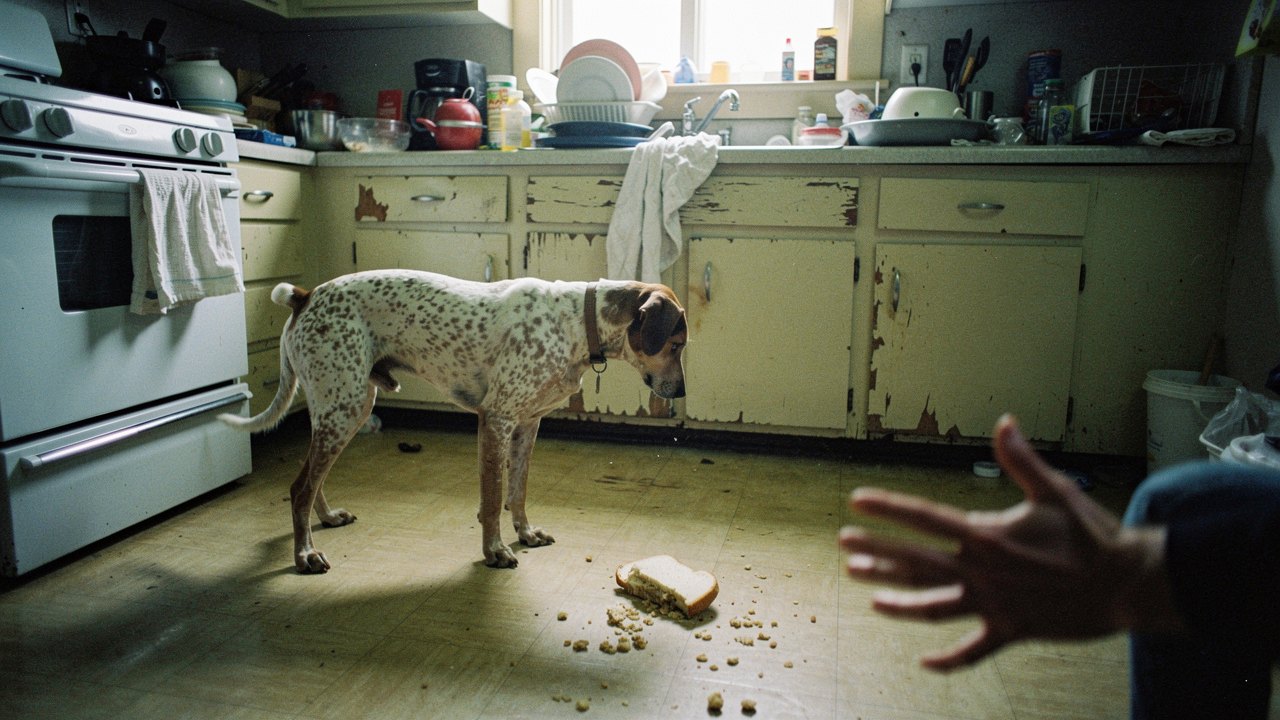
Then the floor, still with a cover you can use: your shoe, a folder, a hand. Drop a piece. If they dive, cover. When they look off, mark, pay from the pouch, pick up the floor piece or release it as a jackpot you chose.
Raise one variable: closer to the piece, or a smellier piece, or a short walk-by. Not all three. If they fail, you were too close or too interesting. Drop criteria. That is the same rule as the recall ladder.
A lure that never fades is a follow, not a leave. Showing steak to pull the head off a tissue forever is how you run out of a ladder. Mark the orientation. Then pay.
How do you take leave-it to food on the floor and to guests?
The floor in a quiet kitchen is not a guest with crisps on a low table.
When the covered-floor picture is cheap, walk past a known piece on a slack lead. Cue once if they orient toward it. Pay at your seam for the look off. That picture also feeds loose-leash walking. Slack and leave-it can share a session. They should not share a first lesson.
Guests:
- The dog is already managed before the plate enters: leash, gate, or a rest place that pays. See children and guests.
- A known person holds food still, at first higher than a dive, then lower.
- You cue. You pay. The guest does not feed the dive “just this once.”
- Children do not hold the teaching food. A toddler with a biscuit is a management problem. An adult watches. The biscuit can be traded by you, or it can be out of the room.
US coffee tables and UK low sofas fail the same way: food at muzzle height plus a dog who has only left a closed fist. Raise the furniture or raise the criterion before you raise the guest list.
Street food and bins are the last rungs. A long line or a short lead you can gather keeps the dive from landing. If you cannot honestly say they will leave it, you pick it up or you walk wide. The cue is not a force field you shout across a road.
When do you manage instead of cue?
Most of the week.
Manage when:
- the prize is dangerous (a pill, xylitol gum, a cooked bone, unknown bait)
- you have not trained this picture
- a child is carrying food
- a guest cannot follow a brief
- the dog is already on the prize
Pick it up. Leash the dog. Close the kitchen. Put plates in the sink. That is the protocol, not a failure of the cue.
If you suspect a swallow of something toxic, leave this page. I will not publish a dose or a list that pretends to be complete. US owners can call ASPCA Animal Poison Control, (888) 426-4435. Their fee, their protocol. A local emergency clinic is still the right door if the dog is in distress. UK owners use their own practice or a 24-hour service such as Vets Now. See when to call the vet.
The AVSAB position on humane training is the public standard behind paying the orientation instead of punishing the dive. A smack at the muzzle can suppress a grab and teach that hands near food are dangerous. That is how you buy a growl you did not want.
When is this not a leave-it problem?
Use a fence you can see.
This ladder: the dog dives because food pays, lets go of the idea when the other hand pays, can take food from you, body stays loose.
Not this ladder: freeze over the bowl, hard stare, growl, snap, or a dog who swallows to keep the prize. That is guarding. Stop this page. Run the resource-guarding stop list. Do not take the bowl as a rank test.
A puppy who mouths everything is also a nipping problem. Leave-it does not replace a rest. Pain around the mouth or a sudden grab in a dog who used to wait is a veterinary first question.
What are the usual failure modes?
- You shouted the cue after the swallow. The word now names a failure. Attach it to a mouth already coming off.
- You paid from the same hand they were hunting. You taught a grab. Other hand. Or the pouch.
- You used a guest as the first floor. Guests move, talk, and drop food. That is a late rung. Kitchen fist first.
- You let a child run the cue. Children are not trainers. They are a reason to manage. See children and guests.
- You treated a growl as stubborn leave-it. That is guarding. Stop. Do not take the bowl.
- You skipped management because you like the cue. A pill on the carpet is not a training moment. Pick it up. Call a clinic if it went in.
Sources
AVSAB position statements on humane dog training. ASPCA Animal Poison Control as the US public path for a suspected toxin, with a local UK clinic as the matching door. Paraphrased as public standards, not quoted as a substitute for reading the originals. avsab.org/resources/position-statements/ · aspca.org — animal poison control
Questions on this page
What is leave-it as a skill?
A dog who orients away from a prize when you cue it, then gets paid from your other hand. A shouted no after the swallow is not leave-it. It is a wish. Build a ladder. Manage what you have not trained.
How do you start the leave-it ladder?
Closed fist, dull food. Wait for the mouth to come off. Mark, pay from the other hand. Then an open palm, then food on the floor with a cover you can still use. One raise at a time.
How do you take leave-it to the floor and to guests?
When the kitchen picture is cheap, drop a piece you can still cover. Cue once. Pay from your pouch. Guests hold food only after the dog can leave a known person’s hand. Children do not run this rung unsupervised.
When do you manage instead of cue?
Street food, a dropped pill, a guest with a plate, a toddler with a biscuit. If you cannot honestly say the dog will leave it, pick the prize up, leash the dog, or close the room. The cue is not a force field.
When is this not a leave-it problem?
Freeze, stare, or growl over food is guarding. That is a stop list, not this ladder. A swallow of something dangerous is a veterinarian. I will not publish a dose.
Work with me
A $150 consultation or $500 monthly curatorship. Opens WhatsApp to Andrew.