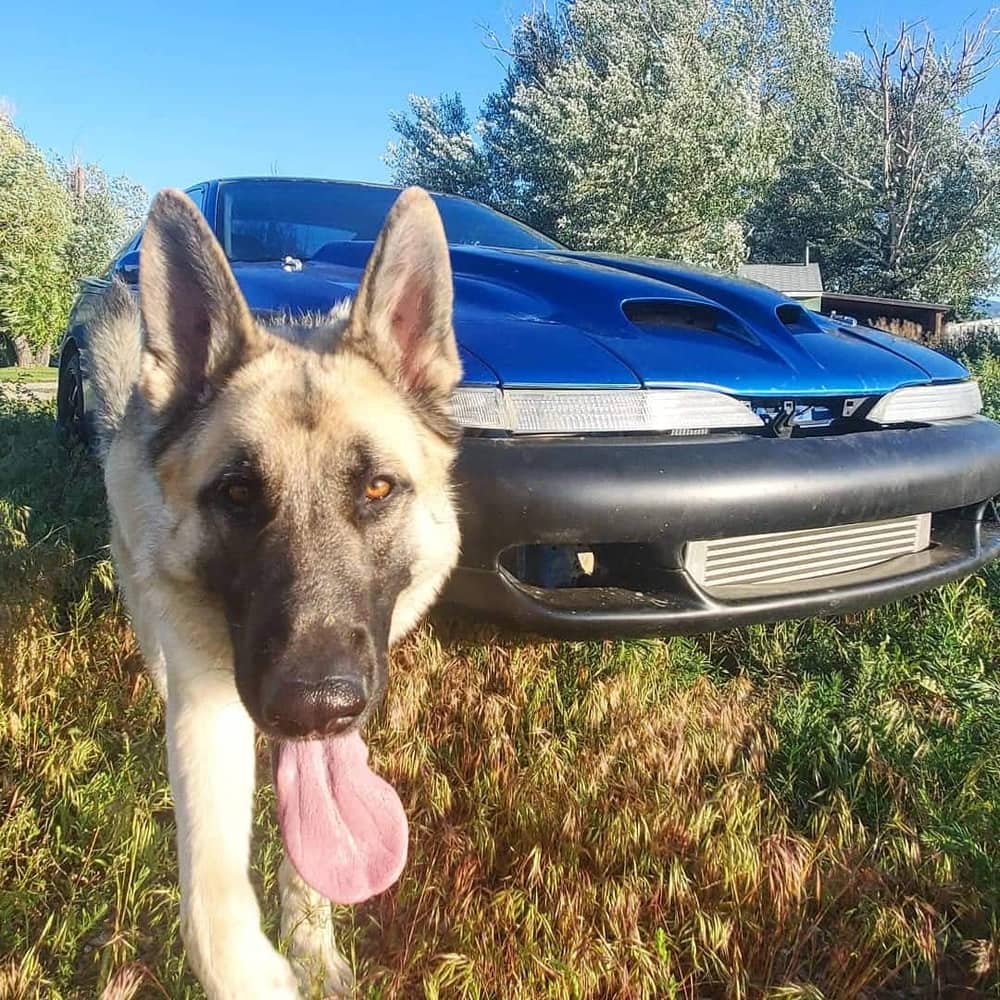
German Shepherd Dog: temperament, training & city life
A German Shepherd notices the environment first — street, stairwell, yard line — then
checks whether the handler is still the clearest job. City life works when you teach two
skills: engage on your cue, and shut the patrol down on purpose at the door, on the
route, and at home.
Apartment? Possible with daily training, exercise and a taught settle — space alone is not enough.
Exercise: Long daily walks plus training and sniffing games for most adults.
Temperament: Loyal, handler-focused working dog; a bored one starts guarding doors and fences.
A German Shepherd can live in a flat with daily training, exercise and a taught settle
Public breed standards describe a versatile herding and service dog: balanced,
confident, attentive, willing to cooperate. In a city those same traits show up as a
fast look at the door, a yard check, interest in another dog, and a readiness to take
control if the human stays silent.
Training starts easily — this type notices a gesture, food, and handler motion. The
hard part is ending the job. If barking at the door bought attention, a lunge to a
scent trail bought access, and a self-appointed yard circuit felt like work, the dog
will remember that as precisely as any cue.
From the first month, build two chains. First: looked at the human, got a task, did
it well. Second: task closed, body softens, the dog can lie down while life
continues nearby.
Why one working dog was assembled from herding types
Origin does not set every puppy’s personality. It explains why many Shepherds switch on
environmental watch, motion with a handler or stock, and a willingness to take a task
whole.
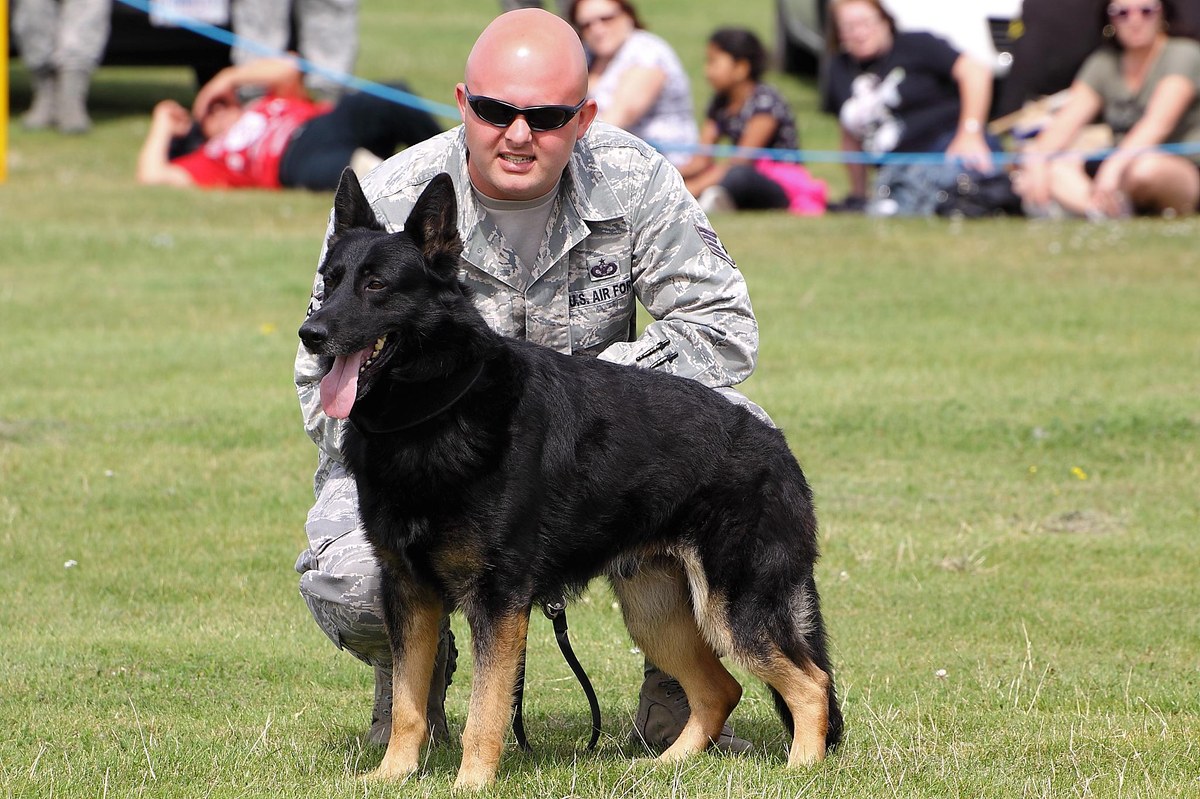
A military working dog with its handler at a 2012 air show. Service and herding selection kept
handler focus and a job appetite; the pet market later kept the silhouette and often
dropped the job.
Herding roots → SV project
Direction, ground cover, stay-in-the-work
German herding dogs were selected for covering ground, taking direction, and staying
in the work with stock — not for sofa photography. Around 1899 the Verein für Deutsche
Schäferhunde (SV) formed to standardize a versatile German shepherd type for service
and herding.
Horand von Grafrath (often cited as SZ1) appears in public breed history as an early
foundation dog in that standardized type. That is public history, not a pedigree sales
pitch from this site.
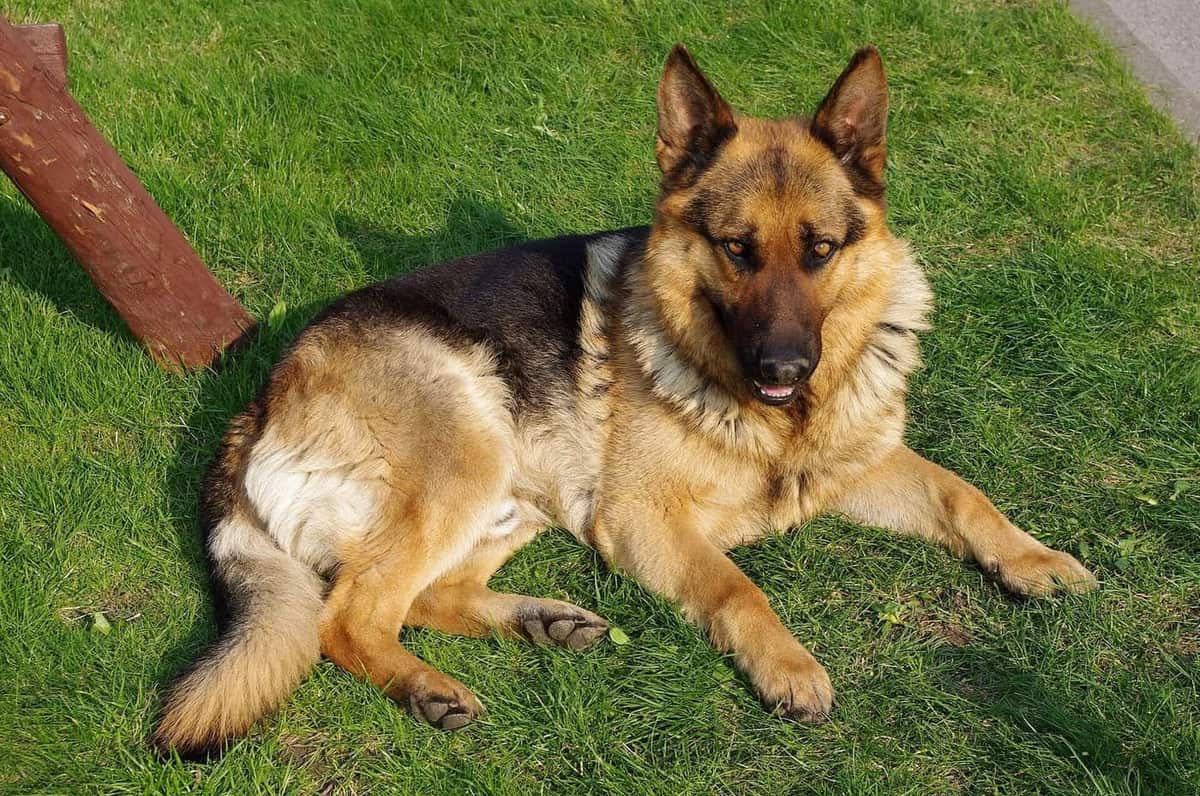
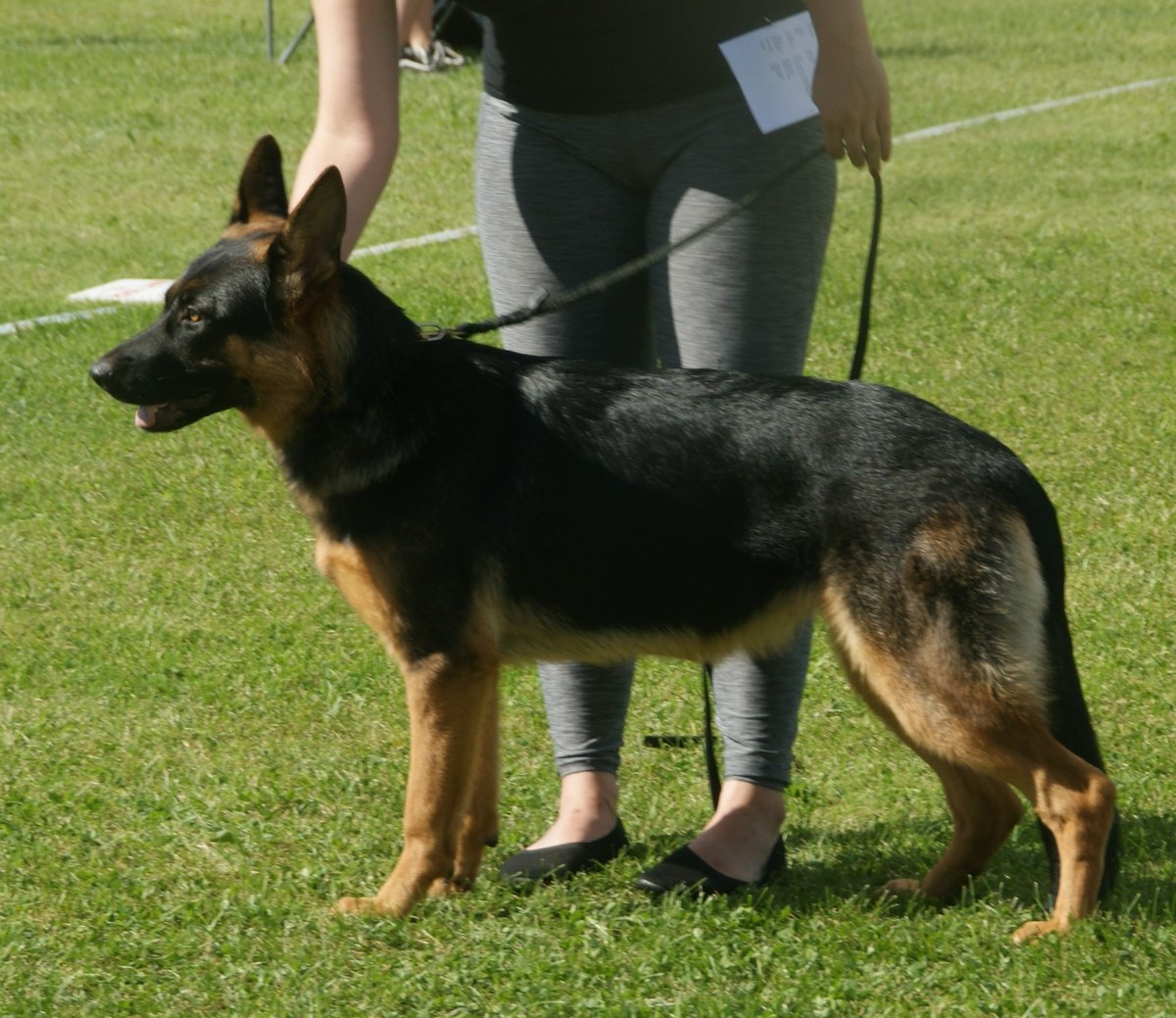
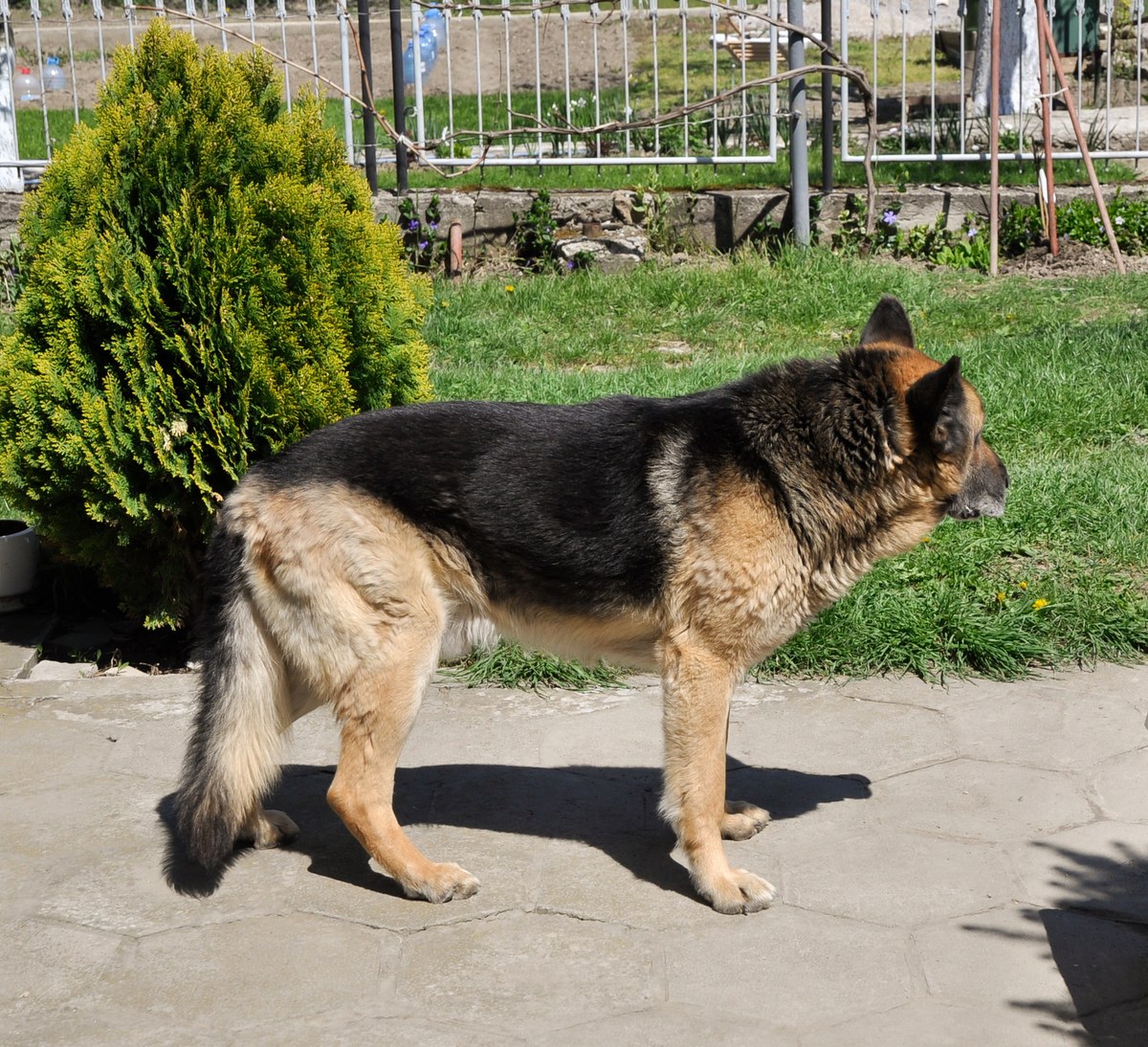
Illustrative adult type. Lines differ — sport engines, companion dogs, and soundness
conversations belong to breeders and vets, not a webpage diagnosis.
Working goal → pet market
Police, military, assistance — then silhouette without the job
Working uses kept the handler-focus and job appetite. Popularity plus a working brain
is how you get both excellent partners and dogs that are passed around because nobody
budgeted for the mind.
You will hear arguments about back slope, working versus show lines, colour. Those
matter to people who breed. For an owner, the useful history is simpler: this type was
not invented to nap through a work-from-home Tuesday with a window and a wish.
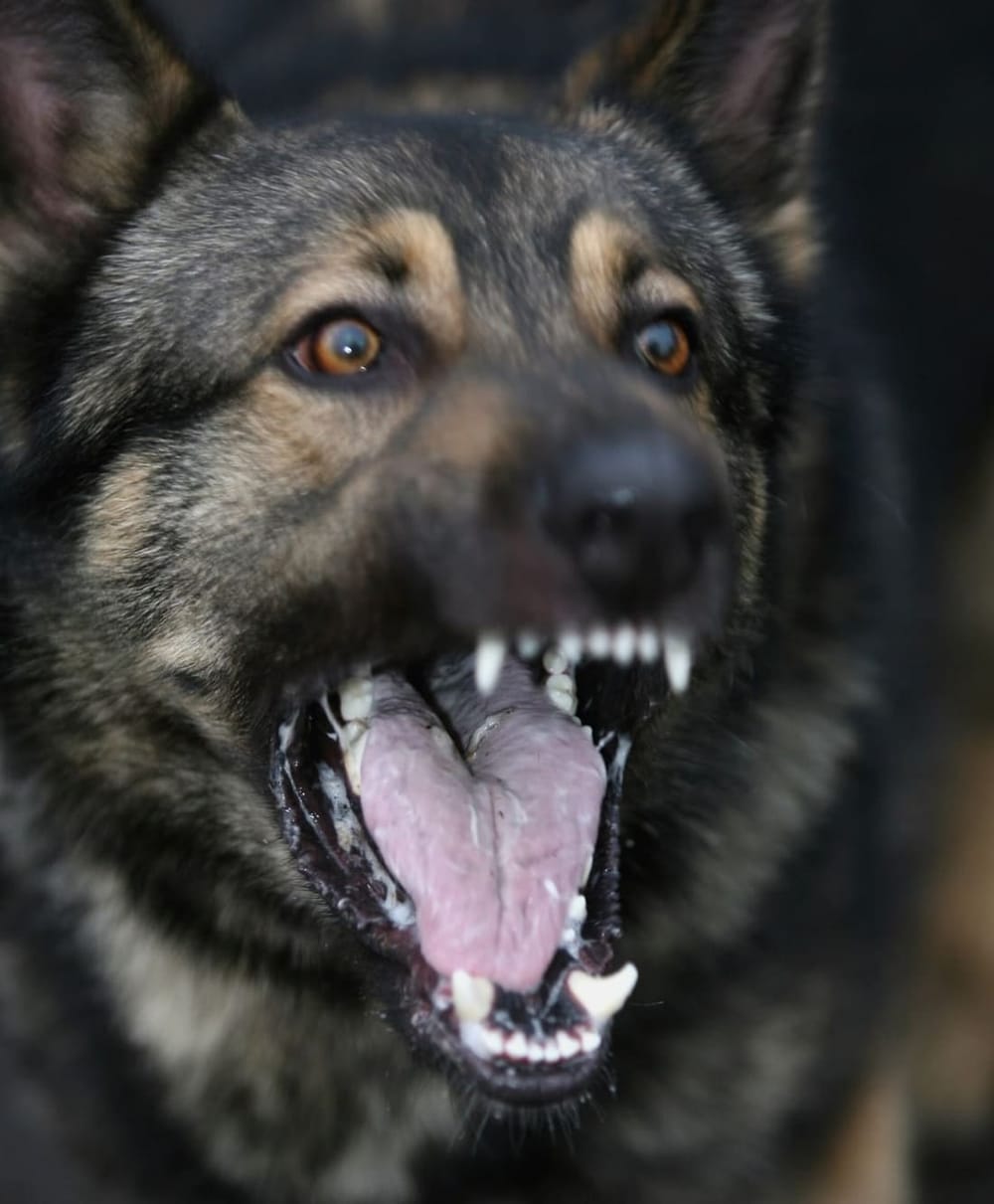
Illustrative working character (modern MOD / Commons photograph). Not a historical
archive plate.
What the breed was selected for
Attention, work drive, environment sensitivity
In plain trainer language: the type was selected for attention to a handler,
willingness to work, and sensitivity to the environment. That is why a clear rule
set produces a partner — and why a vague household produces a self-appointed hall
monitor.
Suspicion of strangers is not automatically aggression, and it is not automatically
useful. A dog that cannot eat near a guest is over threshold. Distance, food, and a
place to go are the plan.
Checking in with the handler before the surroundings take over
A real job (nose work, obedience, search) beats self-appointed patrol
An off-switch is taught, not a personality quirk
Mouth on motion needs early bite inhibition and rest
In a city the Shepherd’s job appetite shows up as scanning: lift sounds, the stairwell,
the garden fence, joggers past the gate. Management is not weakness. End the job on
purpose so the dog learns that patrol has a stop time.
Morning · first outing
The walk starts with sniff, not a full-block patrol
Many Shepherds leave the door already collected: checking scent, people, dogs. If every
morning route becomes a territory circuit, excitement piles up before the dog has toileted
and loosened.
Choose a calm first loop, allow sniff time, and reward a look at you before the leash
tightens toward the next control point.
City route
Pass bikes and dogs at a working distance
Leave before the explosion. A strong dog that hits the end of the lead at a bicycle is
a liability. Slack and distance beat a louder sit.
Crate or mat with a safe chew so the household can work. A Shepherd that cannot lie
on a bed while you answer email will invent patrol.
Quality load leaves the ability to lie down and not hunt for the next shift.
Care and health themes
What to watch monthly — not only before purchase
General awareness only. I am not a veterinarian. Most problems show first as a change in
gait, appetite, or recovery after a walk. For red flags, leave this page and open
when to call the vet.
Hips and elbows
Widely discussed in the breed. Ask breeders for screening paperwork; keep your own dog
lean; raise puppies without endless ball-on-concrete sessions. Lameness or refusing the
car jump is a vet question — even with “good papers.”
Bloat risk awareness
Deep-chested dogs are often discussed with gastric dilatation. Split meals; pause after
eating. A hard, painful belly is not a training article — leave now. No doses, no home remedies here.
Coat and skin
Double coat, heavy shed. Brush; do not shave for summer. Red zones, smell, or scratching
to wounds belong with a veterinarian.
Weight and load
Extra kilos are not loyalty. Ribs should be felt without pressure. Cut weight through
portion and load type — not endless running right after the bowl.
Eyes, ears, nails
Discharge, smell, or pain is a vet visit — not a louder sit. Nails short enough for a
quiet indoor step matter on city pavement.
DM DNA as risk, not diagnosis
Degenerative myelopathy DNA tests inform breeding risk talk. They do not diagnose the
pet on your sofa. Ask your veterinarian what a result means.
Breeding lines
Working and show/companion Shepherds live differently
Honest split, no bloodline sales. Differences show in pace, structure, and how an adult
handles boredom around the house.
Working and sport line
Higher excitement threshold and a fast start on motion, sound, and scent.
Parents often have sport or service results — ask, do not assume.
Home life needs a short daily task and a clear end of work.
Puppies need early socialization without a crowd in the face, plus early braking.
Fits an experienced owner with an instructor, time for sport or service, and willingness
to manage leash strength.
Show and companion line
Often a lower household tempo — environment control and watch interest remain.
Outline and rear angulation can differ more from early foundation type.
See parents at rest, not only stacked in a ring.
Joint and spine conversations deserve the same seriousness as in working lines.
Fits a household ready for daily walks, door rules, and consistent training without
“service by default.”
Socialization windows
What to introduce — and what not to overload — by age
AVSAB-aligned in spirit: short, clean exposures at a distance the puppy can still eat,
with hygiene while vaccines finish. See the
puppy socialization schedule.
2–4 months
Home and near yard
Introduce: family members, soft floors, short outings, one new sound
or surface per walk, calm guests without a crowd.
Do not overload: strange hands in the face, dogs nose-to-nose, first
door bark praised as “guarding.”
~6 months
City at a distance
Introduce: people and children at distance, calm park dogs, lift and
stairwell in quiet hours, brush, paw and ear handling.
Do not overload: “everyone pile in” play yards, sudden close-ups,
height jumps during growth limps.
~12 months
Adolescent meetings
Introduce: dogs on an arc, bikes and runners at a safe distance, guest
by rules, continued surface and transport work.
Do not overload: head-on meetings, doorway guarding, games that teach
grabbing hands and clothes.
~18 months
Adult scenes under control
Introduce: harder routes with an exit option; short contacts after a
warm-up, not at peak excitement.
Do not overload: “courage tests,” protection games without an
instructor, long noisy events back-to-back.
~24 months
Strength arrives
Introduce: longer calm periods and a clear off-switch as strength grows;
keep wins small and clean.
Do not overload: proving the dog in chaos, skipping rest after hard work,
letting fence or window barking repeat.
Before you buy
Who a Shepherd usually fits
Fit is daily decisions: readiness to give a task and close it just as clearly, plus budget
for joints, growth, and a long life with a large dog.
Good match
More likely a good fit if you…
Can give a short clear job most days — and teach rest the same way
Can handle a large dog in the city: slack leash, meetings, door, yard
Will look at parents in daily life and read joint / eye / DNA risk paperwork
Treat protection work as sport with an instructor, not a home experiment
Budget time for puppy growth, slippery floors, stairs, and line health checks
Mismatch risk
A Shepherd may be a poor choice if…
The dog must entertain itself all day in a yard or at a window and “just guard”
You want a quiet companion that barely notices the door, trails, or other dogs
You will not teach braking before weight and speed become dangerous on leash
Protection is planned from videos or a friend’s tip, without a qualified coach
Regular joint checks, bloat awareness, and long puppy load control are unacceptable
If you are torn between breeds
German Shepherd vs Labrador and Border Collie
Labs usually bring a social mouth and retrieving appetite; Border Collies bring eye and
motion control. A German Shepherd brings handler focus plus environmental scanning. Pick
the failure mode you can live with — then train.
Size and strength
German Shepherd
Roughly 22–26 in / 50–90 lb. On leash, a mistake lands harder.
Labrador
Sporting power with a social mouth — different pull, often more “friendly chaos.”
Household tempo
German Shepherd
Can hold a long “shift” at door and yard if the job stays open.
Border Collie
Often hunts the next micro-task; boredom becomes self-assigned work faster.
Apartment reality
German Shepherd
Possible with clear rules and daily load — especially a calmer line.
Labrador
Also needs mileage and a mouth job; square footage still does not replace work.
Health themes
German Shepherd
Hips/elbows, GDV awareness, spine and eye conversations in some lines.
Both compares
Joints and weight matter; Collies add eye/motion load, Labs add mouth and weight.
Training style
German Shepherd
Holds long sequences; values a clear end of work.
Border Collie
Switches on faster; needs even clearer rules and frequent pauses.
Ownership without surprises
Where a Shepherd owner’s budget goes
Figures depend on city, food, and line health. Below are cost themes to budget before a
puppy — not exact prices and not quotes from this site.
Food
A large, active dog eats like one. Measure; use part of the ration as training rewards. Cheap food
often returns via skin, stool, and weight.
Veterinary
Routine care plus the reality of joint and emergency conversations in deep-chested
working types. Know your clinic’s emergency number.
Gear and safety
Sturdy leash and harness or collar, long line, crate, mat, barriers — tools, not
personality. Liability awareness while strength grows.
Grooming
Brush, paw trim, ear hygiene at home; long-coated lines may need periodic professional
help. Plan on coat in the house.
Training
Puppy class, private help for leash and door, behaviour consult when stuck. Example
ranges vary widely by city — treat any online “average” as rough, not a quote.
Line reserve
If the pedigree conversation includes limps, GDV, or neurological cases, keep a separate
diagnostic reserve — not only an “ordinary year.”
A puppy from screened parents does not cancel daily decisions: weight, load, door rules,
and timely rest after work.
Before day one at home
What to prepare for a German Shepherd puppy
The puppy needs an environment where toileting on time is easy, growth is protected,
looking at a human is rewarded, and self-appointed door duty does not start before rules
exist.
01
Build contact through food
Hand, bowl, and a short name appear in a calm room. The puppy learns to approach and
release hands before child and guest games.
02
Close slippery floors and height
Rugs, stair gates, and a ban on sofa leaps protect growing joints. Lift a large puppy
supporting chest and pelvis.
03
Set a rest place
Bed or open crate separates sleep from hallway patrol. A dog that can lie down handles
adult work pauses better. Start
crate training door-open.
04
Socialize without a crowd in the face
People, dogs, transport, and surfaces appear at a distance where the puppy can eat,
sniff, and leave with you. Contact stays voluntary.
05
Do not accelerate “guarding”
Guest, courier, and door sound first meet a calm human. Do not praise the first bark
and do not station the puppy as a hall monitor.
06
Ask breeders hard questions
Hips/elbows screening, eyes, DM risk talk, how parents rest and meet guests. “No
training needed” is a red flag. Verify health meaning with your vet.
If the dog is already yours
Training is a clear goal plus a clear end of the job
The goal must be visible: after a sound the dog reports once and looks at the
human; on the mat the body is soft; the leash hangs; door or yard is not a private
shift.
Short precise sessions with a clear payoff fit this breed. Pressure and long reps in
excitement often strengthen environment control. A understood end of work teaches better
than one more lap to “burn energy.”
Environment management supports learning: curtain on the lower glass, closed gate, a
ready place, and a pause after meals stop the old behaviour from being practised.
Load balance
Keep work interest — joints and stomach set the limit
Age, hips, elbows, spine, heat, and meal size change what is allowed. Lameness, a hard
belly, foam vomiting, rear weakness, or slow recovery mean stop and get a veterinary
assessment.
Calm walkNose workShort trainingLeash contactSleep after the job
Walks, search, sport, and service disciplines with an instructor are available. Endless
ball, height jumps, and a sprint right after the bowl are not required to close the
work need.
Quality load leaves the ability to lie down and not hunt for the next shift.
Door and yard control
How to teach a Shepherd to finish the message
Start with a quiet predictable signal and a prepared payoff while a real courier is still
too hard.
01
Set the door or yard message
When the dog notices the door, gate, or yard trigger, mark the notice quietly. Do not cheer the bark. Your job is to catch the moment before the patrol speech starts.
02
Call the look to you
Cue a name or a hand target so the dog checks the handler. Reward the look at a distance the dog can still eat. If the dog cannot look, you are too close to the trigger.
03
Send to place
Send the dog to a known mat or bed away from the threshold. The place is a park, not a punishment. Reward arrival and a down.
04
Hold duration while life continues
Open the door a crack, answer a knock, or let a guest enter while the dog stays on place. Release only when you choose. Short wins beat long failures.
05
End the job cleanly
Release, walk away from the threshold, and give a chew or a settle. The off-switch is part of the plan, not an afterthought.
One scene close-up
Why loose leash starts before the other dog arrives
If the Shepherd already pulls to every dog, the first training distance must be one where
it can still eat and look at you. Head-on approaches lock in the lunge.
Mark the look, arc away, and add distance at the first freeze. Speed, straight approach,
and a barked “no” only after simple reps are stable.
Constant shrieking, a charge, harness ripping, or refusal of food at any distance means
do not push through. Safety and an individual plan belong with a qualified professional.
“With a Shepherd, do not argue with the first look at the door or another dog. We
acknowledge that the dog noticed the event, then teach the next action: look at the
human, go to place, and close the shift.”
Sessions cover real scenes: stairwell, yard, loose leash, greeting, and rest after exercise.
The breed’s strength helps in sport and service — and hurts if a clear end of work
never appears. I am a trainer, not a veterinarian. No invented reviews.
Andrew DarovProfessional dog trainer and instructor
It can be, if you provide work and a real off-switch. Square footage does not replace a job. A bored GSD in a flat becomes a vocal, chewing patrol at the door and window.
Are German Shepherds aggressive?+
They are a type that can be reserved and that is used in protection sports. Reserved is not the same as aggressive. A dog that cannot cope with guests needs management and a qualified professional — guarding instincts do not replace training.
Are German Shepherds good with kids?+
With structure and supervision, many live well with children. Do not ask the dog to babysit. Herding mouths grab motion; teach an off-switch and give the dog a rest place adults control.
Should I start protection sports with my pet GSD?+
Not as a substitute for door manners and a settle. Protection work without a solid base and a clear head on the handler often produces a dog that confuses household noise with a job. Build recall, leash, threshold wait, and off-switch first.
My German Shepherd is limping — is that training?+
No. Sudden or persistent lameness is a veterinary problem. Stop the session, rest the dog, and call a veterinarian. This page is not a diagnosis.
What does a DM DNA test mean?+
A degenerative myelopathy (DM) DNA result is risk information used in breeding conversations, not a clinical diagnosis of your pet. Talk to your veterinarian about what a result means for the dog in front of you.
How much exercise does an adult German Shepherd need?+
Most adults I see do better with roughly 90+ minutes of real work across the day — walks plus training and a sniff or search job — not only a mindless trot. Puppies need less mileage and more naps. Growing joints are not a marathon plan.
Can a German Shepherd live with cats?+
Some do, with management and clean introductions. Some chase motion. Breed alone does not make a dog safe with cats. Supervise, use barriers, and interrupt chasing early.
What is the typical lifespan of a German Shepherd?+
Public breed references often cite roughly 9–13 years. That is a range from public knowledge, not a promise for any individual dog.
Working line or show/companion line — which should I get?+
Working and sport lines usually need more directed work. Show and companion lines can still be loud, handler-focused, and heavy. Meet the parents if you can, read health paperwork, and train the dog in front of you either way. I do not sell bloodlines.
Do German Shepherds shed a lot?+
Yes. The double coat blows. Brush, vacuum, and do not shave the coat because summer arrived. Shade, water, and cooler walk times are kinder.
When is a German Shepherd too much dog?+
When the household cannot walk, train, and manage a focused working type. Buy the week you actually have, not the silhouette from a film.
If a Shepherd feels too strong — or the wrong tempo
The breed is versatile, but not for every home. Sometimes another pace, size, or contact
type fits better.
A small, sensitive herding dog from Shetland that needs quiet training, gentle socialization and weekly brushing.
Need a read on your exact situation?
Describe your Shepherd’s age and the scene that repeats most: door, leash, greeting,
yard, or rest after the walk. We check safety first, then pick the first skill.
Written by Andrew Darov, professional dog trainer. Not veterinary advice and not a diagnosis.
Not a kennel club. No invented reviews. No vaccine schedules or toxin doses. Photo credits in
/images/breeds/gsd-guide/credits.md.