Pumi: temperament, barking, energy and training for the curly Hungarian herding dog
The Pumi is a small to medium Hungarian herding dog with a curly coat, a long head and high-set ears that fold over at the tips. It was bred in western Hungary to drive and gather cattle, sheep and pigs on village pastures, moving fast, barking and nipping to keep stock going. Living with one means a bright, lively, very vocal dog that loves its family, watches everything and wants a job all day. What works is daily exercise with a real brain job, a quiet cue and a door routine taught early, calm meetings with strangers, games that give the herding urge a safe outlet and short, upbeat training with food and play.
Job: A Hungarian herding dog; AKC Herding group, FCI Group 1.
Energy: Lively, alert, clever, vocal and devoted to its family.
Home: Suits an active owner who enjoys training and dog sports.
A Pumi is a busy herding dog in a small curly package
Many people see a small, curly dog with funny ears and expect an easy little companion. The Pumi is affectionate and fun, but it is a working herder with a big voice and a quick brain.
This dog was bred to boss cattle and pigs around a farmyard by barking and nipping. The problems I meet at home are about that job: a dog that barks at every sound, rushes the door, nips at running children and heels, chases bikes and cannot switch off in the evening.
My approach is to give the brain work and the voice rules. Training games every day, a dog sport, a quiet cue and a door routine, calm meetings with visitors and a clear way to settle. A Pumi with a job is a cheerful, clever and very loyal friend.
FCI: males 41–47 cm (about 16–18.5 in), females 38–44 cm (about 15–17.5 in)
Weight
FCI: males 10–15 kg (about 22–33 lb), females 8–13 kg (about 18–29 lb)
Energy
High; needs daily exercise and brain work
Coat / shed
Medium-length wavy to curly coat in loose corkscrews, harsh to the touch; grey, black, fawn or white
Job
Hungarian herding dog that drives cattle, sheep and pigs on small pastures and village roads (FCI Group 1, sheepdogs and cattle dogs)
Temperament in one minute
Pumi temperament: what they are like at home
Short answer: Pumik are lively, clever, playful dogs that are very devoted to their family and often reserved with strangers. They are Hungarian herders with a big voice and a quick brain, so they tend to bark at noises and visitors, nip at moving feet and get into mischief when bored. They need about an hour or more of activity a day with real brain work, a quiet cue and a door routine taught early, calm meetings with strangers and short, upbeat training.
Are Pumik affectionate?
Very, with their own family. Build short absences early so the dog copes when you go out.
Are Pumik easy to train?
They learn very fast with food and play, and get bored with long drills. Start with a hand target and a name check-in.
Are Pumik friendly with strangers?
Often wary and noisy at first. Guests should ignore the dog and let it come; see scared of visitors.
Are Pumik good with kids and other dogs?
Good with calm children and dogs they know; they may herd and nip running kids. See herding nips with children.
Pumi behavior problems to expect
The usual four are barking, wariness with strangers, nipping at moving feet and not settling. The list further down links a guide for each.
Living with a Pumi in an apartment
Possible with daily exercise, training games and serious work on barking. Thin walls and a busy hallway make it harder.
Breed history
From Hungarian village pastures to the agility ring
The history will not train your dog, but it explains the voice, the nipping and the quick brain.
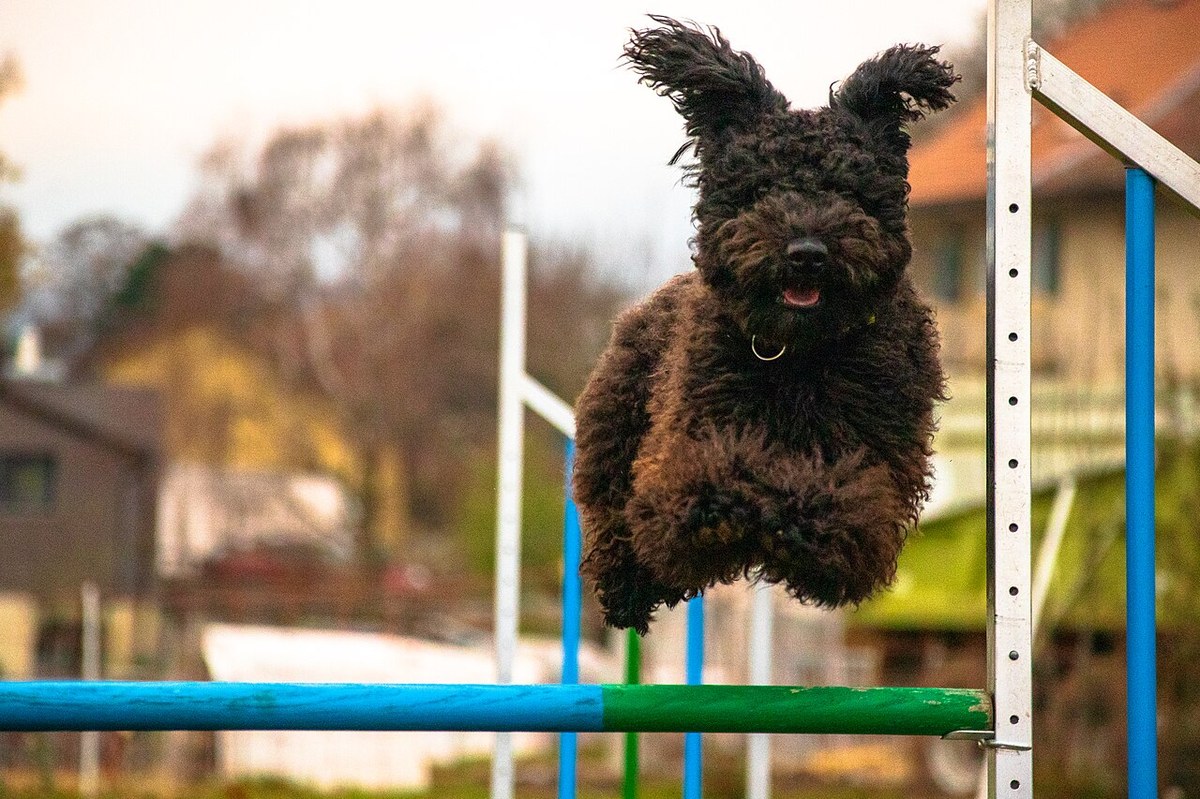
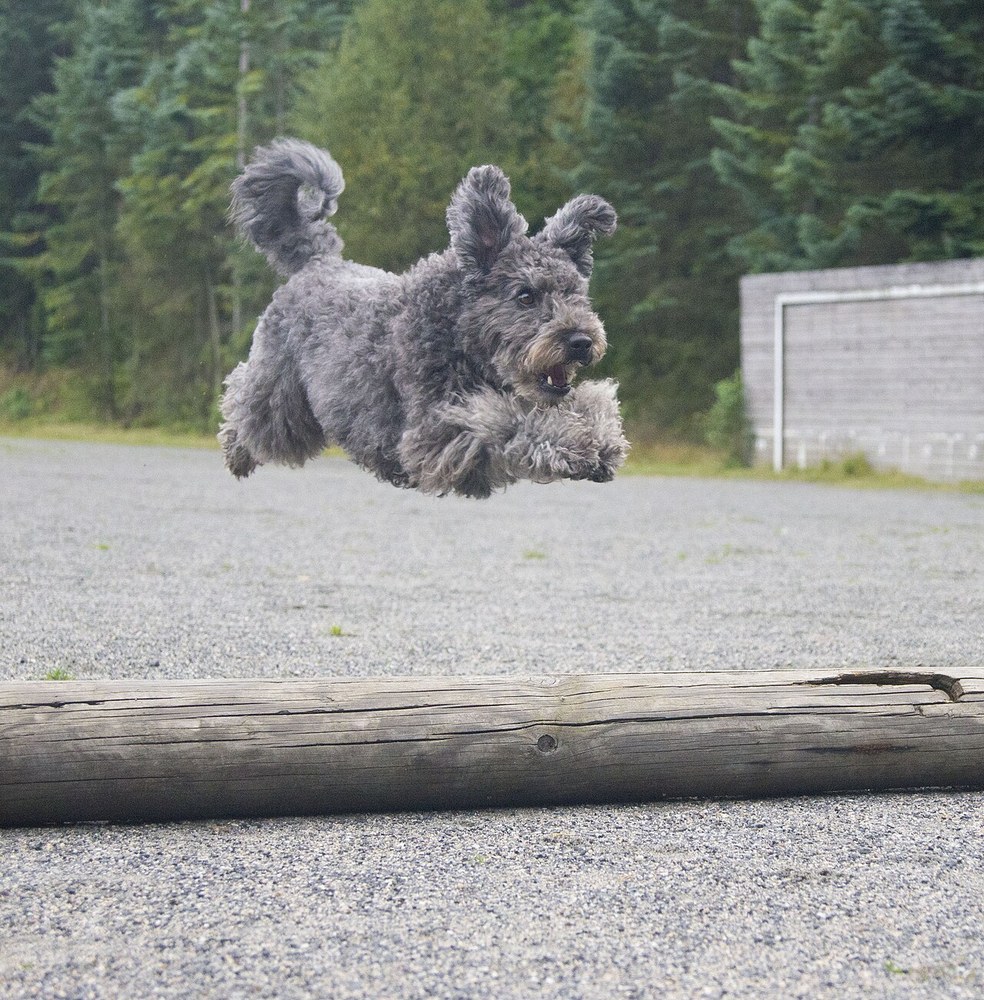
A Pumi jumping an agility hurdle: the breed is fast, light and keen, and many Pumik do very well in dog sports.
Hungary · 1600s–1800s
A drover for small farms
In western Hungary, farmers needed a small, tough dog to move cattle, sheep and pigs between village yards and pastures. The Pumi type grew from local herding dogs crossed with prick-eared terrier-type dogs brought in from German and French lands.
It worked close to the stock, barking, darting and nipping heels to keep animals moving. It also warned of strangers and caught rats around the farm, which explains its watchful, terrier-like edge.
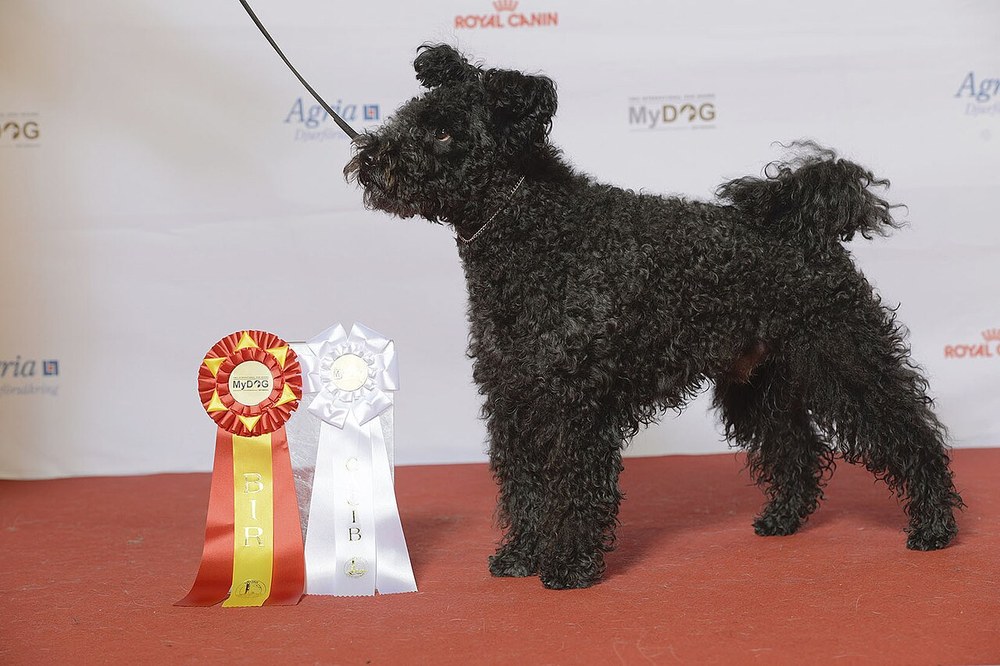
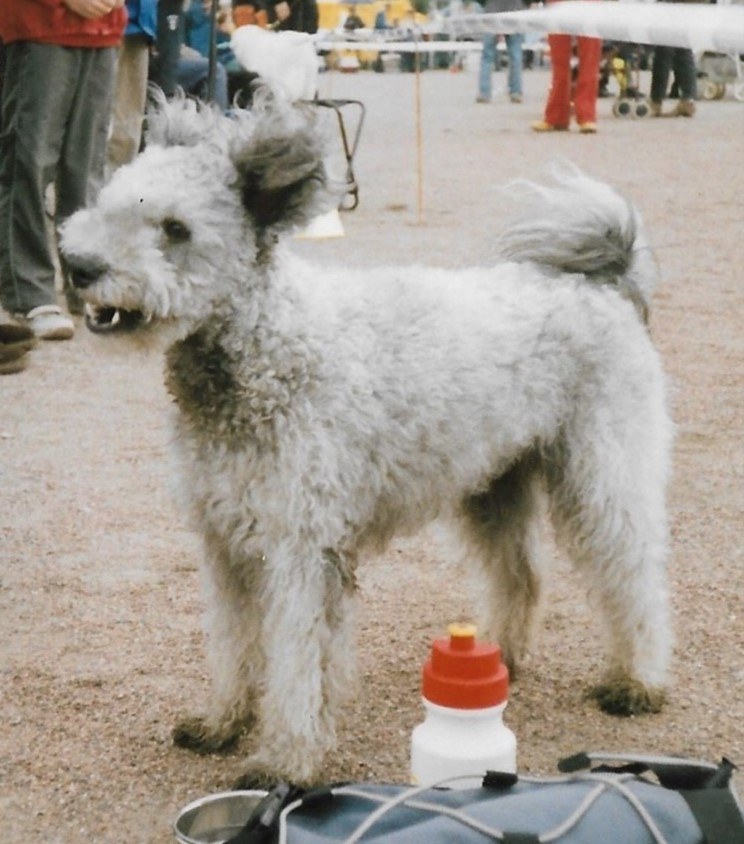
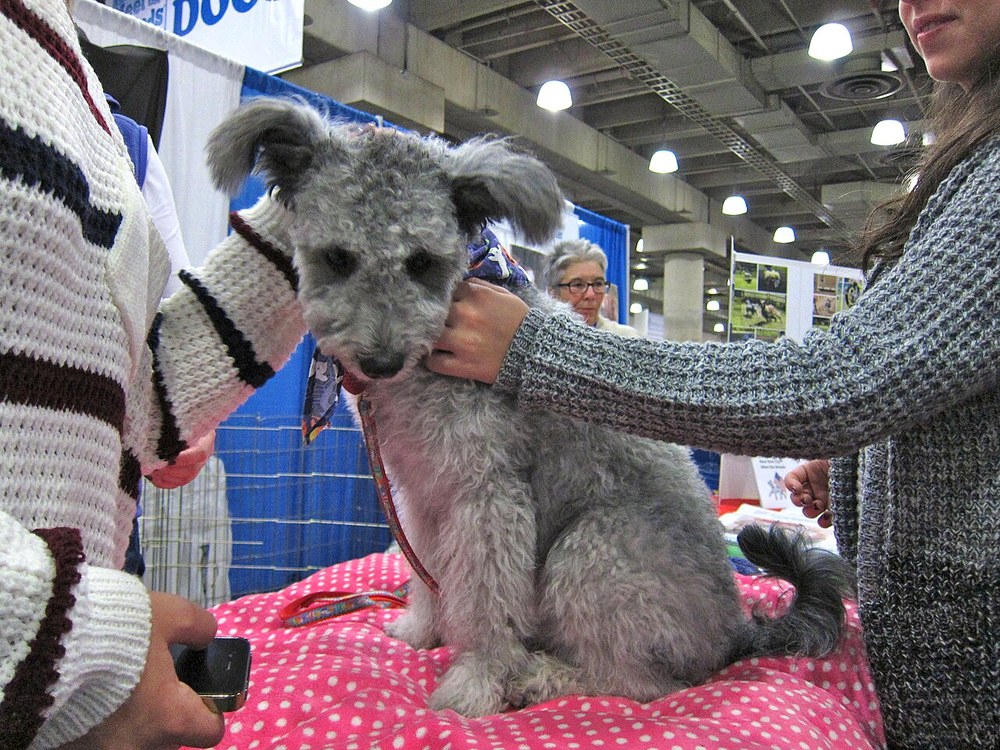
A Pumi at a large dog show in Sweden: the breed type was set out in a written standard in the last century, and today show and sport dogs share the same curly coat and ears.
From the 1920s
Separated from the Puli and sent abroad
For a long time the Pumi and the corded Puli were mixed up. In the 1920s Hungarian dog experts described the Pumi as a breed of its own, and the FCI later listed it in Group 1 with the sheepdogs.
The breed spread to Scandinavia, the rest of Europe and North America. The AKC added it to the Herding group in 2016, and the Kennel Club in the UK lists it in the Pastoral group. It is still uncommon, so puppies often mean a waiting list.
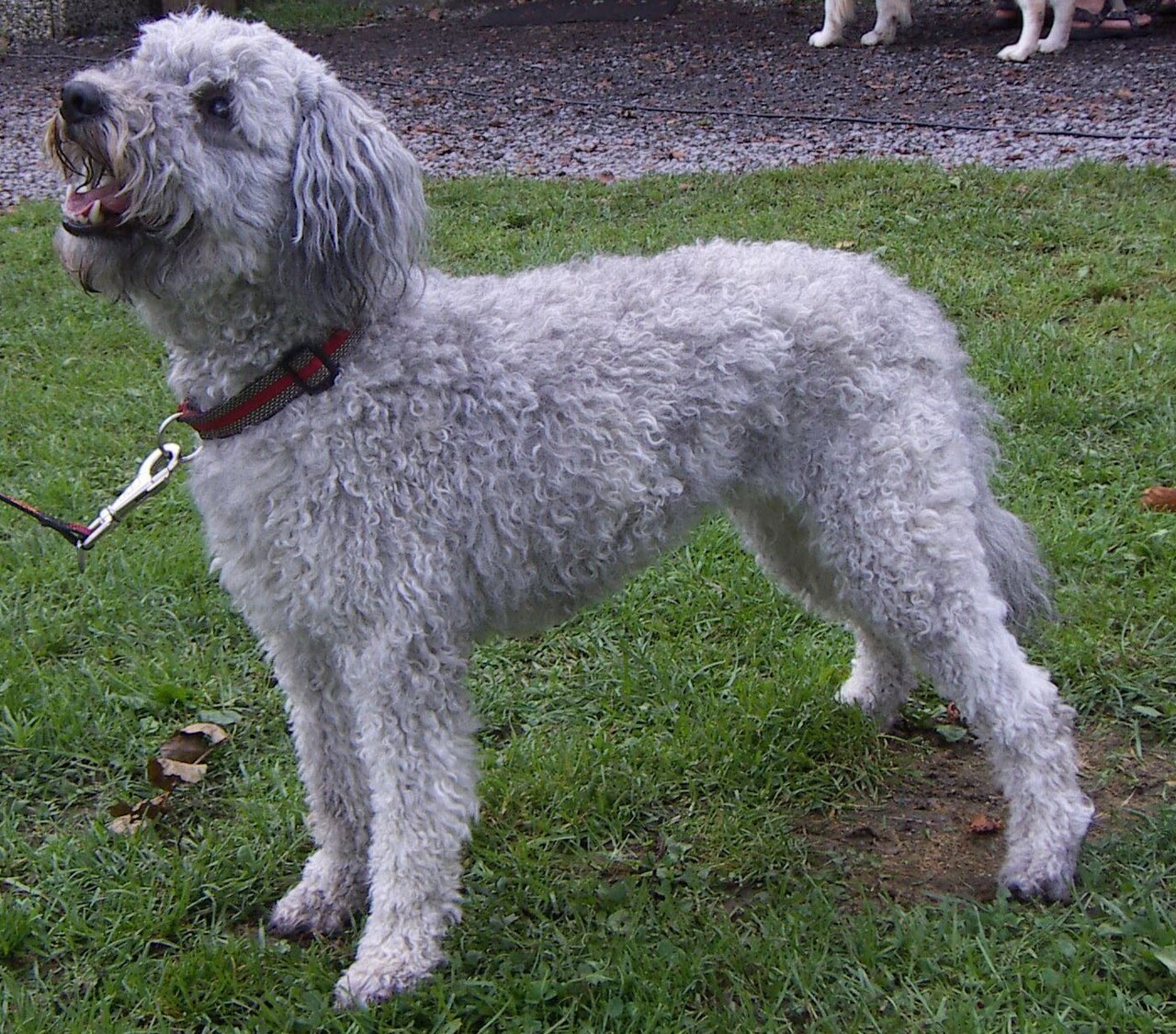
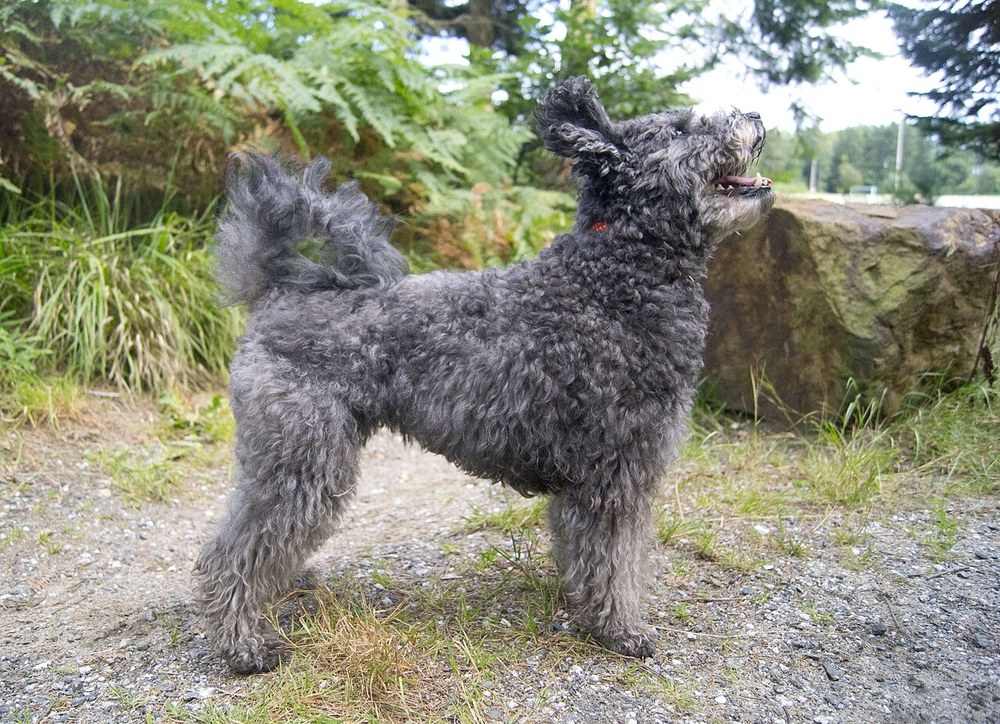
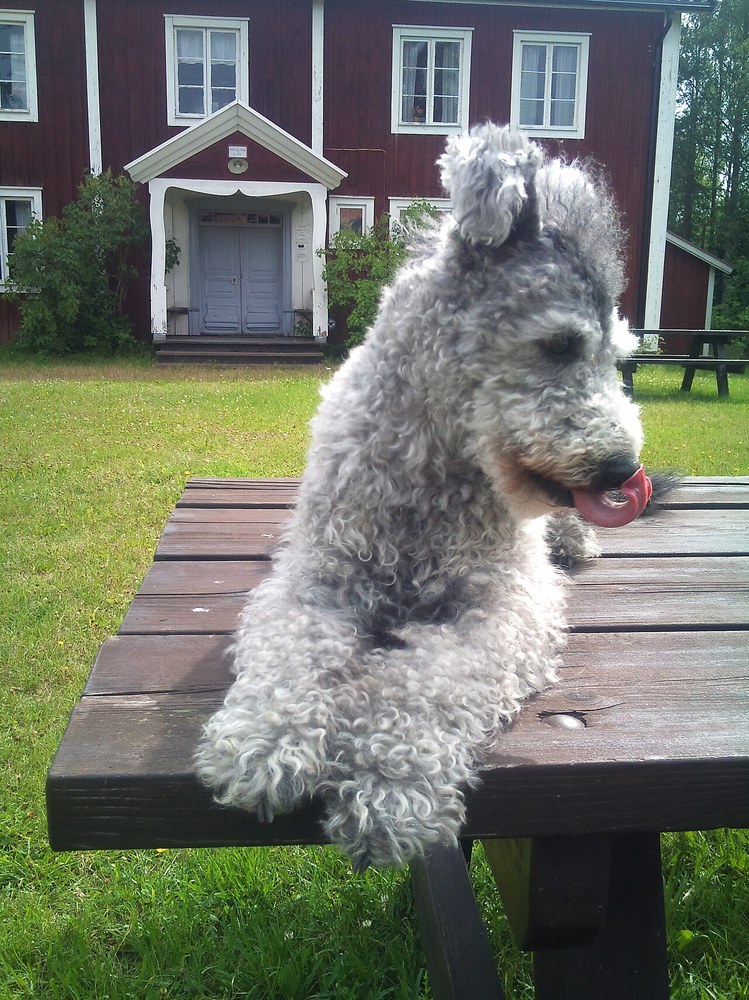
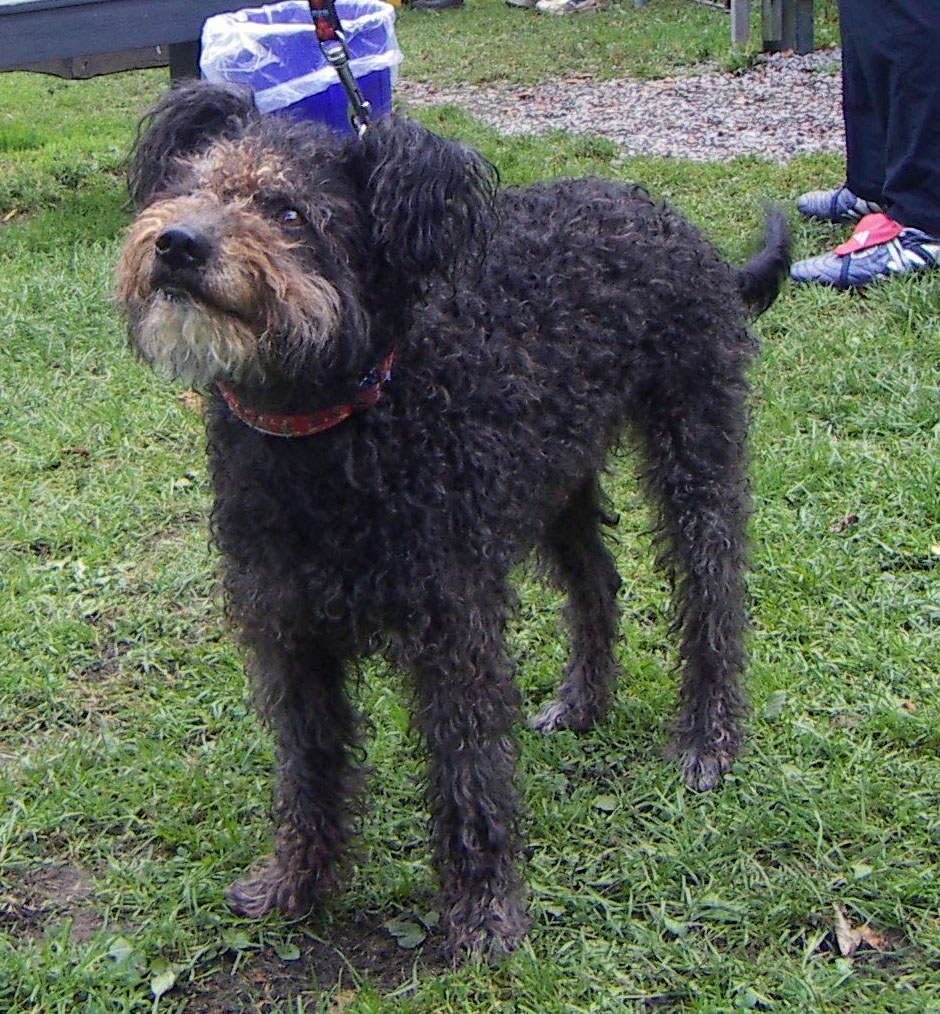
A grey Pumi outdoors: the curly coat, curled tail and tipped ears are the classic Pumi look.
What the breed was bred for
Clever, cheerful and always on watch
At home a well-exercised Pumi is playful, affectionate and close to its family, and many are funny, clownish dogs. It learns very fast and loves training with food and play.
It is also a watchdog and a herder. It barks at noises and visitors, can be wary of strangers and may nip at moving feet. Young dogs need a quiet cue, a door routine and calm meetings from the start.
A good day has a brisk walk, a training game, a sport or puzzle and a calm evening
An adult Pumi usually needs about an hour or more of activity a day, with a brisk walk, some free running in a safe place, a training or trick session, a dog sport or nose game and a calm rest. Trouble usually comes from boredom, barking that was never given rules and a quick young dog with no outlet for the herding urge.
Morning · run
Run, sniff and jump
A brisk walk with time to sniff and a few minutes of free running or fetch in a safe place take the edge off a young Pumi. Use a long line until recall holds near bikes, joggers and cats.
Pumik learn tricks and new skills very fast with food and play. Keep lessons short and upbeat, change the game often and stop while the dog still wants more.
A Pumi loves a lookout spot and will report everything it sees. Reward quiet looks at people and dogs, teach a quiet cue and block window views when you are out.
Send the dog to its bed when the bell rings, reward quiet and let guests sit before the dog says hello. Strangers should ignore it and drop a treat now and then.
Busy herders do not always calm down by themselves. A bed in a quiet spot, a chew and the same evening routine teach the dog that the working day is over.
General awareness only. I am not a veterinarian. With a Pumi, owners often notice trouble first as mats behind the ears and in the armpits, grass seeds caught in the curls, red or smelly ears, limping after hard jumping, or a dog that suddenly gets grumpy when touched. For red flags, leave this page and open
when to call the vet.
Curly coat
Comb through every week or two and after muddy walks. Many owners wet the coat and let it dry to keep the curls; daily brushing flattens them.
Trimming
Trim the coat by hand or with scissors every couple of months to keep its shape, and keep the hair on the ears tidy.
Ears
Check the ears weekly and pluck or trim hair inside if your vet or groomer suggests it.
Sport and joints
Keep hard jumping for adult dogs and build fitness slowly. See walk length by age.
Handling for the vet
Teach calm handling of paws, ears and mouth with food while the puppy is small.
Ask the breeder
Ask which screenings the national breed club recommends for the parents and see the results. Do not invent disease claims from a blog.
Lines and types
Choose a steady, healthy dog, not just the funniest ears
No bloodline selling. Pumik come from show, sport and some working homes, and all of them are busy herders. Meet the mother, watch how she copes with a stranger, a noise and another dog, notice how much she barks, and ask what health checks the parents have had.
Sport homes
Agility, herding, scent work or obedience.
Training several times a week.
Rest days between hard sessions.
A calm place to switch off.
Suits owners who want a fast, clever partner for dog sports.
Active family homes
About an hour or more of activity a day.
Daily training games or puzzles.
A plan for barking and visitors.
Children taught to move calmly around the dog.
Suits an active family that enjoys training and wants a lively, loyal small dog.
Socialization windows
What to introduce — and what not to overload — by age
AVSAB-aligned in spirit: short, clean exposures at a distance the puppy can still eat,
with hygiene while vaccines finish. See the
puppy socialization schedule.
2–4 months
Settling in and meeting the world
Introduce: calm visitors, gentle handling and combing, the toilet spot, short car rides, short spells alone, watching bikes and traffic from a distance.
Do not overload: rough play with hands, being chased by children, long runs.
~6 months
Busy puppy
Introduce: name check-in, a quiet cue, recall games on a long line, tug and fetch with rules, a bed cue, short trick sessions.
Do not overload: letting it bark at the window all day, chasing bikes or joggers.
~8–18 months
Teenage phase
Introduce: calm meetings with strangers, door routine, long line recall near moving things, a sport foundation class.
Do not overload: forcing meetings with strangers, hard jumping before the body is ready.
~2 years
Settling down
Introduce: full sport training if you like, harder tricks and nose games, more off-lead time where it is safe.
Do not overload: stopping training because the dog seems grown up.
~3 years+
Maintenance
Introduce: daily exercise and brain games, coat trims, weight checks, yearly vet visits.
Do not overload: skipping the brain work on busy days.
Before you buy
Who a Pumi usually fits
Fit comes down to time, noise, how you feel about a watchdog that reports everything and whether you enjoy training a quick, clever dog.
Good match
More likely a good fit if you…
You want a lively, clever, affectionate small dog
You can give about an hour or more of activity every day
You enjoy training, tricks or dog sports
You can teach a quiet cue and a door routine
You like a dog that is a little reserved with strangers
Mismatch risk
A Pumi may be a poor choice if…
You want a quiet dog
You live with thin walls and close neighbours
You want a dog that loves every stranger
You have little time for training
You prefer correction-based or force training
If you are torn between breeds
Pumi vs Puli and Shetland Sheepdog
All three are smart, vocal herding dogs. The Puli is the Pumi's Hungarian cousin with a corded coat and a calmer, more guarding manner. The Shetland Sheepdog is a softer, more sensitive herder with a long double coat. The Pumi is the busiest and most terrier-like of the three, with a curly coat and tipped ears.
Coat
Pumi
Curly, medium length, trimmed.
Puli
Long cords that take years to form.
Manner
Pumi
Busy, bold, a little terrier-like.
Puli
Steadier and more guarding.
Sensitivity
Pumi
Keen and quick to bounce back.
Shetland Sheepdog
Softer and more sound-sensitive.
Barking
Pumi
A lot; needs a quiet cue.
Both compares
All three are vocal herders.
Ownership without surprises
Where a Pumi owner’s budget goes
Costs depend on country, city and your choices. These are themes to plan for, not quotes.
Veterinary
Annual vet visits, the vaccines your vet recommends and the health tests the breed club recommends.
Grooming
A good comb, scissors and a trim every couple of months, or visits to a groomer who knows the breed.
Training
Puppy class, then sport, tricks or herding classes for a busy adult.
Gear
A long line, a harness, a crate, puzzle toys and tug toys.
Finding a puppy
An uncommon breed, so plan for waiting lists and travel to a breeder.
Time spent early on a quiet cue, a door routine and calm meetings saves far more than fixing a teenager that barks at everything.
Before day one at home
What to prepare for a Pumi puppy
A Pumi puppy is bold, curious, noisy and quick to learn, and it starts herding feet early. Have gates, a crate, chews, tug and puzzle toys and a comb ready before it comes home.
Training a Pumi means brain games, a quiet cue and calm meetings
Five skills cover most of daily life: a name check-in, a quiet cue, a door routine, recall on a long line and going to a bed to settle.
Pumik learn with food, play and quick, upbeat lessons. They are clever and keen, but get bored by long drills, and harsh handling tends to make them more noisy and suspicious.
Be realistic about barking. A Pumi will always tell you when something happens. The aim is a dog that barks a few times, then stops when asked and comes to you.
Load balance
Training and sport count as exercise
Go easy with growing puppies and keep hard jumping for adult dogs. A limp, a change in mood or a dog that suddenly hates being touched means a vet visit before more training.
Brisk walkTrick or sport gameThree-minute lessonFind it gameQuiet nap
For this breed, fifteen minutes of training games often tires the dog more than an extra half hour of walking.
A Pumi that has used its brain is a happy clown at home; one that has not will herd the family and bark at the street.
Barking
How to teach a Pumi a quiet cue
Start at home with small sounds, reward the moment the dog goes quiet, add a quiet word, ask it to come to you or go to its bed after a few barks, and practise with the doorbell and window before real visitors.
01
Start with small sounds
Practise quiet at home first.
02
Reward the silence
Food the moment the barking stops.
03
Add a quiet word
Say it once, then wait.
04
Come or go to bed
Give the dog something to do instead.
05
Bell and window next
Recordings and calm friends before real guests.
One scene close-up
Why a Pumi barks so much
A Pumi was bred to use its voice to move stock and warn of strangers. Barking is part of the job, not a fault. Each time barking makes a visitor or a passing dog go away, the dog learns it works.
Teach quiet at home first, with small sounds. Let the dog bark two or three times, say your quiet word once, and reward the moment it stops or comes to you. Then practise with a doorbell recording, the window and calm friends before real visitors.
A dog that cannot settle, bites when handled or seems frightened needs a qualified professional; a vet check helps rule out pain.
“With a Pumi, I begin with daily brain games, a quiet cue, a door routine and calm meetings with strangers. Give this clever little herder a job and clear rules, and you get a funny, loyal friend.”
We work on what your days look like: walks, barking, visitors, children and the evening at home. I am a trainer, not a veterinarian.
Andrew DarovProfessional dog trainer and instructor
Write down the dog's age, how much exercise and training it gets, what it barks at, what happens when guests arrive and the first thing that goes wrong. Opens WhatsApp to Andrew.
For an active family that enjoys training, often yes. It is loving and playful with its own people. It can nip at running children and bark a lot, so children need calm rules and the dog needs a job.
Is a Pumi a good first dog?+
It can be for a first-time owner who enjoys training, will join a class and can teach a quiet cue early. It is a lot of dog for someone who wants a quiet lap dog.
Do Pumik bark a lot?+
Yes, most do. They bark at noises, visitors and passing dogs. A quiet cue, a door routine and enough brain work help a lot.
How big does a Pumi get?+
FCI: males 41–47 cm (about 16–18.5 in), females 38–44 cm (about 15–17.5 in). Males usually weigh 10–15 kg (22–33 lb), females 8–13 kg (18–29 lb).
Do Pumik shed?+
Very little. The curly coat needs combing every week or two and a trim every couple of months.
Pumi vs Puli: what is the difference?+
Both are Hungarian herders. The Puli has a long corded coat and is steadier and more guarding; the Pumi has a short curly coat, tipped ears and a busier, more terrier-like manner.
Pumi vs Shetland Sheepdog: what is the difference?+
The Sheltie has a long double coat and is softer and more sensitive. The Pumi has a curly coat and is bolder and more terrier-like.
What is the plural of Pumi?+
In Hungarian it is Pumik, and many breed clubs use that. In everyday English both Pumis and Pumik are common.
Are Pumik good with other dogs?+
Usually good with dogs they know. Some are bossy or noisy with strange dogs, so teach calm meetings early.
How much exercise does a Pumi need?+
An adult usually needs about an hour or more a day, including a brisk walk, some running and a training or sport game.
What health themes should I ask about?+
Ask the breeder which screenings the national breed club recommends for the parents and see the results. Tell your vet the breed. This is general awareness, not a diagnosis.
How long do Pumik live?+
Public breed references usually give about 12–14 years. Individual dogs vary.
If a Pumi seems too noisy or too busy for your home
Many people fall for the curls and the funny ears. The barking, the herding nips, the wariness with strangers and the need for daily brain work are what to be sure about first.
A gentle white shepherd from Switzerland: people-focused, sensitive and often vocal. Needs daily training, real exercise and a calm routine for visitors.
Dog barking in the car at other dogs, bikes or the park? Why car barking starts and how to stop it: cover the view, use a crate, and do short quiet drives.
The engage-disengage game: your dog looks at a mild trigger, then back at you for a treat. How to run it at the right distance.
Need a read on your exact situation?
Send me a few lines about your Pumi: its age, how much exercise and training it gets, what it barks at, what happens when guests arrive and what goes wrong first. We rule out health issues first, then pick one skill to start with.