
Expert Advice · Behavior · 13 min read
Car barking: management and short training reps
The car is a moving barrier. Cover the view, shorten the trip, then pay quiet reps you can still win.

Car barking is arousal in a moving box: scenery flashing past, other dogs at traffic lights, parking-lot chaos, and a dog who never downshifted before the doors locked. The world often “answers” the bark by moving on. That is enough to keep the loop. This page is management plus short training reps. It is not a clone of window barking or barking at the door.
I board dogs for a month and longer as a trainer from Russia. I am not a veterinarian. No fake client reviews. AVSAB’s public training position supports reward-based behavior work. Shouting over the engine is not the method here.
Why do dogs bark in the car?
Because the setup pays, and because the body is already up.
Common fuel:
- motion and flickering scenery through side windows
- other dogs visible in adjacent cars or on the pavement
- parking lots, drive-throughs, and school-run density
- loading that was already a wrestle
- a destination the dog anticipates (park, daycare, vet) with no settle before arrival
You do not need a story about the dog “dominating the back seat.” You need a secure travel plan, a blocked view when the view is the problem, and reps short enough that the dog can still win.
A forty-minute scream is not a training session. It is a rehearsal you paid for with fuel.
How do you manage the car so barking cannot rehearse every trip?
Secure the dog. Cover what pays the bark. Shorten what you cannot yet train.
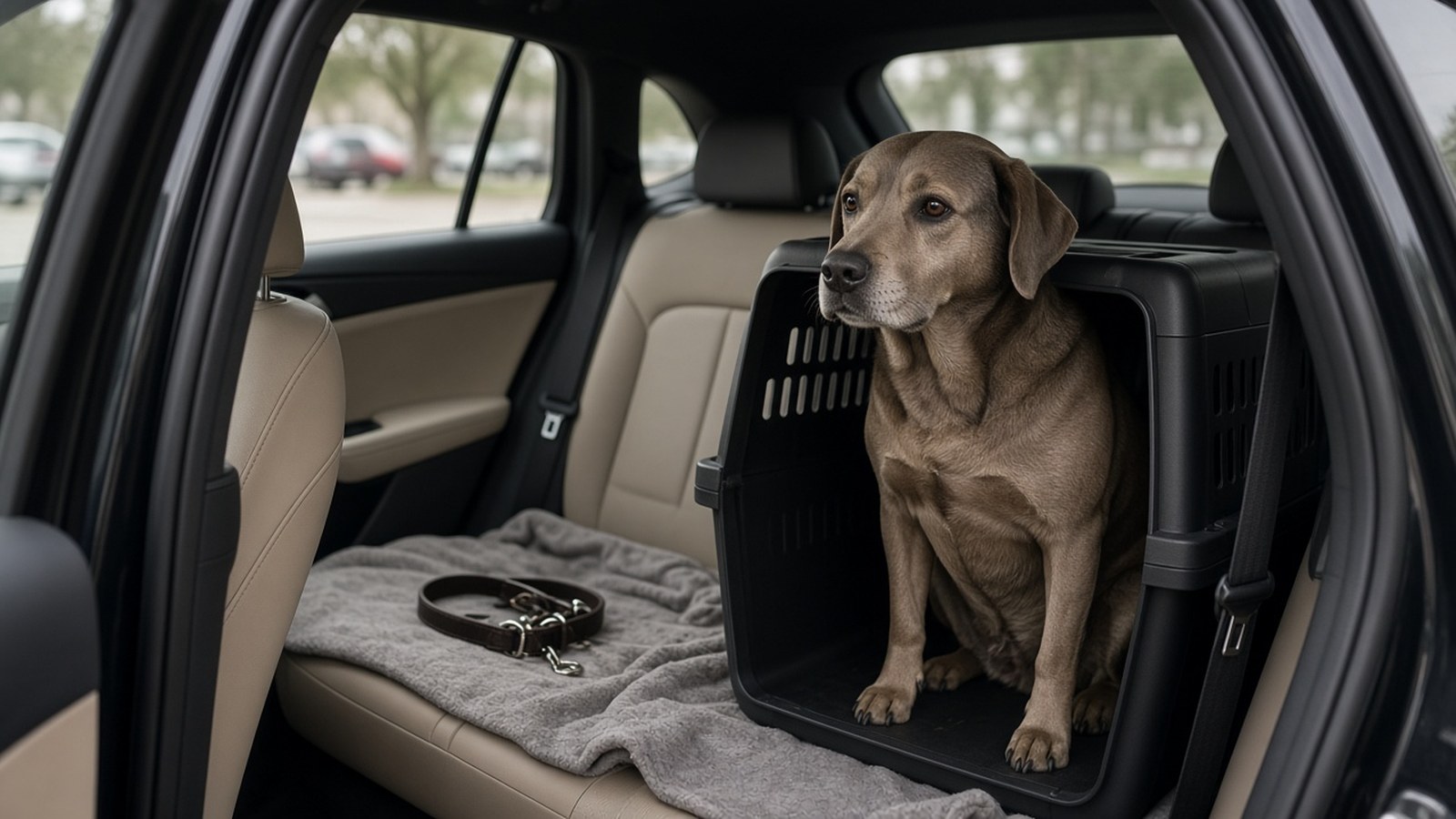
- Use a travel crate or fitted barrier. The dog cannot pace the cabin or climb into laps. Crash safety and training hygiene share this step.
- Cover side views when needed. A crate cover or window shade that blocks dog-dense pavements and adjacent cars. Front windscreen for the driver stays clear. You are managing the dog’s cinema, not driving blind.
- Load calmly. Leash manners at the door, food for entering the crate, a moment of quiet before the engine. A frantic load predicts a frantic mile.
- Choose the route. Avoid the dog-park car park and the school-run kerb while you are still teaching. Off-peak streets buy distance the same way a walking route does.
- End unpaid long rehearsals. If today’s trip will be a guaranteed scream and the dog can stay home safely, leave the dog home. Management includes saying no to the rehearsal.
A US SUV with a cargo crate and a UK hatchback with a smaller travel crate use the same rule. Size changes. The criterion does not: secure body, managed view, trip length you can still win.
How is this different from window barking and door barking?
Window barking owns stationary glass at home: film the pane, move the sofa, pay look-away in the room. Car barking adds motion, vibration, confined space, and destination heat. Cross-read the window page if the dog also runs unpaid sentry at the house glass. Stay here for the vehicle.
Barking at the door owns knock, latch, and arrival at home. Loading the car can share some door arousal. Brief the household the same way you brief guests: no chaos at the threshold. Then the protocol moves into parked and moving reps, which the door page does not own.
If the dog is over threshold on lead in the car park before you even open the door, you are also in on-leash threshold territory. Distance and exits still apply once paws hit asphalt.
What do short training reps look like?
You teach when you can still win, then you add motion.
Parked, engine off, dog already in the crate or on a secured mat. Quiet street or driveway. Mark and feed calm: soft body, quiet mouth, orientation to you if you ask for it. End the rep while the dog is still winning. Two to five minutes beat a hopeful half hour.
Then idle with the engine on. Pay quiet. Engine off. Rest.
Then one block on a quiet street. Cover on if scenery pays the bark. Return home. Unload calmly. Rest.
Raise criteria in this order, and only when the current picture is cheap:
- Parked, engine off.
- Parked, engine idle.
- One quiet block and home.
- A short errand on a low-density route.
- A real destination the dog cares about, cover still available.
If you skip to a motorway run or a packed car park on day one, you are not training. You are hoping.
Food in the crate (legal chew or scattered kibble for calm) can help some dogs settle. If the dog cannot take food, you are already over threshold: shorten, cover more, or stop the session. See harness and lead notes only for the walk after arrival; this page stays the car.
How do US and UK car life differ?
US trips are often longer. UK urban trips may be short but dense: narrow streets, frequent other dogs at kerbs, tight car parks. In both places the rule is the same. Do not fund a scream you have not trained past. A short UK hop through a dog-dense high street may need more cover than a quiet US suburban mile. Destination heat (the park, the beach, the boarding kennel) needs a settle plan before doors open, or the last five minutes undo the quiet twenty.
When is car barking not a DIY road project?
A dog who thrashes until injury or crate damage, redirected biting at passengers, vomiting plus panic that does not ease with cover and short trips, or a previously calm traveller who suddenly cannot ride. Manage (dog stays home when possible, vet check for sudden change) and see a qualified trainer or veterinary behavior professional in your country. See not veterinary advice. Pain, nausea, and medical change can rewrite the car overnight. This page does not invent diagnoses.
What are the usual failure modes?
- You ran the same screaming commute every day and called it exposure. Rehearsal is not a protocol. Shorten or cover.
- You shouted quiet over the road noise. You paid the bark with a conversation the dog could hear.
- You skipped parked reps and started on the motorway. Criteria were never cheap. Drop back to engine-off.
- You left side windows as a free dog cinema. Cover when other dogs and scenery pay the sound.
- You loaded in a wrestle and expected calm by mile two. Calm loading is part of the car picture.
- You ignored house window rehearsal of the same street. Baseline arousal travels. Manage the glass at home too.
Sources
AVSAB position statements on humane training and behavior modification. ASPCA public overviews of common dog behavior issues. Paraphrased as public standards, not quoted as a substitute for reading the originals. avsab.org/resources/position-statements/ · aspca.org — common dog behavior issues
Questions on this page
Why do dogs bark in the car?
Motion, scenery flashing past, other dogs at windows, parking-lot traffic, and a body that never settled before the engine started. The bark is often paid by the world moving on. It is not fixed by shouting over the road noise.
How is car barking different from window barking at home?
Home window barking is unpaid street sentry at glass in a stationary room. Car barking adds motion, confined space, and destination arousal. Same barrier family. Different management tools: crate, cover, route, and short parked reps.
How do you manage the car so barking cannot rehearse every trip?
Secure travel crate or barrier, cover that blocks side views when needed, calm loading, and routes that avoid dog-dense car parks while you train. A US SUV cargo crate and a UK hatchback crate both work if the dog cannot rehearse at every window.
What do short training reps look like for car barking?
Parked engine-off sits first. Pay quiet. Add idle. Add one block. Mark calm orientation or a settle on a mat or in the crate. Raise only when the current picture is cheap. You cannot out-train a forty-minute motorway scream with hope.
When is car barking not a DIY road project?
A dog who thrashes until injury, cannot settle even covered and crated on short trips, sudden new panic in a previously calm traveller, or aggression toward passengers. Manage, and see a qualified professional. This page is not a clinic.
Work with me
A $150 consultation or $500 monthly curatorship. Opens WhatsApp to Andrew.