Spanish Water Dog: temperament, working outlets and retrieve with a clear end for a curly herding water dog
The Spanish Water Dog is a versatile Spanish farm and water dog: curly coat, herding push, retrieve drive and a work ethic that does not clock out because you live in a suburb. It moved sheep, retrieved from water and helped on boats and farms. At home that becomes a busy, loyal dog that needs working outlets and a retrieve that finishes on cue — not endless self-employed swimming and herding of joggers.
Job: Spanish herding and water dog; curly coat and versatile farm jobs.
Energy: High; needs daily work outlets, swim/retrieve and skill games.
Home: Fits an active owner ready for coat care, clear retrieve ends and herding manners.
A Spanish Water Dog is a worker: herding, water and a retrieve that must end
Public histories place the Spanish Water Dog — Perro de Agua Español — across Andalusia and other Spanish regions as a farm and water helper: moving stock, retrieving and working near boats and nets. The curly coat shed water and debris. Versatility, not a single fancy sport, shaped the type.
What I see in homes is an athletic, people-bonded dog that invents jobs: herding bikes, retrieving every stick in the park without an end cue, barking at movement and getting frustrated in quiet flats with no plan. The curly coat also needs clipping or cord-style maintenance depending on the household choice.
I start with three outlets. A daily working outlet: herding games, swim retrieves, scent or agility. A retrieve plan with a clear end so the mouth does not self-employ all afternoon. And manners for moving targets — bikes, joggers, stock-like motion. On top of that I build settle and door skills, and the Spanish Water Dog becomes a brilliant dual-purpose companion.
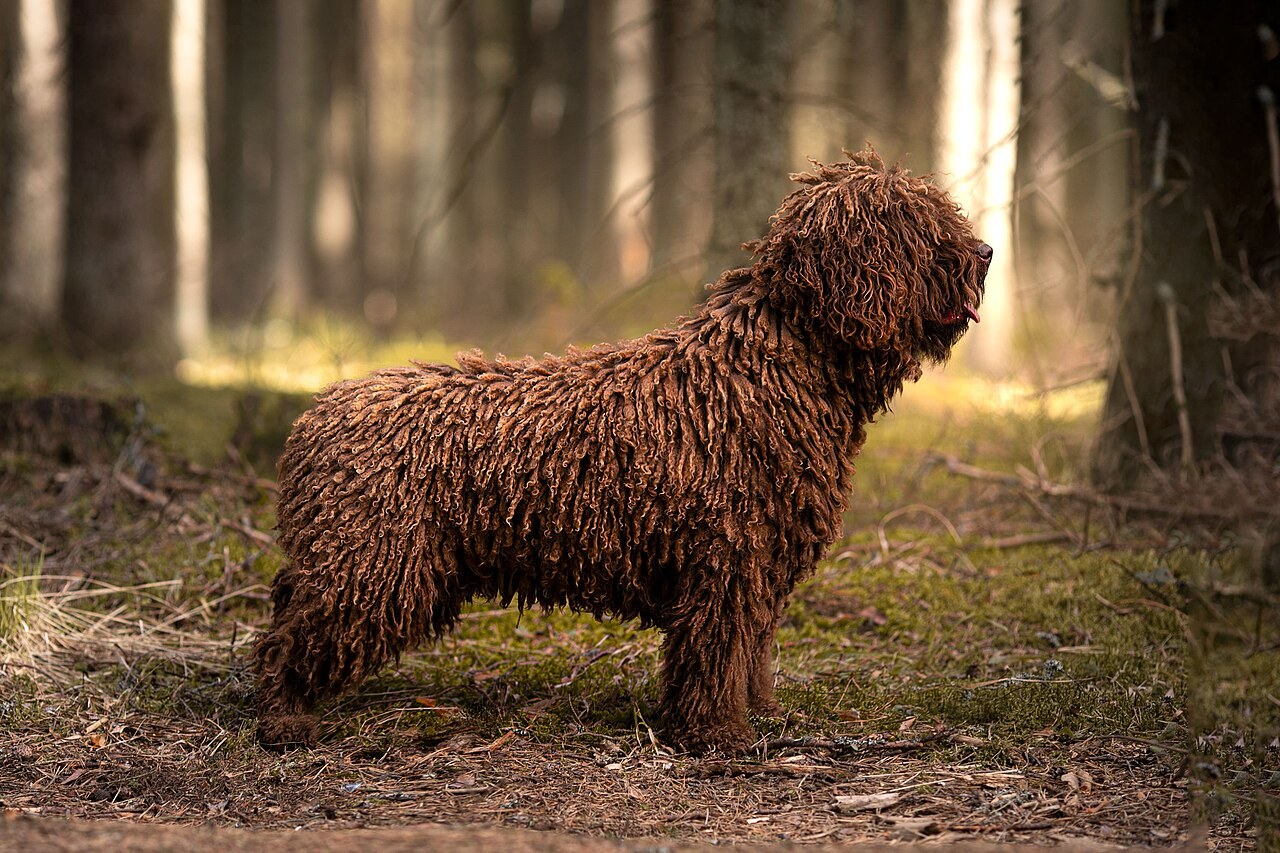
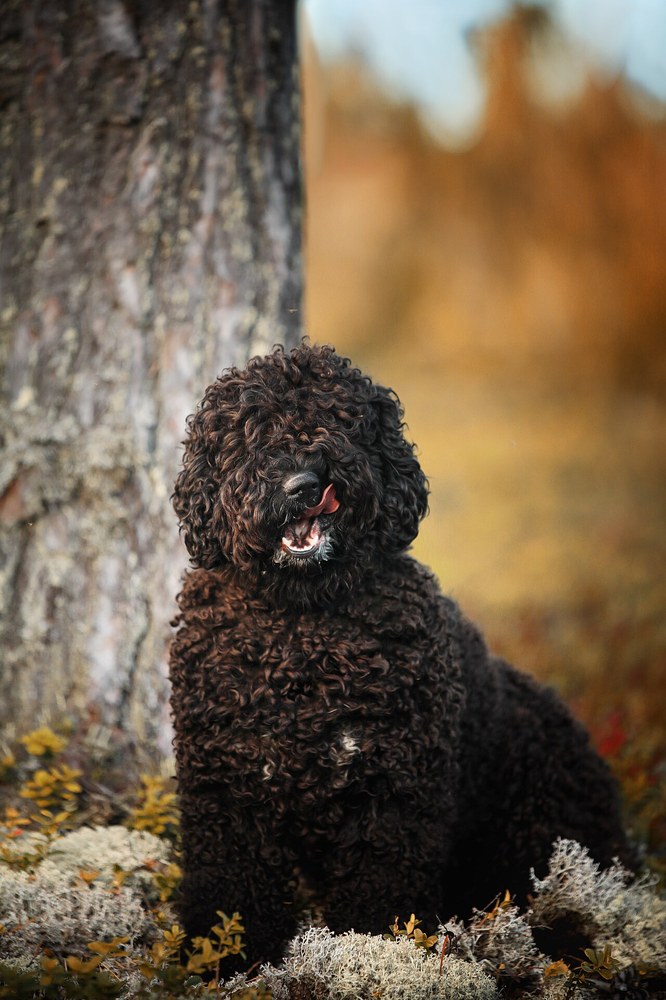
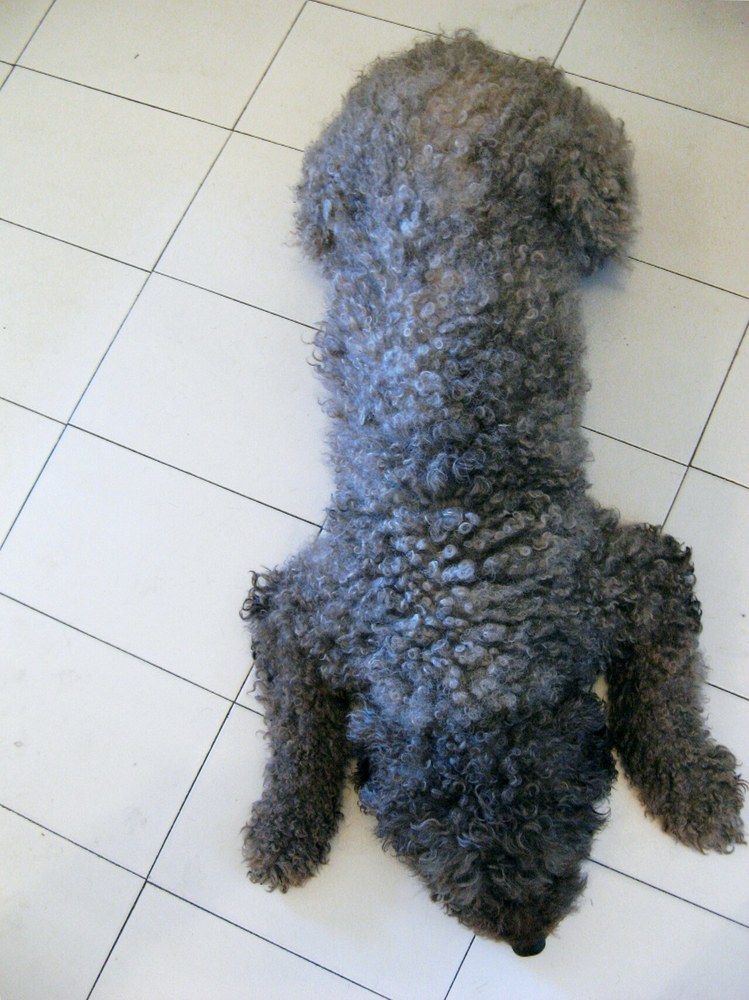
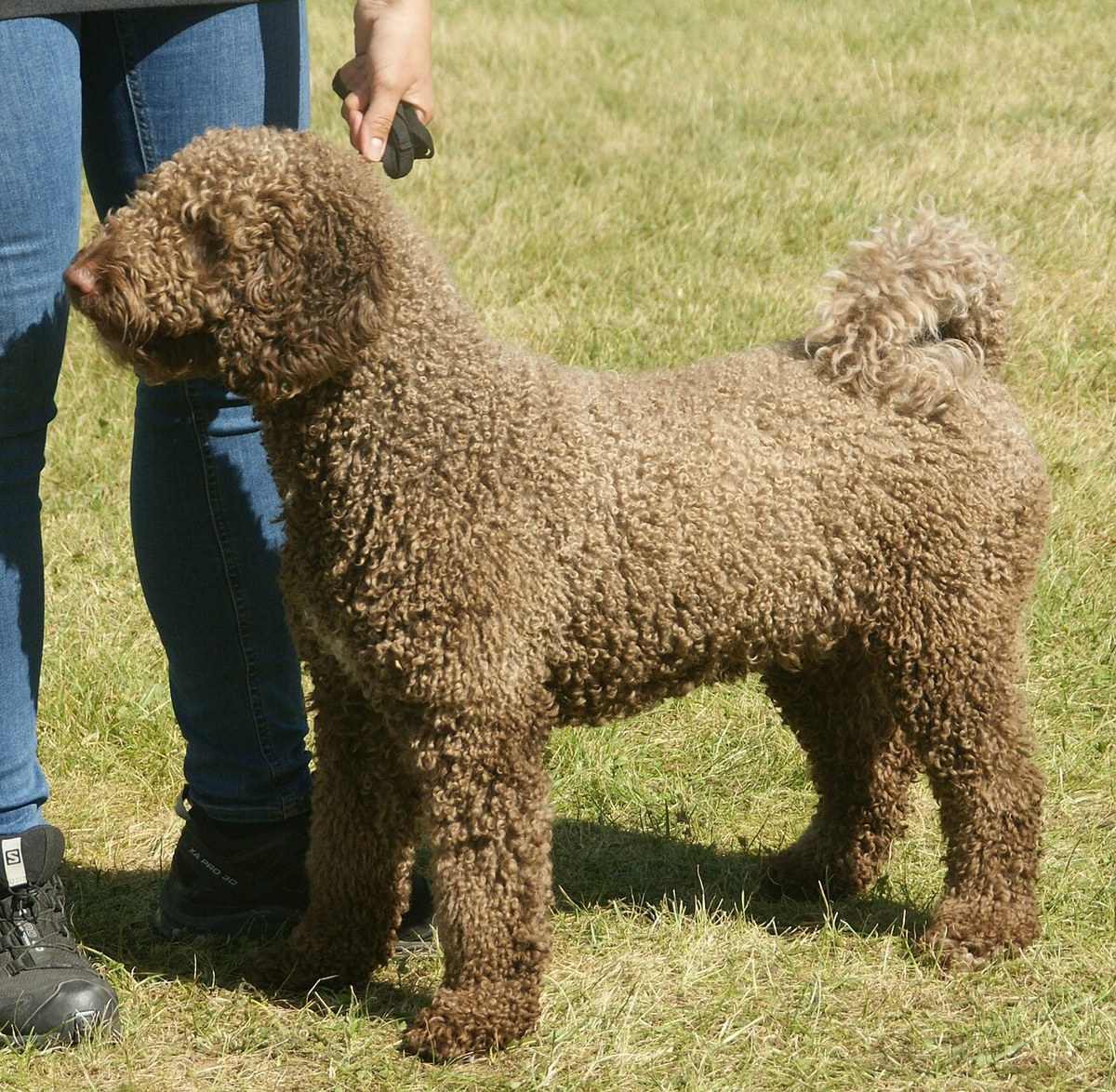
Woolly curly coat; clipped in even lengths or kept longer; low shedding when maintained
Job
Spanish herding and water utility dog (FCI Group 8; AKC Herding)
Breed history
How a Spanish farm and water helper became the Spanish Water Dog
Breed history does not decide your dog’s day, but it explains why these dogs herd moving things, love water work and keep going until someone ends the job.
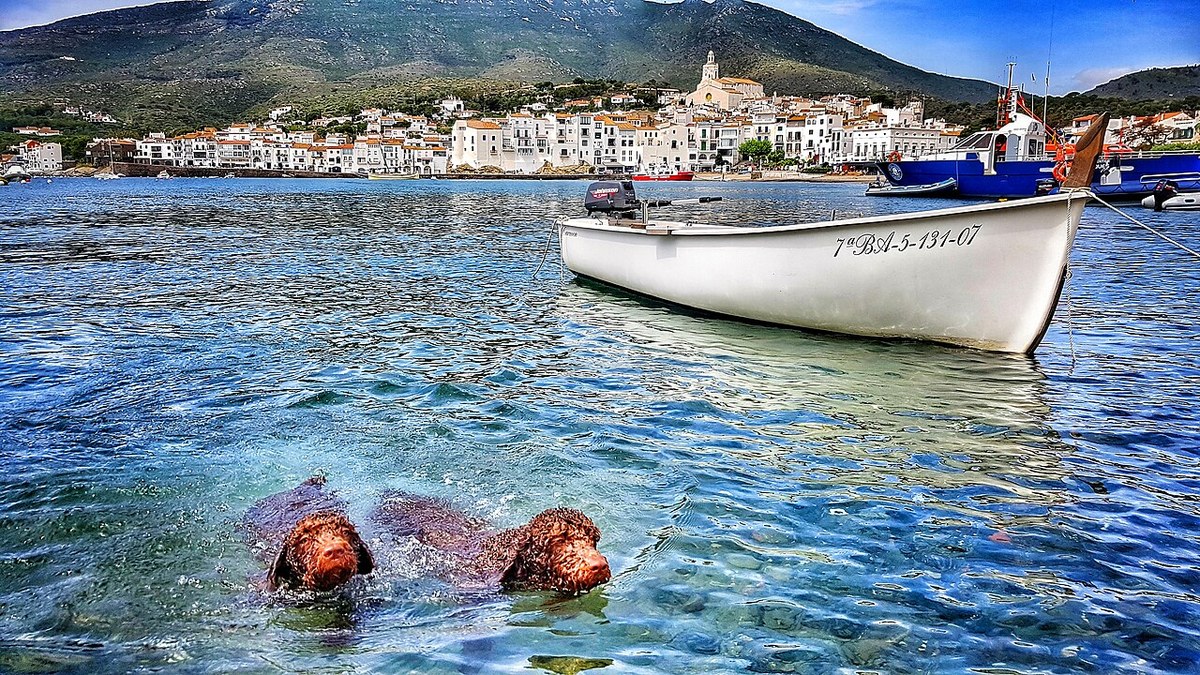
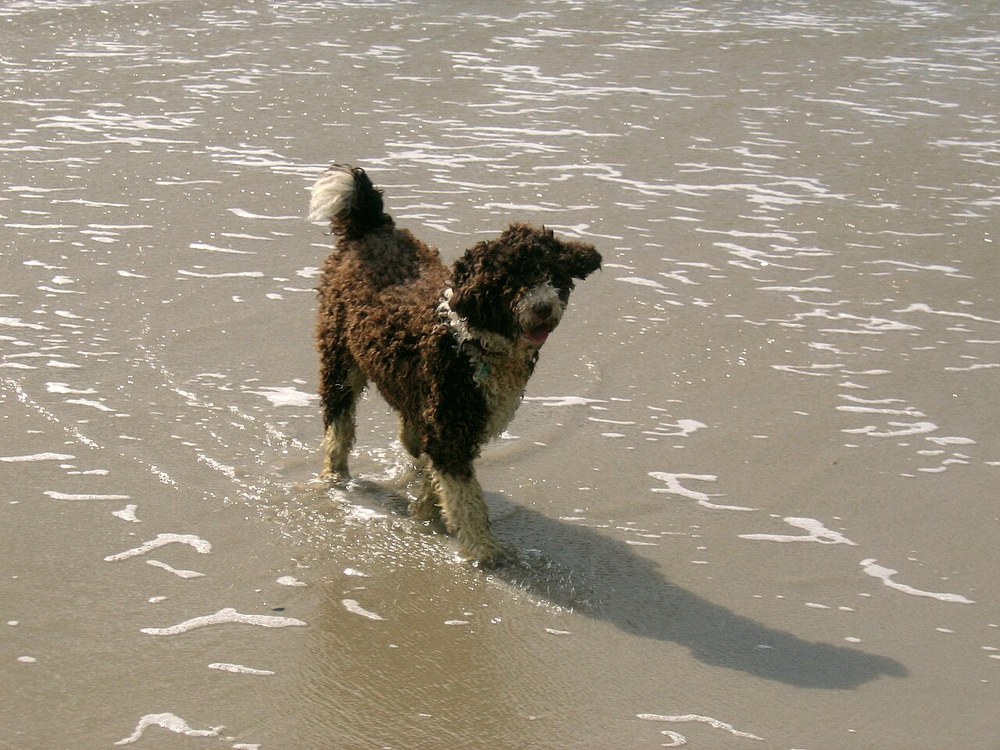
Spanish Water Dogs in water (CC BY-SA 4.0). Swim and retrieve are still natural outlets.
Andalusia and Spanish coasts → mixed farm jobs
One dog for stock, water and odd jobs
Public accounts describe curly-coated Spanish water dogs used to move sheep and goats, retrieve from water and help fishermen and farmers. The job list was practical and wide.
A versatile farm dog needed courage, trainability and a coat that handled wet work. At home that becomes a dog that wants variety and clear instructions.
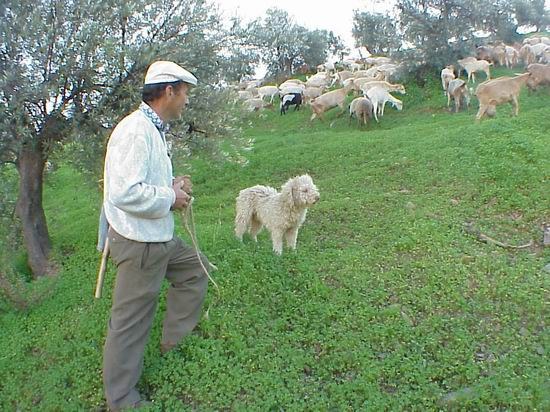
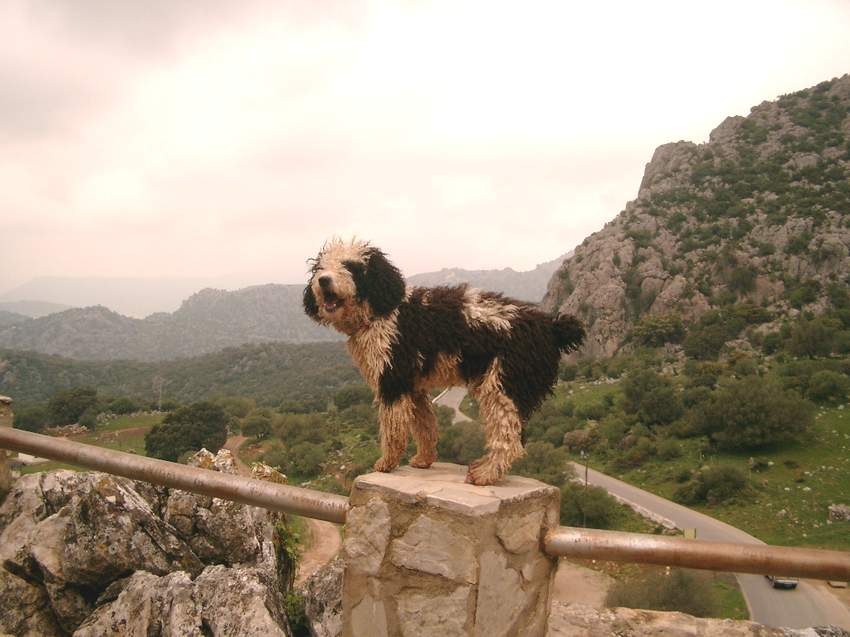
Spanish Water Dog in Andalusia (CC BY-SA 2.5). Regional working life shaped the modern breed.
Recognition without losing versatility
From working regions to sport and companion homes
Kennel clubs recognised the breed and it spread as a companion and sport dog. Many still excel in herding tests, dock diving, obedience and scent work.
Today the useful question is whether you will give this dog a job with a finish — not only whether it can swim.
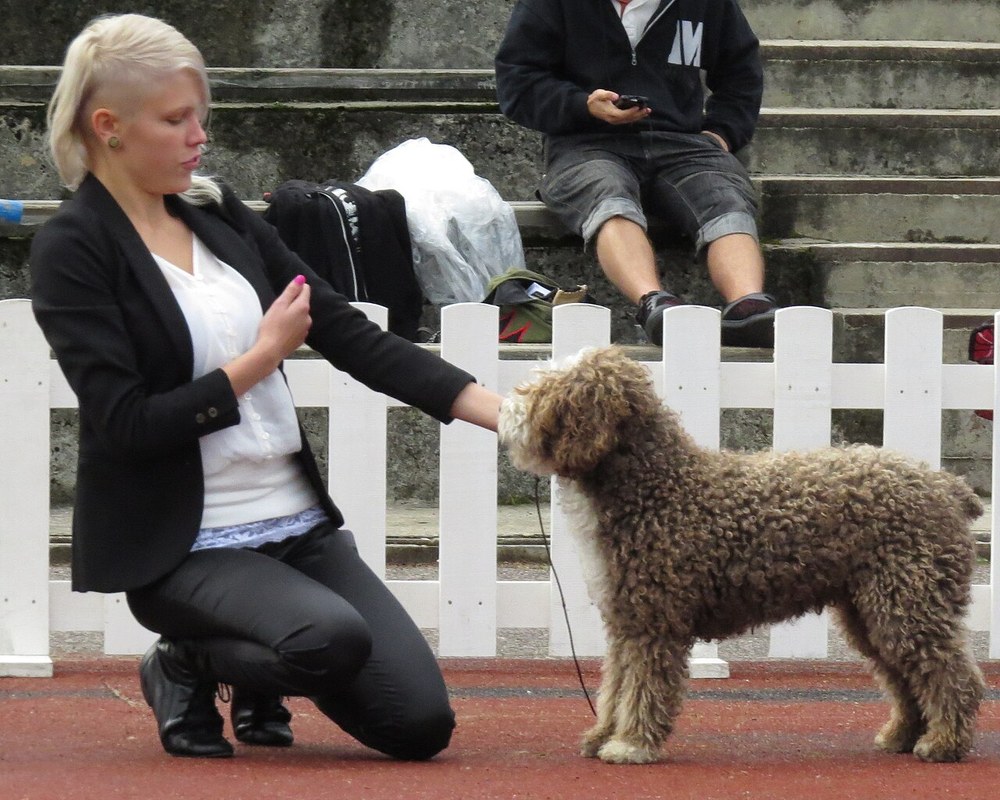
Spanish Water Dog in regional Spain (CC BY-SA 2.5). Companion homes still inherit the work list.
What the breed was bred for
Herd, retrieve, then off
In trainer terms, breeders favoured a dog that keeps working, handles water and stock motion and stays with people. At home that becomes herding of joggers, endless retrieves and excellent sport potential.
Spanish Water Dogs usually learn fast with fair, clear rules. Vague games create self-employment.
A good day has work, water or retrieve, coat care and an off switch
At home the Spanish Water Dog job shows up as herding bikes, endless stick returns, wet curly coats and restlessness without a plan. Most are loyal and athletic. Clear ends and daily outlets make them outstanding companions.
Morning · work
A job block before the suburb wakes
Fifteen to thirty minutes of herding-shaped games, obedience chains, scent or a swim retrieve lowers the urge to organise joggers. Then the walk is calmer.
General awareness only. I am not a veterinarian. With Spanish Water Dogs, owners often notice trouble first as ear issues after swimming, limping after hard play, skin under neglected curls or eye irritation from coat. For red flags, leave this page and open
when to call the vet.
Ears after water
Dry and check ears after swimming. Head shaking needs a vet look.
Hips and joints
Active dogs show limp early when joints hurt. Ask breeders about screening. See limping stop list.
Coat and skin
Mats and constantly damp curls irritate skin. Clip and dry on a real schedule.
Know safe swim spots and your clinic’s number for water-related incidents.
Lines and types
Herding-leaning and water-leaning dogs still need a finish line
No bloodline selling. Differences show in herding push versus water retrieve focus. Every Spanish Water Dog needs daily outlets and retrieve ends.
Herding and sport-minded dogs
Often stronger interest in moving targets and trial-style work.
Need legal herding games and bike manners.
Ask how parents behave around stock or sports.
Still need coat care and settle.
Fits an active trainer who likes herding sports or structured games.
Water and companion dual-purpose homes
Often love swim retrieves and family sports.
Retrieve without an end cue becomes a problem fast.
Coat still needs clipping and drying.
Ask about hips, ears and off-switch at home.
Fits a swimming, hiking household ready to train finish cues.
Socialization windows
What to introduce — and what not to overload — by age
AVSAB-aligned in spirit: short, clean exposures at a distance the puppy can still eat,
with hygiene while vaccines finish. See the
puppy socialization schedule.
2–4 months
Mouth, water intro, handling
Introduce: soft toy to hand, shallow water play if safe, coat handling, name game.
Do not overload: endless stick games with no end, unsupervised bike chasing practice.
~6 months
Movement at a distance
Introduce: bikes and joggers at a distance where the puppy eats, long-line retrieves, leave-it.
Do not overload: off-lead near cycle paths, practising herding of runners.
~12 months
Adolescent work drive
Introduce: retrieve end cue under distraction, herding manners, longer swim sessions with rest.
Do not overload: only raw exercise with no rules, harsh corrections.
~18 months
Adult routines
Introduce: regular clips, sport classes, reliable place after work.
Do not overload: dropping end cues, letting coat stay wet and matted.
~24 months
Keep it going
Introduce: refresh outlets and finish cues, ear checks after swims, yearly health conversations.
Do not overload: assuming drive faded, ignoring limp or head shaking.
Before you buy
Who a Spanish Water Dog usually fits
Fit comes down to daily work, retrieve ends, curly coat care and training around moving targets.
Good match
More likely a good fit if you…
You want a versatile Spanish working dog for an active life
You will train retrieve with a clear end
You like swimming, hiking or sports
You will clip and dry the curly coat
You will manage herding of bikes and runners
Mismatch risk
A Spanish Water Dog may be a poor choice if…
You want a low-exercise curly companion
You hate wet dogs and grooming
You live beside a busy cycle path and refuse training
You throw sticks with no end cue all weekend
You need a quiet first dog that forgives skipped work
If you are torn between breeds
Spanish Water Dog vs Portuguese Water Dog and Curly-Coated Retriever
Portuguese Water Dogs share Iberian water-work roots with a different history and often a different size/profile; Curly-Coated Retrievers are larger British retrieving gundogs. The Spanish Water Dog keeps a stronger herding thread beside water work.
Origin
Spanish Water Dog
Spanish farm, herding and water utility.
Portuguese Water Dog
Portuguese working water dog.
Herding thread
Spanish Water Dog
Often strong interest in moving targets.
Curly-Coated Retriever
More classic gundog retrieve focus.
Coat
Spanish Water Dog
Woolly curls; even clip common.
Portuguese Water Dog
Curly or wavy; also high maintenance.
Retrieve
Spanish Water Dog
Needs a trained end cue.
Both compares
Working mouths need finish rules.
Home energy
Spanish Water Dog
High working energy.
Curly-Coated Retriever
Also high; often more independent.
Ownership without surprises
Where a Spanish Water Dog owner’s budget goes
Costs depend on country, city and your choices. These are themes to plan for, not quotes.
Coat clipping
Regular even clips or longer-coat maintenance, plus drying after swims.
Time and outlets
Daily work and training. A bored Spanish Water Dog costs you in herding and noise.
Classes
Herding, dock, obedience or scent. Prices vary by city.
Veterinary
Routine care, hip screening of parents, ear care after water. Know your emergency clinic.
Food
Athletic rations; adjust when work drops.
Gear
Long line, retrieve toys, secure fencing, swim gear as needed.
Versatility is not free. Coat and daily work drive the real budget.
Before day one at home
What to prepare for a Spanish Water Dog puppy
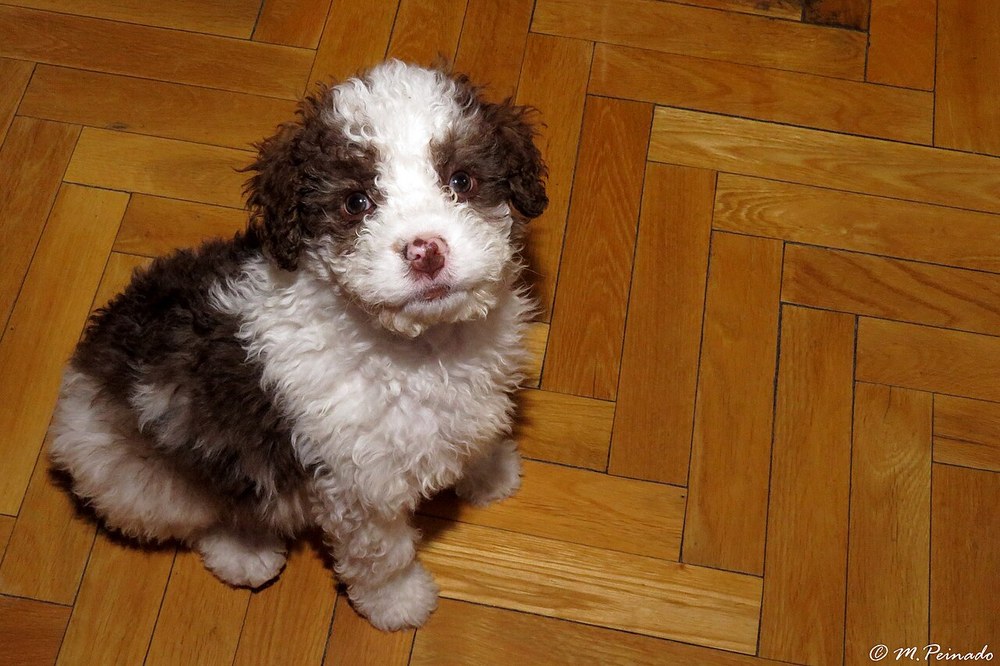
A Spanish Water Dog puppy is mouthy, athletic and already interested in moving things. End cues and handling before adolescence save your cycle-path reputation.
Training a Spanish Water Dog installs jobs with finish lines
Keep rules easy to see: retrieve to hand then end, leave-it on bikes, place after swim, four paws on the floor for guests. Reward each one.
These dogs usually love work. Clear, upbeat sessions beat vague endless play. If the game has no end, the dog will not invent one you like.
Management makes training work: choose quiet times near cycle paths at first, put idle sticks away, dry the coat after water. You stop the habit while better habits grow.
Load balance
Work and water first, then settle
Age, joints, ears and weather all affect load. Limping, head shaking or a dog that cannot stop retrieving need a vet or behaviour check.
Working gameSwim or retrieveMovement mannersCoat/ear careSettle on a bed
Herding games, swim retrieves, scent and obedience all count. Hours of unsupervised stick obsession do not meet the need cleanly.
A Spanish Water Dog that has worked and finished retrieves today can let a bicycle pass and lie on its bed.
Retrieve, then stop
How to teach a Spanish Water Dog a retrieve that ends on cue
Start with an easy toy, reward delivery to hand, add an end cue and a bed chew, then practice around mild distraction before the park chaos.
01
Choose one toy for the session
Put other sticks away so the game stays clear.
02
Reward delivery to hand
Mark when the toy hits your hand; trade for food if needed.
03
Decide the rep count
Three to five good retrieves, then prepare to end — do not keep going until the dog is frantic.
04
End cue and place
Say the end cue, take the toy, send the dog to a bed with a chew.
05
Protect the end
Do not throw again after the end cue. Reset later in a new session if you want more work.
One scene close-up
Why a Spanish Water Dog never stops bringing sticks
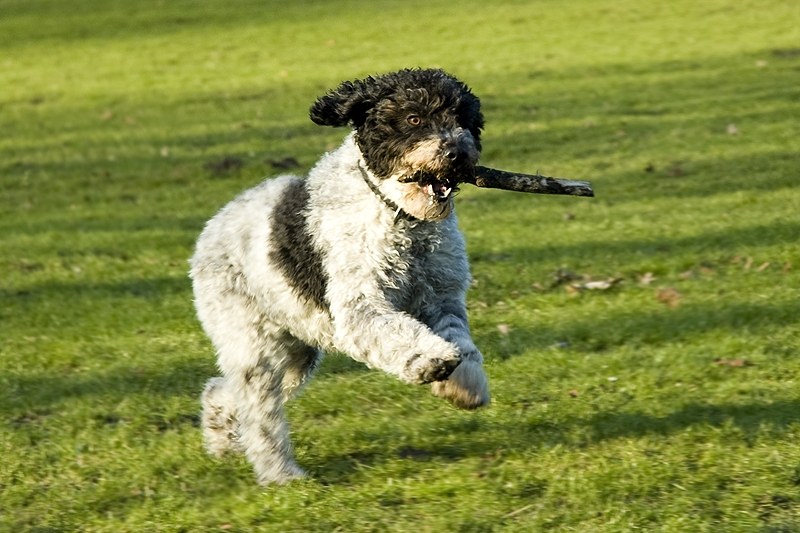
Each throw rewards the retrieve. Without an end cue, the dog correctly learns that the job is infinite. People get tired; the dog does not.
Decide the number of reps in advance, reward the last delivery richly, say the end cue and go to place. Carry a chew. Do not throw “just one more” after the end.
If the dog guards sticks or becomes frantic, get qualified help and lower excitement.
“With a Spanish Water Dog, I train the end of the retrieve as carefully as the start. Working outlets and curly coat care do the rest. Versatility is wonderful when it has a finish line.”
Sessions cover real scenes: retrieve ends, bike manners, swim routines, coat handling and settling. I am a trainer, not a veterinarian. No invented reviews.
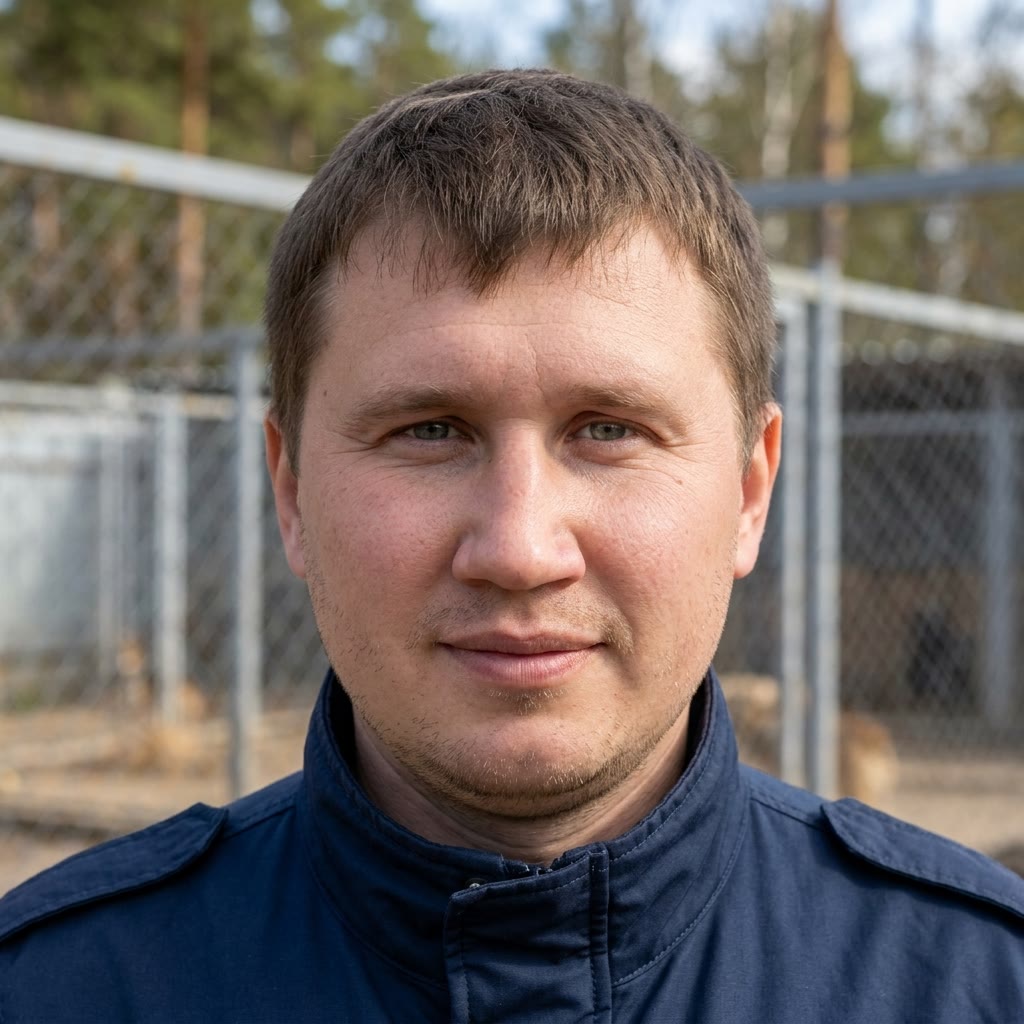
Andrew DarovProfessional dog trainer and instructor
A high-drive Belgian working shepherd that needs structured daily work, a taught off-switch and an experienced handler.
Need a read on your exact situation?
Tell me your Spanish Water Dog’s age and the scene that keeps repeating: endless retrieves, bikes, barking, coat fights or settling. We check safety and health first, then pick the first skill.
Written by Andrew Darov, professional dog trainer. Not veterinary advice and not a diagnosis.
Not a kennel club. No invented reviews. No vaccine schedules or toxin doses. Photo credits in
/images/breeds/spanish-water-dog-guide/credits.md.