Kuvasz: temperament, guarding instinct, fencing and training for the Hungarian flock guardian
The Kuvasz is a big white livestock guardian from Hungary. For centuries it lived with sheep and cattle and decided for itself what counted as a threat. At home you get a devoted, gentle dog with its own family that is cool and suspicious with strangers, barks at night, roams if the fence allows it and does not obey just because you asked. Living well with one takes a very secure fence, early and steady socialization, patient reward-based training and an owner who accepts that this dog thinks for itself.
Job: A Hungarian livestock guardian; AKC Working group, FCI Group 1.
Energy: Devoted to its family, suspicious of strangers, independent and protective.
Home: Suits an experienced owner with a fenced property, not a busy street or a small flat.
A Kuvasz is a guardian that makes its own decisions
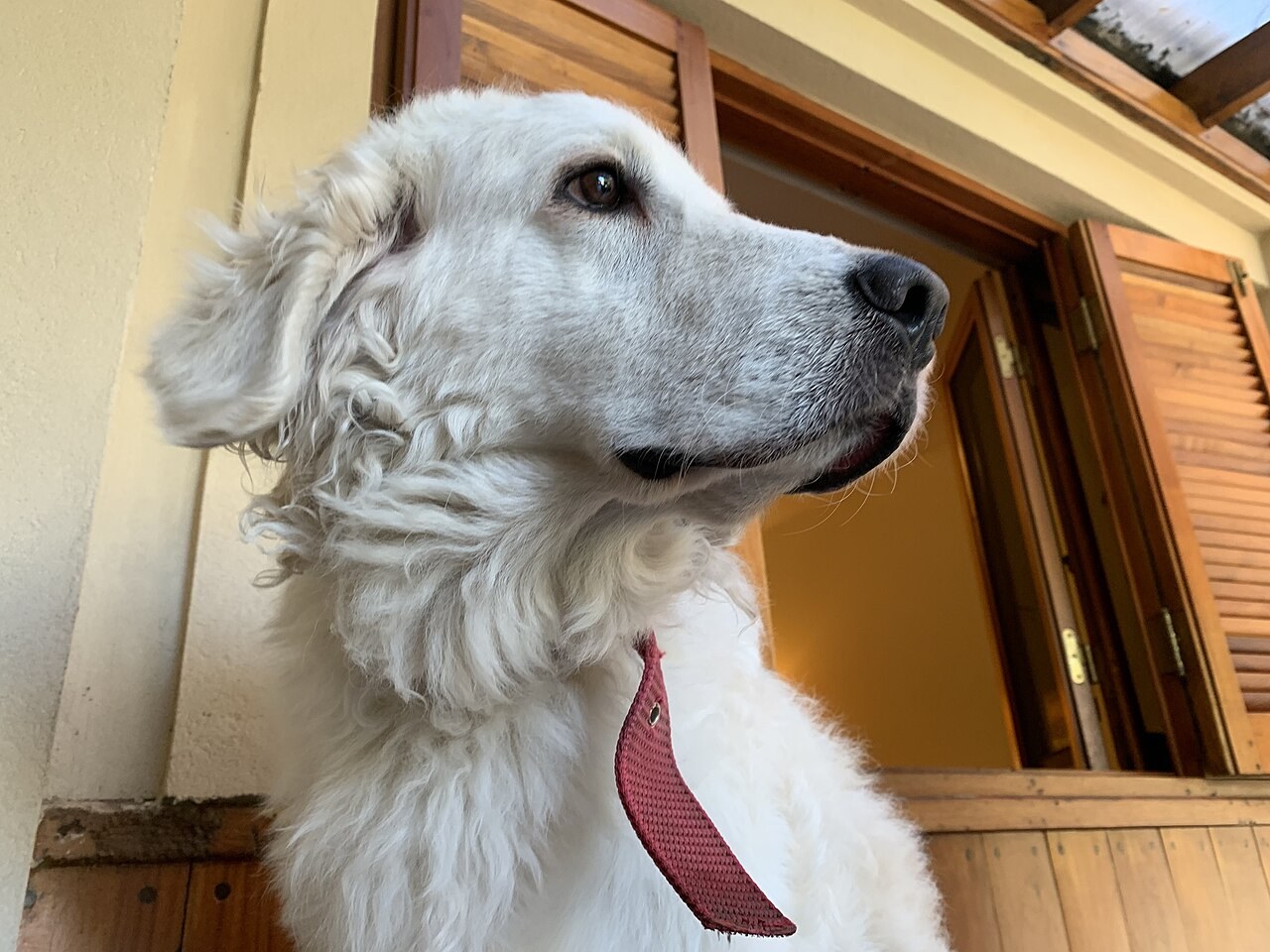
Many people pick a Kuvasz for the white coat and the calm face and expect a big, easy family dog. What they get is a guardian bred to stay with the flock without a shepherd telling it what to do, and to act on its own when something seems wrong.
In family homes the problems I see are fairly predictable: barking at night at every sound beyond the fence, roaming or digging out to widen its territory, blocking or warning visitors, ignoring the recall when something interests it, and friction with strange dogs that enter what it sees as its land.
I work on four things. A fence the dog cannot beat, and the dog indoors at night. Wide, calm socialization with people and places that keeps going until the dog is mature. Short, fair training sessions with food that build a few reliable habits. And an owner who handles visitors and the gate, so the dog does not feel it has to.
AKC: males 28–30 in, females 26–28 in (FCI: males 71–76 cm, females 66–70 cm)
Weight
AKC: males about 100–115 lb, females about 70–90 lb
Energy
Moderate; calm at home, alert at night and on its own ground
Coat / shed
Medium-length, wavy or straight white double coat with a dense undercoat; dark skin
Job
Livestock guardian of sheep and cattle (AKC Working group, FCI Group 1)
Temperament in one minute
Kuvasz temperament: what they are like at home
Short answer: Kuvaszok are devoted, gentle and protective with their own family and suspicious of strangers. As livestock guardians they were bred to work without a shepherd, so they are independent, think before they obey and act on what they see. Expect warning barks at night, interest in roaming and wariness with visitors and strange dogs. They need a tall, dig-proof fence, nights indoors, early and long socialization, short reward-based training and an experienced owner who handles visitors.
Are Kuvaszok affectionate?
Yes, with their own people, often quietly. Many like to lie near the family. Build short absences early.
Are Kuvaszok easy to train?
They learn fast but ask "why". Keep sessions short and fair; start with a hand target and a door wait.
Are Kuvaszok friendly with strangers?
No, they are wary and protective. Let guests come in and sit before the dog meets them; see guest entry steps.
Are Kuvaszok good with kids and other dogs?
Usually gentle with children they live with; visiting kids need supervision. Dog friends are best raised together. See children and guests.
Kuvasz behavior problems to expect
The usual four are night barking, roaming or digging out, blocking visitors and a weak recall. The list further down links a guide for each.
Living with a Kuvasz in an apartment
A poor fit for most. The breed does best with land or a big fenced garden and few close neighbours.
Breed history
How the Hungarian flock guardian nearly disappeared
The history explains why this dog watches the fence line, distrusts strangers and works things out without you.
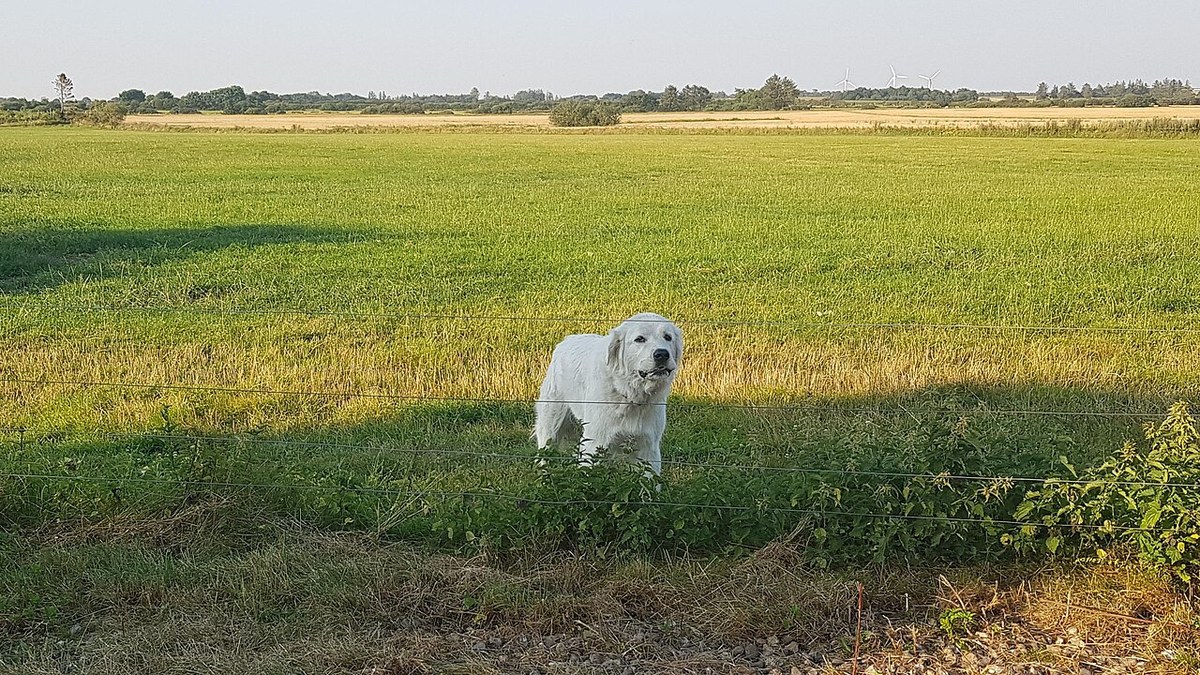
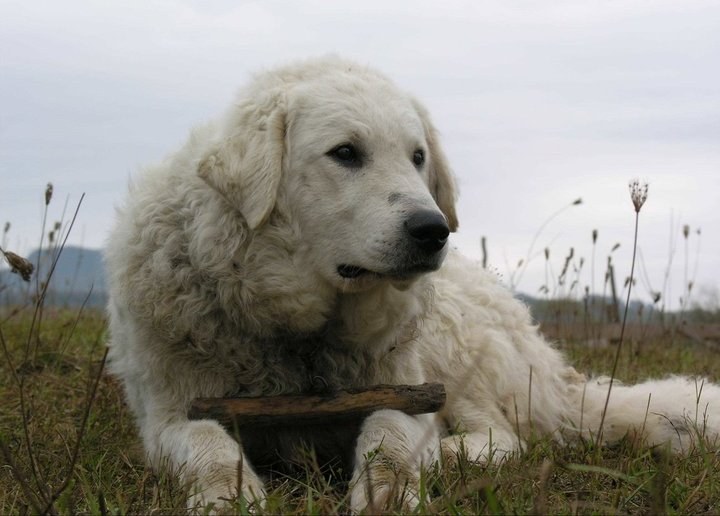
A Kuvasz on pasture land in Denmark, where its owner keeps it with sheep day and night as protection against roaming wolves.
Hungary · open grazing
A white dog that lived with the herds
Big white guardian dogs have worked with sheep and cattle in the Carpathian Basin for centuries. The white coat helped a shepherd tell his own dog from a wolf at dusk.
A popular story links the breed to King Matthias Corvinus in the 15th century. Treat that as a legend, not as a pedigree.
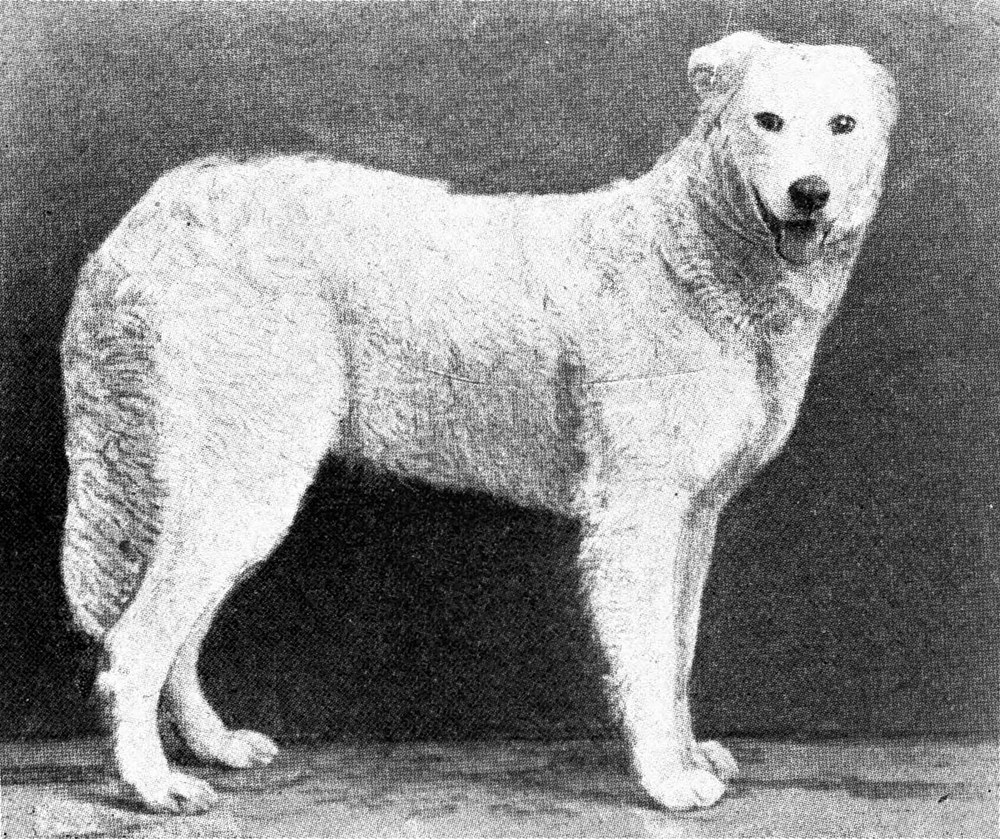
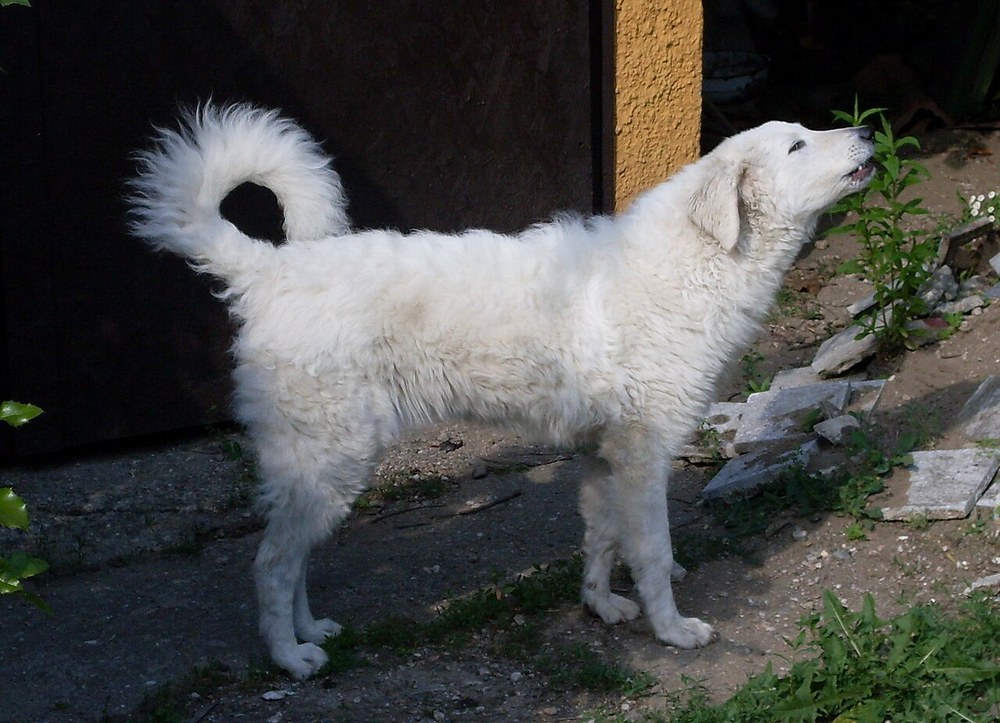
A Hungarian white sheepdog photographed in 1915, around the time breeders were writing down the Kuvasz type.
From the 1880s
A standard, two wars and a rebuild
Hungarian breeders began to describe the Kuvasz as a breed at the end of the 19th century. The two world wars hit the population hard, and only a small number of dogs were left in Hungary after 1945.
The breed was rebuilt from those dogs and from Kuvaszok abroad. The AKC has listed the Kuvasz since 1931, and the FCI keeps it with the sheepdogs in Group 1.
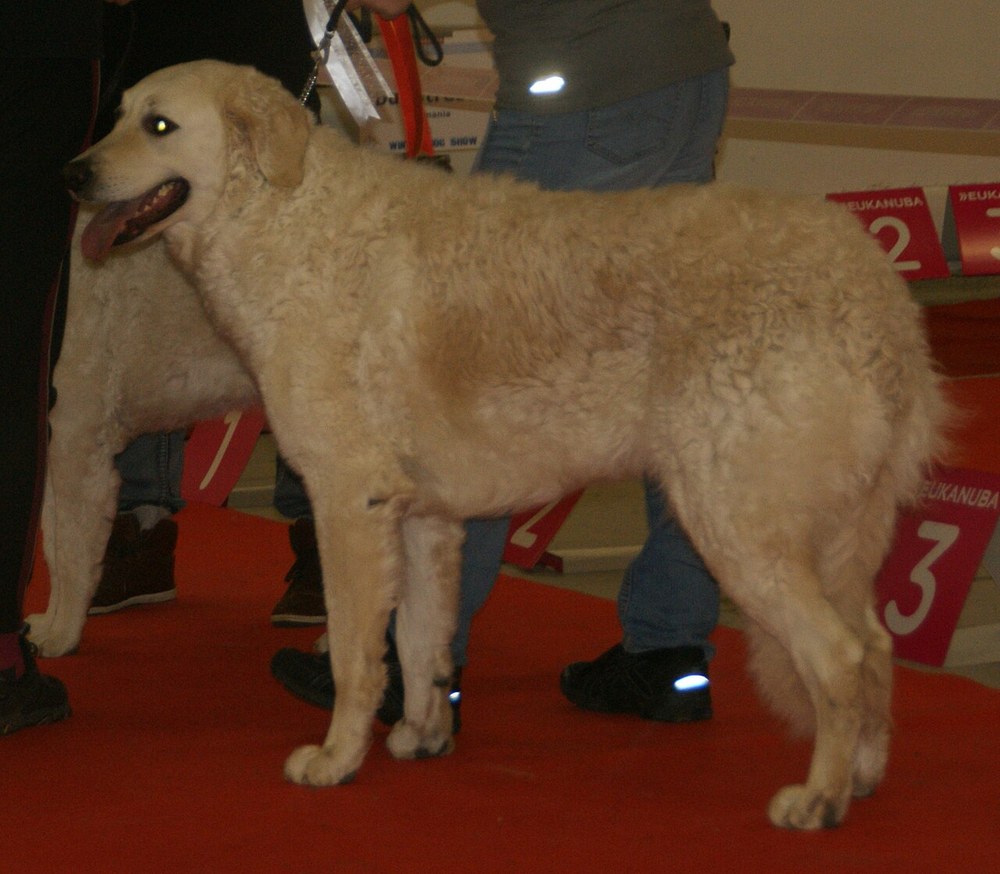
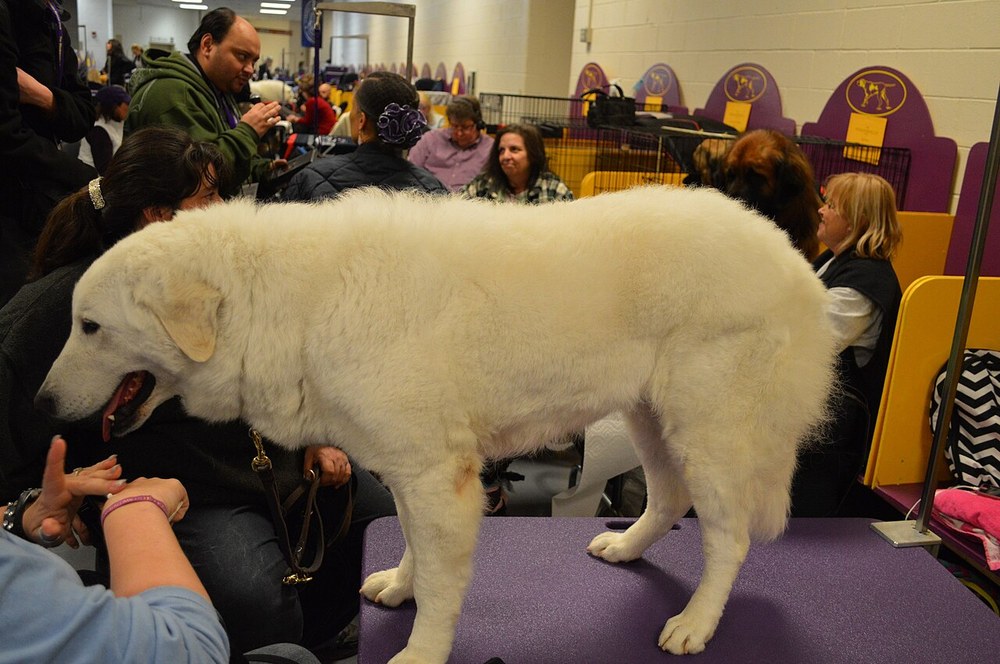
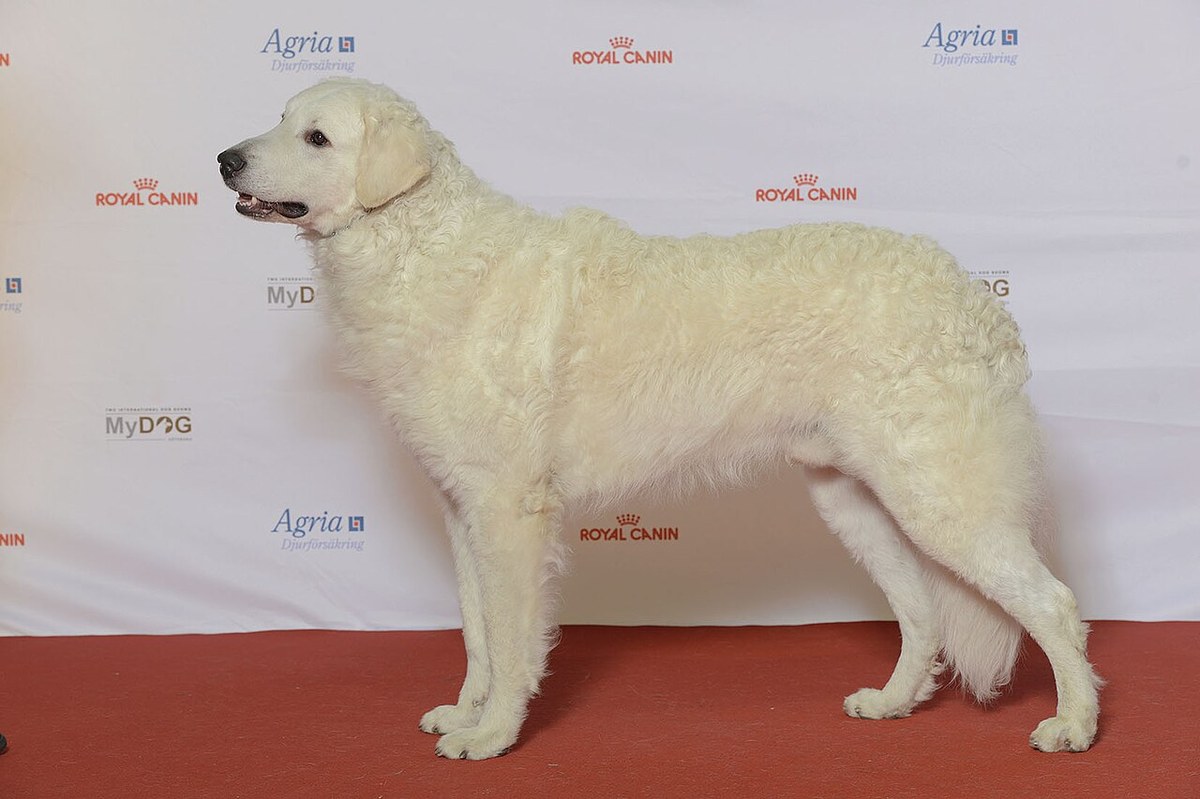
A Hungarian Kuvasz female at a show: the breed standard asks for a white coat, though some dogs look cream or ivory in show lights.
What the breed was bred for
Soft with its own, hard to fool
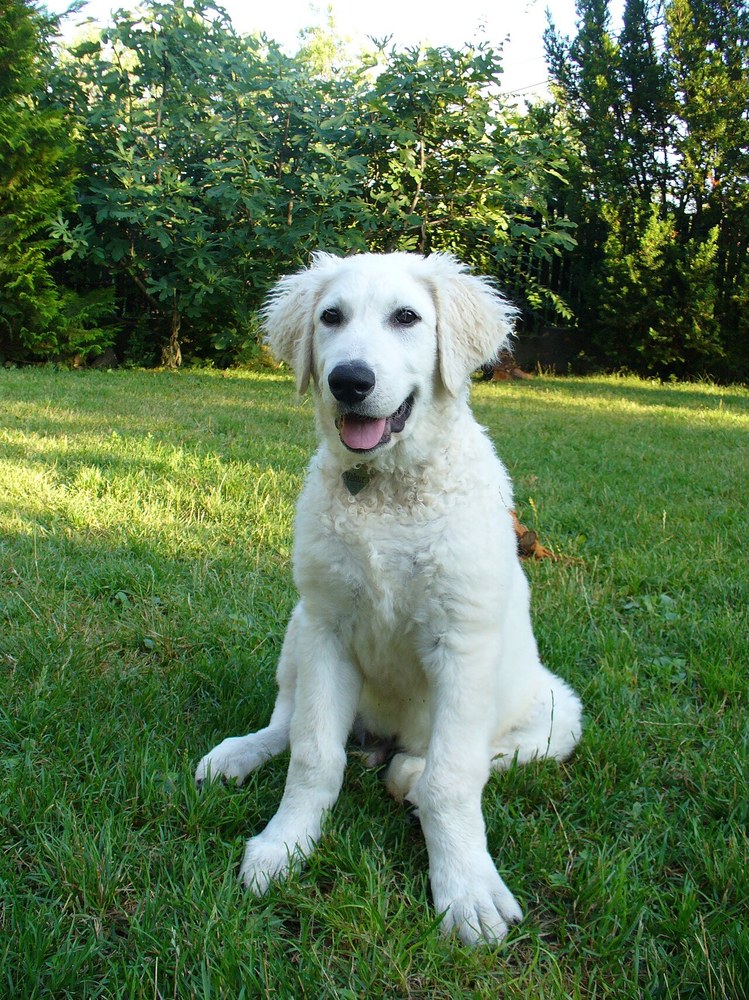
At home a well-raised Kuvasz is quiet, gentle and close to its family, and many are tender with children they live with.
Outside that circle it is watchful. It notices strangers, cars and animals at the boundary, barks a warning and may stand between a visitor and its people. Good management keeps that instinct calm instead of constant.
A good day has a long walk, quiet time on its own ground and no night patrol
Most adult Kuvaszok are happy with an hour or so of walking, a sniff around their own garden with you and plenty of rest. They are not built for hours of fetch. Trouble starts when the dog is left outside alone to guard, especially at night, or when the fence leaves room to roam.
Morning · walk
A steady walk on a lead or long line
Pick quiet routes, let the dog sniff and look around, and keep it on a lead or long line in open areas. A Kuvasz that spots something to check out may decide it matters more than your call.
Between about eight months and two years many Kuvaszok start to watch the boundary and push at rules. Keep routines the same, check the fence weekly and reward calm choices instead of arguing with the dog.
Put the dog in another room or behind a second gate before guests arrive. Let them in, sit down and talk, then bring the dog in on lead for a calm sniff. Guests should not stare at it, lean over it or reach for its head.
Go out with the dog in the evening, let it check its ground and bark once or twice, then thank it and call it inside. A dog that patrols alone in the dark keeps finding new things to bark at.
The months before maturity are your chance to show the puppy many calm people, places and dogs. Short, pleasant outings several times a week matter more than one busy day at a crowded park.
General awareness only. I am not a veterinarian. With a Kuvasz, owners often notice trouble first as stiffness after exercise, a change in how the dog moves, skin under the coat or a dog that suddenly turns short-tempered. For red flags, leave this page and open
when to call the vet.
Joints and growth
A large breed that grows fast; ask your vet how much exercise suits a growing puppy. A new limp needs a vet. See limping stop list.
Coat and skin
Brush weekly and daily while it sheds; the coat drops dirt once dry, so it needs fewer baths than people expect.
Weight
Keep it lean, above all in the growing months. See BCS check at home.
Heat
A thick white coat in summer: walk early and late and give shade and water. See water after exercise.
Handling for the vet
Teach calm handling and muzzle comfort while the dog is small; a grown, wary Kuvasz is hard to examine.
Ask the breeder
Ask which screenings the national breed club recommends for the parents and ask to see the results. Do not take disease claims from a blog.
Lines and types
Working flock dogs and family Kuvaszok need different set-ups
No bloodline selling. Some Kuvaszok come from working homes and live with sheep; most in North America and Europe come from show and family breeders. Both keep the guarding instinct. Meet the mother on her own ground and watch how she reacts to you at the gate.
Family homes
A tall, dig-proof fence.
Dog indoors at night.
Walks on a lead or long line.
Visitors handled by you.
Suits a calm, experienced household with land or a large fenced garden and few visitors.
Farm and livestock homes
Raised with the animals it will guard.
Bonded to the stock, not just people.
Strong perimeter fencing.
Neighbours who accept barking.
Suits a smallholding or farm that needs a guardian and has space for a dog that works on its own.
Socialization windows
What to introduce — and what not to overload — by age
AVSAB-aligned in spirit: short, clean exposures at a distance the puppy can still eat,
with hygiene while vaccines finish. See the
puppy socialization schedule.
2–4 months
Settling in and meeting people
Introduce: calm visitors who let the puppy come to them, short car rides, handling, the toilet spot, short spells alone.
Do not overload: long walks, jumping from heights, leaving it outside alone.
~6 months
Fast growth
Introduce: lead walking, a long-line recall, a bed cue, new places at quiet times.
Do not overload: off-lead runs in open country, rough play with big dogs.
~12 months
Guarding switches on
Introduce: gate and door routines, night inside, short calm meetings with new people.
Do not overload: letting it bark at passers-by all day, guests who reach for its head.
~18–30 months
Grown-up guardian
Introduce: steady training, longer walks, checking the fence together.
Do not overload: treating normal wariness as aggression, or ignoring real growling.
~3 years+
Maintenance
Introduce: daily walks, regular handling, weekly brushing, yearly vet checks.
Do not overload: letting socialization lapse because the dog is grown.
Before you buy
Who a Kuvasz usually fits
Fit depends on your fence and land, how many visitors you get, your neighbours' patience with barking at night and whether you can live with a dog that cooperates rather than obeys.
Good match
More likely a good fit if you…
You have lived with a large, independent breed before
You have land or a big garden with a solid fence
You want a gentle family dog that is wary of strangers
You can keep the dog indoors at night
You like patient, reward-based training
Mismatch risk
A Kuvasz may be a poor choice if…
You want a dog that greets every guest
You want off-lead walks in open country
You live in a flat or close to neighbours who hate barking
You want a guard dog to protect property on its own
You expect quick obedience to every cue
If you are torn between breeds
Kuvasz vs Great Pyrenees and Anatolian Shepherd Dog
All three are big livestock guardians that bark at night and think for themselves. The Great Pyrenees is usually the softest with people, the Anatolian the most reserved and territorial, and the Kuvasz sits in between: devoted to family, quick to act on what it sees.
Origin
Kuvasz
Hungary, white guardian of sheep and cattle.
Great Pyrenees
French and Spanish mountains, also white.
Strangers
Kuvasz
Suspicious, slow to warm up.
Anatolian Shepherd Dog
Very reserved and territorial.
Coat
Kuvasz
Wavy white double coat.
Great Pyrenees
Longer, heavier white coat.
Barking
Kuvasz
Warns at night by instinct.
Both compares
All three bark at night; plan for it.
Ownership without surprises
Where a Kuvasz owner’s budget goes
Costs depend on country, city and your choices. These are themes to plan for, not quotes.
Fencing
A tall fence with a dig guard and a gate that locks; often the biggest early cost.
Veterinary
Annual vet visits, the vaccines your vet recommends and the health tests the breed club recommends.
Training
Puppy class, then help from a trainer who knows guardian breeds.
Food and treats
A dog of 70 to 115 lb eats a lot, and growth food matters.
Grooming
Brushes, an undercoat rake and a good dryer for heavy shedding.
Money spent on the fence and on early socialization prevents most of the expensive problems later.
Before day one at home
What to prepare for a Kuvasz puppy
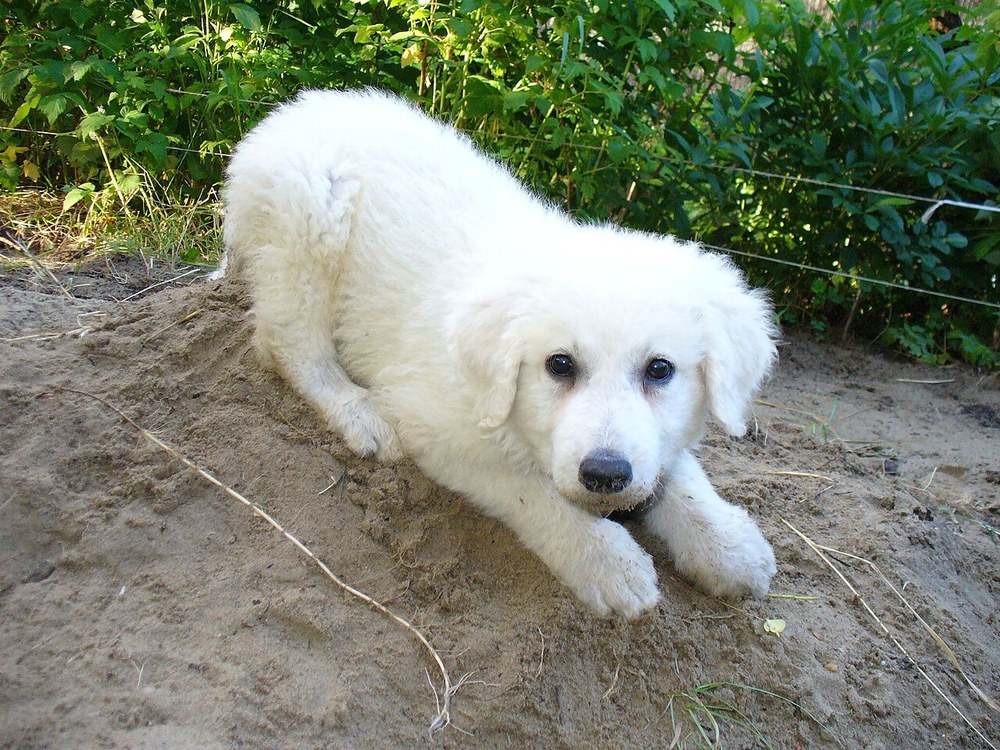
A Kuvasz puppy looks like a white bear cub and grows fast. Have a bed spot, safe chews, gates in the house and a list of calm people ready to visit in the first weeks.
Training a Kuvasz means short sessions, a strong fence and patience
Five skills cover most of daily life: a recall on a long line, a wait at doors and gates, a bed cue while guests settle in, a quiet signal after a warning bark, and calm walking on a lead past people and dogs.
A Kuvasz learns quickly when it sees a reason. It does not enjoy repeating a cue ten times for nothing. Keep sessions to a few minutes, use good food and stop while the dog is still keen. Harsh corrections damage trust with this breed and can make a guarding dog more defensive.
Expect cooperation, not instant obedience. You build a dog that chooses to work with you; the fence and the lead cover the moments when its instinct wins.
Load balance
Walks and quiet time first, training in small pieces
Go easy with growing puppies, older dogs and hot days. A limp, stiffness or sudden bad temper means a vet visit before more training.
Lead walkSniff timeShort trainingChew on the bedLong rest
For this breed, a calm walk with lots of sniffing settles the dog better than an extra hour of running.
A Kuvasz that sleeps indoors and walks with you has much less reason to guard the street all night.
Night barking
How to cut night barking with a Kuvasz
Bring the dog in at dusk, close curtains on the street side, give it a bed near the family, answer one warning bark with a calm "thank you" and a treat on the bed, and keep the last garden trip short and with you.
01
In at dusk
Bring the dog inside before dark and close the gate.
02
Less to see
Close curtains or block windows on the street side.
03
Bed near you
Give it a bed close to where the family sleeps or sits.
04
Answer once
Say a calm "thank you" after one warning bark and reward quiet on the bed.
05
Short last trip
Go out with the dog for the last toilet trip and come back in together.
One scene close-up
Why a Kuvasz barks after dark
Flock guardians were bred to bark at dusk and through the night, when wolves, foxes and thieves came near the animals. A dog that hears deer, cats or footsteps beyond the fence is doing exactly that.
You will not train the warning out completely, and you should not try. What works is less to guard: the dog indoors at night, less view of the street, a fixed bedtime routine and a calm reply to the first bark instead of shouting, which sounds to the dog like joining in.
A dog that barks for hours, cannot settle at all or growls at the family needs a qualified professional; a vet check helps rule out pain.
“With a Kuvasz I start with the setting: a fence it cannot beat, nights indoors and an owner who handles the gate. Then come short, fair lessons and years of calm socialization. Treat it as a partner, not a soldier, and it becomes a gentle, loyal family guardian.”
We work on what your days look like: nights, visitors, the fence, walks and other dogs. I am a trainer, not a veterinarian.
Andrew DarovProfessional dog trainer and instructor
Write down the dog's age, where it sleeps, what it does when someone comes to the gate and the first thing that goes wrong: night barking, visitors, the fence, other dogs or walks. Opens WhatsApp to Andrew.
For the right family, yes. Most are gentle and devoted with their own people and children they live with. They are suspicious of strangers and need an experienced owner.
Is a Kuvasz a good first dog?+
Usually not. It is huge, independent and protective. A first-time owner would need land, a strong fence and steady help from a trainer.
Do Kuvaszok bark a lot?+
Yes, especially at night, which is part of the guarding job. Keeping the dog indoors after dark and limiting its view of the street helps a lot.
Can a Kuvasz be off lead?+
Rarely in open areas. Most will leave to check something out or widen their territory. Use a long line and a secure fence.
Kuvasz vs Great Pyrenees: what is the difference?+
Both are big white flock guardians. The Kuvasz is usually more suspicious and quicker to react to strangers; the Great Pyrenees is often softer with people and has a heavier coat.
Kuvasz vs Anatolian Shepherd Dog: what is the difference?+
The Anatolian is usually even more reserved and territorial and has a short coat. The Kuvasz is white with a wavy coat and is often closer to its family indoors.
How much exercise does a Kuvasz need?+
About an hour of walking a day for an adult, plus time on its own ground with you. It is not a jogging or fetch dog.
Is a Kuvasz good with other dogs?+
Many live well with dogs they grew up with. Strange dogs on its land or same-sex adults can cause trouble, so plan introductions carefully.
Do Kuvaszok shed?+
Yes. There is a heavy shed once or twice a year and steady hair the rest of the time. Brush weekly and more in season.
Can a Kuvasz live in an apartment?+
It is a poor fit. The size, the barking and the guarding of shared hallways make flat life hard for most dogs and neighbours.
What health themes should I ask about?+
Ask the breeder which screenings the national breed club recommends for the parents and see the results. Tell your vet the breed. This is general awareness, not a diagnosis.
How long do Kuvaszok live?+
Public breed references usually give about 10–12 years. Individual dogs vary.
If a Kuvasz sounds like more guardian than your home needs
Most people fall for the white coat and the gentle face. The night barking, the fence and the wariness with strangers are what to be sure about first.
An independent Italian flock guardian: calm by day, watchful at night, aloof with strangers. Best on rural land with a good fence, a night routine and an owner who values cooperation.
A calm, loyal Italian giant with heavy folds: loving at home, watchful with strangers. Needs early lead manners, managed visitors, short cool walks and patient training.
Dog jumps on people? Stop rewarding the jump, reward four paws on the floor, and manage the door. A kind, step-by-step plan that works.
Need a read on your exact situation?
Send me a few lines about your Kuvasz: its age, where it sleeps, what it does at the gate and what goes wrong first. We rule out health and safety issues first, then pick one skill to start with.