Samoyed: temperament, training & voice/coat/mileage
A Samoyed is a friendly, talkative Arctic spitz built to work with people in the cold. Most love company, greet everyone, bark and dig when bored, and pull hard unless taught otherwise. City life works when you give the dog company, real exercise, and a grooming routine — and teach calm greetings early.
Job: Siberian herding and sled dog — friendly and vocal.
Energy: High; daily exercise and games.
Home: Needs grooming, company and plans for warm weather.
A Samoyed is a friendly northern working dog that needs exercise and a job
Public breed histories describe a reindeer-herding and sled-pulling dog that lived closely with Siberian families. The modern pet kept the friendliness, the stamina, and the voice. The white coat and smile did not turn it into a low-energy ornament.
Training usually starts well; Samoyeds like people and food. The common problems are jumping on guests, pulling on the lead, barking when left, and wandering off after interesting things.
From the first month, build two habits. First: visitor arrives, four paws stay on the floor, the greeting is the reward. Second: after a walk the dog settles on a mat while the household carries on.
Why the Samoyed was built for reindeer camps, sled work, and constant company
A breed’s past does not script one dog, but it explains the pattern: many Samoyeds are friendly, talkative, and unhappy alone — and a household that wanted a white sofa ornament meets a working spitz with opinions and a digging habit.
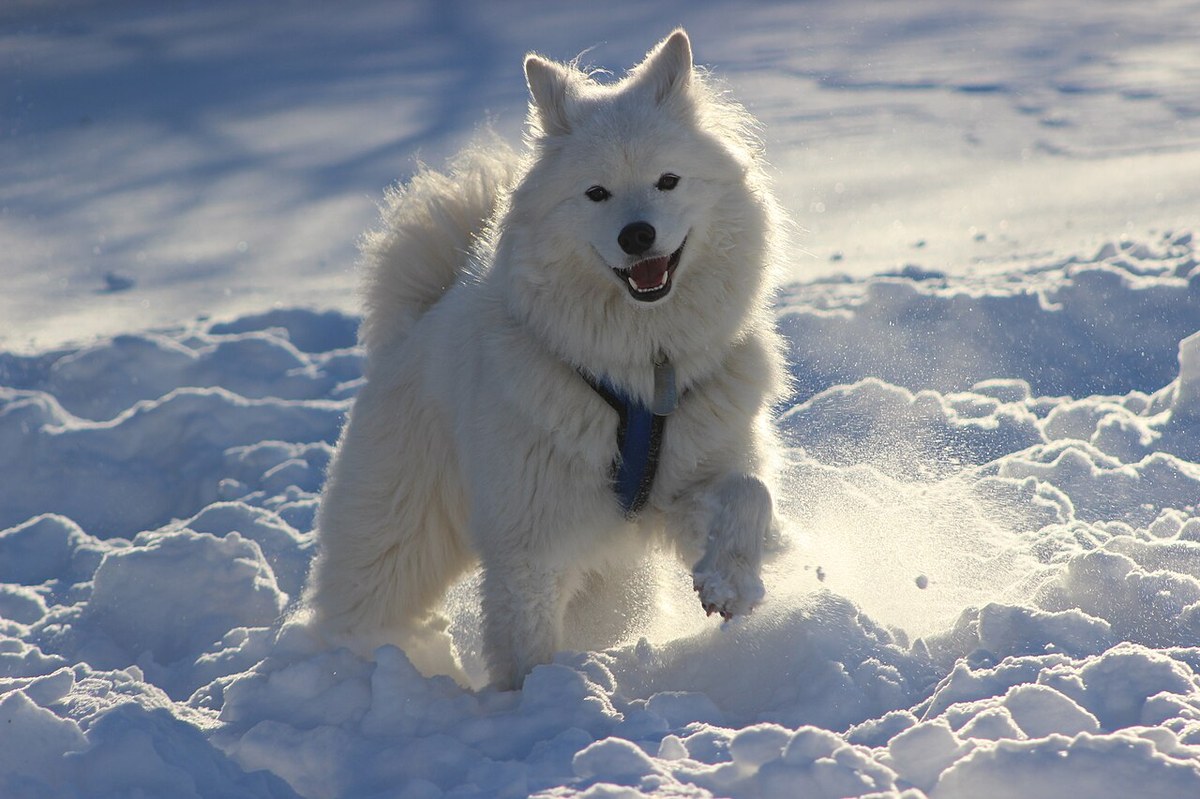
Lulu the Samoyed in Central Park snow (modern photograph). Cold weather is where the coat makes sense.
Siberia → reindeer camps and sledges
A dog that lived and worked beside people
The breed takes its name from the Samoyedic peoples of northern Siberia. Public breed histories describe dogs that helped herd reindeer, pulled sledges, and lived close to the family rather than in a kennel far away.
That close-contact history is the part pet homes underestimate. A dog selected to be with its people all day does not do well as a back-garden dog left alone for ten hours. Company and a job are the baseline.
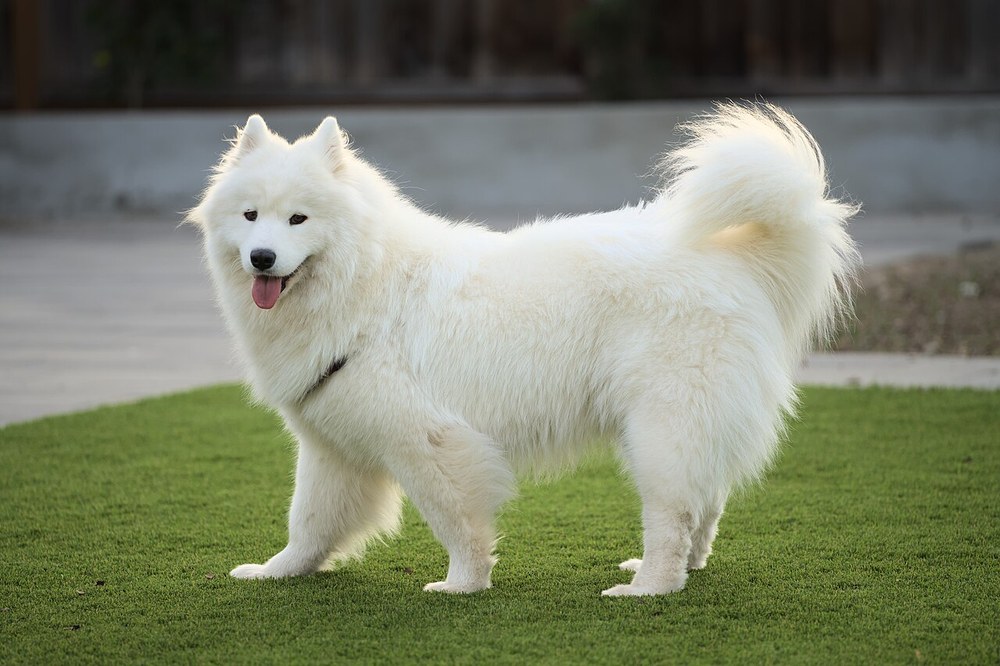
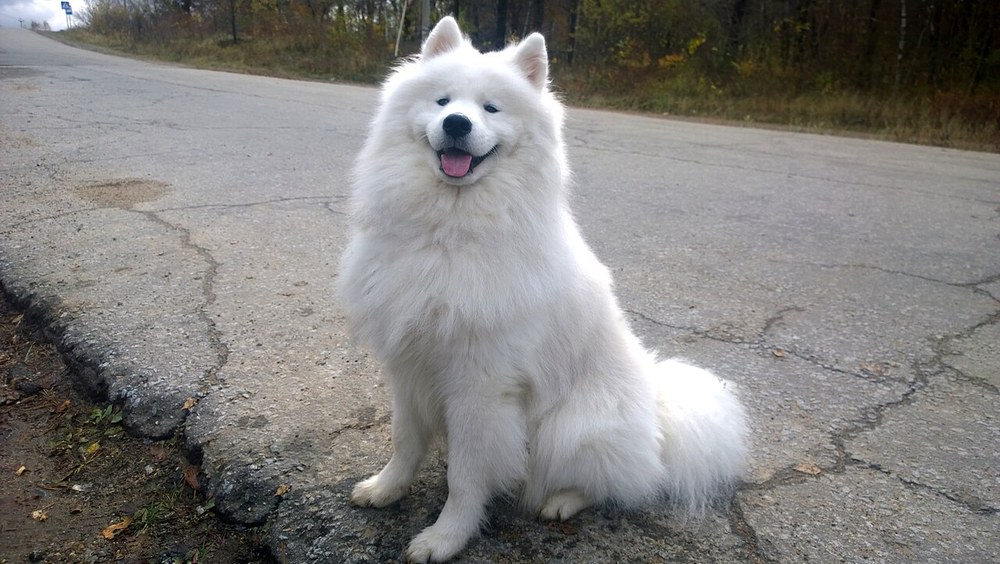
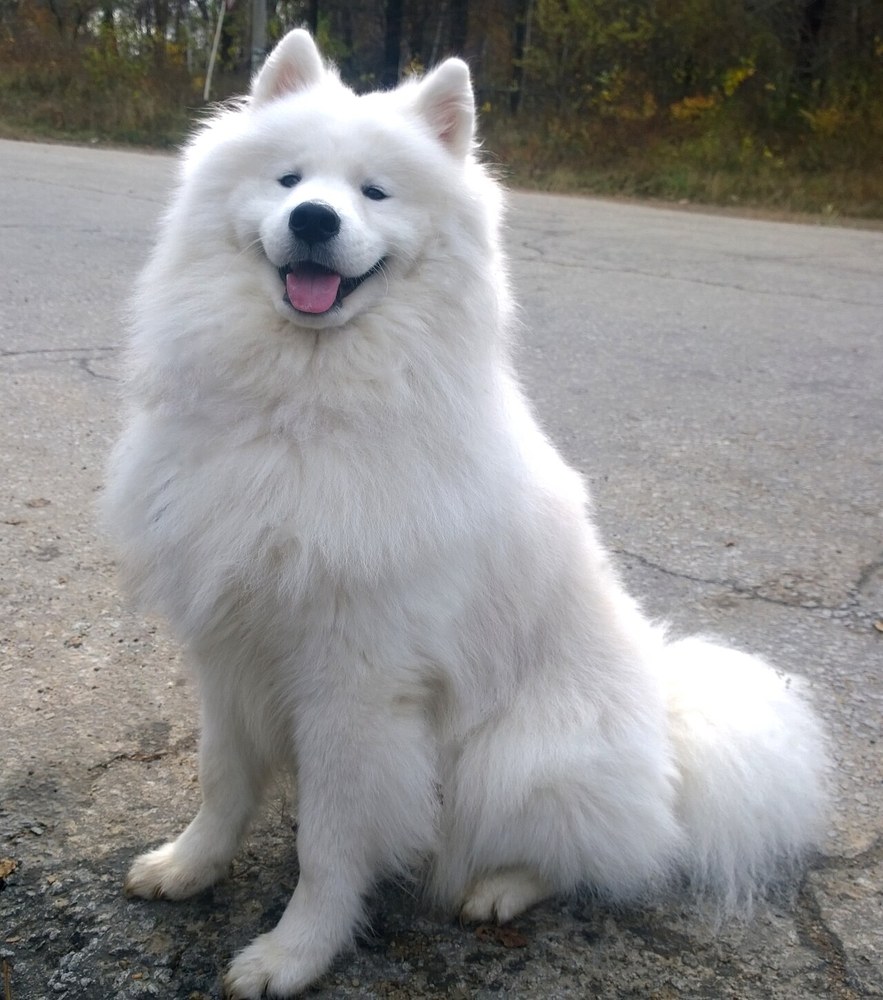
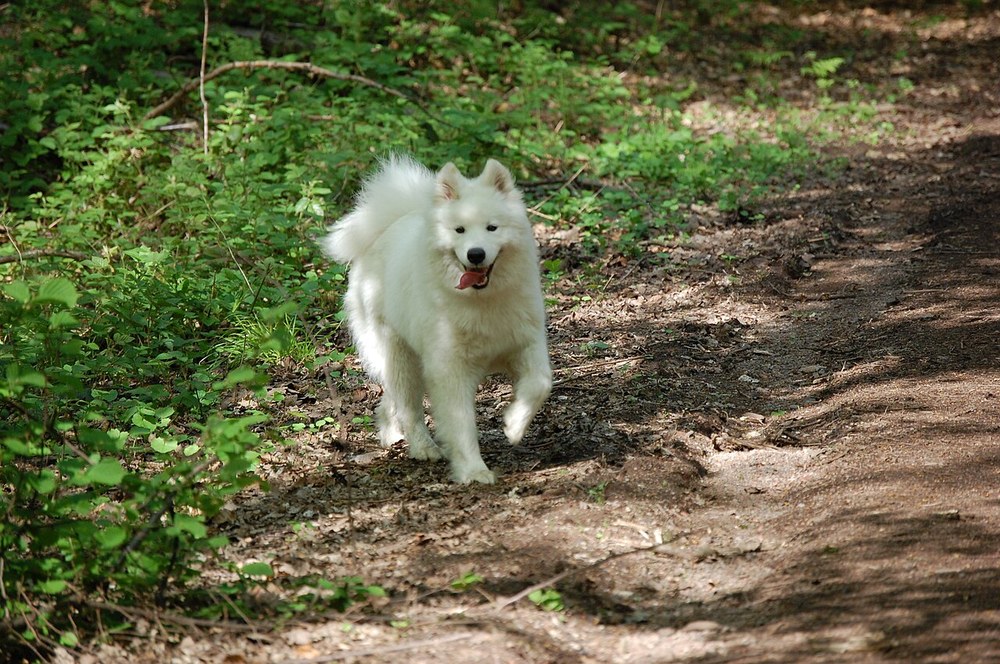
A two-year-old Samoyed female (modern photograph). The same smiling outline once pulled sledges in the Arctic.
Polar expeditions → British kennels → show ring
From expedition teams to a white show dog
Public breed lore records Samoyed-type dogs reaching Britain in the late nineteenth century and dogs of this type being used on early polar expeditions. Kennel-club breeding then fixed the white or cream coat and the upturned mouth people call the “Sammy smile”.
The smile sells puppies. It does not cancel the working spitz underneath: stamina, a strong voice, a love of digging, and a dog that will pull hard on a lead unless pulling is taught as a separate job.
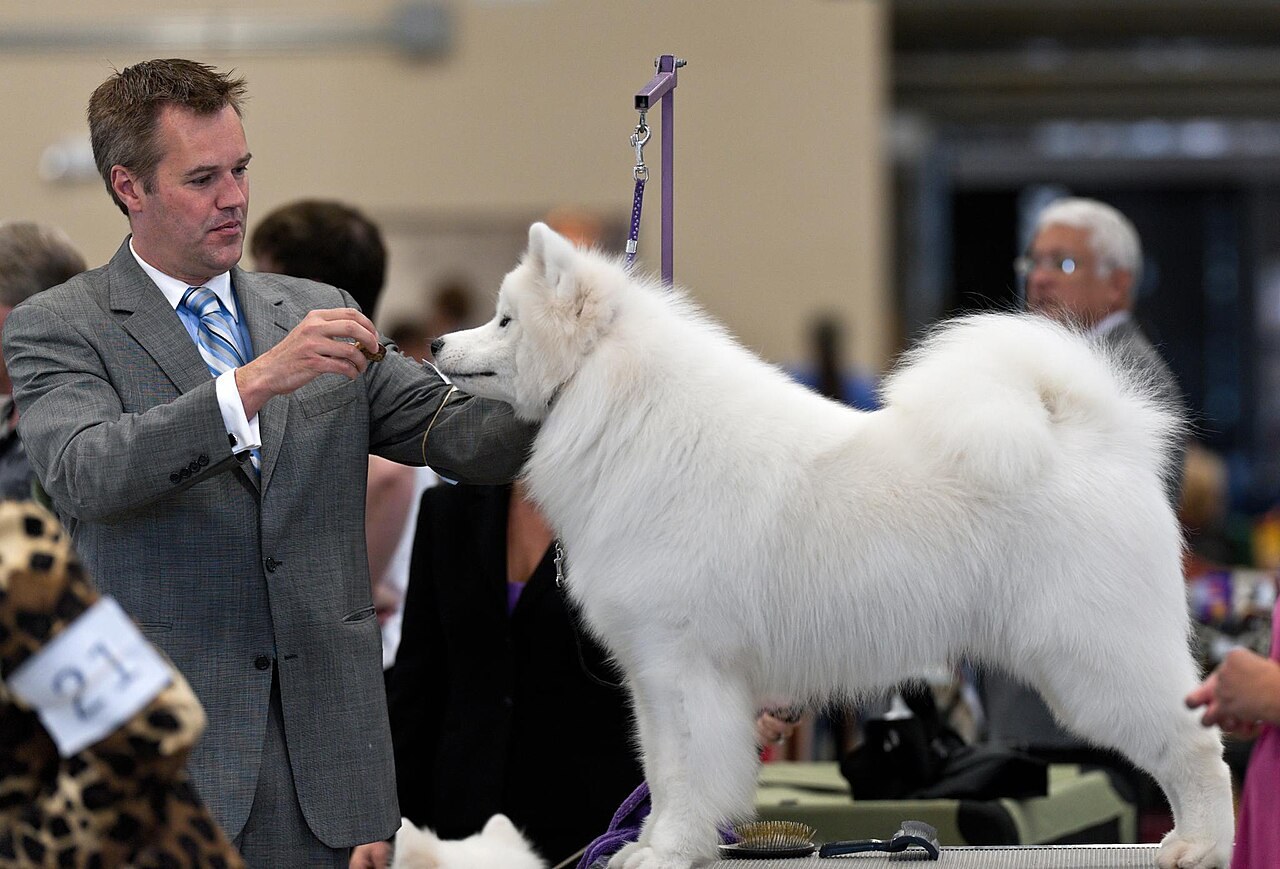
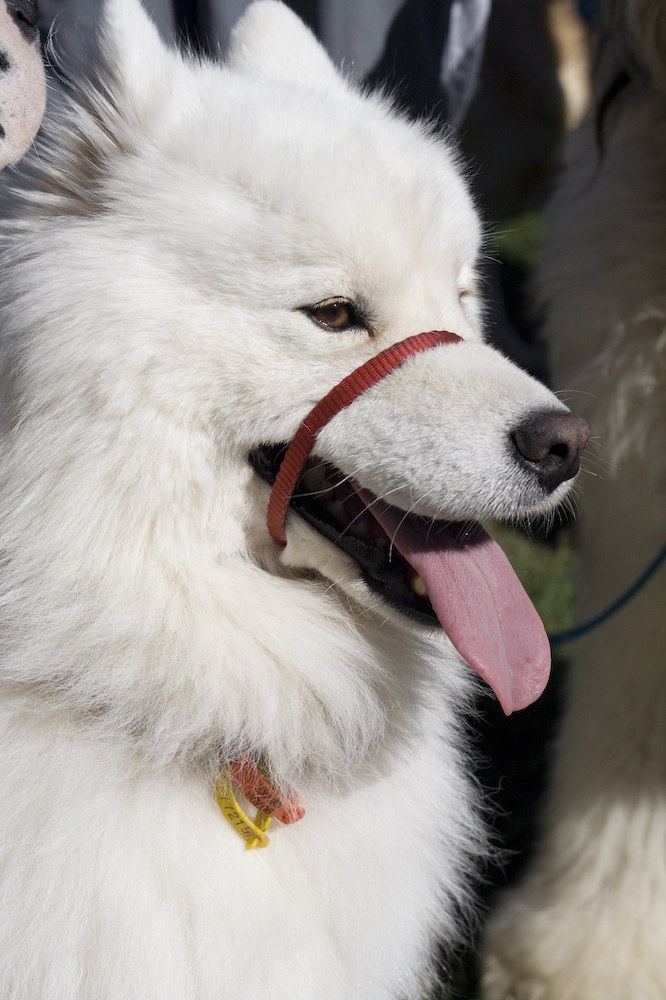
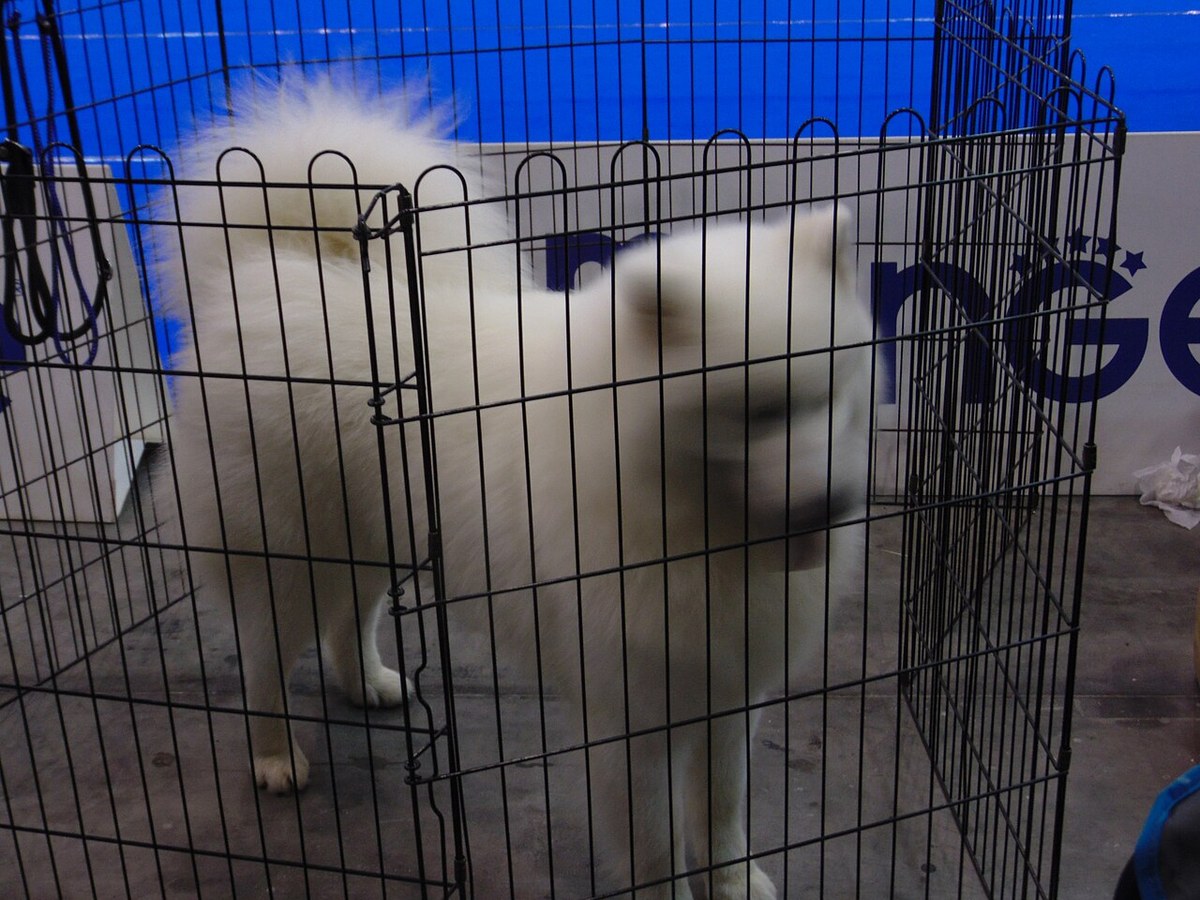
Samoyed at a dog show in Katowice, Poland (modern photograph). Show coat, same working frame.
What the breed was bred for
Endurance, friendliness, and a voice that comments on everything
In plain trainer language: the type was selected for stamina in cold, cooperation with people, and sociability. That is why a Samoyed with company and outlets is a cheerful partner — and why a bored, isolated one barks, digs, and redesigns the garden.
Friendly is not the same as trained. Many Samoyeds greet by jumping, pull on the lead, and wander off after interesting things. Reward the calm greeting, teach loose-lead walking separately from any pulling sport, and keep a long line until recall is real.
Company is a requirement, not a bonus
Pulling is a job you can give — on a harness, not on the walk lead
A day is company, a real outlet, and a grooming habit that never takes a season off
In a city the Samoyed’s working past shows up as mileage, voice, and a strong need to be with people. The commonest complaints are pulling, jumping on guests, barking when left, and holes in the lawn. All of them shrink when the dog has company, exercise, and a taught off-switch.
Morning · first outing
Steady mileage before anyone asks for calm
A young Samoyed usually wants to move. A brisk walk with time to sniff takes the edge off before the household starts its day. In warm weather, move the walk to the coolest hour.
Many Samoyeds are friendly with strangers and dogs, which makes them follow every interesting thing on the horizon. A long line keeps the walk safe while recall is built with food and repetition.
Digging cool holes and commenting loudly on the street are normal for the type. A sandpit or a dig spot, plus supervision, beats a fight over the flowerbeds. Do not leave the dog barking in the garden alone.
A Samoyed that jumps on every visitor is being rewarded by attention. Teach a sit or a place for greetings, and hold the dog back until it can offer it. Guests should greet only the calm dog.
A dog bred to live beside people often struggles with long, sudden absences. Build alone time in small steps, give a chew and a quiet room, and plan help for long workdays.
What to watch monthly: the white double coat, weight, heat, and paws
General awareness only. I am not a veterinarian. Changes in appetite, coat, skin, movement, or energy are the early signals. For red flags, leave this page and open
when to call the vet.
Double coat and heavy shed
The Samoyed has a dense undercoat that sheds a lot, usually most during seasonal coat changes. Brush to the skin with a slicker and comb; mats hide close to the body. Shaving is not a cooling plan.
Heat and the cold-weather coat
This is a cold-climate dog. In summer walk early or late, keep shade and water available, and keep hard play short. Heavy panting that will not settle or weakness is an emergency.
Weight under the fluff
A thick coat hides a heavy dog. Feel the ribs, measure the ration, and use part of it for training. See body condition check at home.
Health screening (not a diagnosis)
Ask the breeder which health screenings the national breed club recommends and see the results for both parents. A breed page cannot diagnose your dog; your veterinarian can.
Paws, nails, and snow
Trim the fur between pads, check paws after salty or icy pavements, and keep nails short. See the nail trim ladder.
Toxins and scavenging
I do not publish toxin amounts. If the dog ate something dangerous, call a veterinarian or a poison-control line; the footer lists public numbers.
Lines and types
Working and show Samoyeds share the same needs
Some breeders focus on sled sports and working ability, others on the show ring and family companions. Coat, size, and energy vary a little. Company, grooming, and exercise needs are shared.
Working / sled-sport families
Often lighter and more driven to pull and run.
May need more daily exercise and a pulling outlet.
Still very social; isolation leads to barking and digging.
Ask what the parents do and how they behave at home.
Fits an active owner interested in harness sports, hiking, and cold-weather outings.
Show / companion families
Often heavier coat and a more relaxed pace.
Still needs daily exercise and real company.
Coat care is a weekly commitment year-round.
Meet the parents at rest, not only groomed for a show.
Fits a household that wants a friendly family dog and is ready for hair, noise, and regular grooming.
Socialization windows
What to introduce — and what not to overload — by age
AVSAB-aligned in spirit: short, clean exposures at a distance the puppy can still eat,
with hygiene while vaccines finish. See the
puppy socialization schedule.
2–4 months
Home life and gentle grooming
Introduce: family routines, short brushing sessions, paw handling, a crate or pen, calm visitors who greet a sitting puppy.
Do not overload: long periods alone, guests who reward jumping, hard play on slippery floors.
~6 months
The wider world, calmly
Introduce: busier streets at a distance, polite dog greetings, loose-lead practice, short alone-time sessions.
Do not overload: letting the puppy pull to every person, off-lead in open parks, hours alone in the garden.
~12 months
Adolescent energy and voice
Introduce: longer walks and gentle harness work for fitness, a quiet cue, a dig spot, regular brushing.
Do not overload: heavy pulling sports before maturity, ignoring barking until it is a habit, skipping grooming during a shed.
~18 months
Adult routines
Introduce: hiking, canicross or other sports with your vet’s approval, longer settles at home.
Do not overload: summer runs in the heat, letting recall slide, long workdays without help.
~24 months
Keep the basics fresh
Introduce: refreshed greeting, recall, and alone-time skills; new activities with company.
Do not overload: assuming a friendly dog needs no training, missing mats under the coat.
Before you buy
Who a Samoyed usually fits
A Samoyed fits sociable, active households that want a cheerful, talkative companion and do not mind a lot of brushing and a lot of hair.
Good match
More likely a good fit if you…
Want a friendly dog that enjoys people and usually gets on with other dogs
Can offer daily exercise and a job — hiking, harness work, herding games or tricks
Are home a lot or can arrange company; Samoyeds dislike being left alone for long
Enjoy grooming or are prepared to pay for it
Can live with some barking and are willing to teach a quiet cue
Mismatch risk
A Samoyed may be a poor choice if…
You need a quiet dog for a thin-walled apartment
Long hours alone are part of the daily routine
White hair on dark clothes would bother you every day
You live in a hot climate with no cool indoor area
You want a guard dog — most Samoyeds greet strangers happily
If you are torn between breeds
Samoyed vs Siberian Husky and Golden Retriever
Samoyeds are often compared with Huskies for the looks and with Golden Retrievers for the friendly nature. Each has its own drawbacks.
Origins
Samoyed
Bred by the Samoyedic peoples of Siberia to herd reindeer, pull sleds and keep people warm.
Siberian Husky
Bred by the Chukchi people as a fast, light sled dog.
Closeness to owner
Samoyed
Usually stays closer and is easier to motivate than a Husky.
Golden Retriever
Even more owner-focused and eager to work for you.
Voice
Samoyed
Often barks and ‘talks’, especially when bored.
Siberian Husky
Howls more than it barks; still noisy when bored.
Coat
Samoyed
Thick white double coat that needs regular brushing and sheds heavily.
Golden Retriever
Sheds too, but the coat is easier to maintain.
Recall and roaming
Samoyed
Can wander after interesting things; recall needs plenty of practice.
Both compares
Huskies are more likely to run off; Goldens are usually the easiest of the three off lead.
Ownership without surprises
Where a Samoyed owner’s budget goes
Prices depend on where you live and the breeder you choose. These are the cost areas to plan for, not exact quotes.
Company and exercise
Time is the main cost. A Samoyed needs daily exercise and does not cope well with long hours alone.
Grooming
Good brushes, a dryer and regular professional grooming if you cannot do the work yourself.
Food
Medium to large active dog; measure meals and keep it lean under the fluffy coat.
Veterinary care
Routine care, vaccinations and parasite control. Ask the breeder which health screenings the national breed club recommends.
Training
A puppy class and possibly help with barking, recall or alone-time problems.
Home and garden
Secure fencing and cooling options in summer: shade, fans or air conditioning.
With a Samoyed, grooming and company are the costs owners underestimate most.
Before day one at home
What to prepare for a Samoyed puppy
A Samoyed puppy is sociable, playful and vocal. Teach it to be alone, to accept brushing and to stay quiet when asked while it is still a puppy.
01
Practise brushing every day
Short, positive sessions with a soft brush and treats. The coat gets much thicker as the puppy grows. See puppy handling.
02
Teach alone time in small steps
Start with a few minutes while the puppy is tired and build slowly. See first absences.
03
Plan toilet trips
Go out after sleep, meals and play. Clean accidents without fuss. Follow potty training.
04
Reward quiet
Mark and reward silence after a bark rather than shouting. See barking at the door.
05
Guide the herding instinct
Some puppies chase and nip at running children. Redirect to toys and supervise play. See biting and nipping.
06
Protect sleep
Puppies need a lot of rest. Use a crate or pen in a quiet room and enforced naps after busy times.
If the dog is already yours
Training is play, clear rewards and a job for a busy mind
Samoyeds are clever and sociable but can be independent. Short, varied sessions with play and food keep them interested; repetitive drilling bores them quickly.
Many problems — barking, digging, chewing — come from boredom or being alone too long. Daily exercise, training games and company prevent most of them.
Teach recall from the start and practise it often, but use a long line in unfenced areas until it is reliable.
Load balance
Active days, but keep the heat in mind
Samoyeds enjoy activity, but the thick coat makes them vulnerable to overheating. Exercise in the cool hours and stop if the dog pants heavily or slows down.
Walk or hikeTraining gamesHarness or herding playChewRest in the cool
Walks, hiking, harness sports, herding games, tricks and food puzzles are good options. Long periods alone or in a garden without company are not.
A Samoyed that has had exercise, training and company is usually happy to relax at home.
Barking, alerting and the quiet cue
How to teach a Samoyed to be quiet on cue
Start practising with small triggers, like a soft knock, before trying it with the real doorbell or passing dogs.
01
Pick a small trigger
Start with a quiet knock or a recording of the doorbell at low volume.
02
Wait for a pause
Let the dog bark once or twice, then wait for a moment of quiet.
03
Mark and reward the silence
Say ‘quiet’ as the dog stops, mark and reward. Repeat many times before making the trigger stronger.
04
Redirect to a mat
Once quiet is understood, send the dog to its mat after the first bark and reward calm.
05
Block the view
Use window film, closed curtains or a gate so the dog cannot practise barking all day.
One scene close-up
Why your Samoyed barks when you leave the room
Samoyeds were bred to live closely with people. Barking when left alone is often a sign that being alone has not been taught yet, not stubbornness.
Practise short departures and come back while the dog is still calm. Give a chew or food puzzle as you leave and keep returns low-key.
If the dog panics, damages doors or cannot settle even for short periods, talk to a qualified behaviour professional about separation-related problems.
“With a Samoyed, I do not fight the herding and pulling instincts — I give them a job. We use harness work, a long line for recall, a quiet cue for the talkative voice and a solid routine for the coat — because a friendly, busy dog gets into trouble when bored.”
Sessions cover real scenes: barking and talking, alone time, recall on a long line, grooming, and rest in warm weather. I am a trainer, not a veterinarian. No invented reviews.
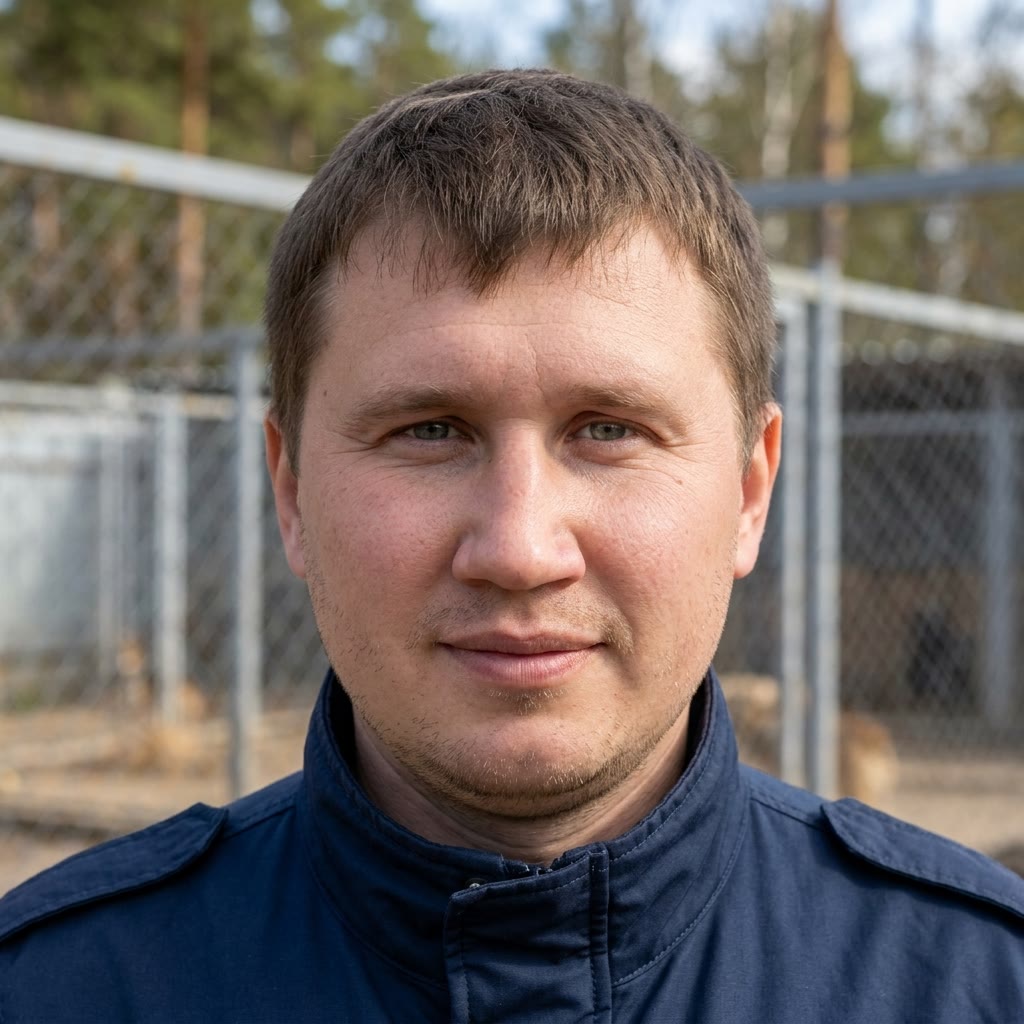
Andrew DarovProfessional dog trainer and instructor
Describe age, living setup, and where the dog breaks first — barking and howling, pulling, coat care, or settling after exercise. Opens WhatsApp to Andrew.
A playful, bouncy German working dog that loves people and needs daily exercise, calm greetings and a settle routine.
Need a read on your exact situation?
Describe your Samoyed’s age and the scene that repeats most: barking and howling, pulling, coat care, or settling after exercise. We check safety first, then pick the first skill.
Written by Andrew Darov, professional dog trainer. Not veterinary advice and not a diagnosis.
Not a kennel club. No invented reviews. No vaccine schedules or toxin doses. Photo credits in
/images/breeds/samoyed-guide/credits.md.