Polish Tatra Sheepdog: temperament, barking, space and training a mountain flock guardian
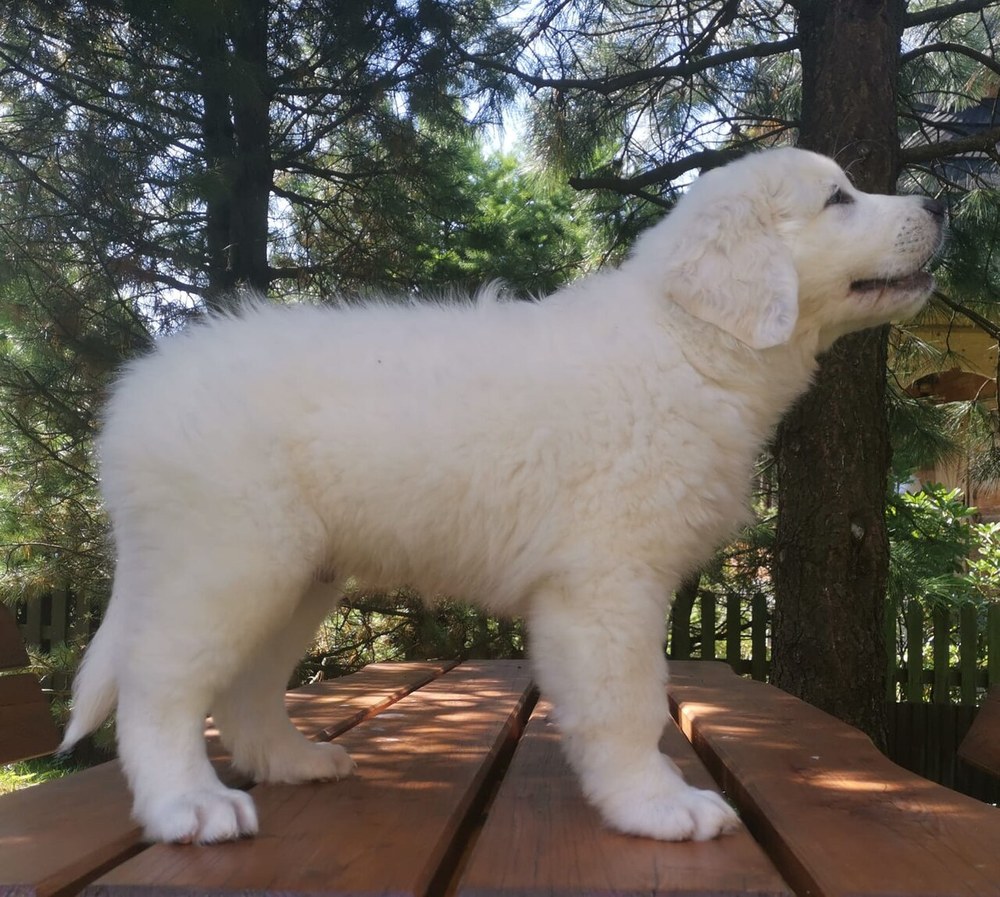
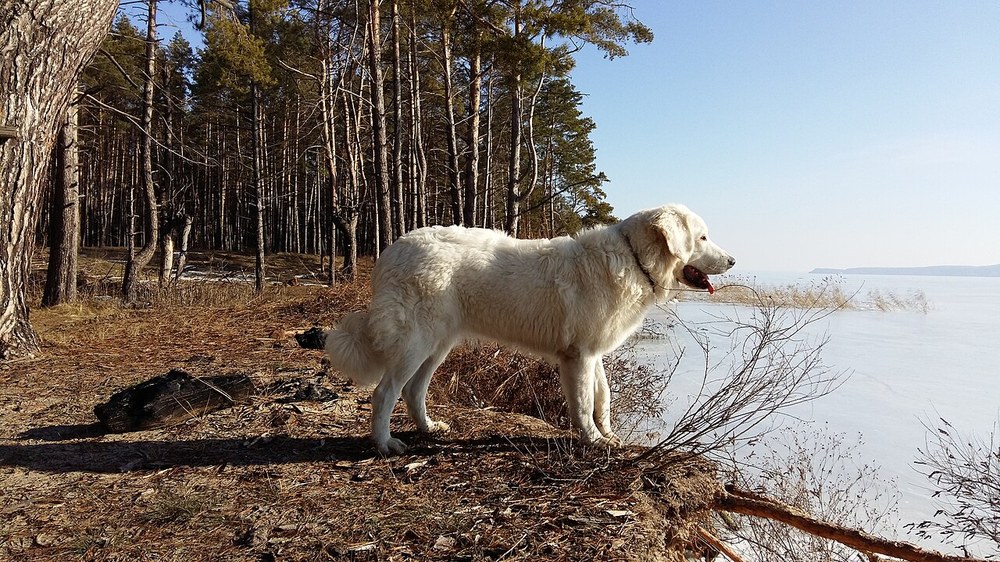
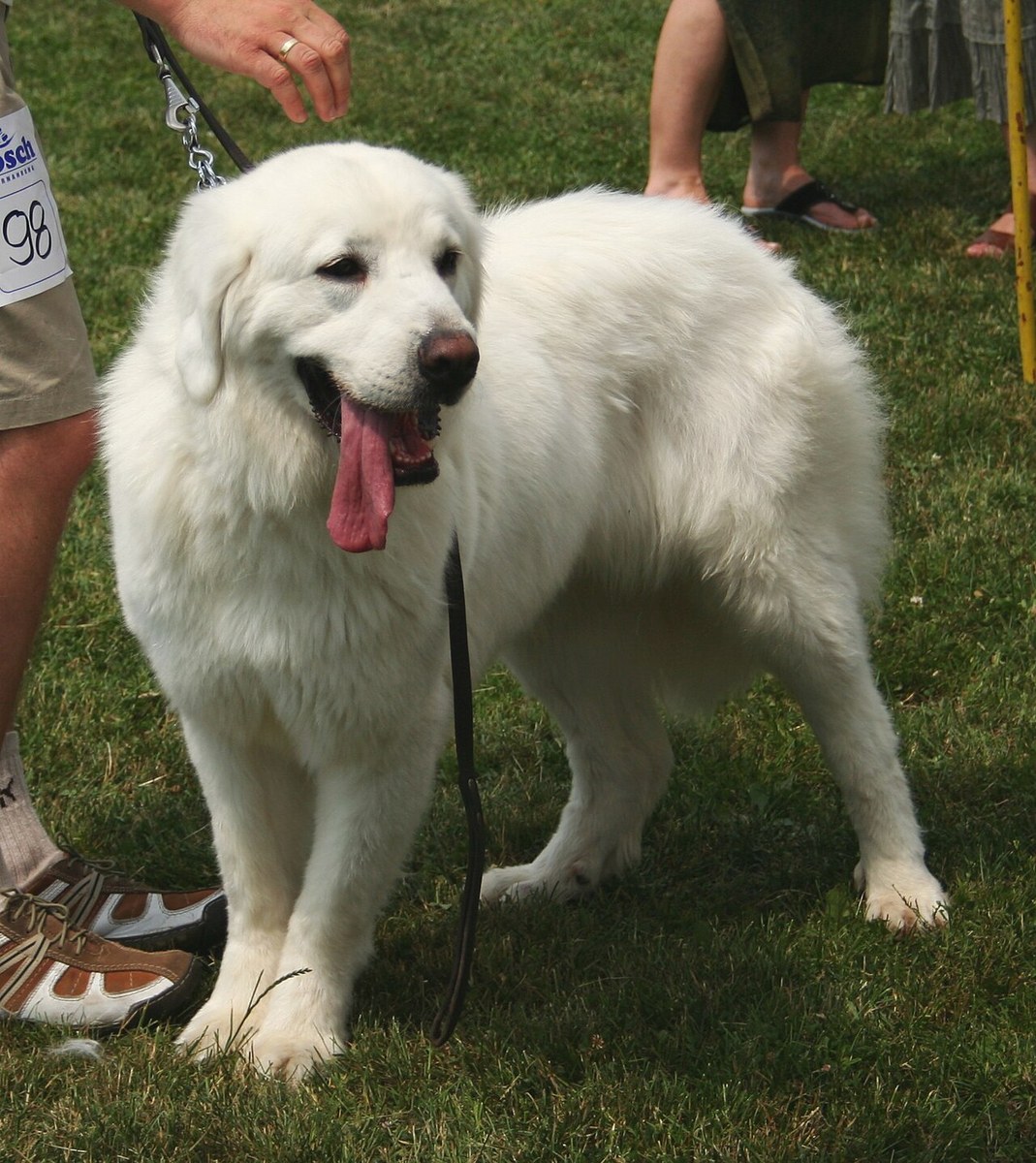
The Polish Tatra Sheepdog, known in Poland as the Owczarek Podhalański, is a big white flock guardian from the Tatra Mountains. For centuries it lived with highland shepherds and their sheep on the summer pastures, keeping wolves and bears away. At home it is usually calm, gentle and patient with its own family. It is also independent, slow to grow up, watchful at night and quick to bark at anything that moves near its land. It needs a secure garden, real space, early social time and an owner who accepts that it thinks for itself.
Job: A large white livestock guardian from the Podhale region of southern Poland; FCI Group 1 (FCI 252, Tatra Shepherd Dog). Not recognised by the AKC.
Energy: Calm and gentle with its family, reserved with strangers, protective of its home and animals.
Home: Suits a rural or suburban home with a large, well-fenced garden and an owner who is fine with night barking and a dog that makes its own decisions.
Most Tatra owners describe a dog that spends the day lying in the garden looking half asleep. Then a fox crosses the field or a stranger stops at the gate, and the big white dog is up and barking in a deep voice before anyone else has noticed.
The calls I get are rarely about a wild dog. They are about a young male that will not come back in from the garden at night, barks at neighbours walking past, pulls hard toward other dogs at fourteen months and fifty kilos, or growls when a visitor walks straight into the yard.
What helps is accepting what the dog was bred for and planning around it. A tall, solid fence, a calm routine for guests, loose-lead walking taught before the dog is heavy, lots of quiet time outside with the family and kind, steady training. With that, a Tatra is a peaceful, loyal and very gentle companion.
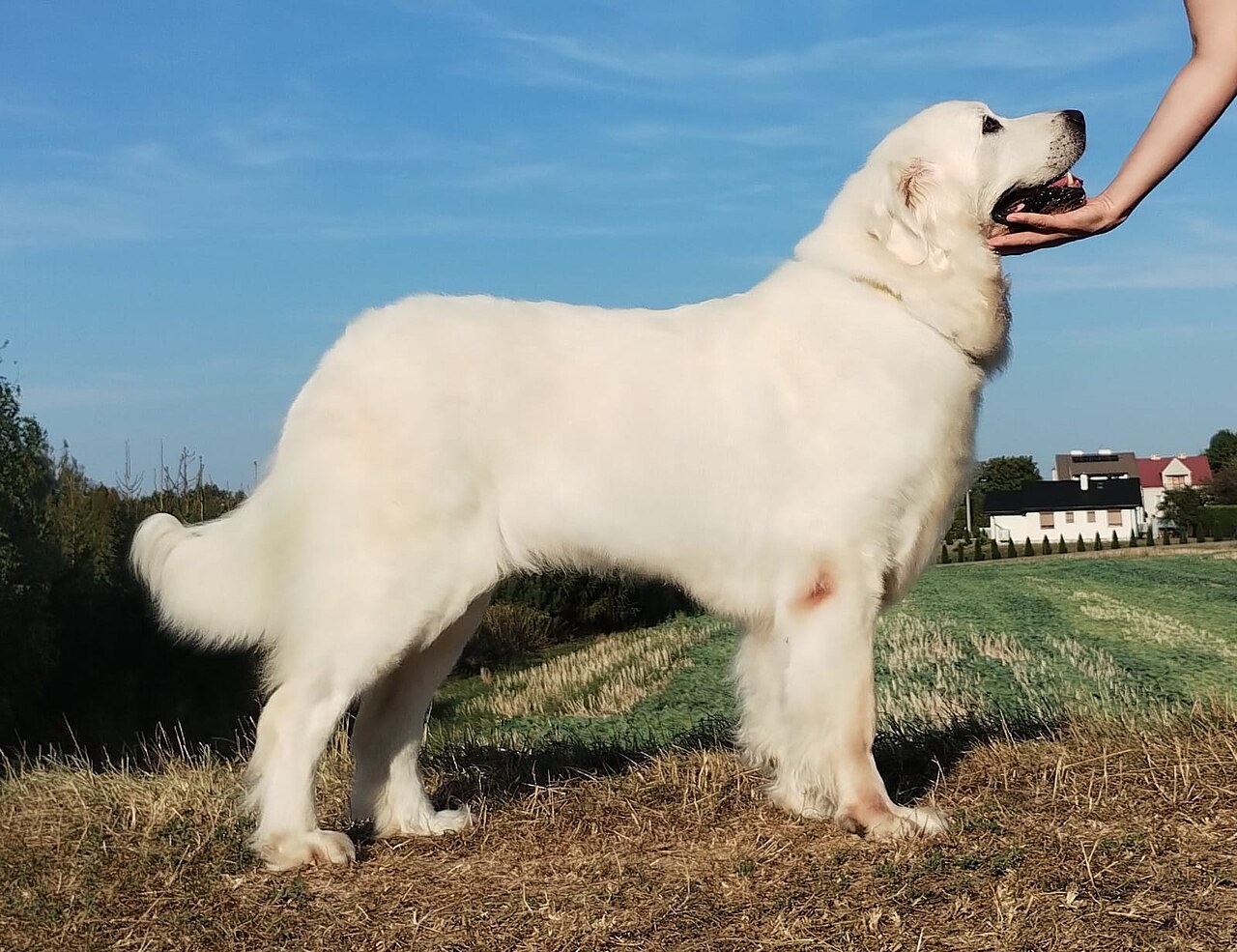
FCI: males 65–70 cm, females 60–65 cm at the shoulder
Weight
Usually about 35–60 kg (77–130 lb)
Energy
Moderate
Coat / shed
Thick, heavy double coat, straight or slightly wavy, with a dense undercoat and a mane on the neck; always white, sometimes with a cream tinge. Sheds heavily, especially in spring and autumn
Job
Flock guardian of the Podhale highlanders, living with sheep on the summer mountain pastures and keeping wolves and bears away
Temperament in one minute
Polish Tatra Sheepdog temperament: what they are like at home
Short answer: Polish Tatra Sheepdogs are large white flock guardians from the Tatra Mountains. They are calm, patient and gentle with their family, reserved with strangers, protective of their home and often loud at night. They need a big, well-fenced garden, about an hour and a half of slow walks and outdoor time a day, early social time, lead manners taught young and patient, food-based training.
Are Tatras affectionate?
Yes, in a calm way, with their own family. Teach short absences early.
Gentle with family kids; supervise because of size. See children and guests.
Tatra behavior problems to expect
The common four are night barking, tension with visitors, pulling on the lead and fence running. The list below links a guide for each.
Living with a Tatra in an apartment
A poor fit; this breed needs a large, secure garden.
Breed history
From the Tatra pastures to family homes
Living out with the sheep in the mountains shaped the calm, the independence and the watchful nights.
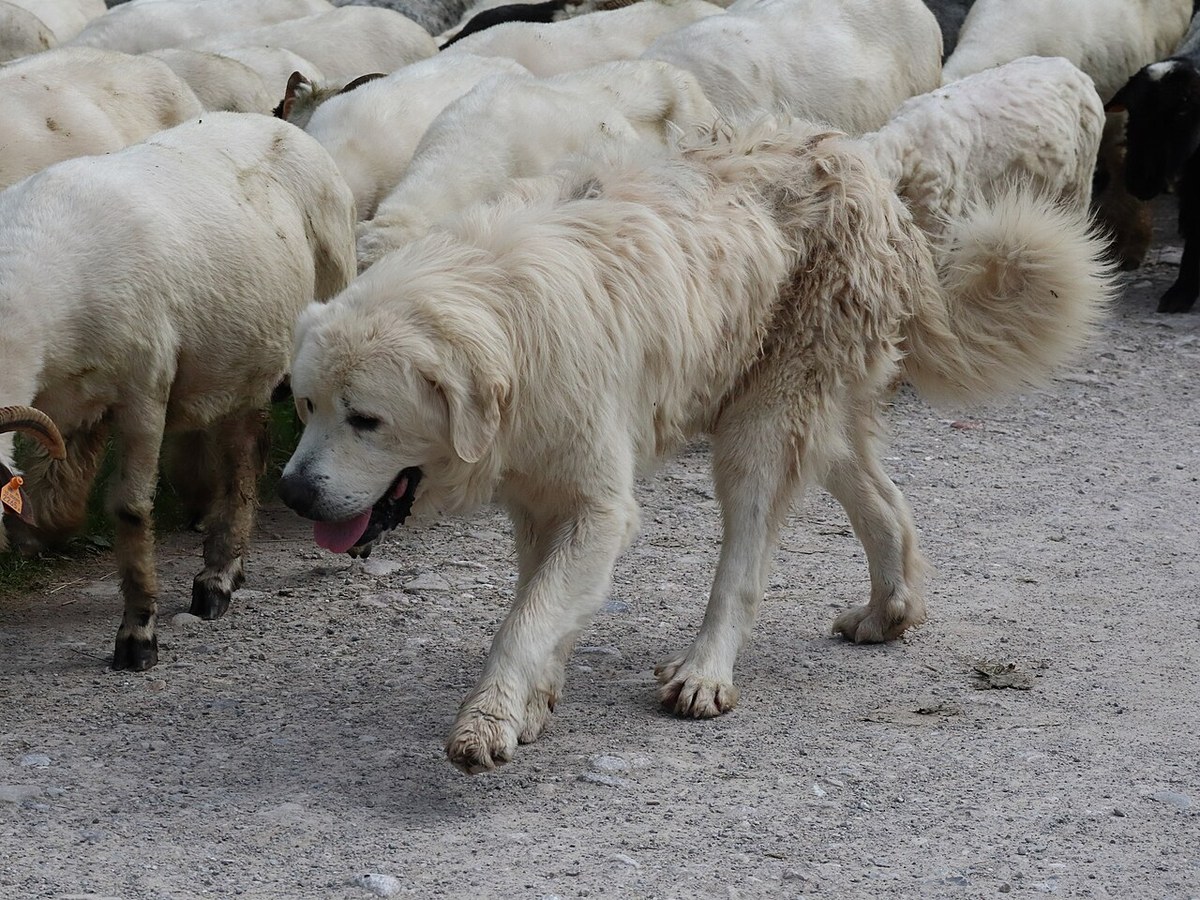
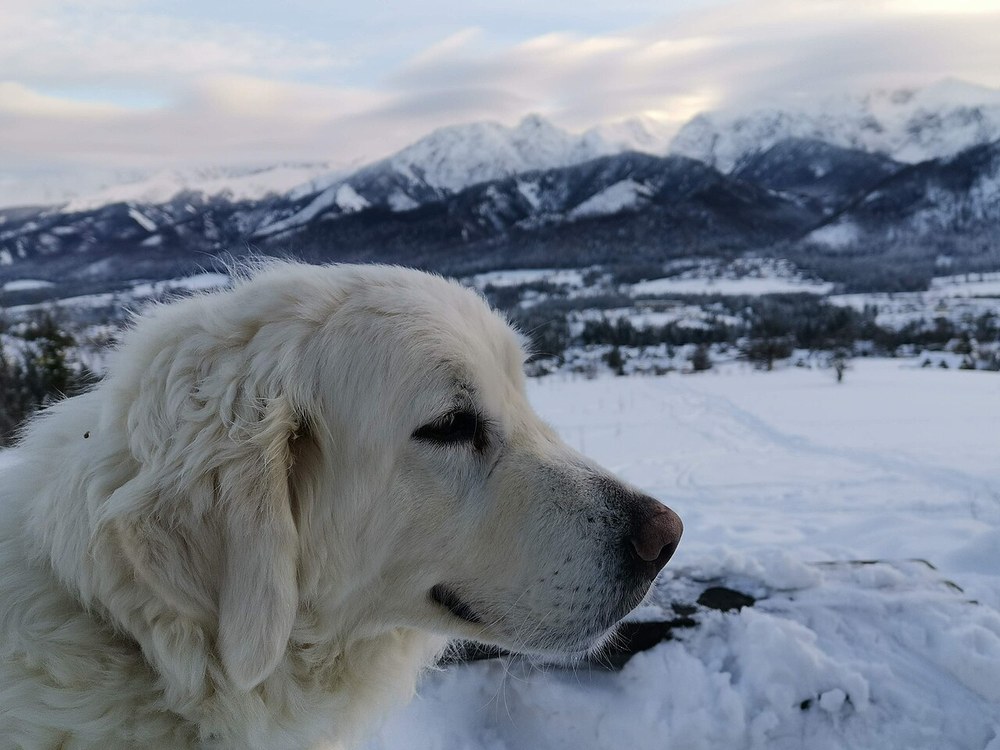
A Tatra moving with a flock in the Kościeliska Valley in the Tatras, where sheep are still grazed in summer.
Podhale · before 1930
Dogs of the highland shepherds
The breed grew up with the górale, the highland people of the Podhale region at the foot of the Tatra Mountains in southern Poland. Each summer, shepherds took their flocks up to the high pastures and lived there with them in wooden huts.
Large white dogs stayed with the sheep day and night. They did not herd them; they lay among them, watched, and barked and stood their ground when a wolf or bear came close. Like the Kuvasz and other white flock guardians, the type is thought to go back to dogs that came with herding peoples from the east.
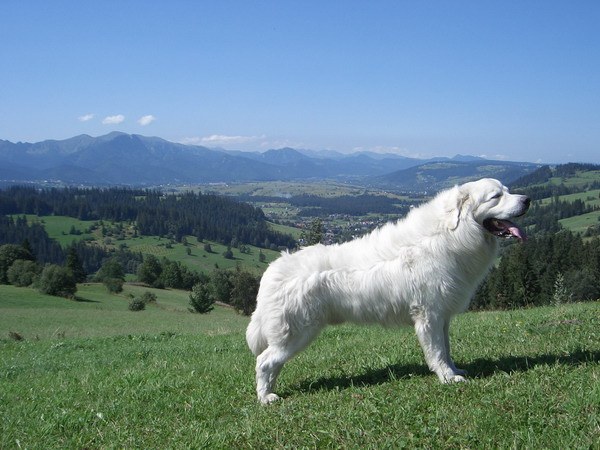
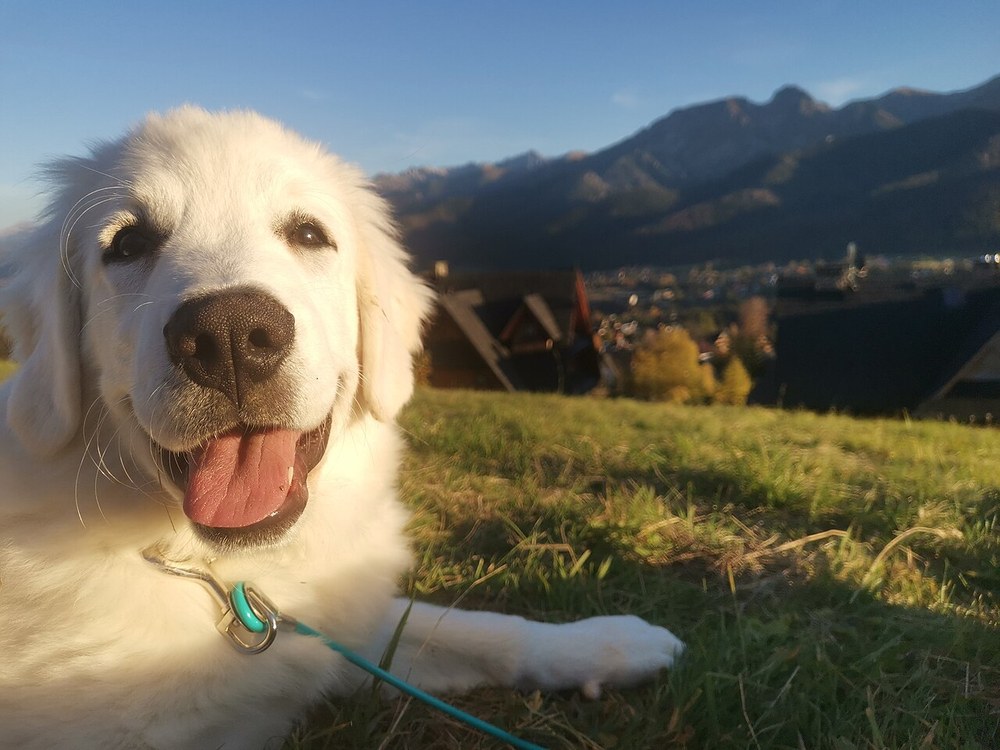
A Tatra on a high meadow above the valleys of southern Poland: the kind of country the breed comes from.
From 1937
Saved by isolation
The first show for these dogs was held in 1937. The war hit the breed hard, but because many dogs lived in remote mountain areas, some survived; by 1954 about 120 were found. Polish breeders rebuilt it from them, and the FCI recognised it in the 1960s.
The stud book is still open, so typical dogs without papers can be added. Most of the dogs are in Poland, with a few hundred puppies born there each year and small groups elsewhere in Europe and North America.
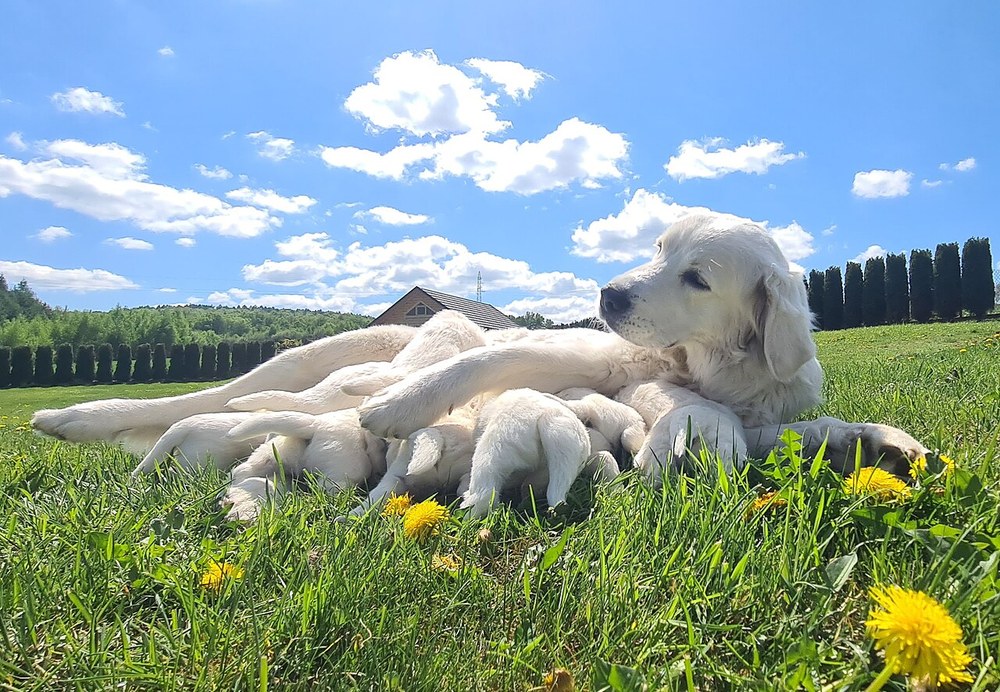
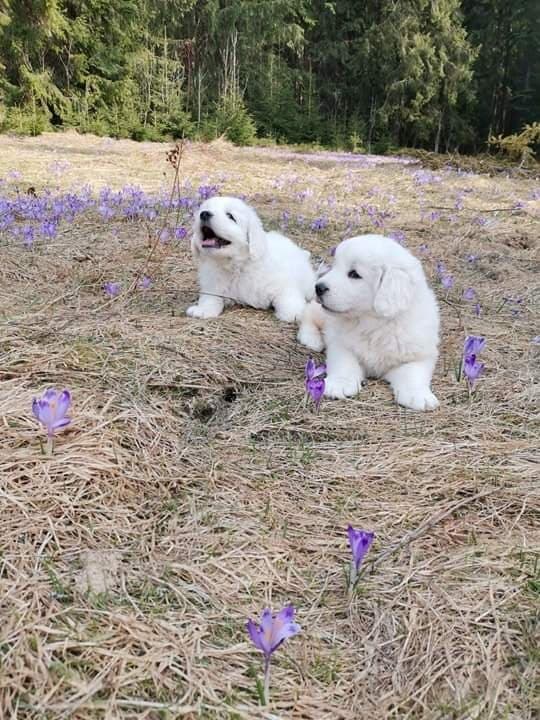
A Tatra mother feeding her litter on spring grass: puppies of this breed grow very fast.
What the breed was bred for
Gentle at home, serious at the gate
A well-raised Tatra is calm, patient and affectionate with its family, including children it grows up with, and usually gets along with other pets in its home.
It is also reserved with strangers, protective of its land, independent and loud at night. It was bred to decide for itself on the mountain, so it does not obey like a retriever, and it does not need to be taught to guard.
A good Tatra day is slow walks, outdoor time and a calm evening with the family
Most adult Tatras need around an hour and a half of activity a day: one or two steady walks with lots of sniffing and plenty of calm time outside in a secure garden. They are not built for running or ball games, but they love being out with their people.
Morning · the walk
Steady pace, lots of sniffing
A long, slow walk on a harness and long lead suits this breed far better than a jog. Let the dog stop, smell and look around; for a guardian, checking the area is the exercise.
Tatras love being outside, but they want company there. Sit in the garden together, work in the yard, go for a picnic. Being left out alone all day often leads to barking and fence trouble.
Take the puppy out to see calm people, other animals, cars and new places from the first weeks. A guardian that met lots of ordinary life as a puppy is far easier to live with as an adult.
Put the dog on a lead or behind a gate before guests arrive, then walk them in together and let the dog watch. Never let visitors walk into the garden on their own.
Night is when a guardian works hardest. Bringing the dog inside to sleep, with the curtains closed, keeps the barking down and the neighbours friendly.
General awareness only. I am not a veterinarian. Tatra owners most often notice huge coat drops, matting behind the ears and on the trousers, heat stress in summer, fast growth in puppies, sore joints after too much exercise and a big dog that gains weight easily. For red flags, leave this page and open
when to call the vet.
Coat drops
Brush weekly and every day when the undercoat comes out. Do not shave the coat short.
Hot days
Walk early and late in summer; give shade, water and a cool floor to lie on.
Growing joints
Keep puppy exercise gentle and avoid stairs, jumping and long runs. See walk length by age.
Parent checks
Ask which hip, elbow and other checks the national breed club recommends for both parents, and see the paperwork.
Handling
Practise feet, ears and teeth with food while the dog is small. See nail trim ladder.
Pick a breeder who raises steady puppies used to people and normal life
No bloodline selling. Ask to meet the mother and, if possible, the father, ask how both parents behave with visitors and other dogs, look at the club-recommended hip and elbow checks and ask what the puppies have already seen, from cars to children.
Working flock lines
Closer to the mountain guardian.
Often more serious with strangers.
Often more night barking.
Best with livestock or a lot of land.
Suits farms and smallholders who keep sheep, goats or poultry.
Family and show lines
Often raised in the house.
Usually easier with visitors.
Still independent and watchful.
Same need for a fence and space.
Suits rural or suburban families with a large, secure garden.
Socialization windows
What to introduce — and what not to overload — by age
AVSAB-aligned in spirit: short, clean exposures at a distance the puppy can still eat,
with hygiene while vaccines finish. See the
puppy socialization schedule.
2–4 months
First weeks
Introduce: food-rewarded handling, a harness, a toilet routine, calm outings to see people, cars and other animals, guests who sit and let the puppy come over, a few minutes alone.
Do not overload: long walks, stairs and jumping out of the car.
~5–8 months
Fast growth
Introduce: loose-lead walking, a name check-in, calm meetings with other dogs, a vet-handling routine.
Do not overload: rough wrestling games that teach the dog to use its weight on people.
~9–24 months
Teenage test
Introduce: a guest routine, more time outside with you, steady lead work, calm car trips.
Do not overload: letting it greet every visitor at the gate on its own terms.
~2–3 years
Growing up
Introduce: longer hikes, scent games, a settled night routine, an adult health check.
Do not overload: expecting puppy friendliness with strangers to last unchanged.
~3 years+
Steady routine
Introduce: daily walks, brushing, weight checks, regular vet visits.
Do not overload: dropping the guest routine because the dog seems calm.
Before you buy
Who a Polish Tatra Sheepdog usually fits
Fit comes down to space, a fence and patience with an independent mind.
Good match
More likely a good fit if you…
You have a large garden with a tall, solid fence
You live in the country or on the quiet edge of town
You are fine with barking at night and at passers-by
You want a calm, gentle family dog that likes the outdoors
You enjoy slow walks rather than runs
Mismatch risk
A Polish Tatra Sheepdog may be a poor choice if…
You live in a flat or a terraced house with close neighbours
You want a dog that obeys every cue straight away
You have many visitors who walk in without warning
You want a jogging or ball-game partner
You want a dog that never sheds
If you are torn between breeds
Polish Tatra Sheepdog vs Great Pyrenees and Kuvasz
All three are big white mountain flock guardians, calm at home and watchful at night. The Great Pyrenees is the best known, often heavier and may have grey or tan marks on the head. The Kuvasz is the Hungarian guardian, often more intense and more reserved with strangers. The Tatra sits between them: big and sturdy, usually gentle and easy-going with its family, and very loyal to its home.
Origin
Polish Tatra Sheepdog
Tatra Mountains, Poland.
Great Pyrenees
Pyrenees, France and Spain.
Coat
Polish Tatra Sheepdog
Always white, straight or slightly wavy.
Great Pyrenees
White, may have marks on the head.
Size
Polish Tatra Sheepdog
About 60–70 cm.
Kuvasz
About 66–76 cm.
With strangers
Polish Tatra Sheepdog
Reserved, usually calm.
Kuvasz
Often more wary.
Ownership without surprises
Where a Polish Tatra Sheepdog owner’s budget goes
Costs vary a lot by country, so use these as headings for your budget rather than fixed prices.
Veterinary
A yearly check-up, the vaccines your own vet recommends and any breed club health checks; big-dog medicine costs more.
Fencing
A tall, solid fence with no gaps and a gate that latches; this matters more than any gear.
Food
A large dog eats a lot; budget for good food and the right amount for a slow-growing puppy.
Gear
A strong harness, a long lead, a large crate, a big bed and an undercoat rake.
Finding a puppy
Most breeders are in Poland: expect travel or import costs outside Europe.
A good fence costs less than one escape onto a road or into a neighbour's field.
Before day one at home
What to prepare for a Polish Tatra Sheepdog puppy
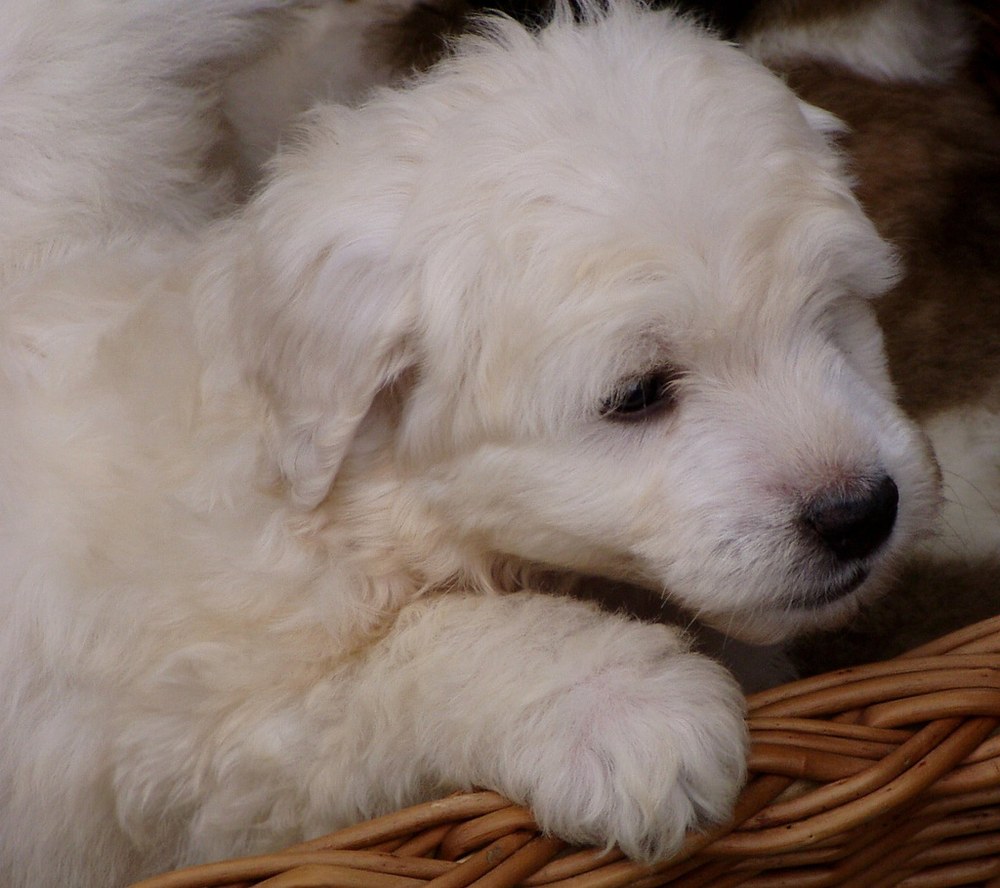
A Tatra puppy is a soft white bear cub that grows very fast. Plan food-rewarded handling, calm trips to meet ordinary life, gentle exercise, guests who let the puppy come to them and a few minutes alone from the first week, and start lead manners while it is light.
Training a Tatra works best with patience, food and a calm, steady routine
Most problems with this breed get smaller once five habits are in place: loose-lead walking taught early, kind handling, a guest routine, a name check-in and a night routine indoors.
Tatras learn well, but they ask why. They will do a sit for food, then decide a sound by the fence matters more. Short sessions, good rewards and calm repetition work; harsh handling makes them stubborn or wary.
Do not try to make this dog a guard dog, and do not punish it for barking at real news. Your job is to show it which things are normal, so it saves its voice for what matters.
Load balance
Big body, slow build-up
Large puppies should not run long distances, go up and down stairs a lot or jump from the car while they grow, which can take two years. Build up slowly and see a vet about any limp.
Sniff walkGarden time with youShort lessonCalm guestsRest
For this breed, a slow walk plus calm time outside with the family often settles the dog better than a longer hike.
A Tatra that gets space, company and a steady routine is usually a quiet, gentle giant at home.
Lead manners and guests
How to keep a big Tatra easy to handle
Teach loose-lead walking while the dog is small, use a strong harness, reward every check-in, bring guests in with you rather than letting them walk in, and keep greetings calm and short.
01
Lead work early
Loose lead before the dog is heavy.
02
Strong harness
Fitted well, checked often.
03
Check-in reward
A treat for each look back.
04
Guests with you
No one walks in alone.
05
Calm greeting
Short, with the dog on lead.
One scene close-up
Why a Tatra takes charge at the gate
This dog was bred to decide on its own whether something near the flock was a danger. A stranger walking into its yard is exactly the kind of thing it was kept to deal with.
Manage first: a solid, locked gate, a clear rule that guests come in with you, and the dog on a lead or behind a gate until it settles. Then build calm greetings step by step with treats, starting with friends the dog already knows.
A dog that growls at or snaps at visitors, guards food or toys from the family or fights other dogs should be seen by a qualified behaviour professional, after a vet has looked for pain.
“With a Tatra I never try to switch off the guardian. I help it see what is normal, keep visitors predictable and teach manners while the dog is still small.”
We look at your actual week: walks, garden and fence, guests, other dogs, grooming and nights. Medical questions go to your vet; I work on behaviour.
Andrew DarovProfessional dog trainer and instructor
Before we talk, note the dog's age and weight, how your garden is fenced, how it reacts to visitors and passers-by, when it barks and what goes wrong first. Opens WhatsApp to Andrew.
With the right home, yes. Tatras are calm, patient and gentle with their family, including children they grow up with. Their size means toddlers should always be watched.
Is a Tatra a good first dog?+
It can be a challenge. The size, the independence and the guarding instinct suit someone with dog experience, or a first-time owner who gets help early.
Is a Tatra a guard dog?+
It is a flock guardian, not a trained protection dog. It watches and barks at strangers on its own; it should never be trained to attack.
How big does a Polish Tatra Sheepdog get?+
FCI: males 65–70 cm and females 60–65 cm at the shoulder; usually about 35–60 kg (77–130 lb).
Do Tatras bark a lot?+
Often, especially at night and at things near their land. Keeping the dog inside at night helps a lot.
Do Tatras shed?+
Yes, heavily. They shed all year and drop the undercoat in spring and autumn. Weekly brushing, daily in those weeks.
Tatra vs Great Pyrenees: what is the difference?+
They are similar mountain guardians. The Great Pyrenees is often heavier and may have marks on the head; the Tatra is always white.
Tatra vs Kuvasz: what is the difference?+
Both are white guardians. The Kuvasz is often more intense with strangers; the Tatra is usually a little more easy-going.
Can a Tatra live in an apartment?+
It is a poor fit. This breed needs a large garden, a solid fence and room to keep watch.
How much exercise does a Tatra need?+
About an hour and a half a day of slow walks and calm time outside, with gentle exercise while it grows.
What health themes should I ask about?+
Ask the breeder which hip, elbow and other checks the national breed club recommends for both parents. This is general awareness, not a diagnosis.
How long do Tatras live?+
Breed sources usually quote about 10–12 years, though every dog is different.
If a Tatra sounds like too much dog
The white coat and the gentle face win many hearts. The size, the night barking and the guarding instinct are what to weigh before you choose.
A devoted Hungarian flock guardian: gentle with family, wary of strangers and independent. Needs a strong fence, nights indoors, long socialization and patient training.
Dog-to-dog on-leash lunging and barking: work at threshold distance, management routes, engage-disengage seeds, and a fence from flooding.
Need a read on your exact situation?
Send me a short message about your Tatra: its age and weight, how your garden is fenced, how it reacts to visitors and passers-by, when it barks and what goes wrong first. We check for health issues first, then choose one skill to start with.