Neapolitan Mastiff: temperament, size, drool, heat and training for the wrinkled Italian giant
The Neapolitan Mastiff, the Mastino Napoletano, is a massive, heavily wrinkled mastiff from the Naples area of southern Italy. Under the folds lives a calm, home-loving dog that is deeply attached to its family and quietly suspicious of strangers. Life with one means planning for a dog that can weigh as much as an adult person, drools a lot, struggles in hot weather, grows for two years and guards its home without being asked. What works is early lead manners, gentle and steady socialization, careful handling of visitors, cool and short walks, and an owner who never needs to win a strength contest.
Job: A giant Italian mastiff; AKC Working group, FCI Group 2.
Energy: Calm and loyal at home, watchful and reserved with strangers.
Home: Suits an experienced owner with space, a cool home and a big car.
A Neapolitan Mastiff is a quiet giant, not a showpiece
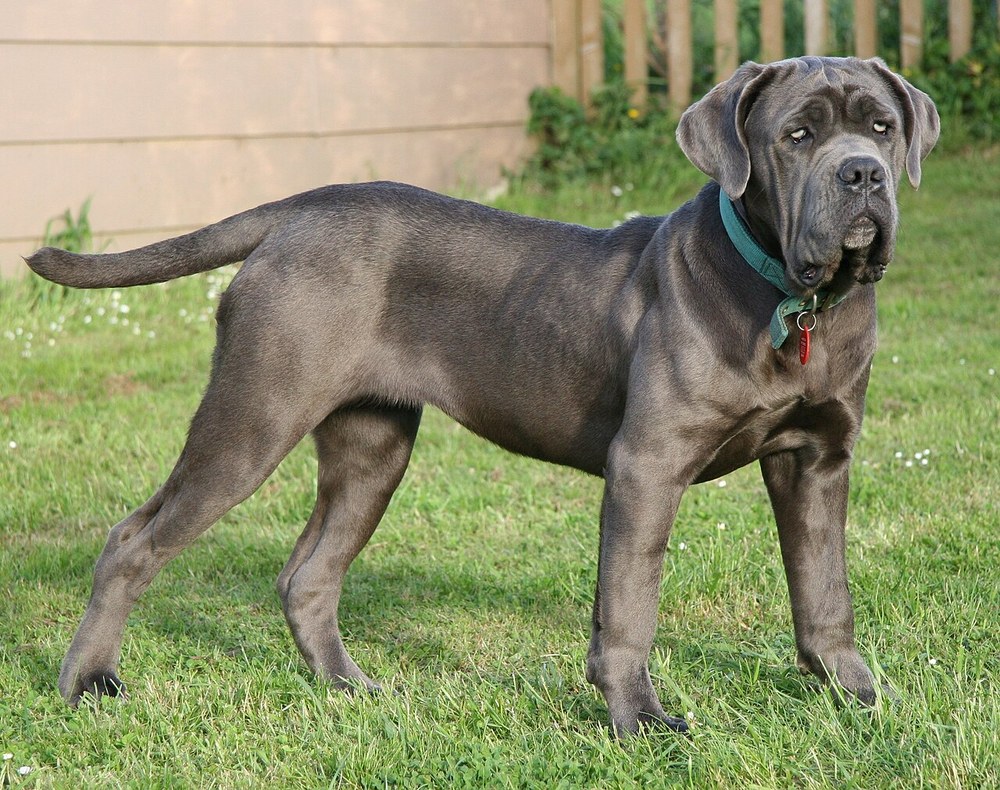
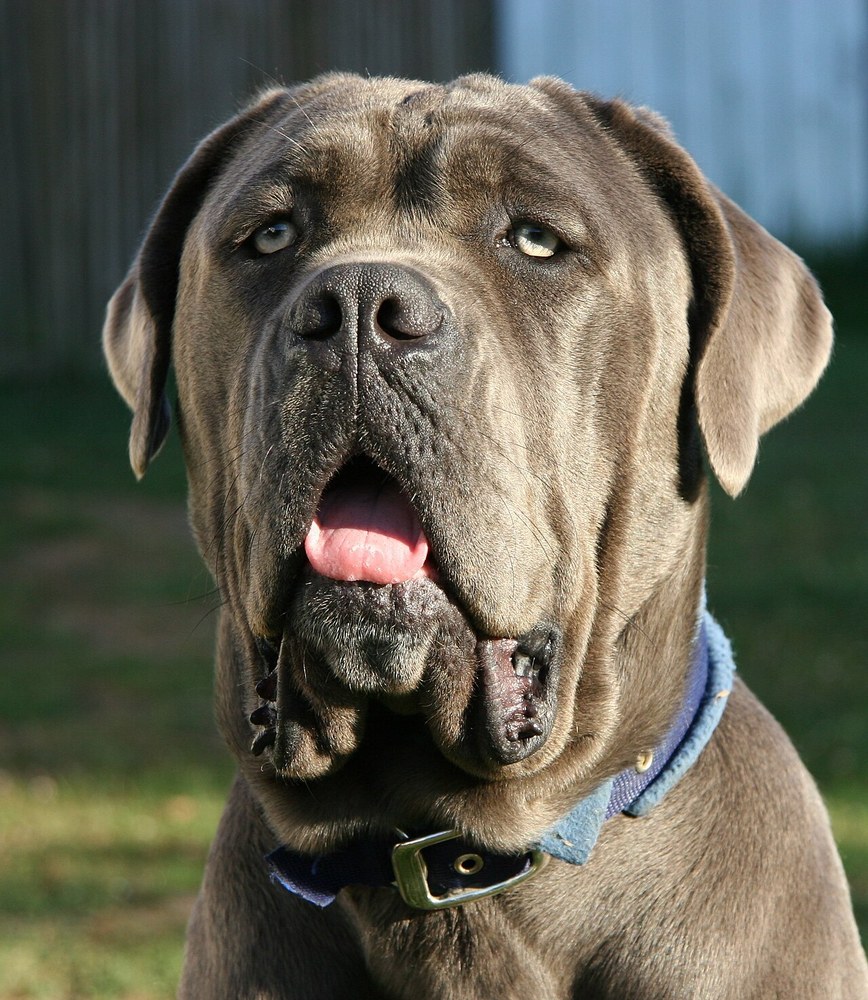
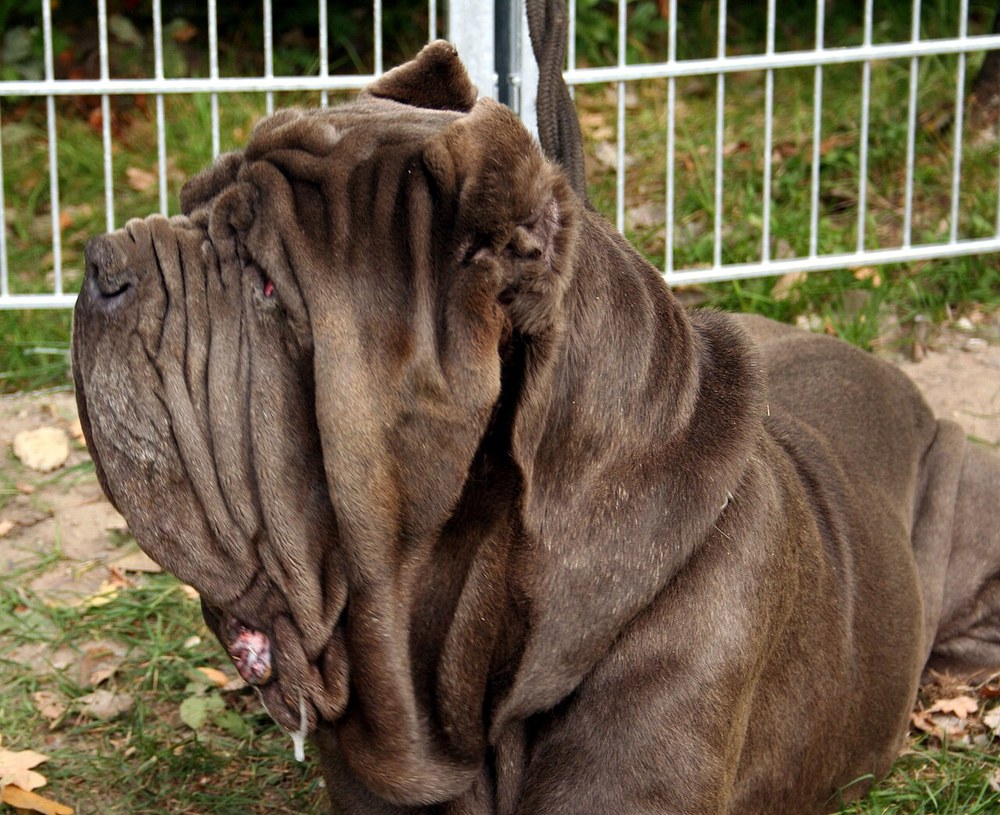
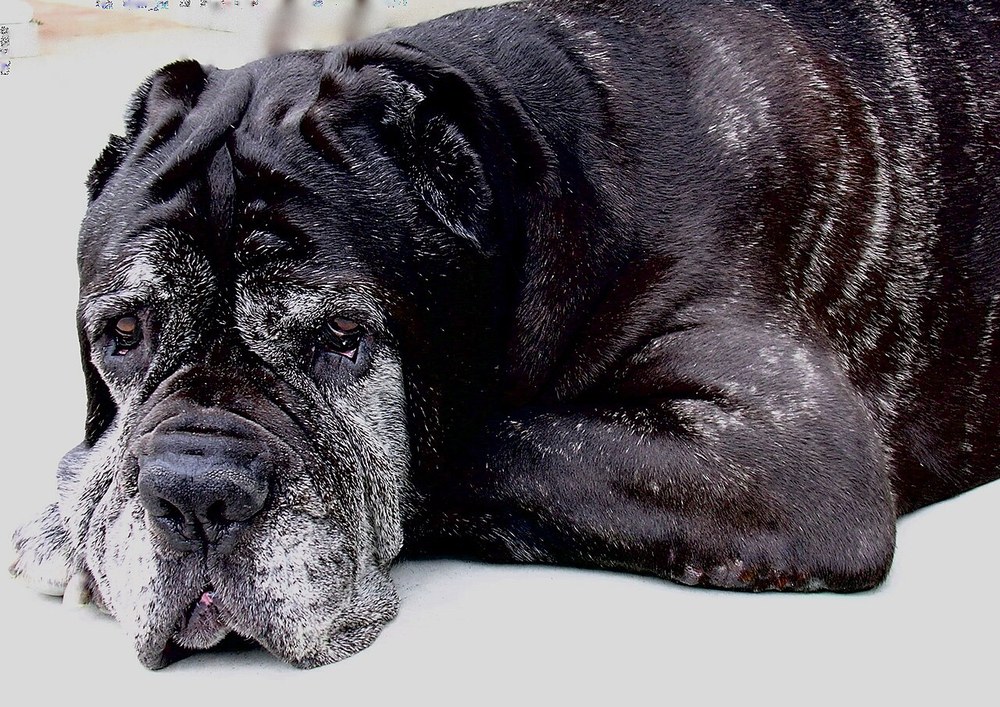
The photos show a dramatic, wrinkled face, and some sellers still talk about it as a fearsome guard dog. The real dog is mostly a slow, affectionate homebody that follows its people from room to room and leaves a wet trail on the floor.
The problems I meet in family homes come from size and instinct together: a teenage dog that drags its owner down the street, a guest blocked in the hallway, a dog that refuses to move off the sofa, tension with strange dogs, and a dog that overheats or tires on a summer walk.
My approach is simple. Teach lead manners and a bed cue while the puppy is still light enough to guide. Socialize gently and keep going into adulthood. Manage visitors so the dog never has to decide on its own. Keep exercise short, cool and steady, and build a relationship where the dog wants to cooperate, because you will never out-muscle it.
AKC: males 26–31 in, females 24–29 in (FCI: males 65–75 cm, females 60–68 cm)
Weight
AKC: males about 150 lb, females about 110 lb (FCI: males 60–70 kg, females 50–60 kg)
Energy
Low; calm at home, needs short, gentle walks
Coat / shed
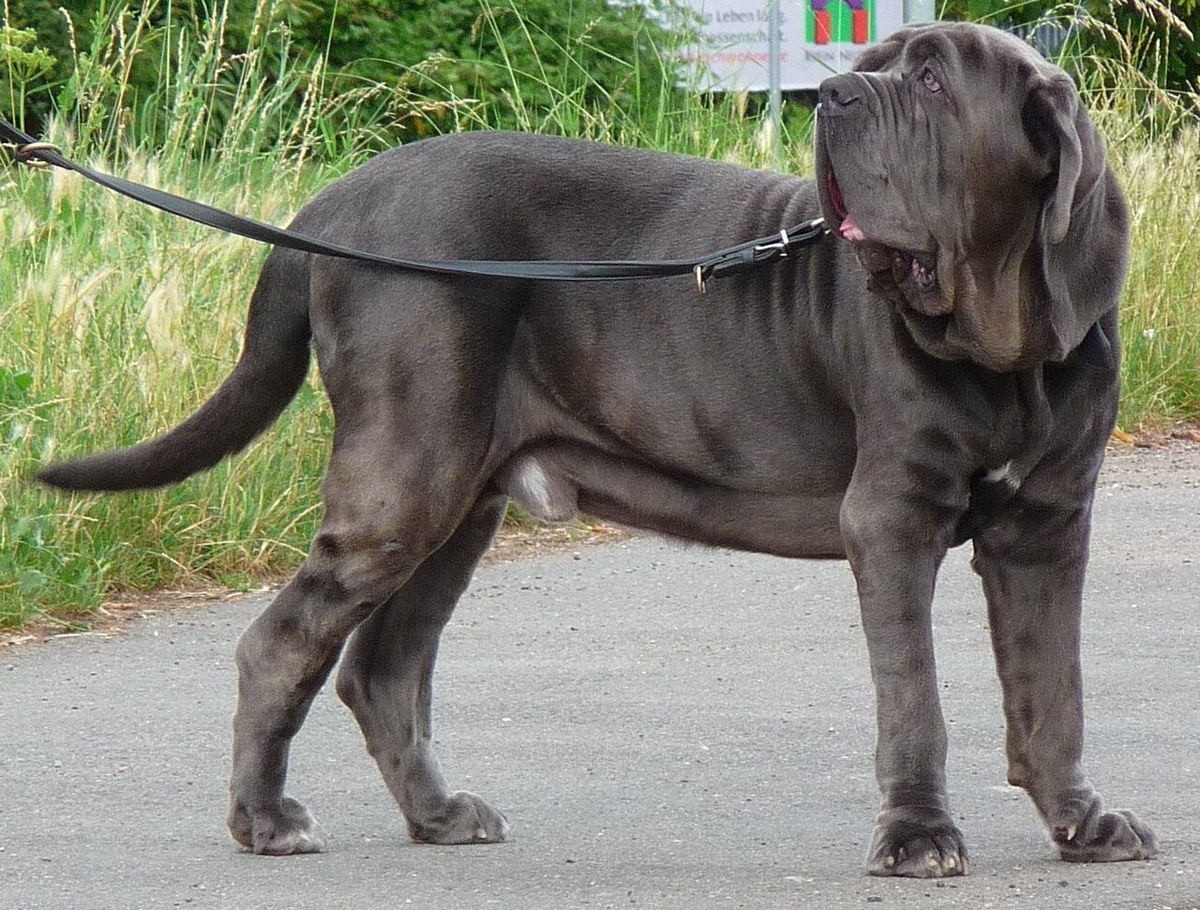
Short, dense, smooth coat in grey, black, mahogany or tawny, with or without brindling; loose skin and heavy folds
Job
Estate and farm guardian of the Naples area (FCI Group 2, molossoid)
Temperament in one minute
Neapolitan Mastiff temperament: what they are like at home
Short answer: Neapolitan Mastiffs are calm, loyal and affectionate giants that stay close to their family and are watchful and reserved with strangers. They guard their home by instinct, usually by standing their ground rather than barking. They mature slowly, drool a lot, struggle in heat and are far too strong to manage by force. They need early lead manners, gentle and long socialization, a clear routine for visitors, short cool walks and an experienced owner who builds cooperation with food and calm routine.
Are Neapolitan Mastiffs affectionate?
Very, with their own people, and many follow the family from room to room. Build short absences early.
Reserved and watchful. Guests should sit first and let the dog come to them; see guest entry steps.
Are Neapolitan Mastiffs good with kids and other dogs?
Often gentle with children they live with, but their size alone needs supervision; strange dogs can be a problem. See children and guests.
Neapolitan Mastiff behavior problems to expect
The usual four are pulling on the lead, blocking visitors, guarding the sofa or food and tension with strange dogs. The list further down links a guide for each.
Living with a Neapolitan Mastiff in an apartment
Possible only with a lift, a cool home and calm neighbours. Most do better in a house with a fenced garden.
Breed history
How the Naples farm mastiff became a recognised breed
The history will not train your dog, but it explains the guarding instinct, the size and the strong home bond.
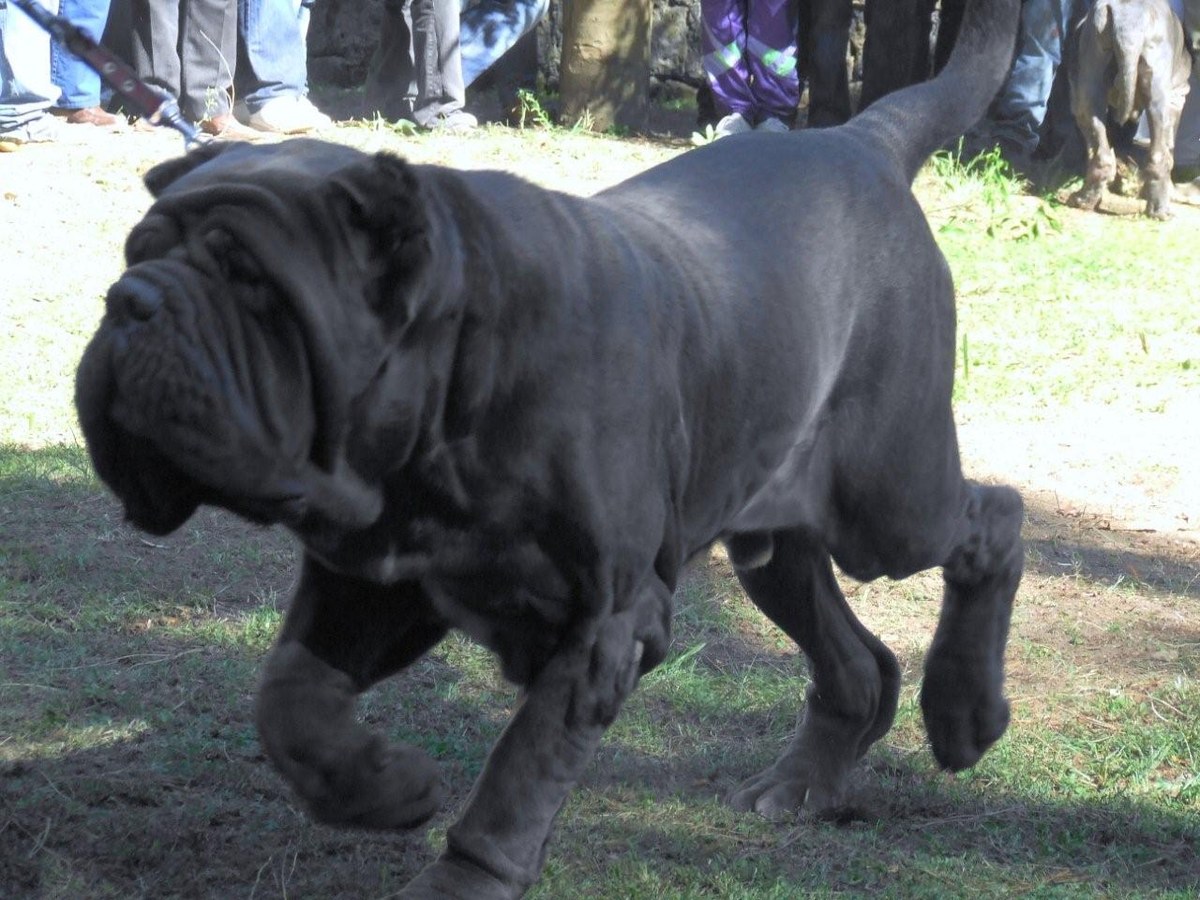
A black Neapolitan Mastiff on the move: the breed has a slow, rolling, bear-like walk and is not built for speed or long runs.
Southern Italy · farms and estates
Big mastiffs in the Campania countryside
Large, heavy dogs guarded farms, estates and homes around Naples for a long time. People often connect them to the war dogs of ancient Rome, but that link is a story about a type of dog, not a written family tree.
These were working dogs kept by farmers and butchers, judged by what they did rather than how they looked.
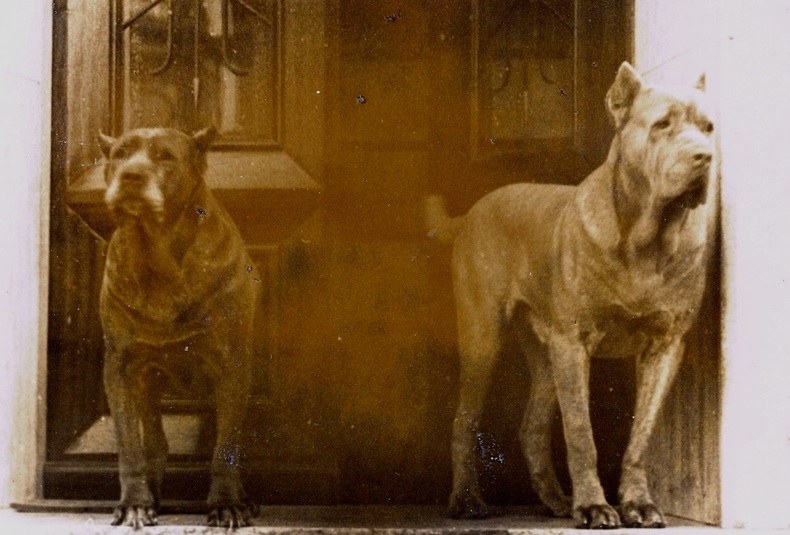
An old photo from an Italian book on the breed: on the right a cane 'e presa, the type behind today's Neapolitan Mastiff; on the left a Cane Corso-type dog.
From 1946
A standard after the war
At a dog show in Naples in 1946 the writer Piero Scanziani noticed several of these mastiffs and helped write the first breed standard in 1949, under the name Mastino Napoletano.
Breeders since then have made the dog heavier and more wrinkled. The AKC recognised the breed in 2004, and the FCI lists it with the molossoid breeds in Group 2.
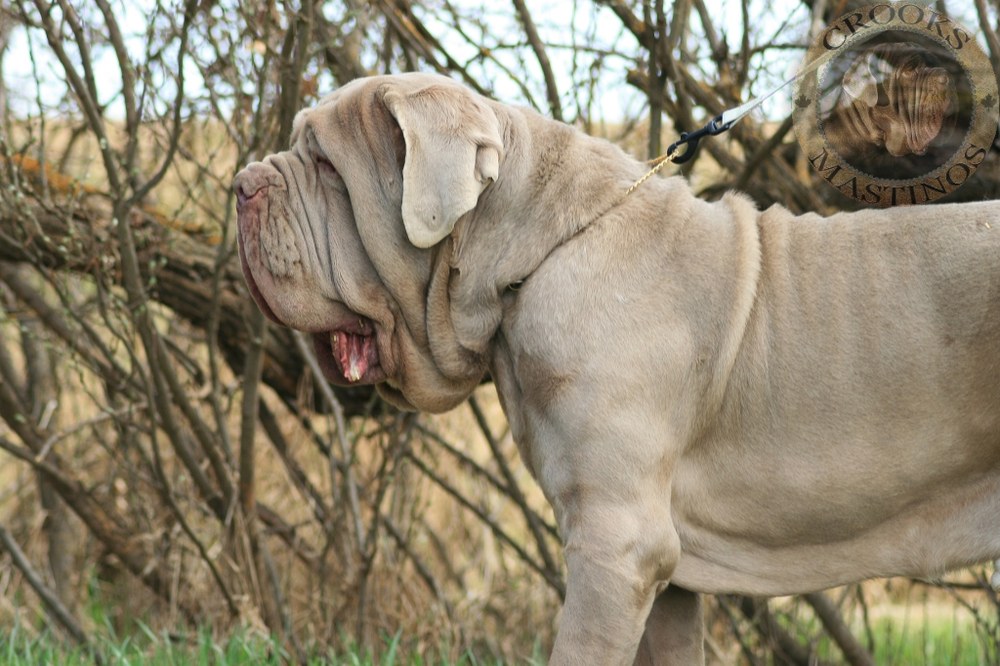
A tawny male Neapolitan Mastiff, a Canadian champion: besides grey and black, the breed also comes in tawny and mahogany.
What the breed was bred for
Gentle with its own, careful with the rest
At home a well-raised Neapolitan Mastiff is calm, quiet and affectionate, and often very patient with its family.
With people it does not know, it watches before it decides. It rarely barks much; it is more likely to stand and block. Clear management of the door and early, calm meetings keep that instinct low-key.
A good day has two short walks, long naps and a calm house
An adult Neapolitan Mastiff usually does well with two or three gentle walks a day and plenty of rest in a cool room. It is not a running partner. Trouble usually comes from a strong dog with no lead manners, too much heat, or visitors who arrive while the dog is loose at the door.
Puppy · lead manners
Teach the lead while you still can
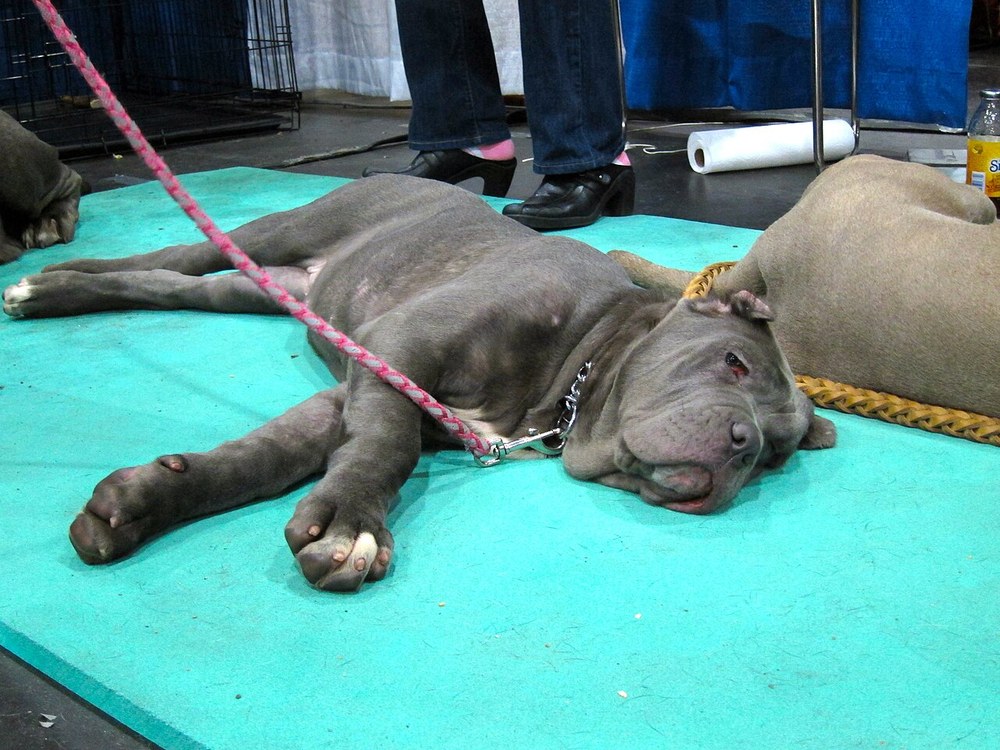
At five months the puppy may already weigh as much as a grown spaniel. Practise walking on a loose lead every day with food at your side. Habits set now matter later, when the dog is heavier than you.
Give the dog a cool spot on a hard floor or a thick bed, away from sun. Heavy, short-coated dogs with loose skin can struggle in heat, so on warm days the midday walk is replaced by rest.
Before guests come in, put the dog behind a gate or on its bed with a chew. Let the visitors sit, then bring the dog in on lead to sniff. A guardian that sees you handle arrivals has less reason to block the hallway.
Never try to pull a heavy dog off furniture. Teach an off cue with food, give it a great bed of its own and keep doors closed to rooms it guards. Calm trades work far better than force.
Giant dogs often slow down earlier than smaller ones. Keep walks short, floors non-slip and handling routines in place, and watch for stiffness or a change in mood that needs a vet.
General awareness only. I am not a veterinarian. With a Neapolitan Mastiff, owners often notice trouble first as heavy breathing in warm weather, stiffness, red or damp skin in the folds, sore eyes or a dog that suddenly gets irritable. For red flags, leave this page and open
when to call the vet.
Heat
Walk in the cool hours, provide shade and water, and stop at the first sign of struggling. See water after exercise.
Folds and eyes
Wipe the facial folds and keep them dry; ask your vet if the skin or eyes look red or wet.
Growth and joints
A giant that grows for about two years; ask your vet about exercise for a puppy. See limping stop list.
Teach calm handling and muzzle comfort while the puppy is small.
Ask the breeder
Ask which screenings the national breed club recommends for the parents and see the results. Do not invent disease claims from a blog.
Lines and types
Choose a calm, healthy dog, not the biggest wrinkles
No bloodline selling. Some breeders aim for the heaviest head and the most skin; others keep a more moderate, active dog. Meet both parents, watch how they move and breathe on an ordinary walk and how they greet you, and ask what health checks the parents have had.
Family homes
Space and a cool place to rest.
Lead manners from puppyhood.
Managed visitors.
A car that fits a giant dog.
Suits an experienced, calm family that does not have many unplanned visitors and can handle drool and hair.
Rural and property homes
A secure, fenced property.
The dog lives indoors with the family.
Short, gentle exercise.
Calm, regular social outings.
Suits owners with land who want a watchful companion, not a dog left outside to guard alone.
Socialization windows
What to introduce — and what not to overload — by age
AVSAB-aligned in spirit: short, clean exposures at a distance the puppy can still eat,
with hygiene while vaccines finish. See the
puppy socialization schedule.
2–4 months
Settling in and meeting people
Introduce: calm visitors, gentle handling of face and folds, short car rides, the toilet spot, short spells alone.
Do not overload: stairs, jumping from the car, long walks, rough play with large dogs.
~6 months
Fast growth
Introduce: loose lead walking, wait at doors, off cue, a bed cue, quiet new places.
Do not overload: pulling games, long walks in the heat, letting it lean on visitors.
~12 months
Teen guardian
Introduce: door routines, short meetings with new people, calm dog meetings on walks.
Do not overload: letting it greet guests loose at the door, wrestling for control.
~18–30 months
Filling out
Introduce: steady daily routine, longer but still gentle walks, regular handling.
Do not overload: calling normal wariness aggression, or ignoring real growling.
~3 years+
Maintenance
Introduce: short daily walks, fold care, weight checks, yearly vet visits.
Do not overload: stopping training because the dog seems settled.
Before you buy
Who a Neapolitan Mastiff usually fits
Fit comes down to space, climate, how many visitors you get, your physical strength and whether you can live with drool, hair and a shorter life span than smaller dogs.
Good match
More likely a good fit if you…
You have lived with a large, strong guardian breed before
You want a calm, loyal house dog, not a runner
You can keep the home and walks cool in summer
You are happy to manage visitors every time
You do not mind drool on walls and clothes
Mismatch risk
A Neapolitan Mastiff may be a poor choice if…
You want a guard dog for show or status
You want a jogging or hiking partner
You live in a hot flat with stairs and no lift
You often have unplanned visitors or children's friends over
You prefer correction-based or force training
If you are torn between breeds
Neapolitan Mastiff vs English Mastiff and Dogue de Bordeaux
All three are heavy mastiffs that guard their home. The English Mastiff is usually the most easygoing and has the least skin, the Dogue de Bordeaux is shorter, more compact and often more active, and the Neapolitan is the most wrinkled and the most watchful with strangers.
Look
Neapolitan Mastiff
Loose skin and heavy folds.
English Mastiff
Tighter skin, a broad, smoother head.
Strangers
Neapolitan Mastiff
Watchful, slow to accept.
Dogue de Bordeaux
Also wary, often more vocal.
Colours
Neapolitan Mastiff
Grey, black, mahogany, tawny.
Dogue de Bordeaux
Shades of fawn and red only.
Drool and heat
Neapolitan Mastiff
A lot of drool; heat is hard.
Both compares
All three drool and need cool walks.
Ownership without surprises
Where a Neapolitan Mastiff owner’s budget goes
Costs depend on country, city and your choices. These are themes to plan for, not quotes.
Veterinary
Annual vet visits, the vaccines your vet recommends and the health tests the breed club recommends; giant-dog vet costs are higher.
Food
A dog of 110 to 150 lb or more eats a lot, and puppy growth food matters.
Training
Puppy class early, while the dog is still small enough to guide, and later help with visitors.
Home and car
A big crate or car space, non-slip floors, a large bed and possibly a ramp.
Cooling and cleaning
Fans or air conditioning in summer and plenty of towels for drool.
Money spent on early training and a cool, safe home saves far more than fixing a heavy dog's bad habits later.
Before day one at home
What to prepare for a Neapolitan Mastiff puppy
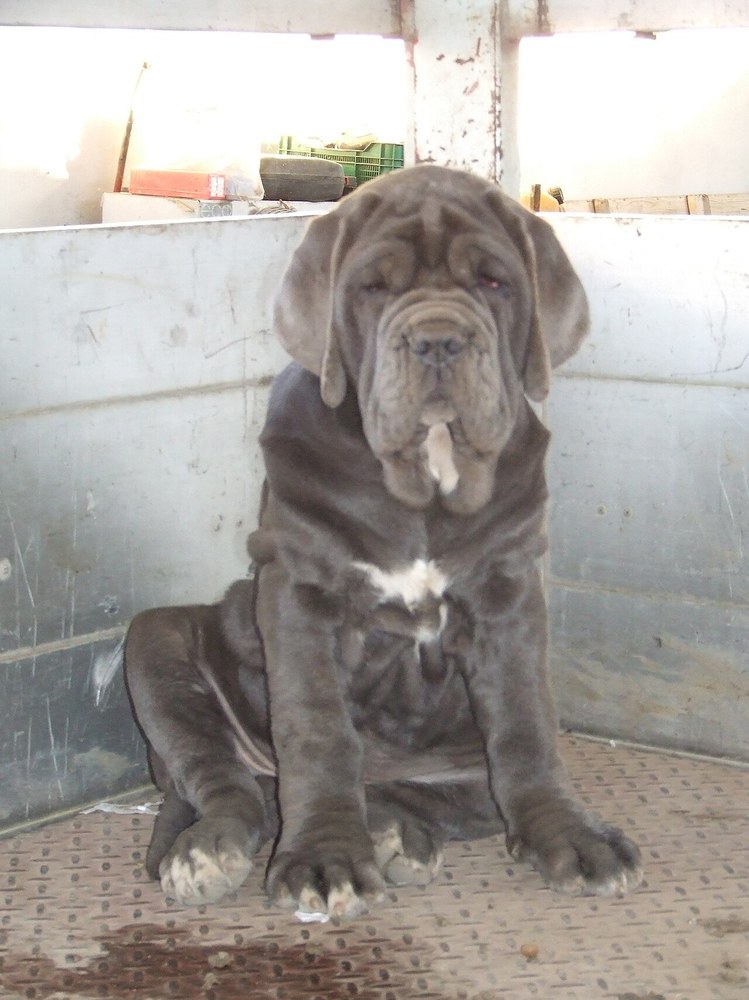
A Neapolitan Mastiff puppy is a soft, wrinkled bundle that gains weight every week. Have gates, a non-slip floor, a big bed, chews and a list of calm visitors ready, and start lead manners on day one.
Training a Neapolitan Mastiff means cooperation, not strength
Five skills cover most of daily life: walking on a loose lead, waiting at doors and the car, going to a bed while guests arrive, getting off furniture on cue, and a calm check-in when it hears its name.
Mastinos learn with food, calm praise and short sessions. They are not quick to repeat things and may lie down when bored. Never try to win by pushing or pulling; a dog this heavy learns to resist, and harsh handling can make a guardian defensive.
Start everything before the dog is big. The lessons a puppy learns at 20 kg are the ones you will rely on at 60 kg.
Load balance
Short walks and good rest first
Go easy with growing puppies, older dogs and warm days. Heavy breathing, a limp or sudden bad temper means a vet visit before more training.
Short cool walkSniff timeTwo-minute lessonChew on the bedLong nap
For this breed, a slow sniffing walk in the cool hours does more good than any long outing.
A Neapolitan Mastiff that walks nicely on a lead is a joy; one that pulls is a danger to its owner.
Loose lead walking
How to teach a Neapolitan Mastiff to walk on a loose lead
Start indoors with food at your side, take two or three steps and reward when the lead is slack, stop and wait whenever it tightens, move outside to quiet streets, and keep sessions short and cool.
01
Food at your side
Hold a treat by your leg and start indoors.
02
Reward slack lead
Take two or three steps and reward while the lead is loose.
03
Stop when tight
Stand still the moment the lead tightens and wait.
04
Quiet streets next
Move outside to calm streets before busy ones.
05
Short and cool
Keep each session a few minutes and avoid warm hours.
One scene close-up
Why lead manners matter more with a giant
An adult Mastino can weigh more than its owner. If it decides to go toward a dog, a cat or a person, no grip on the lead will stop it. Good lead manners are a safety skill, not a nicety.
Teach them while the puppy is small. Reward the dog for walking next to you, stop the moment the lead goes tight and only move on when it loosens. Use a well-fitted harness and practise in quiet places before busy ones.
A dog that lunges, growls at people or cannot calm down needs a qualified professional; a vet check helps rule out pain.
“With a Neapolitan Mastiff, I begin with lead manners while the puppy is small, a clear plan for the door and short, cool walks. Build cooperation with food and calm routine, never strength, and you get a gentle, devoted giant.”
We work on what your days look like: walks, visitors, the sofa, other dogs and hot weather. I am a trainer, not a veterinarian.
Andrew DarovProfessional dog trainer and instructor
Write down the dog's age and weight, what it does when someone comes to the door and the first thing that goes wrong: the lead, visitors, the sofa, other dogs or heat. Opens WhatsApp to Andrew.
For an experienced family with space, often yes. Most are calm and loving with their own people. They are wary of strangers and need careful visitor routines.
Is a Neapolitan Mastiff a good first dog?+
Usually not. Its size, strength and guarding instinct need experience. A first-time owner would need strong support from a trainer.
Do Neapolitan Mastiffs drool a lot?+
Yes. Loose lips and folds mean a lot of drool, especially after drinking and eating. Keep towels handy.
How big does a Neapolitan Mastiff get?+
Males often weigh about 150 lb (about 70 kg) and stand 26–31 in at the shoulder; females are smaller. They keep filling out until about two years.
Neapolitan Mastiff vs English Mastiff: what is the difference?+
The Neapolitan has much looser skin and deeper folds and is usually more watchful with strangers. The English Mastiff is often more easygoing.
Neapolitan Mastiff vs Dogue de Bordeaux: what is the difference?+
The Dogue is shorter, more compact and only fawn to red. The Neapolitan is taller, heavier in skin and comes in grey, black, mahogany and tawny.
How much exercise does a Neapolitan Mastiff need?+
Two or three gentle walks a day for an adult, in the cool hours. Puppies need short walks and no forced running.
Are Neapolitan Mastiffs good with other dogs?+
Many live well with dogs they grew up with. Some adults, often of the same sex, do not like strange dogs. Plan meetings carefully.
Do Neapolitan Mastiffs bark a lot?+
Usually not. They tend to watch and stand their ground rather than bark, which is why visitor routines matter.
Can a Neapolitan Mastiff handle hot weather?+
Heat is hard for this breed. Walk early and late, give shade and cool floors, and watch breathing closely on warm days.
What health themes should I ask about?+
Ask the breeder which screenings the national breed club recommends for the parents and see the results. Tell your vet the breed. This is general awareness, not a diagnosis.
How long do Neapolitan Mastiffs live?+
Public breed references usually give about 7–9 years, as with many giant breeds. Individual dogs vary.
If a Neapolitan Mastiff seems like more dog than your home can carry
Many people fall for the wrinkles and the calm face. The size, the heat, the drool and the guarding instinct are what to be sure about first.
Loose lead walking step by step: where to reward, what to do the instant the lead goes tight, and a 10-minute daily plan that stops your dog pulling.
Need a read on your exact situation?
Send me a few lines about your Neapolitan Mastiff: its age and weight, what it does at the door and what goes wrong first. We rule out health and safety issues first, then pick one skill to start with.