Finnish Spitz: temperament, training and a bark-pointer’s voice at home
The Finnish Spitz is a red, fox-faced hunting dog from Finland that was bred to find a bird in the forest, stand under its tree and bark until the hunter arrives. Owners love the colour and the cheerful face, then discover the voice. In a modern home the plan is simple to say and takes patience to build: give the bark a defined job, give the nose and legs real work, and teach the dog that a human takes over once the report is made.
Job: Bark-pointing bird dog: finds game birds and holds them in a tree with a ringing, rhythmic bark.
Energy: Moderate to high; needs daily walks with sniffing time plus problem-solving games.
Home: Suits active homes with a plan for barking; tricky in thin-walled flats without training.
A Finnish Spitz will bark. The useful question is when, how long, and what happens next
In Finland this dog is the national breed and a working bird dog. It moves ahead of the hunter, locates capercaillie or black grouse, and when the bird flies up into a tree it barks steadily to keep the bird’s attention. Finnish hunting trials actually score the bark, and the best barkers are celebrated. That is the dog many owners bring home to a quiet street.
So I start by accepting the voice. Most Finnish Spitz I meet are friendly, playful with their family, sensitive to harsh handling and quite independent outdoors. The barking problems I see usually come from three gaps: the dog had little real work that day, nobody ever showed it how the report ends, and the household answered every bark with noise of its own.
From the first weeks I build a short chain: hear something, give a few barks, look at the human, get a reward for going quiet, then go to a bed or a chew. Next to that I build a recall that survives birds and squirrels and an off switch after walks. With those three pieces the breed is a lovely companion.
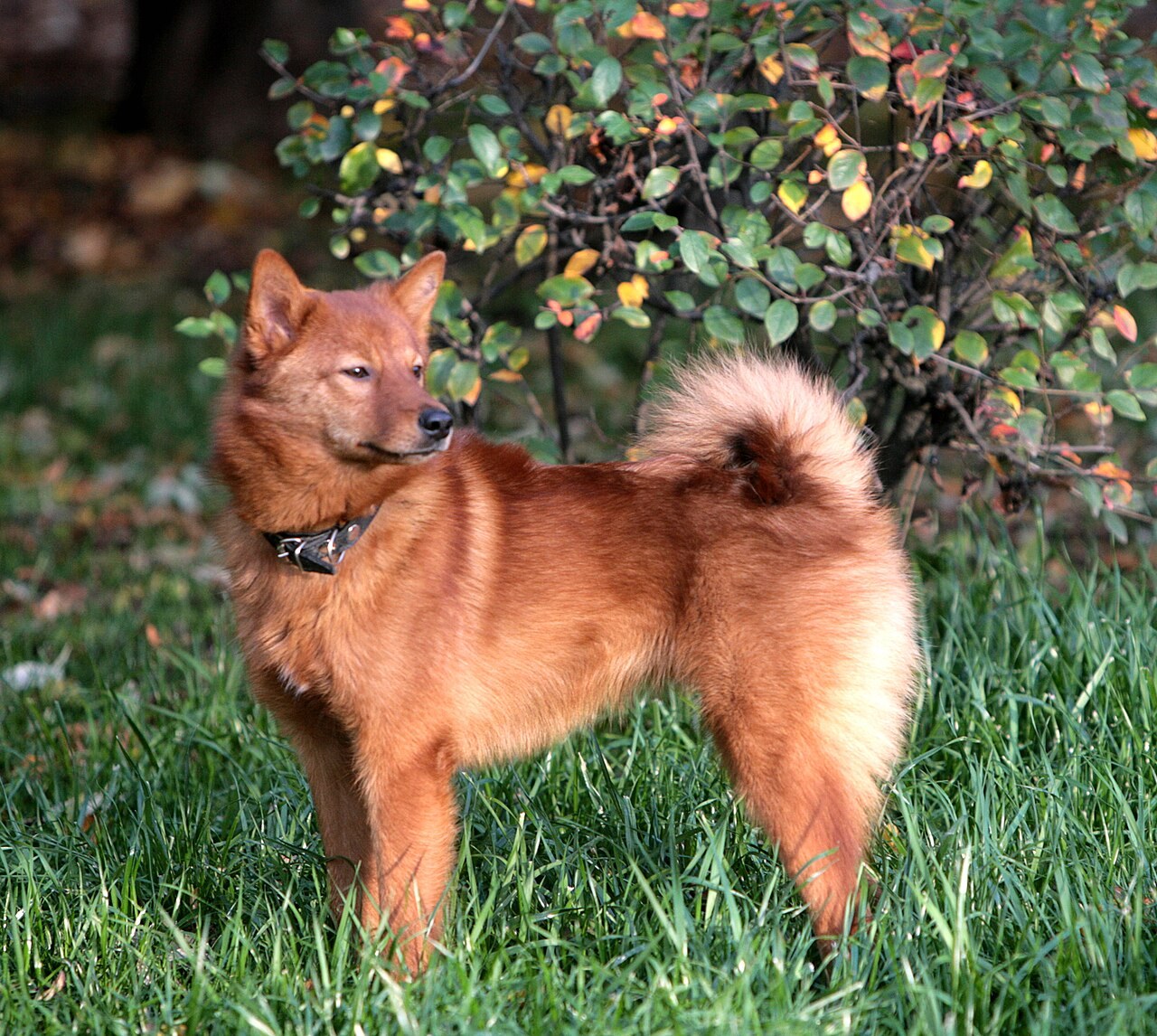
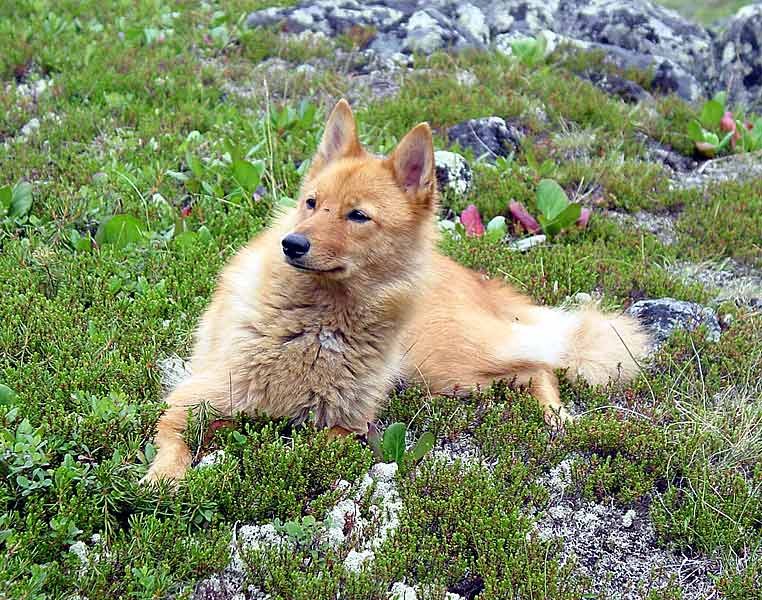
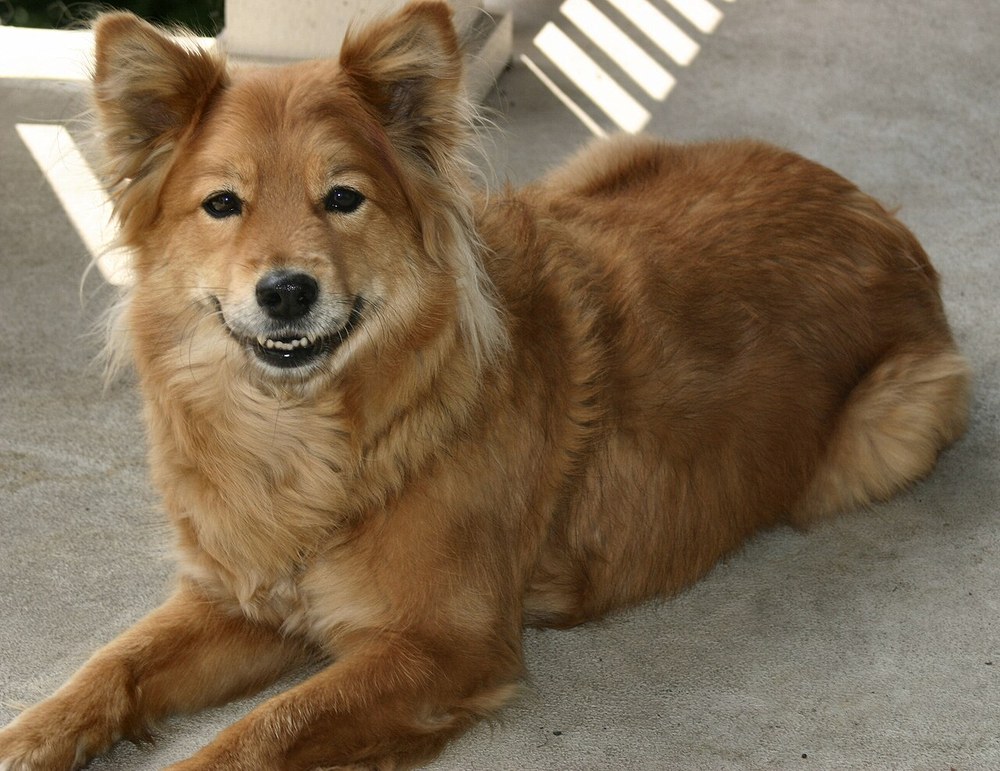
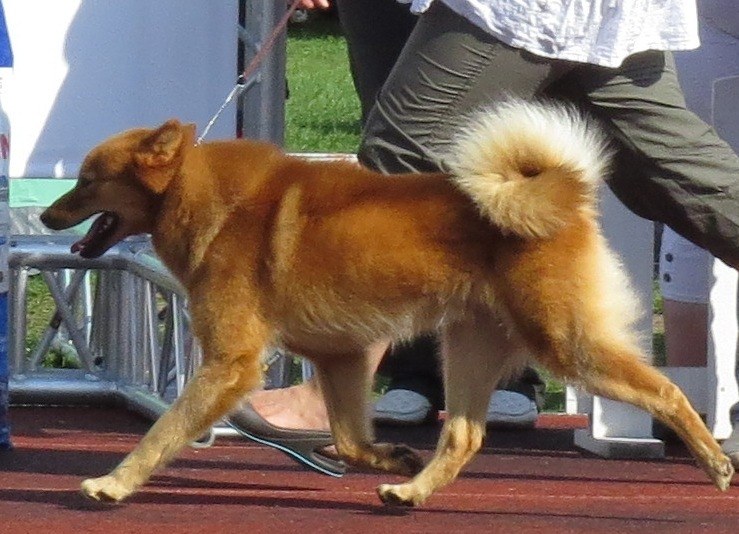
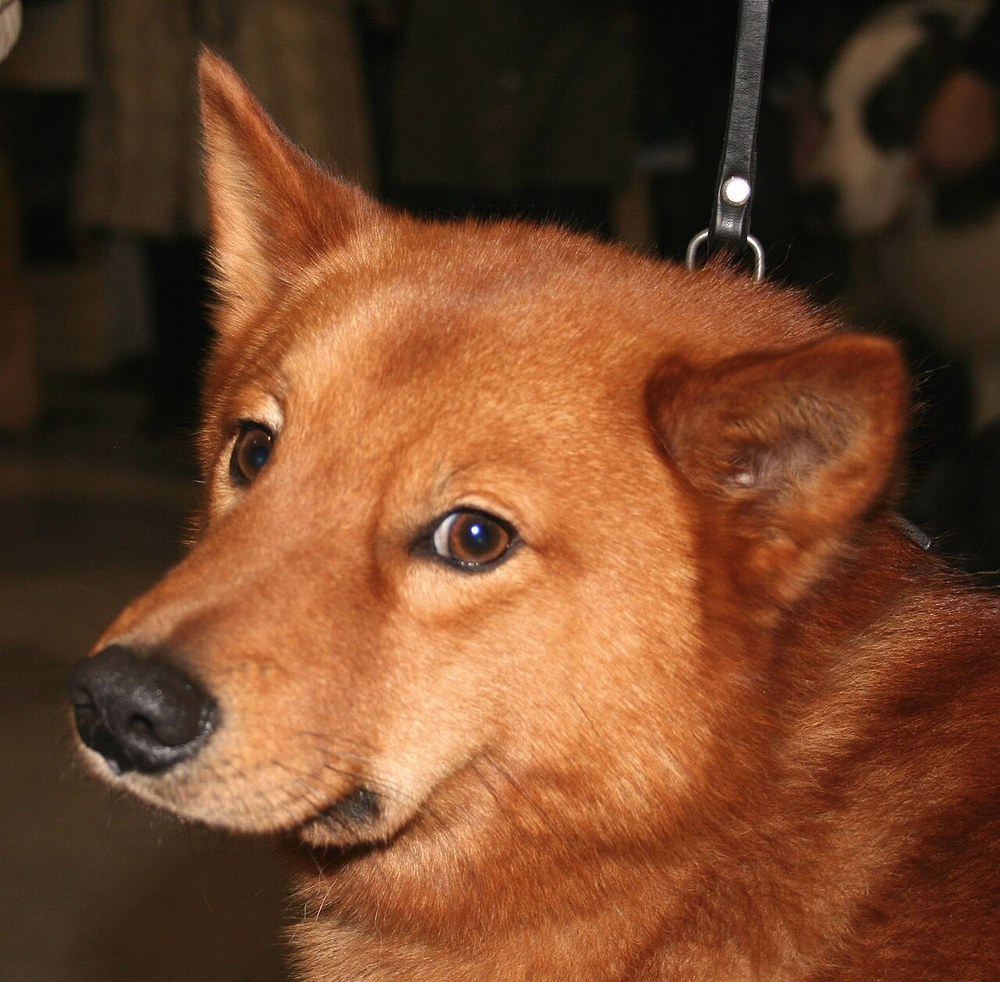
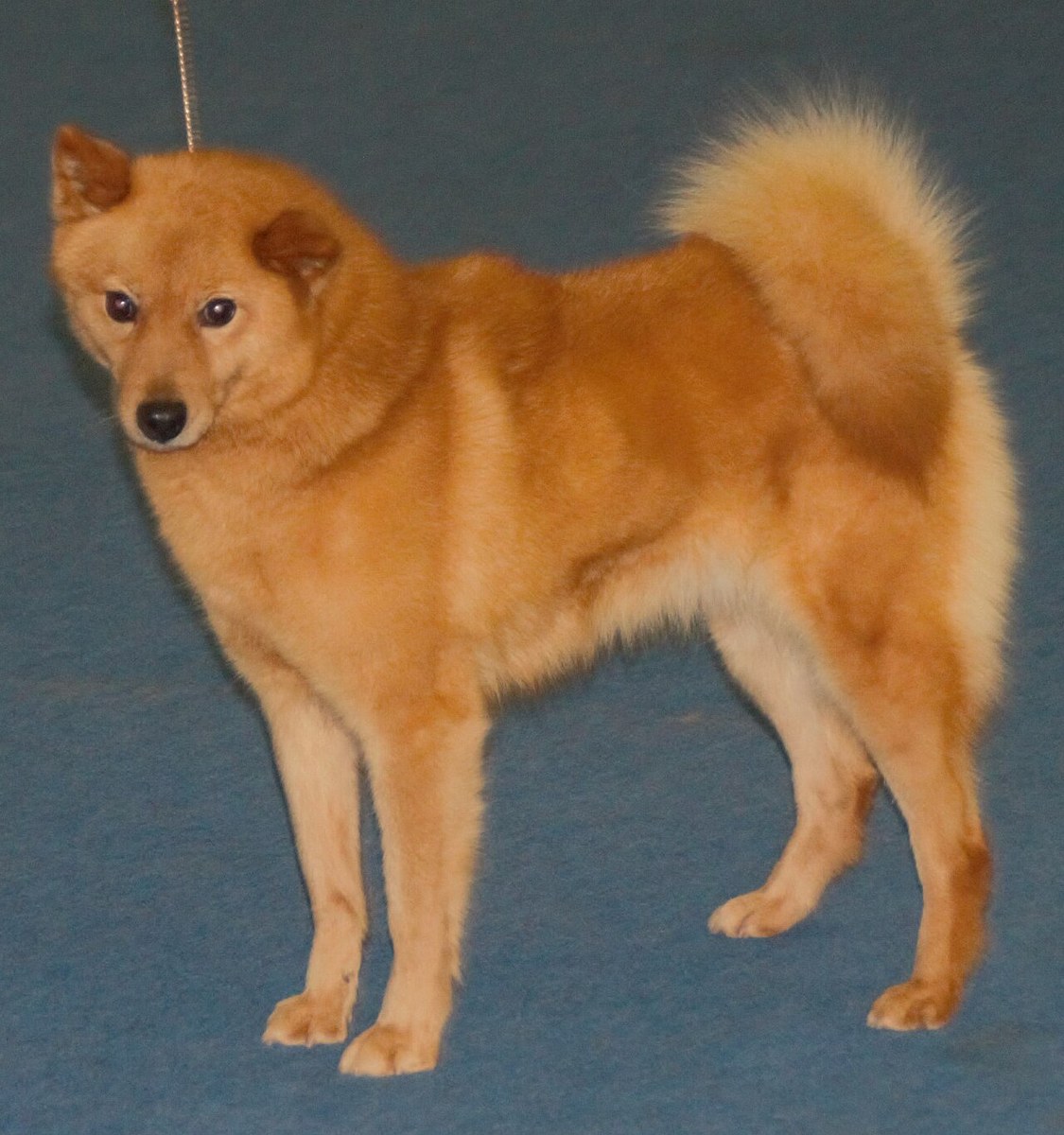
Golden-red double coat, harsher outer hair and soft undercoat; seasonal heavy shed
Job
Finnish bark-pointing bird dog (FCI Spitz group; AKC Non-Sporting)
Breed history
How a Finnish forest dog was selected for its bark
Breed history will not tell you how your puppy behaves at 7 a.m., but it explains why so many of these dogs bark with rhythm and persistence, scan treetops on walks, and drift away from you when they catch a scent.
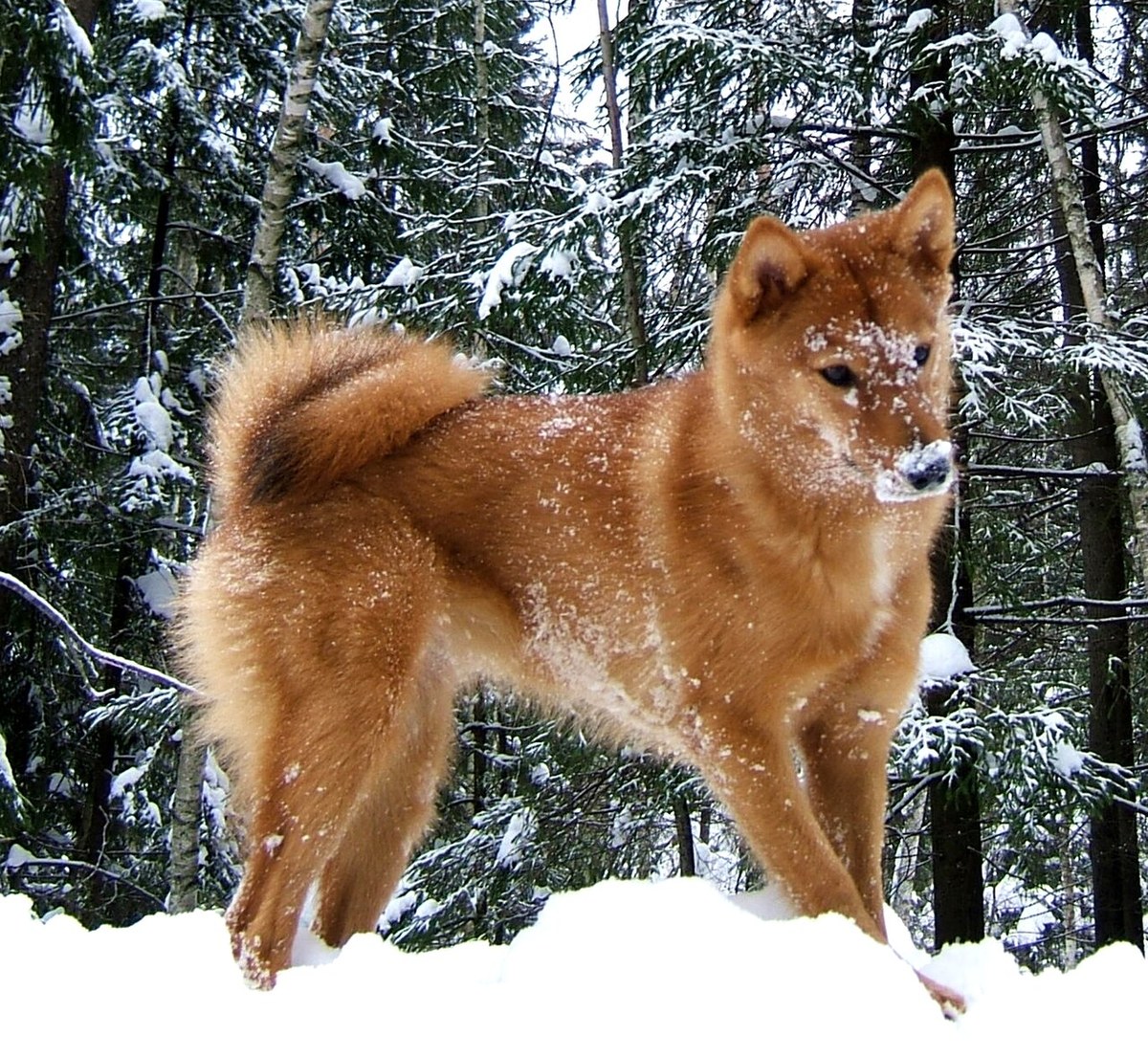
A Karelo-Finnish type spitz in winter forest (CC BY-SA). This is where the breed works: quiet woods, birds in the canopy, a dog that ranges ahead.
Finland and Karelia → hunting in the taiga
A dog that finds the bird and holds it with sound
Spitz-type hunting dogs lived with Finnic peoples in the northern forests for a very long time. Public breed histories say that by the late nineteenth century crossbreeding was diluting the type, and two Finnish hunters set out to rescue the red bark-pointing dog. A written standard and club recognition followed in the 1890s.
The job shaped the temperament. The dog has to range out of sight, think for itself, find birds by sound and scent, and keep up a bark for a long time without losing focus. A household should expect independence, a voice that carries, and strong interest in anything up a tree.
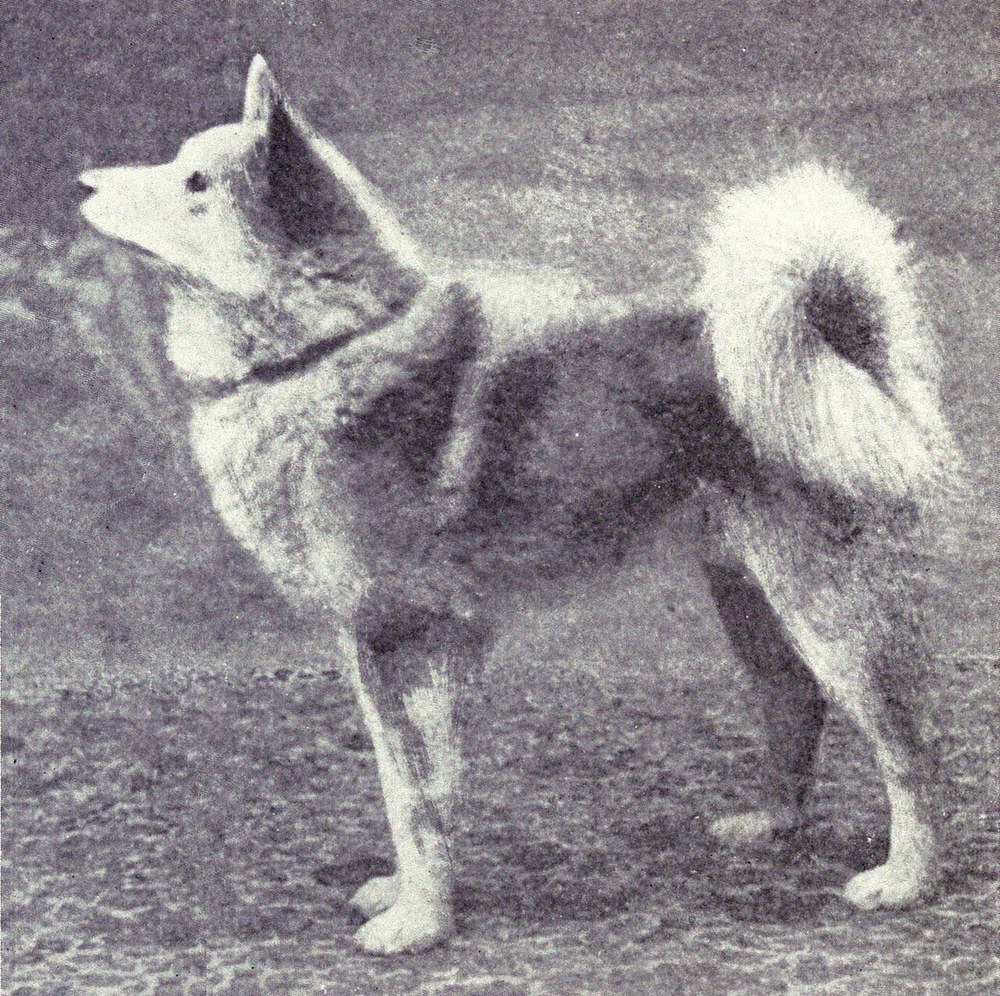
A dog labelled “Finnish Pom”, 1915 (public domain). Early British fanciers used several names before Finnish Spitz settled.
Hunting dog → national symbol → show ring and sofa
From working trials to stamps and family homes
The breed reached Britain in the 1920s and later North America, where it is shown in the Non-Sporting group. In Finland it is still trialled for hunting, and it appears on stamps and in national song. In Russia, where I work, the closely related Karelo-Finnish Laika is now usually registered under the Finnish Spitz name.
Today you meet the breed in hunting kennels, show rings and ordinary family homes. The working voice comes with every line, so a pet owner still needs a plan for it.
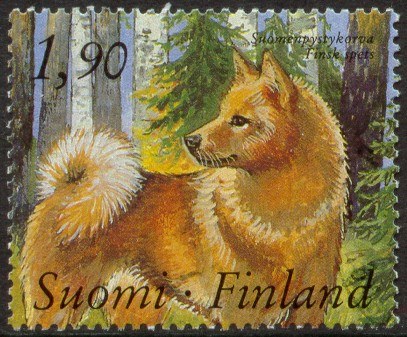
Finnish stamp, 1989 (public domain). A national dog with its own stamp is a cultural fact, not a buying argument.
What the breed was bred for
Ranging, scanning upward, and a bark that keeps going
In trainer language, breeders favoured a dog that works away from the handler, notices small movement high up, and sustains a rhythmic bark. At home that shows up as window and garden barking, interest in squirrels and birds, and a recall that weakens when the nose is busy.
These dogs are soft about pressure. Shouting and yanking tend to produce a dog that avoids you and barks anyway. Short sessions, good food, games and clear rules work much better.
A good day has sniffing, running, a short report, and a long nap
At home the hunting job tends to show up as garden patrol, barking at birds and squirrels, and a dog that forgets you on an open field. Most Finnish Spitz are also cheerful and affectionate with their own people. Management such as closed curtains, a long line and a set bedtime spot gives you time to teach the skills that replace those habits.
Morning · sniff walk
Start with the nose, not the ball
A slow walk in woods or a park, with long stretches of sniffing on a long line, settles this breed better than fast repetitive fetch. The dog gets to scan, smell and listen, which is close to its original work, and comes home tired in a calm way.
Scatter feeding, hide-and-seek with food or a toy, and simple trick sessions of three to five minutes suit a dog that gets bored with drilling. Stop while the dog still wants more. Long sessions make many Spitz walk off or start barking at you.
Most are pleasant with visitors once they have had time to look. Let guests ignore the dog at first and let it approach. Pushy greetings from strangers can tip a sensitive youngster into barking and backing away.
A dog bred to watch treetops will watch the street, the birds on the fence and the neighbour’s cat. Frosted film on the lower glass, closed blinds during the day and supervised garden time cut hours of practice while you teach the alert routine.
After a good outing, a Finnish Spitz will often sleep deeply. After a poor one it patrols. Give it a bed in a quieter room, a chew, and a predictable bedtime. A dog that has learned to switch off barks far less at night noises.
General awareness only. I am a trainer, not a veterinarian. In this breed, owners tend to notice issues first as a change in gait, stiffness after rest, weight gain, a dull or patchy coat, or an episode of strange behaviour or shaking. For red flags, leave this page and open
when to call the vet.
Hips, elbows and knees
Breed clubs ask breeders to screen hips and often elbows, and kneecap problems are also discussed. A dog that skips, limps or avoids stairs needs a vet visit. See limping stop list.
Seizure awareness
Epilepsy is one of the themes Finnish Spitz clubs talk about openly. If your dog has a seizure or a strange episode, film it if you safely can and call your clinic. That is veterinary territory.
Weight and diabetes themes
A compact, food-keen dog gains weight easily. Diabetes is also mentioned in breed health discussions. Weigh regularly and count training treats. See body condition and rations.
Coat and the big shed
The double coat blows heavily once or twice a year. Brush down to the skin weekly and every day during the shed. Shaving is not a cooling plan for this coat.
Heat and summer walks
A northern dog with a thick coat can struggle in hot weather. Walk early and late, offer shade and water, and stop long play sessions on hot days. See water after exercise.
Handling, nails and teeth
Many Finnish Spitz dislike being held still. Short, rewarded handling sessions from puppyhood keep vet and grooming visits calmer. See nail trim ladder.
Lines and types
Hunting lines and show or companion lines
I am not selling bloodlines here. The real differences are in drive to range and bark, and in how easily an adult switches off indoors. Every line still needs barking rules, recall work and a daily outlet.
Hunting and trial lines
Often stronger urge to range and to bark at birds in trees.
Parents may hold hunting trial results; ask how they behave at home.
Need regular woodland walks on a long line or proper hunting work.
Recall around birds and squirrels takes longer to build.
Fits a hunter or a very outdoorsy owner who enjoys forest time and accepts a loud working voice.
Show and companion lines
Often an easier house tempo; the bark is still very much present.
Meet the parents at home and notice how long they bark when you arrive.
Ask about hip and elbow scores and any seizures in the family.
Still curious, independent outdoors and sensitive to pressure.
Fits an active family ready for daily sniff walks, barking training and seasonal brushing.
Socialization windows
What to introduce — and what not to overload — by age
AVSAB-aligned in spirit: short, clean exposures at a distance the puppy can still eat,
with hygiene while vaccines finish. See the
puppy socialization schedule.
2–4 months
Home, garden and first sounds
Introduce: household noises, doorbell and hallway sounds at low volume paired with food, gentle handling of paws and ears, harness wearing, name game, first bed time.
Do not overload: answering every bark with attention, long garden sessions alone, loud crowded places.
~6 months
Outdoor world at a distance
Introduce: birds, squirrels, bikes and other dogs at a distance where the puppy can still eat; long-line walks in quiet woods; the alert routine at one window.
Do not overload: free running near roads, letting the puppy bark at the fence for minutes, dog parks with rough play.
~12 months
Adolescent independence
Introduce: long-line recall around wildlife, short café or bench settles, calm guest routine, more varied sniff walks.
Do not overload: trusting an unfinished recall in open land, letting window patrol become a hobby, harsh corrections for barking.
~18 months
Adult scenes
Introduce: new walking areas, car travel, visits to friends with a mat, structured search games.
Do not overload: skipping the seasonal brushing, letting the weight creep up, dropping the alert routine once things improve.
~24 months
Keep it going
Introduce: refresh recall and alert routines a few times a week, keep forest walks and games, yearly health check.
Do not overload: assuming a quiet month means the voice is gone, ignoring stiffness or a strange episode.
Before you buy
Who a Finnish Spitz usually fits
Fit comes down to daily habits: sniff walks, a plan for barking, patient recall training, brushing during the shed, and gentle, consistent handling.
Good match
More likely a good fit if you…
You enjoy long walks in woods or parks and are happy to let a dog sniff
You accept a vocal breed and will teach it alert manners
You like a cheerful, independent dog more than a constantly obedient one
You live in a detached house or have tolerant neighbours
You can brush weekly and cope with heavy seasonal shedding
Mismatch risk
A Finnish Spitz may be a poor choice if…
You need a quiet dog because of thin walls or strict building rules
You want off-lead freedom in open country from the start
You prefer firm, correction-based training
You keep pet birds or small animals that cannot be safely separated
You are away long hours and the dog would be alone near a window
If you are torn between breeds
Finnish Spitz vs Norwegian Elkhound and Shiba Inu
Norwegian Elkhounds are heavier Nordic hunting spitz that held elk at bay; Shiba Inu are compact Japanese spitz with a famous independence. The Finnish Spitz sits between them in size, with the most celebrated bark of the three.
Original job
Finnish Spitz
Finds game birds and barks them into a tree for the hunter.
Norwegian Elkhound
Tracked and held elk at bay with barking.
Voice
Finnish Spitz
Persistent, rhythmic bark; trialled and admired in Finland.
Shiba Inu
Usually less barking, but a loud scream when unhappy.
Size and build
Finnish Spitz
Medium, light and quick; about 20–33 lb.
Norwegian Elkhound
Sturdier and heavier, around 48–55 lb.
Handling
Finnish Spitz
Sensitive and often dislikes being held still.
Shiba Inu
Often very resistant to restraint and grooming.
Recall
Finnish Spitz
Weak around birds and squirrels without long-line work.
Both compares
All three need careful recall training and secure fencing.
Ownership without surprises
Where a Finnish Spitz owner’s budget goes
Costs depend on country, city, food and how much help you hire. These are the themes to budget for before a puppy arrives, not bills or quotes from this site.
Time for walks
An hour or more most days of walking with real sniffing time. A Finnish Spitz that only gets the block tends to reward you back in noise.
Barking management
Window film, blinds, a white-noise machine for the night and possibly a trainer for the alert routine. Cheaper than a dispute with neighbours.
Fencing and long lines
Secure garden fencing, a 10–15 m long line, a well-fitted harness and a GPS tag if you walk in forests.
Veterinary
Routine care, health-tested parents, and a budget for joint checks or investigation of any seizures. Know your emergency clinic.
Grooming gear
Undercoat rake, slicker brush, comb, nail clippers, and a vacuum that can handle a seasonal blow.
Training and outlets
Puppy class, scent work or tracking classes, and private help for barking or recall. City prices vary a lot; treat online averages as rough.
The red coat and smile are the free part. Walking time, barking work and seasonal shedding are what you actually budget for.
Before day one at home
What to prepare for a Finnish Spitz puppy
A Finnish Spitz puppy is bright, busy and already vocal. A few choices made before it comes home save months of untangling later, especially around windows, recall and handling.
01
Choose the bed spot away from the street window
Put the crate or bed somewhere the puppy cannot watch the street or the bird feeder. Fewer things to report means fewer barks to practise. See crate training.
02
Agree on the alert script
Everyone uses the same calm phrase, walks over, looks, and rewards the puppy for turning and going quiet. Nobody shouts back or laughs.
03
Buy a long line before you need it
Recall in this breed grows on a long line in safe places. Off-lead freedom comes later and only where it is safe. See recall ladder.
04
Toilet routine
Out after sleep, meals and play. Accidents mean the gap was too long. Follow potty training.
05
Rewarded handling from the first week
Touch paws, ears and mouth for a second, then feed. Sensitive spitz puppies that learn handling early are far easier at the vet. See puppy handling.
Training gives the bark a beginning, a middle and an end
Make the rules visible. Two or three barks at a real sound, then a head turn to you. Four paws on the ground for greetings. A recall that ends with the dog touching your hand. A settle on the mat that you can see and reward.
Finnish Spitz learn fast and lose interest fast. I keep sessions short, use food the dog really likes, mix in play, and end early. Corrections, shaking cans and spray bottles usually make a sensitive dog wary of the handler while the barking continues.
Management carries a lot of the load at the start: blocked window views, a long line outdoors, a bed in a quiet room and a daily sniff walk. You cut practice while the new habits grow.
Load balance
Feed the nose and the legs first, then ask for quiet
Age, joints, weight and weather all change how much exercise is right. A dog that is stiff, skipping on a leg, or cannot calm down even after a good outing needs a vet or behaviour check before more training.
Sniff walkLong-line recallSearch gameAlert routineSettle on a bed
Forest or park walks, scent games, tracking classes and short trick sessions all count. Endless ball throwing, hours in the garden alone and barking at the window all day do not meet the need.
A Finnish Spitz that has sniffed and run today can hear a bird outside and still stay on its bed.
Report, hand over, go quiet
How to teach a Finnish Spitz a useful alert
Start with predictable, quiet sounds and food ready in your pocket. Move to real knocks, footsteps and birds outside only when the dog can turn to you easily.
01
Let the dog make a short report
When something real happens outside or at the door, allow two or three barks without yelling back or laughing.
02
Walk over and use one calm phrase
Go to the window or door, glance where the dog is looking, and say the same phrase every time, such as “thanks, I see it.”
03
Reward the turn and the quiet
Mark the moment the dog looks at you and closes its mouth, and reward well. If it cannot turn, lower the trigger: close the blind, move away or shorten the session.
04
Move to the bed or a sniff game
Cue the bed or scatter a few treats away from the window. The report is finished and the dog has something else to do.
05
Lower the baseline every day
Give a proper sniff walk on a long line most days, plus a short search game, so fewer sounds feel worth reporting.
One scene close-up
Why the garden turns into a barking stage
A bird lands on the fence. The dog barks, the bird stays, the dog keeps barking, and someone inside yells. From the dog’s side, the job is going well and the whole family has joined in. Nothing about that teaches it to stop.
Go outside calmly, say your phrase once, and reward the first glance back with something great. Then bring the dog in or give it a sniffing game. If the dog cannot take food, you are too close to the trigger or the session is too long. Shorter garden visits on a line help a lot.
If barking comes with growling at visitors, panic when alone, or seems linked to pain, a structured plan with a qualified professional and a vet check is safer than experiments.
“I never try to make a Finnish Spitz silent. I teach it to report, look at me and hand the job over, I give the nose a real daily outlet, and I build recall on a long line before anyone talks about freedom. The bark gets shorter as the dog learns the job has an end.”
In sessions we work on real scenes: window and garden barking, the doorbell, recall around wildlife, handling for grooming, and switching off in the evening. I am a dog trainer, not a veterinarian. No invented reviews.
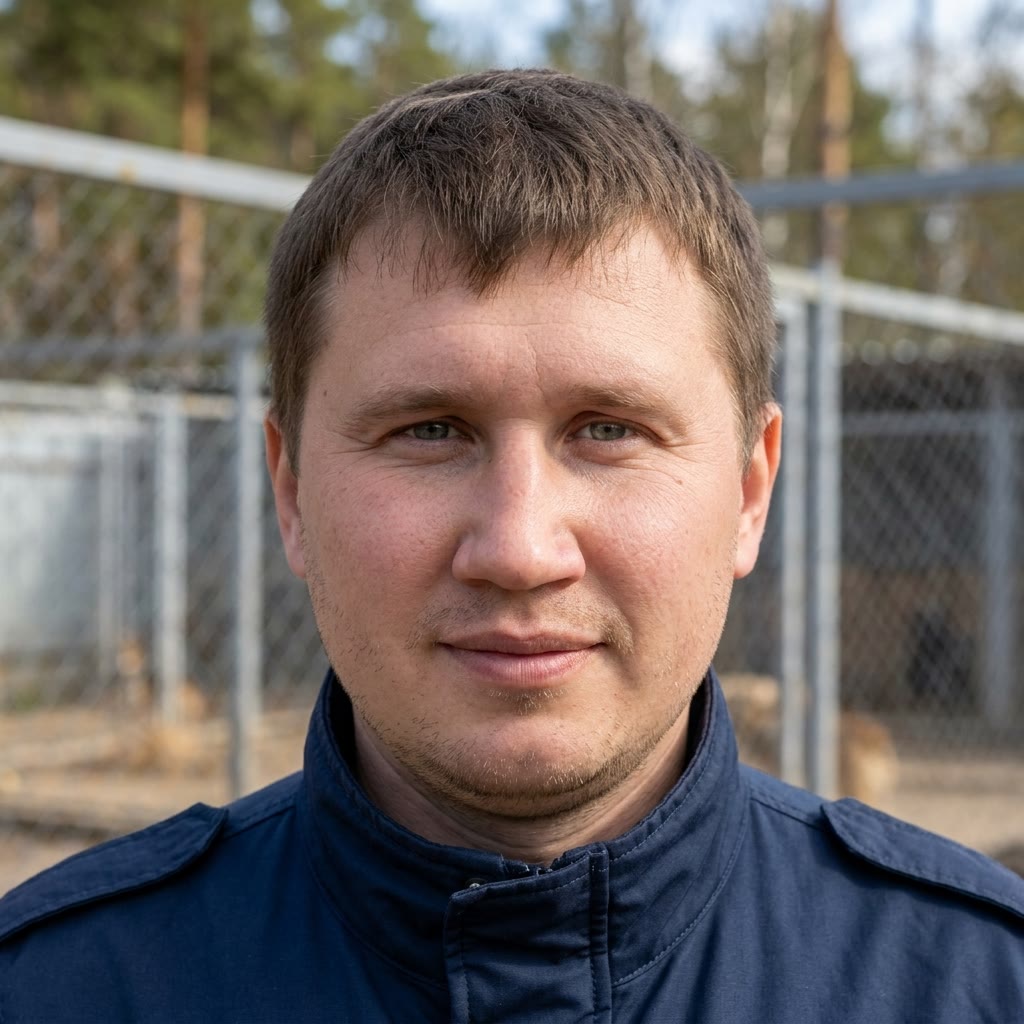
Andrew DarovProfessional dog trainer and instructor
Tell me the age, your housing, and where things break down first: window barking, the door, recall, handling or settling. This opens WhatsApp to Andrew.
Yes, most do. The breed was selected to bark at birds in trees for long periods, and Finnish trials still judge the bark. Training can make barking shorter and more useful, but a quiet dog is not a realistic goal.
Is a Finnish Spitz a good first dog?+
It can work for an active first-time owner who reads up, enjoys long walks and is ready to train barking and recall patiently. It is a hard first dog for someone who needs quiet or wants quick obedience.
Can a Finnish Spitz live in an apartment?+
Some do, but the voice is the main risk. With good daily walks, blocked window views and a trained alert routine it can be manageable. With thin walls and long hours alone it often goes badly.
How much exercise does an adult Finnish Spitz need?+
Most adults need around an hour or more a day, ideally including long sniffing walks on a line and some running in a secure area, plus short brain games.
Can a Finnish Spitz be off lead?+
Some can in safe, enclosed areas after long recall training. Around birds and squirrels many will range and ignore you, so a long line or fenced area is the safer default.
Finnish Spitz vs Shiba Inu: which fits better?+
Both are independent spitz breeds. The Finnish Spitz is usually more vocal and a little larger; the Shiba often barks less but resists handling more. Pick the challenge you would rather live with.
Finnish Spitz vs Norwegian Elkhound: what is the difference?+
Both are Nordic hunting spitz with strong voices. The Elkhound is heavier and was used on elk; the Finnish Spitz is lighter, red, and specialised in barking at game birds.
Are Finnish Spitz good with children?+
Many are playful and gentle with respectful children. They are sensitive and may avoid rough handling. Supervise and teach children not to hug or corner the dog.
Are they good with cats and small pets?+
Some live with a cat they were raised with. Birds and small rodents are risky because of the hunting interest. Keep them separated if you are unsure.
What health themes should I ask a breeder about?+
Ask about hip and elbow screening, knees, and any epilepsy in the family. Weight control matters too. This is general awareness for a vet conversation, not a diagnosis.
How much do Finnish Spitz shed?+
Moderately most of the year and heavily during the seasonal coat blow. Weekly brushing, daily during the shed, keeps it manageable.
What is the typical lifespan?+
Public breed references usually give about 12–15 years. Individual dogs vary.
If a Finnish Spitz sounds like more voice than your home can carry
It is a charming, healthy-looking breed, and it is not right for every address. Another breed may suit you better.
A shaggy Tibetan mountain companion, not a British earthdog. Needs real outdoor work, coat care and clear door manners.
Need a read on your exact situation?
Tell me your Finnish Spitz’s age and the scene that keeps repeating: window barking, the door, recall around birds, handling or settling in the evening. We check safety and health first, then choose the first skill.
Written by Andrew Darov, professional dog trainer. Not veterinary advice and not a diagnosis.
Not a kennel club. No invented reviews. No vaccine schedules or toxin doses. Photo credits in
/images/breeds/finnish-spitz-guide/credits.md.