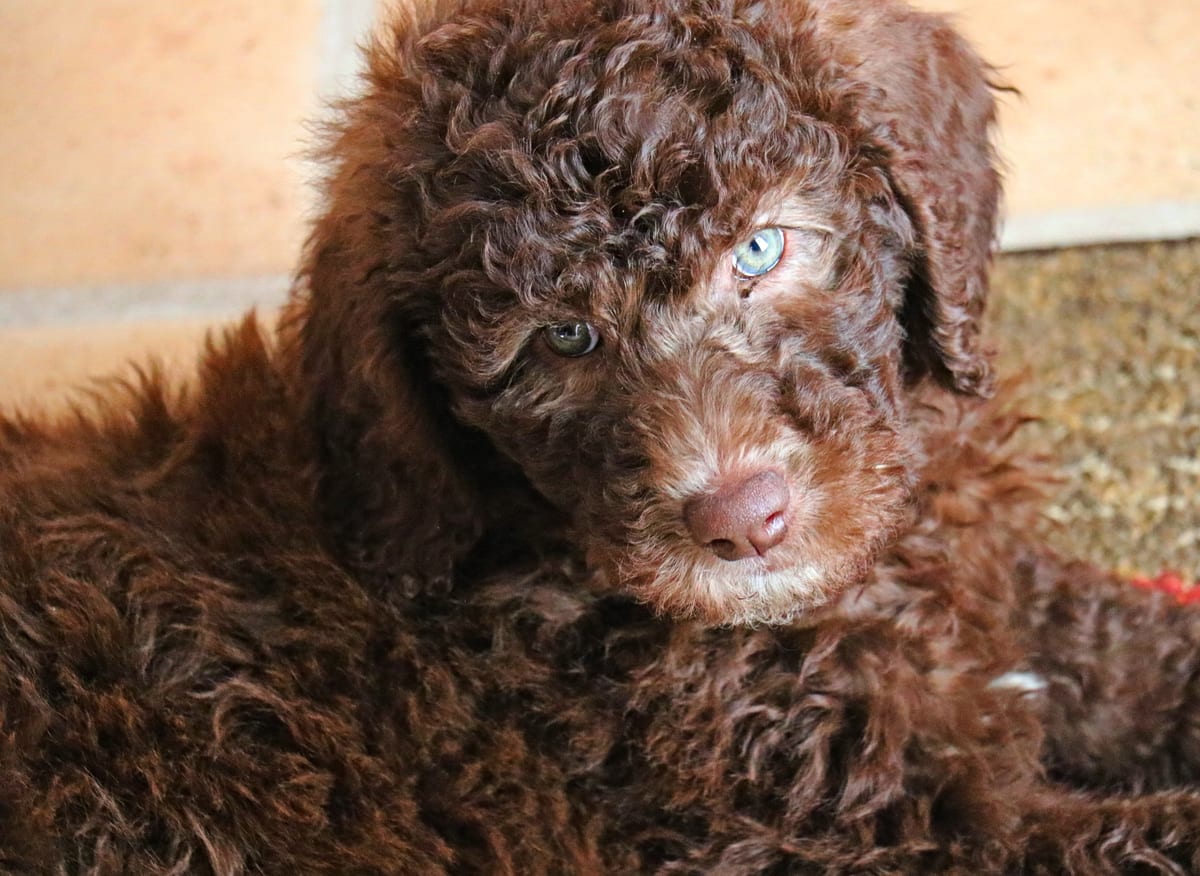
A Poodle notices patterns first — the doorbell, the window, the third soft sit you
accepted — then checks whether the handler still owns the rules. The clip is culture.
Underneath is a water-retriever brain. City life works when you teach two skills: clear rules for a clever dog, and a settle after vigilance, before the coat bill and the
bark hobby own the week.
Sizes: Standard, Miniature, Toy — same type, different mileage and handbag risk.
Coat: Low loose shed; real cost is brush + clip every 4–8 weeks.
Public breed histories describe a European water retriever: enter cold water, find the
object, return to the handler. The famous clips started as a way to keep joints and
chest protected while reducing drag. Fashion kept the silhouette. It did not delete the
brain that likes puzzles, patterns, and a job with a clear end.
Training often starts easily — this type notices food, play, and handler motion. The
hard part is consistency. If you mark sloppy sits, you will own sloppy sits. If barking at
the glass bought a conversation, the dog will remember that as precisely as any cue.
Smart is not a free pass.
From the first month, build two chains. First: looked at the human, met the rule,
got a reward. Second: watch closed, body softens, the dog can lie down while the street
keeps moving outside.
Standard over 15 in (38 cm); miniature and toy smaller
Weight
Standard often 40–70 lb (18–32 kg)
Energy
High
Coat / shed
Grows continuously — brush + clip
Job
Water-retrieving type / companion
Breed history
Why one sporting dog was built around water, coat, and return
Origin does not set every puppy’s personality. It explains why many Poodles switch on for
puzzles, water, and patterns — and why a household without a proper job invents a watch
at the glass.
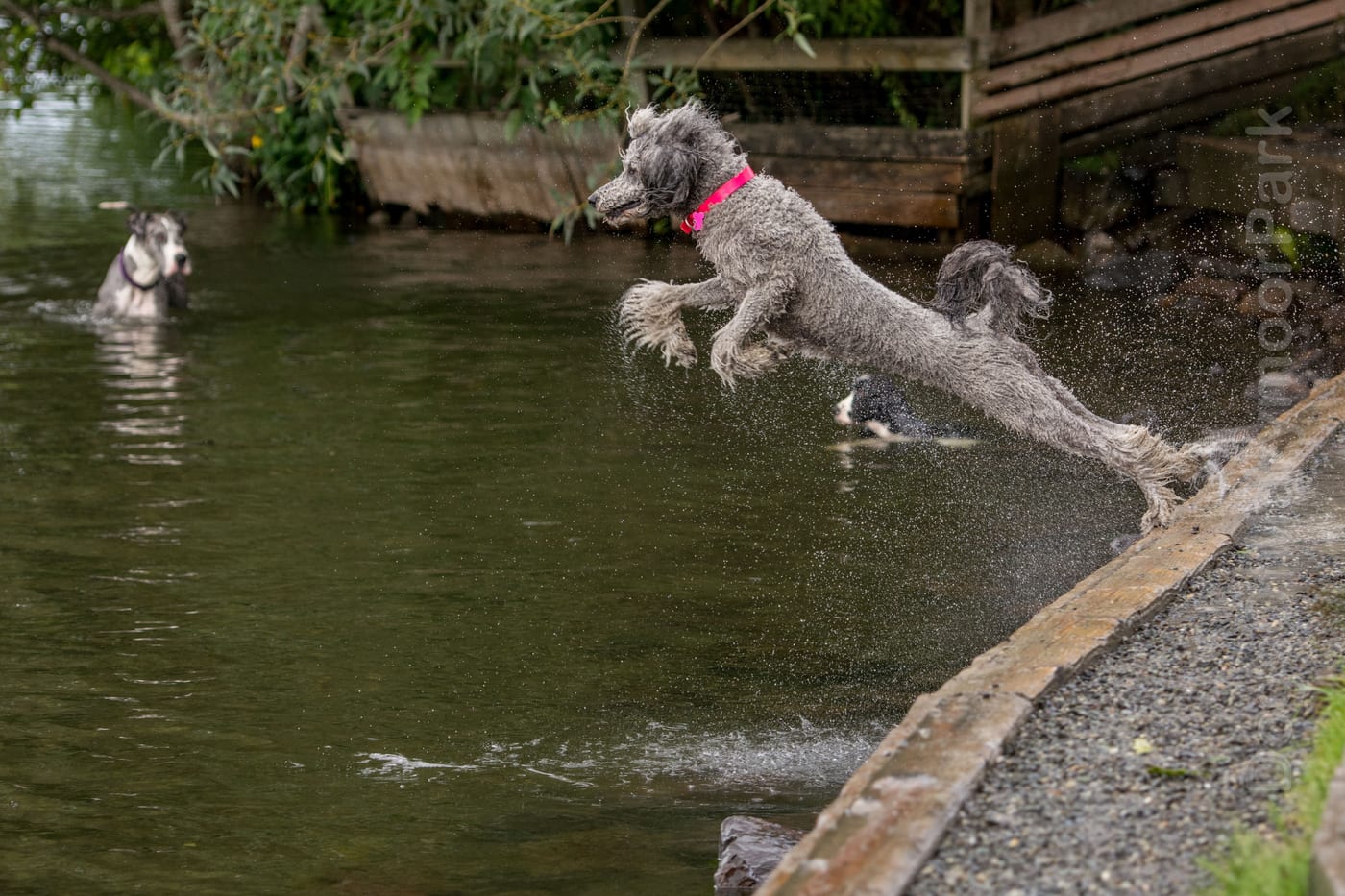
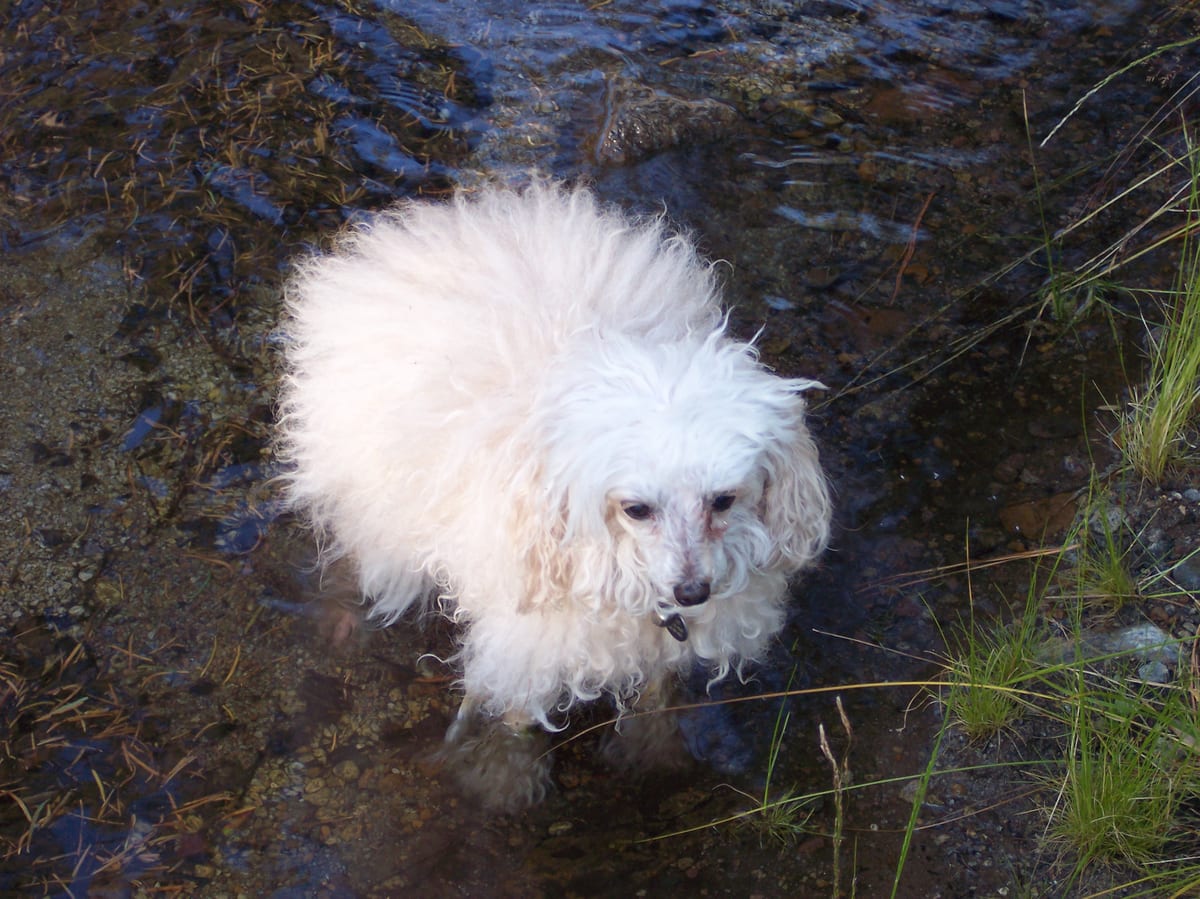
Illustrative water work (modern photograph). Public histories describe Poodles as
waterfowl retrievers — splash, swim, return — long before the show clip became famous.
Europe → waterfowl work
Enter the water, find the bird, come back
The working outline is a dog that retrieved from water and took direction. German and
French naming both point at splashing and duck work. Swimming alone was never enough:
the dog had to search, take, and return to a person.
Coat clips that look like fashion started as function — protect chest and joints in
cold water, reduce drag on the rest. The modern Continental is a long way from a
working trim. The brain did not become a sofa pillow because the haircut got famous.
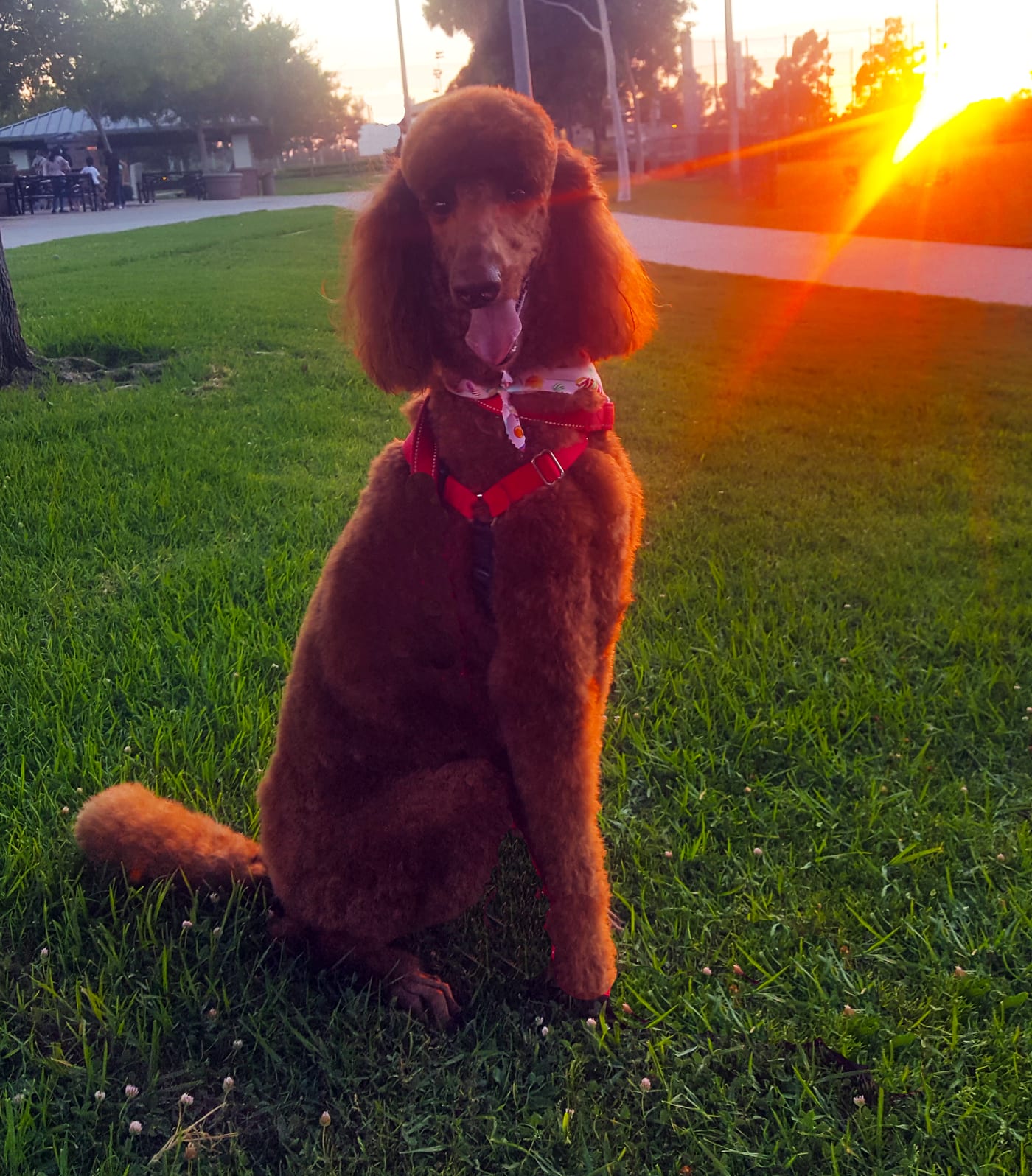
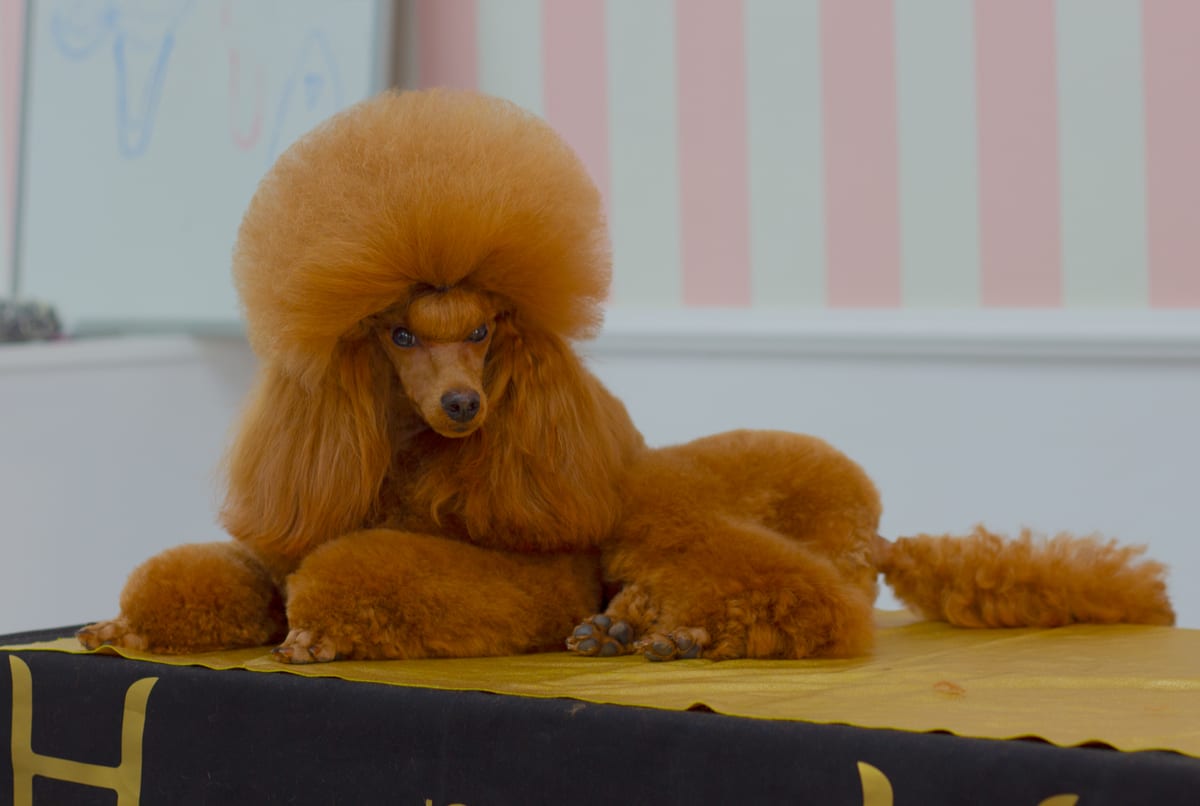
Illustrative adult type. Standard, Miniature, and Toy share a learning speed; they do
not share the same daily mileage or the same risk of being treated like luggage.
Working goal → pet and ring market
Size varieties, circus history — then silhouette without the job
Size classes were developed so the same type could live in different rooms. Miniature
and Toy are not failed Standards. They are smaller dogs with the same tendency to learn
fast and to get bored fast — plus the extra risk of being carried instead of walked.
You will meet Poodles as circus history, as assistance dogs, as city companions, and as
the parent of a dozen mixed names. The mix does not cancel the coat or the brain. Train
the dog in front of you and budget for haircuts anyway.
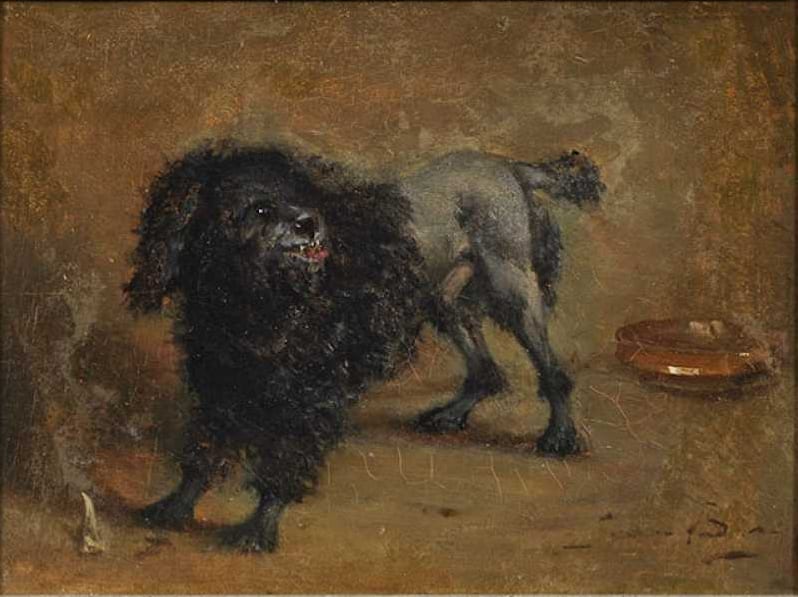
Jean-Baptiste Berré — public-domain historical painting of a Poodle. Culture kept the
look; it is not a modern pedigree sales pitch.
What the breed was bred for
Retrieve, pattern sense, and a coat that never clocks off
In plain trainer language: the type was selected for carrying work in water, taking
direction, and staying in the job. That is why a clear training loop produces a
partner — and why a vague household produces a window manager with a perfect haircut.
Cleverness is not automatically manners. A dog that invents a better version of your
cue is over-practised on loose rules, not “too smart for training.” Distance, food,
and a place to go are the plan.
Clear rules beat “smart enough to guess”
Place and quiet are core skills, not optional tricks
Brush and clip are ownership costs, not vanity
Size class changes mileage — not the need for a job
A day is puzzles, a walk, and a taught end of the watch
In a city the Poodle’s job appetite shows up as soft cleverness: the hallway bark, the
window shift, the variation on your cue, the coat that mats if you skip Tuesday. Management
is not weakness. End the job on purpose so the dog learns that vigilance and retrieve have
a stop time.
Morning · first outing
The walk starts with sniff, not a full-block critique
Many Poodles leave the door already collecting information: scent, people, lifts,
other dogs. If every morning route becomes a lecture about the world, excitement piles up
before the dog has toileted and loosened.
Choose a calm first loop, allow sniff time, and reward a look at you before the leash
tightens toward the next argument. See
leave-it.
City route
Pass dogs, bikes, and cafe tables at a working distance
Leave before the explosion. A clever dog that hits the end of the lead at a greeting
or a bark exchange is still a liability. Slack and distance beat a louder sit.
If every “come” ends the game or the swim, water and dogs become more valuable than
returning. Sometimes call, reward, and send back out on a long line.
Teach a wait and a place before guests and street traffic become a weekly bark
practice. Do not reward the first alarm as “protective.” Vigilance without brakes is
still a hobby.
Crate or mat with a safe chew so the household can cook. A Poodle that cannot lie on a
bed while you work will invent a better job at the window.
Quality load leaves the ability to lie down and not manage the street. See
place
and
enforced naps.
Care and health themes
What to watch monthly — not only before purchase
General awareness only. I am not a veterinarian. Most problems show first as a change in
gait, ear smell after water, coat mats that hide skin, or recovery after a walk. For red
flags, leave this page and open
when to call the vet.
Coat, mats, and skin
The coat grows. Brush to the skin several times a week. Mats pull and hide irritation.
A pet clip on a schedule is maintenance, not vanity. Red zones, smell, or scratching to
wounds belong with a veterinarian.
Ears after water
Drop ears plus swimming and a dense coat create a moist climate. Dry ears and the coat
after water. Smell, shake, discharge, or head tilt is a veterinary visit. This page is
not a diagnosis and not an ear-clean plan.
Joints and size class
Standards can have the same athletic injuries as other retrieving dogs. Toys have the
extra risk of being dropped or stepped on. Keep the dog lean. Do not run a young Standard
like an adult field dog on concrete. Lameness is a vet question.
Eyes, teeth, nails
Discharge or pain is a vet visit — not a louder sit. Toy mouths often need more dental
attention than people budget — ask your veterinarian. Nails short enough for a quiet
indoor step matter on city pavement.
Allergy marketing skepticism
Low loose shed means hair stays in the clippers more often. It is not a medical
hypoallergenic guarantee. People still react to dander. Spend time with the dog before
you buy a story. I will not sell you an allergy cure.
Weight and rations
Measure the ration. Use part of it as training rewards. A heavy Poodle is not a cozy Poodle; it
is a joint conversation waiting for a vet. See
body condition and rations.
Size classes — not three ideas
Standard, Miniature, and Toy share a type
Honest split, no bloodline sales. These are size classes of the same breed type — not
separate personalities sold in three gift boxes. Differences show in mileage, handling
risk, and how the household treats the dog.
Standard
Working outline: more running, more retrieve appetite, more physical play.
Needs a real walk and a chance to swim or retrieve if you can offer it.
Meet parents at rest — not only stacked in a continental clip.
Joints and lean weight deserve the same seriousness as any sporting type.
Fits an active owner with time for movement, training, and a grooming calendar — not
only a “smart apartment dog” promise in a larger body.
Miniature and Toy
Same fast learning and boredom risk — less jump height, more handbag temptation.
Carry less, walk more; let the dog meet the world on the ground.
Protect from drops, rough play, and being treated as an ornament.
Coat bill does not shrink with the dog; brush and clip still apply.
Fits a household ready for mental work, socialization on the ground, and grooming —
not a portable decoration that skips the toilet plan.
Socialization windows
What to introduce — and what not to overload — by age
AVSAB-aligned in spirit: short, clean exposures at a distance the puppy can still eat,
with hygiene while vaccines finish. See the
puppy socialization schedule.
2–4 months
Home and near yard
Introduce: family members, soft floors, short outings, brush and paw
handling, calm guests without a bark party.
Do not overload: crowd of hands, carrying the puppy past every dog,
rewarding window barking as “cute.”
~6 months
City at a distance
Introduce: people and children at distance, calm park dogs, lift in
quiet hours, ear and coat handling, first clean place on a bed.
Do not overload: “everyone pile in” play yards, endless carried
outings, jump or bark practice at the door.
~12 months
Adolescent pattern hunting
Introduce: dogs on an arc, water and nose work with rules, guest by
script, continued transport work.
Do not overload: loose rules on sits, long hours guarding the window, inability
to lie down after the walk.
~18 months
Adult scenes under control
Introduce: harder routes with an exit option; short contacts after a
warm-up, not at peak excitement.
Do not overload: skipped grooming until mats hurt, chronic limps
ignored, panic when left alone without a plan.
~24 months
Maintain the brakes
Introduce: new places without overload; refresh door, place, and
loose-leash rules as confidence arrives.
Do not overload: coat-only care with no walks, sudden weight gain,
letting vigilance become the only job.
Before you buy
Who a Poodle usually fits
Fit is daily decisions: readiness to brush, budget clips, walk a clever dog, and close
the watch just as clearly as you start training.
Good match
More likely a good fit if you…
Will brush to the skin and keep a groomer calendar without resentment
Enjoy short training puzzles most days and teach rest the same way
Will train place and door rules before window barking becomes the hobby
Can agree as a household on the same rules — not “smart enough to know”
Understand size class changes mileage, not the need for a job
Mismatch risk
A Poodle may be a poor choice if…
You want “hypoallergenic and low maintenance” as one package deal
The dog must entertain itself all day with a window and a wish
Barking, soft chaos, and clever variations are unacceptable even during learning
You will carry a Toy everywhere instead of walking and socialising on the ground
Grooming time and cost are surprises you refuse to budget
If you are torn between breeds
Poodle vs Labrador Retriever and Golden Retriever
Labs and Goldens usually bring a similar retrieve appetite with a shedding double coat.
Poodles bring a continuous-growth coat bill, pattern sense, and vigilance. Pick the
failure mode you can live with — then train.
Coat reality
Poodle
Low loose shed; brush + clip are the real cost. Not an allergy medical claim.
Lab / Golden
Short or long double coat that blows — vacuum and brush, fewer salon clips.
Contact style
Poodle
Handler-oriented and a critic; loose rules get invented improvements.
Labrador
Often easier to switch on with food and play; jumps and mouthing without rules.
Household tempo
Poodle
Window watch and pattern barking if under-worked; needs a taught off-switch.
Golden Retriever
Soft social mouth; coat care takes time; similar need to end play cleanly.
Apartment reality
Poodle
Possible with grooming, walks, and place — size alone is not the plan.
Both compares
Square footage still does not replace work — Lab mouth rules, Golden coat care.
Training style
Poodle
Learns fast; consistent rules and calm time need as much work as the trick.
Labrador
Sees results fast; self-control and drop-it need as much work as the retrieve.
Ownership without surprises
Where a Poodle owner’s budget goes
Figures depend on city, food, and size class. Below are cost themes to budget before a
puppy — not prices and not quotes from this site.
Grooming
This is the bill people forget. Pet clip every four to eight weeks plus home brushing.
Skip either and you reward in mats, skin, and emergency shaves.
Food
Size class changes the bag size. Measure; use part of the ration as training rewards. Cheap food
often returns via skin, stool, and weight.
Veterinary
Routine care plus ears after water, dental attention in smaller mouths, and joint talk
in Standards. Know your clinic’s emergency number.
Gear and safety
Leash and harness, long line, crate, mat, brush, dryer habits after water — tools, not
personality. Toys need drop and step awareness.
Training
Puppy class, private help for door and leash, behaviour consult when barking or loose rules stuck. Example ranges vary widely by city — treat any online “average” as
rough, not a quote.
Line reserve
If the pedigree conversation includes joints, eyes, or skin talk, keep a separate
diagnostic reserve — not only an “ordinary year.”
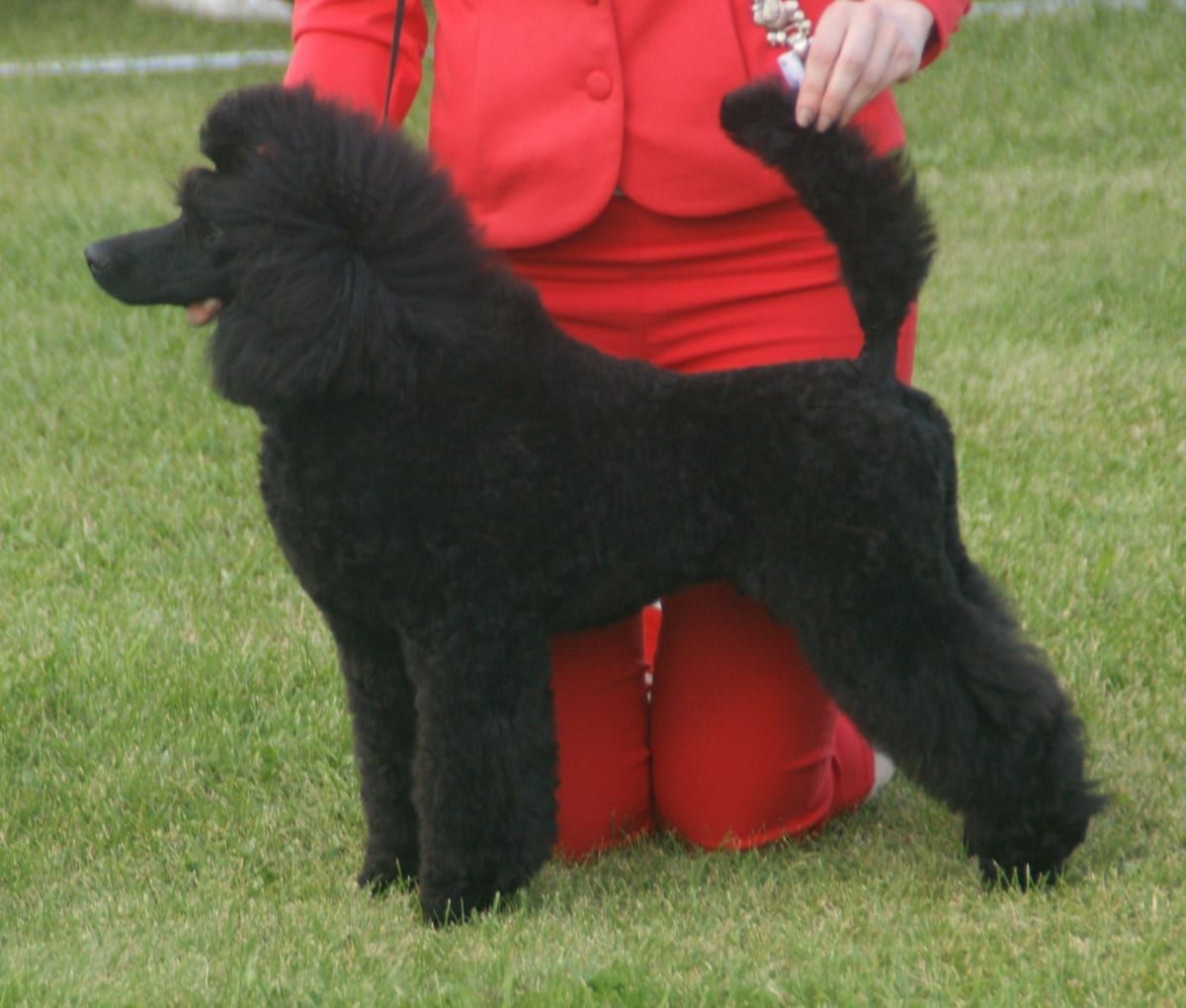
A show-clip photograph does not cancel daily decisions: brush, walk, and a clear end of the
watch remain the main cost drivers.
Before day one at home
What to prepare for a Poodle puppy
The puppy will test patterns, switch on fast for attention, and sleep hard. A few
decisions before arrival beat a hundred “no”s after the fact — including coat handling.
01
Limit space before you lecture
Remove cords, meds, rubbish, and children’s toys. A gate or safe room beats endless
corrections. Management is part of training.
02
Stage brush and body handling
Short, rewarded brush sessions before mats exist. Face, feet, and ears are not optional
later. Pair handling with food so the groomer is not the first hard teacher.
03
Plan the toilet clock
Out after sleep, food, and active play. Accidents mean the interval was too long —
not that the clever puppy is spiteful. Follow
potty training.
04
Protect sleep
After guests, walks, and play, the puppy needs a quiet block. Overtired Poodles look
naughty: barking, mouthing, and zero response. Start
crate training
door-open and use
enforced naps.
05
Dose introductions on the ground
Socialization means see the city safely and recover. Carry less — especially Toys and
Miniatures. The puppy does not need to greet every person and every dog.
06
Start alone time in minutes
Leave briefly while the puppy is calm and return before panic. The first absence
should not be a full workday. See
first absences.
If the dog is already yours
Training is clear rules plus a clear end of the watch
The rule must be visible: four feet on the floor for a hello; place holds while
you cook; the leash hangs past a bark exchange; the sit you mark is the sit you want.
Short precise sessions with a clear payoff fit this breed. Long reps in excitement and soft
marking often strengthen clever chaos. A understood end of play and of the window shift
teaches better than one more trick to “tire the brain.”
Environment management supports learning: baby gates, covered lower windows if needed,
a ready place, measured rations, and a brush on the calendar cut practice of the old
behaviour.
Load balance
Keep puzzle interest — joints, size, and coat set the limit
Age, size class, heat, and meal size change what is allowed. Lameness, ear smell after
water, or slow recovery mean stop and get a veterinary assessment.
Calm walkNose workShort trainingLegal retrieveSleep after the job
Walks, search, swimming with permission, and structured retrieve are available. Endless
ball, height jumps for a young Standard, and a sprint right after the bowl are not
required to close the work need.
Quality load leaves the ability to lie down and not manage the street.
Window, door, and vigilance
How to teach a Poodle to stop watching the window
Start with a quiet predictable signal and a prepared payoff while a real street parade is
still too hard.
01
Catch the window or door notice
When the dog notices the passer-by, the lift ding, or the guest at the threshold, mark the notice quietly. Do not cheer the bark or rush the glass with the dog. Your job is to catch the moment before watching the window becomes the dog’s job.
02
Call a look, then a hand target or sit
Cue a name or a hand target so the dog checks the handler. Reward the look at a distance the dog can still eat. If the dog cannot look, you are too close to the trigger — add distance or a barrier.
03
Send to a known place
Send the dog to a mat or bed away from the window or door. The place is a park, not a punishment. Reward arrival and a down while life continues outside the glass.
04
Reward quiet duration
Feed for soft body and closed mouth in short slices. If the bark returns, you asked for too much duration or the trigger is too hard. Reset easier. Do not reward the bark with a conversation.
05
End the shift cleanly
Release only when you choose. Then give a safe chew or a short training game. Clever dogs that only learn “start the watch” invent the rest of the evening at the window.
One scene close-up
Why smart becomes “he already knows” — and then invents
For a pattern-sensitive Poodle, a soft sit that still earns dinner is information. The
dog did not forget. The dog updated the rule. If the human keeps rewarding the variation,
the variation becomes the standard.
Mark cleanly. End the session before the dog frays. Raise the difficulty in small steps. If
food fails at any distance from a bark trigger, add space — do not shout the dog into a
fake sit.
Shouting can interrupt an episode without teaching which behaviour earns rest. If the
harness is ripping toward traffic or the dog cannot eat at any distance, safety belongs
with a qualified professional.
“With a Poodle, I do not argue with the brain wanting a job. We give clear rules, a
legal puzzle or retrieve, teach place for the window watch, and budget the coat — because
smart without an off-switch is still boredom with a haircut.”
Sessions cover real scenes: window, door, loose leash, guest greeting, water, grooming
handling, and rest after exercise. The breed’s cleverness helps — and hurts if brakes never
appear. I am a trainer, not a veterinarian. No invented reviews.
Andrew DarovProfessional dog trainer and instructor
Describe age, size class, living setup, and where the dog breaks first — window, door, leash, coat handling, or rest after the walk. Opens WhatsApp to Andrew.
Are Standard, Miniature, and Toy Poodles different breeds?+
No. They are size classes of the same breed type. The brain that learns fast and gets bored fast is shared. Jump height, handbag risk, and daily mileage are not. Buy the size that matches your hands, stairs, and real exercise needs — not the idea that Toys are “easier personalities.”
Do Poodles shed? Are they hypoallergenic?+
Loose hair is usually low. You reward that bill at the groomer and with a brush to the skin. Low shed is not a medical allergy cure. Some people do better around a Poodle coat; some do not. Spend time with the actual dog before you buy a marketing story. I will not sell you an allergy promise.
How much grooming does a Poodle need?+
A pet clip every four to eight weeks is normal for most households, plus brushing to the skin several times a week. Mats are shed you did not remove. If you cannot brush, you cannot honestly keep this coat. A sporting or lamb clip is easier than a sculpture and still looks like a dog.
Is a Poodle a good apartment dog?+
Size can fit a flat. The brain still wants a walk, a puzzle, and a taught settle. An under-worked Poodle often invents a job at the window. Square footage does not replace rules.
Are Poodles easy to train because they are smart?+
Smart means they learn the first time — including the wrong lesson. Sloppy sits become owned sits. Soft chaos at the door becomes a hobby. Keep rules honest. Smart is not the same as easy to live with.
Why does my Poodle bark at the window or door?+
Vigilance and pattern-noticing are common. If barking bought a conversation, a chase to the glass, or a group reaction, the barking was rewarded. Teach a place, reward quiet, and do not narrate every passer-by.
How much exercise does an adult Poodle need?+
Most adults I see do better with roughly 60–90 minutes of real movement plus brain work — retrieve, scent, shaping — not only a mindless trot. Standards usually want more running. Toys and Miniatures want less mileage and the same mental work. Puppies need shorter sessions and more naps.
Do Poodles like water?+
Many do — the working outline is a water retriever. Teach enter and exit on permission, dry ears and coat after swimming, and do not let every puddle become a free swim. Smell, shake, or discharge after water is a veterinary visit.
Are Poodles good with kids?+
A well-raised Poodle can live with children. A Standard is a mid-size athlete; a Toy is a breakable teammate. Supervise, teach a sit-for-hello, and give the dog a rest place adults control. No breed is a nanny.
What is the typical lifespan of a Poodle?+
Public breed references often cite roughly 12–15 years. That is a range from public knowledge, not a promise for any individual dog.
Is a Poodle a good first dog?+
A Poodle can be a good first dog if you will brush, budget grooming, walk, and train with clear rules. If you wanted “smart and low maintenance,” you bought half a sentence. The coat never clocks off.
When is a Poodle too much dog?+
When the household cannot walk, brush, pay for clips, and manage barking and cleverness. Buy the week you actually have — including grooming time — not the silhouette from a show clip photo.
If a Poodle feels too clever — or the wrong coat bill
The breed is popular, but not for every home. Sometimes another coat, size, or contact
type fits better.
A friendly, tuxedo-marked American companion that needs calm greetings, moderate exercise and care in hot weather.
Need a read on your exact situation?
Describe your Poodle’s age, size class, and the scene that repeats most: window, door,
leash, coat handling, water, or rest after the walk. We check safety first, then pick the
first skill.
Written by Andrew Darov, professional dog trainer. Not veterinary advice and not a diagnosis.
Not a kennel club. No invented reviews. No vaccine schedules or toxin doses. Photo credits in
/images/breeds/poodle-guide/credits.md.