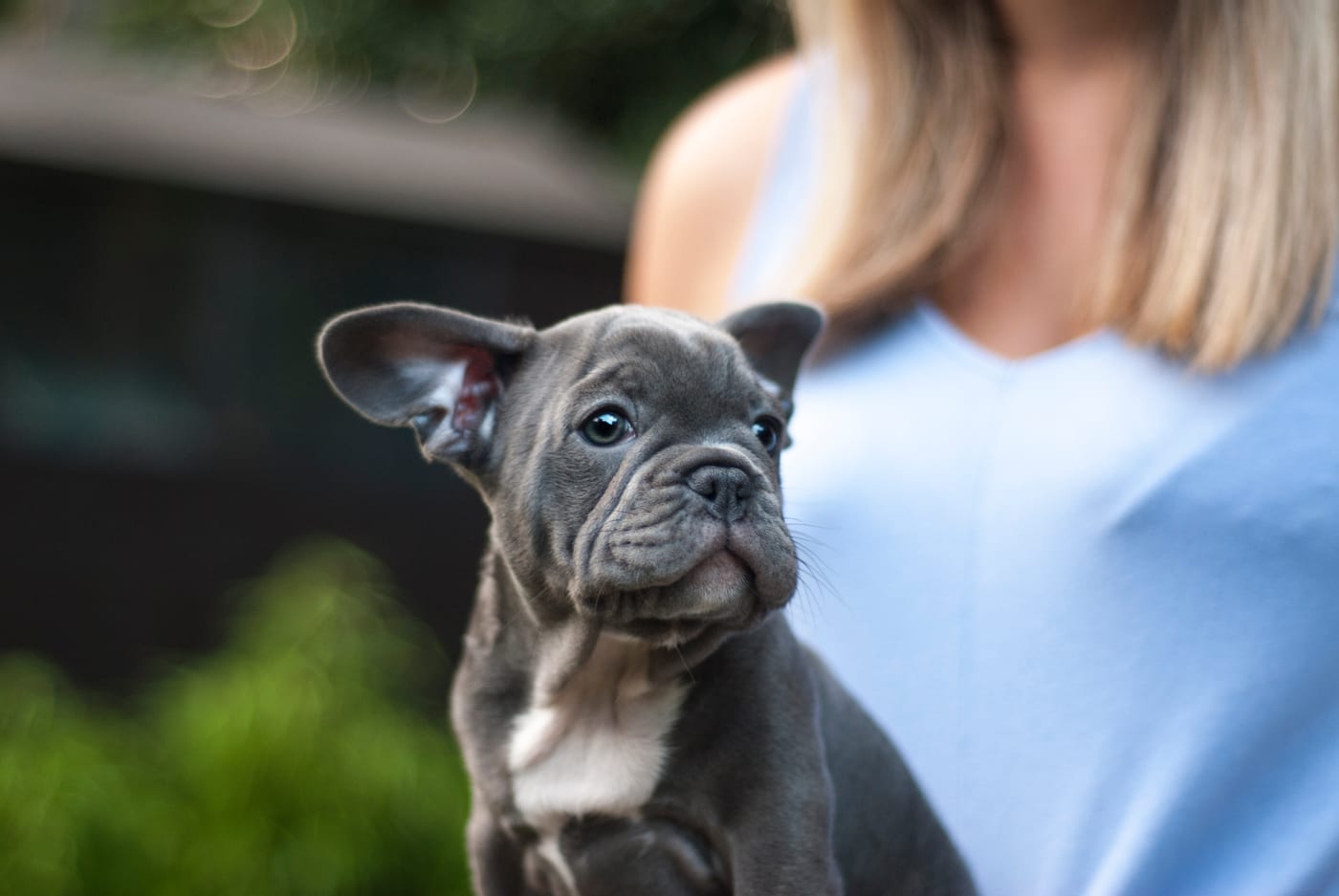
French Bulldog: temperament, training & apartment life
A Frenchie notices people first — the door, the sofa, the laugh that rewards the bark —
then checks whether the handler still owns the rules. City life works when you teach
manners with food, keep walks short and cool, and treat heat and breathing as welfare,
not as a cute soundtrack.
Apartment? Often yes for space — still needs toilet, rest, cool walks, and rules.
Exercise: Short regular outings; stop in heat or when breathing gets loud.
Temperament: People-facing companion; stubborn for food, not for theatre.
Public breed standards describe a small companion built to live close to people — bat
ears, compact body, a face that photographs well. In a city those same traits show up
as a dog that wants your lap, practises door barking for laughs, and cannot be asked to
jog August pavement like a sporting athlete.
Training looks easy when food is on the table — and stalls when the household skips
rules because the dog is portable. If every bark bought attention and every sofa
corner became a fortress, the dog will remember that as precisely as any cue.
From the first month, build two chains. First: looked at the human, went to a bed,
met the rule. Second: short outing ended while breathing was still recoverable,
body softens, the dog can rest while life continues nearby.
Why one companion dog was built for close quarters, not a farm run
Origin does not set every puppy’s personality. It explains why many Frenchies switch on
for people, food, and indoor clowning — and why heat and stairs were never the design
brief for a marathon athlete.
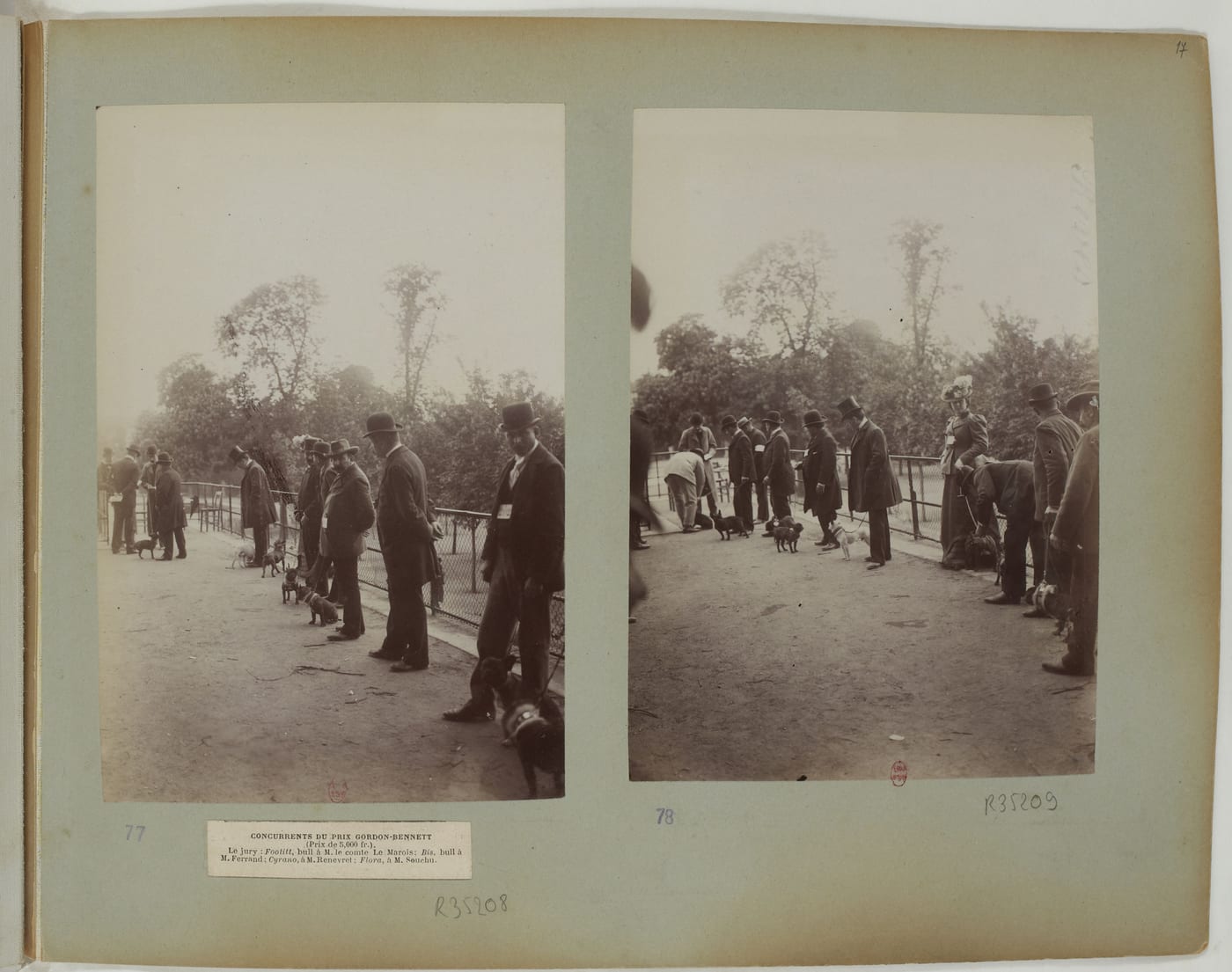
Historical plate (Collection Jules Beau, c. 1899). Public-domain context for early
companion bulldog-type dogs at exhibitions — not a modern pedigree sales pitch.
England → France
Live with people in a city room
The breed’s story runs through English bulldog-type dogs and a French city life that
favoured a smaller companion outline. Public kennel-club histories describe a dog kept
for company, not for driving stock or retrieving waterfowl all day.
Bat ears and a compact body are the modern picture. The job was never to run a farm.
The job was to live with people in close quarters — which is why the type can do well
in a flat and why the same dog may not do well in a heatwave on a third-floor walk-up.
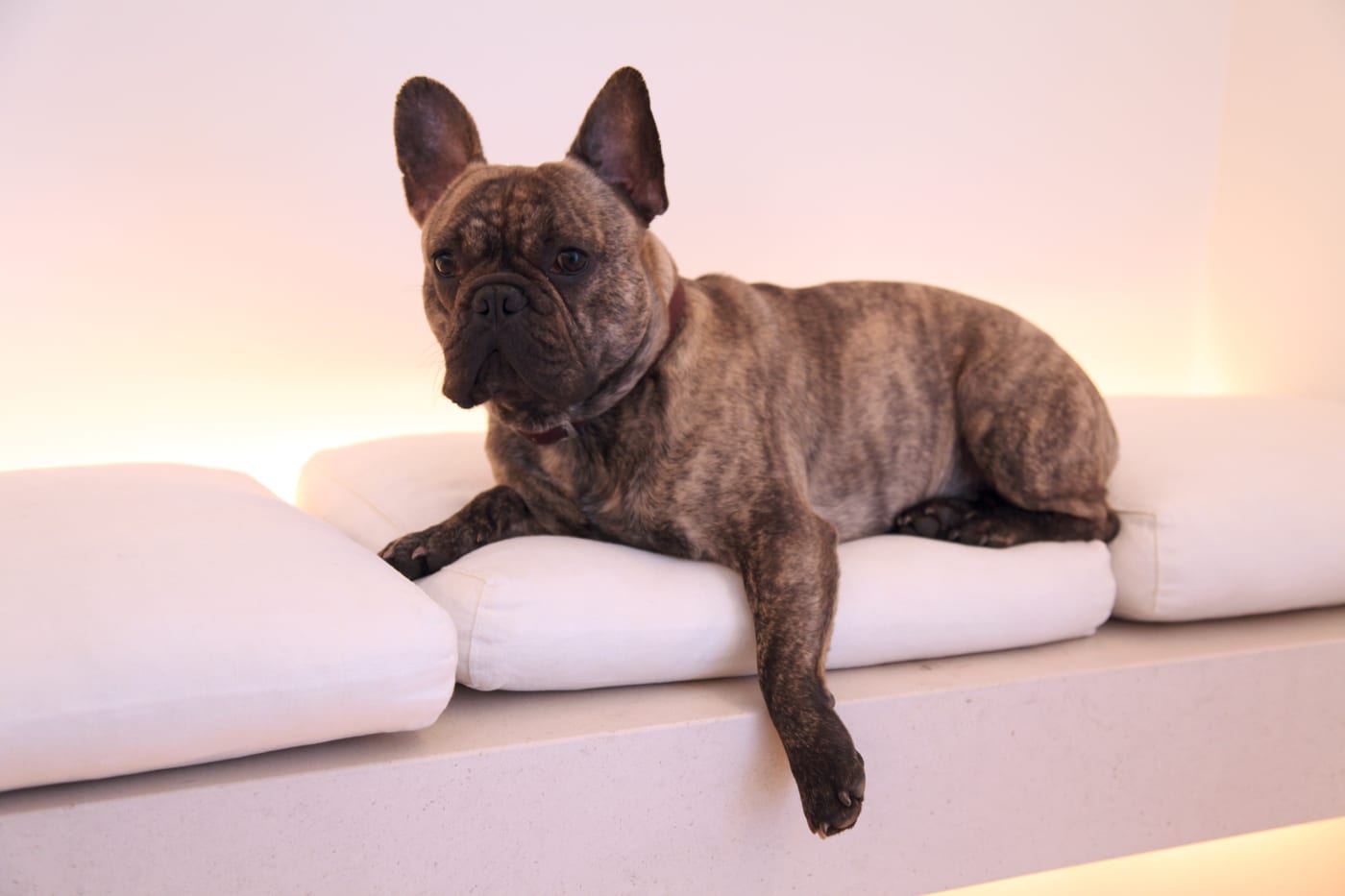
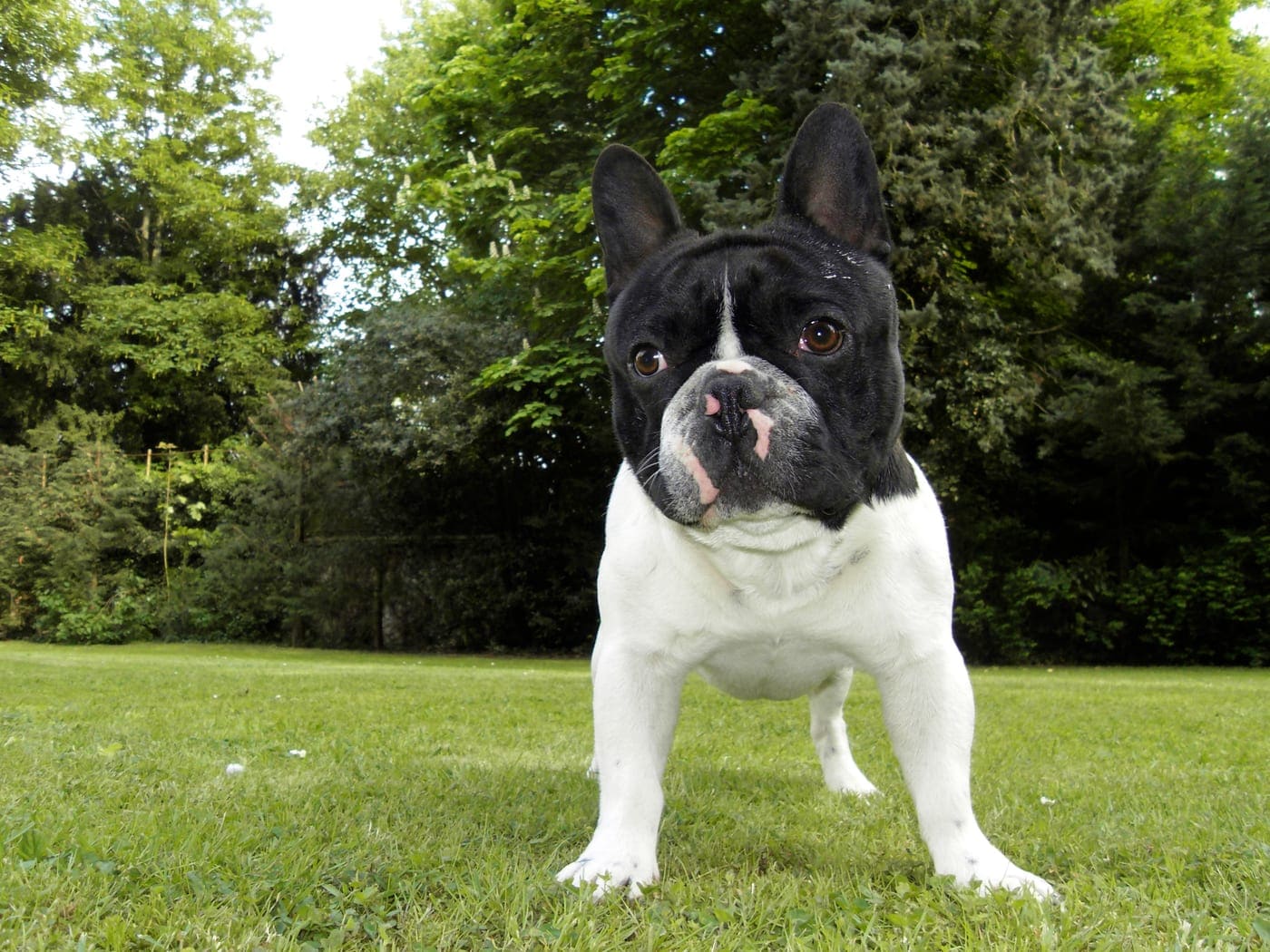
Illustrative adult type. Companion reputation and photogenic outline share a household;
they do not share the same breathing, back, or heat tolerance in every individual.
Working goal → pet market
Companion job, then silhouette without the management
Demand kept the friendly face and often dropped the boring parts: toilet schedules,
rest places, cool-hour walks, and a household that does not treat the dog as a cushion.
Popularity is how you get a wide range of breathing, backs, and skins.
You will hear arguments about colour, ear set, and “teacup” marketing. Those matter to
people who breed. For an owner, the useful history is simpler: look at the dog breathing
at rest before you look at the colour.
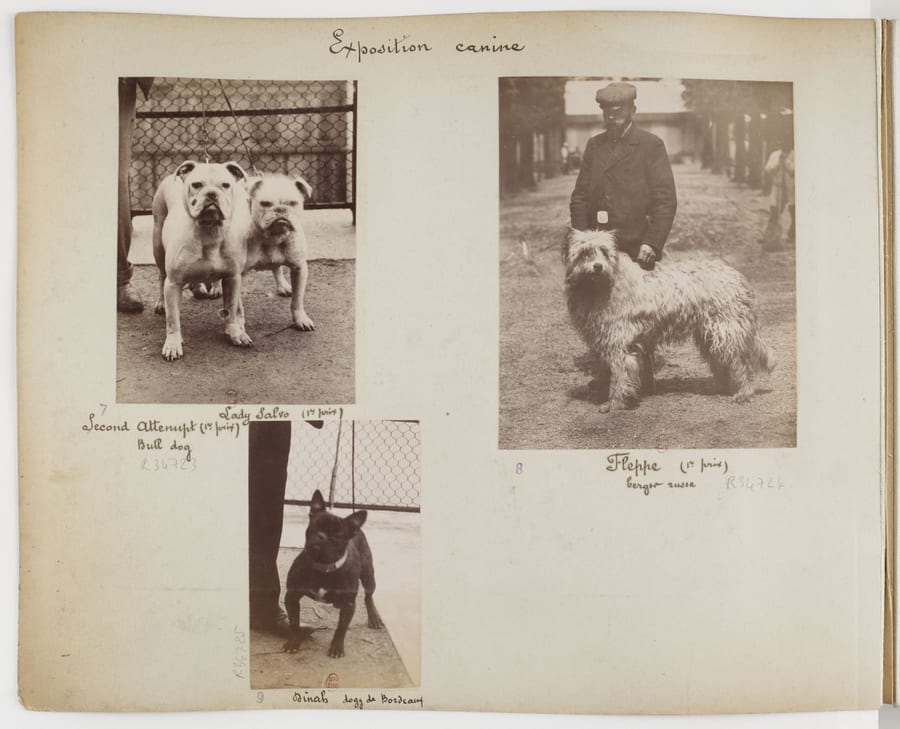
Historical plate (Collection Jules Beau, c. 1898) — public-domain exhibition context
for early companion bulldog-type dogs. Not a modern pedigree sales pitch.
What the breed was bred for
People focus, compact body, and indoor life
In plain trainer language: the type was selected for living with humans in tight
spaces, not for endless pavement mileage. That is why a clear place-and-food plan
produces a partner — and why a vague household produces a door clown with opinions
about the lift.
Compact is not automatically low-maintenance. A dog that cannot settle while you cook,
or that overheats on a noon loop, is over-practised or under-managed — not “loving.”
Food rules beat door entertainment
Cool short walks beat heroic heat outings
Rest place and toilet plan are companion-job tools
Weight control protects a short back and a short face
In a city the Frenchie’s companion appetite shows up as door noise, sofa guarding of
space, and a household that skips training because the dog fits in a tote. Management is
not weakness. End sessions while breathing is still recoverable so the dog learns that
play and clowning have a stop time.
Morning · first outing
The walk starts cool and short, not as a hero loop
Many Frenchies leave the door already warm. If every morning route becomes a pavement
march in rising heat, excitement and breathing debt pile up before the dog has toileted
and loosened.
Choose kinder hours, allow sniff time, and end before the dog is noisy at rest. See
loose leash walking.
City route
Pass dogs and lifts without turning small into spoiled
Leave before the explosion. A compact dog that screams in the lift or lunges at a
wrestle-style playmate is still a liability. Slack, distance, and food rules beat
picking the dog up as the only plan.
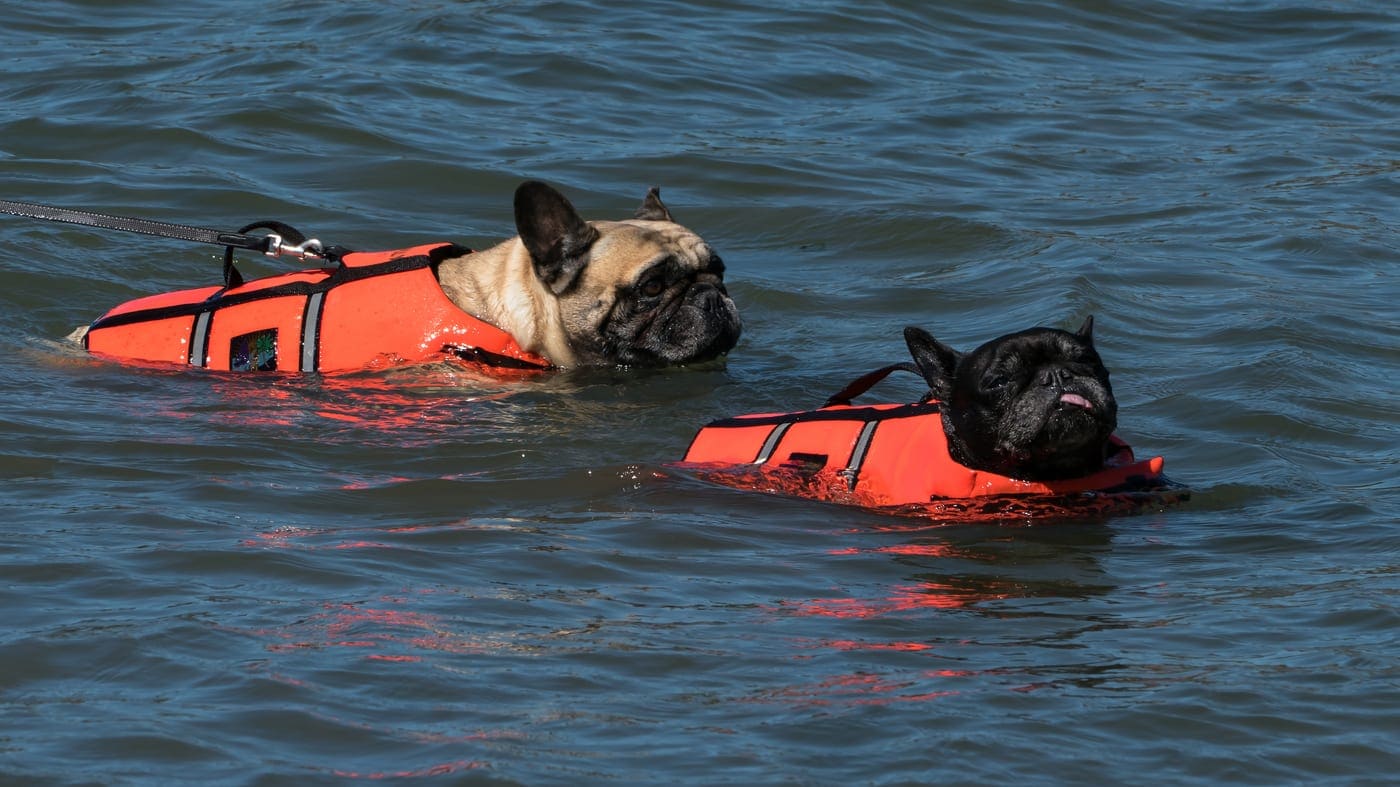
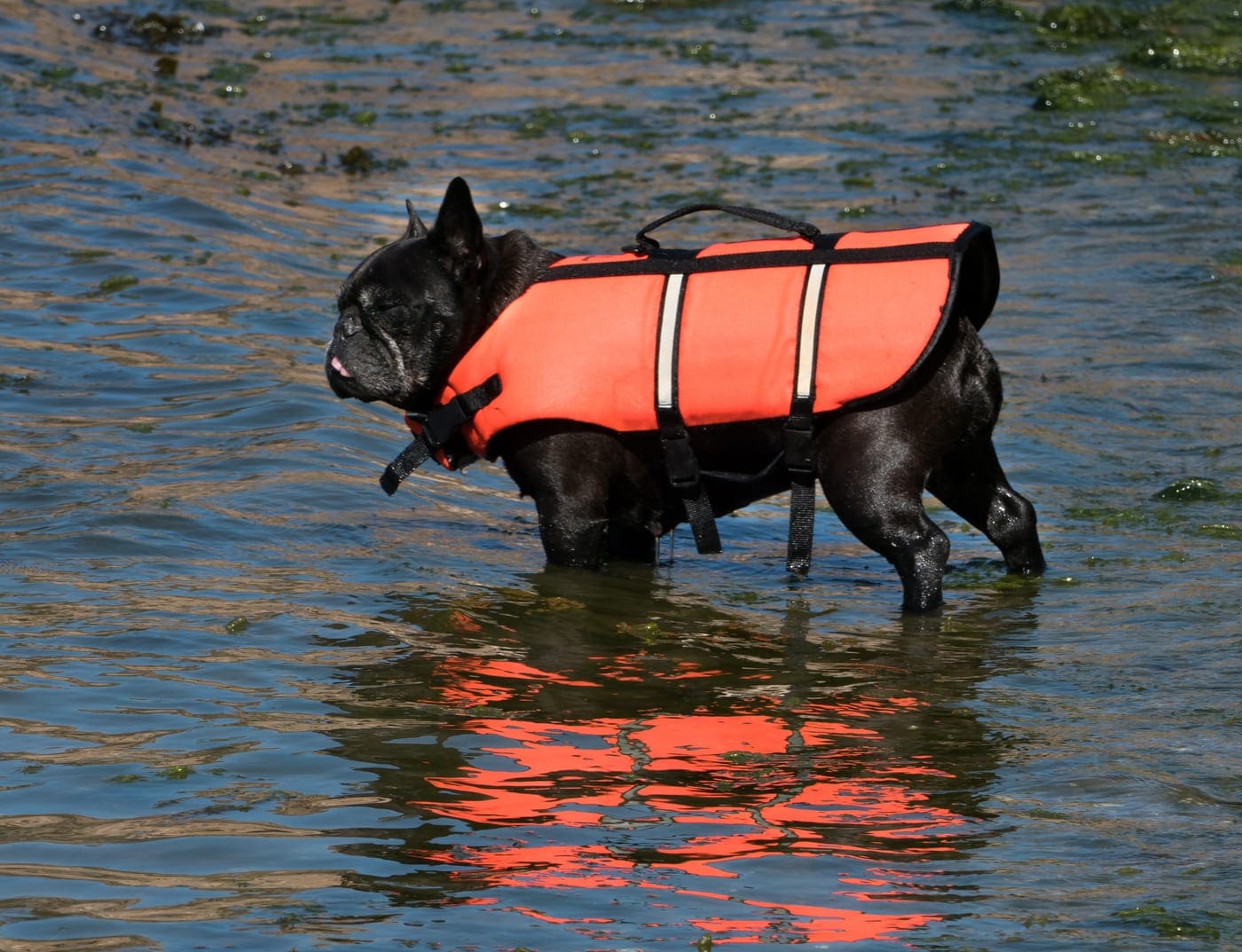
Short faces change swimming and summer play. Life jackets and shade are owner tools —
not proof the breed is an athlete. Stop if breathing gets loud or recovery stalls.
Distress, collapse, or inability to rest after mild play is
when to call the vet
— not a louder sit.
Door · guests
Quiet on a bed beats ten barked arrivals
Teach a wait and a place before guests become a weekly failure. Do not reward the first
bark as “funny.” Entertainment without brakes is still practice.
Crate or mat with a safe chew so the household can cook. A Frenchie that cannot lie on
a bed while you plate food will invent door duty and sofa arguments.
Quality load leaves the ability to lie down and not hunt for the next laugh. See
enforced naps
and
place.
Care and health themes
What to watch monthly — not only before purchase
General awareness only. I am not a veterinarian. Most problems show first as a change in
breathing at rest, heat tolerance, gait, skin folds, or recovery after a short walk. For
red flags, leave this page and open
when to call the vet.
Breathing and heat
Short faces change cooling and airflow. Noisy distress, fainting, or inability to rest
is not “stubborn.” Stop the session, cool the dog, and use a veterinarian when relevant.
I will not publish treatment plans or surgery shopping lists from a training desk.
Spine and IVDD themes
Widely discussed in the type as awareness — not a diagnosis of your dog. Ask your vet
how to think about stairs, sofa jumps, weight, and ramps. Sudden rear weakness or
crying on movement is a veterinary emergency path, not a cue drill.
Skin folds and ears
Face folds and the tail pocket can collect moisture. Keep clean and dry. Smell, raw
skin, or angry ears are a vet visit — not a new shampoo brand from a forum.
Weight and rations
Extra kilos on a short-faced, short-backed dog are not cute. Measure food. Frenchies
are talented beggars. See
body condition and rations.
Eyes, nails, harness
Discharge or pain is a vet visit. Nails grow fast when walks are short — trim. Harness
fittings should not press on a throat that is already working hard.
Travel and air stress
Cabin rules change by airline. Short-faced dogs can be at higher risk in heat and
stress. Ask your veterinarian and the airline. I will not green-light a flight from
markup.
Breeding lines
Companion popularity is not one breathing profile
Honest split, no bloodline sales. Differences show in structure, heat tolerance, and how
an adult handles stairs and rest — meet the parents breathing at rest.
Show and companion focus
Often selected for outline and temperament in close quarters.
See parents at rest — not only stacked in a ring or on a feed.
Ask how the household manages heat, folds, and veterinary follow-up.
Socialization and door rules still start in week one.
Fits a household ready for cool-hour walks, food training, and veterinary budgets —
not only a “cute apartment dog” promise.
High-demand / colour-first market
High demand widens the range of breathing, backs, and skins.
Colour marketing is not a health plan.
Look at the dog breathing at rest before you look at the coat story.
Refuse pressure to skip paperwork or vet conversations.
Fits nobody as a shopping strategy. Buy the dog in front of you — or walk away.
Socialization windows
What to introduce — and what not to overload — by age
AVSAB-aligned in spirit: short, clean exposures at a distance the puppy can still eat,
with hygiene while vaccines finish. See the
puppy socialization schedule.
2–4 months
Home and near yard
Introduce: family members, soft floors, short cool outings, one new
sound or surface per walk, calm guests without a bark party.
Do not overload: crowd of hands, heat walks, rewarding door barking as
“cute.”
~6 months
City at a distance
Introduce: people and children at distance, calm dogs, lift in quiet
hours, paw and fold handling, first clean place on a bed.
Do not overload: wrestle clubs, noon pavement, carry-only life that
skips walking manners.
~12 months
Adolescent opinions
Introduce: dogs on an arc, guest-by-script, continued transport work,
short training rewarded with food.
Do not overload: sofa cornering with toddlers, ignored heat stress,
endless door duty.
~18 months
Adult scenes under control
Introduce: harder routes with an exit option; short contacts after a
cool warm-up, not at peak heat.
Do not overload: forced fetch in humidity, stairs as free play,
chronic noisy distress ignored as “breed snore.”
~24 months
Maintain the brakes
Introduce: new places without overload; refresh door, place, and
cool-hour rules as adult weight arrives.
Do not overload: sofa-only life, sudden weight gain, panic when left
alone without a plan.
Before you buy
Who a French Bulldog usually fits
Fit is daily decisions: readiness to train with food, manage heat and weight, and budget
for veterinary conversations common to the type — not only a photogenic silhouette.
Good match
More likely a good fit if you…
Will walk at cooler hours and stop when breathing gets loud
Will train wait, place, and door quiet before guests become weekly failures
Can agree as a household on the same sofa and toilet rules
Will look at parents breathing at rest and read risk paperwork without theatre
Understand small is not trained and cute is not a care plan
Mismatch risk
A Frenchie may be a poor choice if…
The dog must entertain itself all day as a sofa ornament
You want a jogging partner or heat-proof hiking buddy
Door barking and toilet accidents are unacceptable even during puppy learning
You cannot manage stairs, weight, or veterinary follow-up for the type
Picking the dog up is the only plan for manners
If you are torn between breeds
French Bulldog vs Cavalier and Poodle
Cavaliers usually bring softer sporting-companion energy with their own heart/eye
conversations. Poodles bring a retrieving brain and a coat bill. Frenchies bring compact
people-focus plus heat and breathing awareness. Pick the failure mode you can live with —
then train.
Contact style
French Bulldog
People-facing; food helps; door clowning without rules.
Cavalier
Soft social companion; still needs manners and rest rules.
Household tempo
French Bulldog
Short cool outings; indoor play; clear end of the show.
Poodle
More job hunger and coat work; brain needs puzzles.
Apartment reality
French Bulldog
Space often works; heat, stairs, and toilet plan still decide.
Both compares
Square footage still does not replace training — Cavalier exercise, Poodle coat.
Health themes
French Bulldog
Breathing, heat, skin folds, spine awareness — vet when relevant.
Cavalier / Poodle
Different public risk conversations; still not a diagnosis from this page.
Training style
French Bulldog
Short food sessions; rules over theatre; watch overheating.
Poodle
Learns fast; invents variations; coat does not cancel the brain.
Ownership without surprises
Where a French Bulldog owner’s budget goes
Figures depend on city, food, and line health. Below are cost themes to budget before a
puppy — not prices and not quotes from this site.
Food
A compact dog still eats measured rations. Use part as reward. Begging plus free-fed
kibble returns via weight — and weight matters here.
Veterinary
Routine care plus the reality of breathing, skin, eye, and spine conversations common
in public discussion of the type. Know your clinic’s emergency number.
Gear and safety
Well-fitted harness (not throat pressure), leash, crate, mat, gates, ramp if advised —
tools, not personality. Cooling options for warm months.
Grooming
Coat is the easy bill; folds and nails are the real work. Budget time for clean dry
skin — not only a rubber brush.
Training
Puppy class, private help for door and toilet, behaviour consult when stuck. Example
ranges vary widely by city — treat any online “average” as rough, not a quote.
Line reserve
If the pedigree conversation includes breathing, back, or skin talk, keep a separate
diagnostic reserve — not only an “ordinary year.”
A photogenic face does not cancel daily decisions: heat, weight, door rules, and a clear
end of the clown show remain the main cost drivers.
Before day one at home
What to prepare for a French Bulldog puppy
The puppy will test attention with noise, switch on for people, and sleep hard. A few
decisions before arrival beat a hundred “no”s after the fact.
01
Limit space before you lecture
Remove cords, meds, rubbish, and unsafe jumps off sofas. A gate or safe room beats
endless corrections. Management is part of training.
02
Stage safe chews and a bed
A chew should appear before the sleeve does. Teach place early so “cute on the sofa”
is not the only park. See
place
and
biting and nipping.
03
Plan the toilet clock
Out after sleep, food, and active play. Accidents mean the interval was too long —
not a size tax. Follow
potty training.
04
Protect sleep and cool recovery
After guests and play, the puppy needs a quiet block. Overtired Frenchies look
naughty: barking, zoomies, and zero response. Start
crate training
door-open and use
enforced naps.
05
Dose introductions
Socialization means see the city safely and recover. The puppy does not need to greet
every person and every dog — and does not need a heatwave walk for “exposure.”
06
Start alone time in minutes
Leave briefly while the puppy is calm and return before panic. The first absence
should not be a full workday. See
first absences.
If the dog is already yours
Training is food rules plus a clear end of the show
The rule must be visible: four feet on the floor for a hello; place holds while
you cook; the door bark does not buy a party; the leash hangs past other dogs.
Short precise sessions with a clear payoff fit this breed. Long reps in heat often
strengthen distress, not manners. A understood end of play teaches better than one more
clown bit for laughs.
Environment management supports learning: baby gates, a ready place, measured rations,
and cooler walk hours cut practice of the old behaviour.
Load balance
Keep play interest — heat and breathing set the limit
Age, weight, air temperature, humidity, and meal size change what is allowed. Loud
distressed breathing, collapse, or slow recovery mean stop and get a veterinary
assessment.
Cool short walkSniff workShort food trainingFloor playSleep after the job
Walks at kinder hours, search games, and structured settle are available. Noon pavement
jogs, endless wrestle, and a sprint right after the bowl are not required to close the
companion need.
Quality load leaves the ability to lie down and not hunt for the next door bark.
Door, food, and settle
How to teach a Frenchie to finish the clown show
Start with a quiet predictable signal and a prepared payoff while a real guest buffet is
still too hard.
01
Catch the door or clown notice
When the dog notices the knock, the guest, or the chance to bark for attention, mark the notice quietly. Do not cheer the first bark as entertainment. Your job is to catch the moment before the clown becomes the practice.
02
Call a look, then a sit or hand target
Cue a name or a hand target so the dog checks the handler. Reward the look at a distance and excitement level the dog can still eat. If the dog cannot look, you are too close to the door or the guest.
03
Ask for the proper job — bed or chew
Send to a known mat or offer a stuffed chew the mouth is allowed to finish. Reward arrival and a settle. Do not let “I picked you up” replace the behaviour you want on the floor.
04
Keep sessions short — watch breathing
Frenchies overheat and tire of long repetition. End while the dog can still recover calmly. Loud, distressed breathing or collapse is not a training drill — stop and use a veterinarian when relevant.
05
Release only when you choose
Release from place when you choose, then give a safe chew or quiet time. The off-switch is part of the plan — Frenchies that only learn “perform for laughs” invent the rest of the morning at the door.
One scene close-up
Why the door becomes a rewarded comedy routine
For a people-facing Frenchie, barking at the knock is often the shortest path to hands,
voice, and a laugh. If the human cheers the first bark, the hallway rewards the noise.
Start where the dog can still notice food for a look and a bed. Reward quiet. Send to place
before the guest arrives. Do not let “I picked you up” replace the behaviour you want on
the floor.
If the dog cannot breathe and bark at the same time without distress, you have a
veterinary conversation — not a cue conversation. Safety belongs with a qualified
professional.
A breed page is only a starting point; the fix depends on health, environment, and the dog in
front of you. Each row opens a step-by-step guide. For a single household map — door noise, toy
guarding, toilet stalls, heat limits — see French Bulldog behavior problems.
“With a Frenchie, I do not argue with the need for people. We reward food for place and
quiet, keep walks short and cool, and stop when breathing says the session is over.”
Sessions cover real scenes: door, lift, toilet schedule, guest greeting, heat management,
and rest after exercise. The breed’s clown reputation helps — and hurts if brakes never
appear. I am a trainer, not a veterinarian. No invented reviews.
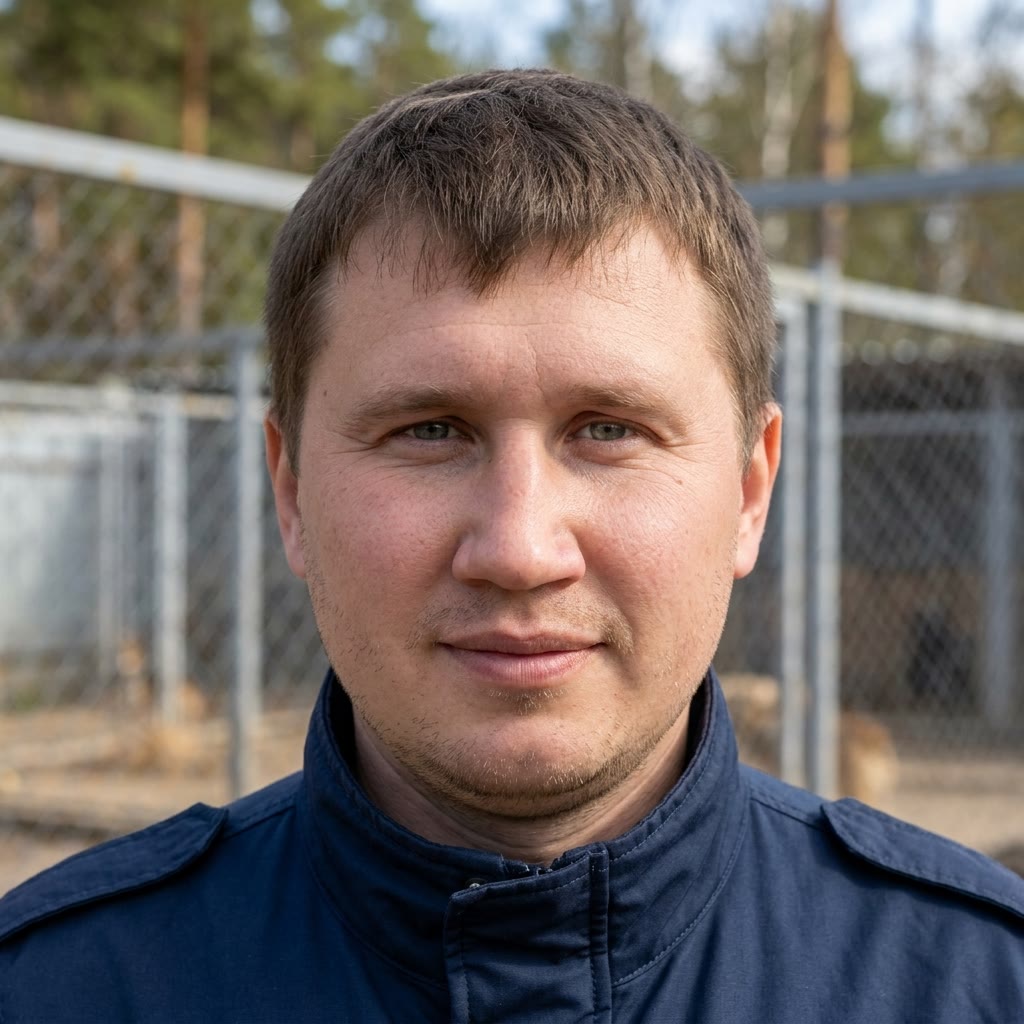
Andrew DarovProfessional dog trainer and instructor
Often yes for square footage — and no as a free pass. Apartments still need a toilet plan, a rest place, short cool-hour walks, and manners. Heat, stairs, and noisy breathing at rest change what “easy city dog” means. Small is not trained.
Are French Bulldogs good with kids?+
Many enjoy people and many get cornered on sofas. Size is not safety: toddlers knock Frenchies over; Frenchies can snap if trapped. Gates, a rest place adults control, and gentle handling still apply. No breed is a nanny.
How much exercise does an adult Frenchie need?+
Short, regular walks and indoor play — not heroic hikes or noon pavement jogs. Stop if breathing gets loud, recovery is slow, or the dog overheats. In heat or humidity, shorten further or move the outing to cooler hours. This is welfare, not softness.
Are French Bulldogs stubborn / hard to train?+
They are easy to reward with food and easy to spoil. Theatre and stare-downs fail; short sessions with clear rules work. The fact that you can pick the dog up is not a training plan.
Is snoring or noisy breathing normal?+
Some noise is common in short-faced dogs. A dog in distress, fainting, unable to rest, or collapsing after mild play is a veterinary conversation — not a cute video and not a cue problem. I am not a veterinarian.
Do French Bulldogs overheat easily?+
Many do. Short faces and compact bodies change cooling. Avoid midsummer hero walks, parked cars, and forced fetch in heat. Shade, water, and kinder hours are management — not optional extras.
What about spines and stairs?+
French Bulldogs as a type are often discussed in connection with backs and IVDD themes. That is awareness, not a diagnosis of your dog. Ask your vet how to think about stairs, jumps off sofas, and ramps for the individual in front of you.
Can French Bulldogs fly in the cabin?+
Airline rules change, and short-faced dogs can be at higher risk in heat and stress. Ask your veterinarian and the airline. I will not green-light a flight from a training desk.
Do they get along with cats and other dogs?+
Some do with clean introductions. Many Frenchies play wrestly and face-on — a style some reserved dogs hate. Supervise the park. End play while it is still play. Cats need management, not a breed guarantee.
What is the typical lifespan of a French Bulldog?+
Public breed references often cite roughly 10–12 years. That is a range from public knowledge, not a promise for any individual dog.
Is a French Bulldog a good first dog?+
It can be if you will train manners with food, manage heat and weight, and budget veterinary conversations common to the type. It is a poor first dog if “small and cute” is the whole plan.
When is a French Bulldog too much dog?+
When the household cannot manage heat, breathing red flags, door barking, and toilet training — or treats the dog as a cushion that never needs rules. Buy the week you actually have.
If a French Bulldog feels too heat-limited — or the wrong tempo
The breed is popular, but not for every home. Sometimes another size, coat, or contact
type fits better.
A shaggy Tibetan mountain companion, not a British earthdog. Needs real outdoor work, coat care and clear door manners.
Need a read on your exact situation?
Describe your French Bulldog’s age and the scene that repeats most: door, toilet, heat,
lift, guests, or rest after the walk. We check safety first, then pick the first skill.
Written by Andrew Darov, professional dog trainer. Not veterinary advice and not a diagnosis.
Not a kennel club. No invented reviews. No vaccine schedules or toxin doses. Photo credits in
/images/breeds/frenchie-guide/credits.md.