Norwegian Elkhound: temperament, training & turning the bark into useful alerts
A Norwegian Elkhound was bred to find a moose in the forest, hold it in place, and bark — steadily, loudly, for as long as it took the hunter to arrive. That voice, that independence, and that stamina all come home with the puppy. City life works when you stop trying to delete the bark and start shaping it: a few useful alerts, a rewarded “thank you, I’ve got it,” real nose and stamina outlets, and a coat and diet plan for a dog that loves cold and food.
Job: Nordic hunting spitz — finds and holds moose at bay by barking; independent and vocal by design.
Energy: Steady stamina rather than sprints; boredom turns into voice, digging, and escape attempts.
Home: Thrives with daily outdoor work, cool weather, a fence, and taught alert manners — not silence by command.
An Elkhound stays a bay dog — the job is to make the bark useful, not to switch it off
Public histories describe the Norwegian Elkhound as an old Scandinavian hunting spitz: it works ahead of the hunter, locates moose by scent, holds the animal by circling and barking, and keeps barking so the hunter can follow the sound. Breeders selected for nose, courage, stamina, and voice.
At home, that same design shows up as a confident, friendly, opinionated dog that comments on everything: the delivery van, the neighbour’s cat, the wind in the hedge. Many owners try to punish the bark away and get more of it. The bark is not a fault — it is a job without a manager.
From the first month I build two chains. First: notice something, bark once or twice, look at the human, get a reward for going quiet. Second: after a walk or a nose job, lie down on a cool mat and let the house carry on. Alert manners and rest skills are the core of living with this breed.
Why one Nordic spitz was built around nose, voice, and stamina
Origin does not set every puppy’s personality. It explains why many Elkhounds bark with conviction, work independently, and roam if allowed — and why a household with no nose work, no alert manners, and no fence meets a frustrated, very loud dog.
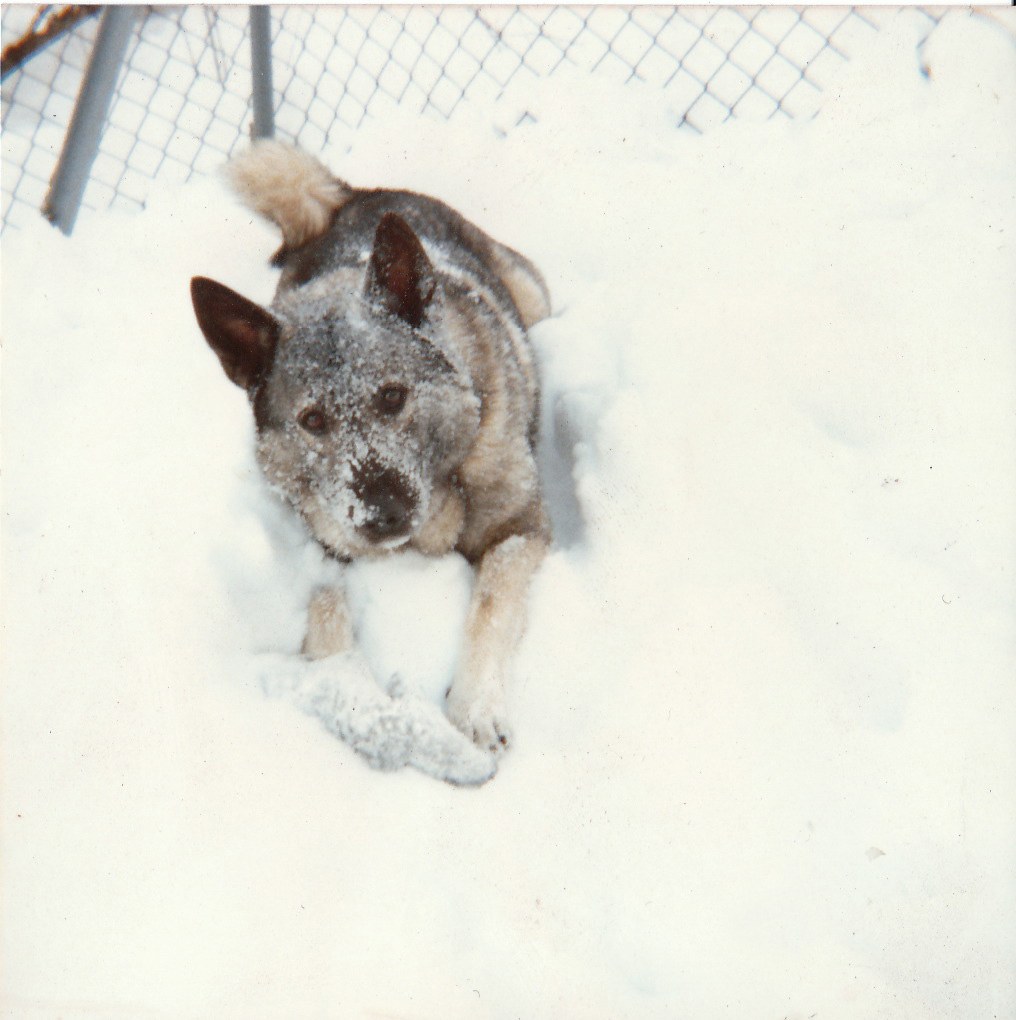
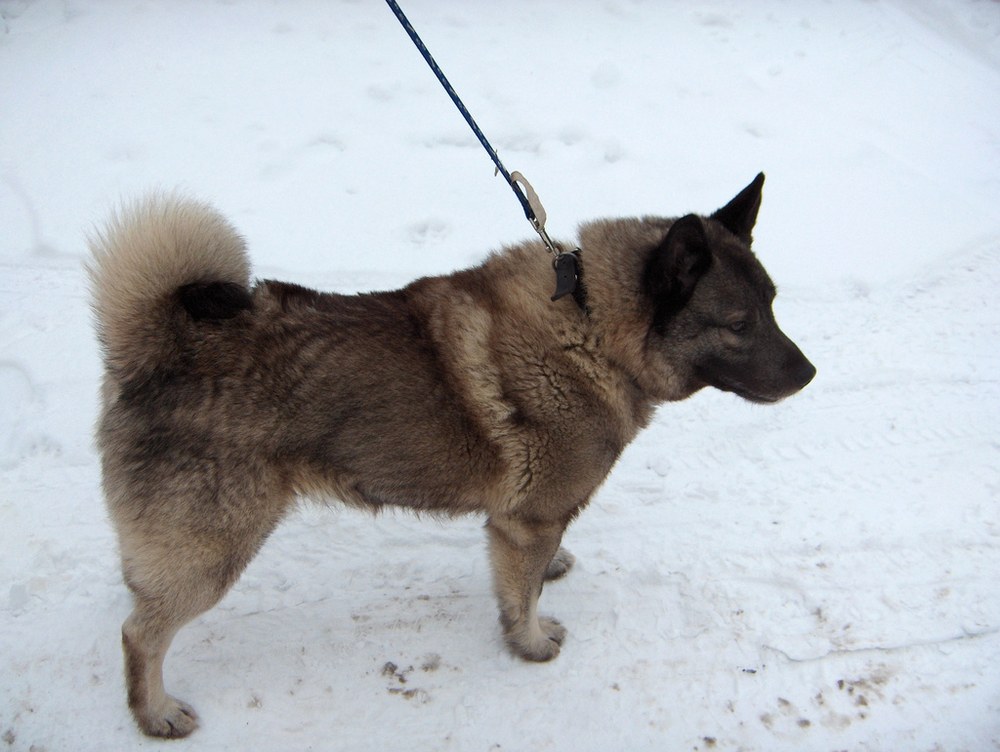
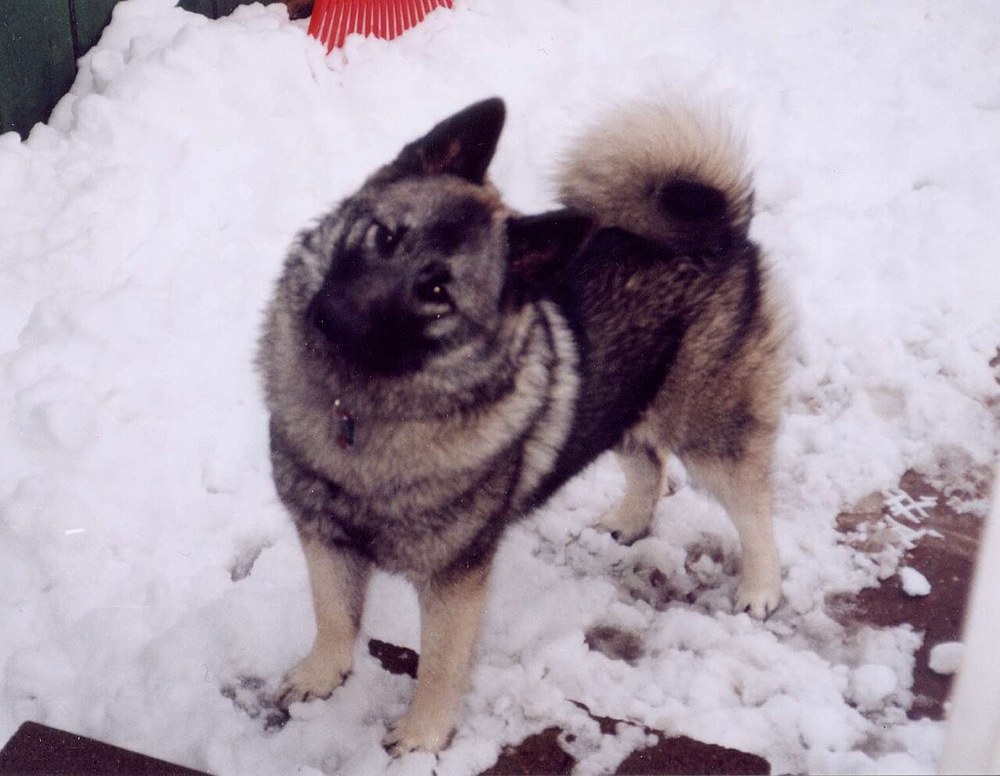
Elkhound in snow, Telemark (CC BY). Built for cold forests and long days on foot — a heatwave and a short pavement loop are a poor fit.
Norway → moose hunting in forest
Find it, hold it, and announce it
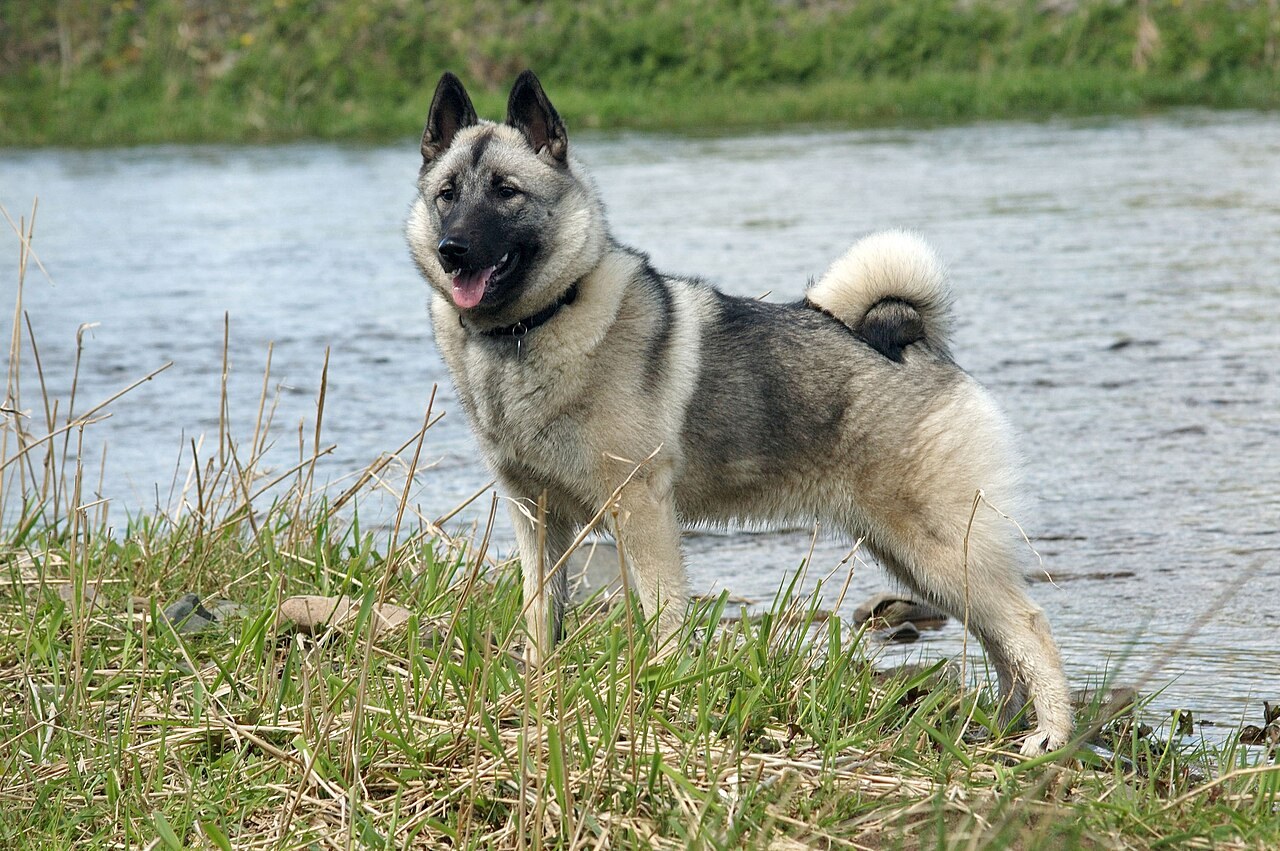
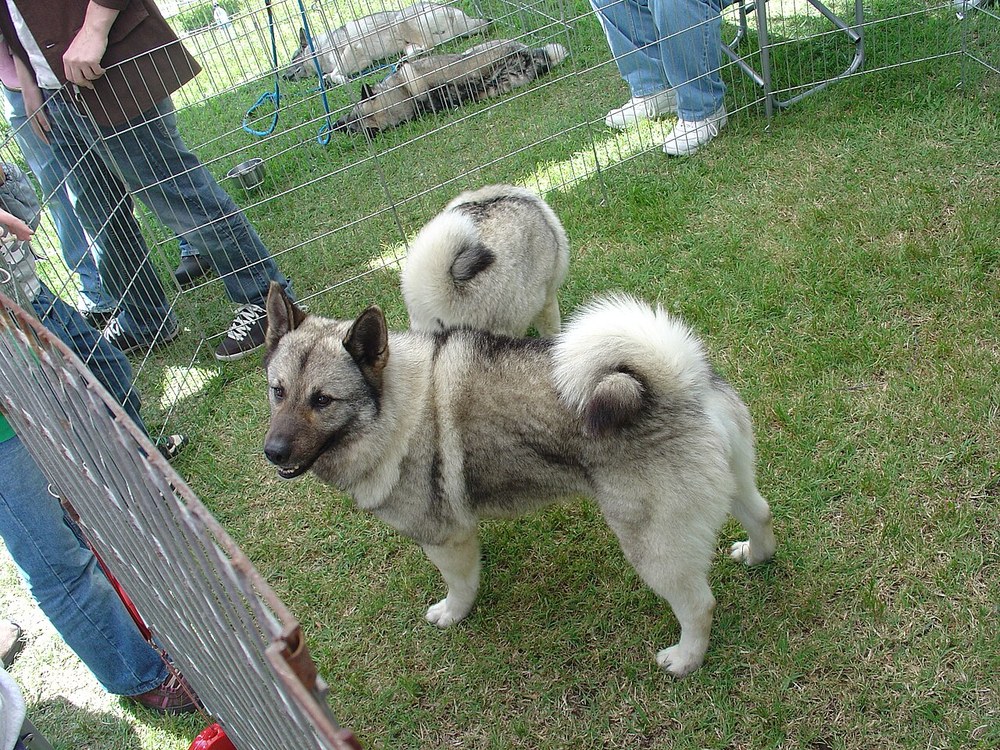
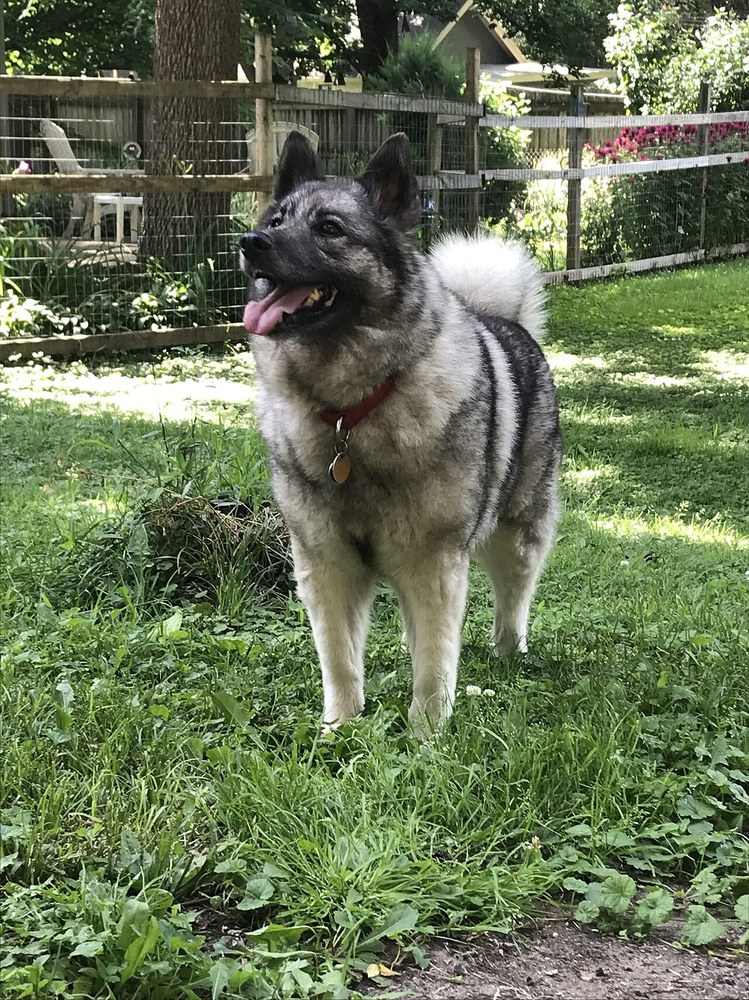
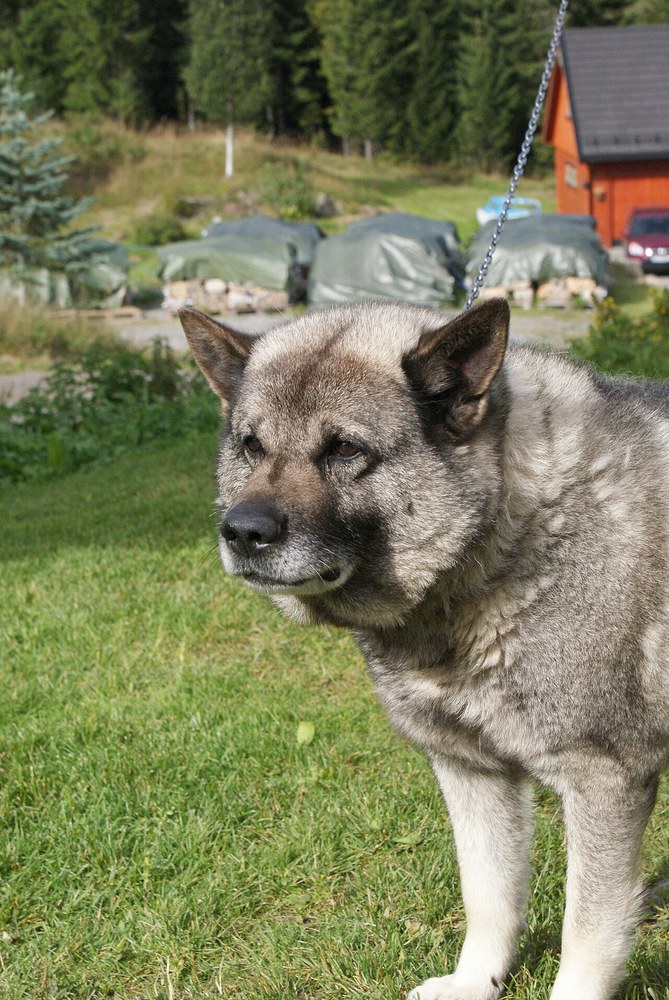
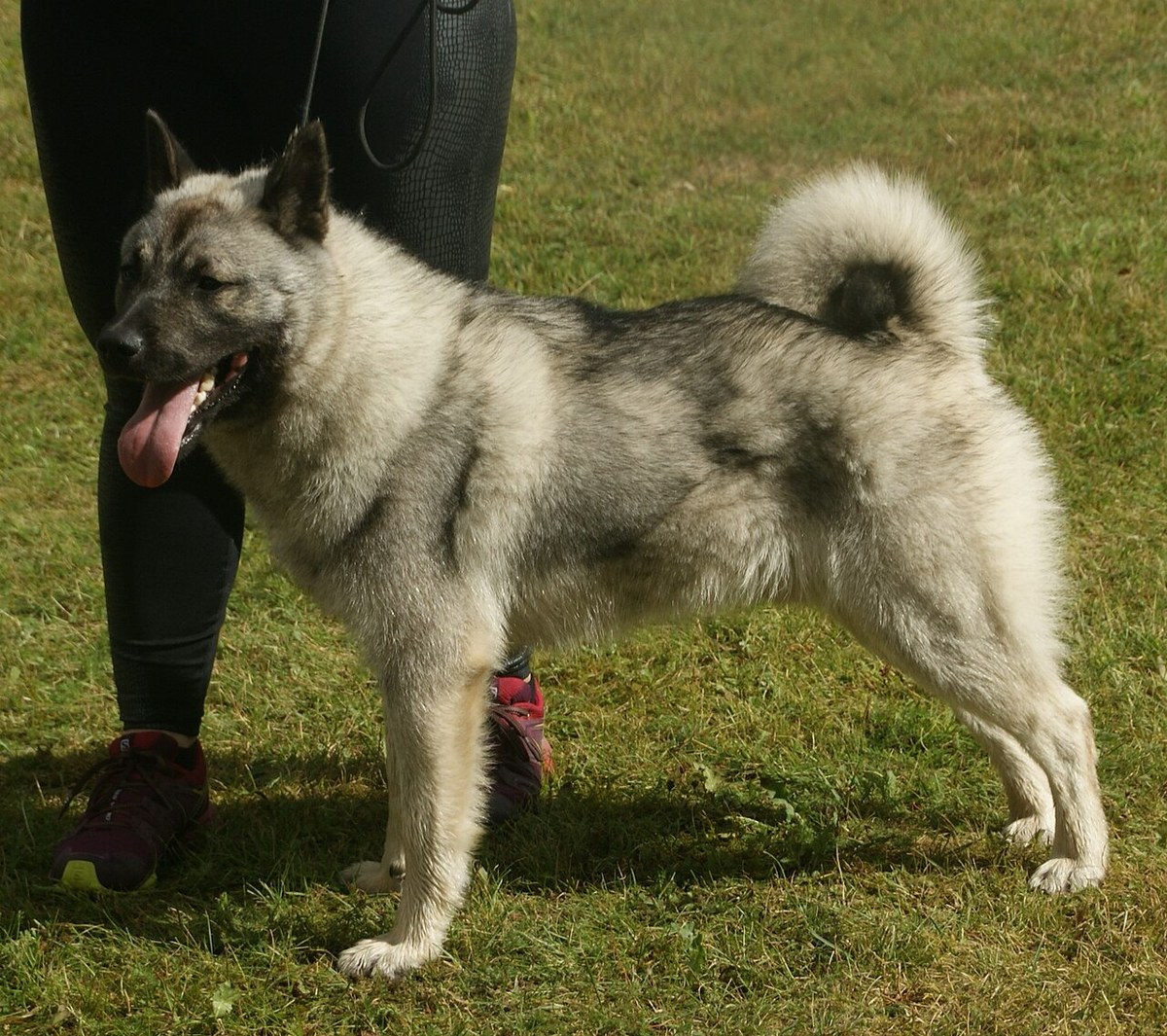
The working outline is a compact, square, sturdy spitz with a thick coat and a tightly curled tail. Public breed histories describe Elkhounds working loose ahead of the hunter, sometimes far out of sight, holding moose at bay with barking — and in some traditions working on a leash to track.
That combination of independence and voice is what pet homes underestimate. A dog bred to work far from the human and report loudly will not be fulfilled by a short walk and a “quiet!” at the window. You give it a job and a plan for reporting.
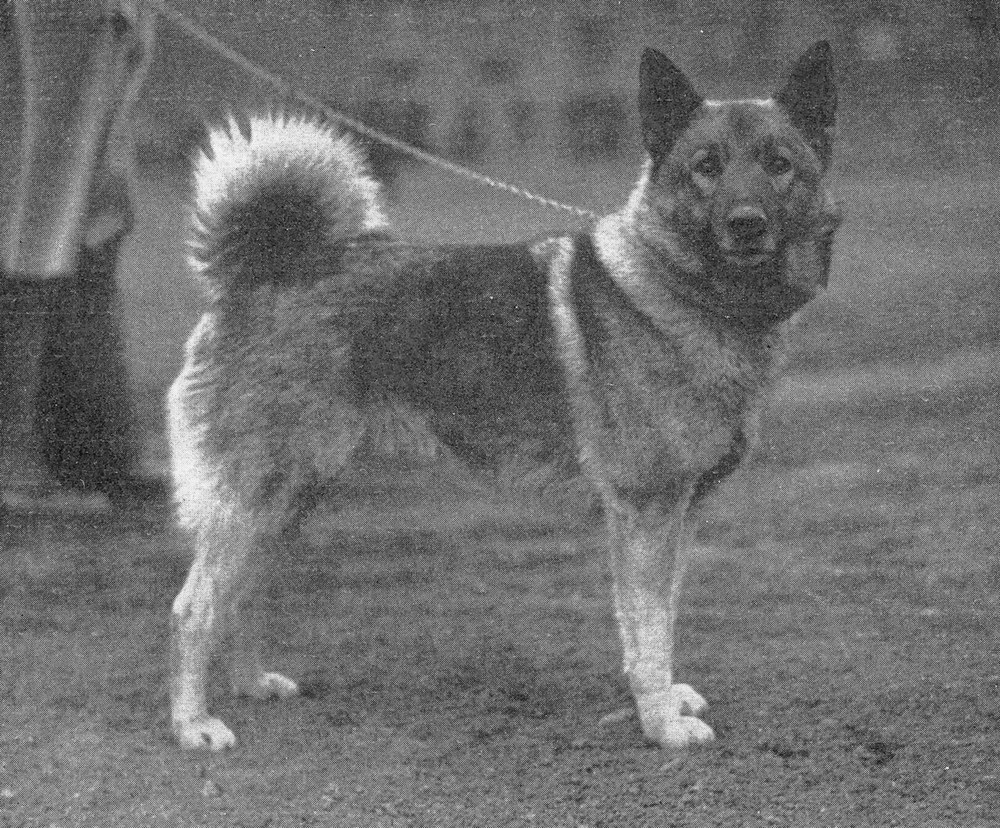
Boy av Glitre, a Norwegian Elkhound photographed in 1932 (CC0). Breed clubs in Norway formalised the grey Elkhound in the late nineteenth and early twentieth century from old hunting stock.
Forest dog → show ring and family home
An old type, a modern registry
Norwegian sources often connect Elkhound-type dogs to very old Scandinavian hunting traditions, and the breed was shown in Norway from the late nineteenth century. It later became popular in Britain and North America as a sturdy family dog.
You will meet Elkhounds in forests, show rings, and suburban gardens. The garden does not cancel the bay. Train the dog in front of you and give the voice a structure anyway.
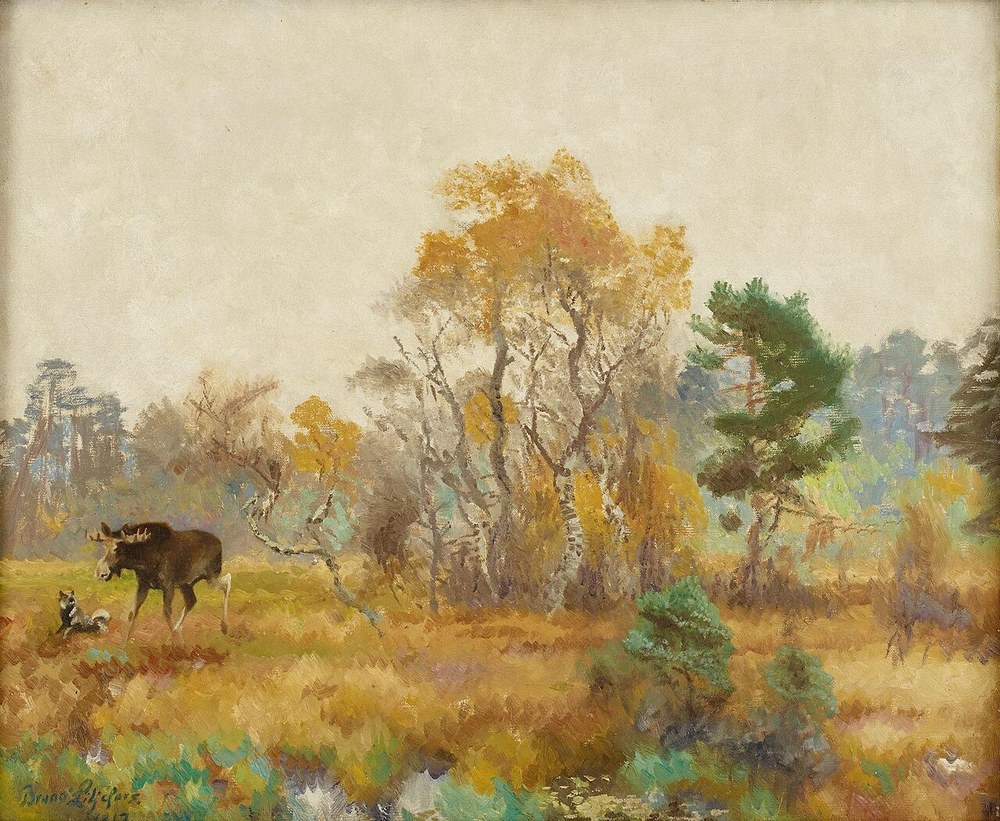
Bruno Liljefors — Elk and grey elkhound in landscape, 1917 (public domain). Scandinavian painters captured the bay-dog job: find the moose, hold it, call the hunter.
What the breed was bred for
Nose, bay voice, and a self-employed brain
In plain trainer language: the type was selected to search independently, stand its ground, and bark until a human arrives. That is why a clear alert-and-acknowledge loop produces a useful household notifier — and why a vague household produces a dog that reports everything, all day, to nobody.
Elkhounds tend to be food-motivated and clever, and many get bored with repetitive drills. Short, varied sessions, real nose work, and clear rules work far better than repetition or pressure.
Barking is part of the job — shape it, do not punish it
Independent search means recall needs real work and a fence
Daily nose and stamina work keeps the volume down
Food drive helps training — and threatens the waistline
A day is nose work, stamina, alert manners, and a cool place to rest
In a city the Elkhound’s job shows up as reporting: barking at the window, at the doorbell, at the neighbour’s dog behind the fence, and sometimes at nothing you can hear. Add an independent nose and a love of food, and you get a dog that needs a plan. Management is not weakness — it gives the dog fewer things to report while you teach a better way to report them.
Morning · outdoor work
Start the day with a real outdoor job
A long, sniffy walk, a hike on a long line, or a tracking game in the woods meets more of an Elkhound’s needs than a fast pavement loop. Many love cold mornings and struggle in summer heat — plan the timing around the weather.
Teach “thank you, I’ve got it” instead of “quiet!”
Let the dog bark once or twice at a real event, then walk over calmly, say a consistent phrase, and reward the dog for turning to you and going quiet. Over time the dog learns that reporting is acknowledged — and that you take over from there.
Many Elkhounds are friendly with people but bossy or loud with unfamiliar dogs — especially same-sex adults. Meet other dogs on a loose lead at a distance where your dog can still take food, and avoid crowded off-lead areas until you know your dog.
An Elkhound left in a garden all day will often become the street’s alarm system. Limit unsupervised yard time, block the busiest window views, and give the dog a better job — chews, food puzzles, and a rest place away from the front door.
With that coat, many Elkhounds choose cool tiles or a mat by the door over a soft warm bed. Offer both. A dog that has worked its nose and legs and has a known rest spot usually stops patrolling.
General awareness only. I am not a veterinarian. In Elkhounds, problems often show first as weight creeping up, changes in drinking or urination, night-vision changes, lumps in the skin, a dull coat, or stiffness. For red flags, leave this page and open
when to call the vet.
Weight and the food-motivated spitz
Many Elkhounds love food and gain weight easily. Measure the ration and use part of it as training rewards. A heavy Elkhound is not a calmer one. See body condition and rations.
Kidney and urinary themes
The breed is discussed with an inherited kidney condition (Fanconi syndrome) where DNA testing exists. Increased drinking or urination is a reason to call the clinic — not a training issue.
Eyes, hips, and thyroid
Elkhounds as a type are discussed with inherited eye conditions, hip dysplasia, and thyroid questions in breed-club and veterinary conversations. Screening choices belong to your vet and breeder.
Skin and lumps
The breed is often mentioned with skin cysts and lumps. Check the coat and skin as you brush; any new or changing lump is a vet question, not something to squeeze at home.
Coat and seasonal blow
The dense double coat sheds heavily, especially once or twice a year. Brush to the skin weekly and more during the blow. Do not shave it for summer without veterinary advice — the coat helps regulate temperature.
Heat and exercise timing
Built for Nordic cold, many Elkhounds struggle in heat. Walk early and late in summer, provide shade and water, and stop exercise if panting will not settle.
Lines and types
Hunting and companion Elkhounds share the same voice
Honest split, no bloodline sales. Differences show in hunting intensity, roaming tendency, and how much an adult needs to work. All still need alert manners, nose work, a fence, and food control.
Hunting / working-influenced
Often a stronger search drive and more independence away from the handler.
Parents may hunt moose or work in tests — ask how they behave at home.
Needs daily outdoor work, a secure perimeter, and serious recall practice.
Puppies benefit from early check-ins and an alert-and-quiet routine.
Fits an outdoor owner who hikes, tracks, or trains nose work — not a “small quiet suburban dog” promise.
Show / companion-influenced
Often a calmer house tempo — the bark and the nose are still there.
Meet parents at home and listen to how much they bark at visitors.
Fence barking and escape attempts happen in every line.
Kidney, eye, and hip screening conversations matter equally.
Fits a household ready for daily walks, brushing, alert-barking training, and honest food control.
Socialization windows
What to introduce — and what not to overload — by age
AVSAB-aligned in spirit: short, clean exposures at a distance the puppy can still eat,
with hygiene while vaccines finish. See the
puppy socialization schedule.
2–4 months
Home and near yard
Introduce: family members, doorbell and delivery sounds at low volume paired with food, brushing and handling, harness wearing, a rewarded name response, short car trips.
Do not overload: rewarding every bark with attention, long unsupervised garden time, free-feeding, open gates.
~6 months
City sounds at a working distance
Introduce: other dogs, bikes, and traffic at a distance the puppy can still eat; the “thank you” alert routine at the window; first tracking games.
Do not overload: fence-line barking duels with neighbours’ dogs, crowded off-lead dog parks, yelling “quiet!” as the only plan.
~12 months
Adolescent confidence
Introduce: longer hikes on a long line, nose-work classes, guests by script, calm meetings with known dogs.
Do not overload: trusting off-lead in forest or near roads, letting the dog patrol the front window all day, ignoring weight gain.
~18 months
Adult scenes under control
Introduce: new places with an exit option; longer settles in cafés or at friends’ homes; door and gate thresholds.
Do not overload: same-sex dog meetings without a plan, summer midday exercise, skipping coat care during the blow.
~24 months
Maintain the routines
Introduce: refresh the alert routine, recall, and door manners; keep daily outdoor work and regular weigh-ins.
Do not overload: letting the alert routine fade, treating one good off-lead hike as permanent proof, letting the ration drift up.
Before you buy
Who a Norwegian Elkhound usually fits
Fit is daily decisions: outdoor work most days, tolerance for some barking while you train, regular brushing, food control, and a fence that actually holds.
Good match
More likely a good fit if you…
You enjoy hiking, tracking, or long outdoor walks in most weather — especially cold
You accept some barking and will train alert manners rather than demand silence
You like a confident, friendly, independent dog with opinions
You can brush weekly and cope with heavy seasonal shedding
Your household can keep food rules and a secure fence or gate habit
Mismatch risk
A Norwegian Elkhound may be a poor choice if…
You live with thin walls and neighbours who will complain about any barking
You want a dog that follows you off lead in open forest without training
Your climate is hot most of the year and you cannot walk early or late
You dislike dog hair on clothes and furniture
The dog would spend most of the day alone in a garden
If you are torn between breeds
Norwegian Elkhound vs Keeshond and Siberian Husky
Keeshonds bring a softer companion spitz with a similar alert voice; Huskies bring running endurance, howling, and serious escape skills. Elkhounds bring a hunting nose, a bay bark, and independent confidence. Pick the failure mode you can live with — then train.
Contact style
Norwegian Elkhound
Friendly, confident, independent; bossy with some dogs.
Keeshond
Very people-focused companion; usually softer with other dogs.
Voice
Norwegian Elkhound
Bay bark — loud, persistent, part of the job.
Siberian Husky
Howls and talks more than barks; still loud.
Exercise style
Norwegian Elkhound
Steady stamina and nose work over long hikes.
Siberian Husky
Running and pulling endurance; needs even more mileage.
Escape and roaming
Norwegian Elkhound
Follows the nose; fences and recall need work.
Both compares
Huskies are famous escape artists; Keeshonds tend to stay closer.
Apartment reality
Norwegian Elkhound
Hard with thin walls unless alert manners and outdoor work are solid.
Keeshond
Often easier indoors; still vocal without training.
Ownership without surprises
Where a Norwegian Elkhound owner’s budget goes
Figures depend on country, city, food, and fencing. Below are cost themes to budget before a puppy — not prices and not quotes from this site.
Time outdoors
Daily long walks or hikes and nose work are the real bill. An Elkhound without a job often costs you in noise complaints and garden damage.
Fencing
A secure perimeter with no gaps under or through it; Elkhounds dig and squeeze when a scent calls. Solid sections can reduce fence-line barking.
Food
Measure carefully; use part of the ration as training rewards. Weight gain is one of the most common breed problems.
Veterinary
Routine care plus possible screening for kidney, eye, and hip themes, lump checks, and a clinic you trust. Know your emergency number.
Grooming
Undercoat rakes, slicker brushes, a high-velocity dryer or groomer help during the blow. Hair on everything is part of the deal.
Training
Puppy class, private help for alert barking and reactivity, nose-work or tracking classes. City ranges vary — treat online “averages” as rough, not a quote.
A handsome grey coat does not cancel daily decisions: outdoor work, alert manners, food control, and shedding remain the main cost drivers.
Before day one at home
What to prepare for a Norwegian Elkhound puppy
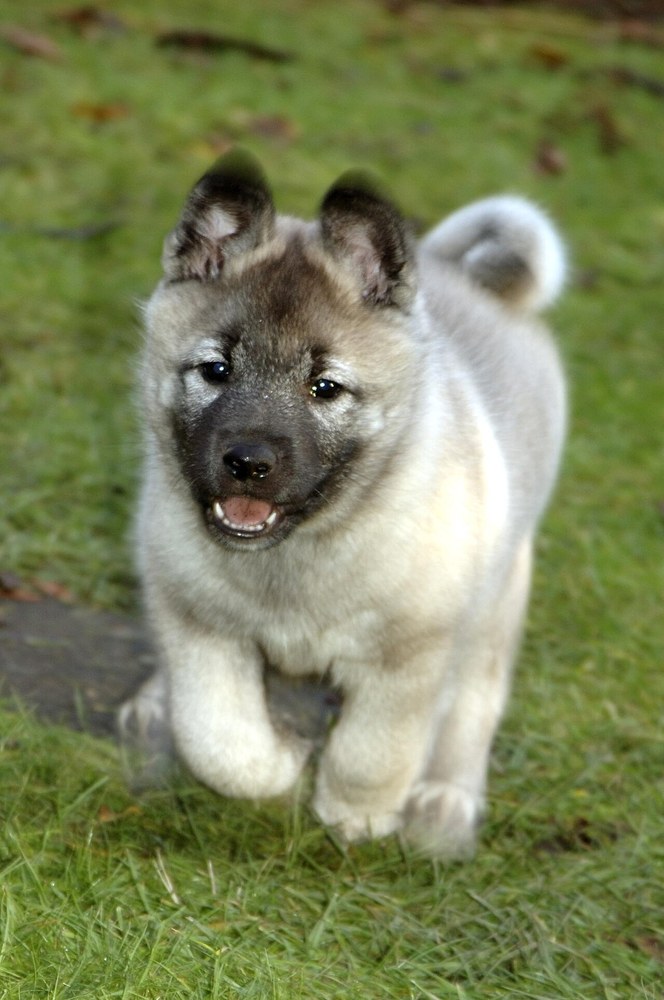
An Elkhound puppy is a confident, curious ball of fur with a voice it will learn to use quickly. A few decisions before arrival beat a hundred shouted “quiet”s after the fact.
01
Decide your alert rules early
Agree as a household: which events earn a bark, what phrase you use to take over, and what the puppy earns for going quiet. Consistency is the whole trick.
02
Pair new sounds with food
Doorbells, knocks, delivery vans, and neighbours’ dogs at low volume, paired with treats. Do not wait until the bark is a habit. See doorbell practice.
03
Plan the toilet clock
Out after sleep, food, and play. Accidents mean the interval was too long — not spite. Follow potty training.
04
Protect sleep
Overtired puppies bark, nip, and dig more. Use a crate or pen in a calm spot and enforced naps.
05
Start nose games now
Scatter feeding, food hidden in boxes, and simple find-it games meet the search drive and build focus. See scavenging on walks for the outdoor side.
06
Start alone time in minutes
Leave briefly while the puppy is calm and return before barking starts. Build slowly. See first absences.
If the dog is already yours
Training is a clear alert routine plus a real job every day
The rule must be visible: one or two barks at a real event, then a turn to the handler; a loose line past another dog; a calm wait at the door; the settle you mark is the settle you want.
Elkhounds are clever, food-motivated, and easily bored by repetition. Short, varied sessions with clear rewards work well. Harsh corrections for barking tend to increase stress and often increase the barking too.
Environment management supports learning: block the busiest window views, limit unsupervised yard time, keep gates secure, measure food, and give daily nose and stamina work to cut practice of nuisance barking.
Load balance
Keep the nose and stamina busy — heat, weight, and age set the limit
Temperature, body weight, age, and joint health change what is allowed. Heavy panting in heat, stiffness, increased drinking, or a dog that cannot stop barking even after work means stop and get a veterinary or behaviour assessment.
Long sniffy walkNose gameShort trainingAlert routineRest on a cool mat
Hikes on a long line, tracking or nose-work classes, food puzzles, and short training sessions are available. Endless fence patrol, punishing the bark, and summer midday runs are not required to close the work need.
A day with real work leaves an Elkhound able to lie down and let a delivery van pass with one bark — or none.
Alert, acknowledge, and the end of the report
How to teach a Norwegian Elkhound useful alert manners
Start with quiet, predictable sounds and a prepared payoff. Build up to the real doorbell and the neighbour’s dog slowly.
01
Let the dog report the real event
When something genuinely happens — a knock, a van, a person at the gate — allow one or two barks without shouting.
02
Acknowledge calmly with one phrase
Walk over, look where the dog is looking, and say a consistent phrase such as “thank you, I’ve got it.” You are taking over the job.
03
Reward the turn and the quiet
Mark the moment the dog turns to you and closes its mouth. Reward generously. If the dog cannot stop, the trigger is too strong — add distance or block the view.
04
Move to a job or a place
Lead the dog away from the window to a mat, a chew, or a short nose game. The report is finished; the dog has something else to do.
05
Close the day with real work
A long sniffy walk or nose-work session most days lowers the baseline, so fewer events feel worth reporting.
One scene close-up
Why shouting “quiet!” turns one bark into ten
To a bay dog, a human who runs to the window and shouts is joining in. The dog did not get a correction; it got a partner. Next time it barks longer, waiting for you to arrive.
Walk over calmly. Use one consistent phrase. Reward the dog for turning to you and closing its mouth, then move it away from the window or give it something to do. If food fails, the trigger is too intense — reduce the volume, add distance, or block the view.
If barking comes with lunging, fence fighting, or real distress, or neighbours are already complaining, a structured plan with a qualified professional is safer than trial and error.
“With an Elkhound, I do not try to make the bark disappear. We teach the dog to report once, look to the human, and hand over the job — and we give that nose and that stamina real work every day, because a bay dog without a manager simply keeps reporting.”
Sessions cover real scenes: window and door barking, fence-line duels, recall around scent, leash manners with other dogs, food control, and rest. I am a trainer, not a veterinarian. No invented reviews.
Andrew DarovProfessional dog trainer and instructor
It can be for an active first-time owner who enjoys outdoor time, accepts some barking, and will train alert manners and recall. It is a poor choice for a quiet apartment with strict neighbours.
Do Norwegian Elkhounds bark a lot?+
Many do — the breed was developed to hold moose at bay by barking. You can shape the bark into short, useful alerts with training and management, but you are unlikely to get a silent dog.
How do I stop my Elkhound barking at the window?+
Block the busiest views, acknowledge real alerts with a calm phrase, reward the dog for turning to you and going quiet, and give daily nose and stamina work. Shouting usually makes it worse.
How much exercise does an adult Elkhound need?+
Most adults do well with an hour or more of outdoor activity daily — long sniffy walks, hikes, or nose work — plus short training sessions. Puppies need shorter, varied activity.
Are Elkhounds good apartment dogs?+
Possible with solid alert manners and daily outdoor work, but thin walls and barking are a real risk. A home with a secure garden and understanding neighbours is easier.
Elkhound vs Keeshond — which fits better?+
Both are vocal spitz breeds. Keeshonds are softer, more people-focused companions; Elkhounds bring a hunting nose, more independence, and more need for outdoor work.
Can an Elkhound be trusted off lead?+
Some do well in safe, enclosed areas with strong training. In forests or near roads, a scent can pull the dog away quickly. A long line and a secure fence are the honest plan.
Are they good with kids and other dogs?+
Many are friendly and sturdy with respectful children. With other dogs, some are bossy or loud, especially with same-sex adults. Supervise and introduce dogs carefully. No breed is a nanny.
What about kidney, eye, or other health themes?+
Elkhounds as a type are discussed with an inherited kidney condition (Fanconi syndrome), eye conditions, hip dysplasia, thyroid questions, and skin cysts. Awareness for a vet conversation — not a diagnosis.
What is the typical lifespan of a Norwegian Elkhound?+
Public breed references often cite roughly 12–15 years. That is general knowledge, not a promise for any individual dog.
How much do Elkhounds shed?+
A lot — especially during the seasonal blow once or twice a year. Weekly brushing to the skin, more during the blow, keeps it manageable. Shaving is not recommended without veterinary advice.
Do Elkhounds cope with hot weather?+
Many struggle. Walk early and late in summer, provide shade and water, and avoid hard exercise in the heat of the day.
If a Norwegian Elkhound feels like too much voice — or the wrong tempo
The breed is sturdy and charming, but not for every home. Sometimes a different spitz or a quieter type fits better.
A clever, independent, cat-like dog from Central Africa that needs secure fencing, puzzle feeding and short, food-based training.
Need a read on your exact situation?
Describe your Elkhound’s age and the scene that repeats most: window or door barking, fence duels, recall on scent, other dogs, or restlessness. We check safety first, then pick the first skill.
Written by Andrew Darov, professional dog trainer. Not veterinary advice and not a diagnosis.
Not a kennel club. No invented reviews. No vaccine schedules or toxin doses. Photo credits in
/images/breeds/norwegian-elkhound-guide/credits.md.