American Hairless Terrier: temperament, prey drive, skin care and training for the bare terrier
The American Hairless Terrier is a small, lively, smooth-skinned terrier that comes from a single hairless puppy born in a Rat Terrier litter in Louisiana in 1972. Some puppies in every litter grow a short coat and are still the same breed. Under the bare skin it is a full terrier: quick, curious, fond of digging, eager to chase small animals and ready to bark at anything new. At home that means a cheerful, affectionate dog that needs real terrier outlets, careful sun and cold care, calm early socialising and short, game-like training with a clear recall plan.
Job: A small terrier from Rat Terrier lines; AKC Terrier Group since 2016.
Energy: Busy, bright, affectionate and keen on chasing small animals.
Home: Suits an owner who wants a little terrier and will look after its skin.
An American Hairless Terrier is a ratter without a coat
People often pick this breed for the look, or because they hope a dog without hair will be easy in the house. The skin is the unusual part; the brain is pure terrier. It was bred from dogs that cleared barns of rats, and that job has not left it.
Most messages I receive are about the terrier underneath. A dog that digs up the garden, ignores recall once it sees a squirrel, barks at the window, shakes and kills soft toys in seconds or gets cold and miserable on winter walks.
My plan treats it as the small terrier it is. Safe outlets for digging and hunting games, a long line until recall is solid, calm meetings with people and other pets, short training sessions with food, and a real routine for sun, cold and skin. With that, an American Hairless Terrier is a funny, loving and very easy-going house dog.
In proportion to height, often about 12–16 lb (about 5–7 kg)
Energy
Moderate to high; needs walks plus terrier games
Coat / shed
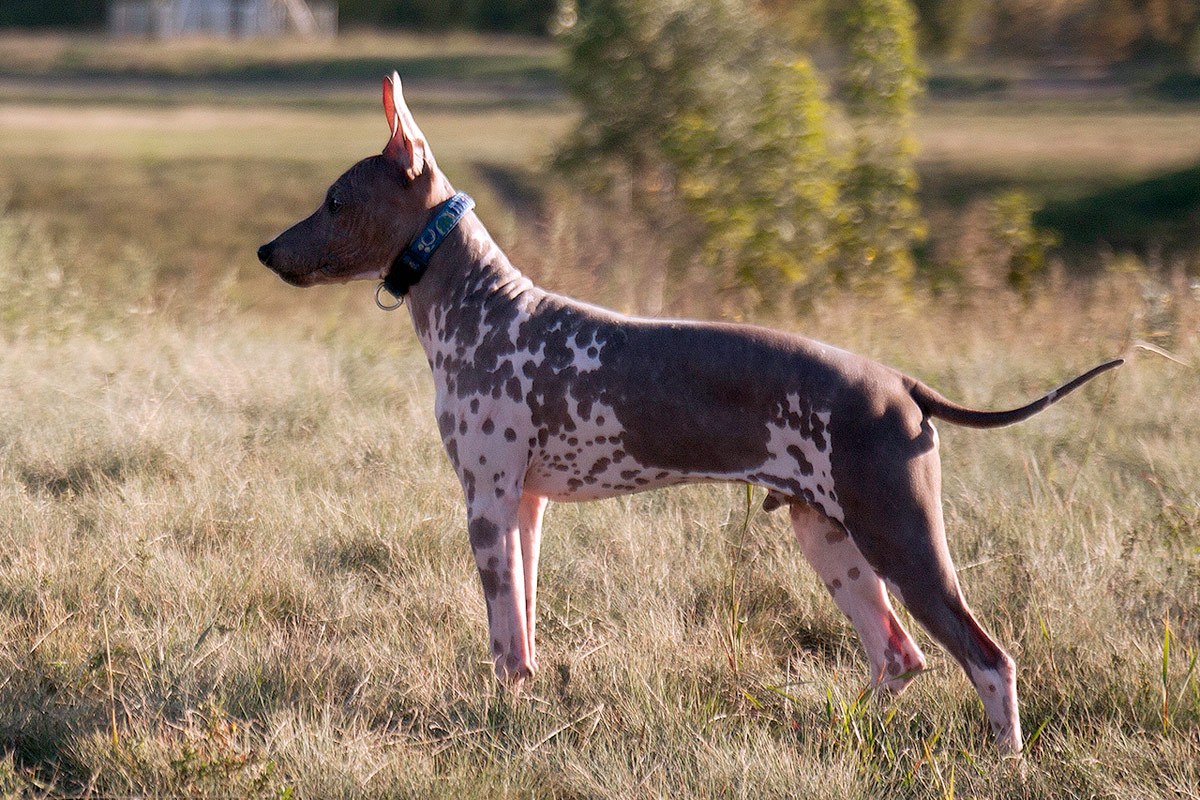
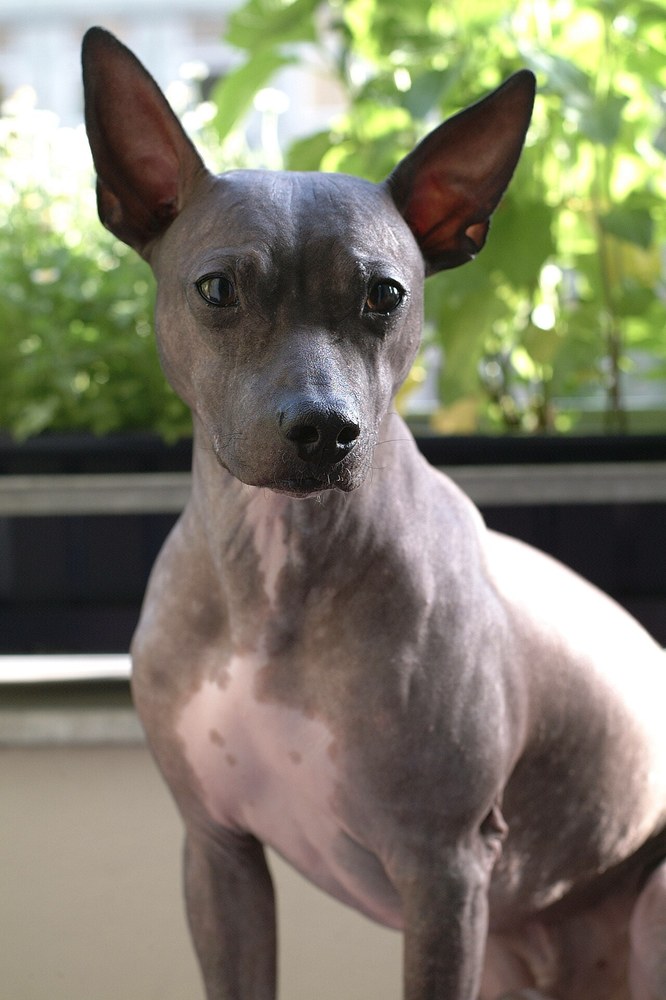
Hairless variety: smooth, warm skin in many colours, often spotted, with short whiskers and eyebrows. Coated variety: short, dense, shiny coat
Job
Companion terrier from Rat Terrier lines, with the same ratting and digging instincts (AKC Terrier Group)
Temperament in one minute
American Hairless Terrier temperament: what they are like at home
Short answer: American Hairless Terriers are bright, playful, affectionate small terriers that come from Rat Terrier lines. Most are hairless, some have a short coat, and all of them keep the terrier urge to chase small animals, dig and bark at new things. They need about an hour of activity a day, a long line until recall is solid, a dig spot, short game-like training and, for hairless dogs, steady protection from sun and cold.
Are American Hairless Terriers affectionate?
Very, and many love to burrow under blankets. Build short absences early.
Are American Hairless Terriers friendly with strangers?
Often friendly after a short look. Keep greetings calm; see jumping up.
Are American Hairless Terriers good with kids and other pets?
Usually good with gentle children and pets they know; small pets stay apart. See children and guests.
American Hairless Terrier behavior problems to expect
The usual four are digging, chasing small animals, barking and poor recall. The list below links a guide for each.
Living with an American Hairless Terrier in an apartment
Often fine with daily walks and games and work on barking. Plan for sun and cold on every outing.
Breed history
From one hairless puppy to a recognised terrier
The breed is young, and its story explains both the bare skin and the terrier drive.
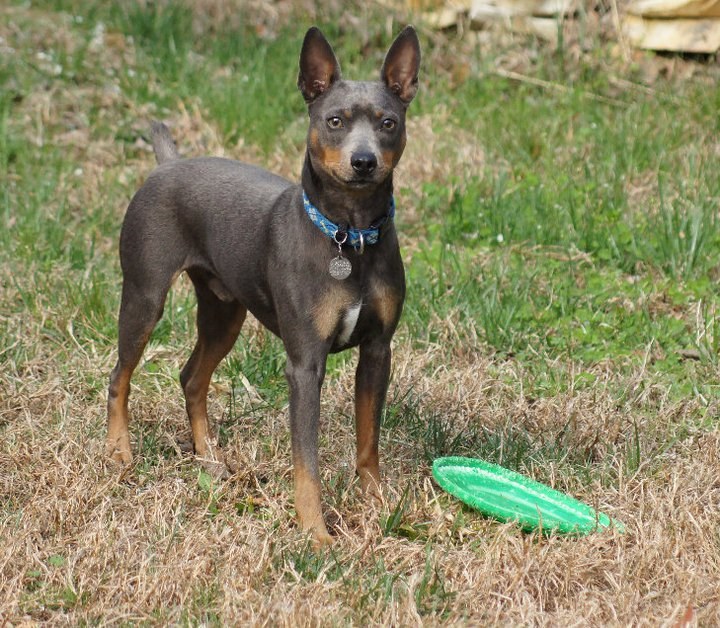
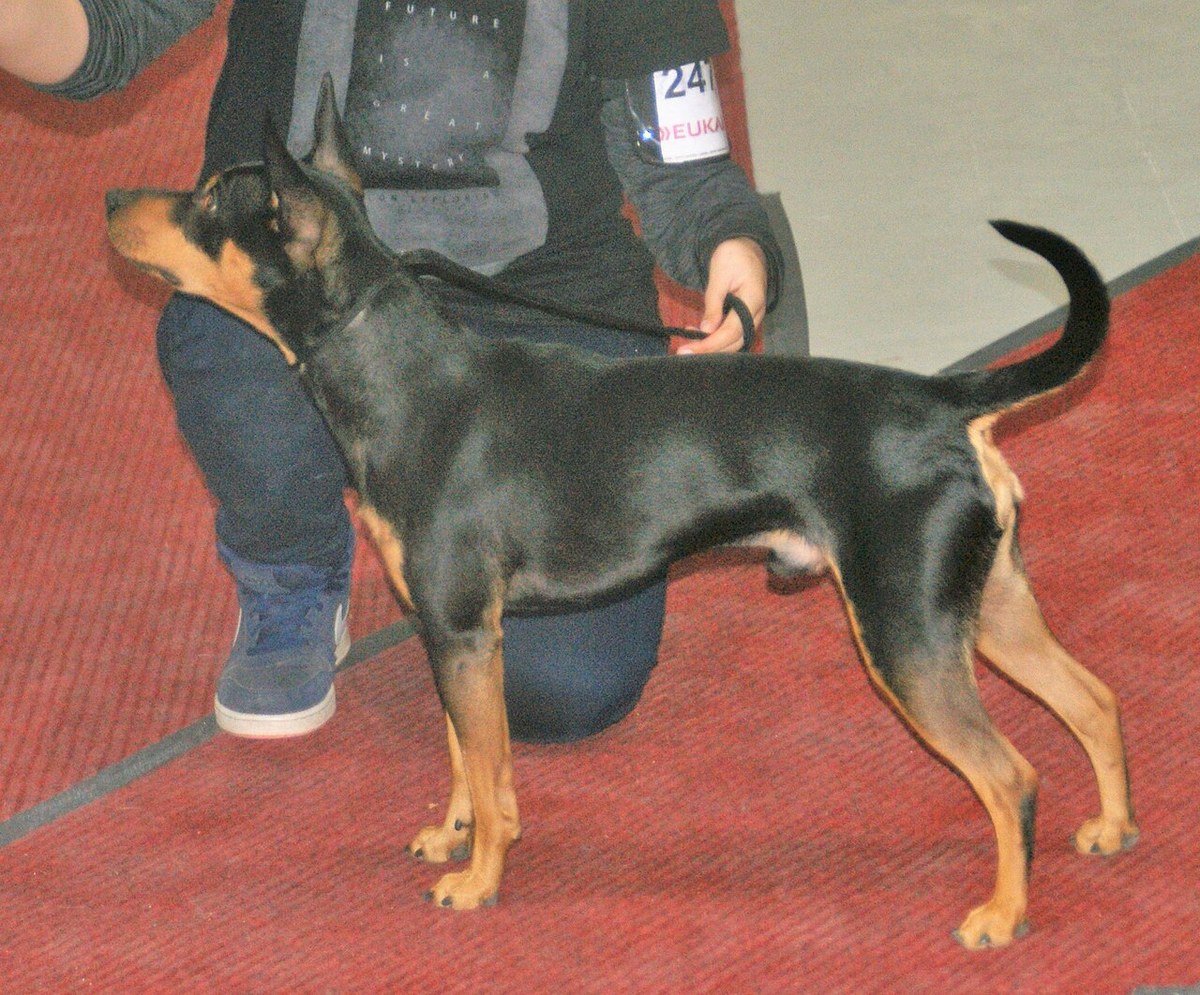
A coated American Hairless Terrier with its frisbee: coated puppies appear in many litters and have the same busy, playful drive.
Louisiana, USA · 1972
Josephine, the puppy with no hair
In 1972 a hairless female puppy was born in a litter of Rat Terriers in Louisiana. Edwin and Willie Scott took her in, named her Josephine and later bred her. One of her litters gave more hairless puppies, and the family built a line from them.
Because the breed came from working Rat Terriers, it kept the same quick feet, sharp eyes and love of hunting small animals. The bare skin is the only big change.
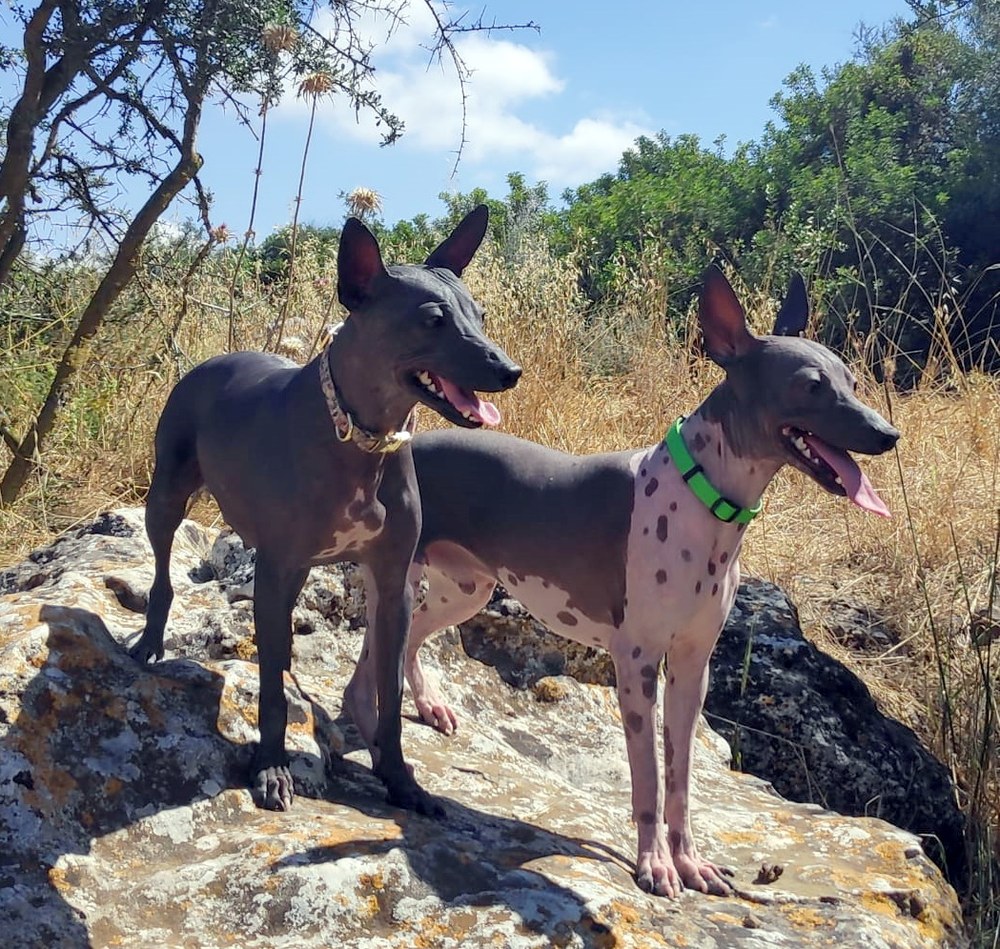
Two American Hairless Terriers outdoors: the breed is now kept far from the Louisiana farms where it started.
From the 1990s
A separate breed and AKC recognition
For years the dogs were registered as a hairless kind of Rat Terrier. Breeders and clubs then worked to have them accepted as a breed of their own, and in 2016 the AKC added the American Hairless Terrier to its Terrier Group.
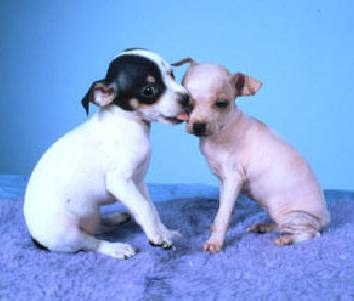
The hairless gene in this breed is recessive and works differently from the one in other hairless breeds such as the Chinese Crested or the Xolo. Litters can hold both hairless and coated puppies, and both kinds belong to the breed.
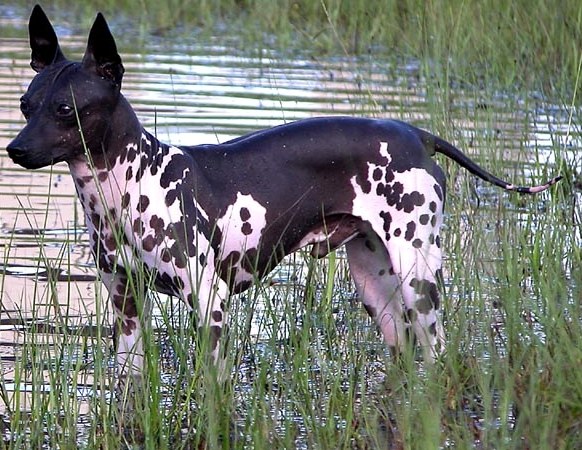
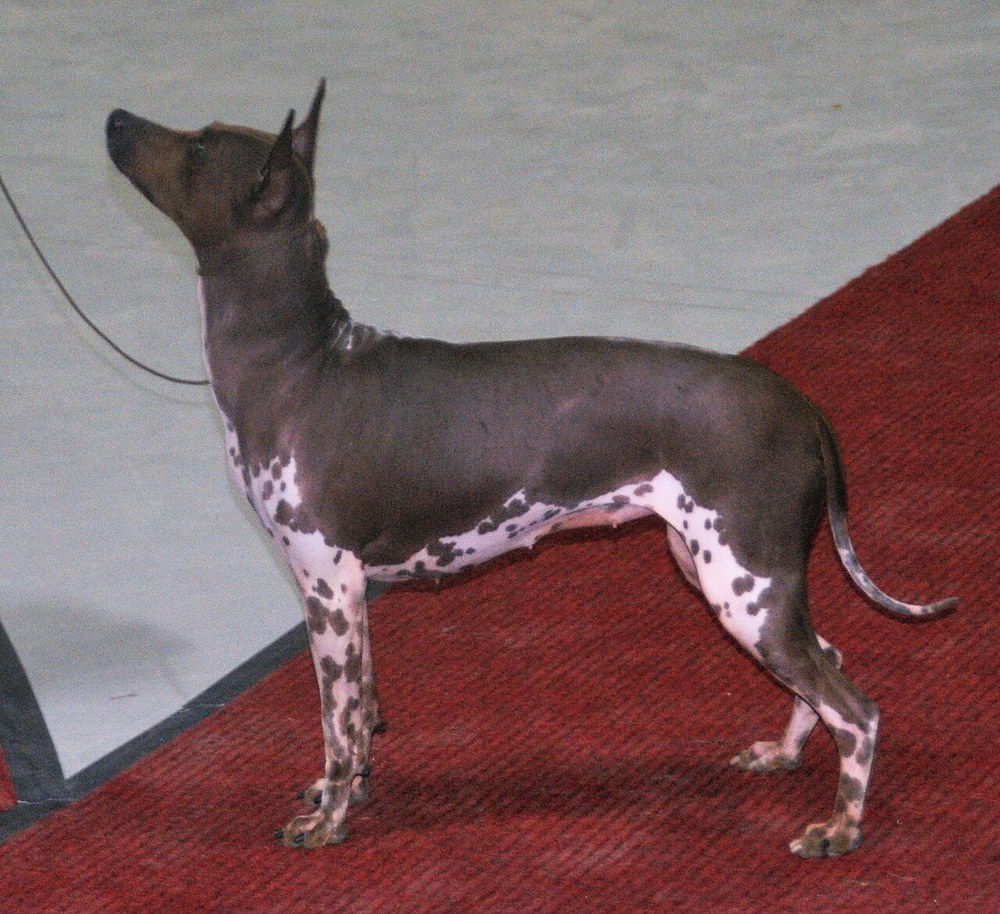
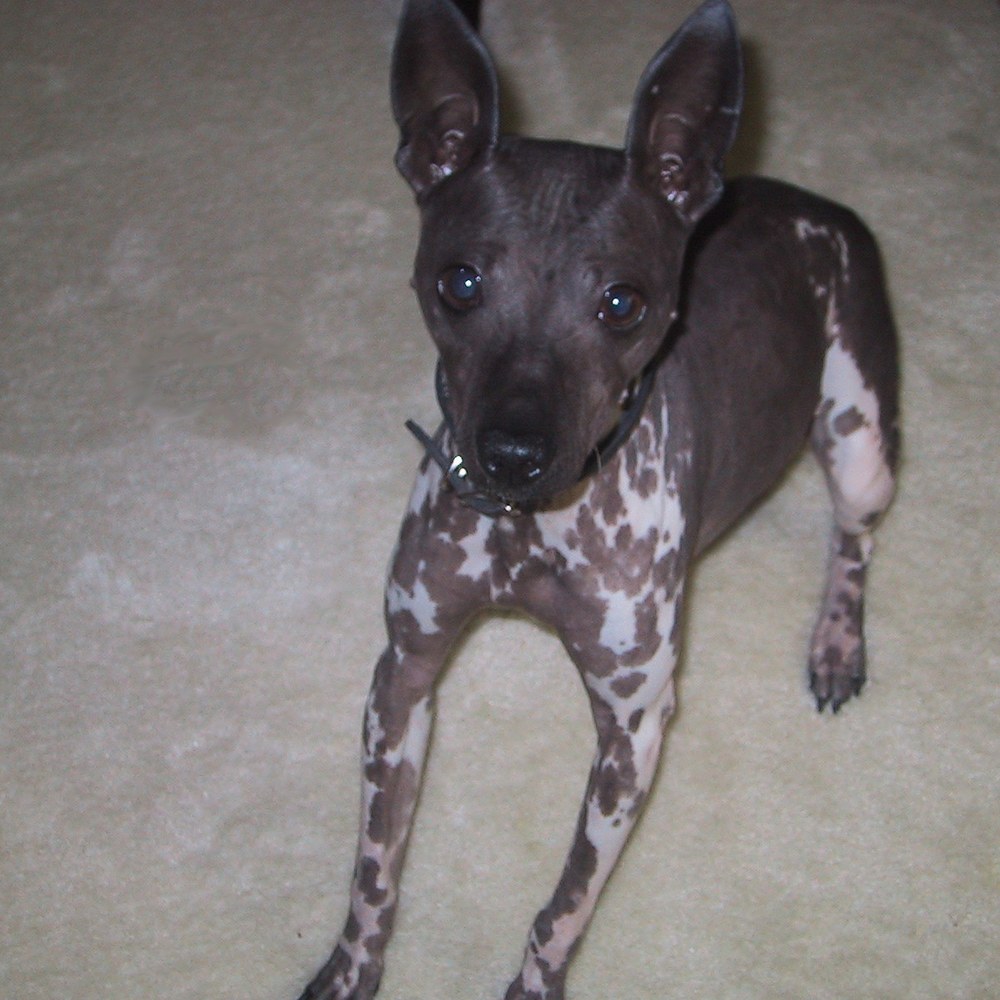
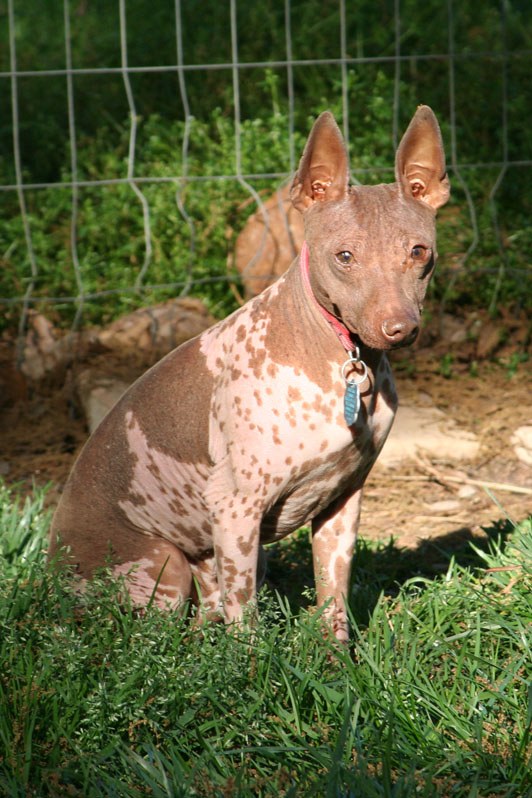
A spotted American Hairless Terrier by a pond: the bare skin can be any colour and often carries spots or patches.
What the breed was bred for
Cuddly at home, a hunter outside
With its family a well-raised American Hairless Terrier is affectionate, playful, bright and keen to please, and many like to sleep under the covers. It learns quickly and enjoys tricks and dog sports.
Outside it is a terrier. It chases small animals, digs, barks at noises and can be bossy with dogs it does not know. Bare skin also means it needs protection from strong sun and cold, which shapes every walk.
A good day has a sniffing walk, a hunting game, a short lesson and a warm nap
An adult American Hairless Terrier does well on roughly an hour of exercise daily, split between walks, games that let it hunt and dig, and a little training. Trouble usually starts when a small terrier gets a short walk and nothing else, or when the weather makes walks unpleasant for its bare skin.
Morning · walk
Sniff first, then walk
Let the dog sniff and explore on a long line before asking for neat walking. On sunny days walk early or late and keep to shade; on cold days put on a coat before you leave.
Most of these terriers dig. Give a sandpit or a corner where digging is allowed, bury toys there, and supervise the rest of the garden so the lawn and fence stay whole.
Small dogs often get picked up and fussed by guests. Ask visitors to let the dog come to them, toss a treat and keep hands low; the dog learns guests are fine without being overwhelmed.
A bare-skinned dog loses heat quickly at night. A covered bed or a blanket it can burrow into, away from draughts, helps it settle and stops it from wandering the house.
General awareness only. I am not a veterinarian. With an American Hairless Terrier, owners often notice trouble first as pink or red skin after time in the sun, shivering on cold walks, scratches from bushes, dry patches or blocked pores. For red flags, leave this page and open
when to call the vet.
Sun
Bare skin burns. Walk in shade or at cooler times, and ask your vet which dog-safe sun protection to use.
Cold
A warm coat or jumper on cool days and a covered bed at night.
Skin care
Bathe with a mild dog shampoo and ask your vet about moisturising; coated dogs need only a weekly brush.
Handling for the vet
Pair touching the paws, ears and mouth with treats, and make a muzzle a normal, easy thing. See introducing a muzzle.
Ask what the parents were tested for (for example knees and eyes) and read the results yourself. No dog is guaranteed to be allergy-free; spend time with the breed before you decide.
Lines and types
Choose a steady, healthy dog, not only the bare skin
No bloodline selling. American Hairless Terriers come mostly from small hobby and show breeders. Meet the mother, see how she greets you, how she reacts to a sudden noise and how she behaves with the breeder's family and other pets, and ask about health checks on both parents and which puppies will be hairless or coated.
Sport and activity homes
Agility, barn hunt, rally or tricks.
Short, playful training.
Sniffing walks on a long line.
Rest in a warm bed.
Suits owners who want a small, quick partner for dog sports.
Family companion homes
Daily walks plus digging and chase games.
Sun and cold care on walks.
A dig spot and toy games.
Calm rules with small pets.
Suits a family that wants a cuddly little dog and enjoys a terrier sense of humour.
Socialization windows
What to introduce — and what not to overload — by age
AVSAB-aligned in spirit: short, clean exposures at a distance the puppy can still eat,
with hygiene while vaccines finish. See the
puppy socialization schedule.
2–4 months
Meeting the world
Introduce: calm meetings with people, gentle children, cats if you have them, surfaces and sounds; handling and bathing with food; a toilet routine; short times alone.
Do not overload: long outings in strong sun or cold, crowds passing the puppy around.
~6 months
Busy puppy
Introduce: name check-in, recall on a long line, leave it, a hand target, a bed cue, a dig spot.
Do not overload: letting it chase the cat or birds as a game.
~8–18 months
Teenage phase
Introduce: more recall practice near squirrels and birds, calm meetings with known dogs, a trick or sport class.
Do not overload: off-lead runs in open areas before recall is solid.
~2 years
Settling down
Introduce: barn hunt or nose work, more freedom where it is safe, travel and holiday practice.
Do not overload: stopping the long line too soon.
~3 years+
Maintenance
Introduce: daily walks and games, skin care, sun and cold routine, weight checks, yearly vet visits.
Do not overload: skipping the coat in winter because the dog seems fine.
Before you buy
Who a American Hairless Terrier usually fits
Fit comes down to terrier drive, small pets in the house and whether you will build sun and cold care into every walk.
Good match
More likely a good fit if you…
You want a small, bright, playful dog
You can fit in walks and play most days
You enjoy short, fun training
You are happy to handle skin care and coats
You like a dog that wants to cuddle
Mismatch risk
A American Hairless Terrier may be a poor choice if…
You want an off-lead dog for open parks
You keep pet rodents or birds loose at home
You expect a guaranteed allergy-free dog
You want a dog that needs no grooming at all
You want to train with harsh corrections
If you are torn between breeds
American Hairless Terrier vs Chinese Crested and Jack Russell Terrier
The Chinese Crested is another hairless breed, but a soft toy companion with far less terrier drive. The Jack Russell is a classic small working terrier with a full coat and plenty of grit. The American Hairless Terrier sits between them: hairless like the Crested, a hunter like the Jack Russell.
Skin and coat
American Hairless Terrier
Hairless or short-coated.
Chinese Crested
Hairless with silky tufts, or powderpuff.
Prey drive
American Hairless Terrier
High; chases small animals.
Chinese Crested
Usually low.
Energy
American Hairless Terrier
Moderate to high.
Jack Russell Terrier
Very high.
Sun and cold care
American Hairless Terrier
Needed for hairless dogs.
Both compares
Crested also; Jack Russell much less.
Ownership without surprises
Where a American Hairless Terrier owner’s budget goes
Spending depends on where you live and what you choose, so these are headings for a budget rather than prices.
Veterinary
An annual vet check, the vaccines your own vet suggests, and sun cream or skin products the vet approves for a hairless dog.
Skin and coat
Mild shampoo, the sun protection your vet suggests, coats and jumpers for cold days.
Training
A puppy class, then tricks, agility or barn hunt.
Gear
A long line, a soft harness, a covered bed, a crate, a sandpit and tough toys.
Finding a puppy
A rare breed, so plan for a waiting list and travel.
Time spent early on recall, a dig spot and a sun and cold routine saves far more than fixing a dog that runs off after squirrels or hates going out.
Before day one at home
What to prepare for a American Hairless Terrier puppy
An American Hairless Terrier puppy is bold, curious and very quick. It will chew, dig, chase anything that moves and get cold faster than a coated puppy. Have gates, a crate with a blanket, chews, a dig box and a warm bed ready, and keep small pets apart at first.
01
Warm and safe
A covered bed and short outings in mild weather. See first week home.
Training an American Hairless Terrier means terrier outlets, a careful recall and short games
Five small skills make life with a terrier much easier: a name check-in, recall on a long line, leave it, a bed cue and a hand target.
These terriers learn fast with food and play, but they get bored with long repeats and switch off when handled roughly. Keep lessons to a few minutes and make them feel like a game.
Be realistic about the hunter. An American Hairless Terrier will always notice a squirrel, a rat or a cat. The goal is a dog that looks, then turns back to you on cue, and that gets to hunt in safe games instead.
Load balance
Weather shapes the walk
Plan walks around sun and temperature, not only the clock. Red skin, shivering, a limp or a sudden change in mood means a vet visit before more training.
Sniffing walkLeave it practiceTwo-minute lessonDig or hunt gameWarm rest
For this breed, a short hunting game in the garden often tires the dog more than a long walk on a hot pavement.
An American Hairless Terrier that gets to hunt in your games has far less reason to hunt on its own.
Small animals
How to keep an American Hairless Terrier coming back when it spots a squirrel
Keep the dog on a long line, start practising recall where squirrels are far away, reward every turn back with something better than the chase, move closer slowly and give the hunting urge a flirt pole or find it game.
01
Use a long line
Freedom to sniff, no chance to run off.
02
Start far away
Practise where squirrels are distant.
03
Reward every turn
Better food than the chase.
04
Move closer slowly
Only while the dog still turns back.
05
Chase a toy
A flirt pole or find it game at home.
One scene close-up
Why an American Hairless Terrier chases and digs
This breed comes from Rat Terriers that were kept to catch rats and other pests around farms. Fast movement in the grass and smells under the ground switch on that old job, so chasing, digging and shaking toys are normal for it.
Manage first: a long line on walks, a secure fence, small pets kept apart and a sandpit in the garden. Then build recall step by step with high-value food, practise leave it near distractions and give the dog its own chase game with a flirt pole.
A dog that cannot be called off at all, guards things or snaps when handled should see a qualified behaviour professional after a vet check that helps rule out pain or skin trouble.
“With an American Hairless Terrier, I start with a long line, a dig spot, hunting games and a sun and cold routine. Treat it as the clever little terrier it is, and you get a loving, funny and very easy house dog.”
We look at your real days: walks, weather, the garden, other pets and the evening at home. Skin and health questions go to your vet; I handle the behaviour.
Andrew DarovProfessional dog trainer and instructor
Jot down the dog's age, whether it is hairless or coated, how much it walks, what it chases or digs, how it meets guests and the first thing that goes wrong. Opens WhatsApp to Andrew.
Is an American Hairless Terrier a good family dog?+
For a family that will train it and care for its skin, often yes. It is affectionate and playful. It is still a terrier that chases small pets and digs, so it needs rules and outlets.
Is an American Hairless Terrier a good first dog?+
It can be. It is small, quick to learn and keen to please. A first-time owner needs to plan recall, digging and skin care from the start.
Are American Hairless Terriers hypoallergenic?+
No dog is truly allergy-free. Hairless dogs shed little hair, and some people with allergies cope better, but spend time with the breed before you decide.
How big does an American Hairless Terrier get?+
AKC: about 12–16 in (about 30–41 cm) at the shoulder; weight in proportion to height, often about 12–16 lb (about 5–7 kg).
Do American Hairless Terriers need sunscreen?+
Hairless dogs can burn. Keep walks in shade or at cooler times and ask your vet which dog-safe protection to use.
Do American Hairless Terriers get cold?+
Yes, the hairless ones do. A coat or jumper on cool days and a covered bed at night help.
American Hairless Terrier vs Chinese Crested: what is the difference?+
The Crested is a gentle toy companion with silky tufts and little prey drive. The American Hairless Terrier is a true terrier, more active and keen to hunt.
What is a coated American Hairless Terrier?+
Some puppies grow a short, dense coat. They carry the hairless gene and belong to the same breed, with the same temperament.
Are American Hairless Terriers good with cats?+
Plenty share a home happily with a cat they met as puppies. Small pets such as rats, hamsters and birds should stay safely apart.
How much exercise does an American Hairless Terrier need?+
An adult usually needs about an hour a day, with sniffing walks plus training, hunting or digging games.
What health themes should I ask about?+
Ask which tests the parents had, such as knees and eyes, and see the papers, and ask your vet about skin and sun care for a hairless dog. This is general awareness, not a diagnosis.
How long do American Hairless Terriers live?+
Kennel clubs usually quote about 14–16 years, and many small terriers reach that, though each dog differs.
If an American Hairless Terrier seems too much terrier for your home
Many people love the bare skin and the big ears. The chasing, the digging, the barking and the daily sun and cold care are what to weigh up before about first.
A small, tough Australian working terrier: confident, cheerful and loyal. Needs terrier jobs, a digging spot, a barking plan and a long line near cats.
Dog-to-dog on-leash lunging and barking: work at threshold distance, management routes, engage-disengage seeds, and a fence from flooding.
Need a read on your exact situation?
Message me about your American Hairless Terrier: its age, whether it is hairless or coated, how much it walks, what it chases or digs and what goes wrong first. We rule out health issues first, then pick one skill to start with.