Bedlington Terrier: the lamb-look terrier with real prey drive, dig outlets and leash polish
The Bedlington Terrier looks like a lamb and moves like a small sighthound. Under the soft, scissored coat sits a Northumberland mining-country terrier that was kept for rats, rabbits and fast work in rough ground. People buy the look and are surprised by the speed, the dig and the sudden switch from sofa cuddler to hunter. The honest plan is to respect both sides: give the hunter safe outlets for chasing and digging, build leash manners that survive a rabbit, and enjoy the gentle house dog that appears when those needs are met.
Job: Northumberland terrier for rats and rabbits; fast and agile in the open.
Energy: Moderate; bursts of speed, then long naps on the sofa.
Home: Fits an owner who wants a quiet house dog and will manage prey drive outdoors.
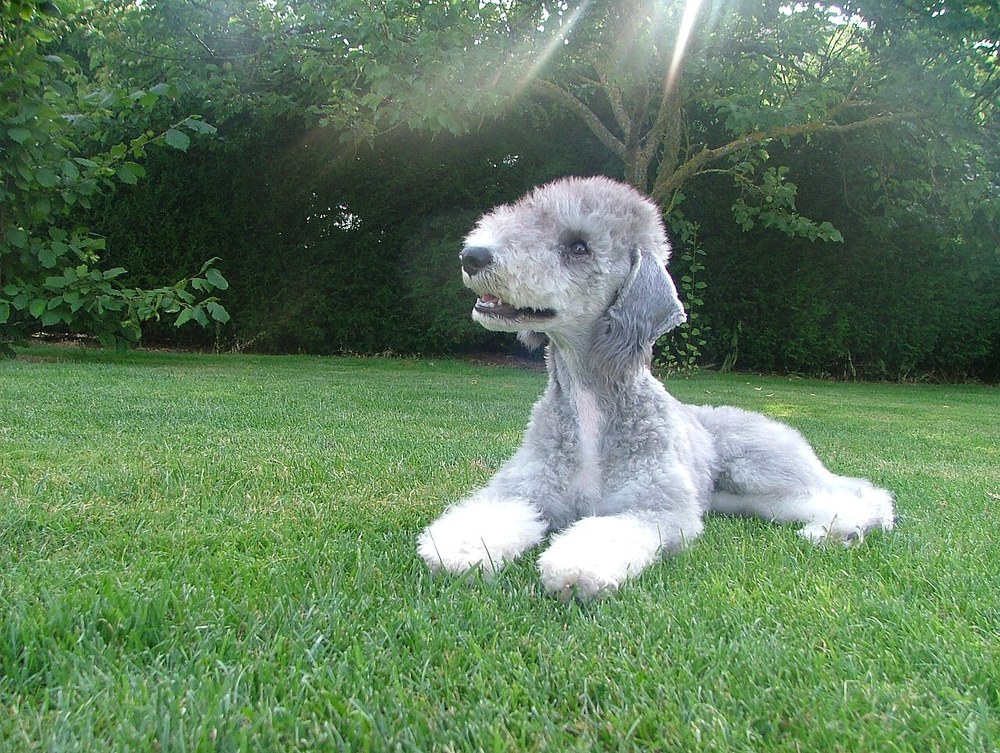
A Bedlington is a sheep in appearance and a terrier in action
Public histories trace the breed to the Rothbury district and the mining town of Bedlington in Northumberland, north-east England. Local terriers there were known as Rothbury terriers before a Bedlington man, Joseph Ainsley, gave the breed its town’s name in the 1820s. Miners, nail-makers and poachers valued a dog that killed rats, ran down rabbits and kept up on long walks. Many writers suggest some sighthound blood, which would explain the arched back and the speed.
In homes, most Bedlingtons are gentle, affectionate and calmer indoors than many terriers. That is exactly why owners get caught out. The same dog that sleeps on your feet can vanish after a rabbit, dig a hole under the fence or take on a dog that pushes it too far. The soft look does not mean a soft temperament when the hunting switch flips.
My plan starts with three outlets. A safe chase — flirt pole or lure games — that ends on cue. A digging spot or scent work so the nose and paws have a job. And leash polish: loose-lead walking, a strong leave-it and a long-line recall that is tested around wildlife, not just in the kitchen. Then the lamb and the terrier live peacefully in one dog.
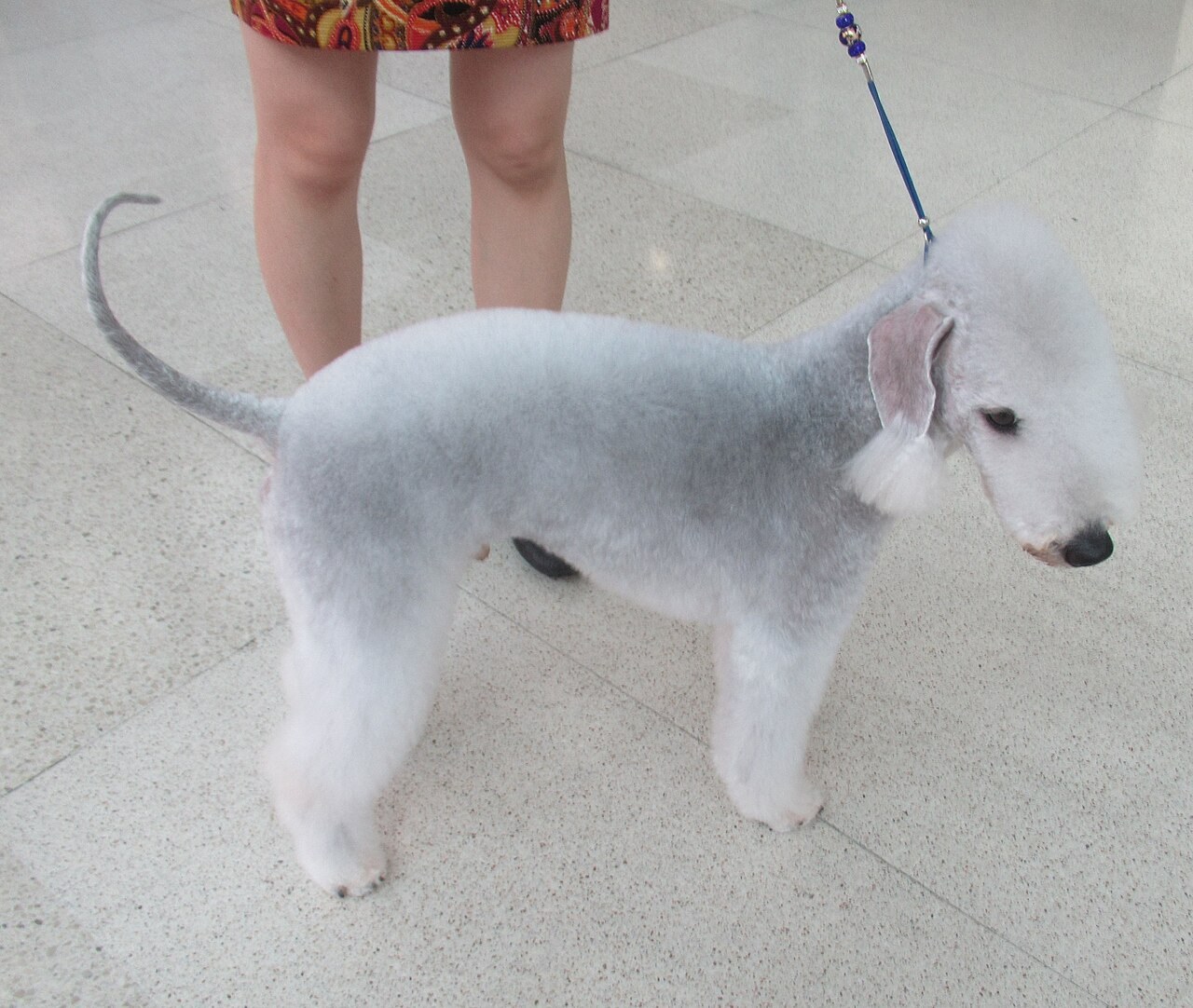
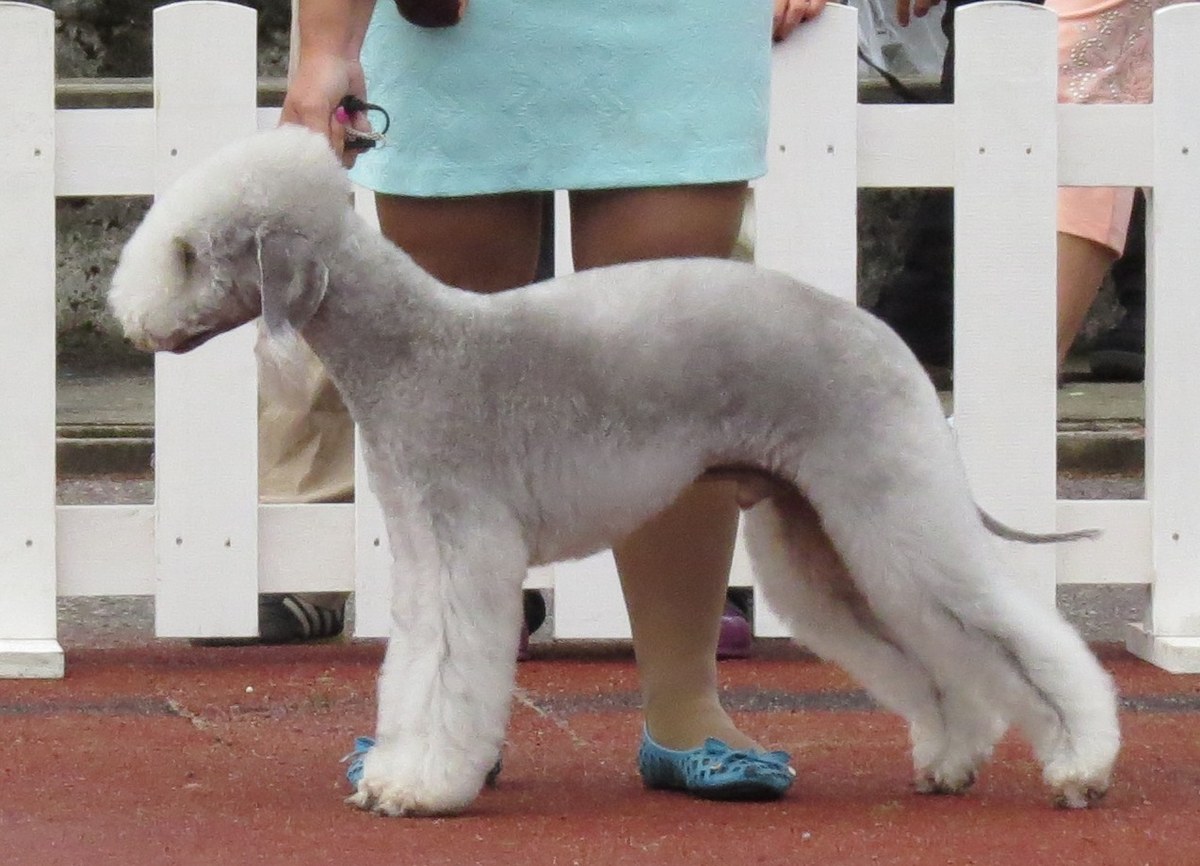
Crisp mix of hard and soft hair, curly on the head; blue, liver or sandy; scissor trim; low shedding
Job
Northumberland terrier for rats, rabbits and fast work in rough country (FCI Group 3; AKC/RKC Terrier)
Breed history
How a Northumberland rat-and-rabbit dog became the Bedlington
History does not decide your dog’s behaviour, but it explains why Bedlingtons can sprint, dig and switch into hunting mode — and why they are often softer indoors than other terriers.
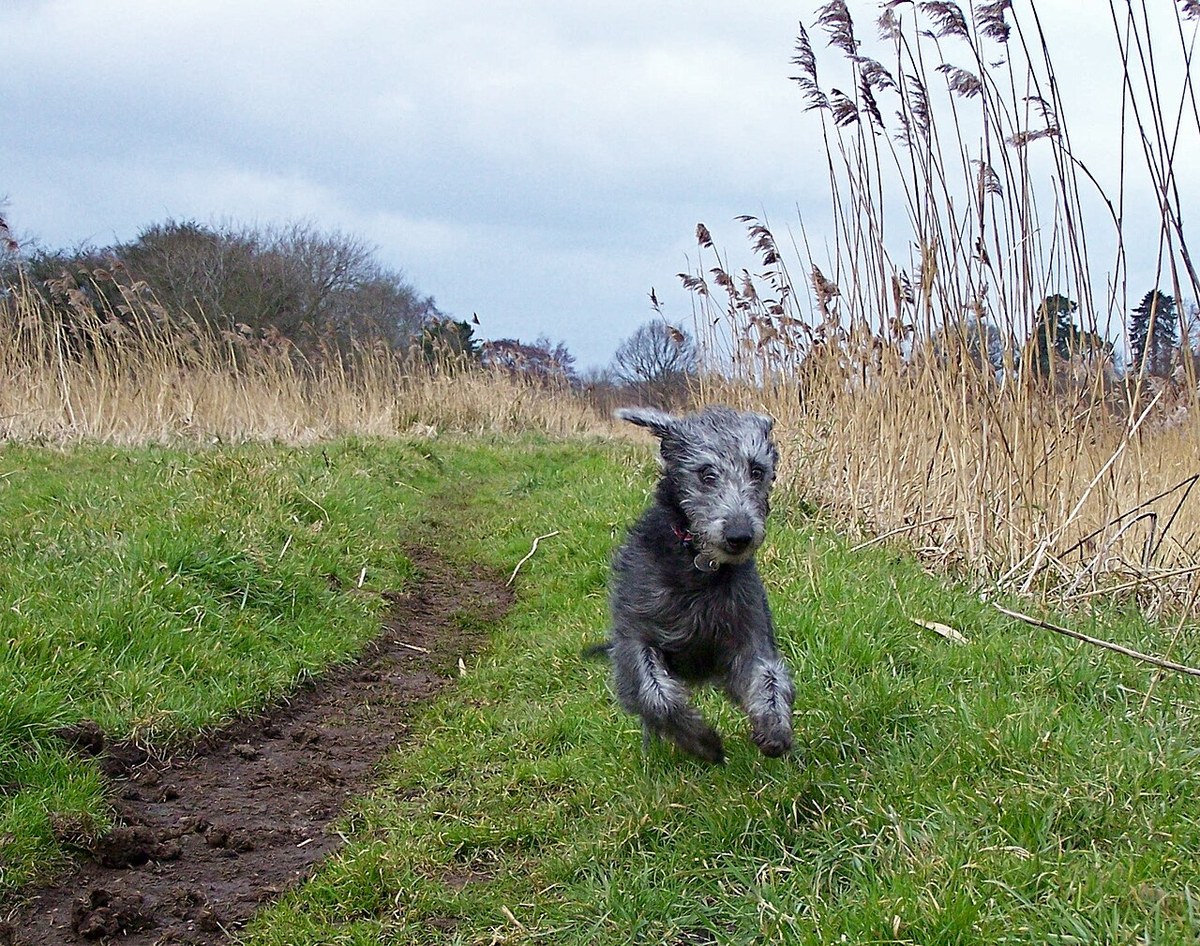
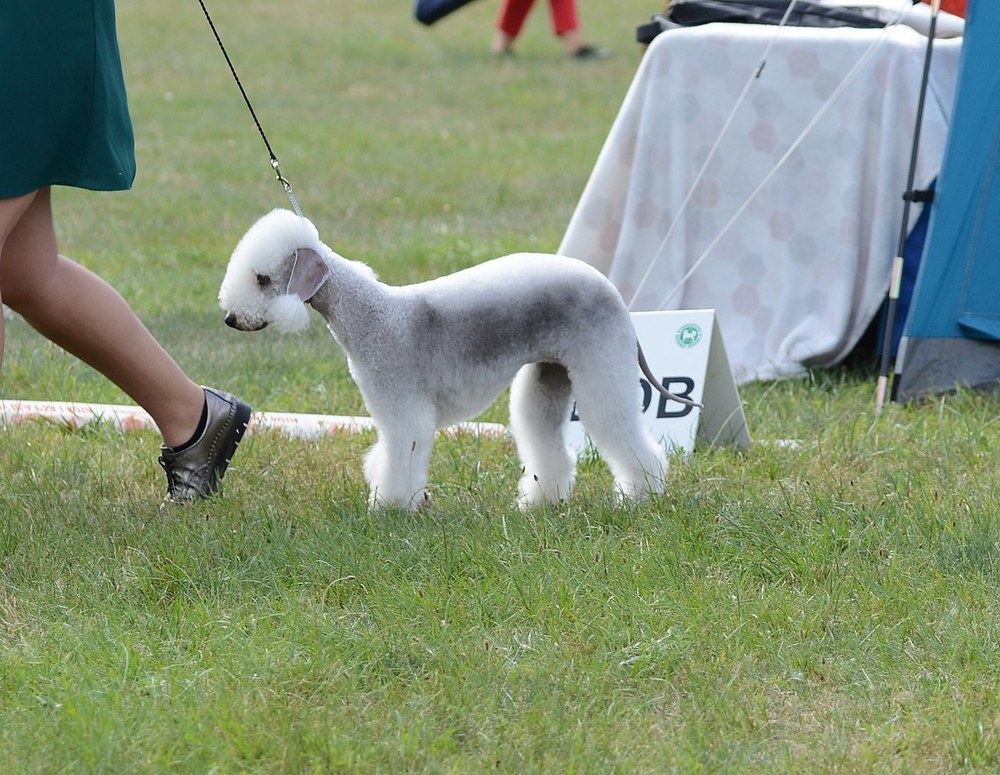
A Bedlington at full speed (CC BY-SA 4.0). The arched back and long legs are built for fast bursts.
Rothbury → Bedlington
A mining-town terrier with a sighthound’s turn of speed
Public accounts describe terriers in the Rothbury forest and nearby mining villages that were kept for rats, badgers, foxes and rabbits. In the 1820s Joseph Ainsley of Bedlington bred a dog often recorded as “Piper” and called the type the Bedlington Terrier. The name stuck to the town rather than the forest.
Miners and poachers needed a dog that was quiet, fast and willing to work in rough ground. Many writers believe sighthound crosses added speed, which shows today in the arched loin and the gallop.
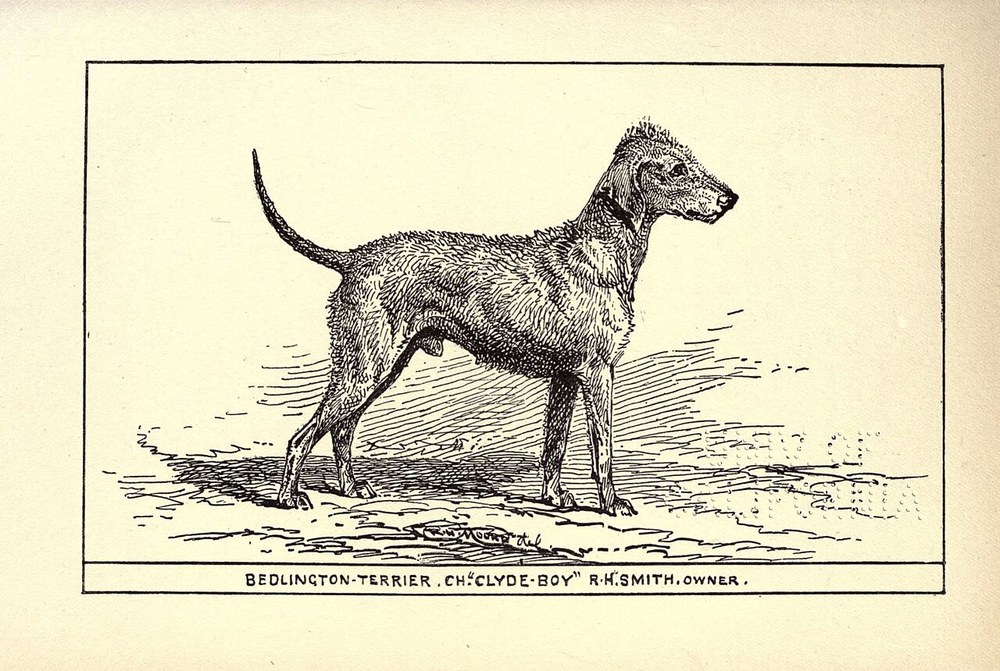
Bedlington Terrier from “All about dogs” (1900, public domain). The lean, arched outline was already the breed’s signature.
From pit villages to show rings
The lamb clip arrived later; the hunter stayed
Breed clubs formed in the 1870s, and the Bedlington appeared at shows in Britain and soon in North America. Over time, show grooming produced the famous lamb-like head topknot and scissored outline.
Most Bedlingtons now live as companions in towns and cities. The coat is styled, but the drive to chase and dig still appears on walks and in gardens.
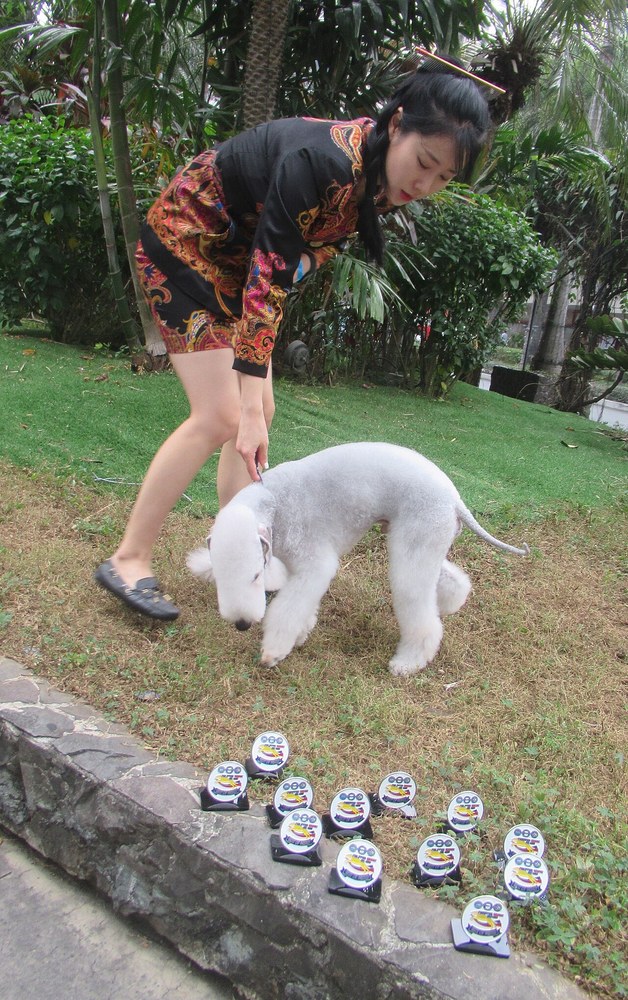
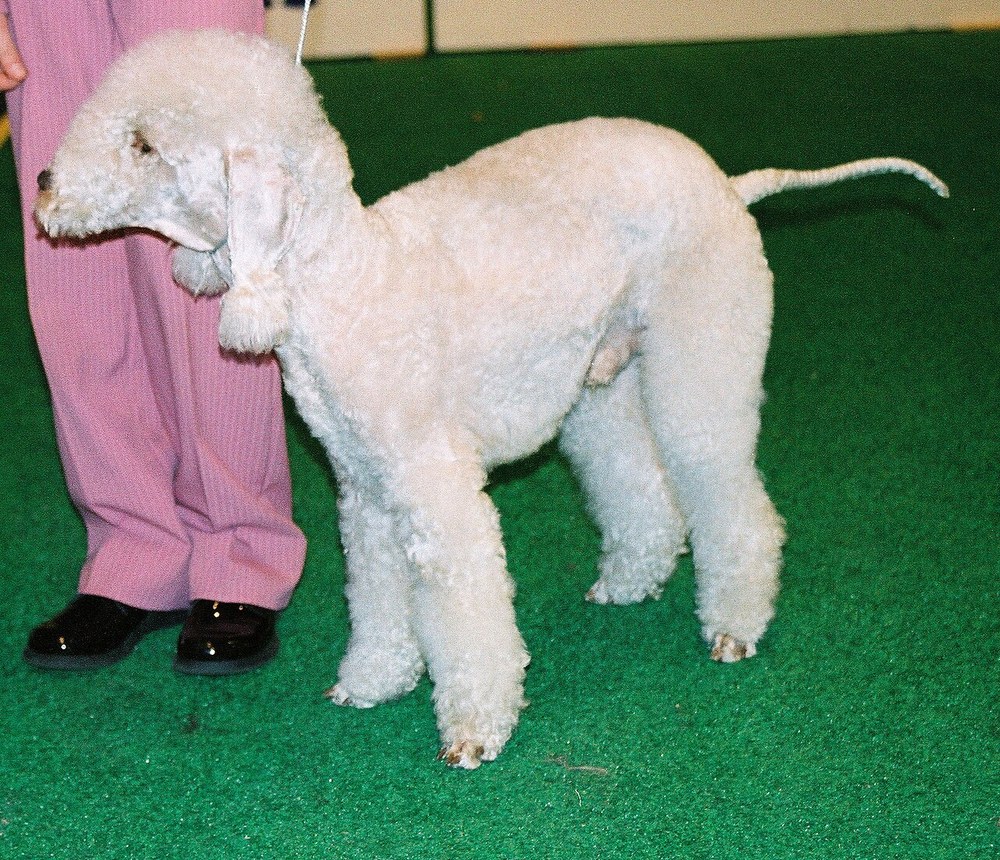
A Bedlington with its handler (CC BY-SA 4.0). Gentle with its people, fast when something runs.
What the breed was bred for
Gentle indoors, fast and keen outdoors
In trainer terms, the breed was selected for a dog that is easy to live with in a small cottage but switches on instantly for quarry. At home that becomes a calm, affectionate dog that may still chase cats, dig in flower beds and argue with a dog that bullies it.
Bedlingtons tend to be sensitive to harsh handling and respond well to food, play and calm voices. Short, clear sessions and plenty of praise work best.
A good day has a sniffing walk, a sprint, a dig and a long nap
Daily life with a Bedlington usually feels calm indoors and lively outdoors. Expect sofa time, gentle affection and then sudden interest in anything that runs or smells like a burrow. A routine with safe chase, digging and leash manners makes the switch predictable.
Morning · leash walk
A sniffing walk with polished leash manners
Most adults enjoy 45–60 minutes of walking with sniffing. Practise loose-lead walking and leave-it from the first weeks, because a Bedlington that sees a rabbit can hit the end of the lead at full speed. Use a harness and a long line in open areas.
A flirt pole, a lure game in a fenced field or a fetch game with a clear finish gives the sighthound legs a job. Five minutes of sprinting can do more than an extra hour of plodding.
Many Bedlingtons dig, especially near fences or where mice live. Give the dog a sandpit or a corner where buried toys and treats are legal. Supervise near fences and interrupt digging elsewhere with a cheerful recall.
The linty coat does not shed much, but it mats and needs regular brushing and scissoring. Teach calm handling of the head, feet and ears early. A Bedlington that relaxes on the grooming table saves you time and stress.
After a sprint and a sniff, most Bedlingtons settle beautifully. Teach place and reward calm. Do not mistake the evening lamb for a dog that no longer needs outdoor work.
General awareness only. I am not a veterinarian. The best-known Bedlington health theme is copper storage disease (copper toxicosis), for which DNA testing exists; owners also notice trouble as lethargy, poor appetite, weight loss, eye changes or limping after sprints. For red flags, leave this page and open
when to call the vet.
Copper storage disease
Copper toxicosis is a known inherited theme in the breed. Ask breeders about DNA testing of parents and follow your vet’s advice on monitoring.
Eyes and kidneys
Eye and kidney conditions are discussed in the breed. Changes in vision, thirst or urination need a vet.
Coat and skin
Mats can hide skin irritation. Regular brushing and trimming keep the skin visible.
Sprint injuries
Fast dogs can strain muscles or cut pads on rough ground. Warm up and check feet after runs.
Show and working-type Bedlingtons share the same hunter
No bloodline selling. Differences show in coat, size and intensity of drive, but every Bedlington needs chase and dig outlets, leash manners and coat care.
Show and companion lines
Often a fuller, more sculpted coat that needs frequent trimming.
Usually gentle, affectionate house dogs.
Prey drive is still present outdoors.
Ask about copper DNA testing and parent temperaments.
Fits an owner who loves grooming and a calm house dog with outdoor bursts.
Working-type and sporty homes
Often keen on lure coursing, agility and scent games.
May be more intense around wildlife.
Coat is often kept shorter and easier.
Recall needs long-line work for months.
Fits an active owner who wants a fast terrier for sports and outdoor life.
Socialization windows
What to introduce — and what not to overload — by age
AVSAB-aligned in spirit: short, clean exposures at a distance the puppy can still eat,
with hygiene while vaccines finish. See the
puppy socialization schedule.
2–4 months
Home, handling and grooming
Introduce: gentle brushing and table sessions, name game, short loose-lead practice, toy chase with a drop, calm car rides.
Do not overload: unsupervised garden digging, chasing cats, rough play with big dogs.
~6 months
The outside world
Introduce: dogs at a distance where the puppy can still eat, first long-line walks, flirt pole with rules, grooming salon visits.
Do not overload: off-lead fields near rabbits, chaotic dog parks, skipping coat care.
~12 months
Adolescent speed
Introduce: recall ladder on a long line, leave-it near wildlife, a dig spot in the garden, polite greetings.
Do not overload: trusting recall in open fields, letting fence digging practise, harsh corrections.
~18 months
Adult routines
Introduce: regular grooming schedule, sports such as lure coursing or agility, varied walks.
Do not overload: assuming the dog has outgrown prey drive, skipping leash practice.
~24 months+
Keep it going
Introduce: refresh recall and leave-it, keep outlets, yearly health checks including copper-related monitoring if your vet advises.
Do not overload: ignoring lethargy or appetite changes, letting the coat mat.
Before you buy
Who a Bedlington Terrier usually fits
Fit comes down to prey drive, coat care, leash manners and how calm you want the dog indoors.
Good match
More likely a good fit if you…
You want a gentle, affectionate dog indoors with real outdoor energy
You will brush and trim regularly or pay for a groomer
You can provide safe sprinting and dig outlets
You will practise loose-lead walking and recall seriously
You like a quieter terrier that still has a spark
Mismatch risk
A Bedlington Terrier may be a poor choice if…
You want a dog that can be off lead anywhere
You keep small pets that would trigger chase
You want a wash-and-wear coat
You expect a lamb-like look to guarantee a soft temperament
You dislike any digging in the garden
If you are torn between breeds
Bedlington Terrier vs Whippet and Kerry Blue Terrier
The Whippet shares the speed and calm indoor nature; the Kerry Blue shares the soft-coated terrier look and grooming needs. The Bedlington sits between them: a fast, gentle terrier with a lamb’s coat.
Bedlington Terrier
Strong chase and dig drive outdoors.
Kerry Blue Terrier
Strong terrier drive with a more opinionated edge.
Indoor energy
Bedlington Terrier
Usually calm and affectionate indoors.
Whippet
Also very calm indoors; sprinter outdoors.
Grooming load
Bedlington Terrier
Regular trimming, brushing and handling.
Kerry Blue Terrier
Similar soft-coat trim lifestyle.
Ownership without surprises
Where a Bedlington Terrier owner’s budget goes
Costs depend on country, city and your choices. These are themes to plan for, not quotes.
Grooming
Professional scissoring every 6–8 weeks or learning to trim at home, plus brushes and combs.
Health testing
Copper DNA status of parents and any monitoring your vet recommends.
Fencing
Secure fencing and gates; Bedlingtons can dig under weak spots and sprint after quarry.
Food
Small-medium rations; measure to keep the dog lean.
Training and sports
Puppy class, leash manners, lure coursing or agility if you enjoy them.
Gear
Harness, long line, flirt pole and a sandpit or dig box.
The lamb coat is not cheap: grooming and secure fencing are often the biggest recurring costs.
Before day one at home
What to prepare for a Bedlington Terrier puppy
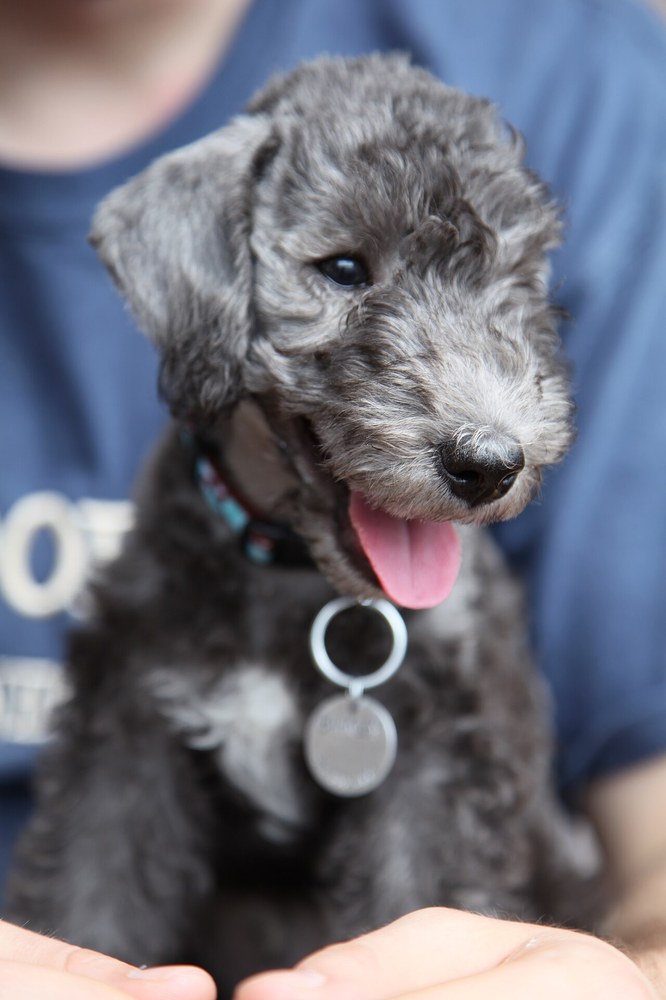
Bedlington puppies are usually born dark and lighten as they grow. They are playful, curious and quick to chase. Prepare grooming, leash and dig plans before day one.
01
Start grooming early
Short, calm table sessions with food. See puppy handling.
Overtired puppies chase and nip more. Use enforced naps.
If the dog is already yours
Training a Bedlington means outlets first, then leash polish
Keep rules clear and gentle: loose lead on walks, leave-it when wildlife appears, drop on cue in chase games, place after exercise. Reward each one generously.
Bedlingtons are often sensitive. Harsh corrections can make them shut down or avoid you. Food, play and calm praise get better results.
Management matters: secure fencing, a harness and long line in open spaces, and no unsupervised garden digging near fences while habits form.
Load balance
Sprint and sniff first, then ask for manners
Age, joint health, weight and weather all affect the right exercise. Lethargy, limping or appetite changes need a vet check before more training.
Sniff walkShort sprintDig or scent gameLeash practiceSettle on a bed
Lure coursing, flirt pole, scent work and short leash sessions all count. Hours alone in the garden do not meet the need and invite digging.
A Bedlington that has sprinted, dug in its own spot and sniffed on a walk can walk past a rabbit on a loose lead and nap on the sofa.
Leash polish around prey
How to teach a Bedlington to walk past a rabbit on a loose lead
Build loose-lead walking and leave-it in easy places, then add distance from wildlife and reward generously for calm choices.
01
Start in a quiet place
Practise loose-lead walking and leave-it at home and in the garden with food rewards.
02
Find the working distance
On walks, notice how far from rabbits or squirrels your dog can still eat and respond.
03
Reward looks back
When the dog sees wildlife and looks back to you, mark and reward. Move away if it cannot.
04
Close the gap slowly
Over weeks, reduce distance only when the dog stays loose and responsive.
05
Give a safe sprint
After the walk, offer a flirt pole or lure game so the chase drive has an outlet.
One scene close-up
Why a Bedlington hits the end of the lead when a rabbit moves
The sighthound legs and terrier drive fire together. If the dog has chased before, the sprint itself is the reward. Yanking back adds frustration and can strain the neck.
Use a harness and long line, practise leave-it at a distance where the dog can still eat, and reward every look back at you. Give a safe sprint later with a flirt pole.
If prey drive becomes intense or dangerous around pets, get help from a qualified professional.
“With a Bedlington, I start by giving the hunter a safe sprint and a dig spot, then I polish the leash. Once those needs are met, owners finally get the gentle lamb they were promised.”
Sessions cover real scenes: rabbits on walks, recall, digging, grooming table and settling. I am a trainer, not a veterinarian. No invented reviews.
Andrew DarovProfessional dog trainer and instructor
An independent Lake District fell terrier. Needs secure boundaries, real work and cooperative leash and recall training.
Need a read on your exact situation?
Tell me your Bedlington’s age and the scene that keeps repeating: pulling, recall, digging, grooming or dog arguments. We check safety and health first, then pick the first skill.
Written by Andrew Darov, professional dog trainer. Not veterinary advice and not a diagnosis.
Not a kennel club. No invented reviews. No vaccine schedules or toxin doses. Photo credits in
/images/breeds/bedlington-terrier-guide/credits.md.