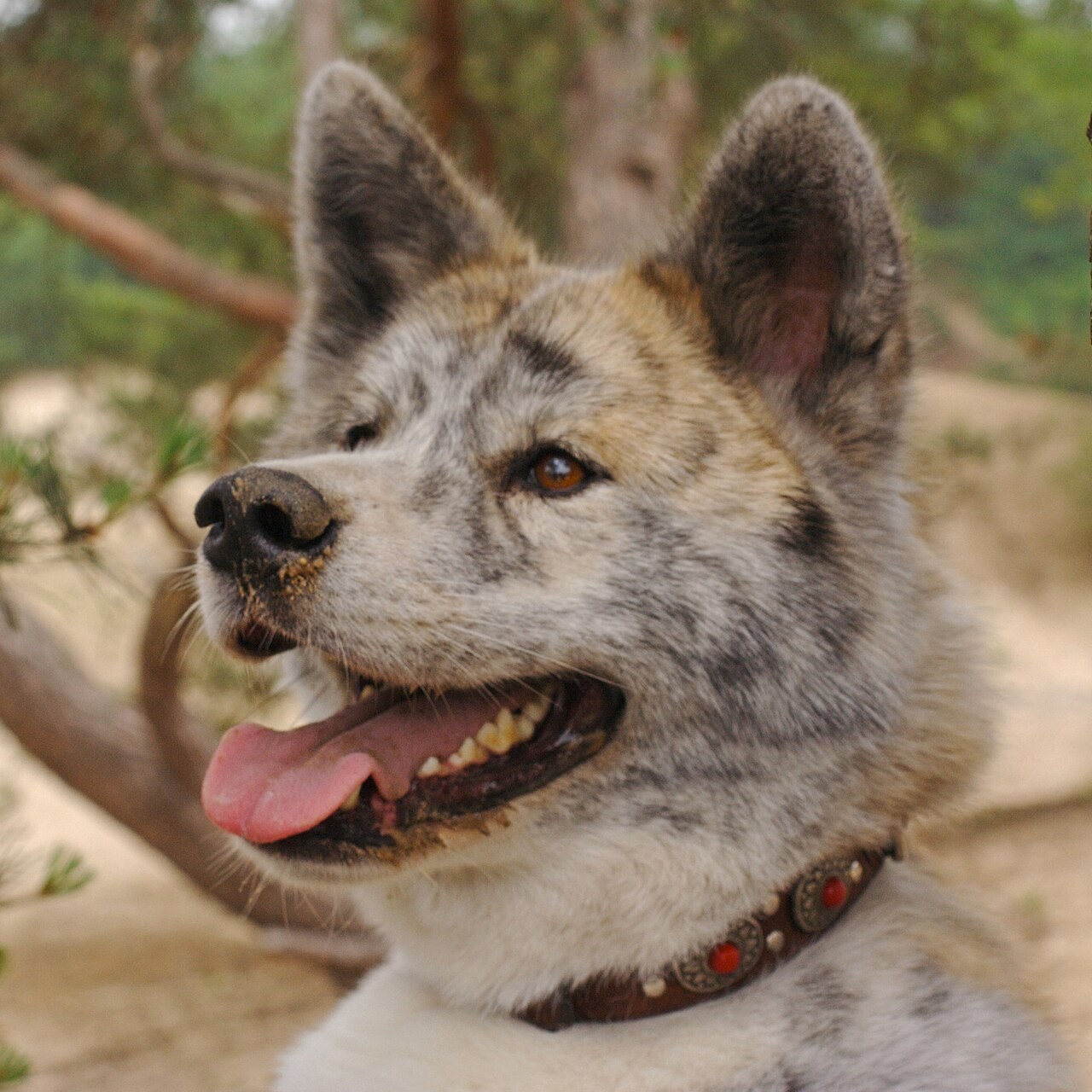
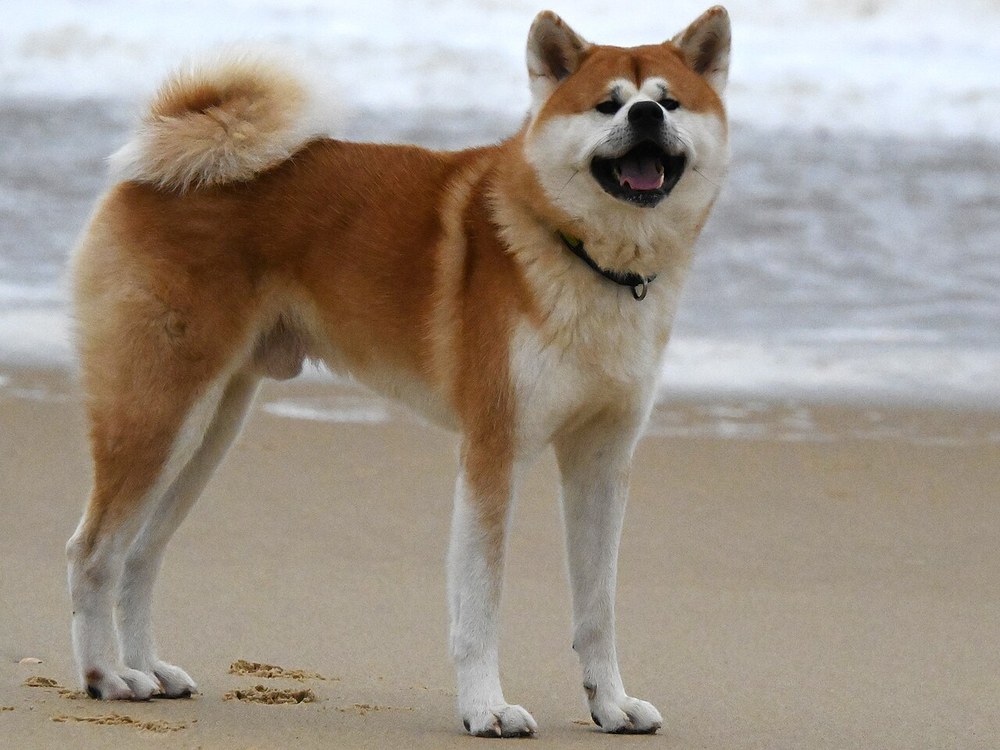
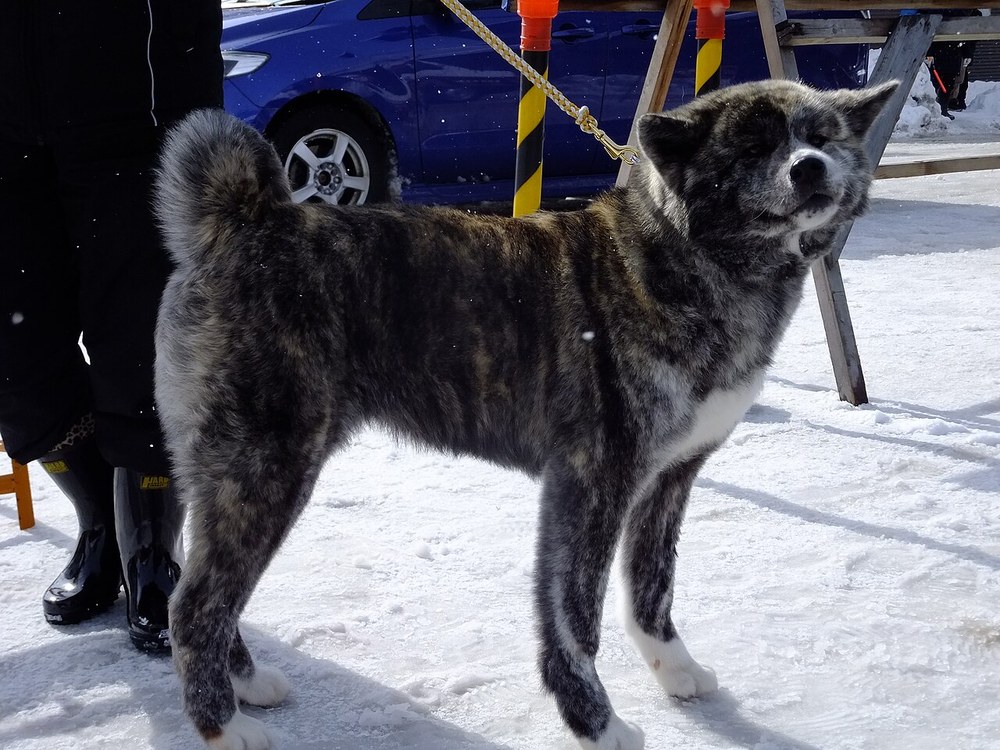
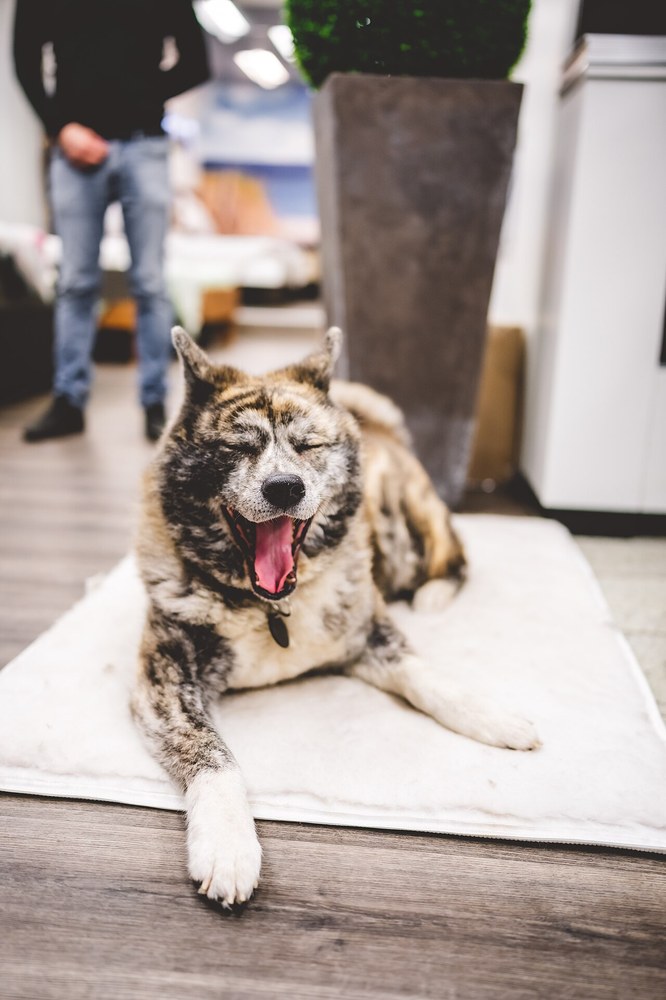
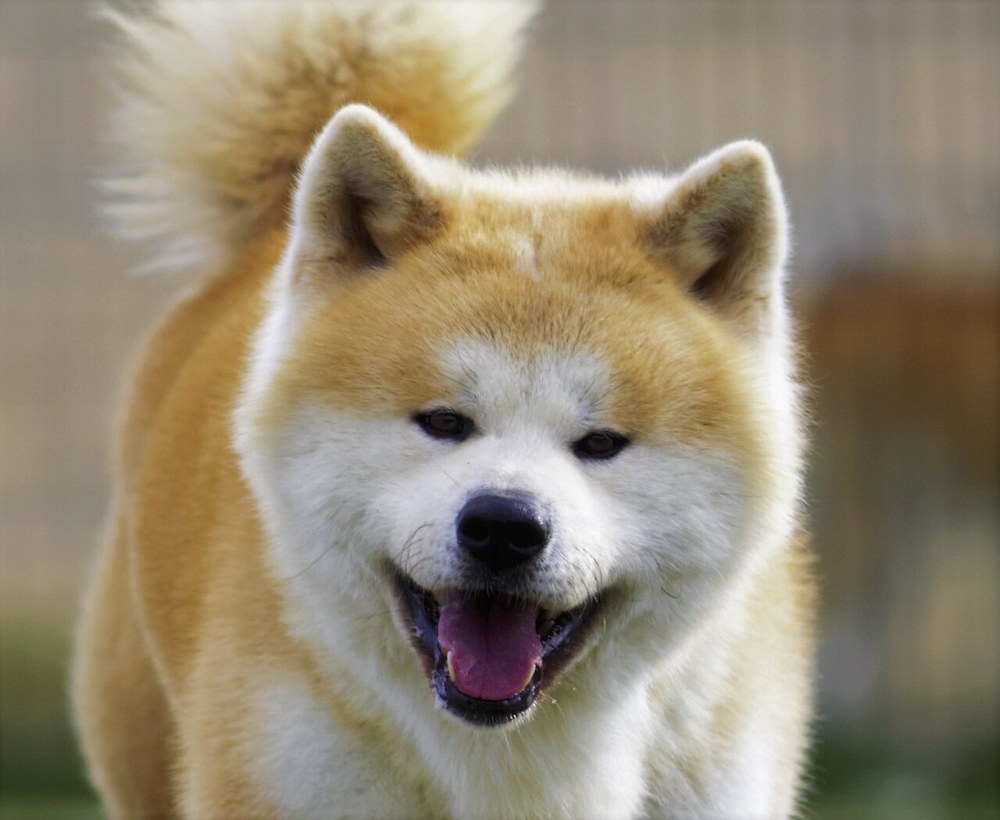
An Akita is a large, quiet Japanese spitz with a guardian’s mind. Most adults are calm and clean at home, devoted to their people, reserved with strangers, and often intolerant of unfamiliar dogs — especially of the same sex. City life works when you plan greetings, secure the gate, and teach a settle as carefully as any trick.
Job: Large Japanese breed — hunter and guardian.
Energy: Moderate; daily walks and calm routines.
Home: Needs visitor routines and care around other dogs.
An Akita is a dignified, watchful guardian that needs calm visitor routines and room to feel safe
Public breed histories describe a hunting and guarding dog from the mountains of northern Japan. The modern pet kept the dignity, the courage, and the loyalty to a small circle. It did not become a dog that wants to meet everyone because it looks like a teddy bear.
Training often goes well when food is good and sessions are short. The hard part is the social side: visitors, dog greetings, and the front gate. A young Akita that practises guarding the doorway or fighting at the fence will keep the habit.
From the first month, build two chains. First: stranger or dog appears, the Akita looks at you, gets a reward, and moves on. Second: guests arrive, the dog goes to its place behind a gate and relaxes while you handle the door.
Why the Akita was built around big game, a guarded home, and very few words
History is not destiny for one puppy, but it explains a lot: many Akitas are quiet, watchful, and selective with strangers and other dogs — and why a household that wanted a fluffy greeter meets a dog that decides who belongs.
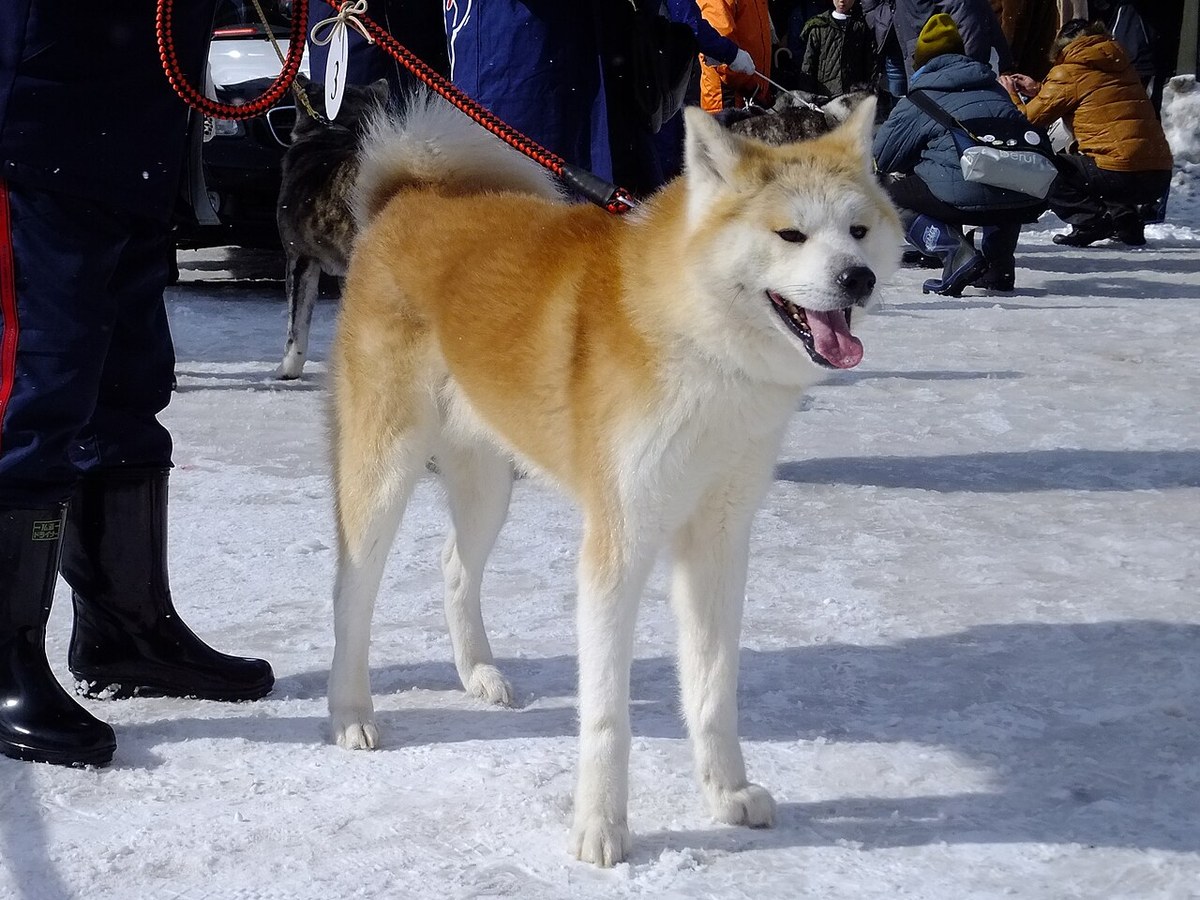
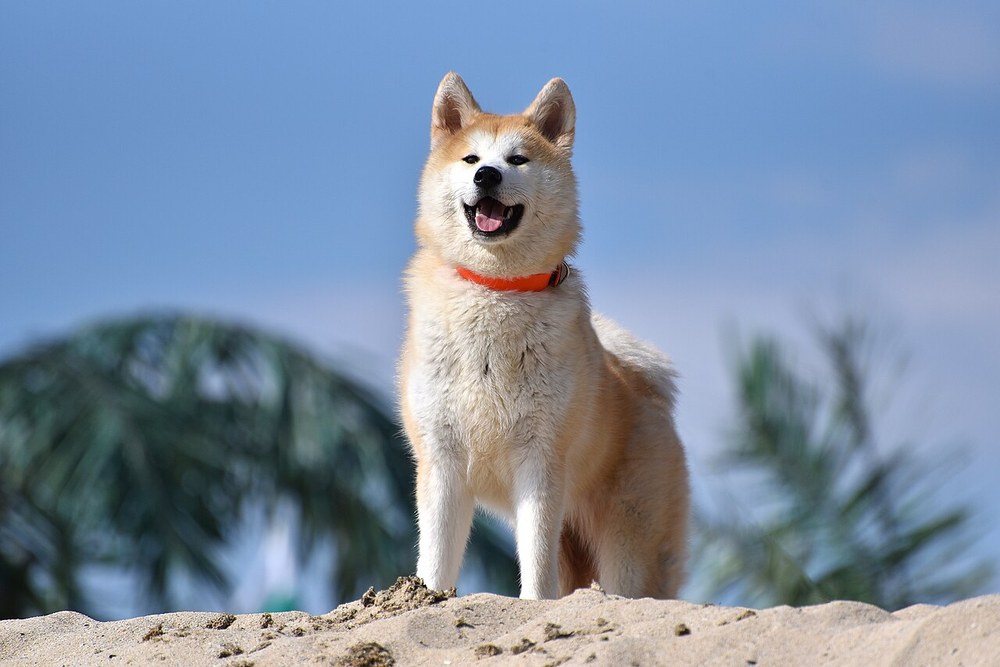
Akita at a parade in Odate, the northern Japanese city most tied to the breed (modern photograph).
Northern Japan → mountain hunting dog
Large, steady, and willing to hold ground
Public breed histories place the Akita in the mountains of Akita Prefecture, in northern Honshu, where large spitz-type dogs worked with hunters on big game. The job asked for courage, stamina in snow, and a dog that would not panic when something large turned around.
That is not a city greeting job. A dog selected to stand its ground does not automatically want to meet every stranger on the pavement. Calm distance and clear rules are the training plan, not a weekend of forced socialising.
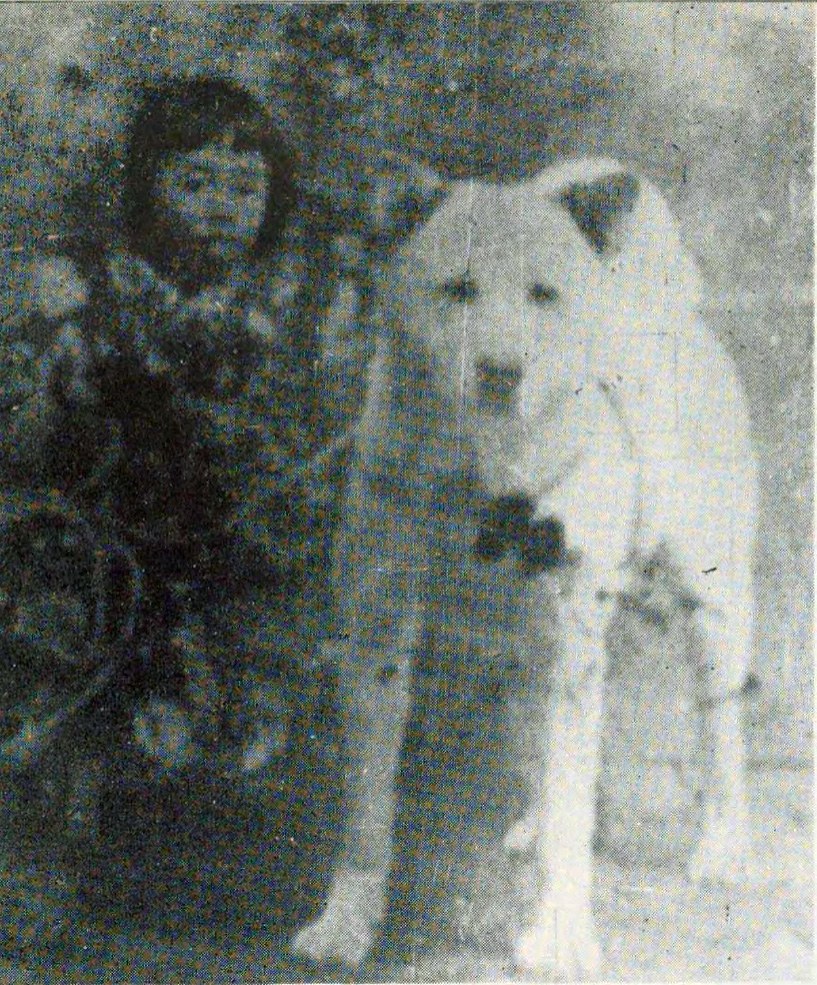
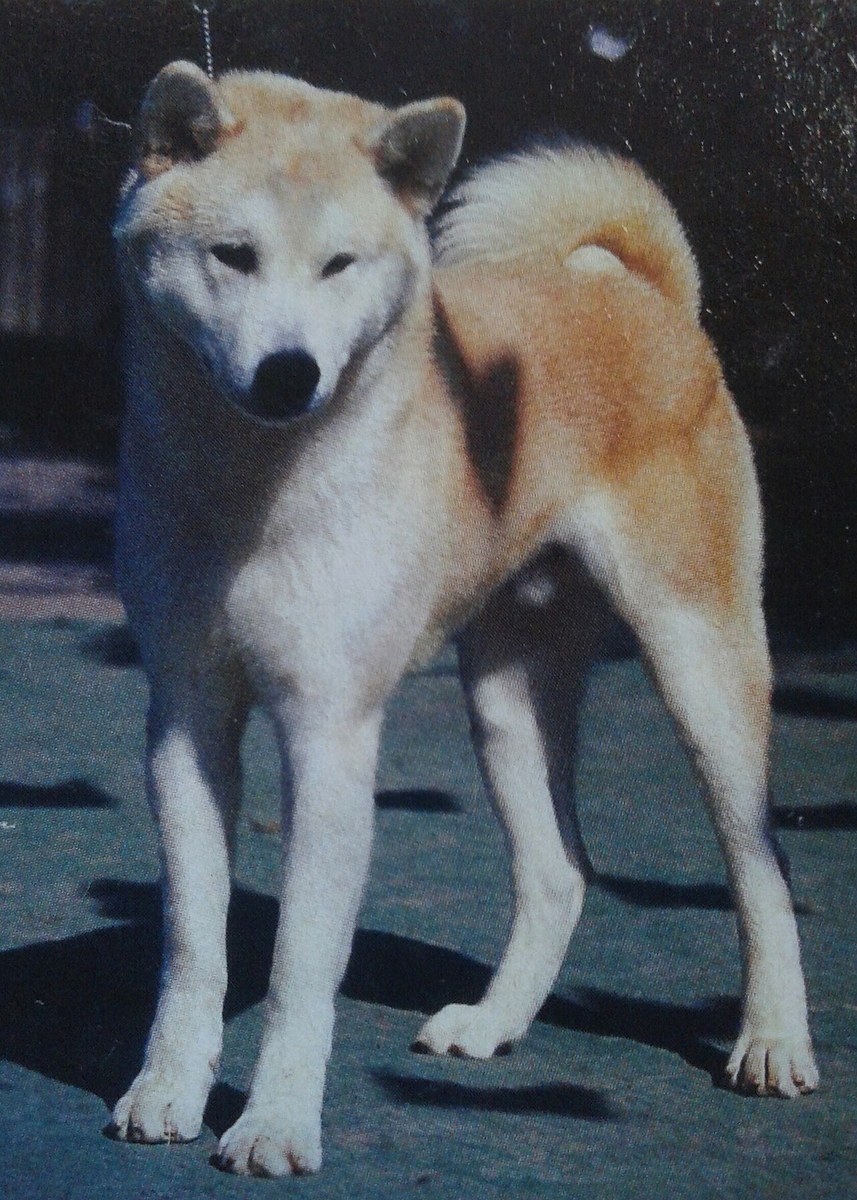
An Akita photographed around 1907 in Odate, Akita Prefecture (public domain). Early type, before modern show rings.
Odate → protected breed → two types
Near loss, preservation, and the Japanese / American split
Public breed lore describes a period of crossing with other breeds, then a preservation effort in Japan; the Akita was designated a natural monument there in 1931. Hachikō, the dog who waited at Shibuya station, made the breed famous far beyond Akita.
After the Second World War, dogs taken to the United States developed into a larger, heavier type. Today FCI lists the Japanese Akita and the American Akita as separate breeds; AKC calls the larger type simply “Akita”. Meet the dog in front of you — guardian and same-sex themes come up in both.
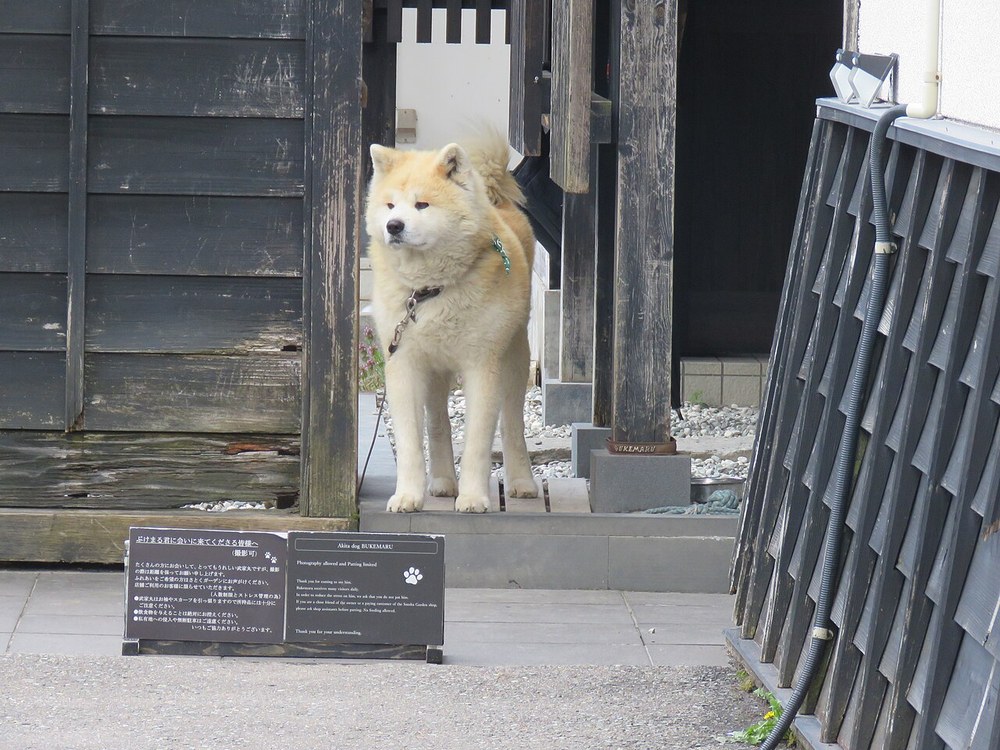
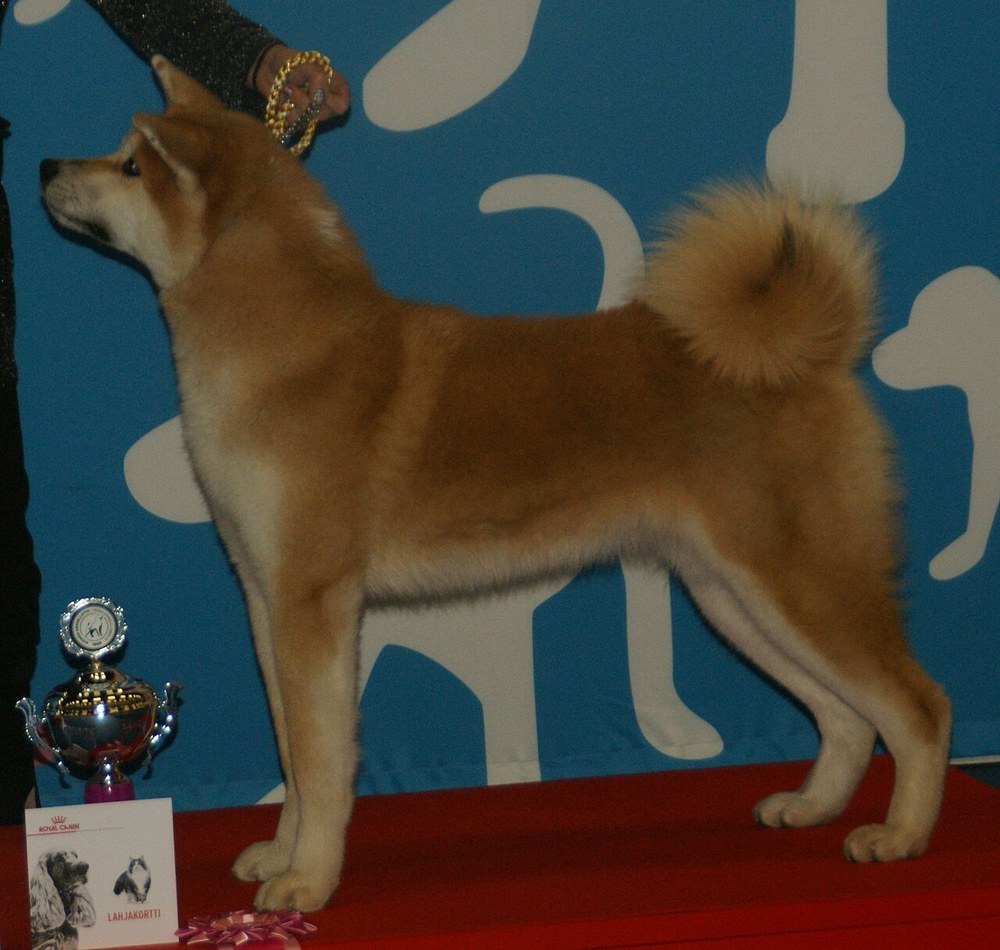
The Akita Bukemaru in Kakunodate, Akita Prefecture (modern photograph). The breed is still a local symbol in its home region.
What the breed was bred for
Courage, composure, and a loyal circle that stays small
In plain trainer language: the type was selected for nerve, independence, and loyalty to its own people. That is why a calm, predictable household produces a dignified partner — and why a chaotic one produces a dog that manages doorways and guests on its own terms.
Independence is not stubbornness. An Akita that ignores a cue has usually not been rewarded enough for it, or was asked in a situation it considers more important. Short sessions, food, distance from triggers, and a place to settle are the plan.
Visitors are managed by you, not interviewed by the dog
Same-sex dog greetings are planned, not improvised
Recall is a long-line project; prey and patrol come first
Fence, gates, and a settle are part of the price of the breed
A day is calm structure, managed greetings, and a guardian that is allowed to rest
In a city the Akita’s job shows up as quiet patrol: watching the gate, stiffening at a dog across the road, blocking a hallway when guests arrive. Most adults are not frantic dogs. The work is keeping those moments small and rewarded, so the dog does not have to take charge.
Morning · first outing
A predictable route beats a social tour
Most Akitas do best on a familiar loop at a quieter hour, with room to step away from other dogs. A walk that forces close passes on narrow pavements practises tension before breakfast.
Distance first; no on-lead greetings with strangers
Many adult Akitas, especially same-sex pairs, are not dog-park dogs. Straight-on greetings on a tight lead are the easiest way to start a fight. A U-turn is a skill, not a failure.
A strong dog that owns the front gate will escalate against couriers and neighbours every day. Supervise yard time, block sightlines where you can, and do not leave the dog to guard the property alone.
Teach a place and a gate routine before guests arrive, not during. Children’s friends running through the house are not a socialisation exercise for a guardian breed. Adults manage every visit.
Give the dog a quiet spot away from the front door and a chew. An Akita that is always on duty at the window is tired, not relaxed. Rest is a taught skill for this breed too.
What to watch monthly: double coat, weight, handling, and heat
General awareness only. I am not a veterinarian. Most problems show first as a change in appetite, coat, movement, or temper during handling. For red flags, leave this page and open
when to call the vet.
Double coat and seasonal shed
The Akita carries a dense undercoat that usually sheds heavily in seasonal waves. Brush through to the skin during a shed, not only the top layer. Shaving is not a cooling plan; shade and timing are.
Weight and the big frame
Measure the ration and use part of it as training food. Extra weight on a large, heavy dog is a joint and metabolic conversation with your vet. See body condition and rations.
Health screening (not a diagnosis)
Ask the breeder which health screenings the national breed club recommends, and read the actual results for both parents. A breed page cannot diagnose your dog; your veterinarian can.
Handling and vet visits
A dog that dislikes restraint becomes a big problem at the clinic. Practise ear, paw, and mouth handling and muzzle comfort while the dog is young. See introducing a muzzle and fear of vet handling.
Heat and the thick coat
Plan summer walks for cooler hours and keep shade and water available. Heavy panting that does not settle, weakness, or collapse is an emergency, not a training moment.
Toxins and dropped food
I do not publish toxin amounts. If the dog ate something dangerous, call a veterinarian or a poison-control line; the footer lists public numbers. Manage food at home — resource guarding and dropped food are a poor mix.
Lines and types
Japanese Akita and American Akita are not the same dog
FCI recognises the Japanese Akita and the American Akita as separate breeds; AKC registers the larger type as the Akita. Size, head shape, and colour differ. Guardian behaviour, same-sex tension, and the need for calm structure show up in both.
Japanese Akita (Akita Inu)
Lighter build, fox-like head, and a limited range of colours such as red, brindle, and white.
Often described as slightly more reserved and agile.
Still a powerful guardian type that needs secure fencing and planned greetings.
Ask which registry the parents belong to and meet them at home.
Fits an experienced owner who wants a dignified, independent companion and is ready to manage visitors and dog encounters.
American Akita
Heavier, larger frame and broad, bear-like head; many colours and markings are accepted.
Strength makes lead manners and handling essential from puppyhood.
Same-sex dog intolerance is commonly reported.
Meet the parents calm at home, not only in a show ring or video.
Fits a household with space, a secure garden, and the commitment to train a very strong guardian breed.
Socialization windows
What to introduce — and what not to overload — by age
AVSAB-aligned in spirit: short, clean exposures at a distance the puppy can still eat,
with hygiene while vaccines finish. See the
puppy socialization schedule.
2–4 months
Home, family, and gentle handling
Introduce: family members, calm visitors at a distance, brushing, paw and ear handling with food, a crate or pen, short car trips.
Do not overload: crowds of strangers reaching in, rough play with children, free access to the front door.
~6 months
Calm looks at the world
Introduce: people and dogs seen across the street, a place cue at home, check-ins on a long line, muzzle training as a game.
Do not overload: on-lead greetings with unknown dogs, dog parks, letting the puppy “handle” the doorbell.
~12 months
Adolescent guarding appears
Introduce: a gate routine for visitors, more distance work around dogs, short training sessions with high-value food.
Do not overload: unsupervised yard time at the fence, same-sex play groups, punishing growls instead of adding distance.
~18 months
Adult social decisions
Introduce: calm walks in busier places at the dog’s pace, introductions to chosen dogs one at a time, regular handling practice.
Do not overload: forcing greetings, assuming puppy friendships will last, letting the dog patrol windows all day.
~24 months
Maintain the structure
Introduce: refreshed place, recall, and visitor routines; new places introduced gradually.
Do not overload: dropping management because the dog “is fine now”, open gates, surprise meetings with strange dogs.
Before you buy
Who an Akita usually fits
An Akita fits people who like a calm, dignified dog and are happy to run the household with clear rules — visitors, other dogs and food included.
Good match
More likely a good fit if you…
Want a quiet, loyal dog that bonds closely with its own family and stays reserved with strangers
Can manage greetings at the door and keep the dog on lead around unfamiliar dogs for life if needed
Have the strength and patience to handle a large, powerful dog on walks and at the vet
Are ready for heavy seasonal shedding and regular brushing of a thick double coat
Prefer steady, short training sessions to drilling and enjoy a dog that thinks for itself
Mismatch risk
An Akita may be a poor choice if…
You picture regular dog-park visits or off-lead play with every dog you meet
Your home has a constant flow of unannounced guests and no way to separate the dog
You expect a dog that obeys everyone in the family equally from day one
Hair on clothes and floors for weeks at a time would be a deal-breaker
You want a first dog that forgives inconsistent rules
If you are torn between breeds
Akita vs Shiba Inu and Cane Corso
All three are independent and take guarding or ownership of space seriously, but size, tempo and the type of handling they need differ a lot.
Size and handling
Akita
Large spitz; strong pull when it decides something matters; needs early handling practice.
Shiba Inu
Same spitz independence in a small body; easier to restrain, just as quick to refuse handling.
With strangers
Akita
Reserved and watchful; usually ignores guests rather than greeting them.
Cane Corso
Bred as a guardian too, but often more vocal and confrontational at the boundary.
With other dogs
Akita
Same-sex intolerance is common in adults; greetings need planning.
Shiba Inu
Can be dog-selective as well, usually with more noise and less risk because of size.
Coat and grooming
Akita
Thick double coat that sheds heavily, especially at seasonal coat changes.
Cane Corso
Short coat with little grooming — the work goes into exercise and structure.
Both compares
The Shiba resists pressure even more; the Corso is more handler-oriented but needs firm structure.
Ownership without surprises
Where an Akita owner’s budget goes
Exact prices depend on your country, breeder and housing. These are the cost areas to plan for before an Akita puppy comes home — not quotes.
Time and structure
Daily walks, short training sessions and calm practice at the door. A large guardian without routine creates bigger problems than a small dog would.
Food for a large dog
A big, slow-maturing breed eats a lot. Measure meals and keep the dog lean; use part of the ration for training.
Veterinary care
Routine care, vaccinations and a vet who is comfortable handling large, reserved dogs. Ask your breeder which health screenings the national breed club recommends.
Fencing and containment
Solid, high fencing and secure gates. An Akita that patrols an open front garden is a liability.
Grooming
Good undercoat rake and slicker brush, possibly professional help during the heavy shedding seasons.
Training help
A puppy class that allows distance from other dogs and a private trainer for guest and dog-to-dog manners.
With an Akita, the biggest costs are usually secure space and owner time — not toys or gadgets.
Before day one at home
What to prepare for an Akita puppy
An Akita puppy is often calm and cuddly, which makes it easy to forget that you are raising a large, independent guardian. The habits you set in the first months decide how the adult behaves at the door and around food.
01
Practise handling every day
Touch paws, ears and mouth, check the coat and reward calm behaviour. A grown Akita that hates handling is hard to examine at the vet. Use puppy handling as a guide.
02
Prevent food guarding early
Add good food to the bowl as you pass rather than taking things away. Teach a trade for objects. See resource guarding.
03
Plan toilet trips
Take the puppy out after sleep, meals and play. Most Akita puppies are clean quickly when the schedule is consistent. Follow potty training.
04
Meet people calmly
Let visitors ignore the puppy and drop treats rather than forcing greetings. The goal is a neutral adult, not one that loves everyone.
A crate or pen in a quiet place helps the puppy settle after visitors and walks. Start with crate training and short first absences.
If the dog is already yours
Training means calm structure around people, dogs and space
Akitas learn fast, but they rarely do something just because you asked. Clear rules, fair rewards and a predictable routine work much better than repetition or pressure.
Most problems come from situations the dog is managing on its own: guests at the door, another dog approaching, food left within reach. Training gives the dog a job in those moments — look at you, go to a mat, move away.
Management is part of the plan: gates between the dog and the front door, a lead in public, and separate feeding areas if there are other pets.
Load balance
Enough exercise, but not overloading a large dog
Adolescent Akitas grow fast; long runs and forced exercise are not a substitute for structure. Heat is hard on a heavy double coat, so plan walks for cooler times of day.
Calm walks, sniffing, short obedience or tricks sessions and food puzzles meet most needs. Rough play with unknown dogs and free-for-all parks are not needed and often cause trouble.
A well-balanced Akita is relaxed at home and does not feel it has to manage every visitor.
Guests, other dogs and the place cue
How to teach an Akita to stay calm when someone arrives
Start practising with a familiar person and plenty of distance, before trying it with real visitors.
01
Set up before the door opens
Gate, lead or a closed room before the visitor arrives. The Akita should not be the first to greet anyone.
02
Reward the first look at you
When the dog notices the guest, reward a glance back at you while it can still eat calmly.
03
Keep the distance comfortable
Ask the guest to ignore the dog and sit down. If the dog stiffens, increase distance rather than encouraging contact.
04
Send to the mat
Cue the place mat, reward lying down and drop occasional treats while the visit goes on.
05
Release when things are quiet
End with a chew or a calm break in another room, not with an excited greeting.
One scene close-up
Why an Akita stares at a visitor — and what to do instead
A stiff stare at a guest is the dog assessing the situation. Telling the dog “it’s fine” after it has already stiffened is too late; the dog needs a clear job before it gets to that point.
Put the dog behind a gate or on a lead before the door opens. Reward looking at you, then send the dog to its mat while the guest settles. Let the dog approach in its own time — or not at all.
If the dog growls, lunges or cannot take food when a visitor arrives, stop practising with guests and get help from a qualified behaviour professional.
“With an Akita, I do not try to turn a reserved guardian into a party dog. We build distance on walks, a place cue for the door, calm handling for the coat and paws, and clear house rules — because a dog this strong and this self-possessed needs to know where the job ends.”
Sessions cover real scenes: visitors at the door, other dogs on lead, handling and grooming, food and toy guarding prevention, and rest after exercise. I am a trainer, not a veterinarian. No invented reviews.
Andrew DarovProfessional dog trainer and instructor
Describe age, living setup, and where the dog breaks first — visitors at the door, tension with other dogs, handling and vet visits, or settling after a walk. Opens WhatsApp to Andrew.
Usually not. Size, strength and dog-selectivity make the Akita a demanding first breed. An experienced owner or a first-timer with professional support has a better chance.
Japanese Akita vs American Akita — does it matter?+
Some registries treat them as two breeds: the lighter Akita Inu and the heavier American Akita. Temperament themes overlap. Meet the parents of your puppy rather than relying on labels.
Are Akitas good with children?+
Many are devoted to their own family, but a large dog that dislikes being pestered needs adult supervision. Teach children to leave the dog alone while it eats or rests.
Are they good with other dogs?+
Adult Akitas, especially of the same sex, often do not tolerate other dogs well. Plan introductions carefully and do not rely on dog parks.
How much exercise does an adult Akita need?+
Daily walks, mental work and a calm home life. Akitas are not usually high-energy runners, but they need regular activity to stay fit and relaxed.
Can an Akita live in an apartment?+
It is possible if the dog gets proper walks and the building is not full of close encounters in narrow hallways. A ground floor or quiet building makes life easier.
Why does my Akita stare at guests?+
It is assessing a stranger. Give it a clear job — a look at you and a mat — and keep visitors from pushing for contact.
Do Akitas shed a lot?+
Yes. The double coat sheds steadily and very heavily during seasonal coat changes. Regular brushing helps control it.
What about health?+
Ask the breeder which screenings the national breed club recommends and see the results for both parents. Keep the dog lean and contact your vet if anything changes suddenly.
What is the typical lifespan of an Akita?+
Public breed references usually give around 10 to 13 years. Individual dogs vary.
Is crate training a good idea for an Akita?+
Yes, as a calm resting place, especially in the puppy months and when visitors are in the house.
If an Akita feels like too much guardian — or the wrong tempo
If you love the spitz look but need a dog that is more social with people and other dogs, these breeds may suit you better.
An athletic, people-focused German guardian that needs daily exercise, training, early socialization and help settling.
Need a read on your exact situation?
Describe your Akita’s age and the scene that repeats most: visitors at the door, tension with other dogs, handling and vet visits, or settling after a walk. We check safety first, then pick the first skill.
Written by Andrew Darov, professional dog trainer. Not veterinary advice and not a diagnosis.
Not a kennel club. No invented reviews. No vaccine schedules or toxin doses. Photo credits in
/images/breeds/akita-guide/credits.md.