Alaskan Malamute: temperament, training & pull/strength
An Alaskan Malamute is a large, powerful freight dog built to haul loads in Arctic conditions. Most are friendly with people, food-driven, independent, strong on the lead, and some are intolerant of other dogs of the same sex. City life works when you give the strength a job, set food rules early, and secure the garden against digging.
Job: Arctic freight sled dog — strong, friendly and independent.
Energy: High; daily exercise, ideally some pulling work.
Home: Needs secure fencing, coat care and cool weather plans.
A Malamute is a strong, friendly freight dog that needs real exercise and a job for its strength
Public breed histories describe a heavy sled dog of the Mahlemiut people of western Alaska, used to pull freight rather than to race. The modern pet kept the strength, the endurance, and the independent mind.
Training goes well with food and short sessions. The common problems are pulling, scavenging, food guarding, digging, and tension with some dogs.
From the first month, build two habits. First: food appears, the dog waits until released. Second: on the walk lead, a loose lead earns the reward; pulling is reserved for the harness.
Why the Alaskan Malamute was built to haul freight, not to win a race
No single puppy is a history lesson, yet the past explains the Malamute: a powerful, food-driven, independent dog that pulls like an engine, digs like a contractor, and often has firm opinions about other dogs of the same sex.
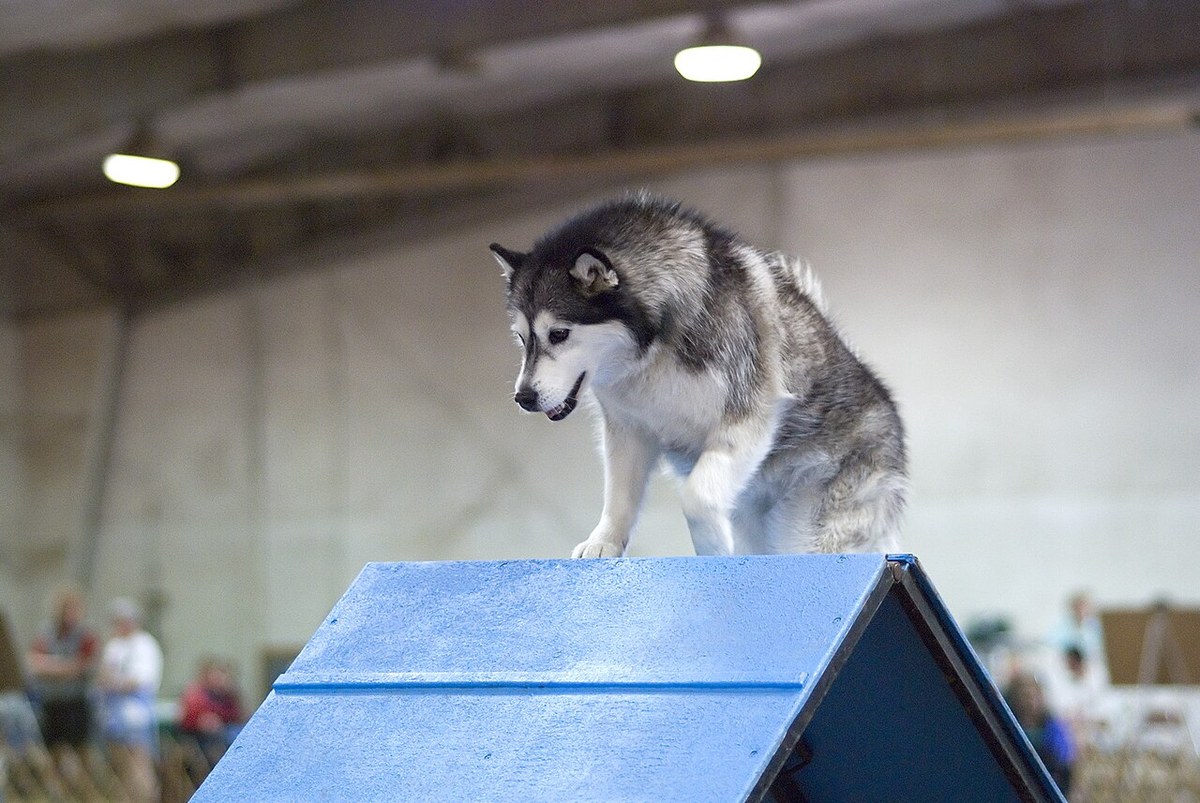
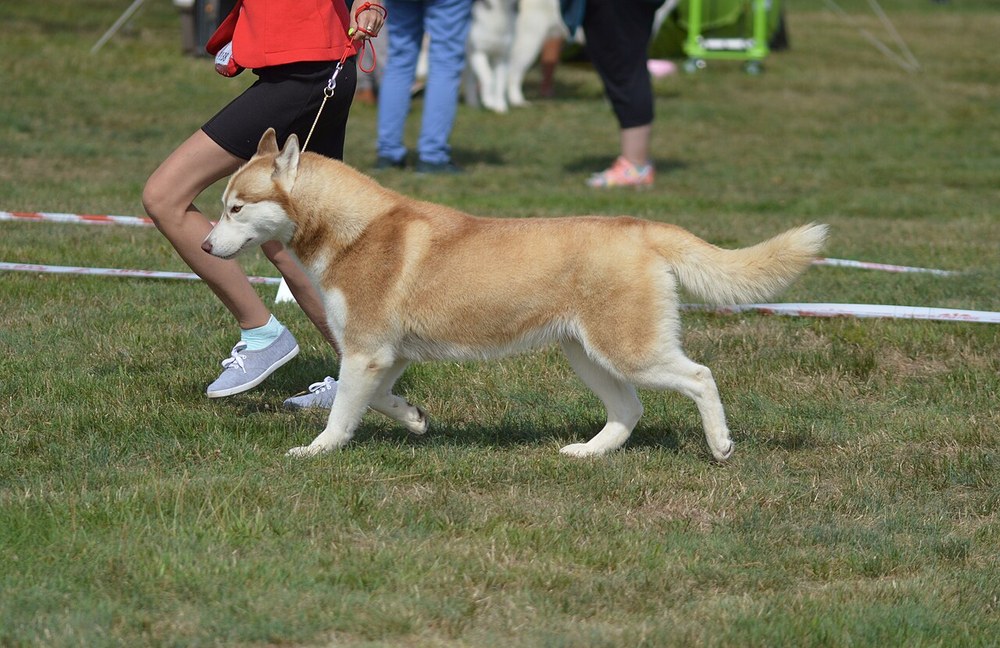
Alaskan Malamute on an agility A-frame (modern photograph). Power and willingness to work, given a clear job.
Western Alaska → Mahlemiut freight dogs
Strength and stamina over speed
The breed takes its name from the Mahlemiut, an Inupiat people of western Alaska. Public breed histories describe large, strong dogs that hauled heavy loads and helped with hunting, living closely with the families who kept them.
Freight work rewards strength, persistence, and a dog that keeps leaning into the harness. On a city lead, the same traits turn into a dog that can pull an adult off balance unless loose-lead walking is taught early.
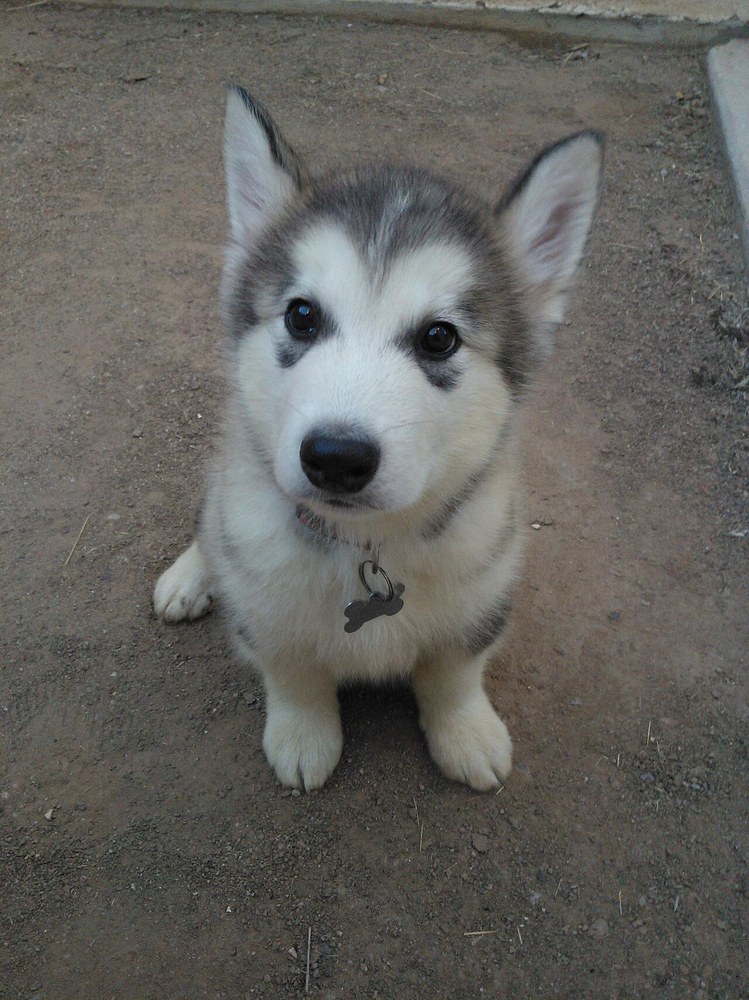
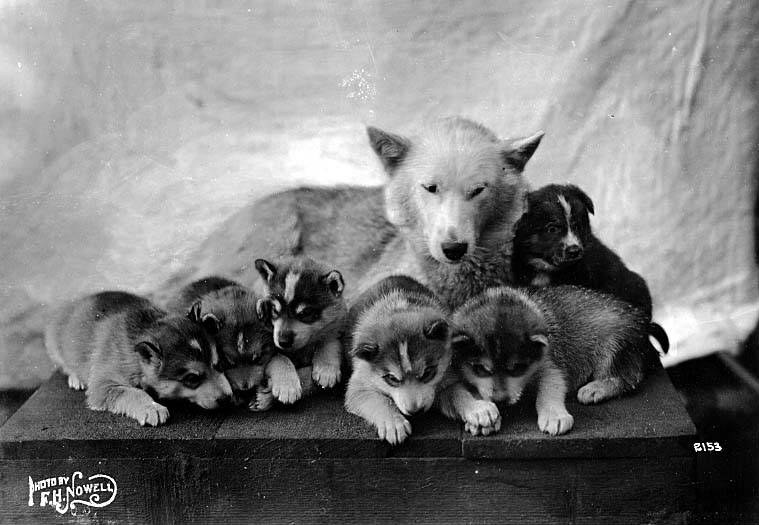
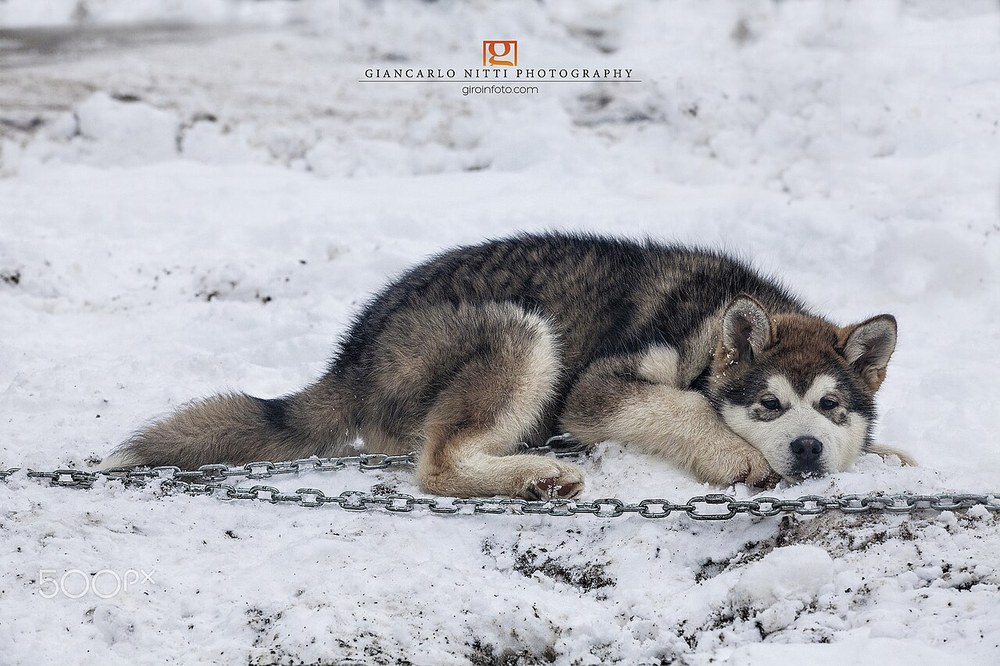
A two-month-old Alaskan Malamute (modern photograph). Small now; plan for the adult size and strength.
Gold Rush era → expeditions → kennel clubs
Northern work, then recognition as a breed
Public breed lore links Malamute-type dogs with freighting in the Alaskan Gold Rush period and with polar expedition teams. Breeders in the twentieth century then worked to preserve the type, and kennel clubs recognised it.
The Malamute is not a bigger Siberian Husky. It is heavier, built for loads rather than speed, and usually more serious about food and about other dogs. Plan for that dog, not the social-media wolf look.
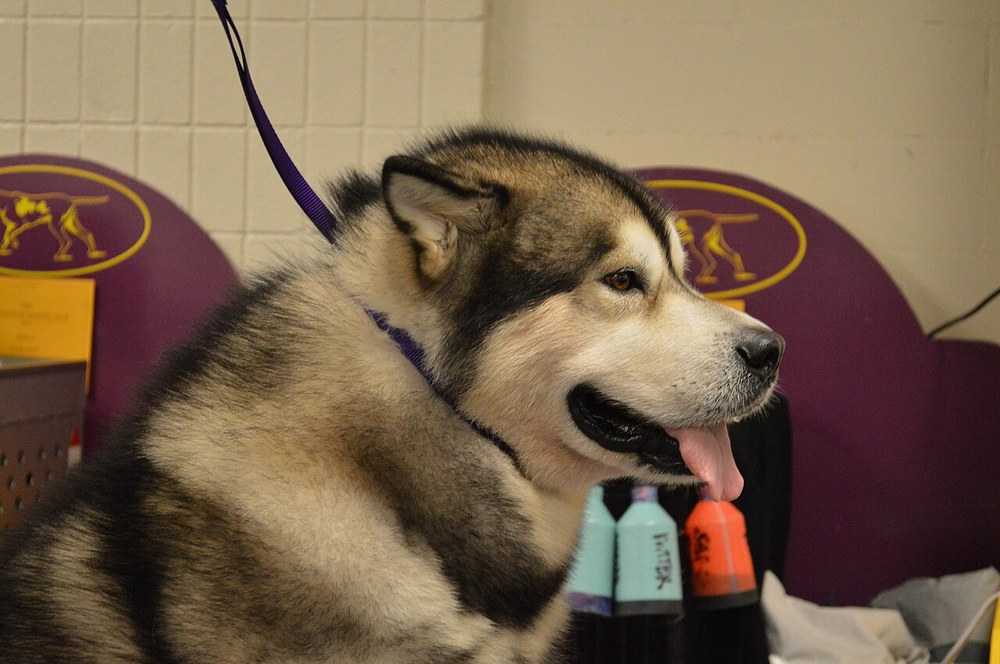
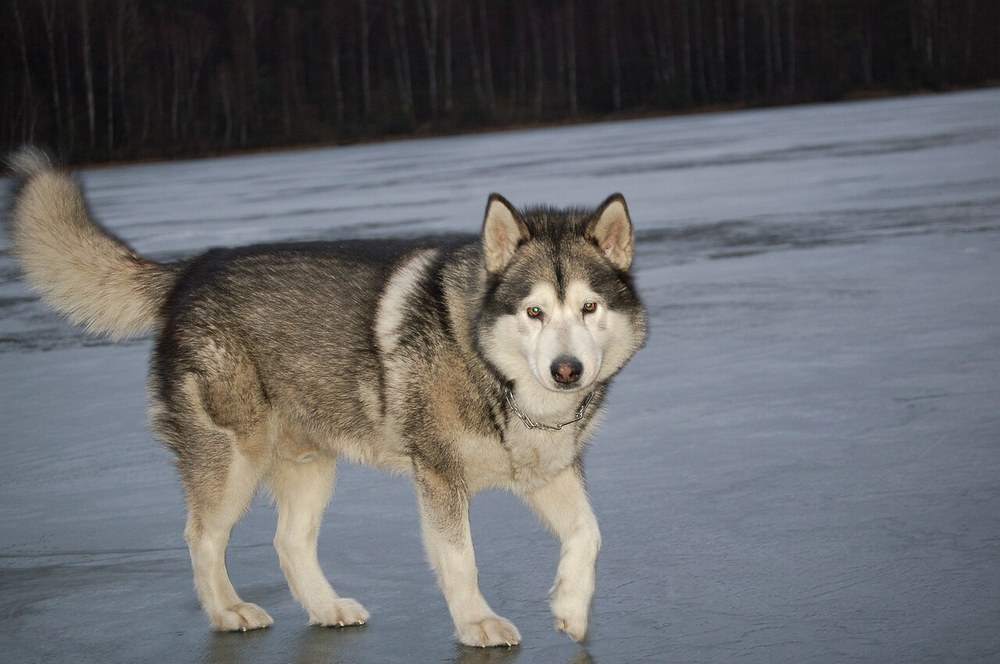
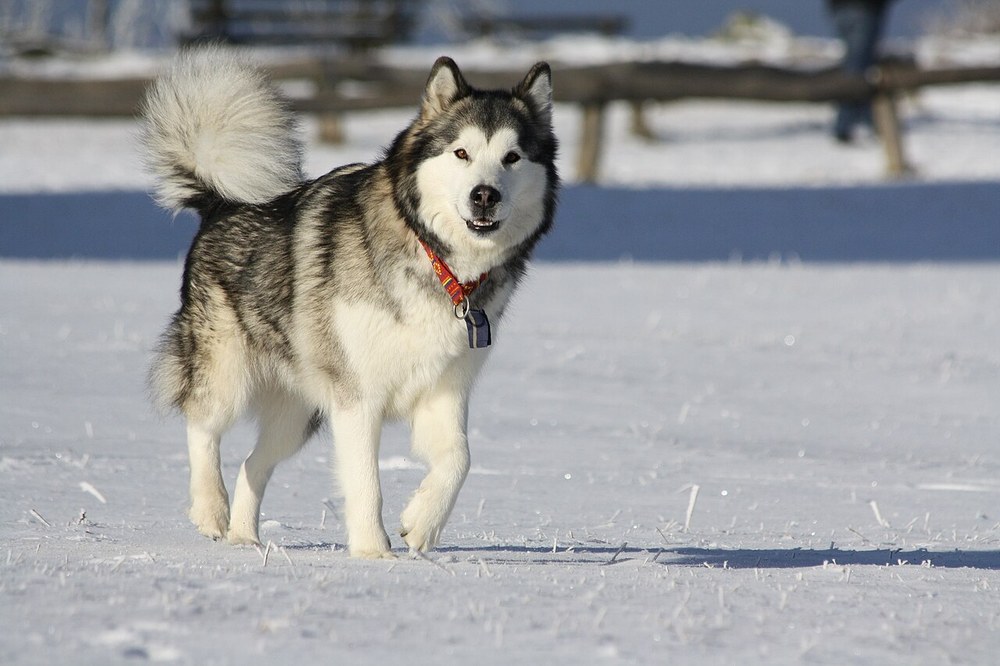
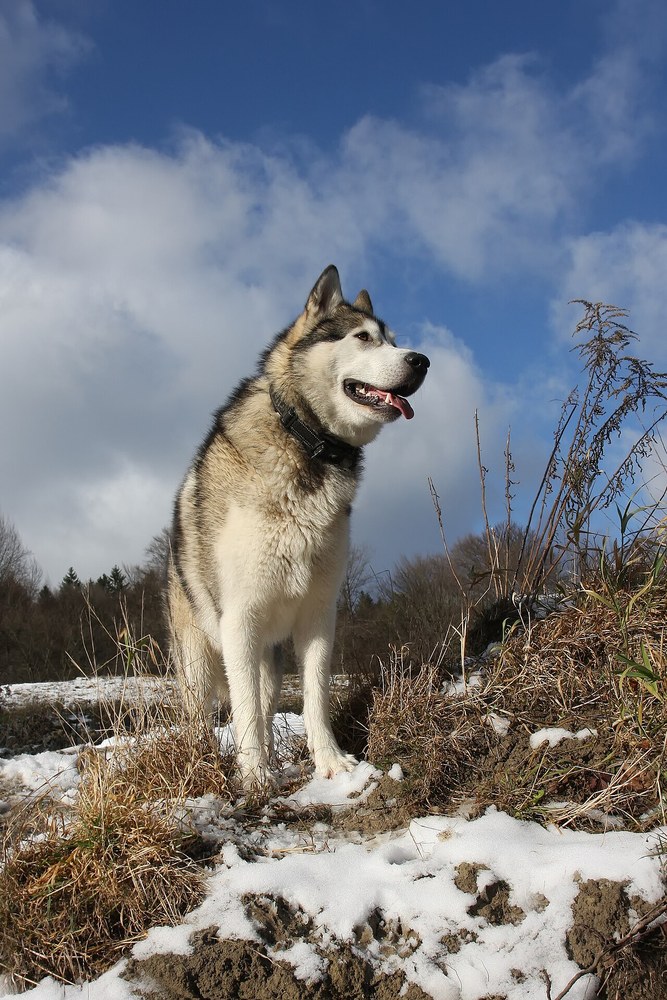
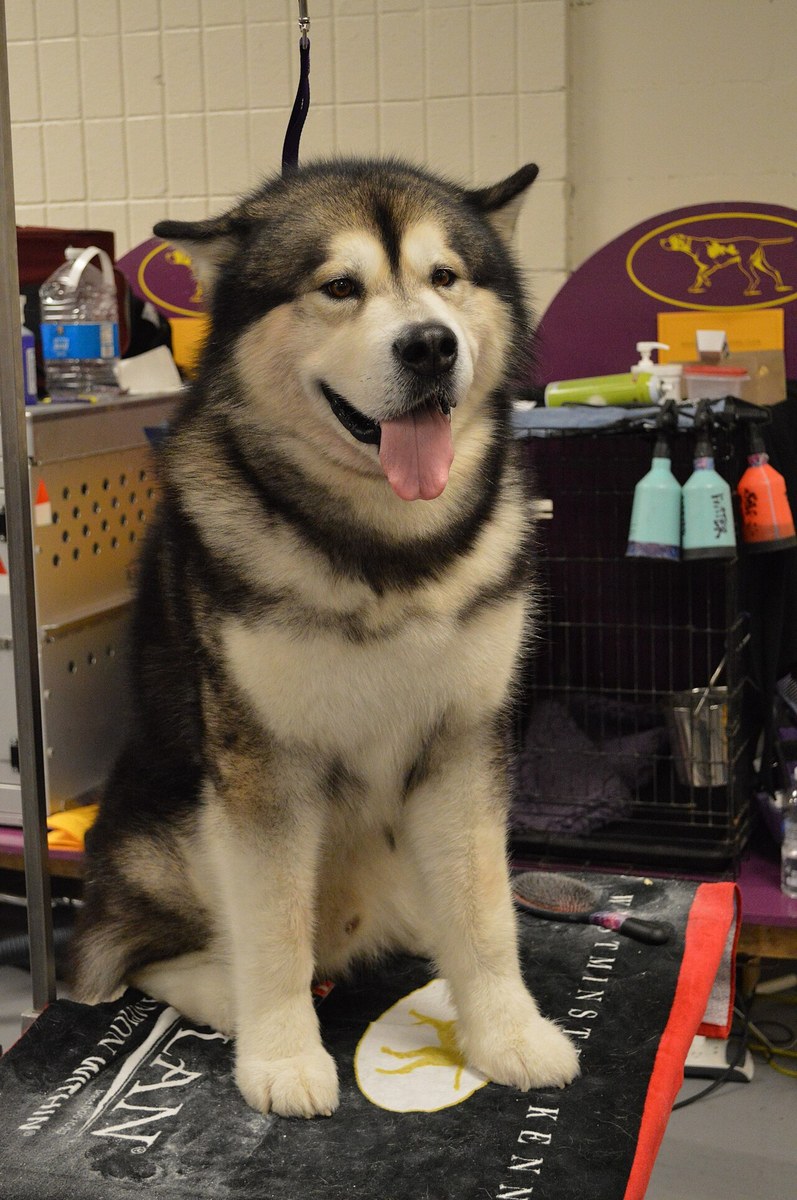
Adult Alaskan Malamute (modern photograph). A broad, heavy frame made for pulling weight.
What the breed was bred for
Power, persistence, and a dog that thinks for itself
In plain trainer language: the type was selected for strength, endurance, and independent problem solving in hard conditions. That is why a Malamute with a pulling outlet and clear house rules is a steady companion — and why an under-exercised one digs, howls, and rearranges the furniture.
Food drive helps training and complicates the household. Many Malamutes guard food or scavenge hard. Feed separately, reward calm behaviour, and manage children and other dogs around meals.
Pulling is a real outlet: harness sports, carting, hiking
Same-sex dog relationships are managed, not assumed
A day is a heavy-duty outlet, food rules, and a strong dog that has learned to wait
In a city the Malamute’s freight past shows up as lead pulling, digging, food stealing, and tension with some dogs. Most Malamutes are friendly with people. The work is giving the strength somewhere to go and keeping meals and greetings organised.
Morning · first outing
Loose lead first; pulling only on the harness
A strong adult that learned to pull on the walk lead will keep doing it. Teach loose-lead walking in short rewarded sections and keep pulling as a separate, cued activity on a proper harness.
Many Malamutes play well with dogs they know and are less tolerant of strangers, especially of the same sex. Choose calm playmates and short sessions instead of a busy dog park.
Counter surfing and bin raids are common. Close bins, feed in separate spaces, and teach a wait at the bowl. Children should not walk past a Malamute eating.
Many Malamutes “talk” rather than bark. After exercise, give a long chew and a place. A dog that has worked and rested is quieter than one that has waited all day.
What to watch monthly: heavy coat, weight, heat, and food habits
General awareness only. I am not a veterinarian. Changes in appetite, coat, movement, or temper are early signals. For red flags, leave this page and open
when to call the vet.
Coarse double coat
The Malamute has a thick, coarse outer coat over a dense undercoat that sheds heavily in seasonal blows. Rake out the undercoat during a shed. Shaving is not a cooling plan.
Weight and the food-driven dog
Malamutes often eat whatever is offered. Measure the ration, use part of it for training, and watch the waistline. See treat calories in the ration.
Heat and the arctic build
Exercise in cool weather. In summer, walk early or late, keep shade and water available, and keep effort low. Heavy panting that will not settle or collapse is an emergency.
Health screening (not a diagnosis)
Ask the breeder which health screenings the national breed club recommends and look at both parents’ results. A breed page cannot diagnose your dog; your veterinarian can.
Growing joints and pulling
Keep heavy pulling and long hikes for adults. Ask your veterinarian when your dog is mature enough for harness work.
Toxins and scavenging
I do not publish toxin amounts. If the dog ate something dangerous, call a veterinarian or a poison-control line; the footer lists public numbers.
Lines and types
Working and show Malamutes share the same strength
Some breeders focus on freight sports and working ability, others on the show ring and companion homes. Size and coat vary. Strength, food drive, and independence are shared.
Working / freight-sport families
Often bred for pulling ability and stamina.
Need real work: weight pull, carting, or long hikes.
Food rules and dog greetings still need management.
Ask what the parents do and how they behave with other dogs.
Fits an experienced owner with time for pulling sports and secure facilities.
Show / companion families
Often heavier coat and larger frame.
Still very strong and food-driven.
Same-sex tension can appear in any line.
Meet the parents at home, not only in a show photo.
Fits a household ready for a powerful, hairy, independent dog and daily exercise.
Socialization windows
What to introduce — and what not to overload — by age
AVSAB-aligned in spirit: short, clean exposures at a distance the puppy can still eat,
with hygiene while vaccines finish. See the
puppy socialization schedule.
2–4 months
Food rules and handling
Introduce: separate feeding, a wait at the bowl, trades for found items, gentle handling, calm visitors.
Do not overload: children near the food bowl, free-fed meals, rough wrestling games.
~6 months
Lead manners before the size arrives
Introduce: loose-lead walking, polite meetings with calm dogs, long-line recall, a dig spot.
Do not overload: pulling on the walk lead, busy dog parks, unsupervised garden time.
~12 months
Adolescent strength and dog manners
Introduce: chosen dog friends, short gentle harness work, chew outlets, fence checks.
Do not overload: same-sex play groups, heavy pulling before maturity, exercise in warm weather.
~18 months
Adult work
Introduce: carting, hiking, or pulling sports with your vet’s approval, longer settles indoors.
Do not overload: skipping exercise, feeding dogs together, ignoring growls over food.
~24 months
Keep the structure
Introduce: refreshed food, lead, and recall routines; new trails at a steady pace.
Do not overload: assuming food guarding has gone away, free access to bins, open gates.
Before you buy
Who an Alaskan Malamute usually fits
A Malamute suits active people who enjoy a big, friendly, strong-willed dog and can give it real physical work, secure fencing and a lot of grooming.
Good match
More likely a good fit if you…
Enjoy long walks, hiking, skijoring or harness sports in cool weather
Can build a high, dig-proof fence and keep gates closed
Like a sociable dog that greets people warmly rather than guarding the house
Accept that recall may never be reliable enough for open, unfenced areas
Are happy to brush a heavy double coat weekly and much more during coat changes
Mismatch risk
An Alaskan Malamute may be a poor choice if…
You want a dog that walks loosely at heel without teaching it for months
You live somewhere very hot and cannot offer a cool indoor space
Cats, rabbits or chickens live in the household or next door with no separation
A perfect lawn matters more to you than a dog with a place to dig
You need a watchdog — most Malamutes welcome intruders
If you are torn between breeds
Alaskan Malamute vs Siberian Husky and Samoyed
Three Arctic working breeds with thick coats and strong opinions. The Malamute is the heavy freight dog of the group; the others are lighter and built for different jobs.
Build and purpose
Alaskan Malamute
Heavy, powerful freight hauler; built for strength and endurance rather than speed.
Siberian Husky
Lighter, faster sled dog bred to cover distance with modest loads.
People
Alaskan Malamute
Friendly and outgoing with almost everyone; poor guard dog.
Samoyed
Also people-friendly, often more eager to please and closer to its owner.
Other animals
Alaskan Malamute
Strong prey drive toward small animals; some adults are selective with dogs of the same sex.
Siberian Husky
Strong prey drive as well, usually more tolerant of other dogs.
Voice
Alaskan Malamute
Rarely barks; talks, grumbles and howls instead.
Samoyed
More likely to bark, especially when bored or excited.
Training
Alaskan Malamute
Food-motivated but independent; responds to clear, fair deals rather than repetition.
Both compares
Huskies are easily distracted and escape-prone; Samoyeds are usually a little easier to motivate.
Ownership without surprises
Where an Alaskan Malamute owner’s budget goes
Prices vary by country and breeder. Plan for these areas before bringing a Malamute puppy home — the list is a planning guide, not a quote.
Exercise time
A working breed that needs daily physical activity. Owners who enjoy outdoor sports find it easier than those who must fit walks in around a busy job.
Food
A large, active dog eats a lot. Keep it lean; Malamutes are often food-obsessed and will steal.
Veterinary care
Routine care plus a vet who can handle a big, strong dog. Ask the breeder which screenings the national breed club recommends for both parents.
Fencing
High fencing with dig guards at the base and self-closing gates. Escapes are one of the main breed problems.
Harness and gear
A well-fitted pulling harness, long line, bikejoring or skijoring equipment if you want to use the pulling instinct legally.
Grooming
Undercoat rake, high-velocity dryer or professional help during heavy coat changes. Expect hair everywhere twice a year.
With a Malamute, fence, time outdoors and coat care usually cost more than the puppy itself.
Before day one at home
What to prepare for an Alaskan Malamute puppy
A Malamute puppy is a cute, fluffy bear that will become a strong adult in less than a year. Teach manners on lead and around food while the puppy is still small enough to guide.
01
Secure the garden first
Check fences for gaps and dig spots before the first unsupervised minute. A digging pit with buried toys gives the urge a safe outlet. See digging in the yard.
02
Start lead skills right away
Reward a loose lead in short sessions from week one, and use a harness for pulling games only. Follow puppy leash training.
03
Teach food manners
Hand-feed part of meals, add food to the bowl as you pass and keep counters clear. Many Malamutes treat food very seriously. See food bowl manners.
04
Handle the coat and paws
Brush for a minute or two daily and reward calm. A full-grown Malamute that refuses grooming is a big problem. See puppy handling.
05
Supervise small animals
Introduce cats behind a gate and never leave the puppy alone with small pets, however peaceful it seems now.
06
Teach rest and alone time
A crate or pen and short absences prevent howling and destruction later. Start with crate training and first absences.
If the dog is already yours
Training is about legal pulling, recall management and fair deals
Malamutes were bred to work as a team and make decisions on the trail. They learn quickly when the reward is worth it and switch off when training turns into endless repetition.
Use the instincts rather than fighting them: harness work for pulling, a digging spot for digging, food puzzles for the strong appetite. Then teach loose-lead walking with a different piece of equipment so the dog knows which game is on.
Recall should be trained, but most Malamutes stay on a lead or long line outside fenced areas. That is a safety decision, not a training failure.
Load balance
Work the body — but respect heat and growth
A heavy coat makes warm days risky; exercise early and late, and keep hard pulling for when the dog is fully grown and fit. Watch for heavy panting and slow down.
Pulling sports, long walks on a long line, digging games and food enrichment cover most needs. Off-lead freedom in open countryside is not necessary to keep a Malamute content.
A Malamute that has worked properly settles at home and stops looking for its own jobs.
Lead walking with a pulling breed
How to teach an Alaskan Malamute a loose lead
Start in the house or garden with few distractions, and use a different collar or harness for walking than for pulling sports.
01
Pick the walking equipment
Use a flat collar or a non-pulling harness for walks and keep the pulling harness for sports only.
02
Reward position next to you
In a quiet place, reward the dog every few steps for being beside your leg with a slack lead.
03
Stop when the lead tightens
Stand still the moment the lead goes tight. Walk on as soon as it softens. Be consistent.
04
Add distractions slowly
Practise near smells, people and dogs only when the dog can still walk nicely in calmer places.
05
Give legal pulling time
Finish some walks with a short harness session so the need to pull has an outlet.
One scene close-up
Why the Malamute pulls you toward every interesting smell
Pulling is what the breed was built for. If pulling moves the dog forward even sometimes, the dog learns that pulling works and keeps doing it.
Stop when the lead tightens and continue as soon as it loosens. Reward the dog for walking next to you, and give it a regular chance to pull in harness so the need has an outlet.
If the dog lunges at other dogs or animals and cannot take food, increase distance and ask a qualified trainer for help before the dog is fully grown.
“With a Malamute, I do not argue with a freight dog that wants to pull and dig. We give legal pulling work, a long line instead of off-lead hope, a digging spot and a firm fence — because a big, friendly dog that decides for itself still needs brakes.”
Sessions cover real scenes: loose leash vs. harness work, recall on a long line, food manners, small animals, heat-aware exercise and settling at home. I am a trainer, not a veterinarian. No invented reviews.
Andrew DarovProfessional dog trainer and instructor
Describe age, living setup, and where the dog breaks first — pulling on the leash, digging and escaping, howling, or settling after exercise. Opens WhatsApp to Andrew.
It can be hard. The size, strength, independence and escape tendency challenge first-time owners. Experienced help and a secure property make a big difference.
Can Malamutes be off lead?+
A few can in fenced areas. Many have a strong prey drive and a habit of roaming, so most owners use a long line outside.
Are Malamutes good with children?+
They are usually friendly but large and boisterous. Supervise, teach children not to disturb the dog while it eats, and give the dog a quiet retreat.
Do they get along with other dogs and cats?+
Many live well with dogs, but some adults are selective with the same sex. Small animals and cats are a risk unless raised together and managed carefully.
How much exercise does an adult need?+
A lot of steady activity every day, ideally including some pulling or hiking. Mental work and food puzzles help on lazy days.
Can a Malamute live in a warm climate?+
Only with air conditioning or a cool indoor area and exercise in the coolest hours. Never shave the coat as a fix.
Do Malamutes bark a lot?+
Usually not, but they howl, ‘talk’ and grumble. Boredom or loneliness makes it worse.
How much do they shed?+
A lot. The coat sheds steadily and comes out in large amounts once or twice a year.
What about health?+
Ask the breeder which screenings the national breed club recommends and see the parents’ results. Keep the dog lean, and see a vet if anything changes suddenly.
What is the typical lifespan of an Alaskan Malamute?+
Public breed references usually mention about 10 to 14 years. Every dog is different.
Is crate training useful?+
Yes. It helps with house training, safe travel and preventing destruction while the dog learns to be alone.
If a Malamute feels like too much dog — or too much hair
If you like Arctic breeds but need something smaller, easier to contain or more willing to work with you, consider these.
A powerful Italian guardian that needs early socialization, calm visitor routines and an experienced, consistent owner.
Need a read on your exact situation?
Describe your Alaskan Malamute’s age and the scene that repeats most: pulling on the leash, digging and escaping, howling, or settling after exercise. We check safety first, then pick the first skill.
Written by Andrew Darov, professional dog trainer. Not veterinary advice and not a diagnosis.
Not a kennel club. No invented reviews. No vaccine schedules or toxin doses. Photo credits in
/images/breeds/alaskan-malamute-guide/credits.md.