Löwchen: temperament, barking, coat care and training for the little lion dog
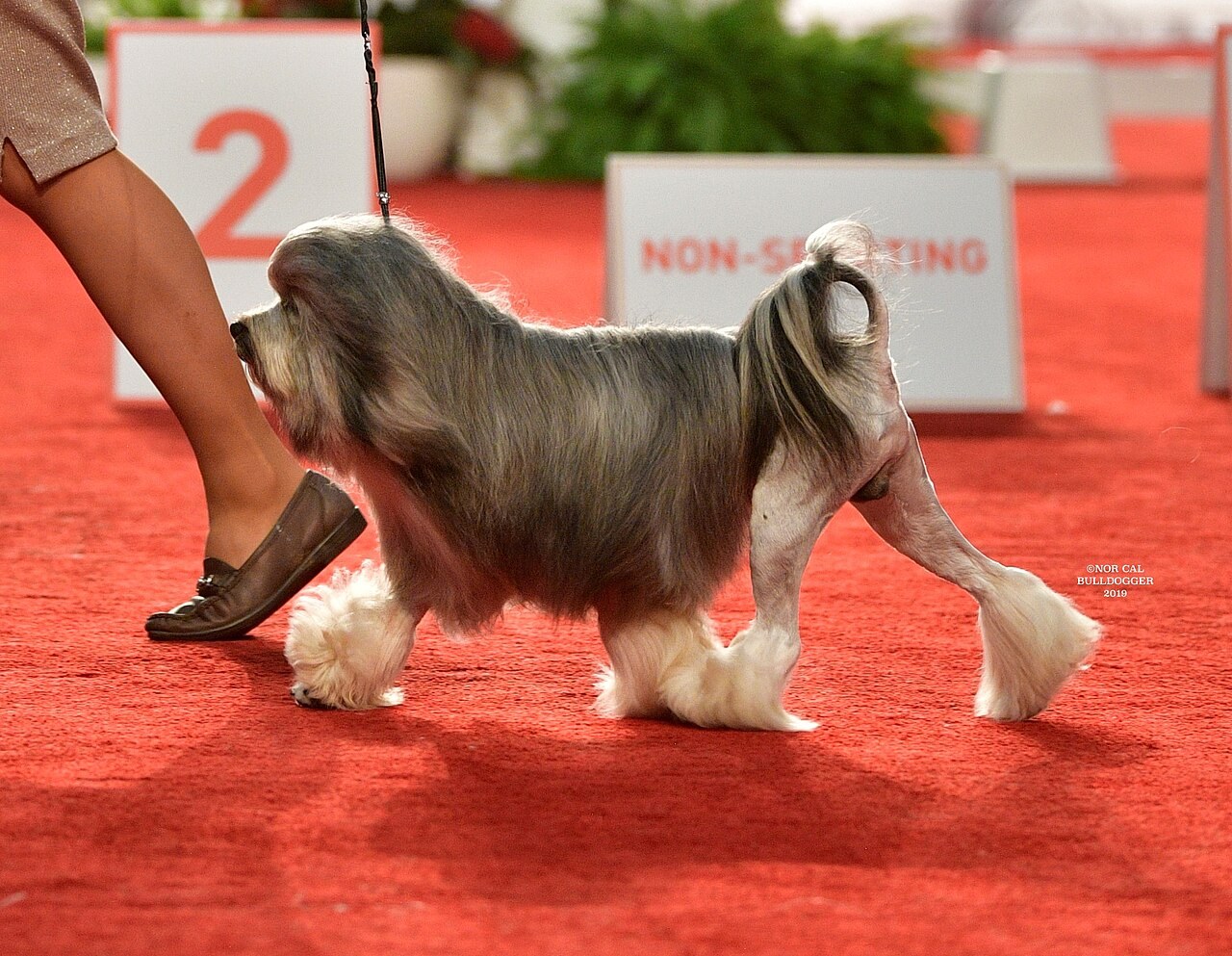
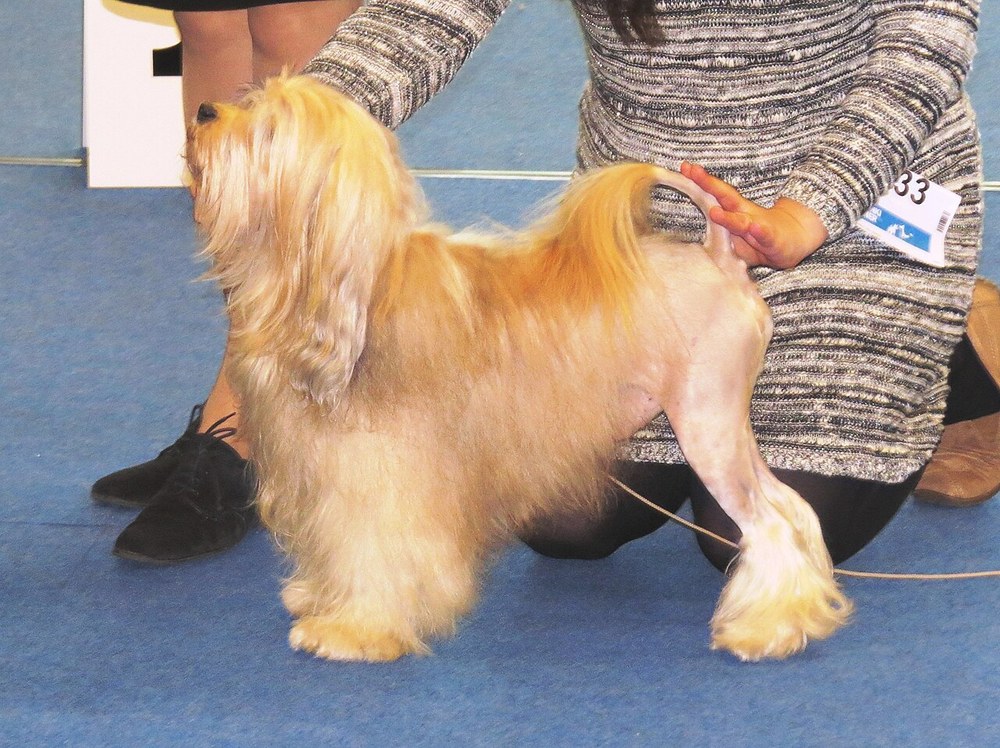
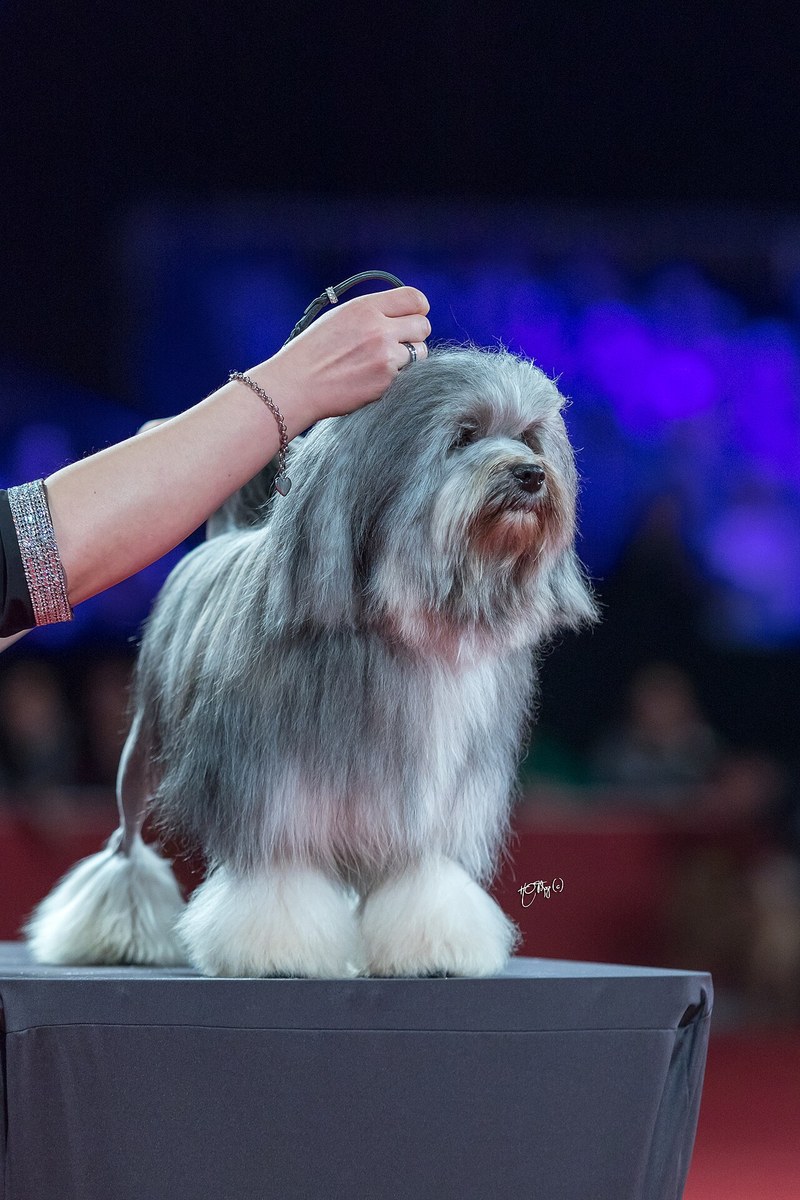
The Löwchen, or little lion dog, is a small, sturdy European companion with a long, soft, wavy coat that show owners clip into a lion shape: a full mane in front, a shaved back half, cuffs on the legs and a plume on the tail. It belongs to the bichon family, yet it often acts more like a busy little watchman than a lap ornament. Expect a cheerful, affectionate dog that follows you from room to room, sits at the window to report on the street, may dig in the garden and needs regular grooming whether you clip it or keep it in a pet trim. Short daily games, a calm door routine and early practice at being alone go a long way.
Job: A small bichon-type companion; FCI Group 9 (Companion and Toy Dogs), AKC Non-Sporting Group.
Energy: Lively, affectionate, alert and keen to watch the world.
Home: Suits an owner who is home a lot and enjoys grooming and short training games.
The lion clip makes people think of a pampered show toy. Under the coat is a solid, nimble little dog that likes to be busy, likes to be with its people and has opinions about anyone walking past the house.
The calls I get about Löwchens are rarely about aggression. They are about a dog that barks at every passer-by from the sofa back, cries when the owner goes to the shower, digs up the flower bed and squirms or nips when someone tries to brush out a knot.
My plan treats the Löwchen as a real dog. A daily walk with sniffing, short trick sessions, a calm routine for the door and the window, grooming taught as a game from the first week and small steps towards time alone. Done that way, this is a happy, sociable and very loving companion.
FCI: about 26–32 cm (about 10–13 in) at the shoulder
Weight
About 4.5–8 kg (about 10–18 lb)
Energy
Moderate; lively in short bursts
Coat / shed
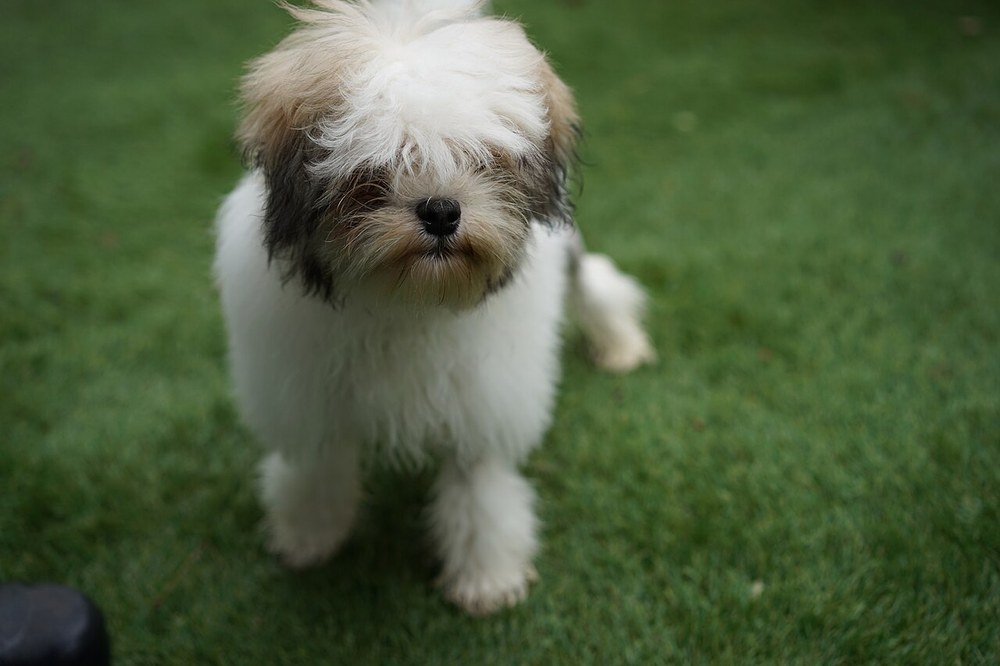
Long, soft, wavy single-layered coat in any colour or mix; often shown in the lion clip, many pets kept in a short all-over trim
Job
Small European house and court companion for centuries; today a family companion (FCI Group 9, Bichons and related breeds)
Temperament in one minute
Löwchen temperament: what they are like at home
Short answer: Löwchens are small, sturdy, cheerful companions from the bichon family, known as little lion dogs for their traditional clip. They are affectionate and playful with their people, alert and quick to bark at windows and doors, often keen diggers and unhappy when left alone for long hours. They need about an hour of walks and play a day, short reward-based training, regular brushing or a pet trim, and early steps towards calm time alone.
Are Löwchens affectionate?
Very. Most follow their people from room to room. Start short absences early.
Usually friendly once the barking stops. A door routine helps; see guest entry steps.
Are Löwchens good with kids and other dogs?
Usually gentle with kind children and polite with dogs. Teach kids to sit on the floor to hold it; see children and guests.
Löwchen behavior problems to expect
The usual four are window and door barking, fretting when alone, digging and dislike of grooming. The list below links a guide for each.
Living with a Löwchen in an apartment
A good fit with daily walks and early work on barking at hallway noise.
Breed history
From old European paintings to near loss and back
The history will not train your dog, but it explains why this tiny dog wants to be with you all the time.
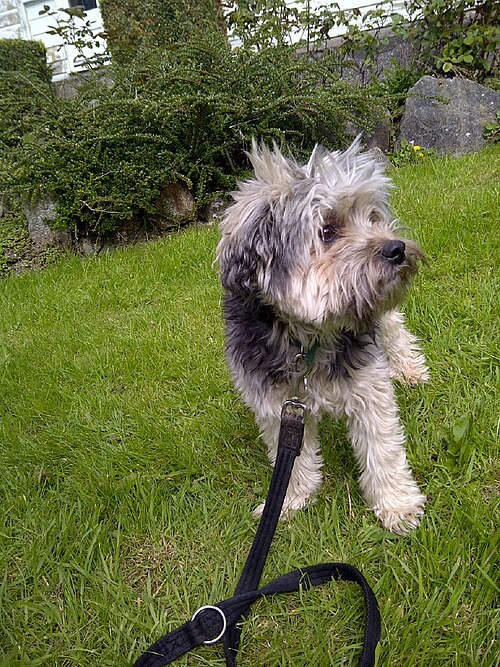
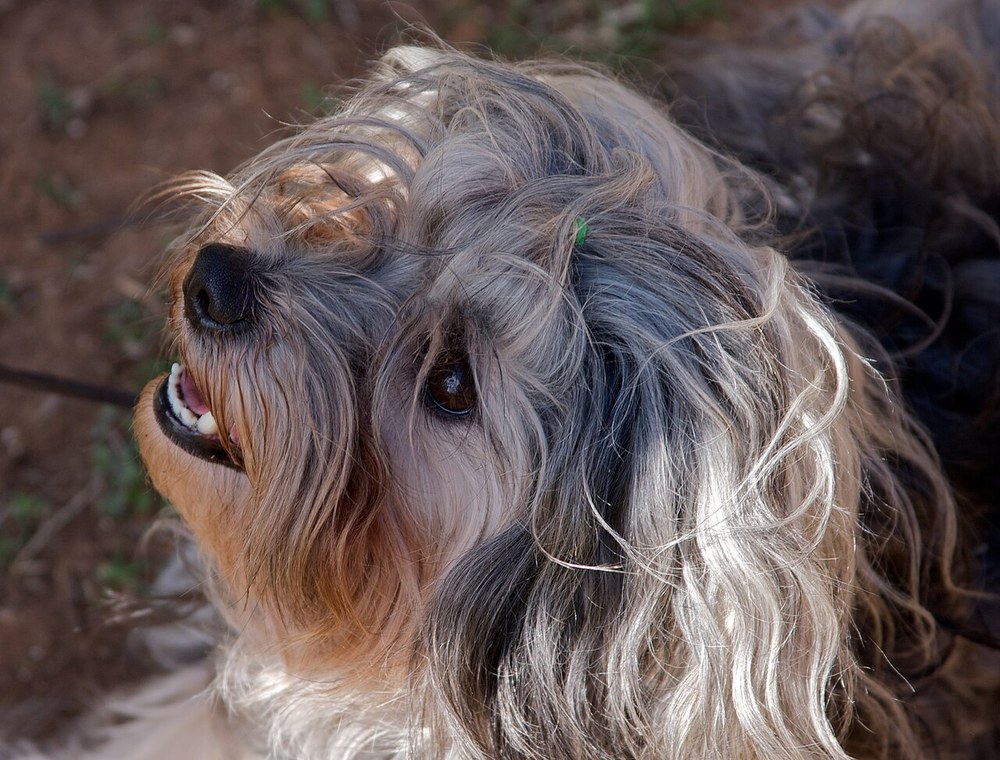
A Löwchen in its natural, untrimmed coat on a garden walk: many pet owners skip the lion clip and keep the coat like this or shorter.
Western Europe · companion dogs
A small dog of houses and courts
Little dogs with a lion trim appear in European paintings, tapestries and carvings from the late Middle Ages onwards. Historians still argue about where the breed began; France, Belgium, Germany and the Mediterranean are all named, and the FCI lists France as the country responsible for the standard.
What the sources agree on is the job: a small, bright dog kept close to its people in homes, shops and courts. That is still the core of the modern Löwchen.
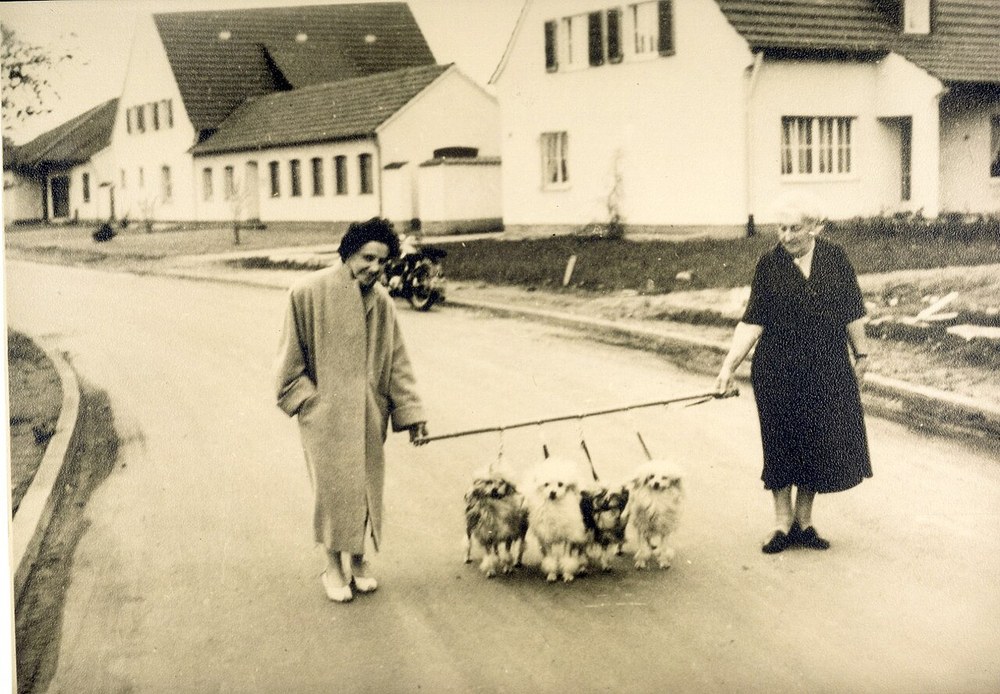
Madame Bennert walking her Löwchens: after the Second World War she gathered the few dogs left and started the breed again.
From 1945
Saved from a handful of dogs
By the 1940s the breed had almost gone. Madame Bennert of Brussels collected the last few dogs she could find and began a careful breeding plan, and other breeders in Germany and Britain joined in. In the early 1970s the Löwchen was still described as one of the rarest breeds in the world.
Numbers grew slowly. The Kennel Club in Britain and the AKC in the US now recognise it; the AKC placed it in the Non-Sporting Group in 1999. It remains a rare breed, so most owners join a waiting list.
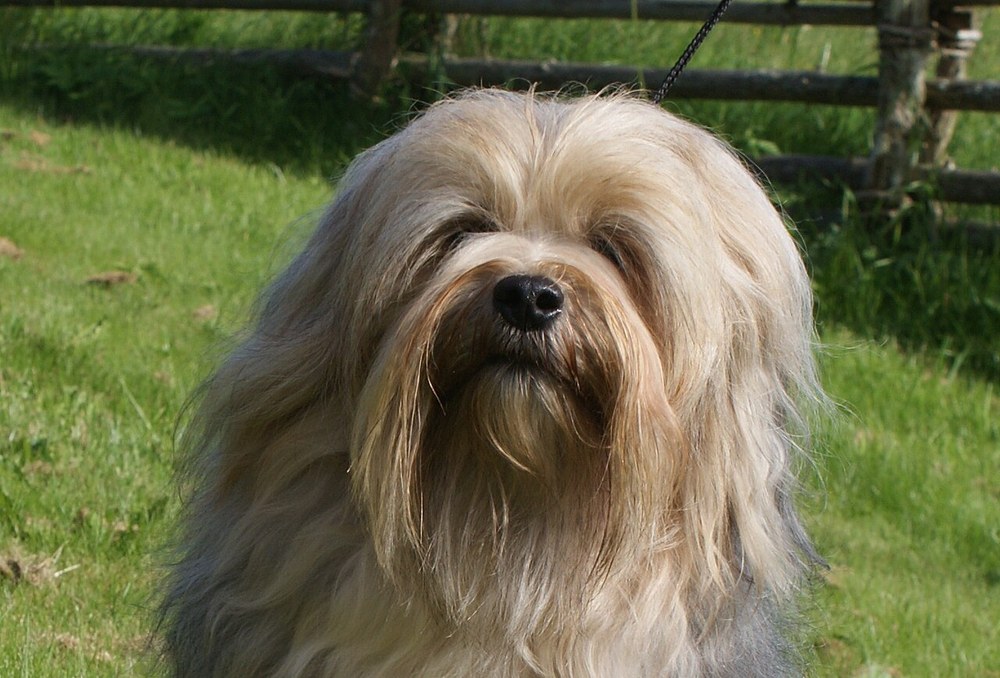
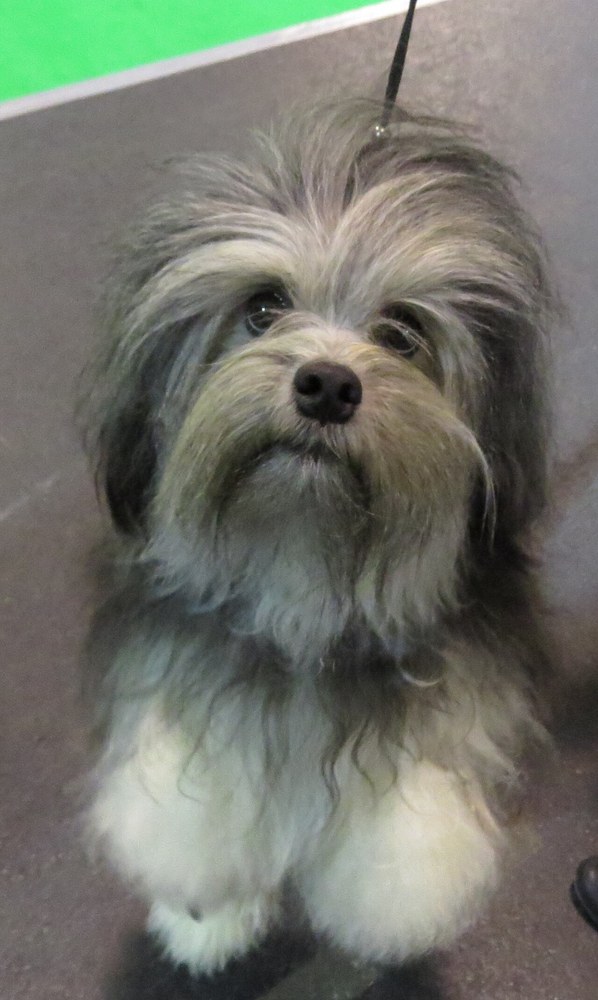
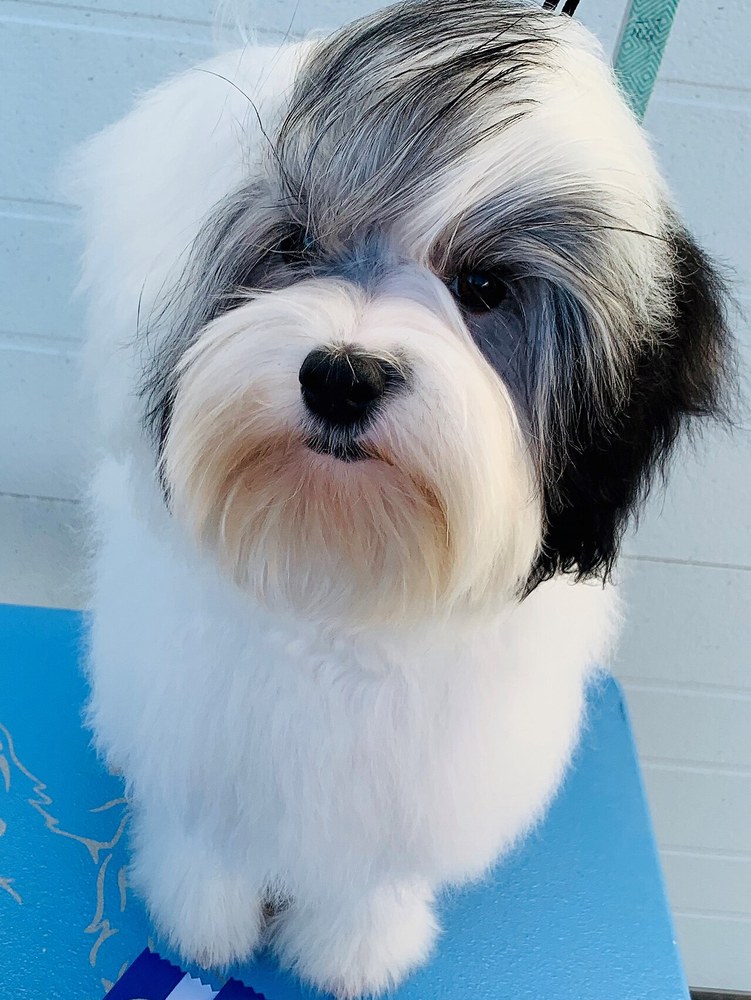
A Löwchen face in full coat: the soft, wavy hair needs regular brushing to stay free of knots.
What the breed was bred for
Bright, sociable and watchful at home
A well-raised Löwchen is friendly, playful and gentle with its own family, and usually polite with other dogs. It learns quickly when lessons are short and fun.
It is also alert and quick to bark, especially from a window seat, and many like to dig. Left alone for long hours without practice, some fret and get noisy. Early time-alone steps and a daily task for the brain prevent most of that.
A good day has a sniffy walk, a trick game, a grooming minute and quiet time
A Löwchen needs less exercise than a terrier but more brain work than people expect: about 45 minutes to an hour of walks and play a day, plus short games at home. Trouble starts when a small, alert dog spends the day alone at a window.
Morning · the first months
A puppy learns the house rules
Little dogs are easy to carry everywhere, and that is the trap. Let the puppy walk, sniff and meet the world on its own four feet, with short trips and lots of naps in between.
Löwchens love to learn when food and play are on offer. A spin, a hand target or a find it game in a two-minute session is a real workout for this busy head.
Block the low window view with film or move the sofa, so the dog is not on guard all day. When it hears something, call it to you, reward and give it a chew on its bed.
Teach a bed or a mat near the door before guests come. The bell rings, the dog goes to its spot, gets a reward, and visitors greet it only when it is calm.
A few minutes of brushing on your lap or a table each evening, with treats, keeps the coat clean and teaches the dog to relax while handled. Then it is lights out in the same bed.
General awareness only. I am not a veterinarian. With a Löwchen, owners often first notice knots behind the ears and under the legs, a dog that will not let anyone touch its feet, tear staining, weight creeping up from treats or a small dog that hops or skips with a back leg. For red flags, leave this page and open
when to call the vet.
Coat and knots
Brush right down to the skin a few times a week; long coats knot fast behind the ears, in the armpits and on the legs.
Clip or pet trim
The lion clip is for show homes. Many pets live in a short all-over trim from a groomer every six to eight weeks.
Eyes and face
Wipe around the eyes and keep hair out of them; ask the groomer about a tidy face trim.
Handling for the groomer
Practise touching feet, ears and the tail with treats from the first week. See fear of vet handling.
Weight
Small dogs gain weight from tiny treats; feel for the ribs once a month. See treat calories.
Ask the breeder
Find out which eye, knee and other checks the national breed club recommends for the parents, and look at the results yourself. Do not take health claims from a blog.
Lines and types
Choose a confident, friendly dog from a careful breeder
No bloodline selling. The Löwchen comes from a small gene pool, so breeders work hard to keep it healthy and sound. Meet the mother, watch how she copes with a stranger and a sudden noise, see how she lets the breeder brush her and ask about health checks on both parents.
Show and grooming homes
Lion clip and full coat care.
Table training from puppyhood.
Ring practice and travel.
A breeder who mentors you.
Suits owners who enjoy coat work and want to show or join breed events.
Pet and family homes
A short pet trim.
Daily walks and games.
A plan for time alone.
Window and door rules.
Suits a family or a person at home a lot who wants a small, sociable dog.
Socialization windows
What to introduce — and what not to overload — by age
AVSAB-aligned in spirit: short, clean exposures at a distance the puppy can still eat,
with hygiene while vaccines finish. See the
puppy socialization schedule.
2–4 months
Meeting the world
Introduce: calm meetings with people, children and gentle dogs, car rides, the brush and the table, short times alone, a toilet routine.
Do not overload: carrying the puppy everywhere so it never learns to walk past things.
~6 months
Busy puppy
Introduce: name check-in, recall in the house and garden, a mat cue, a quiet cue, lead walking, a first visit to the groomer.
Do not overload: letting it bark at the window for hours.
~8–18 months
Teenage phase
Introduce: more practice at the door, longer times alone, polite greetings, a trick or scent class.
Do not overload: skipping brushing until the coat is one big knot.
~2 years
Settled adult
Introduce: longer walks, new places, holidays and travel, a steady grooming plan.
Do not overload: dropping the door routine because the dog seems grown up.
~3 years+
Maintenance
Introduce: daily walks and brain games, regular grooming, weight checks, yearly vet visits.
Do not overload: letting treats creep up as the dog slows down.
Before you buy
Who a Löwchen usually fits
Fit comes down to time at home, noise and how you feel about grooming a small dog for the rest of its life.
Good match
More likely a good fit if you…
You want a small, sturdy, cheerful dog
Someone is home for much of the day
You enjoy short training games
You will brush several times a week or book a groomer
You want a dog that sheds little hair on the sofa
Mismatch risk
A Löwchen may be a poor choice if…
You want a dog that is happy alone all day
You hate barking and live with thin walls
You want a hiking dog for long, rough days
You will not keep up with grooming
You prefer to train with telling-offs
If you are torn between breeds
Löwchen vs Bichon Frise and Havanese
All three are small, long-coated bichon-type companions. The Bichon Frise has a white, curly, powder-puff coat and a softer, more social manner. The Havanese is a merry Cuban cousin with a silky coat and a strong love of people. The Löwchen is the most watchful of the three, with a wavy coat in any colour and a lion clip tradition.
Coat
Löwchen
Long, soft, wavy; any colour.
Bichon Frise
White, curly and dense.
Barking
Löwchen
Quick to report noises.
Havanese
Barks too, often less at the window.
Trim
Löwchen
Lion clip or pet trim.
Bichon Frise
Rounded scissored trim.
Size
Löwchen
Small; about 26–32 cm.
Both compares
Similar size range.
Ownership without surprises
Where a Löwchen owner’s budget goes
Prices differ a lot between countries and cities, so treat these as budget headings rather than numbers.
Veterinary
A yearly check-up, whatever vaccines your own vet recommends and any parent checks the club asks for.
Grooming
Pin brush, comb and a groomer every six to eight weeks for a pet trim; more for show coat.
Training
A puppy class, then a trick, scent or obedience class.
Gear
A light harness, a crate or pen, chews, puzzle toys and window film.
Finding a puppy
A rare breed with small litters, so plan for a waiting list.
An early grooming routine and a time-alone plan cost little and save a lot of stress and money later.
Before day one at home
What to prepare for a Löwchen puppy
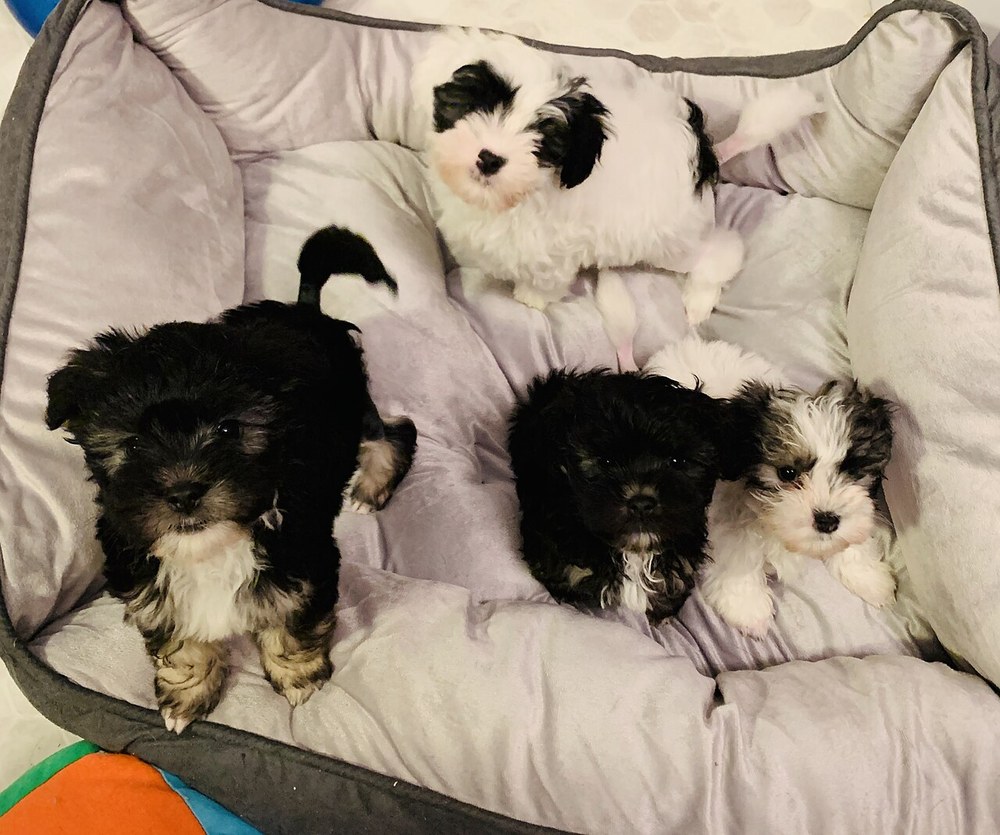
A Löwchen puppy is bold, curious, cuddly and quick to bark at new things. Plan short training games, gentle brushing on your lap, a small toilet routine and time alone from the first days, because this breed loves company and can fret when left.
Training a Löwchen means short games, a calm door routine and grooming the dog actually enjoys
Most daily trouble with this breed shrinks once five things are solid: a name check-in, a quiet cue, a mat at the door, recall in the garden and calm handling for the brush.
Löwchens are smart and keen when rewards are good and the lesson is short. They switch off with repeated drills, and harsh corrections make a soft little dog worried or snappy. Keep it light and stop while it still wants more.
Be realistic about the watchman. The dog will always notice sounds and people outside. The goal is a dog that barks once or twice, checks in with you and goes back to its bed.
Load balance
Small dog, big brain
Puppies and small adults tire quickly on long walks. Build distance slowly, avoid jumping off high furniture and see a vet about a skipping back leg or a sudden change in mood before you add more.
For this breed a find it game in the kitchen often settles the dog better than another lap of the block.
A Löwchen with something to do at home spends far less time on guard at the window.
The window and the door
How to help a Löwchen bark less at passers-by and visitors
Cut the view first, then reward the dog for coming to you after the first bark, teach a mat near the door, practise with a friend ringing the bell, and give it a chew on its bed while the house is busy.
01
Cut the view
Window film or move the sofa.
02
Reward the turn
After the first bark, the dog comes to you.
03
Teach a mat
A spot near the door earns treats.
04
Practise the bell
A friend rings; the dog goes to its mat.
05
Chew time
A chew on its bed while the house is busy.
One scene close-up
Why a Löwchen barks at everything
This breed has lived for centuries in houses, shops and courts, right next to people and their doors. It notices every arrival and wants to tell you. That is part of the dog, not bad manners.
Manage first: window film, a bed away from the street view and a gate near the front door. Then reward the dog for turning to you after a bark, teach a quiet cue and a mat at the door, and give it more brain work during the day.
A dog that barks in panic whenever it is alone, or snaps when handled, should be seen by a qualified behaviour professional, with a vet first ruling out pain.
“With a Löwchen, I start with a calm door routine, brushing the dog enjoys and small steps towards time alone. Treat this little lion as a real dog with a busy mind, and you get a cheerful, loving and very funny companion.”
We look at your real days: time alone, barking, visitors, grooming and walks. Medical questions belong with your vet; I deal with behaviour.
Andrew DarovProfessional dog trainer and instructor
Before we talk, note the dog's age, how long it is alone, what it barks at, how grooming goes and the first thing that goes wrong. Opens WhatsApp to Andrew.
For a family that is home a lot and will groom and train it, often yes. It is affectionate and playful with its own people. It barks at noises and dislikes long hours alone, so plan for both.
Is a Löwchen a good first dog?+
It can be, for a first-time owner who is happy to learn grooming and do short, kind training. Barking and time alone are the two areas to work on early.
Do Löwchens bark a lot?+
Many do, especially at windows and doors. Less view of the street, a quiet cue and a mat routine at the door help a lot.
How big does a Löwchen get?+
FCI: about 26–32 cm (about 10–13 in) at the shoulder. Most weigh about 4.5–8 kg (about 10–18 lb).
Do Löwchens shed?+
They shed very little loose hair, but the long coat knots easily, so brushing several times a week or a short pet trim is needed.
Do I have to keep the lion clip?+
No. The lion clip is traditional for the show ring. Most pet Löwchens live in a short, even trim that is easier to keep clean.
Löwchen vs Bichon Frise: what is the difference?+
Both are small bichon-type companions. The Bichon is always white with a curly coat; the Löwchen comes in any colour, has a wavy coat and is often more watchful.
Löwchen vs Havanese: what is the difference?+
Similar size and family feel. The Havanese has a silkier coat and is famous for its love of people; the Löwchen has a lion clip tradition and is often a keener watchdog.
How much exercise does a Löwchen need?+
About 45 minutes to an hour of walks and play a day, plus short brain games at home.
Can a Löwchen live in an apartment?+
Yes, if barking at hallway noise is worked on early and the dog gets daily walks and games.
What health themes should I ask about?+
Ask the breeder which eye, knee and other checks the national breed club recommends for both parents, and mention the breed to your vet. This is general awareness, not a diagnosis.
How long do Löwchens live?+
Breed clubs and kennel clubs usually quote about 13–15 years, though each dog is different.
If a Löwchen seems too noisy or too much grooming for your home
Many people fall for the lion clip and the cheerful face. The barking, the coat care and the need for company are what to think through before you commit.
Dog destroys the house when left alone? Tell boredom from panic, film the first 10 minutes and set up a safe room. Panic signs call for expert help.
Need a read on your exact situation?
Tell me about your Löwchen in a short message: its age, how long it is alone, what it barks at, how grooming goes and what goes wrong first. We rule out health issues first, then pick one skill to start with.