Saint Bernard: temperament, training & calm giant manners
A Saint Bernard is a giant Swiss mountain dog, famous for its history at the Great St Bernard Pass. Most are calm, friendly, and patient, but they are very strong, drool a lot, and struggle in heat. City life works when you train manners while the puppy is small, keep the dog cool, and plan for the size.
Job: Alpine hospice dog — gentle giant and companion.
Energy: Low to moderate; calm walks, care in the heat.
Home: Needs room, cool spaces and leash manners taught early.
A Saint Bernard is a gentle giant that needs door manners and a calm place
Public breed histories describe hospice dogs that accompanied monks on the Alpine pass and helped find travellers in snow. The modern pet kept the steady temperament, the strength, and the love of cold weather.
Training usually goes well with food and patience. The common problems are pulling, jumping up in greeting, and overheating on warm days.
From the first month, build two habits. First: visitor arrives, four paws stay on the floor, the greeting is the reward. Second: the lead stays loose and the walk continues.
Dense coat — sheds; keep cool and dry after wet weather
Job
Alpine rescue and draft dog
Breed history
Why the Saint Bernard was built for mountain passes, snow, and steady nerves
Lineage is not a script for one puppy, but it explains the Saint: a calm, friendly giant that is slow to anger, strong enough to move you, and better suited to cool air than to a hot flat.
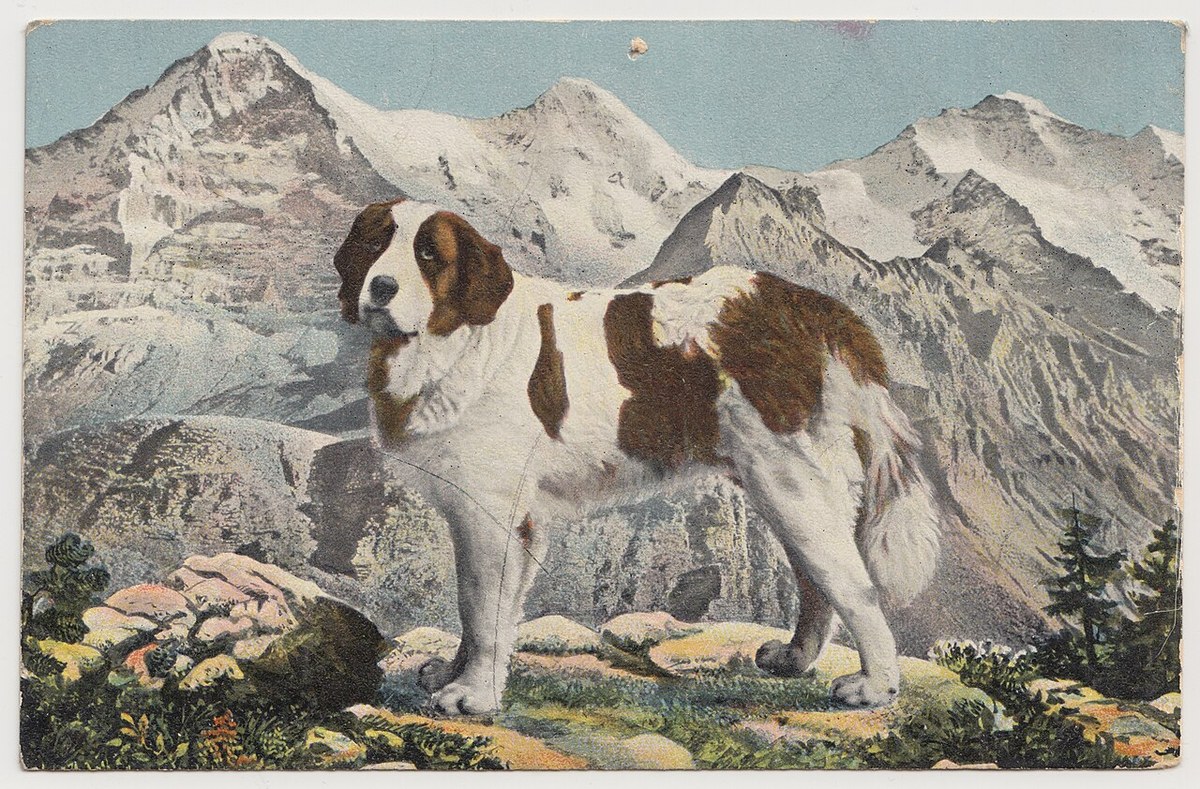
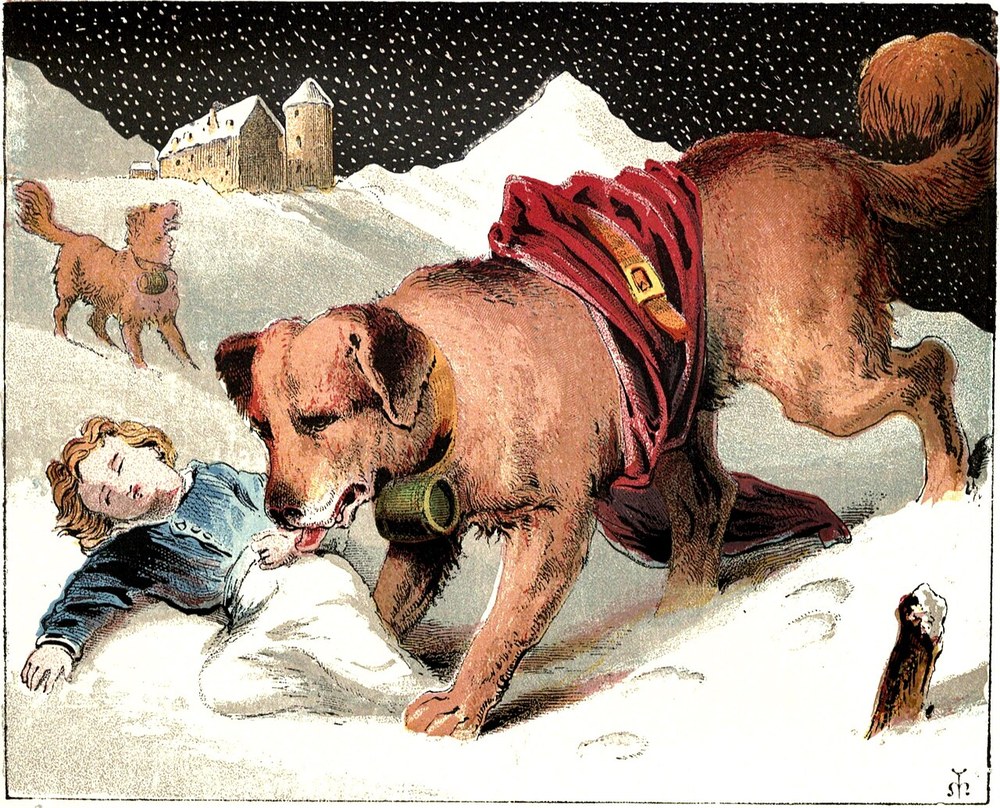
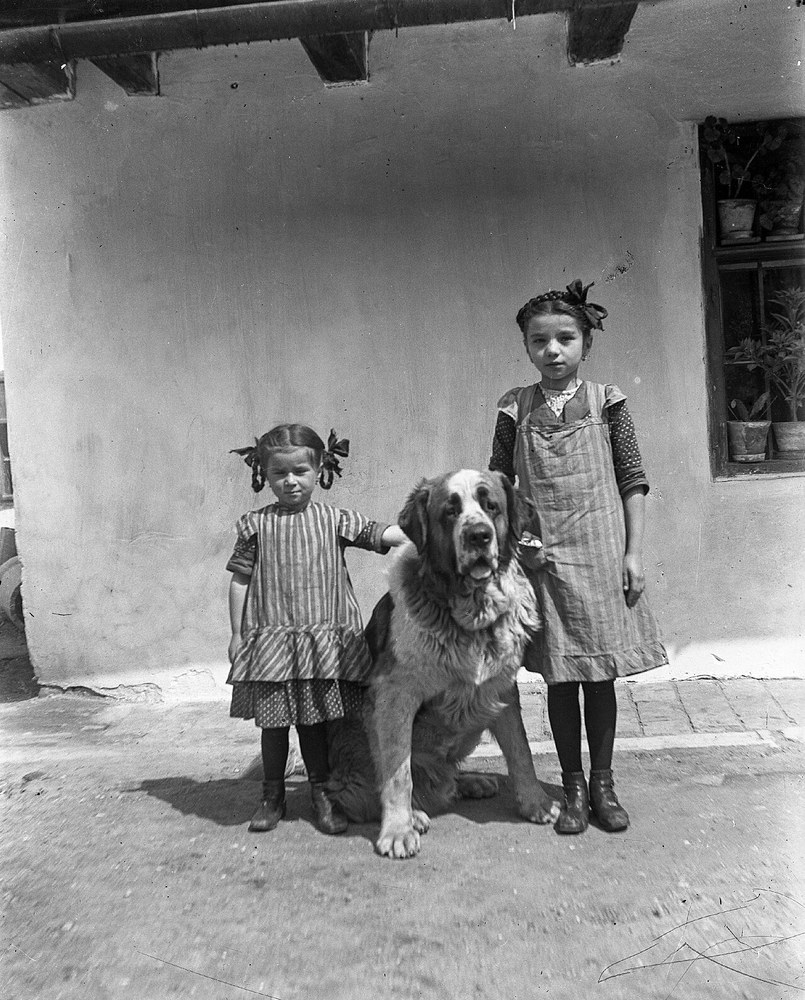
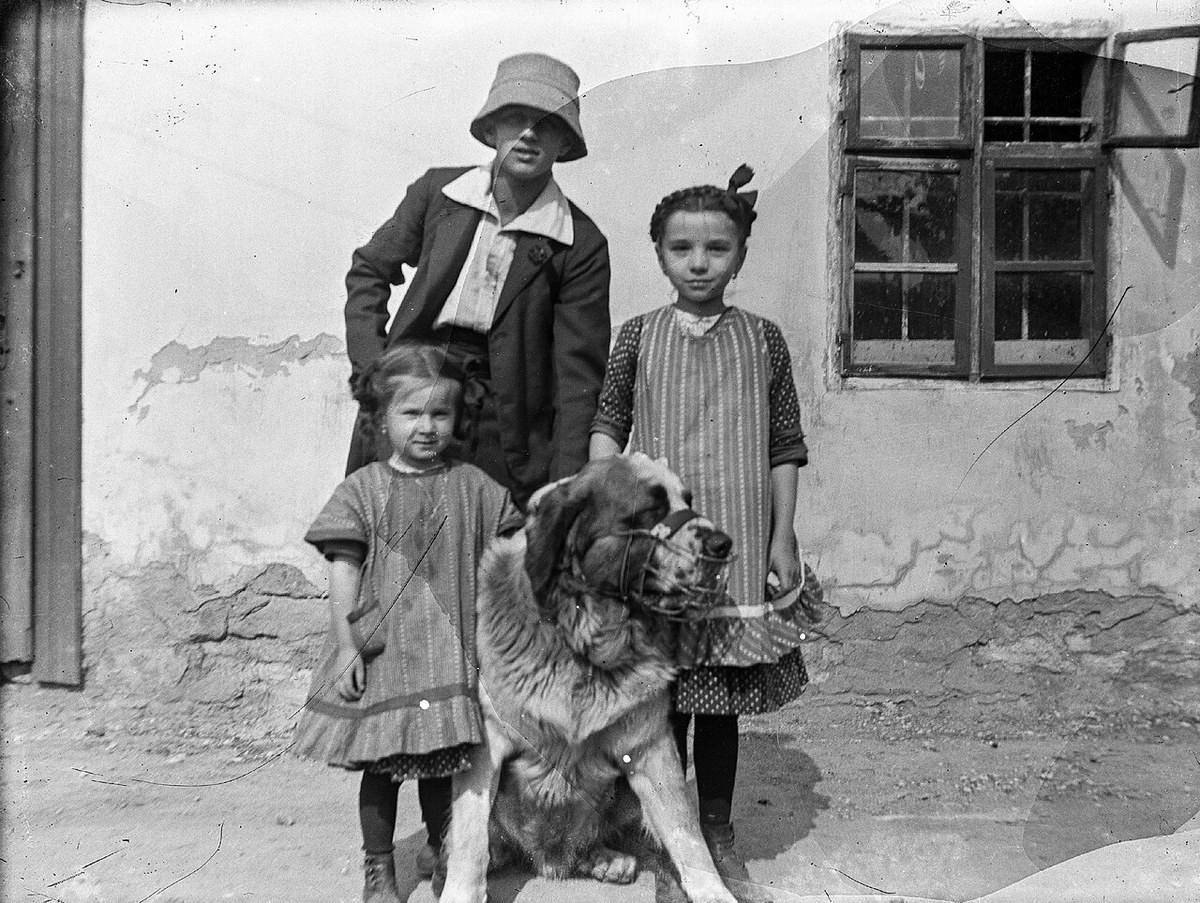
Historical postcard of a Saint Bernard (public domain). The breed was a popular image long before modern shows.
Great St Bernard Pass → hospice dogs
Mountain dogs at a hospice
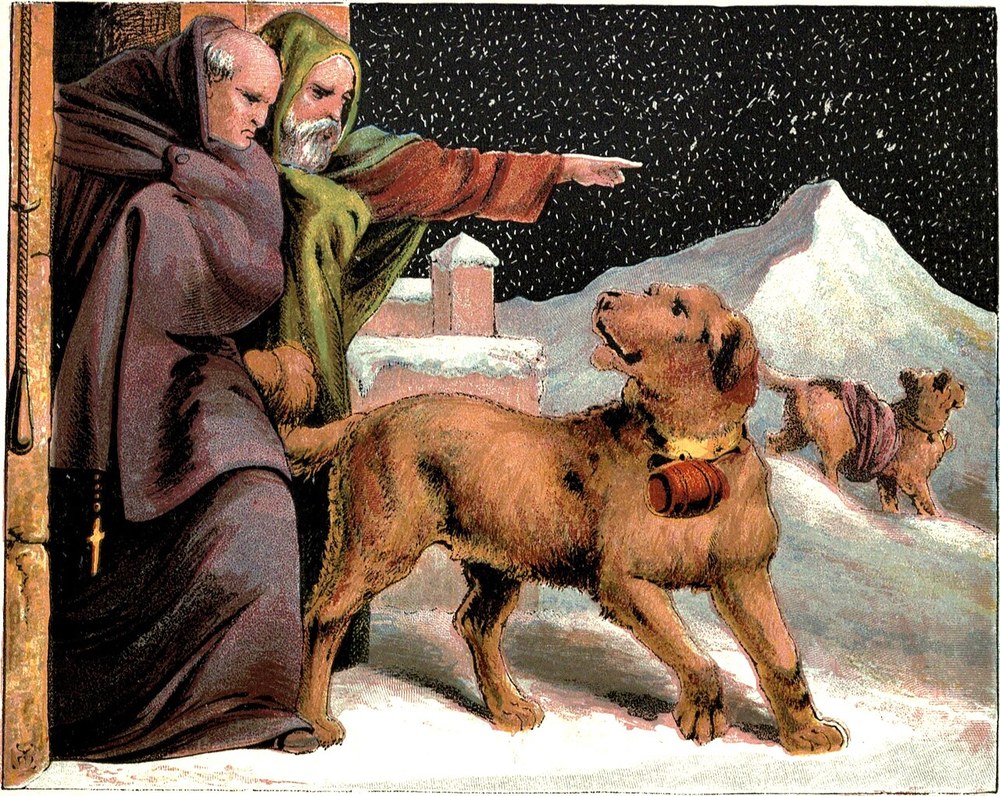
Public breed histories link the breed to the hospice at the Great St Bernard Pass in the Swiss Alps, where large dogs lived with the monks and accompanied them on the pass. The dogs are credited with helping find travellers in snow and fog.
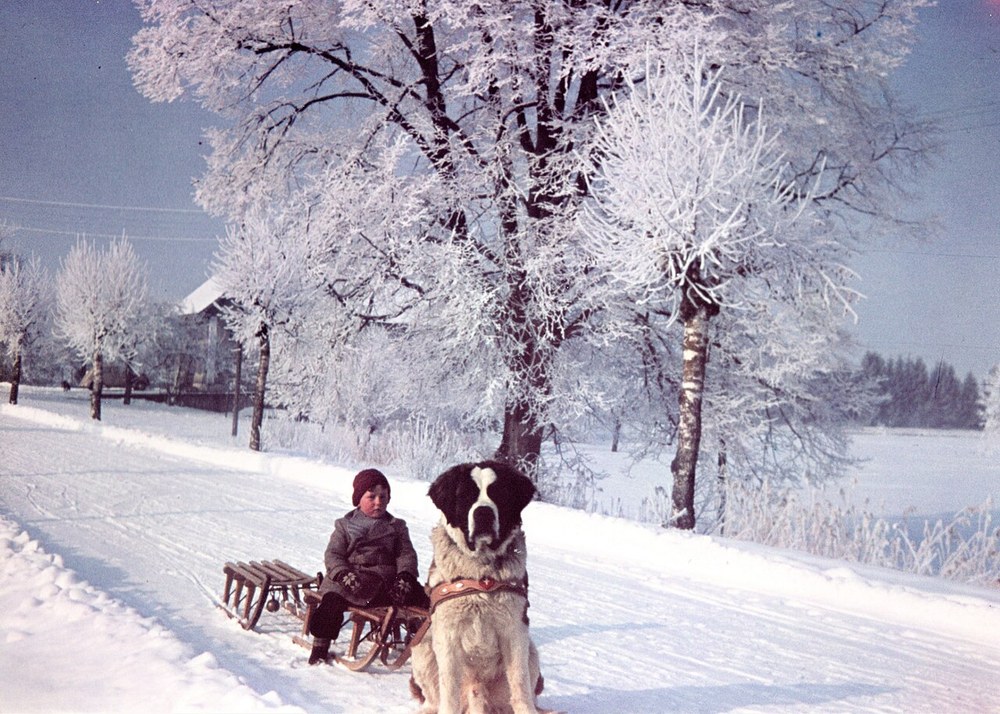
Mountain work rewarded strength, endurance in cold, and a steady temperament. Those traits still show: most Saints are calm, but they are very strong and do not do well in heat.
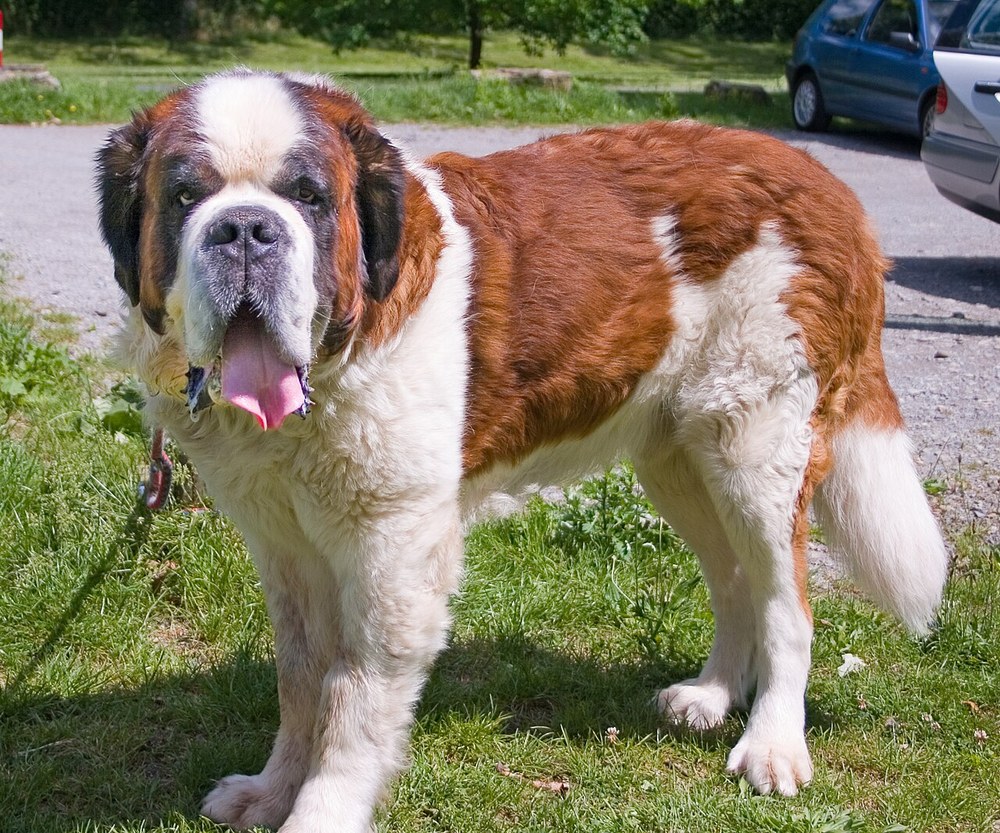
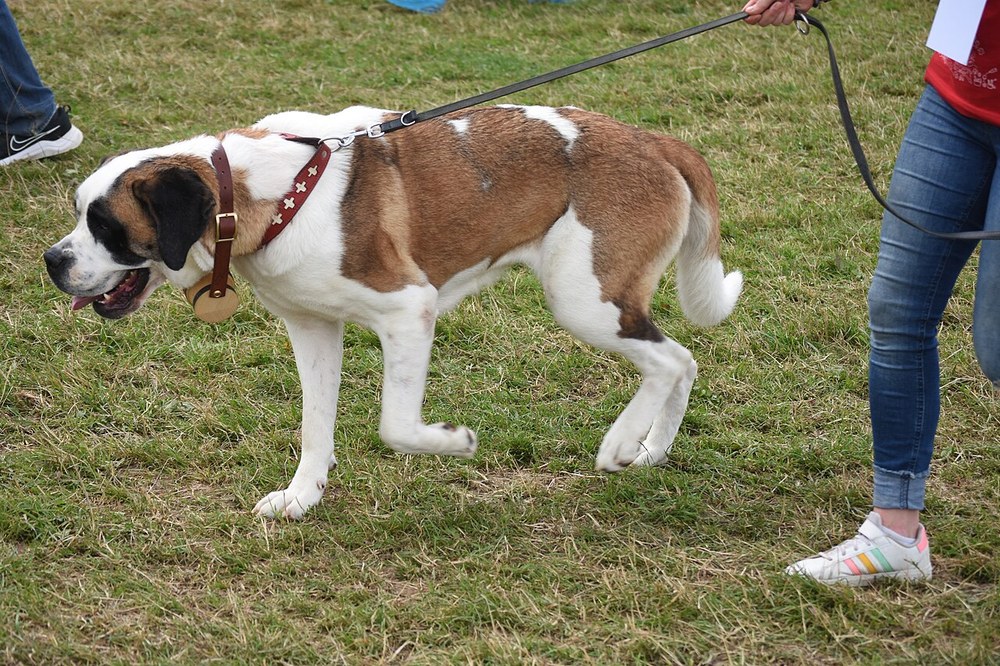
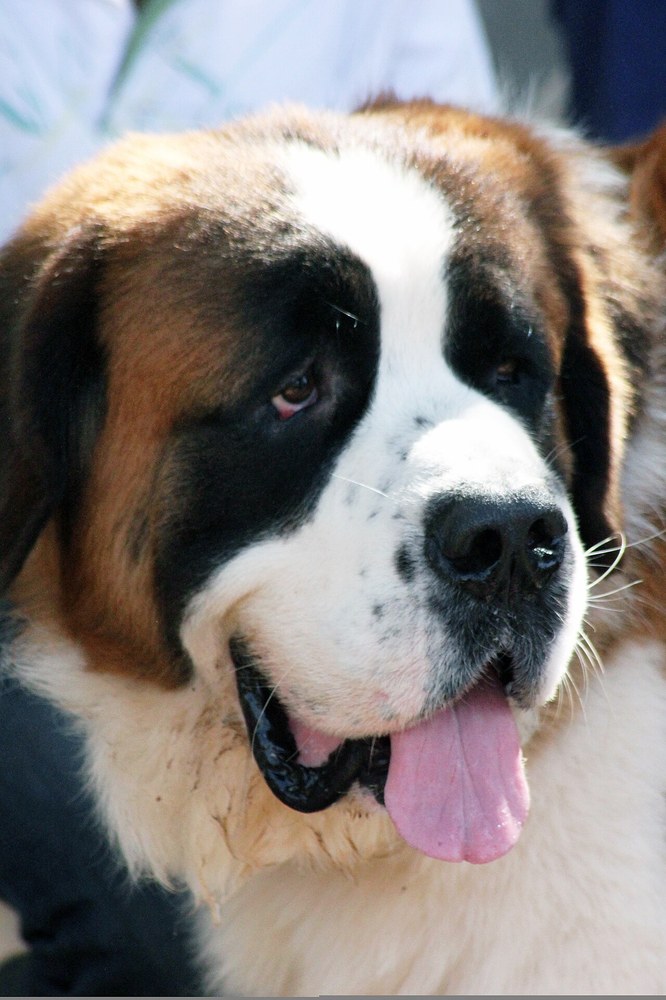
A five-year-old Saint Bernard (modern photograph). Adults are among the heaviest breeds; plan the car, the house, and the vet bills accordingly.
Barry → breed standard → family companion
A famous rescuer, a popular legend, and a modern foundation
The best-known hospice dog, Barry, is credited with many rescues in the early 1800s and is preserved at the Natural History Museum in Bern. The brandy barrel around the neck comes from paintings and postcards, not from the hospice’s working practice.
Today the Barry Foundation in Switzerland continues breeding dogs from the hospice line. Elsewhere the Saint is mostly a family companion, in short-haired and long-haired varieties.
A female Saint Bernard from the Barry Foundation kennel (modern photograph). The foundation continues the hospice breeding line.
What the breed was bred for
Strength, calm, and a friendly, unhurried mind
In plain trainer language: the type was selected for endurance in cold and a steady, cooperative nature. That is why a trained Saint is a gentle, relaxed companion — and why an untrained adolescent leaning on the lead can pull an adult over.
Start manners early. Sit for greetings, loose-lead walking, and a place cue are much easier to teach to a puppy than to a dog that weighs more than you do.
A day is a cool walk, plenty of rest, and a giant that greets with four paws down
In a city the Saint’s mountain past shows up as heat sensitivity, a strong pull when excited, and enthusiastic greetings at a very large size. Most adults are calm and easy-going indoors. The work is manners at size and keeping the dog cool.
Morning · first outing
Short and steady before the day warms up
Most adult Saints need moderate walks rather than long runs. Go early in warm weather, and keep it slow on hot pavements.
Old prints and books show the Saint as a rescue legend. A modern pet still needs everyday skills: coming when called, walking politely, and settling at home.
What to watch monthly: heat, weight, coat, and growing joints
General awareness only. I am not a veterinarian. Early signals are changes in appetite, breathing, coat, movement, or energy. For red flags, leave this page and open
when to call the vet.
Heat and a mountain dog
Saints are built for cold. Keep summer walks short and early, with shade and water. Heavy panting that will not settle, weakness, or collapse is an emergency.
Short or long coat
Both varieties shed, more during seasonal changes. Brush weekly to the skin, more for long coats and during sheds.
Drool, eyes, and face
Wipe the mouth and face folds and look at the eyes weekly. Redness, discharge, or squinting is a vet visit.
Growth and weight
Giant puppies grow for a long time. Keep them lean and avoid forced exercise and jumping while growing. Ask your vet about feeding a giant-breed puppy. See body condition and rations.
Health screening (not a diagnosis)
Ask the breeder which health screenings the national breed club recommends and see both parents’ results. A breed page cannot diagnose your dog; your veterinarian can.
Toxins
I do not publish toxin amounts. If the dog ate something dangerous, call a veterinarian or a poison-control line; the footer lists public numbers.
Lines and types
Short-haired and long-haired Saints share the same temperament
Kennel clubs recognise two coat varieties. The short-haired (smooth) coat is dense and close; the long-haired coat is medium length. Grooming time differs. Size, strength, drool, and heat sensitivity are shared.
Short-haired (smooth)
Dense, close coat; sheds, especially seasonally.
Easier to keep clean after walks.
Still sensitive to heat.
Meet the parents and see how they walk on a lead.
Fits an owner who wants less brushing but is ready for size and drool.
Long-haired
Medium-length coat with feathering on legs and tail.
Needs more brushing and drying after wet walks.
Same calm, friendly temperament.
Check that the parents are relaxed with visitors.
Fits a household that enjoys grooming and has a cool home environment.
Socialization windows
What to introduce — and what not to overload — by age
AVSAB-aligned in spirit: short, clean exposures at a distance the puppy can still eat,
with hygiene while vaccines finish. See the
puppy socialization schedule.
2–4 months
Manners while small
Introduce: sit for greetings, loose-lead basics, gentle face and paw handling, a crate or pen.
Do not overload: jumping up rewarded, stairs and long walks, rough play with children.
~6 months
Calm in the wider world
Introduce: polite dog meetings, a place cue, short car trips, cool-weather walks.
Do not overload: letting the puppy pull to every person, exercise in the heat.
~12 months
Adolescent size
Introduce: continued lead practice, counter rules, moderate exercise.
Do not overload: heavy pulling or jumping before maturity, extra weight from treats.
~18 months
Adult routines
Introduce: longer walks in cool weather, regular grooming and face cleaning.
Do not overload: skipping greeting practice, summer outings without shade.
~24 months
Keep it gentle
Introduce: refreshed greeting, lead, and recall routines.
Do not overload: assuming a calm adult needs no training, letting drool and folds go unchecked.
Before you buy
Who a Saint Bernard usually fits
A Saint Bernard suits calm households with space and a cool climate that want a gentle, sociable giant and can manage drool, size and a big food bill.
Good match
More likely a good fit if you…
Want a friendly, easy-going dog that likes people and is usually tolerant
Have room for a giant dog indoors, in the garden and in the car
Live somewhere cool or can keep the dog in an air-conditioned space
Are fine with drool, hair and muddy paws
Will train manners early, while the puppy is still small enough to guide
Mismatch risk
A Saint Bernard may be a poor choice if…
You live in a small flat with stairs and no lift
Hot summers without air conditioning are normal where you live
You want a running or hiking partner for long distances
Drool on clothes and furniture would bother you
You cannot budget for giant-breed food and vet care
If you are torn between breeds
Saint Bernard vs Newfoundland and Bernese Mountain Dog
Saint Bernards share size and gentle temperament with the Newfoundland and Bernese, but their history and daily needs differ.
Origins
Saint Bernard
Bred at the Great St Bernard Hospice in the Swiss Alps to help monks find travellers in snow.
Newfoundland
Canadian water and working dog used by fishermen.
Coat
Saint Bernard
Short or long coat; both shed and need regular brushing.
Bernese Mountain Dog
Long tricolour coat that sheds heavily.
Drool
Saint Bernard
Heavy drool, especially with loose lips.
Bernese Mountain Dog
Drools much less.
Water
Saint Bernard
Not a natural water dog.
Newfoundland
Strong swimmer and loves water.
Energy
Saint Bernard
Calm and easy-going; short bursts of play.
Both compares
Newfies are similarly calm; Berners can be a bit more active.
Ownership without surprises
Where a Saint Bernard owner’s budget goes
Costs depend on your area and choices. Plan for these areas before bringing a Saint home — not exact prices.
Food
A giant breed eats a lot. Feed a large-breed puppy diet during growth and keep the adult lean.
Veterinary care
Giant-breed doses and procedures cost more. Ask the breeder which screenings the national breed club recommends.
Cooling
Air conditioning, fans and shade in summer; heat is a real risk.
Grooming
Brushes and possibly professional help, plus drool towels and regular eye and ear checks.
Transport
A big car and ramp, or a plan for vet trips.
Training
Early classes and possibly a trainer for leash manners and greetings.
With a Saint Bernard, food, vet care and cooling are the costs that grow with the dog.
Before day one at home
What to prepare for a Saint Bernard puppy
A Saint Bernard puppy will be very large in a short time. Teach manners now, while you can still lift and guide it, and protect the growing body.
Check eyes, ears and paws with rewards. See puppy handling.
06
Build a rest routine
Large crate or pen and enforced naps to prevent overtired chaos.
If the dog is already yours
Training is gentle manners for a very large, friendly dog
Saint Bernards are friendly and want to please, but they can be stubborn and slow to respond. Calm voices, food rewards and short sessions work best.
The priorities are loose-lead walking, polite greetings and a reliable settle. A heavy adult without manners can knock people over without meaning to.
Start early and stay consistent. Habits that are cute in a puppy become a problem in a dog that weighs more than many adults.
Load balance
Moderate exercise, careful with heat and growth
Saints need daily walks but not intense exercise. Avoid heat, long runs and hard exercise for puppies.
WalkShort trainingChewGroomingCool rest
Daily walks, calm play, training games and food puzzles are enough. Long runs and rough play are not needed.
A Saint Bernard with good manners and steady routines is a calm, relaxed house dog.
Leash manners for a giant
How to teach a Saint Bernard to walk on a loose lead
Start at home and in the garden, then practise on quiet streets before busy areas.
01
Choose the right gear
A well-fitted harness or flat collar and a strong lead.
02
Reward slack lead
Reward the dog for walking beside you with a loose lead.
03
Stop when the lead tightens
Stand still until the dog moves back toward you, then walk on.
04
Short, interesting walks
Keep walks short and varied, especially for puppies.
05
Add distractions slowly
Practise near people and dogs only after success in quiet places.
One scene close-up
Why your Saint Bernard suddenly stops and refuses to walk
Saints sometimes stop and plant their feet. It can be tiredness, heat, discomfort or simply a different opinion about the route.
Check the weather and the dog’s condition first. Then make walking worth it: reward a few steps, move toward something the dog likes, keep walks shorter and more interesting.
If the dog stops often, seems stiff or reluctant to move, ask your vet to check for pain before treating it as a training problem.
“With a Saint Bernard, I teach manners while the puppy is still liftable. We build loose leash, polite greetings, a place cue and calm handling, and keep exercise moderate — because a friendly giant without brakes becomes a problem by sheer weight.”
Sessions cover real scenes: jumping and leaning on people, leash manners, drool and coat routine, heat management, and settling indoors. I am a trainer, not a veterinarian. No invented reviews.
Andrew DarovProfessional dog trainer and instructor
Describe age, living setup, and where the dog breaks first — pulling and leaning, visitors at the door, coping with heat, or settling after a calm walk. Opens WhatsApp to Andrew.
An independent Turkish livestock guardian that needs secure fencing, calm visitor routines and an owner comfortable with a self-directed dog.
Need a read on your exact situation?
Describe your Saint Bernard’s age and the scene that repeats most: pulling and leaning, visitors at the door, coping with heat, or settling after a calm walk. We check safety first, then pick the first skill.
Written by Andrew Darov, professional dog trainer. Not veterinary advice and not a diagnosis.
Not a kennel club. No invented reviews. No vaccine schedules or toxin doses. Photo credits in
/images/breeds/saint-bernard-guide/credits.md.