Expert Advice · Behavior · 12 min read
Puppy counter surfing: stop kitchen steals
The worktop is a management problem first. Empty counters beat lectures after the plate is gone.

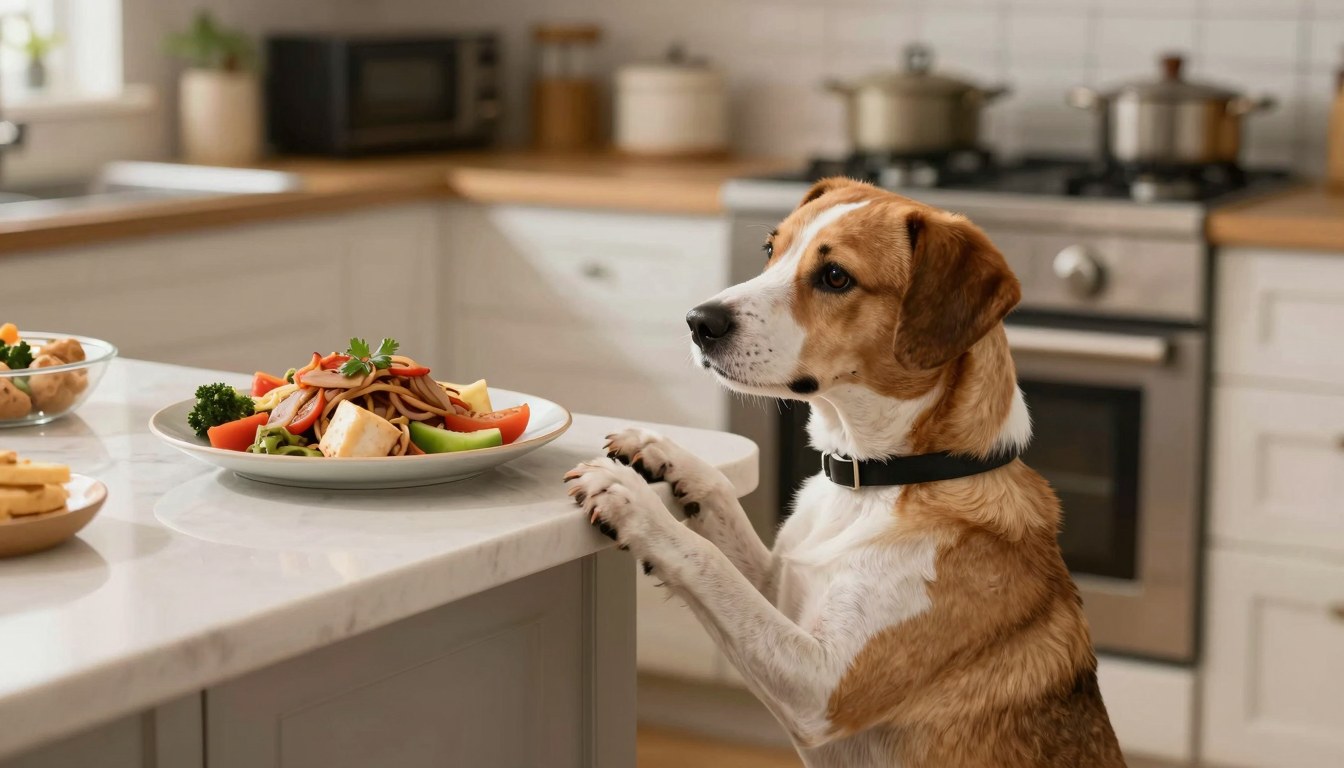
Counter surfing is unpaid access to food on a horizontal surface the dog can reach. The plate on the worktop, the butter on the island, the sandwich you set down “for one second.” The dog is not reading your values. The dog is reading what was available last time you turned to the sink.
This is a behavior protocol. It overlaps jumping up at the front feet and leave it when food is already on the floor. This page owns the kitchen surface: clear it, manage the dog while you cook, pay four paws on the floor, then raise criteria. I work dogs in residential boarding for a month and longer. I am a professional trainer from Russia, not a veterinarian. See not veterinary advice for the medical fence.
Why do dogs steal food from the counter?
Because it works. Food left at nose-plus height is a slot machine with a jackpot smell.
Common pay-offs:
- a plate left while you answer the door
- chopping with the dog free underfoot
- “just this once” from a guest who feeds from the worktop
- a roast cooling unsupervised
- crumbs and wrappers that teach the surface is interesting
You do not need a dominance story about who owns the kitchen. You need to name access and remove the rehearsal. A US kitchen island and a UK galley flat change the furniture. They do not change the learning rule.
If the mouth is already on a stolen sock or a shoe, that is closer to drop it or furniture chewing. This page stays food on the counter and the jump that gets it.
If food is on the counter unsupervised, you hired a thief.
How do you stop counter surfing while you cook?
Manage before you teach. A real dinner prep is a test, not a first lesson.
- Empty or cover. Before you leave the room, food leaves the worktop or goes under a cover the dog cannot open. Hope is not a lid.
- Contain the dog. Leash tethered away from the stove, a pen, a crate you already introduced, or a baby gate. See crate training if the crate is still a fight.
- Pay the floor. When four paws stay down near the kitchen, mark and feed at chest height or on the floor — not tossed onto the counter as a joke.
- Station while you work. A mat or place a few steps from the heat. Short duration first. Cooking smells are a distraction raise, not the first criterion.
- Catch the start, not the swallow. If front feet leave the floor toward the worktop, become boring, reset, pay the next four-paw picture. Do not chase a stolen sandwich around the flat as “training.”
US open-plan kitchens and UK narrow galley kitchens use the same rule. If the dog can reach the surface alone, the surface is the classroom.
Should you punish after the steal?
No. The steal already paid. Your anger ten seconds later is a different event in the dog’s timeline.
Aversives around food — shouting, grabbing the muzzle, a shock, a slap near the mouth — can suppress a jump and also teach that kitchens and hands near plates are dangerous. Some dogs stop surfing and start guarding. That is a worse problem. The American Veterinary Society of Animal Behavior recommends reward-based methods for training and behaviour work. Read their position statements as a public standard. This page is the kitchen version: remove access, pay the floor.
If you catch the dog mid-reach, interrupt without a drama chase, remove the dog, clear the surface, and run the next rep on a picture you can win. Late lectures do not install a criterion.
Is a US kitchen different from a UK flat?
Architecture differs. Learning does not.
A US suburban island puts food in the middle of the room at elbow height. A UK third-floor flat may have a short run of worktop and a dining table that doubles as prep space. Both leave unpaid food when you turn away. Both need management when you cannot watch. Both can use a mat station and four paws as the criterion.
Do not invent a breed rule (“Labradors always surf”). Labs and spaniels get more reps because households leave more food out, not because a gene forces the jump. Close the rehearsal.
When is counter surfing not DIY?
Use a fence you can see.
This protocol: opportunistic grabs when food is available, stops when access is removed, takes food on the floor, no freeze or growl over a stolen plate.
Not this protocol: stiff body and hard stare over stolen food, a growl or snap when you approach the plate, a child knocked into a hot stove, or a calm dog who suddenly raids frantically after a pain or medication change. Guarding is a stop list — see resource guarding. Injury and sudden change are veterinary first.
True aggression over food is not a weekend DIY project. Gate the dog. End unsupervised kitchen access. See a qualified professional in your country. Dogmindlab will not invent a triage inbox for that. For paid residential work, use work with me as a human contact path, not as emergency care.
What usually fails?
- You left the roast and hoped. Unsupervised food is a paid lesson. Cover or contain.
- You scolded after the swallow. Late anger is not a criterion. Reset the next setup.
- You trained a sit in the lounge and opened the kitchen. Arousal and smell were never paid. Drop to management and four paws.
- Guests fed from the worktop. Brief them or keep the dog behind a gate. Intermittent pay keeps the slot machine running.
- You used a shock or a slap near the plate. You may suppress a jump and buy guarding. Rebuild with food and management.
- You treated guarding as this page. Wrong ladder. Resource guarding is a stop list.
Run a clear-counter week before you decide the dog is “unteachable.” Criteria only rise when the current kitchen picture is boring.
Sources
AVSAB position statements on humane dog training. ASPCA overview of common dog behavior issues. Paraphrased as public standards for kitchen protocol, not quoted as a substitute for reading the originals. Topic-specific AKC counter-surfing URLs checked for this page returned 404 and were omitted. avsab.org/resources/position-statements/ · aspca.org — common dog behavior issues · humaneworld.org/en/resources
Questions on this page
Why does my dog steal food from the counter?
Because food on the worktop has been available and unpaid. Height, smell, and a quiet kitchen are enough. The dog is not plotting revenge. Clear the surface, manage access, and pay four paws on the floor. A scolding after the steal teaches nothing about the next plate.
How do I stop counter surfing when I cook?
Management first. Leash, pen, crate, or a baby gate so the dog cannot rehearse while you chop. Empty the counters when you leave the room. Teach a floor station or place while you work. Do not leave a roast unsupervised and call it training.
Should I punish a dog who already stole from the counter?
No. The steal already paid. Late anger is noise. Interrupt if you catch the start, remove access, and reset the next rep with an empty surface and a paid floor picture. Aversives around food can create new problems.
Is counter surfing different in a US kitchen and a UK flat?
Furniture height and layout change. US islands and UK galley flats both leave food at nose-plus height when you turn away. The criterion is the same: no free food on horizontal surfaces the dog can reach, and four paws paid on the floor.
When is counter surfing not a manners problem?
When the dog guards stolen food with a freeze or growl, when a child is knocked reaching for the same plate, or when sudden frantic stealing arrived with pain or medication change. Manage, and see a vet or qualified behaviour professional. This page is not a clinic.
Work with me
A $150 consultation or $500 monthly curatorship. Opens WhatsApp to Andrew.