English Mastiff: temperament, training & threshold/guardian
The English Mastiff is one of the heaviest dog breeds — a calm, dignified estate guardian that is usually gentle with its family and quietly watchful with strangers. Life with a Mastiff is less about energy and more about managing size: lead manners, greetings, space and joint-friendly routines.
Job: Old British guardian — calm, watchful and very large.
Energy: Low to moderate; gentle walks and rest.
Home: Needs space, visitor routines and leash manners taught early.
An English Mastiff is a calm, massive guardian that needs door manners and room
Public breed histories describe large guard dogs in Britain for centuries. The modern Mastiff kept the calm temperament and loyalty, and the deterrent size.
Most Mastiffs are easy-going and not hyperactive. Problems usually come from size: pulling, leaning, refusing to move and greetings that knock people over.
From the first weeks, teach a loose lead, four paws on the floor for greetings and calm handling. Those three skills matter more than any trick.
Why the Mastiff was built as a calm, massive estate guardian
History does not decide what one puppy becomes, but it explains a lot: most Mastiffs are calm, slow to excite and deeply attached to their family — and why their sheer size, not their temper, is usually the main challenge.
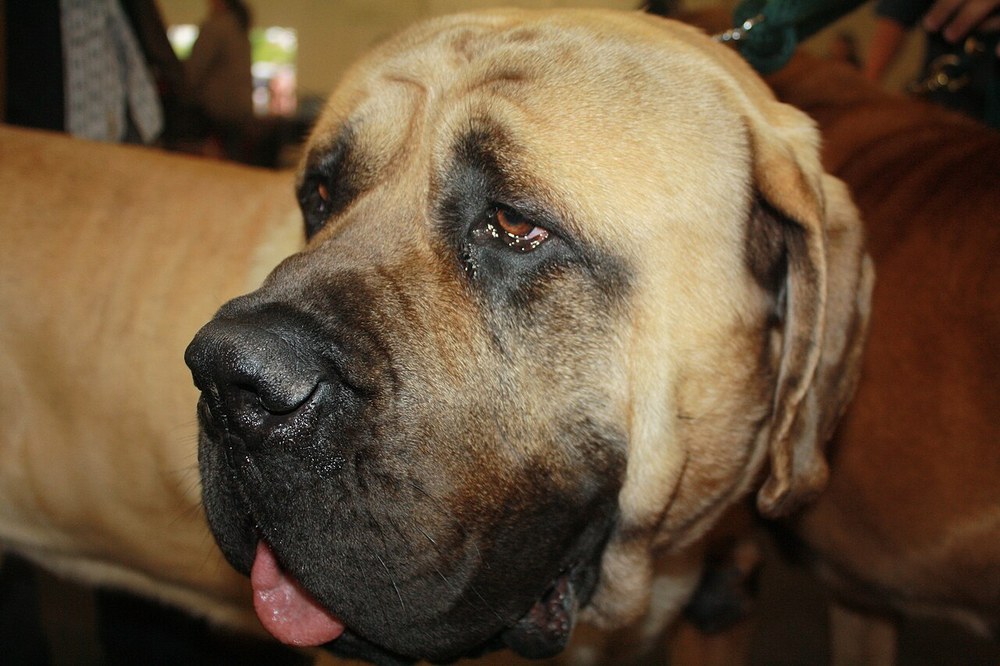
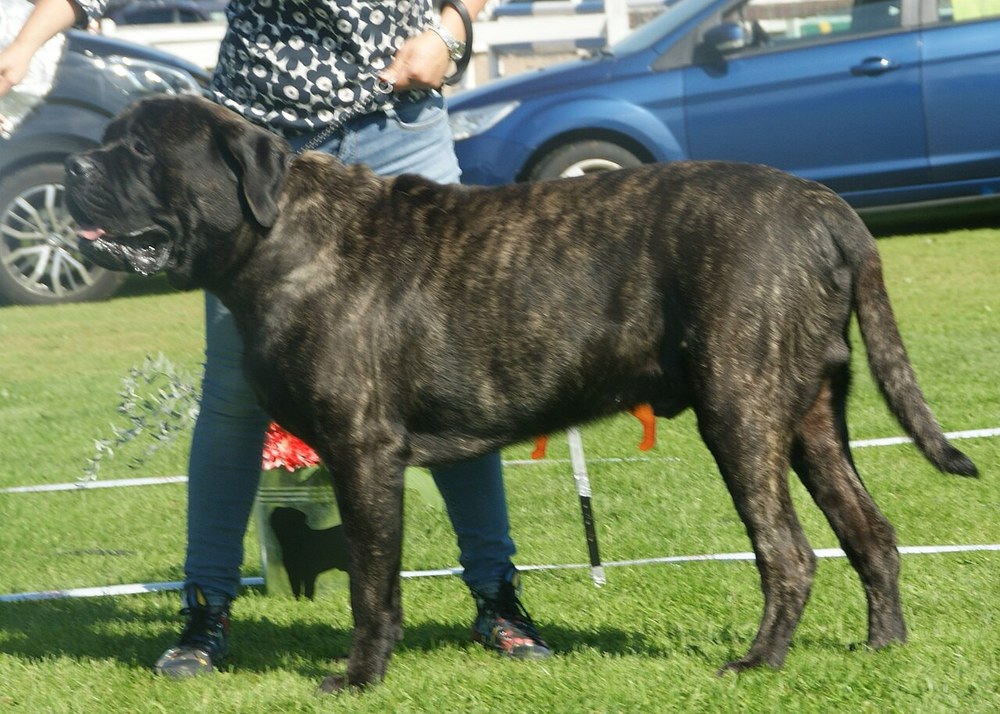
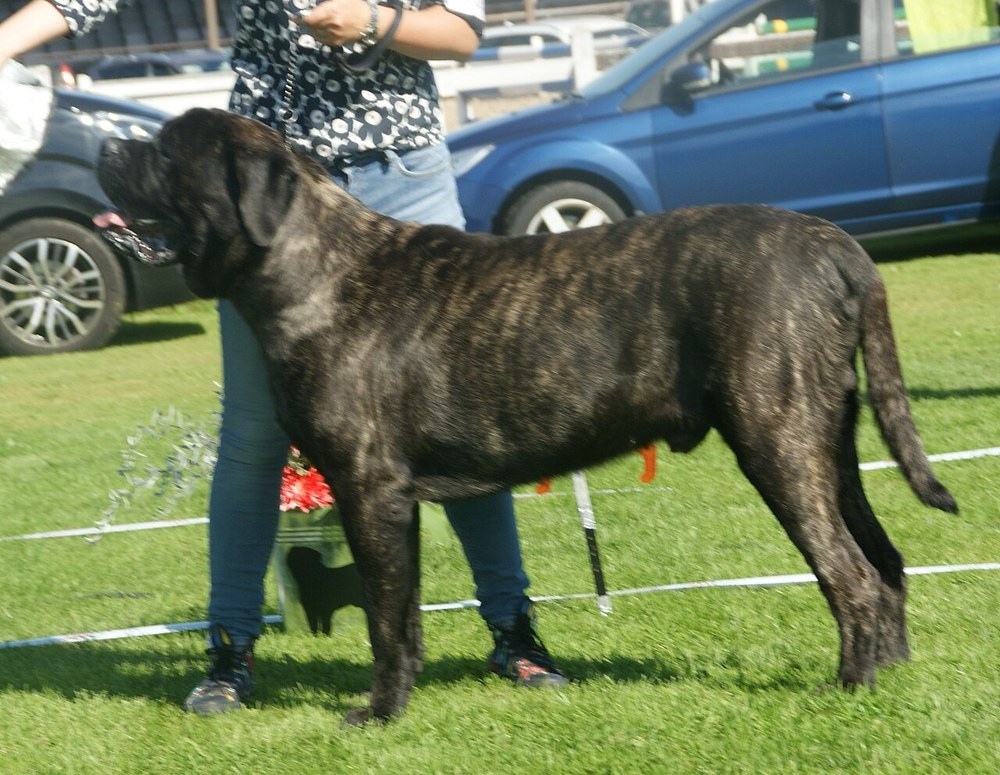
An English Mastiff at the Baltic Winner show in Riga, 2013 (modern photograph).
Britain → estate and property guardian
A deterrent by size and presence
Public breed histories describe large mastiff-type dogs in Britain for many centuries, kept to guard estates, homes and livestock. Some well-known historical strains, such as the dogs of Lyme Hall in Cheshire, are often mentioned in breed accounts.
The guard job relied on presence more than activity. A Mastiff was expected to stay calm, watch and intervene only when needed. That calmness is still typical — but so is a dog that will not be moved when it decides to stay put.
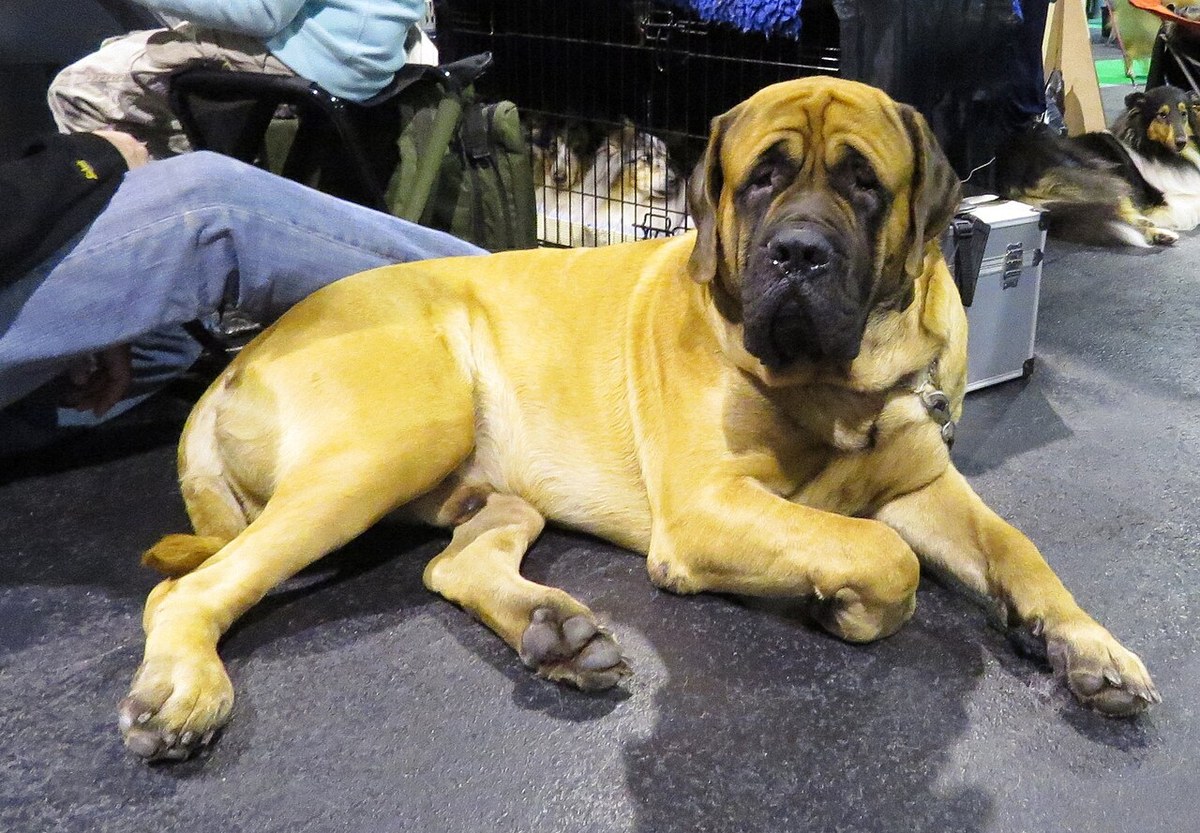
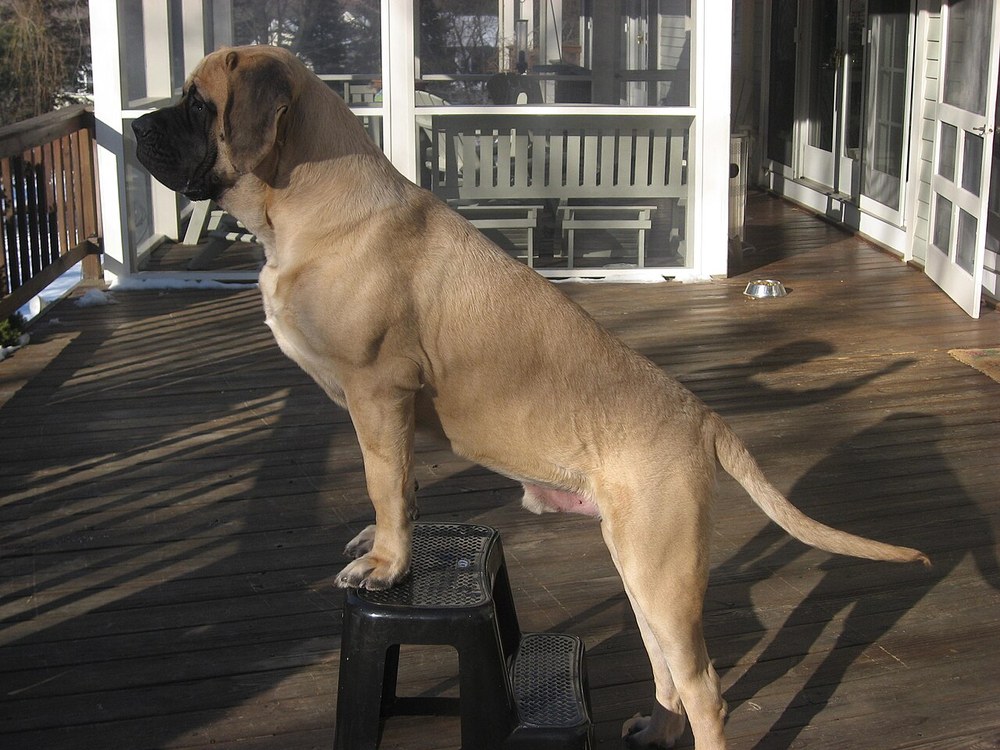
An English Mastiff named Pluto (modern photograph).
War-time decline → rebuilding
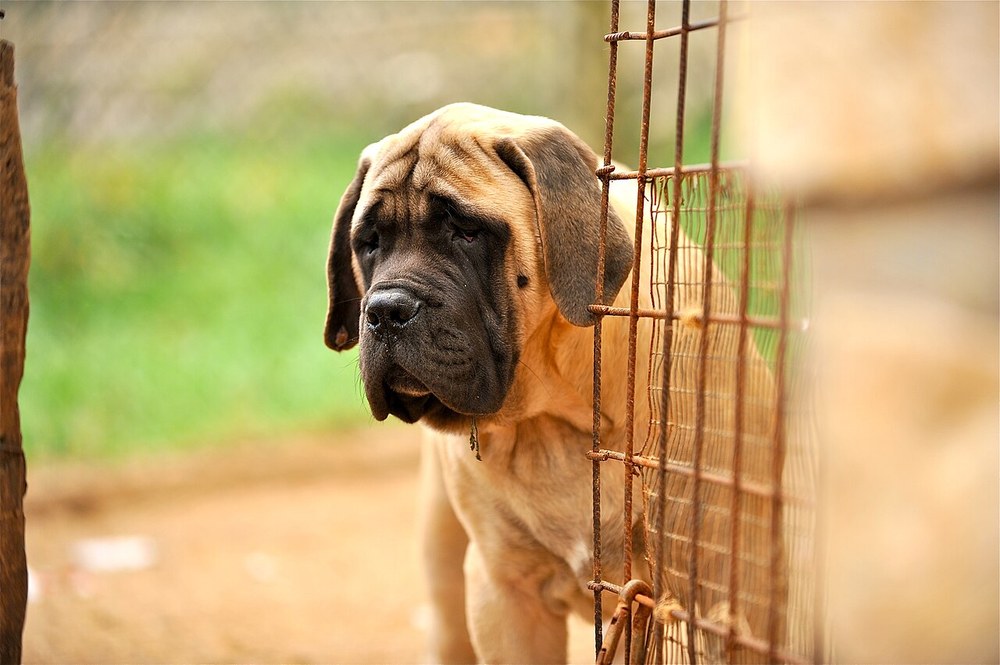
A breed that nearly disappeared in Britain
Feeding giant dogs was hard during the world wars, and numbers in Britain fell to very few dogs by the mid-1940s. Breed histories describe how dogs from North America helped rebuild the population afterwards.
Today the Mastiff is recognised by FCI, AKC and the UK Kennel Club. Size and type vary between lines, so meet the parents and look at their movement and temperament at home.
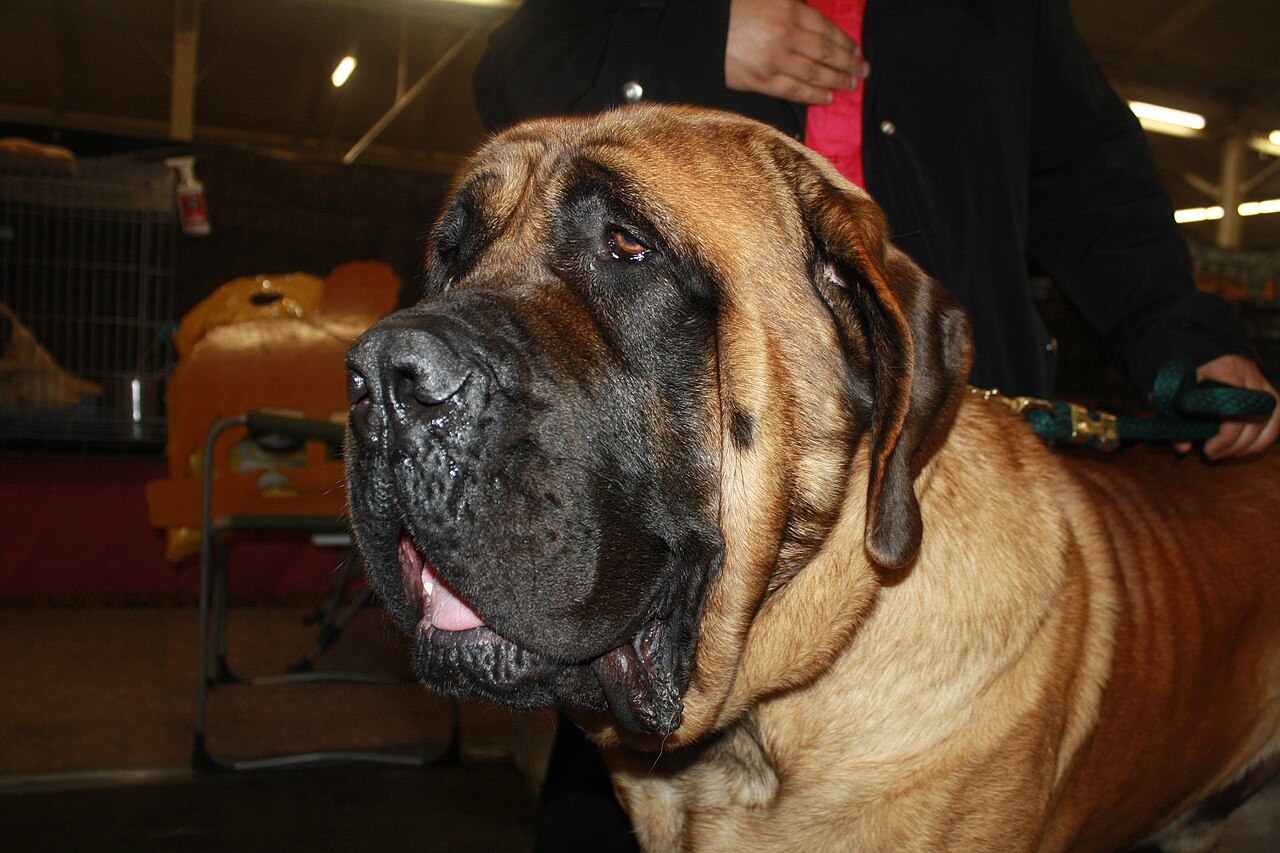
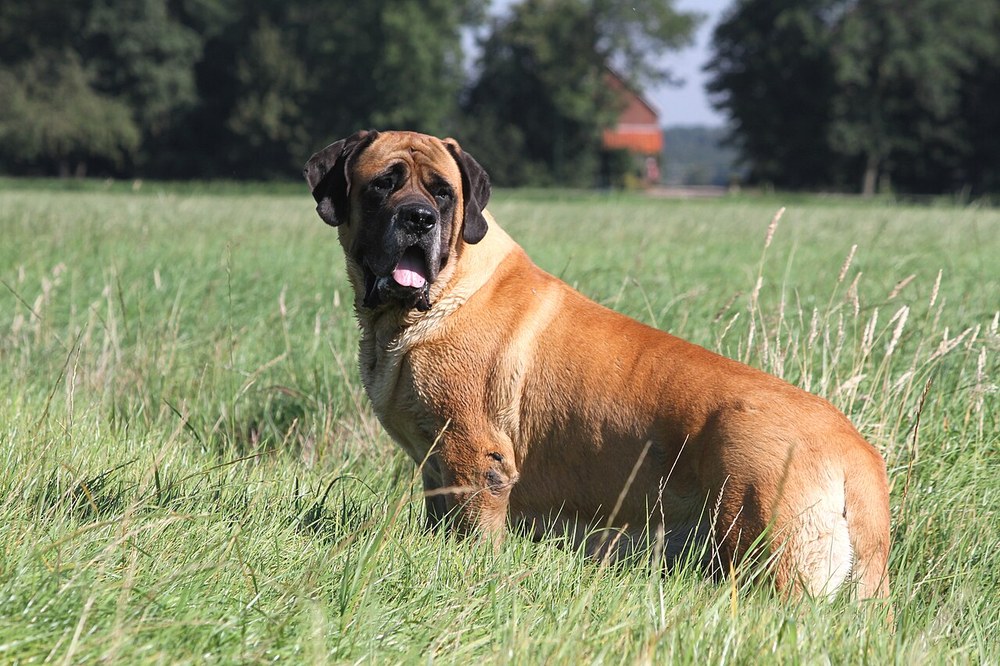
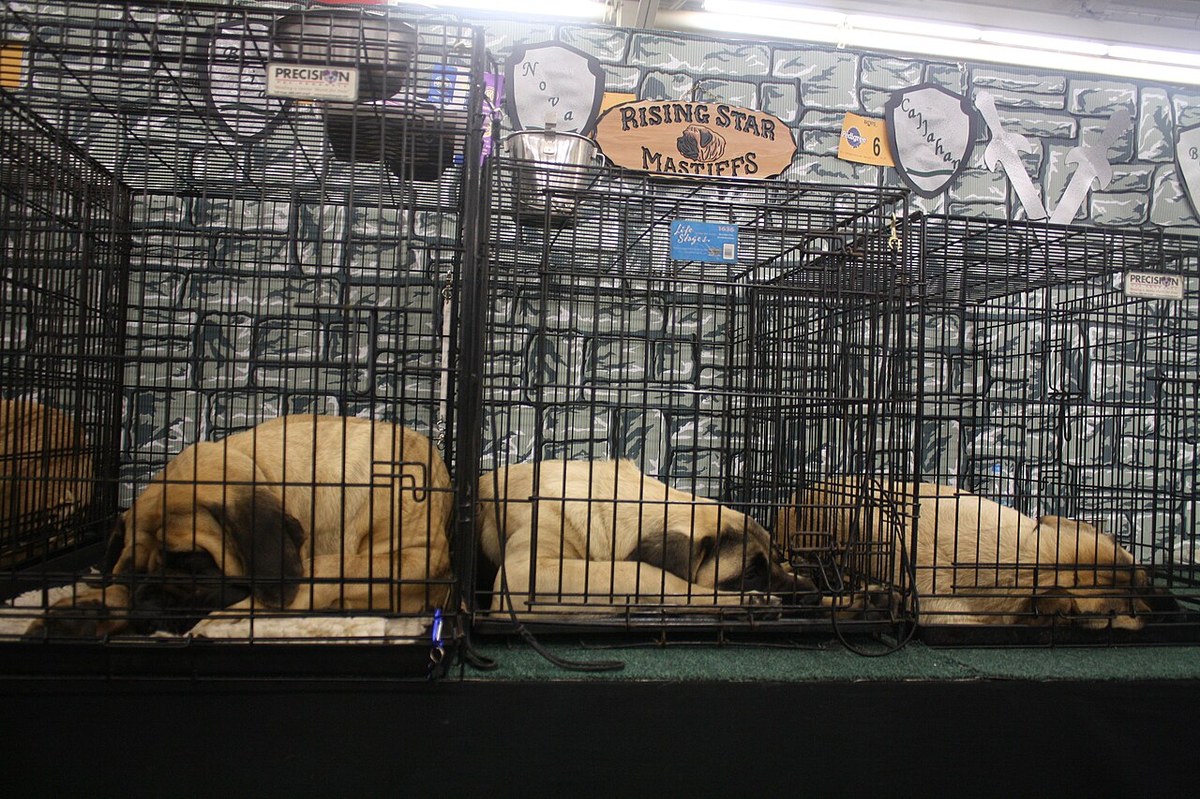
An English Mastiff at a dog show in the United States (modern photograph).
What the breed was bred for
Calm nerves, loyalty and enormous strength
In plain trainer language: the Mastiff was selected to be steady, watchful and loyal. Most are gentle at home and not demanding. The risk comes from size: a friendly lean from a dog that may outweigh its owner, a pull toward a smell or a refusal to move can be hard to manage.
Train lead manners, greetings and handling while the puppy is still light. Short, calm sessions with food work far better than repetition — Mastiffs tend to switch off when bored.
A day is short walks, long naps and good manners in a giant body
Mastiffs are usually calm indoor companions. Their daily needs are modest, but everything takes more space and more planning: the car, the hallway, the vet visit and the walk past other dogs.
Morning · short walk
A steady, unhurried route
Most adults enjoy a moderate walk rather than a long hike. Keep pace slow, avoid the hottest hours and let the dog sniff.
What to watch monthly: weight, joints, drool and heat
General awareness only — I am a trainer, not a veterinarian. In giant breeds, small changes in movement or appetite matter. For urgent signs, see
when to call the vet.
Weight and growth
Feed for slow, steady growth and keep the adult lean. Extra weight is hard on a giant frame. See body condition and rations.
Joints and exercise
Avoid stairs, jumping and long walks during growth. Watch for stiffness after rest and ask your vet if you see it.
Health screening (not a diagnosis)
Ask the breeder which screenings the national breed club recommends and look at the results for both parents.
Face, drool and skin
Wipe the face and lips daily and check skin folds. Keep towels handy.
Heat
Exercise in cool hours and provide shade and water. Heavy panting that does not settle is a reason to stop and call a vet.
After meals
Plan quiet time after meals and ask your vet about feeding routines for giant breeds. A swollen belly with restlessness is an emergency.
Lines and types
Show-bred and pet-bred Mastiffs vary in size and type
There is one standard, but breeders differ in how heavy, how wrinkled and how active their dogs are. Meet the parents and watch them move.
Heavier show type
Very large head and heavy bone.
Often slower and less active.
Heat tolerance and joints need extra attention.
Ask how the parents move on a normal walk.
Suits a calm household with space, a cool home and a plan for vet care.
Moderate type
Slightly lighter build and more athletic movement.
Often a bit more active and playful.
Still a giant with the same size management needs.
Meet the parents at home and on a walk.
Suits families who want a gentle giant that can manage longer walks.
Socialization windows
What to introduce — and what not to overload — by age
AVSAB-aligned in spirit: short, clean exposures at a distance the puppy can still eat,
with hygiene while vaccines finish. See the
puppy socialization schedule.
2–4 months
Handling and calm first experiences
Introduce: family members, handling, a crate or pen, short car trips, calm visitors.
Do not overload: stairs, jumping from furniture, rough play with big dogs.
~6 months
Manners before weight
Introduce: loose-lead practice, sit for greetings, a place cue, short walks in new places.
Do not overload: long walks, jumping up on people, pulling toward dogs.
~12 months
Adolescent size
Introduce: calm greetings with many people, distance from unknown dogs, regular handling.
Do not overload: forced greetings, dog parks, hard exercise.
~18 months
Adult calm
Introduce: longer walks at a slow pace, new places, chosen dog friends.
Do not overload: heat, long runs, leaving the dog to guard the garden.
~24 months
Maintain good habits
Introduce: refreshed lead and greeting routines; vet checks for movement.
Do not overload: dropping manners because “he’s gentle”, overweight.
Before you buy
Who an English Mastiff usually fits
A Mastiff fits calm households with space and budget for a giant dog, and owners who will teach manners while the puppy is still small.
Good match
More likely a good fit if you…
Want a calm, gentle companion rather than an active sports dog
Have room indoors, a large car and a secure garden
Are fine with drool, snoring and big food bills
Will teach lead manners and calm greetings early
Can arrange help to lift or transport the dog in an emergency
Mismatch risk
An English Mastiff may be a poor choice if…
You live in a small flat with stairs and no lift
You want a running or hiking partner
Drool on clothes and furniture would bother you
You cannot budget for giant-breed food and vet care
You live in a hot climate without air conditioning
If you are torn between breeds
English Mastiff vs Bullmastiff and Great Dane
Mastiffs are compared with Bullmastiffs for type and with Great Danes for size. Temperament and daily needs differ.
Size
English Mastiff
Very heavy and massive; among the heaviest breeds.
Great Dane
Taller and leaner, with longer legs.
Energy
English Mastiff
Low to moderate; calm and slow.
Bullmastiff
A bit more active and quicker.
Guarding
English Mastiff
Watchful and protective but rarely reactive.
Bullmastiff
Bred to stop poachers; more alert.
Drool
English Mastiff
Heavy drooler.
Great Dane
Usually less drool.
Training
English Mastiff
Learns well with food but tires of repetition.
Both compares
Bullmastiffs can be more stubborn; Danes are often eager but clumsy when young.
Ownership without surprises
Where an English Mastiff owner’s budget goes
Costs depend on your area and breeder. These are the main areas to plan for a giant breed — not quotes.
Food
Giant-breed puppy food and large adult portions.
Veterinary care
Giant-breed doses and procedures cost more. Ask which screenings the national breed club recommends.
Transport
A big car, ramp and large crate.
Home
Non-slip floors, a large bed and drool towels.
Training
Early classes for lead manners and greetings.
Cooling
Fans or air conditioning in summer.
With a Mastiff, everything costs more because everything is bigger.
Before day one at home
What to prepare for an English Mastiff puppy
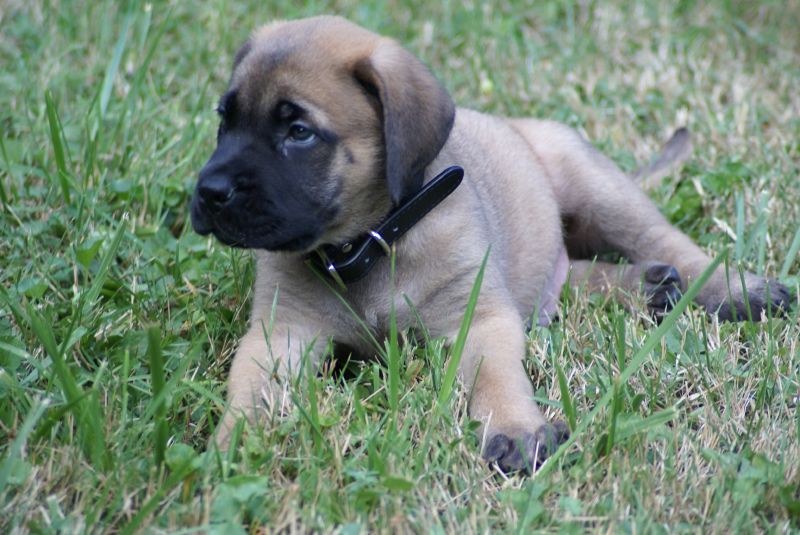
A Mastiff puppy gains weight very fast. Teach manners while you can still lift it, and protect the growing body.
“With a Mastiff, I plan for the adult weight from the first week. We teach a loose lead, four paws on the floor, a place cue for visitors and calm handling — because a gentle giant without manners can still knock someone over.”
Sessions cover real scenes: lead walking and refusals, greetings and leaning, visitors, vet handling, and rest after walks. I am a trainer, not a veterinarian. No invented reviews.
Andrew DarovProfessional dog trainer and instructor
Describe age, living setup, and where the dog breaks first — pulling or refusing to walk, leaning on visitors, tension with other dogs, or vet handling. Opens WhatsApp to Andrew.
An athletic, curly-coated fisherman’s dog from Portugal that needs daily exercise, training and regular grooming.
Need a read on your exact situation?
Describe your English Mastiff’s age and the scene that repeats most: pulling or refusing to walk, leaning on visitors, tension with other dogs, or vet handling. We check safety first, then pick the first skill.
Written by Andrew Darov, professional dog trainer. Not veterinary advice and not a diagnosis.
Not a kennel club. No invented reviews. No vaccine schedules or toxin doses. Photo credits in
/images/breeds/english-mastiff-guide/credits.md.