Galgo Español: temperament, rescue life and safe running for the Spanish sighthound
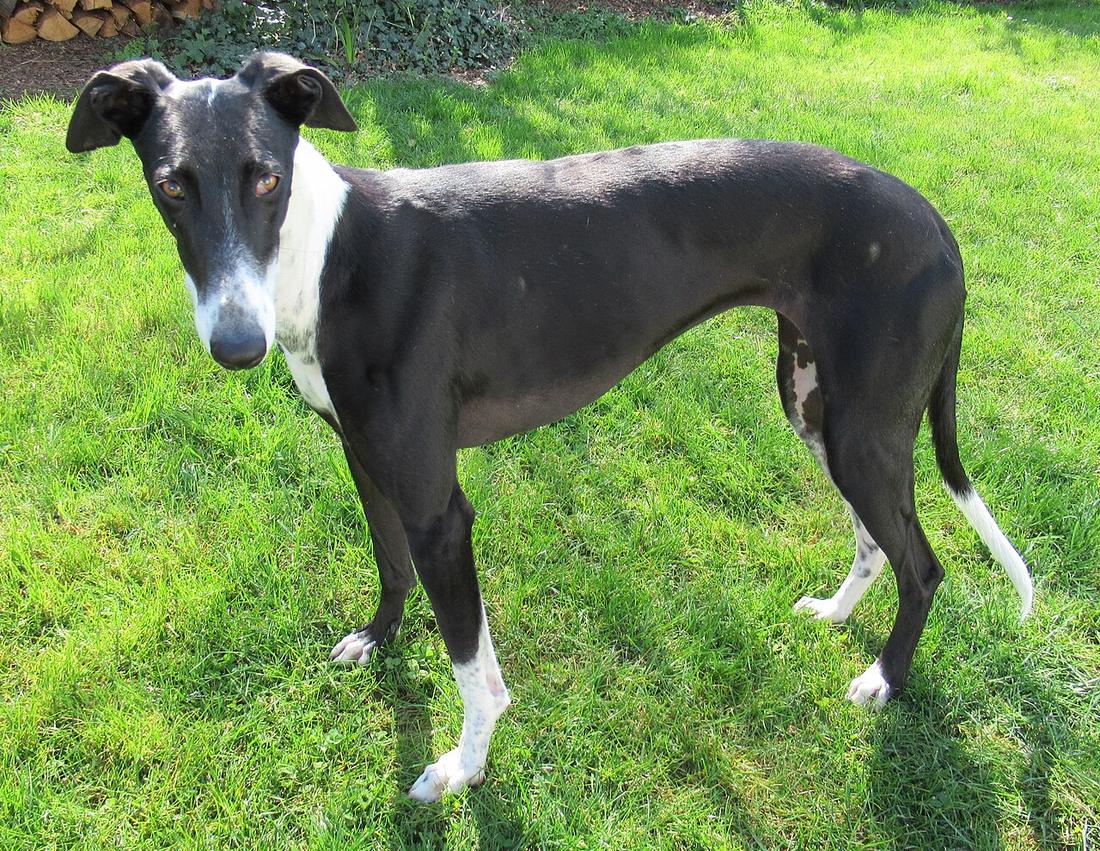
The Galgo Español, or Spanish Greyhound, is a lean sighthound bred to course hares across the open plains of Spain. Many now come to homes in the UK and Europe through rescue, often as adults that have never lived indoors. At home most are quiet, gentle and sleepy; outside, a running cat or rabbit can switch on a chase you cannot call back. What works is soft handling, a slow start in the house, secure fencing, a long line and a warm coat in winter.
Job: A Spanish sighthound for hare coursing, FCI Group 10; smooth or rough coat.
A Galgo is a sofa dog with a sprinter’s engine and a chase it did not learn from you
Most people meet the Galgo through rescue photos: a thin, sad-eyed hound that needs a home. Weeks later they have a soft, quiet dog that sleeps most of the day, leans on their legs and stares at every squirrel through the window. Both pictures are true.
The problems I see are rarely about bad manners. A new rescue Galgo may be scared of stairs, shiny floors, doorways and men with hats. It may have never been house trained. And the one thing no training removes is the sight chase: when something small runs, a Galgo runs after it, and it is gone before you finish the word “come”.
My plan is simple. First, safety: a well-fitted martingale collar or harness, a long line and a fence the dog cannot clear. Then a slow first month at home with gentle handling and a toilet routine. Then calm, safe places to run, so the dog gets its sprint without risking its life on a road.
Males 62–70 cm (about 24.5–27.5 in), females 60–68 cm (about 23.5–27 in)
Weight
Often about 20–30 kg (44–66 lb); the FCI standard sets height, not weight
Energy
Low indoors, explosive outdoors; short sprints and calm walks
Coat / shed
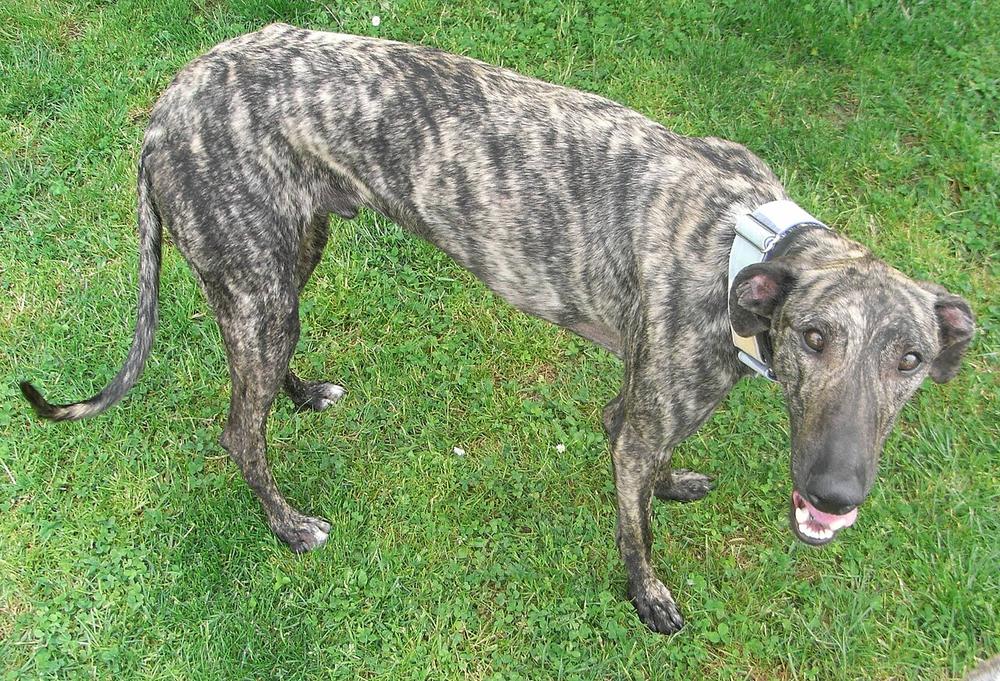
Smooth: short, fine and dense; rough: harder, medium-length hair. Light seasonal shed
Job
Sighthound for coursing hare (FCI Group 10)
Temperament in one minute
Galgo Español temperament: what they are like at home
Short answer: Galgos are calm, gentle and quiet dogs at home that sleep much of the day and bond closely with their people. Many are shy with strangers at first, especially rescue dogs that have never lived in a house. Outside they are sighthounds with a strong chase for anything small that runs, so recall in open spaces is limited and a secure fence matters more than any trick.
Are Galgos affectionate?
Very, once they trust you. Many lean on their people and follow them from room to room. Trust comes slowly with shy rescues, so let the dog come to you and build short absences early.
Are Galgos easy to train?
They learn quickly with food and quiet praise, and they are sensitive to harsh voices. Recall when something runs is the one skill training cannot make fully reliable. Use a long line in open places.
Do Galgos bark a lot?
Rarely. Most are quiet dogs. Some whine or howl when left alone in a new home, which usually fades with a slow alone-time plan.
Are Galgos good with kids and other dogs?
Most are gentle with calm children and enjoy dog company. Small dogs and cats that run need slow, careful introductions. See introducing a new dog.
Galgo behavior problems to expect
Chasing, slipping the collar, fear of stairs and doorways, accidents in the house and startling when woken. Each has a plan in the problems list on this page.
Living with a Galgo in an apartment
Usually fine. A Galgo is quiet and sleepy indoors. Plan calm walks, a soft bed spot, safe runs a few times a week and gentle steps for lifts and stairs.
Breed history
How the hare dog of the Spanish plains became a rescue sofa dog
The history will not train your dog, but it explains the long legs, the eyes that lock on movement and why many Galgos arrive in your home as adults.
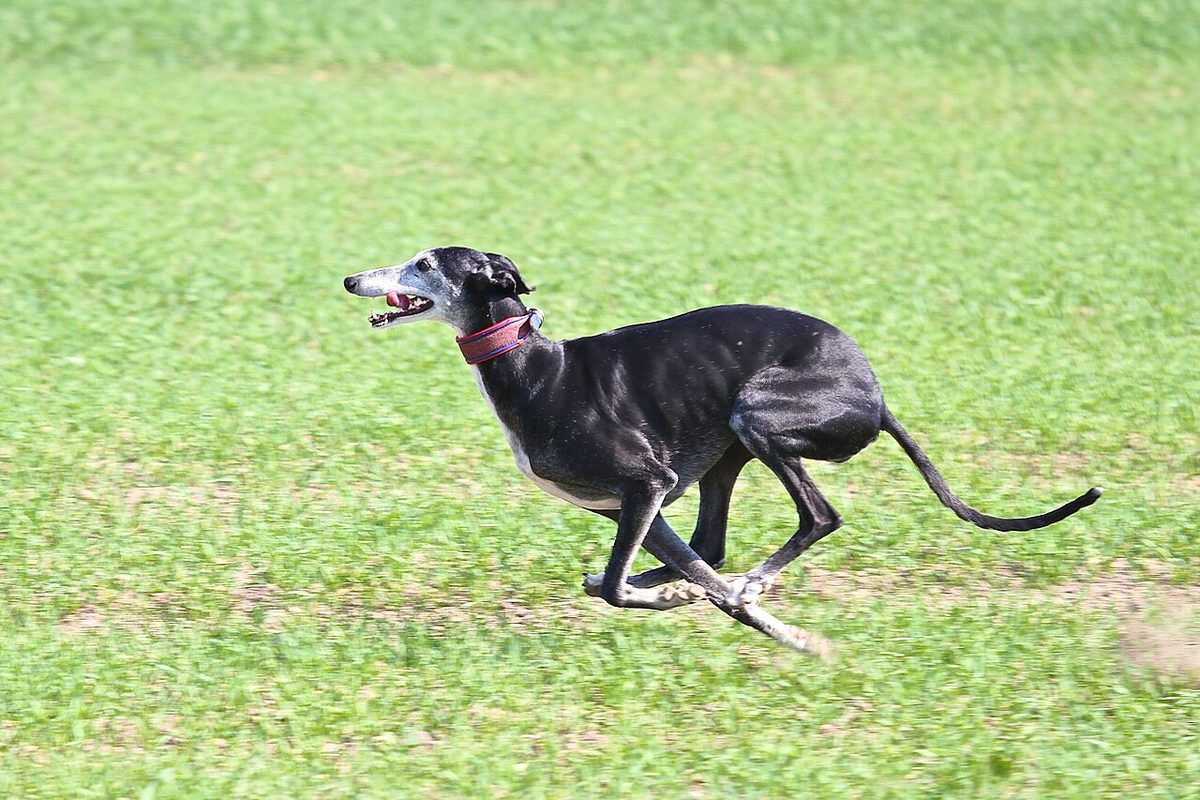
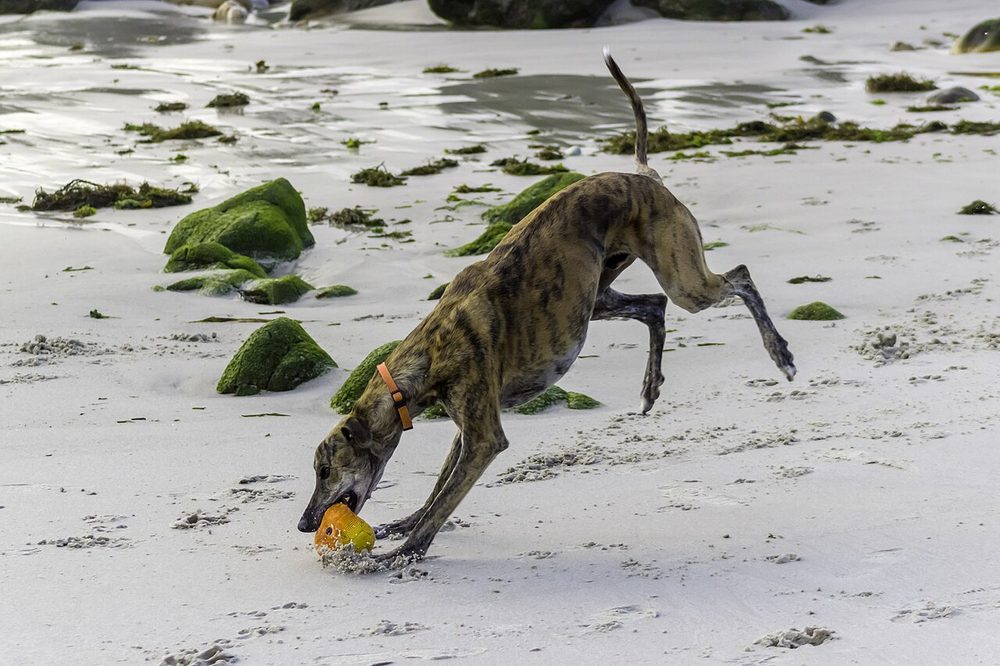
A Galgo at full speed: a coursing hound built to catch hares in open country.
Spain · centuries of coursing
A hare hound for open country
Spanish sighthounds have been kept for coursing hares for centuries. As the open plains of Castile were settled in the Middle Ages, a fast dog that could see and run down a hare across flat fields was worth a lot. Spanish literature mentions it too: Don Quixote’s gentleman keeps “a galgo for coursing”.
For an owner this matters every day. A Galgo hunts by sight, not by nose. It notices movement far away, decides in a second and runs flat out.
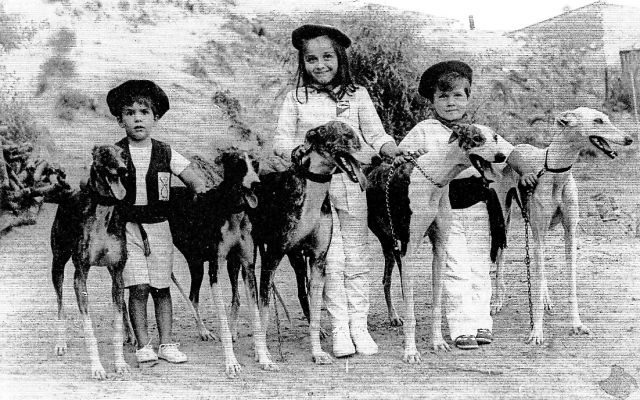
A black-and-white photograph of children with a row of Galgos: for generations these were working dogs of rural Spain.
Working dog, then rescue dog
From the hunting season to adoption homes
In parts of Spain the Galgo is still kept for coursing, and many dogs are given up or left when the hunting season ends. Rescue groups take them in and rehome many to families in Spain and in other European countries such as France, the UK, Germany, Belgium and the Netherlands.
Some Galgos also carry Greyhound blood from crosses made in the 20th century for track racing. Breed clubs now keep the Galgo as its own breed, recognized by the FCI.
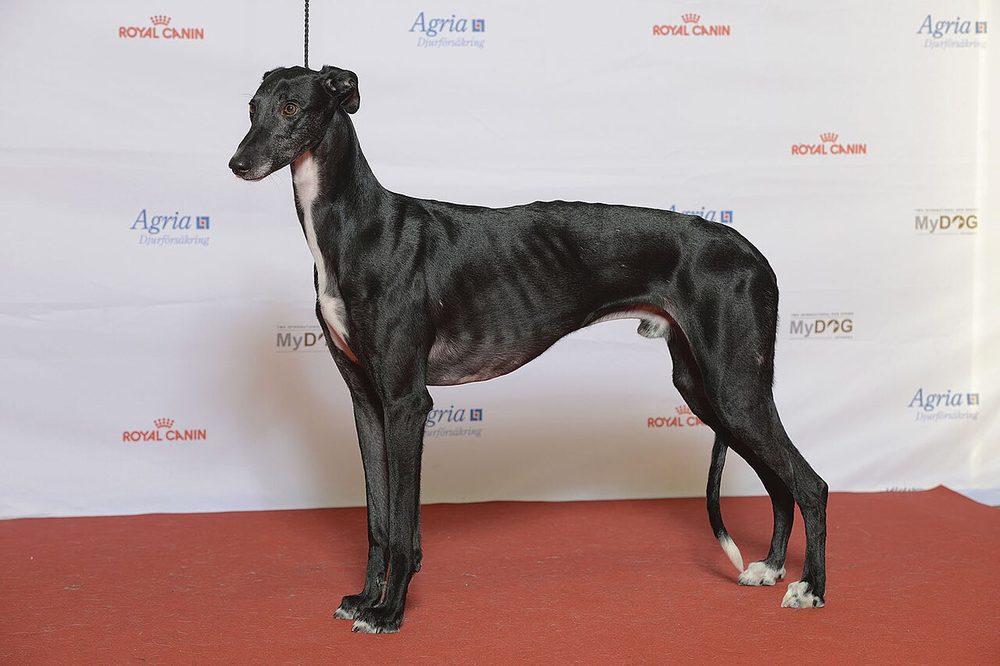
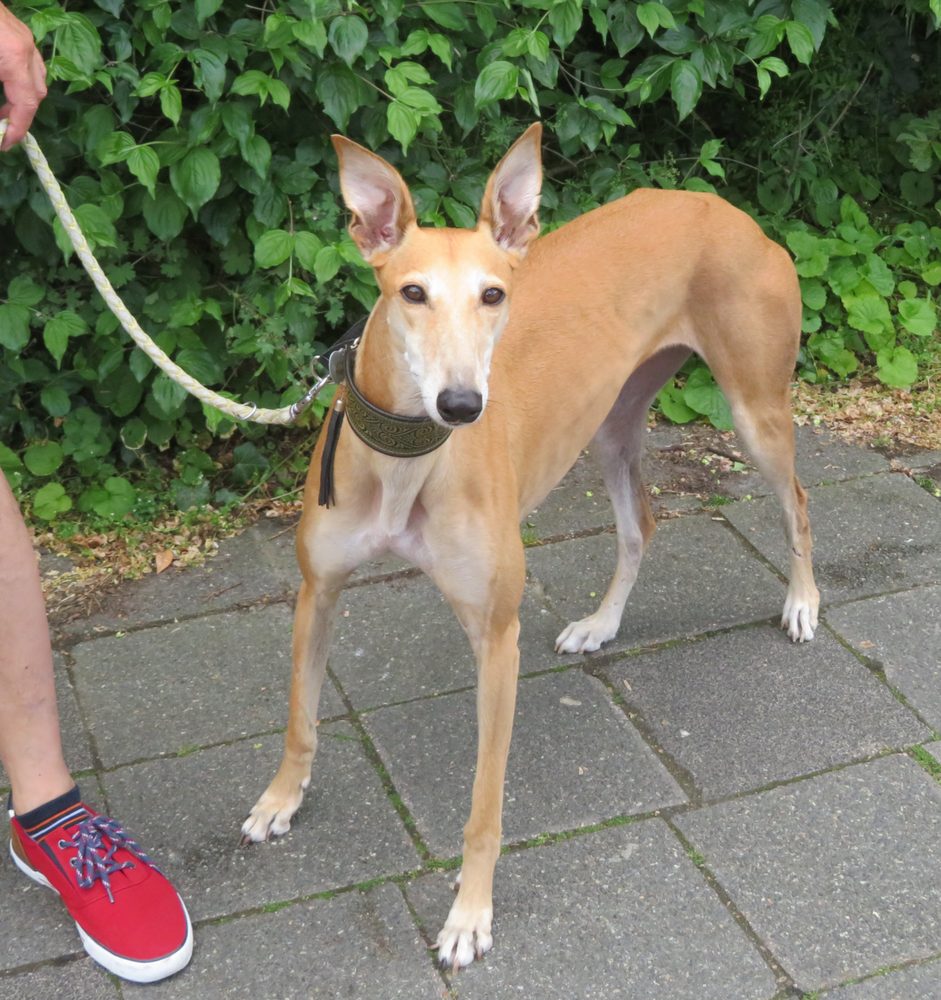
A Galgo Español at a show in Sweden: long, light body, deep chest and the tucked-up waist of a sighthound.
What the breed was bred for
Soft at home, all business outside
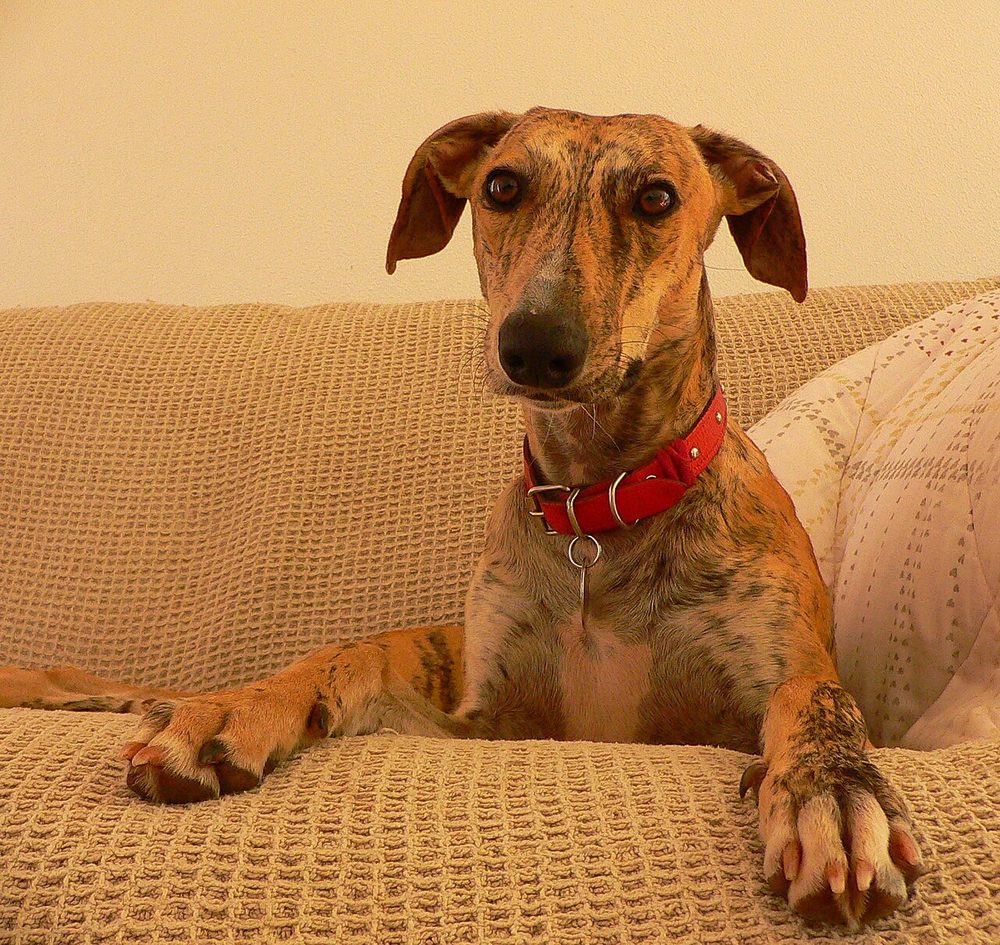
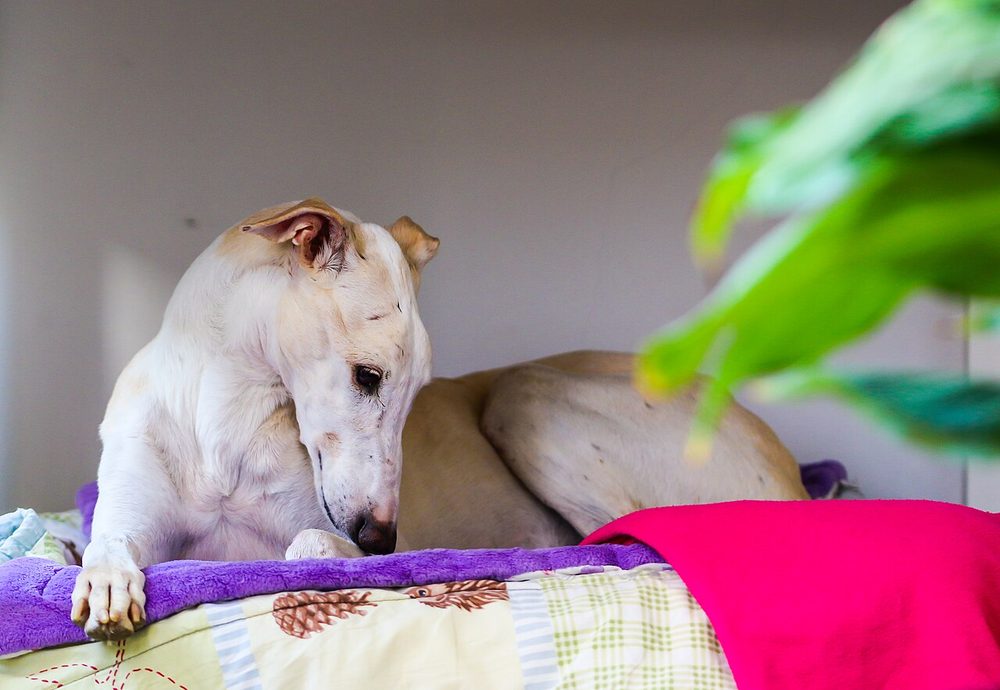
Indoors most Galgos are calm, gentle and quiet. Many are a little shy with new people and need time before they trust a stranger.
Outside, movement switches them on. A cat, a rabbit, a plastic bag in the wind can start a chase. Plan your walks and your fences around that, and the rest of life is easy.
A good day is a calm walk, a safe sprint, a soft bed and a lot of sleep
Most Galgos do well with one or two calm walks on lead, a few minutes of free running in a safe, fenced place and long naps in a warm bed. Trouble usually starts with off-lead walks near roads, a collar the dog can back out of, or too much too soon for a shy rescue dog.
Morning · walk
A calm walk on a long line
Open beaches and fields are where Galgos are lost. Use a long line clipped to a harness, let the dog sniff and look, and reward it for checking in with you. Free running belongs in a fenced field.
Gentle with dogs it knows, careful with small running ones
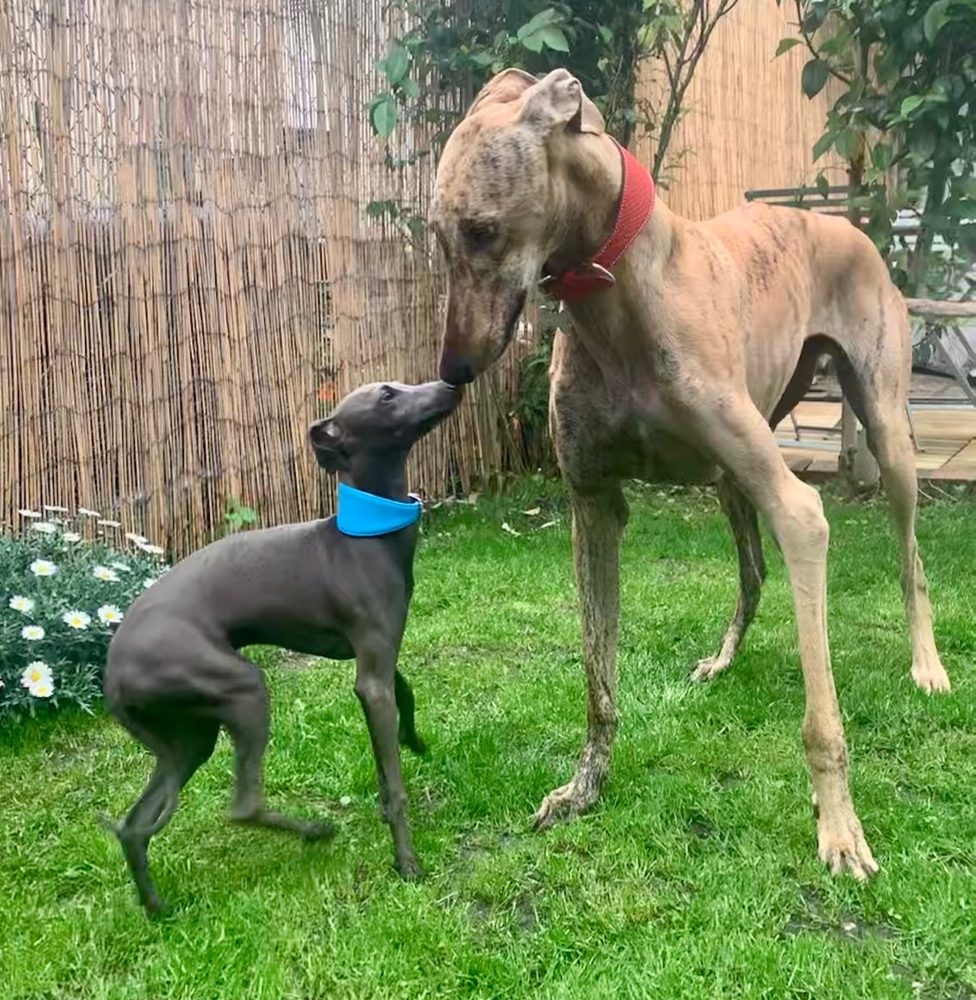
Most Galgos enjoy calm dog company, and many live with another hound. A small dog that squeals and runs can look like prey, so introduce small dogs and cats slowly, on lead, and ask the rescue whether the dog has been tested with cats.
Many rescue Galgos freeze or turn away when a stranger leans over them. Ask people to stand sideways, skip touching and drop food on the floor. Let the dog choose to come closer. Hands on the head and loud voices come much later, if ever.
An adult Galgo sleeps for much of the day. Give it a soft bed in a quiet corner where nobody steps over it. Some Galgos startle when woken by touch, so call the dog’s name before you touch it.
Galgos have thin skin and little body fat, so they feel cold and get scrapes easily. A padded bed, a coat for winter walks and a quick check of the skin after a run keep them comfortable.
General awareness only. I am not a veterinarian. With Galgos, owners often notice trouble first as a small cut or tear in the thin skin after a run, a change in how the dog gets up from its bed, or a rescue dog that eats or sleeps poorly in its first weeks. For red flags, leave this page and open
when to call the vet.
Skin and scrapes
Thin skin tears on branches, fences and rough play. Check the dog after every free run and ask your vet about any cut that gapes or bleeds.
Cold and comfort
Little body fat means a Galgo chills fast. Use a coat in cold or wet weather and a padded bed indoors.
Running injuries
A sprint on hard or uneven ground can hurt toes, nails and muscles. Treat any limp as a vet question. See limping stop list.
Weight
Galgos are meant to look lean, and a healthy one shows a little rib and hip. Ask your vet to judge condition. See BCS check at home.
Vet visits
Tell the vet the dog is a sighthound and a rescue, and bring the rescue’s health papers. Practise calm handling at home.
Ask the rescue or breeder
Ask which checks and tests the dog has had, and which screenings the national breed club recommends. Do not invent disease claims from a blog.
Lines and types
Rescue adults and breeder puppies are the same breed with very different starts
No bloodline selling. Galgos differ in coat (smooth or rough), in how shy they are and in how strong the chase is. What changes your first months most is where the dog comes from. Ask the rescue or breeder how the dog behaves with cats, small dogs, children and new places, and believe the answer.
Adult rescue Galgos
Often new to houses, stairs and glass doors.
House training may start from zero.
Can be shy with strangers for weeks.
Many are calm and settle quickly with routine.
Suits a patient home that wants a calm adult dog and accepts a slow first month.
Puppies and young dogs
Much more energy and mouthing than an adult.
Chase starts early; train recall on a long line.
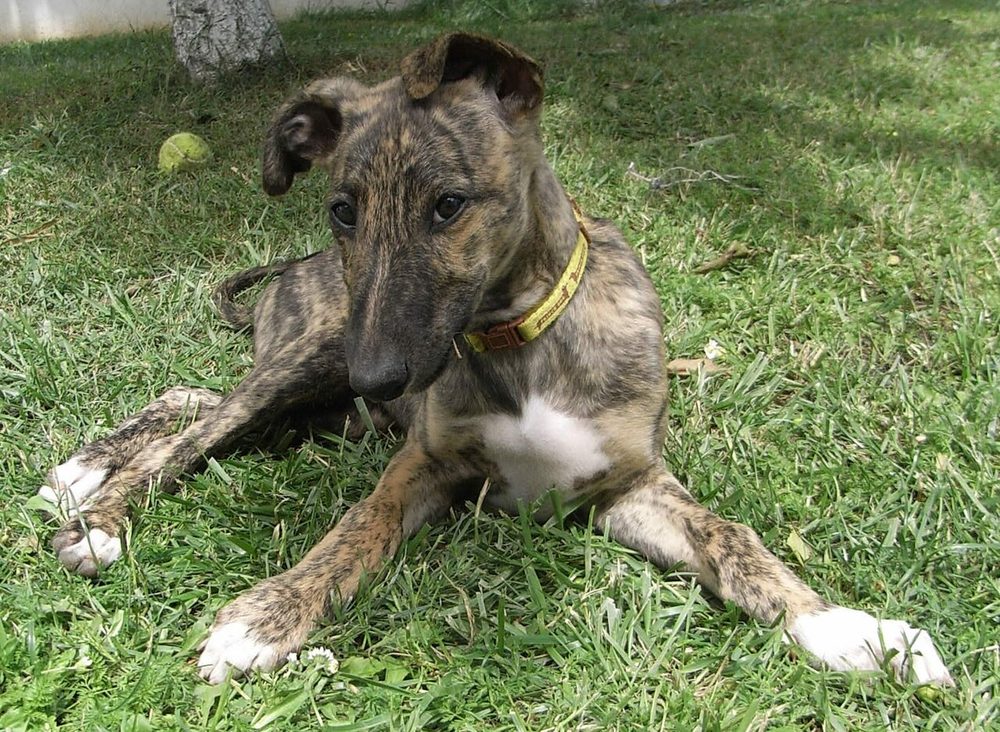
Socialize gently with people, places and pets.
Build running slowly while the body grows.
Suits an owner who wants to raise a sighthound from the start and has time for a busy youngster.
Socialization windows
What to introduce — and what not to overload — by age
AVSAB-aligned in spirit: short, clean exposures at a distance the puppy can still eat,
with hygiene while vaccines finish. See the
puppy socialization schedule.
First 2 weeks home
Safety, quiet and a toilet routine
Introduce: one calm room, short walks on harness and lead, the same toilet spot, food in the same place, soft voices.
Do not overload: visitors in the first days, long walks in busy streets, off-lead time anywhere.
Weeks 3–8
Learning the house and the street
Introduce: stairs and floors step by step, short trips to quiet new places, name check-ins with food, short alone-time steps.
Do not overload: dog parks, forcing the dog toward strangers, hugging and leaning over it.
Months 3–6
Building trust and safe running
Introduce: long line work in open spaces, free runs in a fenced field, meeting calm dogs, a bed spot during visits.
Do not overload: testing recall near roads or livestock, rough play with small dogs.
Puppies to ~18 months
Growing sighthound
Introduce: gentle handling, short play sessions, recall games indoors, calm socialization with cats if the home has one.
Do not overload: long forced runs and hard sprints on rough ground before the body is mature.
Adult and senior
Keep what works
Introduce: daily walks, a safe sprint now and then, warm beds, yearly checks.
Do not overload: assuming the chase has gone away with age.
Before you buy
Who a Galgo Español usually fits
Fit comes down to secure fencing, a plan for walks without off-lead time near roads, patience with a shy dog and a warm, quiet home.
Good match
More likely a good fit if you…
You want a calm, quiet and gentle dog at home
You have a secure, high fence or access to a fenced field
You are happy to keep the dog on a lead or long line in open places
You can give a shy rescue dog time to settle
Your home is quiet and has soft places to sleep
Mismatch risk
A Galgo Español may be a poor choice if…
You want a dog that runs off lead in parks and woods
You have small pets that run and the dog has not been tested with them
You want a dog for long jogs from day one
Your garden fence is low or has gaps
You want a bold, outgoing dog that loves every visitor
If you are torn between breeds
Galgo Español vs Greyhound and Whippet
All three are sighthounds that chase what they see. The Galgo is usually a little lighter and longer in the body than a Greyhound, with more stamina for long coursing runs. The Greyhound is a heavier, more powerful sprinter. The Whippet is the smallest of the three and easier to carry, house and travel with.
Size
Galgo Español
Tall and light, long body.
Greyhound
Heavier and more muscular.
Running style
Galgo Español
Speed with stamina for long runs.
Greyhound
Short, very fast sprints.
Home life
Galgo Español
Quiet, sleepy and often shy at first.
Whippet
Also calm indoors, often more outgoing.
Chase and recall
Galgo Español
Strong sight chase; long line in open spaces.
Both compares
All three need secure places to run free.
Ownership without surprises
Where a Galgo Español owner’s budget goes
Costs depend on country, city and your choices. These are themes to plan for, not quotes.
Adoption or purchase
Rescue fees often include transport, health checks and neutering; ask what is covered.
Veterinary
Routine care, plus the odd stitched cut from a run.
Gear
A martingale collar, a well-fitted harness, a long line and coats for winter.
Fencing and running
A higher fence at home or fees for a secure dog field.
Training
Help with a shy dog, recall on a long line and alone time.
Safety gear and a secure place to run matter more than anything else you buy: a Galgo that cannot slip its collar or clear the fence stays alive.
Before day one at home
What to prepare for a Galgo Español puppy
Most Galgos join their families as adult rescues, but some people raise a puppy. A Galgo puppy is gentle, mouthy and busy, and the chase shows up early. Set up a safe garden, a soft bed and a recall game before it comes home.
Training a Galgo means gentle lessons, a long line and safe places to run
The skills that matter most are few: a name check-in, walking on a loose lead, a recall on a long line, a bed spot at home and calm handling for grooming and the vet.
Galgos learn well with food and quiet praise. They are sensitive, so a sharp voice or a lead jerk often makes a shy dog shut down or try to escape.
Much of the work is safety: the right collar, gates closed, and no off-lead walks where the dog could reach a road.
Load balance
A short sprint and a long rest
Age, heat, cold and fitness all change what is safe. A limp, a cut or a dog that will not get up need a vet before more running.
Calm walk on a long lineSafe sprint in a fenced fieldShort training gameWarm bedLong nap
A Galgo does not need hours of exercise. A few minutes of free running plus calm sniff walks are enough for most, followed by a long sleep.
A Galgo that has had a safe run and a calm walk sleeps through the afternoon instead of pacing at the window.
Safe running
How to give a Galgo safe free running without losing the dog
Fenced place first, check the fence, warm up on lead, short runs, and end with food and a calm walk back.
01
Fenced place first
Choose a fully fenced field or garden with no gaps and no animals on the other side.
02
Check the fence
Walk the line before you let go. Close every gate behind you.
03
Warm up on lead
Walk a few minutes on lead so the muscles are warm before the sprint.
04
Keep runs short
A few short sprints are enough. Stop while the dog still wants more.
05
End with food
Call the dog to you, reward with food, clip the lead on and walk back calmly.
One scene close-up
Why a Galgo ignores your recall when something runs
The chase is the reason the breed exists. When a Galgo locks onto a running animal, it is not choosing to ignore you; most of the time it does not even hear you.
So the plan is to avoid that moment: long lines in open spaces, free runs only behind fences, and lots of rewarded name check-ins when nothing is moving.
If your dog has bitten or caught a small animal, or panics on walks, get help from a qualified professional.
“With a Galgo, I begin with three things: gear the dog cannot slip, a quiet first month at home, and a safe place to run. Once those are in place, most Galgos turn into the gentlest, easiest dogs their owners have lived with.”
Sessions cover the scenes that matter: shy dogs, chasing, recall on a long line, toilet training and being left alone. I am a trainer, not a veterinarian.
Andrew DarovProfessional dog trainer and instructor
Tell me the age, how long the dog has been with you and what goes wrong first: chasing, hiding, accidents, slipping the collar or alone time. Opens WhatsApp to Andrew.
Often yes, for a calm family. Most are gentle and quiet indoors. Teach children to let the dog sleep and to call it before touching.
Is a Galgo a good first dog?+
An adult rescue Galgo can suit a patient first-time owner who keeps it on a lead or long line in open places and has a secure fence.
Galgo vs Greyhound: what is the difference?+
The Galgo is usually lighter and longer in the body, with more stamina. The Greyhound is heavier and built for short, very fast sprints.
Can a Galgo be let off the lead?+
Only in a securely fenced area. In open spaces the sight chase can carry the dog onto a road before it hears you.
Are Galgos good with cats?+
Some live well with cats, many do not. Ask the rescue whether the dog has been tested with cats and introduce them slowly on lead.
Do Galgos bark a lot?+
Most are quiet dogs. Some whine or howl when left alone in a new home; build alone time slowly.
How much exercise does a Galgo need?+
Less than people think: calm daily walks plus a short free run in a fenced place a few times a week, then a lot of rest.
Do Galgos feel the cold?+
Yes. They have thin skin and little body fat, so most need a coat in cold or wet weather and a soft bed indoors.
Why does my rescue Galgo seem scared of everything?+
Many never lived in a house. Stairs, shiny floors and new people take time. Keep things quiet and go at the dog’s pace.
Can a Galgo live in an apartment?+
Often yes. It is quiet and sleeps a lot indoors, as long as it gets calm walks and safe chances to run.
What health themes should I ask about?+
Ask the rescue or breeder which checks the dog has had and which screenings the national breed club recommends, and tell your vet the breed. This is general awareness, not a diagnosis.
How long do Galgos live?+
Public breed references often mention about 12–15 years. Individual dogs vary.
If a Galgo seems like more dog than your home can handle
It is gentle and quiet, but the chase, the need for secure fencing and the slow start of many rescue dogs do not fit every household.
A tall, lean Sahel sighthound and one-family watchdog. Needs fenced sprints, a long line in open country, slow meetings with strangers and a jacket in the cold.
A much smaller sighthound with the same gentle nature and the same chase, easier to house and carry, but more fragile; meet adult dogs before you choose.
More Hound group breeds
Other guides from the same group in the breed library. Same group does not mean same dog: read the fit and the failure modes, not only the outline.
A tall Balearic rabbit hunter and a famous jumper. Needs safe running, tall fences, a long line in open spaces and gentle training — not a free off-lead park dog.
An ancient sighthound-type dog from Peru in three sizes, mostly hairless. Affectionate at home, wary of strangers, quick to chase and in need of daily skin care.
A lean Maltese sighthound-type rabbit hunter. Needs safe running, high fences, a long line in open spaces and gentle training — not a free off-lead park dog.
Training problems Galgo Español owners ask about
Step-by-step guides for the issues that come up most with this kind of dog.
Dog begging at the table? Stop all food from plates, give your dog a mat and a long chew during meals, brief kids and guests, and expect a short spike.
Stop your dog stealing food from the kitchen counter: clear surfaces, gate the kitchen while you cook and reward four paws on the floor. Plan by age.
Need a read on your exact situation?
Tell me your Galgo’s age, how long it has been home and the scene that keeps repeating: chasing, hiding, accidents or alone time. We check safety and health first, then pick the first skill.