Silky Terrier: temperament, barking, prey drive and coat care for the Australian toy terrier
The Silky Terrier, also called the Australian Silky Terrier, is a small blue-and-tan terrier developed around Sydney in the late 1800s from crosses of Australian Terriers and Yorkshire Terriers. It looks like a toy dog, but inside it is a real terrier: quick, bold, curious and keen on anything that scurries. It bonds closely with its people and makes a lively watchdog. What works is treating it like a terrier from day one: a plan for barking, a long line instead of hoping for recall near squirrels, short training games and daily combing of the fine coat.
Job: An Australian toy terrier; fine, straight blue-and-tan coat.
Energy: Alert, bold and busy, with real prey interest and a ready bark.
Home: Suits an owner who wants a small dog with a big terrier attitude.
A Silky Terrier is a terrier first and a toy dog second
People see a silky coat and a small body and expect a lap dog. Most Silky Terriers are far busier than that. They patrol the garden, chase anything that runs, tell you about every sound at the door and still want a cuddle on the sofa in the evening.
What I meet in homes is a smart little dog that learns fast and tests the rules just as fast. The hard parts are barking at the door, the window and passing dogs, bolting after birds and squirrels, bossy behaviour toward bigger dogs, digging and a coat that tangles if you skip a few days.
My plan has four parts. A barking routine from the first week, so one alert is fine and quiet earns food. A long line on walks until recall is solid, because prey drive beats a weak cue. Short daily training with food and games. And a few minutes of combing every day.
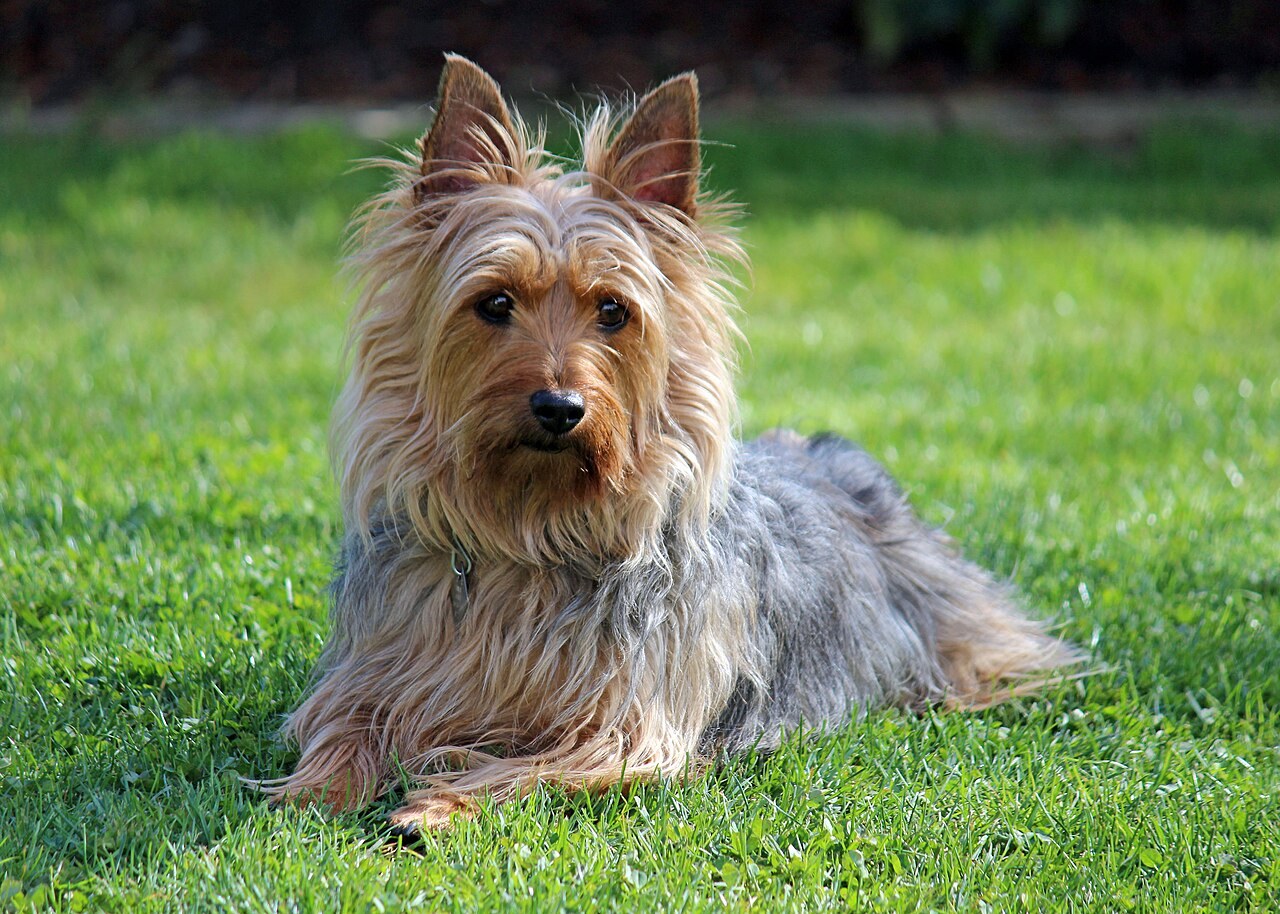
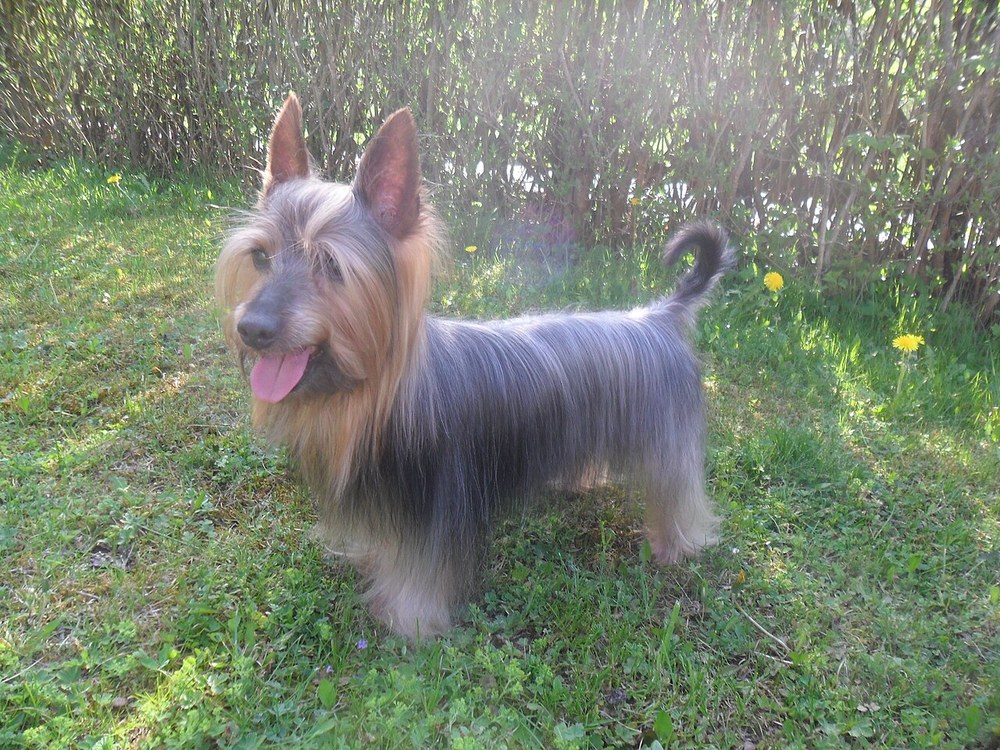
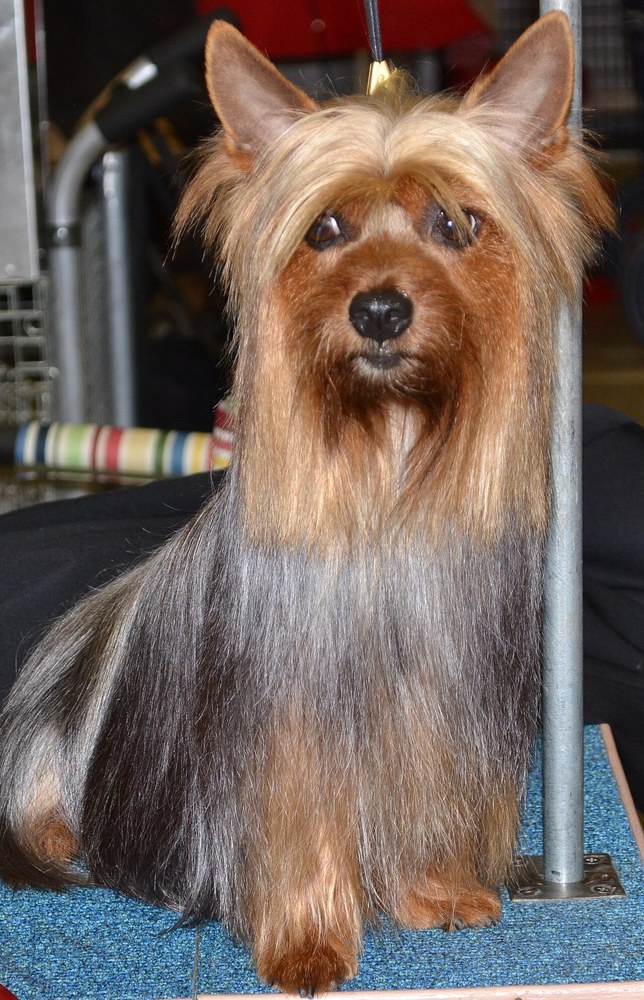
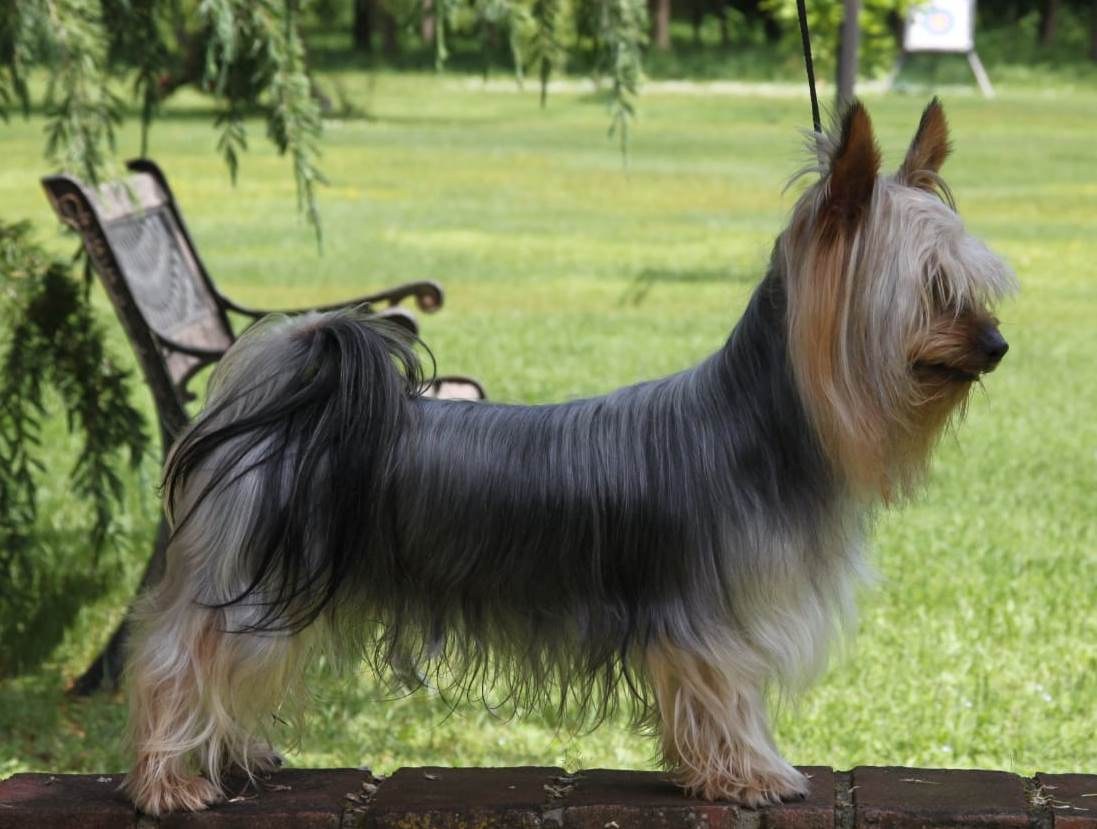
Single coat: straight, fine and glossy, about 13–15 cm long on the body; blue and tan; does not reach the floor
Job
Companion terrier and house ratter (AKC Toy Group; FCI Group 3, toy terriers)
Temperament in one minute
Silky Terrier temperament: what they are like at home
Short answer: Silky Terriers are bold, alert and affectionate little terriers with much more drive than their toy size suggests. Most love their family, enjoy games and learn fast with food. They bark at sounds, chase small animals, may dig and can be bossy with other dogs, especially bigger ones. They need daily walks with sniffing, a long line until recall is solid, a barking plan from the start and a daily comb for the fine coat.
Are Silky Terriers affectionate?
Yes. Most are very close to their people and happy on a lap after a walk. Build short absences early so time alone stays easy.
Are Silky Terriers easy to train?
They learn fast with food and games, and test rules just as fast. Short sessions work best. A name game and recall on a long line are good first skills.
Usually good with older, gentle children. With other dogs some are bossy, so keep first meetings short. See introducing a new dog.
Silky Terrier behavior problems to expect
The usual four are barking at sounds, bolting after squirrels, bossing bigger dogs and digging. The list further down links a guide for each.
Living with a Silky Terrier in an apartment
Usually a good fit for size. Plan daily walks, a bed to settle on, a resting place away from the window and a door routine for the neighbours’ sake.
Breed history
How Australian and Yorkshire terriers made a small dog for Sydney homes
The history will not train your dog, but it explains the terrier drive in a toy body and why this dog is so different from a Yorkie at home.
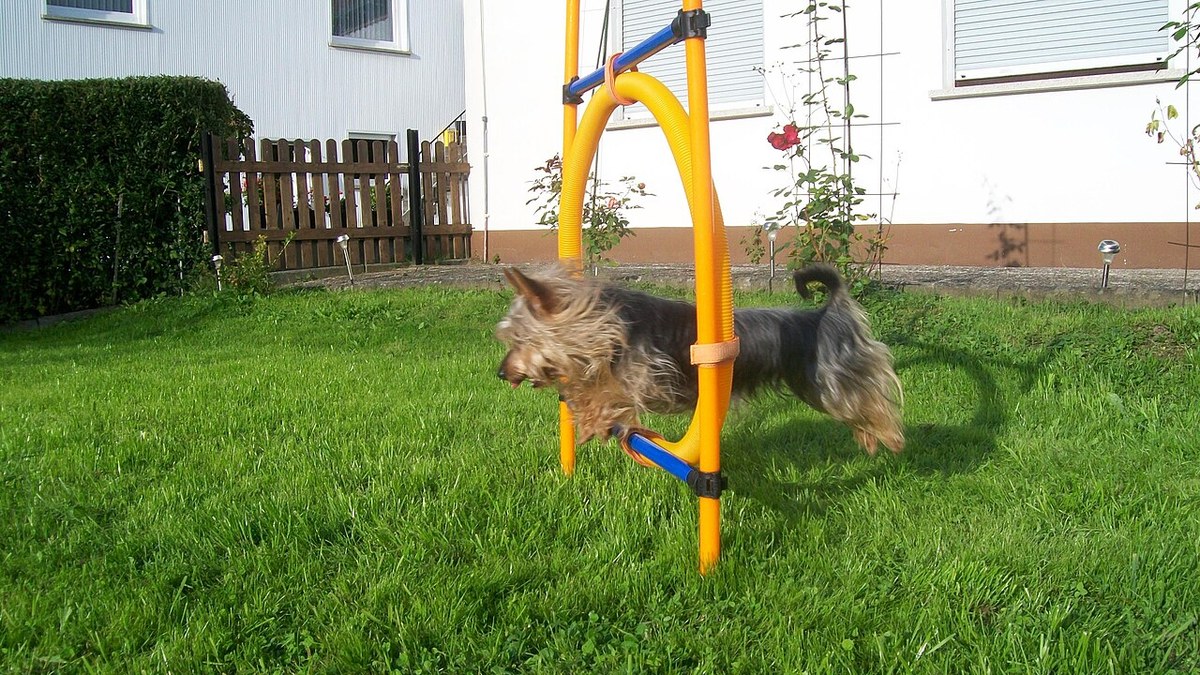
A Silky Terrier next to an agility hoop in a garden: quick, keen dogs that enjoy small dog sports.
Sydney · late 1800s
Two terriers, one new breed
Breed histories describe Australian breeders in the late 19th century crossing Australian Terriers with Yorkshire Terriers. Some puppies came out with longer, finer coats, and breeders around Sydney and Melbourne began keeping them as their own type.
The dogs were kept as companions that also kept rats and mice out of homes and yards. For years they were known as the Sydney Silky.
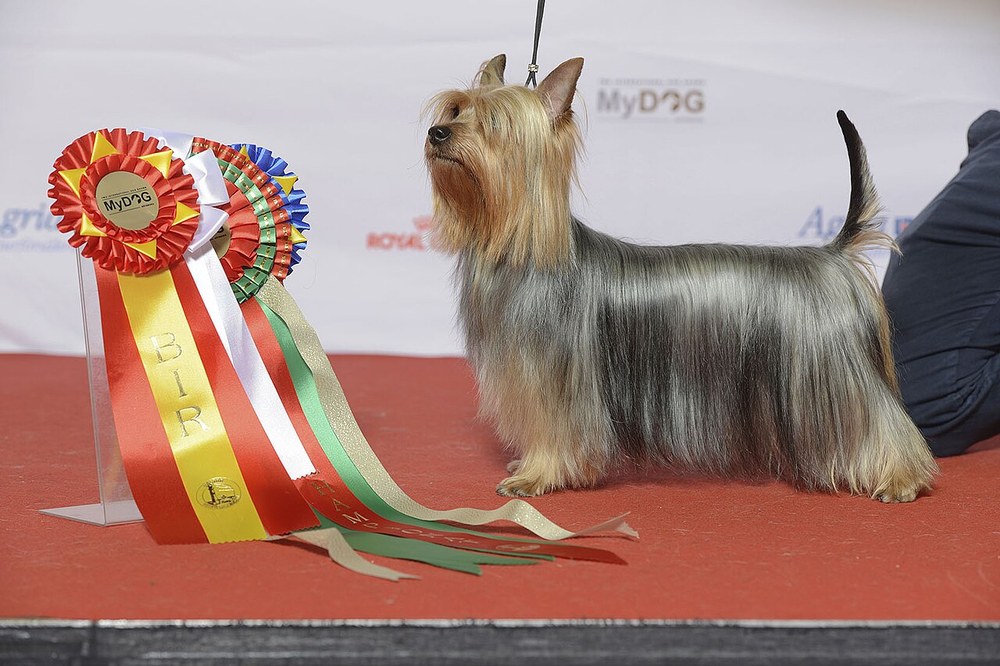
A Silky Terrier with its rosettes at the MyDOG show in Sweden: the breed spread from Australia to North America and Europe.
From Australia to the world
One name, one standard
Standards were drawn up in Sydney and Victoria in the early 1900s. In 1955 the breed name became Australian Silky Terrier in Australia, and in the same year the American Kennel Club recognized it as the Silky Terrier in the Toy group.
The FCI lists it with the toy terriers in Group 3. American soldiers who served in Australia during the Second World War helped make it known in the United States.
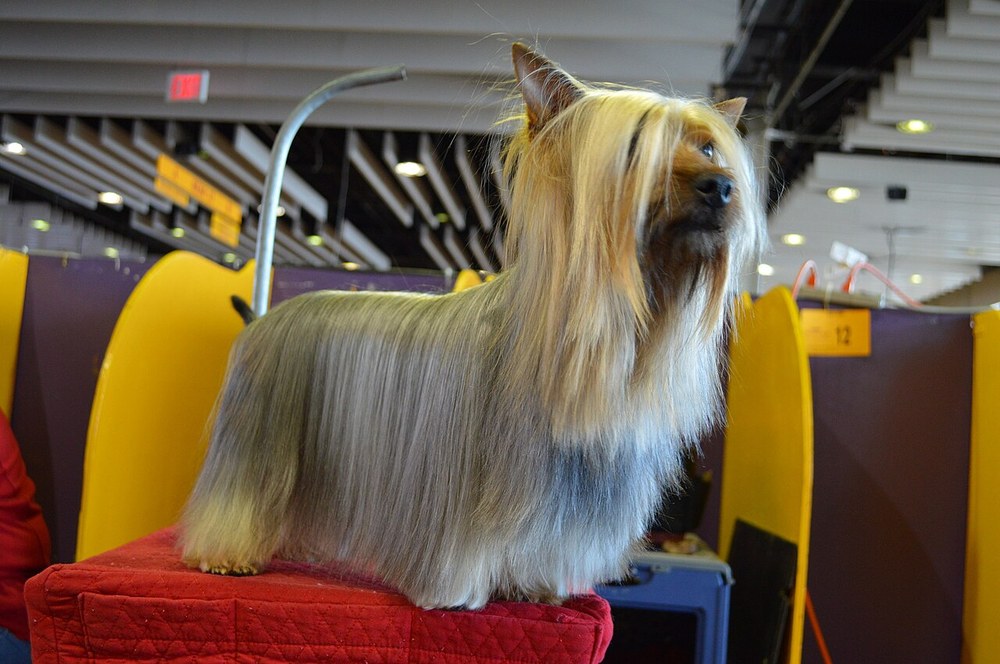
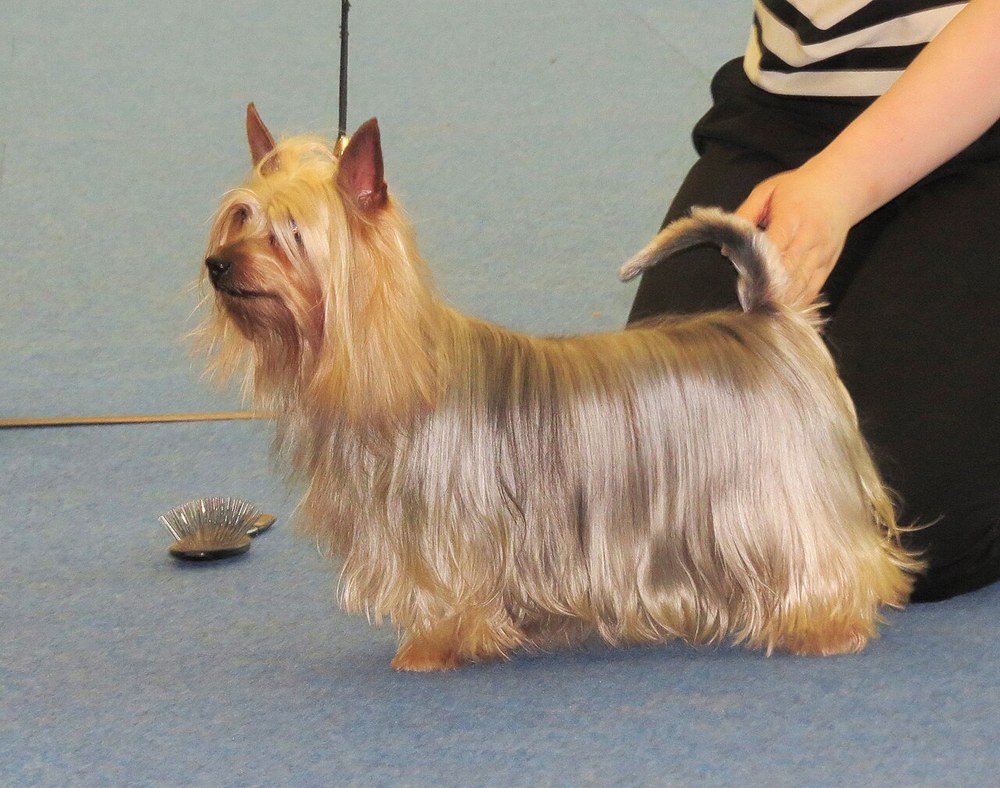
A Silky Terrier at the 2015 Westminster show in New York: the coat is long and straight, and the legs stay visible.
What the breed was bred for
Busy outside, cuddly inside
Day to day you live with a curious, confident dog that wants to be part of everything. Many are very affectionate with their family and happy to snooze on a lap after a busy walk.
The same dog still has the ratter in it. It watches the garden, digs after smells, barks at movement and can be pushy with other dogs. Plan for that and it is great fun.
A good day is a sniffing walk, a terrier game, some training and a nap on the sofa
Most Silky Terriers do well with one or two real walks a day, a few short games that let them hunt and chase toys, quick training sessions and time close to their family. Trouble usually starts with a dog that only gets the garden, a window seat with a view of the street, or off-lead walks near birds and squirrels.
Morning · walk
A walk with time to hunt for smells
A Silky is small but tough and enjoys a proper walk. Let it sniff along hedges on a long line or a loose lead, and reward it for looking back at you. Off lead is for fenced areas until recall works around birds.
Many Silkies live happily with another dog, often another small one. With strange dogs, especially big ones, some get pushy or snappy. Keep first meetings short and on loose leads, and walk away before anyone gets stiff.
Silky Terriers pick up new skills quickly with food. Standing still while you touch feet, ears and coat is one of the most useful for this breed. Practise for a few seconds at a time on a table or mat, and the daily comb and the vet both get easier.
The silky single coat sheds little but tangles easily, especially behind the ears, under the legs and on the chest. Five minutes with a pin brush and a metal comb every day beats an hour of fighting mats once a week. Many owners tie the hair over the eyes back with a small band.
After a walk and a game, a Silky is happy to curl up close to you. Give it a bed away from the window, a chew in the evening and the same routine every night, and it will switch off instead of guarding the street.
General awareness only. I am not a veterinarian. With Silky Terriers, owners often notice trouble first as a skip or hop in the back legs, a dog that suddenly refuses stairs or the sofa, bad breath, or sore skin under a tangled coat. For red flags, leave this page and open
when to call the vet.
Legs and movement
A small dog that hops on three legs for a few steps or stops jumping onto the sofa should see a vet. See limping stop list.
Teeth
Small mouths collect tartar. Start tooth brushing early and ask your vet to check the teeth at every visit.
Coat and skin
Comb to the skin every day; mats pull and hide sore spots. Check ears and paws while you comb.
Eyes
Keep long hair out of the eyes and ask your vet about lasting tears, redness or squinting.
Weight
A few extra treats make a big difference in a 4–5 kg dog. Count training treats into the daily food. See BCS check at home.
Ask the breeder
Ask which screenings the national breed club recommends for the parents, and ask to see the results. Do not invent disease claims from a blog.
Lines and types
Pet and show Silky Terriers both need terrier jobs and a barking plan
No bloodline selling. Within the breed you will find calmer and busier dogs, slightly bigger and smaller ones, and more and less vocal characters. Every one of them is a terrier that needs things to do, early work on barking and a daily comb. Visit the parents if you can and watch how they react to the doorbell and to a toy dragged across the floor.
Family companion homes
Daily walks with plenty of sniffing.
Toy chase and search games at home.
A barking routine from week one.
A short daily comb.
Suits a family or single owner who wants a small, lively dog and enjoys training it.
Show and sport homes
Agility, rally and tricks suit many.
Scent games use the ratter nose.
Coat care before every show.
Rest after busy days.
Suits an owner who wants a quick, keen small partner for dog sports.
Socialization windows
What to introduce — and what not to overload — by age
AVSAB-aligned in spirit: short, clean exposures at a distance the puppy can still eat,
with hygiene while vaccines finish. See the
puppy socialization schedule.
2–4 months
Settling in and first lessons in quiet
Introduce: calm visitors with treats, one-minute combing sessions, car rides, a doorbell that leads to food, the toilet spot, leaving the room for a minute.
Do not overload: being carried everywhere instead of walking, people laughing when the puppy barks, rough games with hands.
~6 months
The bold adolescent
Introduce: walks in new places on a long line, play with steady adult dogs, a dig box in the garden, name games outdoors.
Do not overload: off-lead walks near birds and squirrels, a window seat with a view of the street.
~12 months
Adult coat, adult opinions
Introduce: recall practice with rising distractions, a calm bed during visits, an hour alone after a walk, new tricks.
Do not overload: letting it boss bigger dogs, skipping the daily comb.
~18–24 months
A steady young terrier
Introduce: longer walks, agility or scent games if you like them, café visits, trips with the family.
Do not overload: thinking training is finished because the dog is grown.
~3 years+
Maintenance
Introduce: daily walks and games, a daily comb, yearly vet and dental checks, refreshers on recall and door manners.
Do not overload: letting the barking routine slide until the habit is back.
Before you buy
Who a Silky Terrier usually fits
Fit comes down to your patience for early barking work, a plan for prey drive on walks, a few minutes of combing every day and whether you enjoy a small dog with a big terrier attitude.
Good match
More likely a good fit if you…
You want a small dog that is busy, bold and funny
You will reward quiet at the door from the first week
You enjoy short daily training games
A long line on walks is fine with you
A daily comb sounds relaxing rather than a chore
Mismatch risk
A Silky Terrier may be a poor choice if…
You want a quiet lap dog that never barks
You plan off-lead walks near birds and squirrels from day one
The house has small pets that run, like rabbits or rodents
The dog would be alone for most working days
You have very young children who want to carry the dog around
If you are torn between breeds
Silky Terrier vs Yorkshire Terrier and Cairn Terrier
The Silky shares blue-and-tan colour and a long, fine coat with the Yorkshire Terrier, one of its parent breeds, but it is bigger, with a shorter coat and more terrier drive. The Cairn Terrier is a sturdier, rough-coated working terrier with a similar love of digging and chasing.
Size
Silky Terrier
About 23–26 cm, 4–5 kg.
Yorkshire Terrier
Smaller and lighter, often under 3.5 kg.
Coat
Silky Terrier
Fine, straight, stops above the floor.
Cairn Terrier
Harsh, shaggy weatherproof coat.
Terrier drive
Silky Terrier
Strong prey interest and digging.
Both compares
All three are real terriers that chase and bark.
Home fit
Silky Terrier
Active owner who likes training.
Both compares
All three need walks, games and a barking plan.
Ownership without surprises
Where a Silky Terrier owner’s budget goes
Costs depend on country, city and your choices. These are themes to plan for, not quotes.
Veterinary
Yearly checks, dental care and any screenings the breed club asks breeders to do.
Food and treats
Meals are tiny; the bag of training treats goes faster than you expect.
Grooming kit
A pin brush, a metal comb, small hair bands and now and then a professional trim and bath.
Training
A puppy class for social skills, or a few private sessions for barking and recall.
Gear
A long line, a well-fitting harness and a secure fence, because Silkies dig and slip through gaps.
Early barking and recall work is worth more than any gadget: a Silky that goes quiet after one alert and comes back on a long line is a very easy dog.
Before day one at home
What to prepare for a Silky Terrier puppy
A Silky Terrier puppy is bold, playful and quick to learn, good habits and bad ones alike. Have a bed spot, a comb, food for visitors and a plan for barking ready before it comes home.
Short daily touches on feet, ears and coat. See puppy handling.
04
Teeth on toys
Offer a tug toy and pause the game if teeth land on skin. See biting and nipping.
05
Name game
Say the name, give a treat, many times a day. See name game.
06
Toilet trips
Take the puppy out after sleep, food and play. See potty training.
If the dog is already yours
Training a Silky Terrier means short games, a barking plan and a long line
Five skills cover most of daily life: going quiet after an alert, coming when called, walking on a loose lead, leaving things alone and standing still for grooming.
Silky Terriers are quick learners and love food and toys as rewards. Several tiny sessions over the day work better than one long one, because a bored terrier makes up its own games.
The rest is how you arrange the home: a bed with no street view, a secure fence, a dig box if it loves to dig, and a long line until recall works around birds.
Load balance
Sniffing and games first, then ask for calm
Puppies, seniors and hot days need lighter plans. If the dog limps, skips on a back leg or turns grumpy out of nowhere, see a vet before adding more exercise or training.
Sniffing walkToy chaseHide and seek with treatsChew on the bedQuiet nap
Exercise for this breed is a mix of sniffing, chasing toys and thinking. Leave out the hunting games and the dog starts hunting the garden fence instead.
A Silky Terrier that has sniffed, chased a toy and trained for five minutes is much easier to call back from a squirrel.
Recall
How to teach a Silky Terrier to come back when a squirrel runs
Name games at home, a long line outside, big rewards for coming back, practice far from birds first and a game of chase as the prize.
01
Name games at home
Say the recall cue, give a great treat, many times a day indoors.
02
Long line outside
Clip on a 5–10 m line in open places so a chase cannot start.
03
Big rewards for coming back
Every return earns top food or a short toy chase.
04
Quiet places first
Practise far from birds and squirrels, then move a little closer week by week.
05
End on a win
Call back, reward and let the dog go sniff again, so coming back never ends the fun.
One scene close-up
Why a Silky Terrier ignores you when it sees a squirrel
This is a ratter. When something small runs, the chase feels better than anything you can offer, and every successful chase makes the next one more likely. Calling louder rarely helps.
Change the odds: practise the recall cue at home and in quiet places until the dog spins round on hearing it, use a long line outdoors so chases cannot happen, and reward every return with the best food or a toy chase.
A dog that screams, lunges and cannot take food near other animals needs more distance and maybe a qualified professional.
“With a Silky Terrier, I begin with three things: a clear end to barking, a long line until recall is solid, and short daily training games. Treat it like the terrier it is and it becomes a funny, clever and very loyal little dog.”
We work on what your days actually look like: the doorbell, walks near birds and squirrels, other dogs, time alone and grooming. I am a trainer, not a veterinarian.
Andrew DarovProfessional dog trainer and instructor
Often yes, for families with older, calm children. Most are affectionate and playful but can snap if grabbed or carried roughly.
Is a Silky Terrier a good first dog?+
It can be, for an owner who wants to train and understands terrier habits like barking and chasing.
Do Silky Terriers bark a lot?+
Many do. They are alert watchdogs. A barking plan from the first week keeps it to one or two alerts.
Silky Terrier vs Yorkshire Terrier: what is the difference?+
The Silky is bigger, with a coat that stops above the floor and more terrier drive. The Yorkie is smaller and lighter.
Silky Terrier vs Cairn Terrier: what is the difference?+
The Cairn is a sturdier working terrier with a harsh, shaggy coat. The Silky is lighter with a fine, glossy coat.
How much exercise does a Silky Terrier need?+
Daily walks with plenty of sniffing, plus short games and training. Most have more energy than their size suggests.
Do Silky Terriers shed?+
Very little, but the fine coat tangles easily and needs combing every day.
Can a Silky Terrier live with cats?+
Sometimes, if raised with a calm cat. Small running pets like rabbits and rodents are a risk.
Can a Silky Terrier live in an apartment?+
Often yes. It is small and adaptable, as long as barking is managed and it gets daily walks.
Can a Silky Terrier be left alone?+
Short absences are fine once practised. Long days alone often lead to barking and digging.
What health themes should I ask about?+
Ask the breeder which health checks the national breed club recommends for parents and see the papers. Tell your vet the breed. This is general awareness, not a diagnosis.
How long do Silky Terriers live?+
Public breed references often mention about 12–15 years. Individual dogs vary.
If a Silky Terrier seems like more dog than your home can handle
Most people fall for the silky coat. The barking, the prey drive and the daily combing are the parts to be sure about first.
A small, tough Australian working terrier: confident, cheerful and loyal. Needs terrier jobs, a digging spot, a barking plan and a long line near cats.
A cheerful tricolour toy from Germany, related to the Yorkshire Terrier. Affectionate and playful; needs a toilet plan, gentle training and regular coat care.
A calm, devoted white bichon from Bologna. Gentle and often shy with strangers; needs time alone taught early, gentle socialization and regular brushing.
Puppy only sleeps on you? Move naps to a pen or crate in small steps. Contact naps are fine early; build a second option so rest works without your lap.
How to start leaving your puppy alone: short, planned absences after good rest, with a crate only if it is already familiar. Step by step.
Need a read on your exact situation?
Send me a few lines about your Silky Terrier: how old it is, what it does on walks and what happens at the door. We rule out health and safety issues first, then choose one skill to start with.