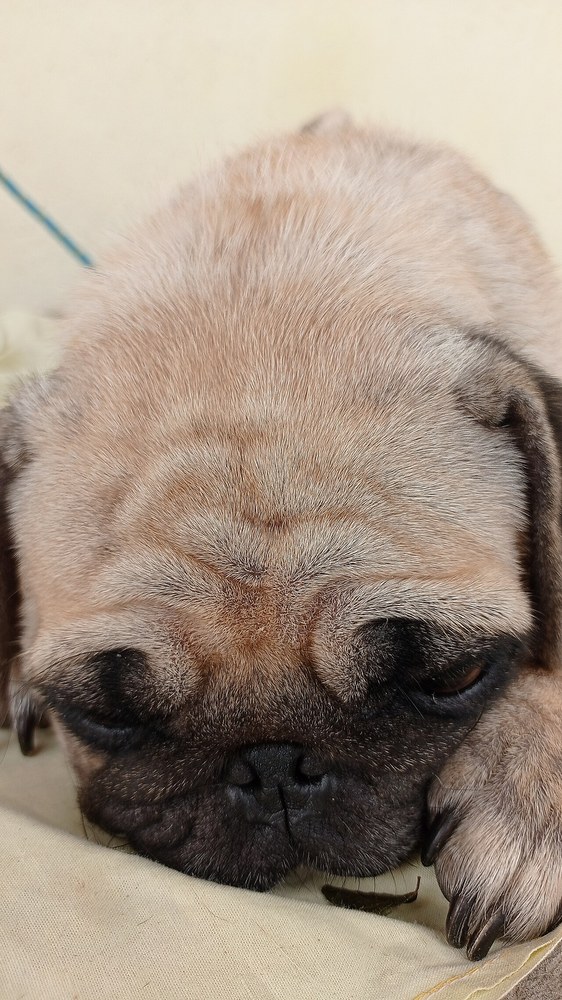
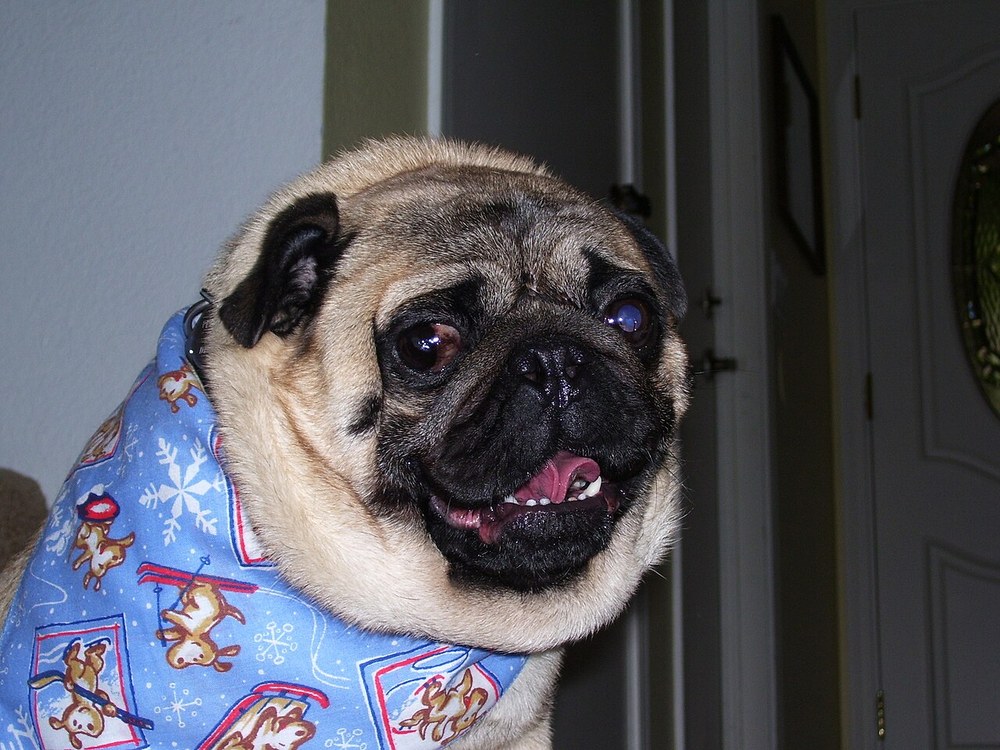
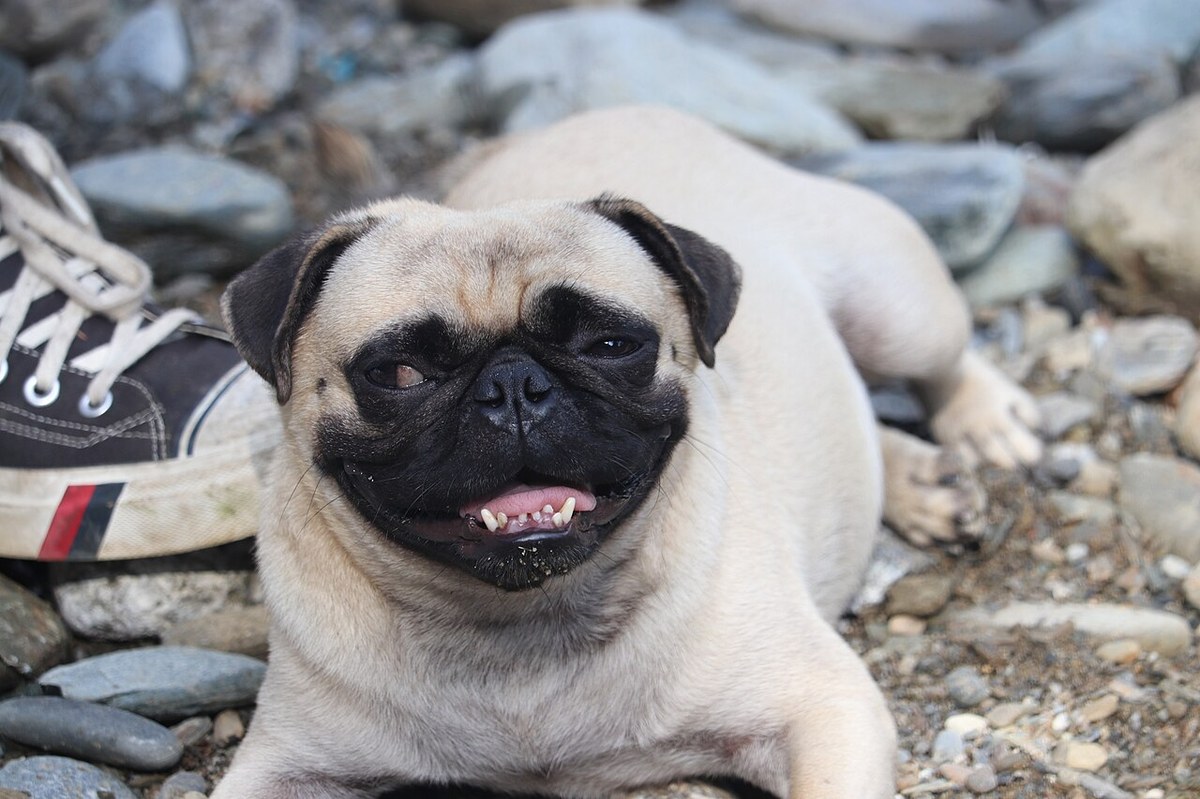
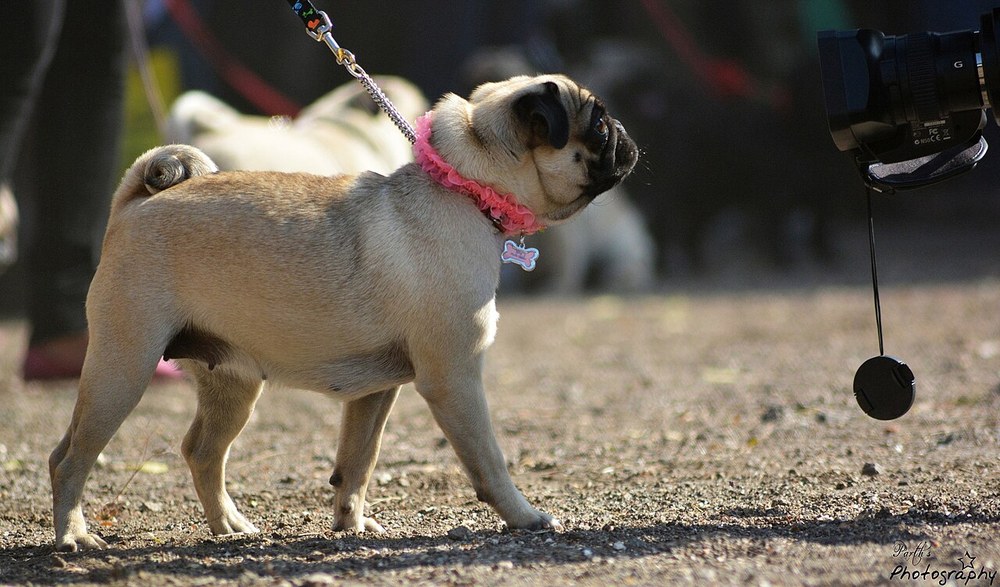
The Pug is a small, sturdy companion dog from China with a wrinkled face and curled tail. Most are affectionate, funny and friendly with everyone. Life goes well with short cool walks, a lean body, face-fold care and food-rewarded training.
Job: Ancient Chinese companion — friendly and funny.
Energy: Low to moderate; short walks in cool hours.
Home: Needs heat care, weight control and company.
History does not decide what one puppy becomes, but it explains a lot: most Pugs are affectionate, funny and people-loving — short-nosed companions that need care with heat, exercise and weight.
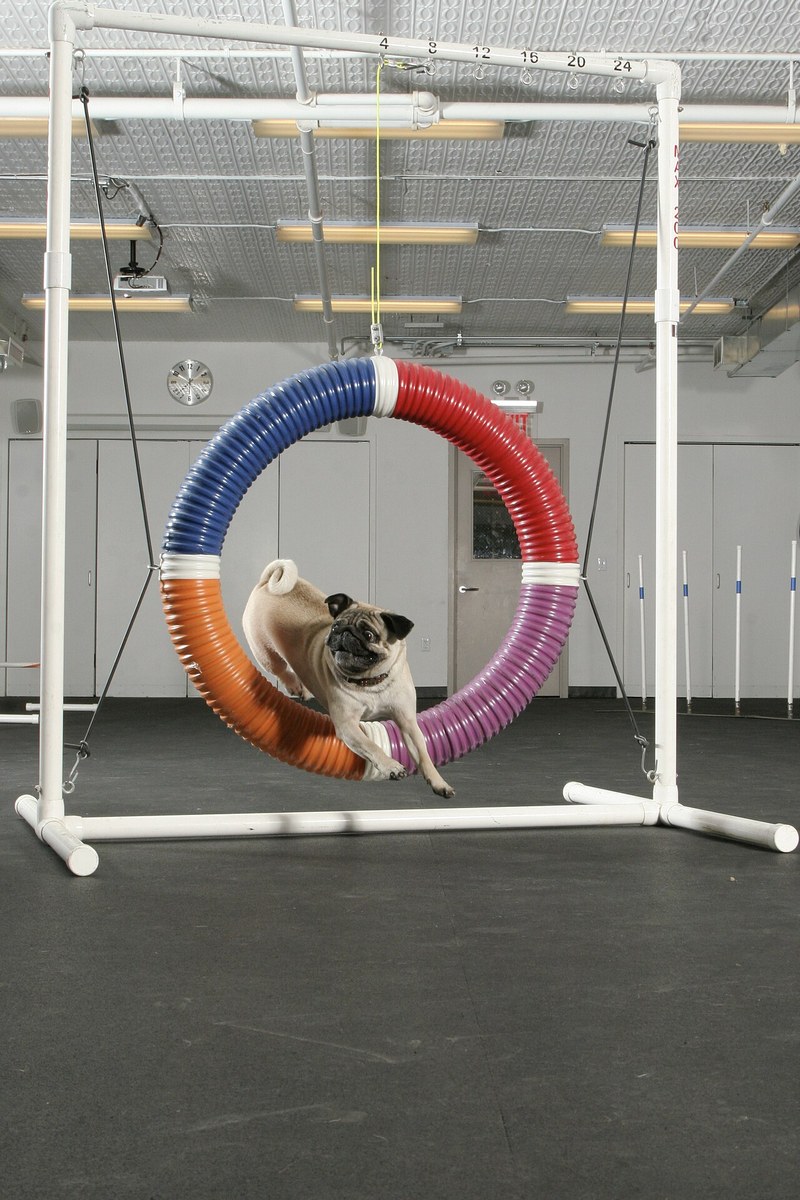
A Pug going through the tyre at agility (modern photograph). Gentle dog sports are fun for many Pugs — keep sessions short and cool.
Ancient China → imperial pet
A small companion of Chinese emperors
Public breed histories describe short-faced companion dogs in China kept by the imperial court for many centuries. The Pug is one of the oldest companion breeds.
They were bred purely for company, which shows in their love of people and their wish to stay close.
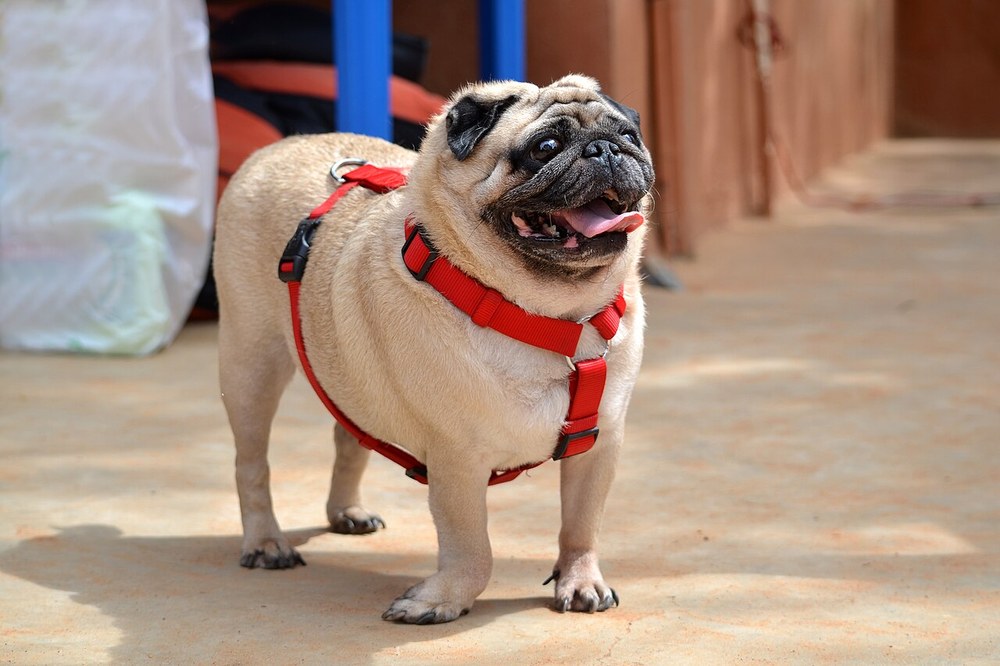
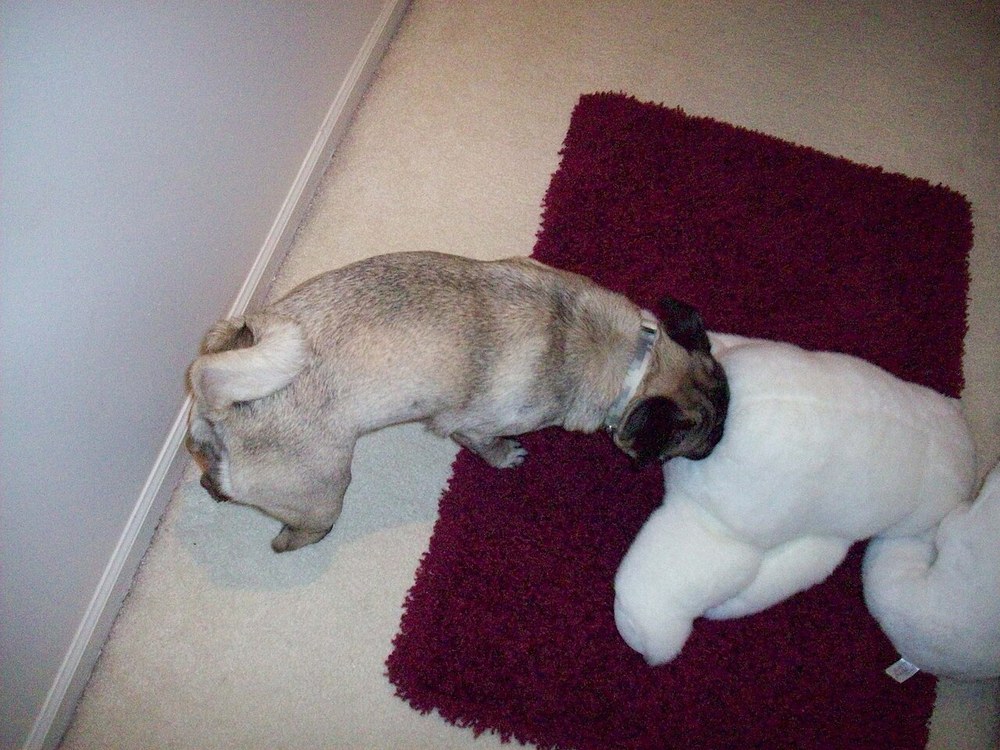
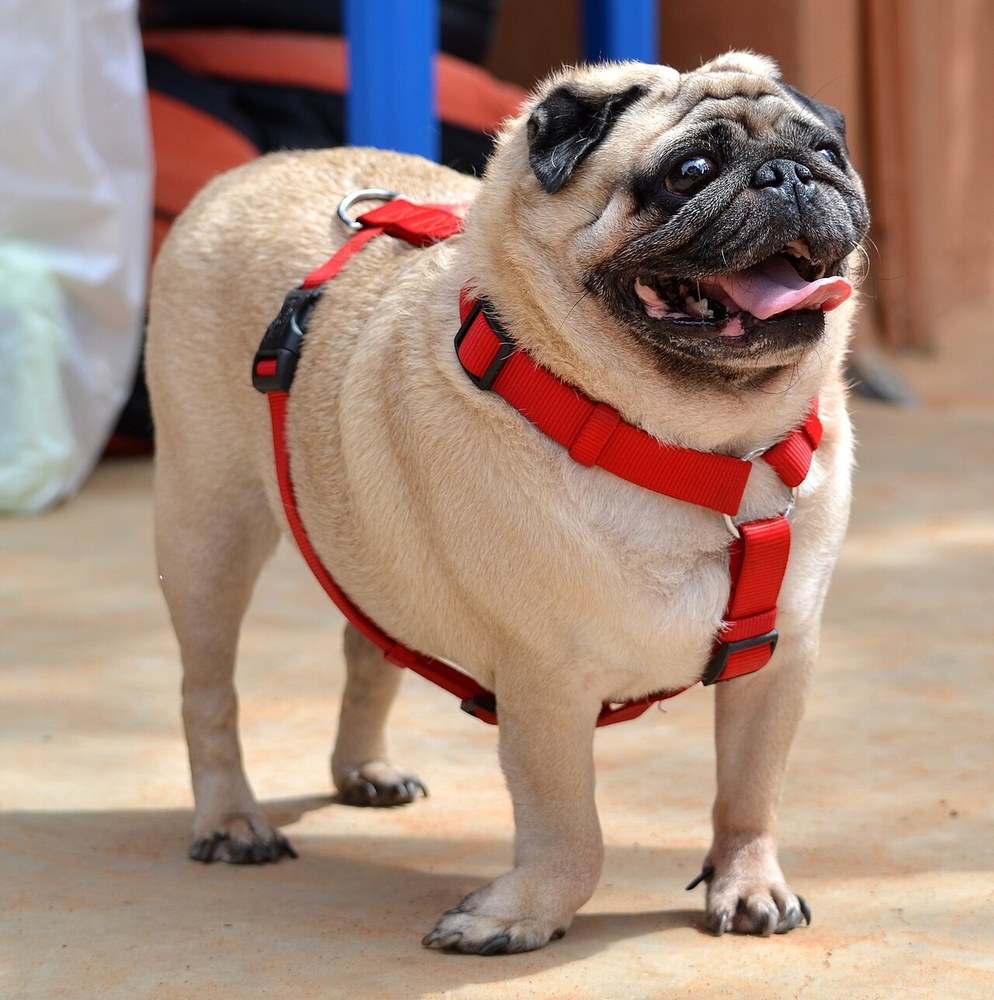
A one-year-old Pug (modern photograph). The wrinkled face and curled tail are typical of the breed.
Dutch traders → House of Orange → Victorian homes
Royal favourites in Europe
Dutch traders brought Pugs to Europe, where they became linked with the Dutch House of Orange. Later they were favourites in Victorian Britain.
Many breeders now aim for more open nostrils and easier breathing — ask about this when you meet the parents.
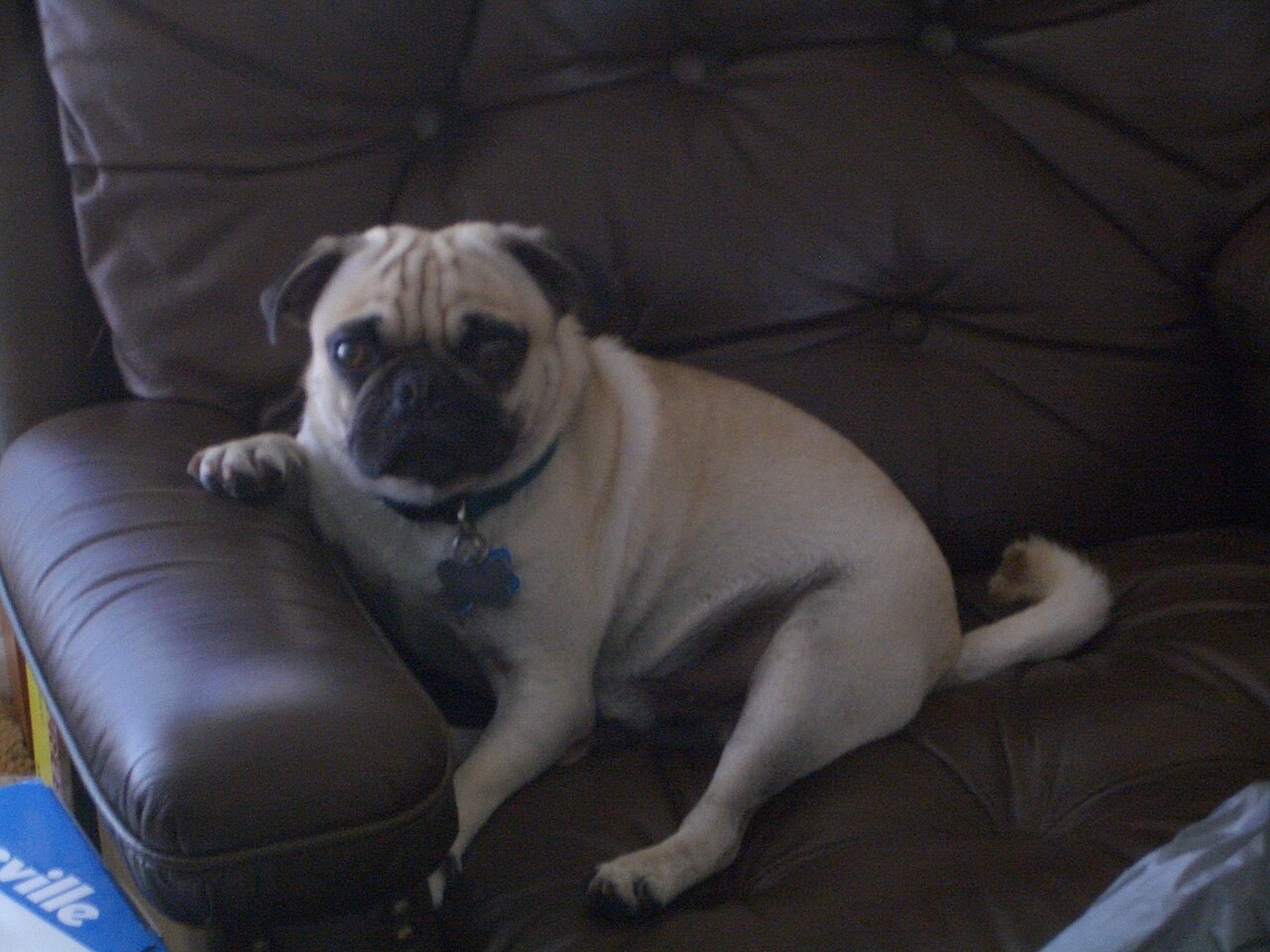
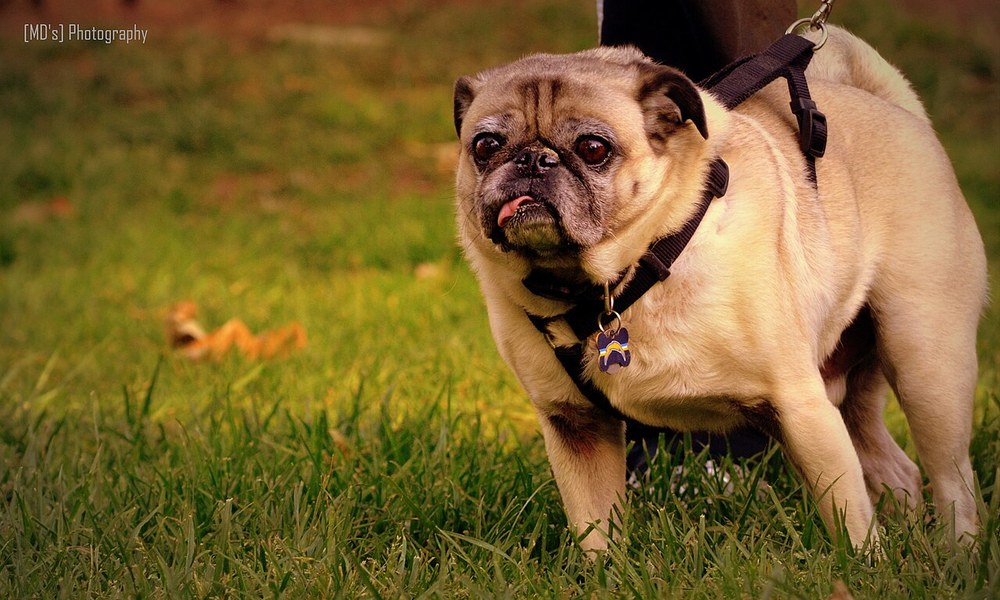
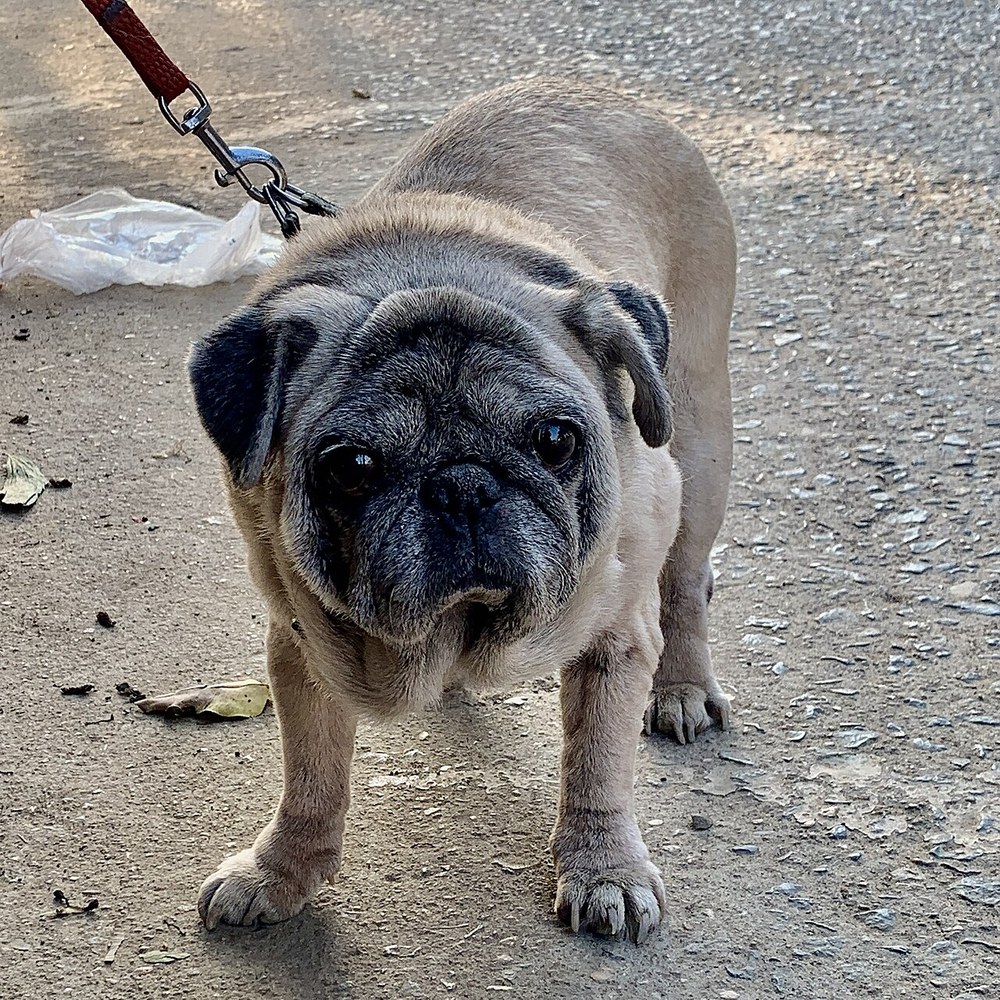
A Pug relaxing at home (modern photograph). Most Pugs are happiest close to their people.
What the breed was bred for
Affectionate, funny and food-loving
In plain trainer language: Pugs love people, food and comfort. Most are friendly with everyone and easy to live with.
The challenges are heat, breathing during exercise, weight and house training. Short cool walks and food-rewarded training work best.
What to watch monthly: breathing, eyes, face folds and weight
General awareness only — I am a trainer, not a veterinarian. Notice changes in breathing, eyes or energy. For urgent signs, see
when to call the vet.
Heat
Pugs overheat easily. Avoid exercise in warm weather and keep them cool.
Breathing
Note noisy breathing or tiring quickly and ask the vet.
Eyes
Prominent eyes are easy to injure. See the vet for redness or squinting.
Face folds
Clean and dry folds regularly.
Health screening (not a diagnosis)
Ask the breeder which screenings the national breed club recommends, including any breathing assessment, and see results for both parents.
Toxins
I do not publish toxin amounts. Call a vet or poison-control line if the dog eats something dangerous.
Lines and types
Fawn or black
Pugs come mainly in fawn with a black mask, or all black. Colour does not change temperament.
Fawn
Light coat with black mask.
The most common colour.
Sheds noticeably.
Same care needs.
Suits owners who love the classic look.
Black
Solid black coat.
Often a shorter, sleeker coat.
Feels the sun more.
Same care needs.
Suits owners who like a striking look.
Socialization windows
What to introduce — and what not to overload — by age
AVSAB-aligned in spirit: short, clean exposures at a distance the puppy can still eat,
with hygiene while vaccines finish. See the
puppy socialization schedule.
“With a Pug, I look at breathing, heat and weight before training. We keep walks short and cool, count treats in the ration and teach food manners — because a comfortable Pug is a happy, cooperative Pug.”
Sessions cover real scenes: toilet accidents, food stealing, time alone, refusing to walk, and handling for fold care. I am a trainer, not a veterinarian. No invented reviews.
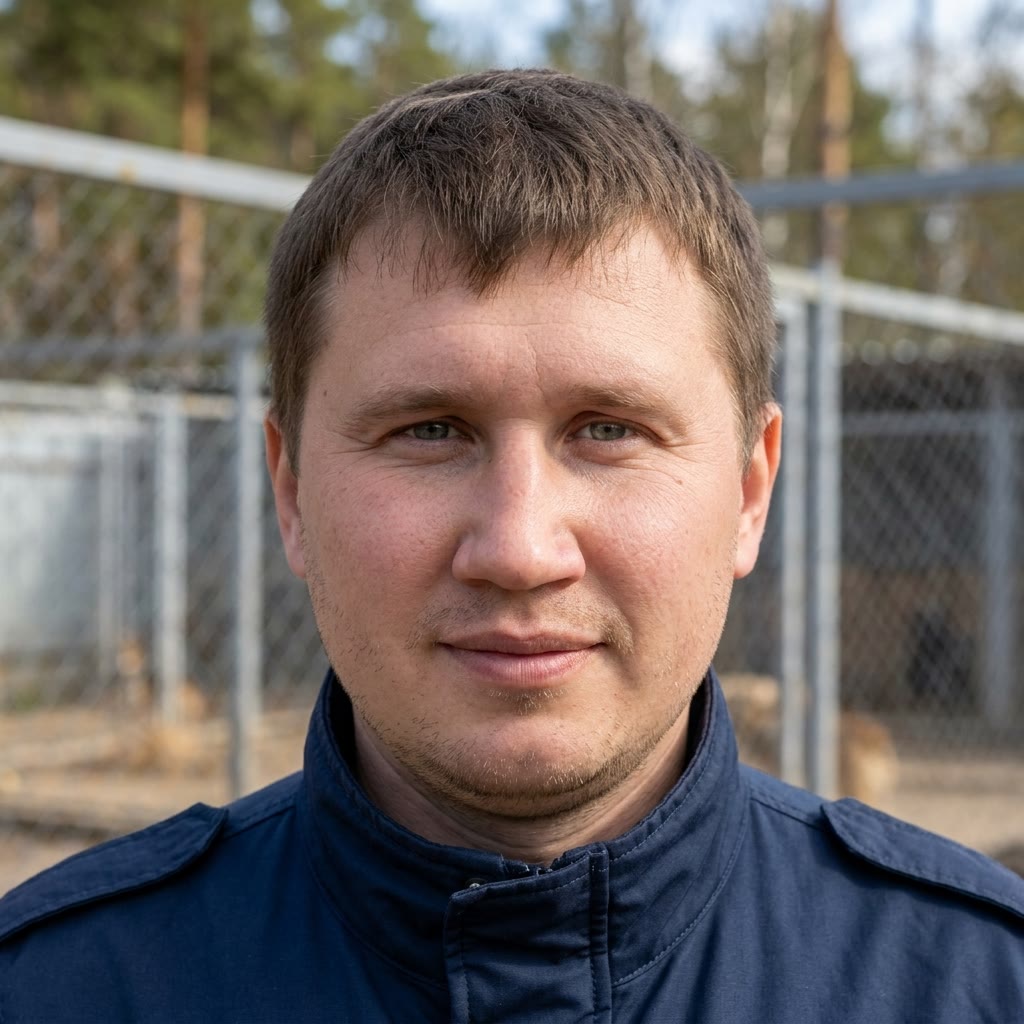
Andrew DarovProfessional dog trainer and instructor
Describe age, living setup, and where the dog breaks first — toilet accidents, food stealing, time alone, or refusing to walk. Opens WhatsApp to Andrew.
A cheerful Cuban companion with a silky coat that loves people and needs company, brushing and patient house training.
Need a read on your exact situation?
Describe your Pug’s age and the scene that repeats most: toilet accidents, food stealing, time alone, or refusing to walk. We check safety first, then pick the first skill.
Written by Andrew Darov, professional dog trainer. Not veterinary advice and not a diagnosis.
Not a kennel club. No invented reviews. No vaccine schedules or toxin doses. Photo credits in
/images/breeds/pug-guide/credits.md.