
Expert Advice · Reactivity · 13 min read
Leash Reactivity: Train at the Right Distance
If the dog cannot eat, you are too close. Threshold is a working distance, not a moral test.
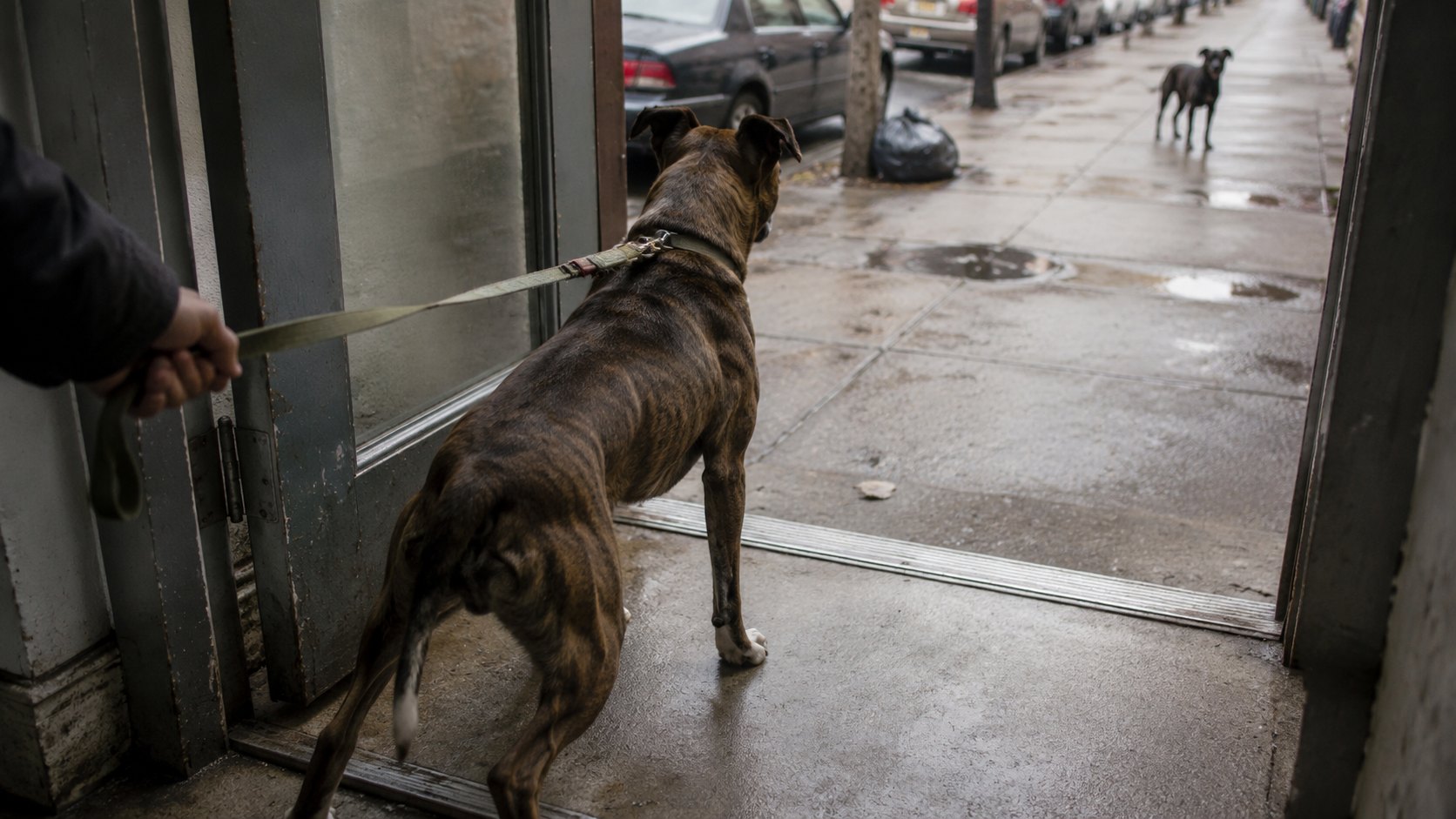
On-leash reactivity (lunging, barking, screaming at dogs, people, bikes, or vans) is a distance problem before it is an obedience problem. If the dog cannot eat, you are too close. Find the line where they can still look, breathe, and take food. Train there. Leave before the explosion. Do not walk into the crowd “so they get used to it.” That is flooding. Flooding is how you buy a worse week.
This page is the threshold protocol. It is not a sit-stay contest and it is not a breed sentence. A harness and a lead that you can feed on will help the mechanics. They will not replace distance. If a dog is injuring people or dogs, skip the internet. Manage, and see a qualified professional. Nothing here is a diagnosis.
What is threshold on a leash?
Threshold is the working distance at which the dog can still process the trigger. Below that line (closer) the nervous system has already chosen a behavior: bark, lunge, freeze, or try to leave and fail because the lead will not let them.
You will know you are under threshold when:
- the mouth can open for food
- the body can turn with you
- the dog can glance at the trigger and glance back
- breathing looks like a walk, not a sprint in place
You are over threshold when:
- food is refused
- the face is tight, the weight is forward, the tail is a hard flag or tucked
- the sound starts and does not stop
- the dog is on the hind legs or the lead is a bowstring
A sit you force at that distance is not proof of calm. It is a dog holding still because you asked, while the inside of the dog is already gone. Mark the distance. That meter-count is the criterion.
If the dog cannot eat, you are not in a training session. You are in a movie they will remember.
How do you find a working distance?
Start farther than your pride wants.
Pick one trigger for the walk. “Other dogs” is enough. Do not also test bikes and delivery vans on the same outing. Walk at a time and on a side of the street where you can see the trigger coming. A parked car, a hedge, or a driveway is a wall you can put between you and the picture.
When the trigger appears, watch the body. If the dog looks and can take food, mark the look and feed at your seam (hip or thigh) so they turn slightly toward you. Then you either let the trigger pass at that distance or you leave first. You are paying “I saw it and I can still think,” not “stare until you pop.”
If they cannot eat, you already passed the line. Add distance. Cross the road. Step behind the car. Go home and try a quieter hour. That is not quitting. That is how you keep the rehearsal from happening.
A US suburban pavement with a wide verge is easier than a UK pavement the width of a lead. The learning is the same. The architecture is not. In a narrow street you need earlier exits: a shop doorway, a side road, a car as a screen. Plan the exit before you need it.
Use a harness you can steer without choking the neck, and a lead long enough that the dog can stand in a natural posture. A two-metre chaos rope in a crowd is not “freedom.” See gear.
What do you do when the dog goes over threshold?
Leave. That is the whole first aid.
Turn. If they can still take food on the move, scatter or hand-feed as you go. If they cannot, you are not arguing with a sit. You are creating meters. Put a car, a hedge, or a corner between you and the trigger. Then you wait until the body comes down (mouth softens, sniffing returns) before you ask for anything.
Do not:
- stand and repeat “sit, sit, sit” into a scream
- yank the dog into a heel and call it calm
- let a stranger’s dog come in for a “hello”
- punish the explosion after the fact
The explosion already happened. Paying a scream with a fight teaches a fight. Leaving teaches that you have an off-ramp.
If this happens every walk, your starting distance is a fantasy. Change the route. Walk at 6 a.m. Use a long way around the park. That is management. Management is how a protocol exists. Read the reactivity hub for the larger map.
Why is flooding a bad street plan?
Because the dog is not “getting used to it.” The dog is rehearsing panic on a tight lead, close to the thing they already cannot process, while you narrate that this is good for them.
Flooding looks like: walking straight at the group, standing in the path of an oncoming dog, sitting on a bench in the middle of a Saturday market “for exposure,” or holding the dog while a person reaches in. The lead removes the choice to leave. The trigger stays. The picture writes itself.
Clean exposure is the opposite: a short look, at a distance the dog can eat, then the trigger or you leaves. The AVSAB position statements treat reward-based work as the standard for behavior change and do not support aversive methods. Flooding is not a reward-based plan. It is a hope that panic will fatigue. Sometimes the noise stops because the dog has shut down. That is not a trained walk.
Socialisation in puppies is a different page. Early, careful looks are not the same as dragging a screaming adolescent through a festival. See the puppy map so you are not accidentally building this problem in week twelve.
When is this not a DIY walk?
When the dog has injured a person or a dog. When you cannot find a distance on your street where food still works. When the handler is frightened enough that the lead is a telegraph of panic. When a child is holding the lead. When the picture includes a freeze and a bite, not just noise.
Then you manage. No more “see how they do,” no off-lead experiments, no dog-park tests. See a qualified professional in your country. This site will not invent a live intake to replace that.
A medical fence sits beside the training fence. A dog who suddenly cannot walk past other dogs, or who screams plus limps, or who cannot settle at home either, may be in pain. Leave the street. See not veterinary advice. A recall will not collect a nervous system that has already left. That is why recall is a different page.
What are the usual failure modes?
- You started at the distance you wanted, not the distance you had. Pride is not a criterion. Meters are.
- You stayed to “finish the sit.” The sit was already gone. The exit was the win.
- You let the other dog say hello. On-leash greetings are how many pictures get worse. Cross the road.
- You punished the bark. The trigger still happened. Now the trigger predicts a pop on the neck as well.
- You trained three triggers on one walk. Pick one picture. Leave the rest for another day.
- The lead and harness were the whole plan. Tools help you steer. They do not create distance.
Sources
AVSAB position statements on humane dog training and related public guidance. ASPCA overview of common dog behavior issues, including aggression as a reason to get qualified help. Paraphrased as public standards, not quoted as a substitute for the originals. avsab.org/resources/position-statements/ · aspca.org — common dog behavior issues
Questions on this page
What is threshold on a leash?
The distance at which the dog can still look at the trigger, breathe, and take food. Inside that line you are not training. You are rehearsing the explosion. A sit you force at that distance is not proof of calm. It is a dog holding still while the inside of the dog is already gone.
How do you find a working distance?
Start farther than you think. Watch the body, not your hope. Soft mouth, scan, eat. Stay. Tight face, frozen, screaming. You already passed it. Add meters and try again. One trigger per walk. You cannot train three wars at once.
What do you do when the dog goes over threshold?
Leave. Turn, feed if they can take it, put a car or a hedge between you and the trigger. Do not stand and cue sit into a scream. A clean exit is a win. The explosion already happened. Paying a scream with a fight teaches a fight.
Why is flooding a bad street plan?
Walking into the crowd so they “get used to it” pairs the trigger with panic on a tight lead. That is rehearsal, not exposure. Short, clean looks at a distance the dog can eat are the work. Sometimes the noise stops because the dog has shut down. That is not a trained walk.
When is this not a DIY walk?
When the dog is injuring people or dogs, cannot come down even at a long distance, or the handler is frightened. Manage, and see a qualified professional. This page is not a diagnosis. A child holding the lead in that picture is also a stop.
Work with me
A $150 consultation or $500 monthly curatorship. Opens WhatsApp to Andrew.