Korean Jindo: temperament, escape skills, prey drive and training for the loyal Korean hunting dog
The Korean Jindo is a medium-sized spitz-type hunting dog from Jindo Island off the south-west coast of Korea. You get a clean, quiet, deeply loyal dog that often bonds to one family or one person and stays cool with everyone else. It has a strong urge to hunt small animals, a talent for getting over or under fences and its own view on doing what it is told. What works is a secure garden, a long line instead of off-lead freedom, calm and patient handling and slow, careful introductions to people, dogs and cats.
Job: A Korean spitz-type hunting dog, FCI Group 5; double coat in white, red, black and tan, brindle or grey.
Energy: Loyal, clean and independent; often a one-family dog, reserved with strangers.
Home: Suits a calm, patient owner with secure fencing and no plans for off-lead freedom.
A Jindo looks like a friendly spitz and lives like a self-reliant hunter
People see a fox-like face, a curled tail and a tidy coat and expect an easy family dog. What arrives is a hunter that thinks for itself, watches strangers carefully and keeps checking the fence for a way out.
In family homes I meet a dog that is quiet, clean and very devoted to its people. The hard parts are escapes over or under the fence, chasing cats and small animals, tension with other dogs, a dog that will not come back off lead and one that does not want strangers to touch it.
My plan has four parts. Make the home and garden escape-proof before anything else. Keep outings on a lead or long line. Train with patience, food and choice, never force. And let the dog meet people, dogs and cats slowly, on its own terms.
FCI: males 50–55 cm (about 19.5–21.5 in), females 45–50 cm (about 17.5–19.5 in)
Weight
About 33–50 lb (about 15–23 kg)
Energy
Medium to high; enjoys long walks, often calm and quiet indoors
Coat / shed
Dense double coat with a harsh outer coat and soft undercoat; white, red (fawn), black and tan, brindle or grey
Job
Hunting and guard dog of Jindo Island (FCI Group 5)
Temperament in one minute
Korean Jindo temperament: what they are like at home
Short answer: Korean Jindos are loyal, clean and independent spitz-type hunting dogs. Many bond closely with one family or one person and are reserved or cool with strangers. They have strong prey drive, are good at escaping over or under fences and are rarely safe off lead. Some do not get on with other dogs, especially of the same sex. They need a secure home, walks on a lead or long line, patient training with food and slow introductions to people and pets.
Are Korean Jindos affectionate?
Yes, with their own people, often very much so. Many are less keen on cuddles from anyone else. Build short absences early.
Are Korean Jindos easy to train?
They learn quickly but work for trust, not for orders. Keep sessions short; start with a hand target and a door wait.
Are Korean Jindos friendly with strangers?
Usually reserved. Guests who sit down and leave the dog alone get the best result; see guest entry steps.
Are Korean Jindos good with kids and other dogs?
Often gentle with children they know. With other dogs and cats it varies, so introduce slowly. See children and guests.
Korean Jindo behavior problems to expect
The usual four are escapes, chasing small animals, a recall that fails off lead and dislike of strangers touching it. The list further down links a guide for each.
How an island hunting dog became a national symbol of Korea
The history will not train your dog, but it explains the prey drive, the independence and the strong bond with one family.
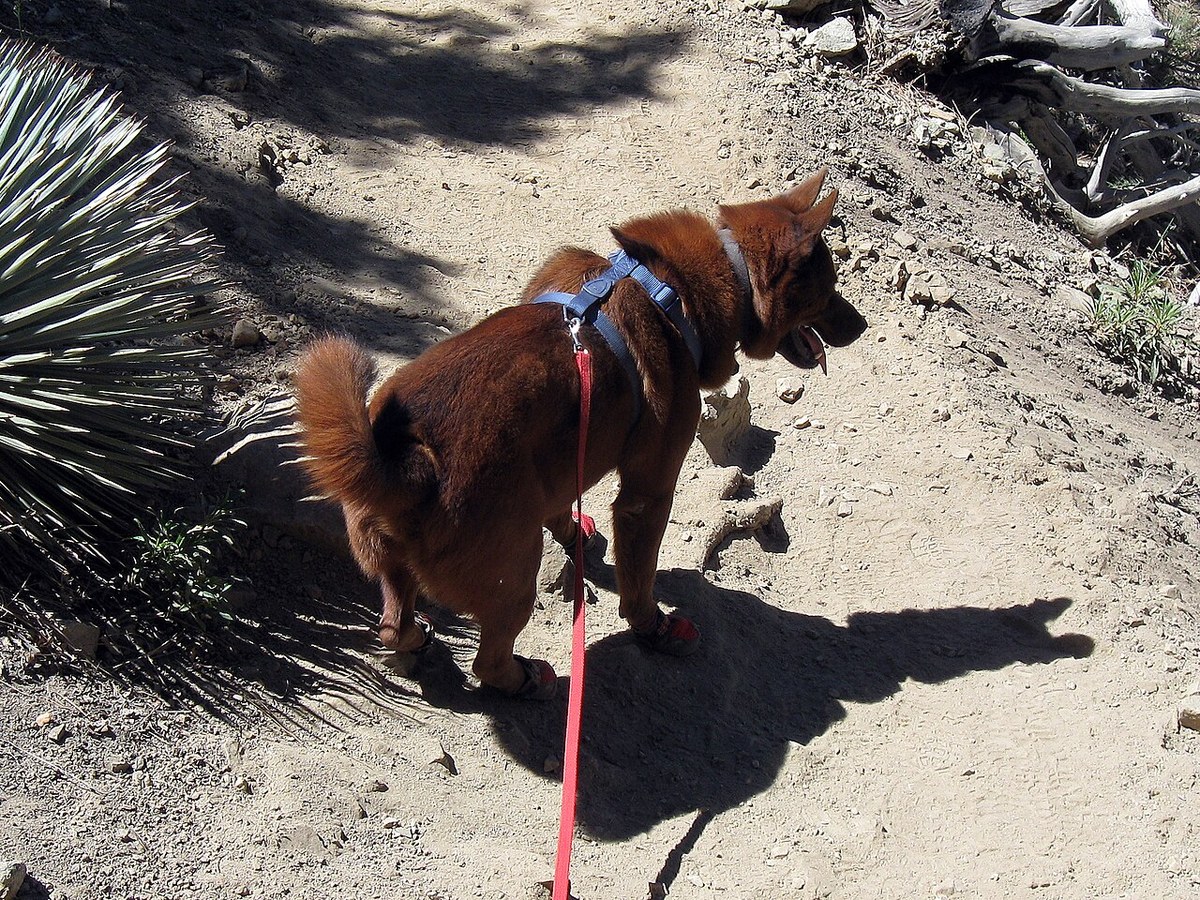
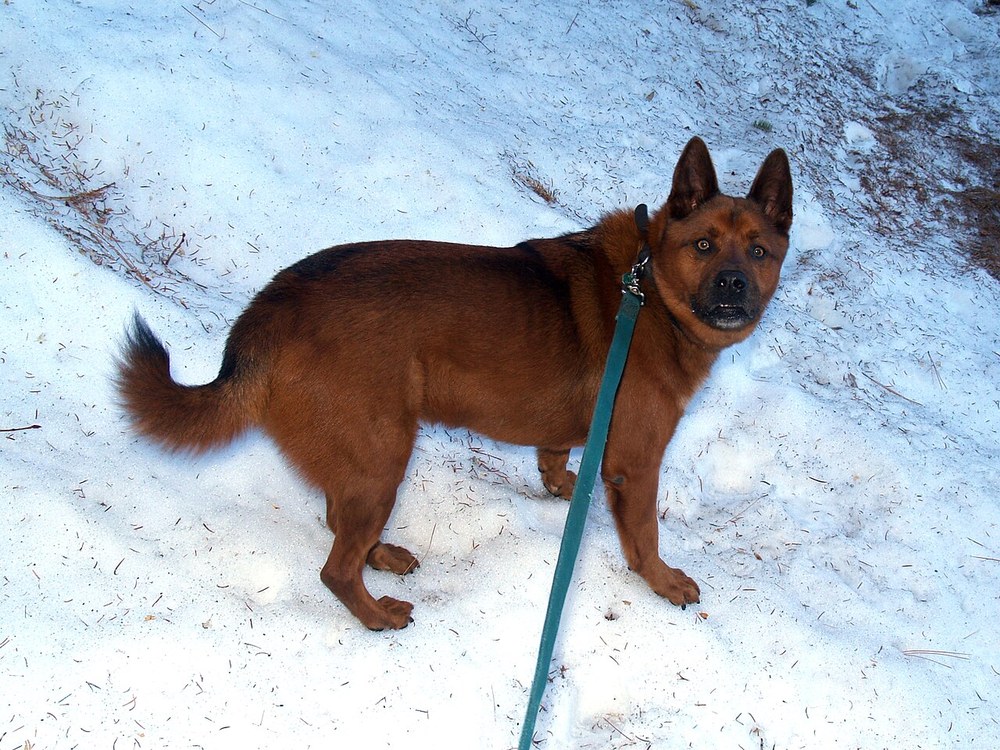
A red Jindo on a long mountain hike: a light, enduring dog that enjoys a big walk on a lead.
Jindo Island · centuries of hunting
A hunter of the island hills
The breed comes from Jindo Island, off the south-west tip of the Korean peninsula. For a long time islanders kept these dogs to hunt deer, boar and smaller game, often in small groups, and to guard the house.
How the type first reached the island is not known for sure. Several stories are told, and none of them has solid records; treat them as legends.
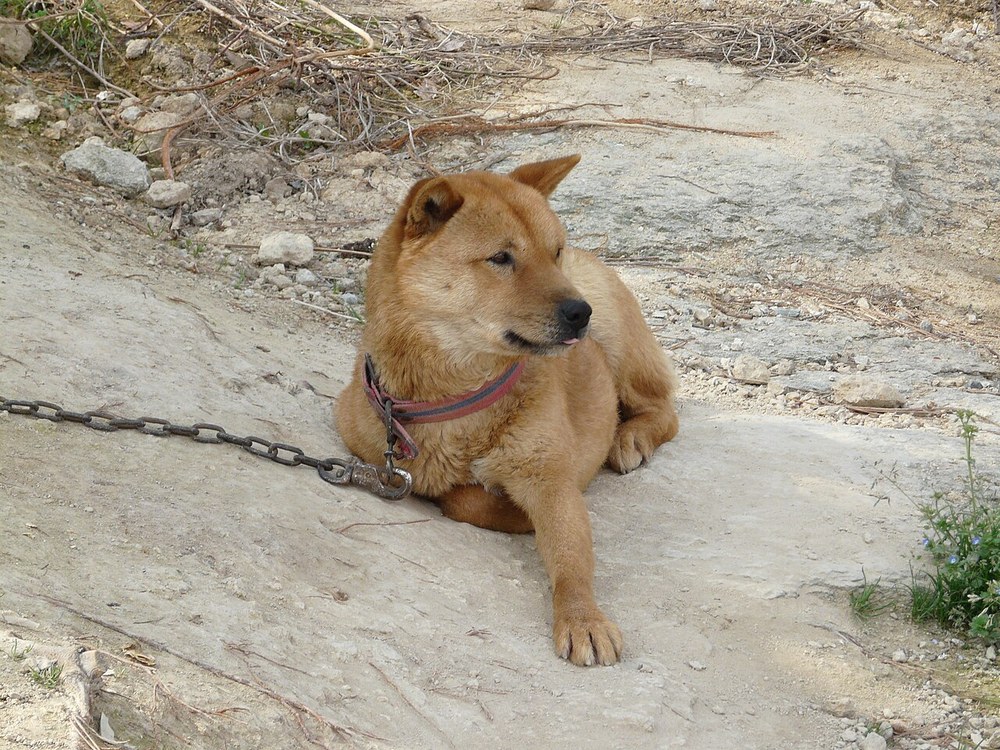
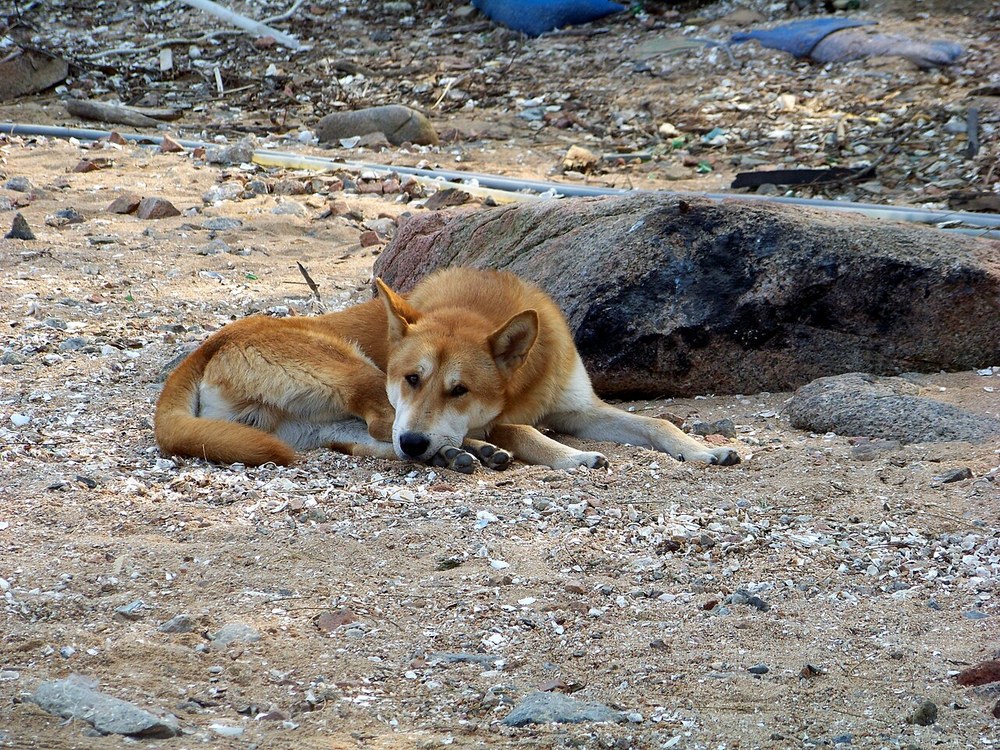
A Jindo dog photographed on Jindo Island, the breed's home in the south-west of Korea.
After 1962
A protected national dog
In 1962 South Korea named the Jindo a Natural Monument, and the dogs on the island are protected. Breeding and export from the island are regulated.
The FCI accepted the Korea Jindo Dog in Group 5. In many countries outside Korea, people now meet the breed through rescue groups that bring Jindos and Jindo mixes from South Korea.
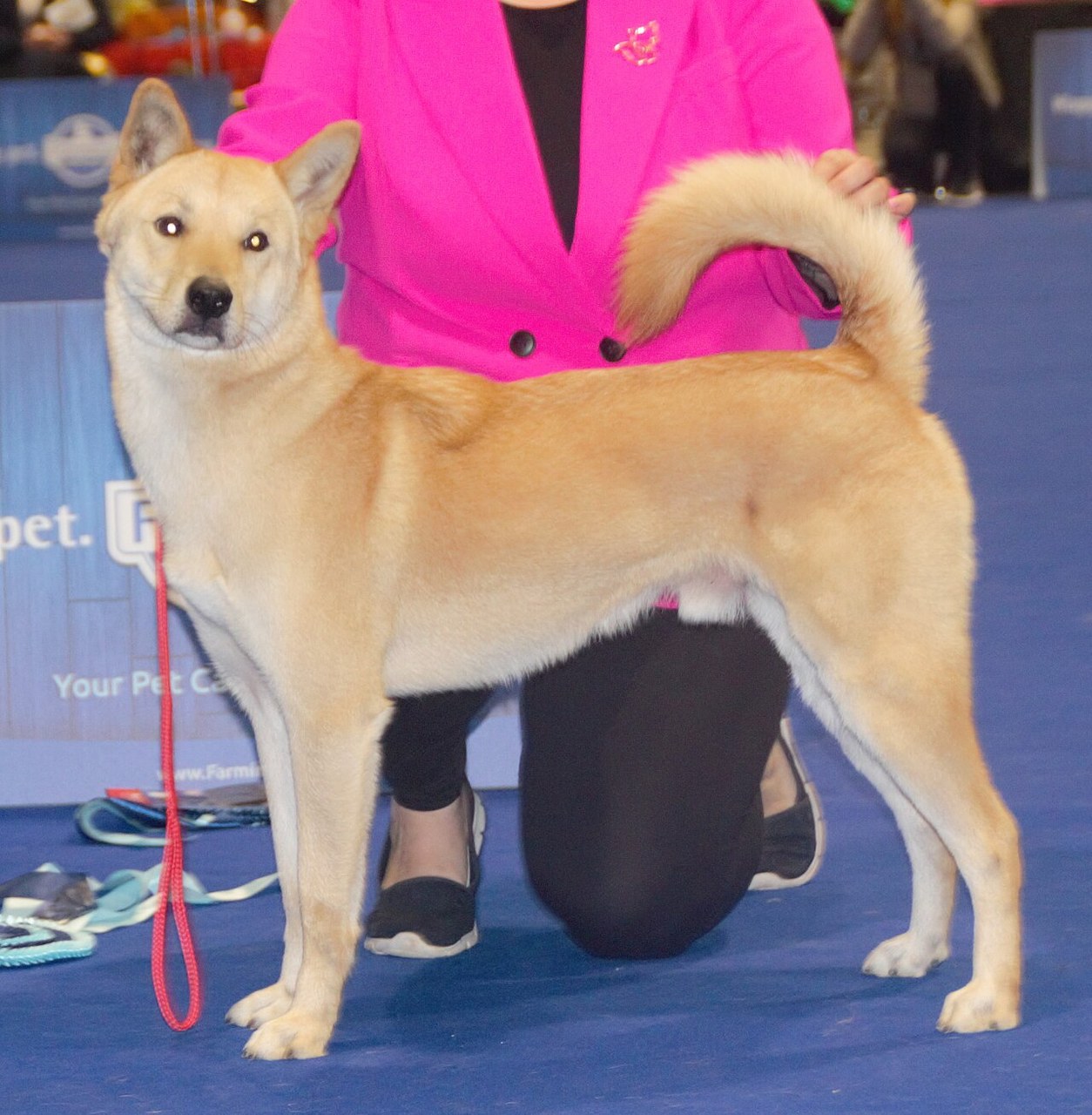
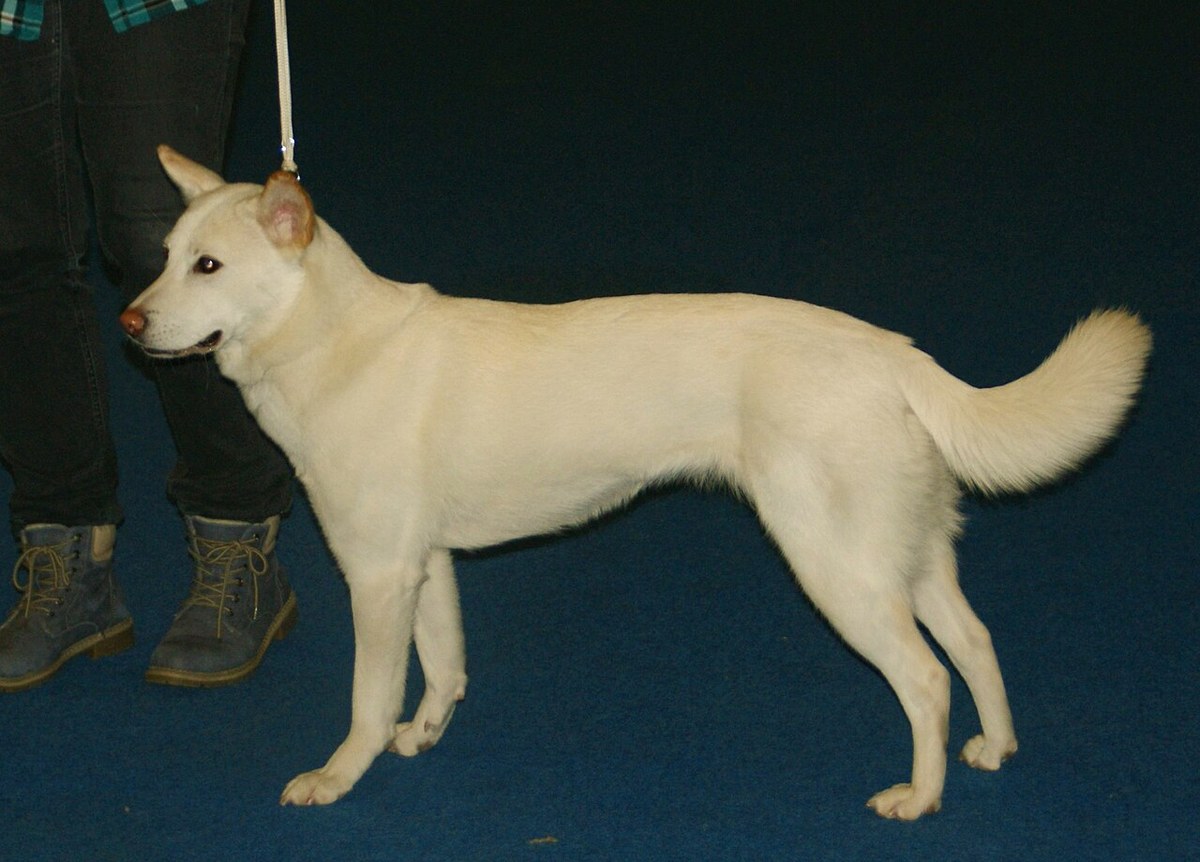
A red male Jindo at a show: the upright ears, curled tail and light, square body are typical of the breed.
What the breed was bred for
Loyal to its people, cool with the rest
Day to day you live with a quiet, tidy dog that is very attached to its family. Many Jindos are easy to house-train and keep themselves clean.
The same dog is often wary of strangers, does not like being grabbed and may not accept every other dog. Its hunting instinct stays switched on, especially for cats and small animals.
A good day has a long walk on a lead, quiet time at home and no surprises
Most adult Jindos do well with an hour or more of walking, sniffing and play on a lead or long line, plus a few short training games. Trouble usually starts with a gap in the fence, a door left open, an unplanned meeting with a cat or a stranger who reaches over its head.
Morning · long line
Freedom on a long line
Most Jindos will not come back once they lock onto a squirrel, cat or deer. A long line on a harness gives the dog room to sniff and explore while you keep it safe. Off-lead running belongs only in a fully fenced area.
Expect the dog to lock on to small animals. Teach it to look back at you for a reward at a distance where it can still think, and move away before it starts to pull or scream.
Jindos can climb, jump and dig. Check the fence for gaps, low spots and things the dog can climb on, and never leave it alone in the garden for long. A bored Jindo spends its time looking for the way out.
Many Jindos dislike being touched by people they do not know. Ask guests to ignore the dog, sit down and toss a treat. If it comes over to sniff, let that be enough for the first visit.
A Jindo often needs time with new things: snow, a car, a vet room or a new house. Give it distance, wait for it to look and sniff, reward calm and leave before it is overwhelmed.
General awareness only. I am not a veterinarian. With Jindos, owners often spot trouble first as itchy or sore skin, a change in appetite, stiffness or a dog that hides and will not be handled. For red flags, leave this page and open
when to call the vet.
Skin and coat
Brush weekly and daily when the undercoat comes out; check for itchy spots and ticks.
Handling for the vet
Practise gentle handling and muzzle comfort early, because many Jindos dislike being held by strangers.
Joints and movement
Stiffness after rest or a change in gait should see a vet. See limping stop list.
A dog from rescue may need extra time, a quiet start and a full vet check when it arrives.
Ask the breeder or rescue
Ask what is known about the parents or the dog's past, and ask your vet which checks make sense. Do not invent disease claims from a blog.
Lines and types
Every Jindo needs secure boundaries and slow, careful socialization
No bloodline selling. Outside Korea there are few breeders, and many Jindos come through rescue, often as adults with a past you do not fully know. Some are bold and curious, others very cautious. If you can, meet the dog more than once and see how it reacts to you before it comes home.
Family companion homes
A secure garden and careful doors.
Walks on a lead or long line.
Quiet routines and calm visitors.
Slow introductions to other pets.
Suits a calm family that keeps the house predictable and does not need the dog to love everyone.
Rescue adoption homes
A quiet first few weeks.
No forced handling or cuddles.
Escape-proof home from day one.
Patience while trust builds.
Suits an experienced or patient adopter who can give a worried dog time and space.
Socialization windows
What to introduce — and what not to overload — by age
AVSAB-aligned in spirit: short, clean exposures at a distance the puppy can still eat,
with hygiene while vaccines finish. See the
puppy socialization schedule.
2–4 months
Settling in and gentle handling
Introduce: calm visitors who let the puppy come to them, short car rides, gentle handling for food, the toilet spot, short spells alone.
Do not overload: strangers picking the puppy up, rough play, an unsecured garden.
~6 months
Testing boundaries
Introduce: long-line walks, recall games in a fenced area, waiting at doors, calm meetings with steady adult dogs.
Do not overload: off-lead walks in open spaces, leaving it alone in the garden.
~12 months
Teenage hunter
Introduce: look-at-me games near small animals at a distance, new places at quiet times, a bed cue during visits.
Do not overload: letting it chase cats or squirrels, dog parks full of strangers.
~18–24 months
A settled young adult
Introduce: longer hikes on a lead, scent games, café visits with a quiet corner.
Do not overload: expecting it to become friendly with every dog and person.
~3 years+
Maintenance
Introduce: daily walks, regular training games, weekly brushing, yearly vet checks, a fence check every season.
Do not overload: relaxing about doors and fences because nothing has happened for a while.
Before you buy
Who a Korean Jindo usually fits
Fit comes down to how secure your home is, whether you can live without off-lead walks, how you handle a dog that is cool with strangers and whether you have cats, small pets or other dogs.
Good match
More likely a good fit if you…
You have a high, solid fence and careful doors
You are happy to walk on a lead or long line
You want a quiet, clean and loyal dog
You train with patience and without force
You accept a dog that is reserved with strangers
Mismatch risk
A Korean Jindo may be a poor choice if…
You want off-lead walks in open country
You have cats or small pets and cannot manage them carefully
You want a dog that greets every guest and loves cuddles from anyone
You plan to visit busy dog parks
The dog would be alone in the garden for long periods
If you are torn between breeds
Korean Jindo vs Shiba Inu and Akita
All three are Asian spitz-type dogs with curled tails and independent minds. The Shiba Inu is much smaller; the Akita is much bigger and heavier. The Jindo sits in the middle: a light, quick hunter with a strong bond to its family.
Size
Korean Jindo
Medium, light and quick.
Shiba Inu
Small and compact.
Size and strength
Korean Jindo
Medium, about 15–23 kg.
Akita
Large and powerful.
Strangers
Korean Jindo
Reserved, often a one-family dog.
Akita
Also reserved and often guarding.
Recall
Korean Jindo
Rarely safe off lead.
Both compares
All three need a lead or secure area.
Ownership without surprises
Where a Korean Jindo owner’s budget goes
Costs depend on country, city and your choices. These are themes to plan for, not quotes.
Fencing
A high, solid fence with no gaps, and sometimes a dig guard along the bottom.
Veterinary
Annual vet visits, the vaccines your vet recommends and a full check for a rescue dog.
Gear
A well-fitting harness, a long line and a secure collar with an ID tag.
Training
Private sessions often suit this breed better than busy group classes.
Food and treats
A medium-sized active dog; training treats add up.
Fixing the fence before the dog arrives costs far less than searching for a lost Jindo.
Before day one at home
What to prepare for a Korean Jindo puppy
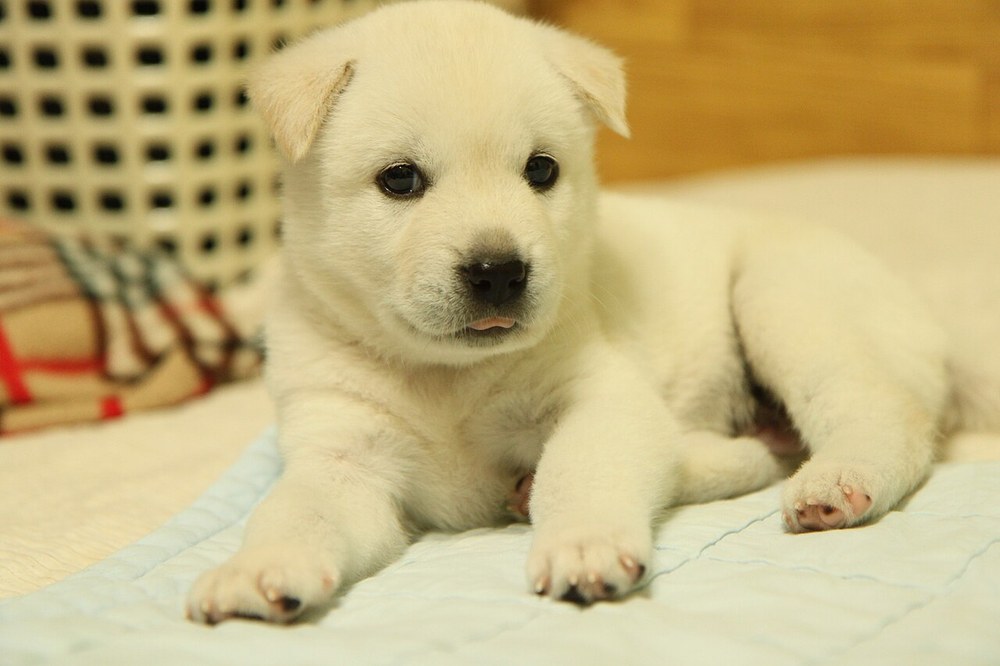
A Jindo puppy is curious, clean and quick to learn the house routine, and it is already deciding who its people are. Have a secure garden, a harness and long line, chews and a few calm visitors lined up before it comes home.
Training a Jindo means patience, choice and a long line instead of off-lead freedom
Five skills cover most of daily life: a wait at every door, a look back at you when it spots an animal, calm walking on a long line, a bed cue during visits and calm handling for brushing and the vet.
Jindos learn quickly but do not see the point of repeating things for you. Keep sessions short, reward well with food, and let the dog choose to take part. Force and harsh corrections damage trust, and trust is what this breed works for.
Treat recall as a safety bonus, not a plan. Practise it on a long line and in fenced areas, and keep the lead on everywhere else.
Load balance
Walks and sniffing first, then calm
Go easier with puppies, older dogs and hot weather. A limp, a change in appetite or sudden bad temper means a vet visit comes before more training.
Long-line walkSniffing timeLook-at-me gameChew on the bedQuiet nap
For this breed, a slow sniffing walk on a long line often settles the dog better than a fast run.
A Jindo that trusts you looks back at you more often, and that is the start of every other skill.
Safe outings
How to keep a Jindo safe and relaxed outside the house
Fit a harness, use a long line, wait at every door, reward looking back at you near animals, and only let it run free inside a fully fenced area.
01
Fit a harness
Use a well-fitting harness the dog cannot back out of.
02
Use a long line
Clip a long line on for every walk outside a fenced area.
03
Wait at every door
Ask for a wait before every door and gate opens.
04
Reward the look-back
Reward the dog for looking at you when it spots an animal.
05
Free running only when fenced
Let it run off lead only inside a fully fenced area.
One scene close-up
Why a Jindo takes every chance to slip away
This breed hunted on its own or in small groups with little help from people. A dog like that is used to following its own nose and eyes, and an open gate or a running cat is hard to resist.
The answer is management first and training second. Secure doors and fences, a harness that fits, a long line on every walk and a door wait practised many times a day. Then build a look-back habit near animals at a distance the dog can handle.
A dog that suddenly hides, snaps when touched or stops eating needs a vet check and, if needed, a qualified professional.
“With a Jindo, I begin with three things: a home it cannot escape from, a long line on every walk and handling that the dog agrees to. Earn its trust and you have one of the most loyal dogs there is.”
We work on what your days actually look like: escapes, recall, cats, visitors, other dogs and handling. I am a trainer, not a veterinarian.
Andrew DarovProfessional dog trainer and instructor
Write down the dog's age, whether it came from rescue and the first thing that goes wrong: escapes, chasing, strangers, other dogs or handling. Opens WhatsApp to Andrew.
Often yes, for a calm family with a secure garden. Most are loyal and gentle with their own people, including children they know. They are usually cool with strangers.
Is a Korean Jindo a good first dog?+
It can be hard for a first-time owner. It is independent, escape-minded and needs patient, careful handling. A calm, prepared beginner can do well with help.
Do Korean Jindos bark a lot?+
Most are fairly quiet indoors. Some howl or bark at the fence or at strangers, more when bored.
Korean Jindo vs Shiba Inu: what is the difference?+
The Shiba Inu is much smaller. Both are independent and hard to recall off lead; the Jindo is taller and often more of a one-family dog.
Korean Jindo vs Akita: what is the difference?+
The Akita is much larger and heavier. The Jindo is lighter and quicker, with a strong hunting drive.
How much exercise does a Korean Jindo need?+
About an hour or more of walking, sniffing and play each day, on a lead or long line or in a fenced area.
Are Korean Jindos good with cats and other dogs?+
It varies. Many have strong prey drive toward cats and small pets, and some do not accept other dogs, especially of the same sex. Introduce slowly and manage carefully.
Can a Korean Jindo be off lead?+
Rarely safely outside a fenced area. Most will follow a scent or an animal and not come back.
Do Korean Jindos shed?+
They shed lightly most of the year and heavily when the undercoat comes out, usually twice a year.
Can a Korean Jindo live in an apartment?+
Many do, if they get long daily walks and the doors are managed carefully.
What should I know about adopting a Jindo from rescue?+
Give a quiet start, no forced handling, an escape-proof home and a full vet check. Trust may take weeks or months.
How long do Korean Jindos live?+
Public breed references often mention about 12–15 years. Individual dogs vary.
If a Jindo seems like more dog than your home can handle
Most people fall for the fox-like face, the curled tail and the loyalty stories. The escapes, the prey drive and the reserve with strangers are the parts to be sure about first.
A cheerful little lion dog from the bichon family. Loving, alert and quick to bark; needs regular grooming, short games and early practice at time alone.
Dog begging at the table? Stop all food from plates, give your dog a mat and a long chew during meals, brief kids and guests, and expect a short spike.
Need a read on your exact situation?
Send me a few lines about your Korean Jindo: how old it is, whether it came from rescue and what goes wrong first. We rule out health and safety issues first, then choose one skill to start with.