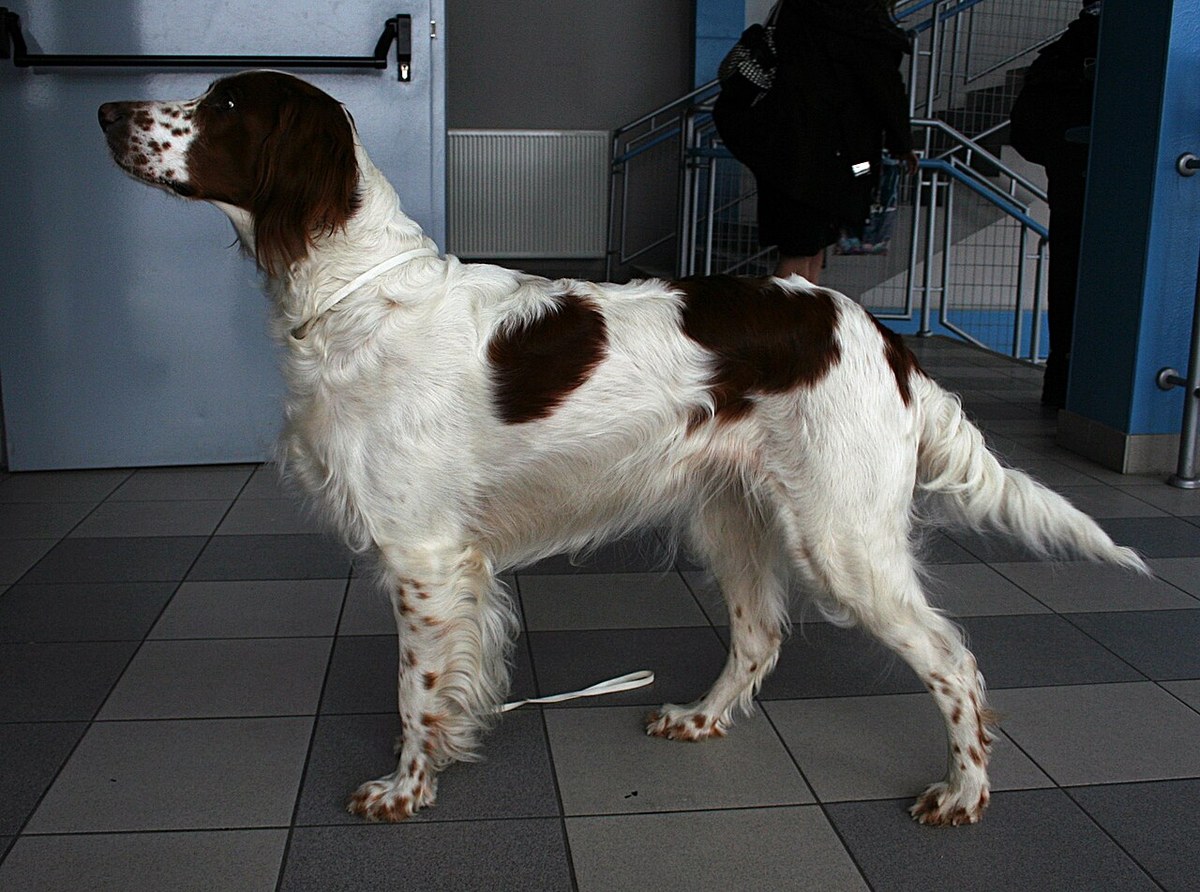
Irish Red and White Setter: temperament, energy, recall and training for the older Irish setter
The Irish Red and White Setter is a tall, friendly bird dog from Ireland with a white coat and solid red patches. It is the older of the two Irish setters, nearly lost in the 1800s when the solid red dog became fashionable, and rebuilt in the 1900s. Living with one means a sweet, people-loving dog with a lot of running in its legs, a strong nose for birds and a long, silly teenage phase. What works is daily free running in safe places, a long line until recall holds near birds, games that use the nose, calm house manners taught early and patience while the dog grows up.
Job: A tall Irish pointing gundog; AKC Sporting group, FCI Group 7.
Energy: Friendly, gentle, playful and full of energy.
Home: Suits an active owner with time and space for a running dog.
An Irish Red and White Setter is a working bird dog in a family coat
Many people see a gentle, pretty setter with a soft face and imagine a calm house dog. Adult dogs often are calm indoors. Young ones are a different story.
This is a gundog bred to run wide over open ground and find birds. The problems I meet at home are about energy and drive: a teenage dog that will not come back once it smells a pheasant, pulls hard on the lead, jumps on everyone, steals food from the counter and cannot settle in the evening.
My approach is to give the drive a place. Real running every day in a safe area, a long line and serious recall work, nose games and searching, a bed cue and calm house rules. An Irish Red and White Setter that has run and searched is a gentle, easy dog at home.
AKC: males 24.5–26 in, females 22.5–24 in (FCI: males 62–66 cm, females 57–61 cm)
Weight
Usually about 50–70 lb (roughly 23–32 kg); the standards give no set weight
Energy
High; needs daily running and searching
Coat / shed
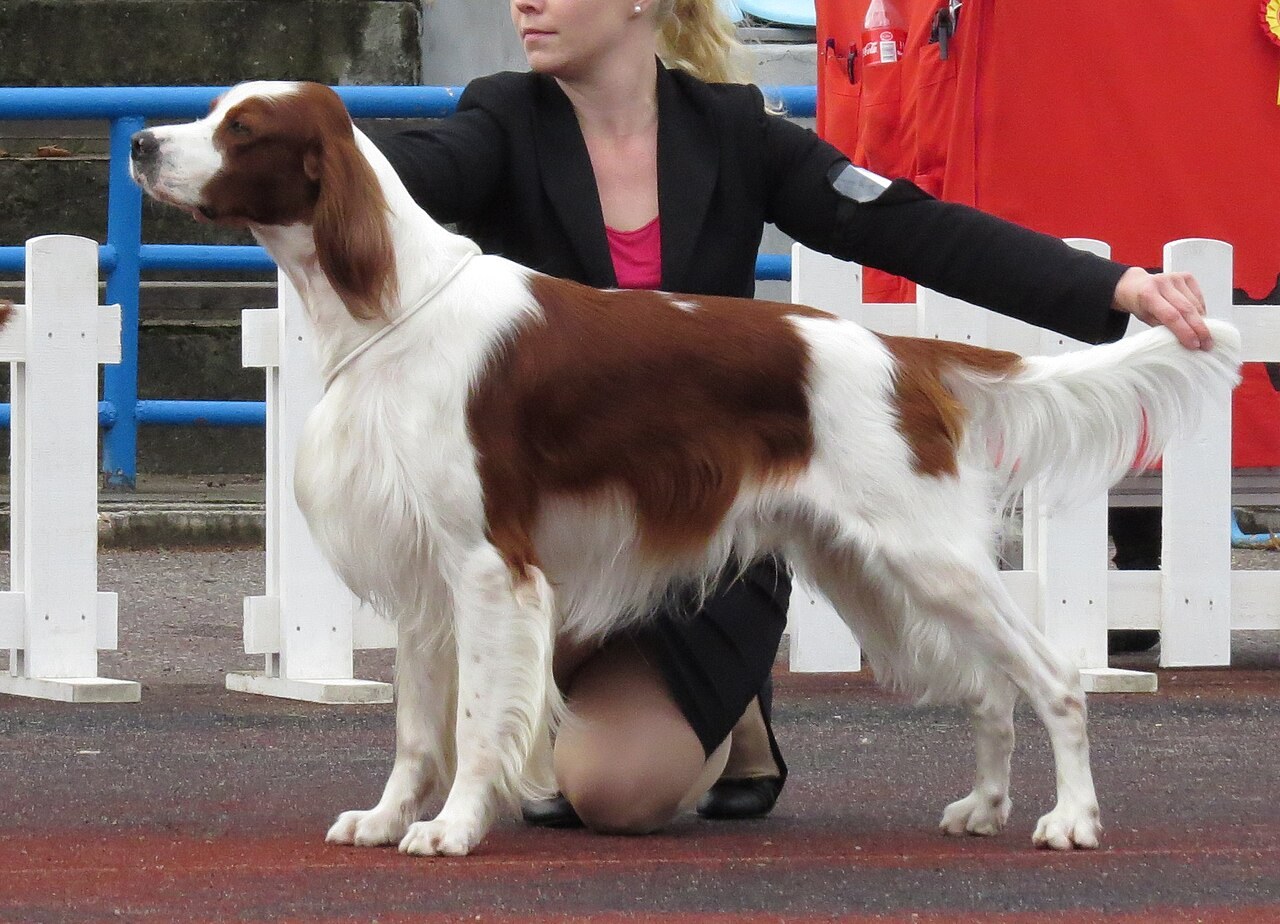
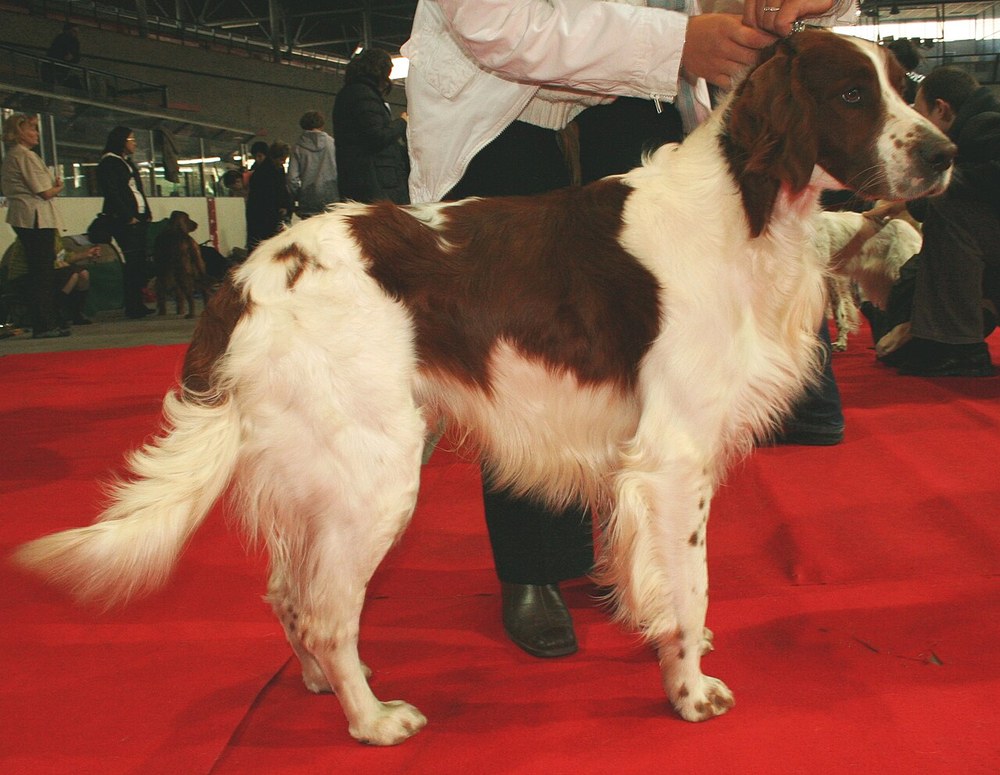
Flat, silky coat with feathering on ears, legs and tail; white base with solid red patches
Job
Irish setter that finds game birds and holds a point for the hunter (FCI Group 7, pointing dogs)
Temperament in one minute
Irish Red and White Setter temperament: what they are like at home
Short answer: Irish Red and White Setters are friendly, gentle, playful dogs that love people and usually get on well with other dogs. They are bird dogs with a lot of running in their legs, a strong nose and a long, bouncy teenage phase, so they can ignore recall near birds, pull on the lead and struggle to settle. They need an hour or more of exercise a day with some free running, a long line until recall is reliable, searching games, kind training and calm house rules.
Are Irish Red and White Setters affectionate?
Very, with family and visitors alike. Build short absences early so the dog copes when you go out.
Are Irish Red and White Setters easy to train?
They are willing but easily distracted by scent. Keep it short and kind; start with a hand target and a name check-in.
Are Irish Red and White Setters friendly with strangers?
Usually very friendly, sometimes too bouncy. Guests should sit first; see guest entry steps.
Are Irish Red and White Setters good with kids and other dogs?
Usually good with both, but a big young dog can knock over small children. See children and guests.
Irish Red and White Setter behavior problems to expect
The usual four are poor recall near birds, pulling on the lead, jumping up and not settling in the evening. The list further down links a guide for each.
Living with an Irish Red and White Setter in an apartment
Possible only with a lot of daily running and a calm indoor routine. A house with a garden and fields nearby is a much easier fit.
Breed history
The first Irish setter, almost lost and brought back
The history will not train your dog, but it explains the running, the bird drive and the soft nature.
An Irish Red and White Setter swimming: many setters enjoy water, and a swim is a good, joint-friendly way to use some of that energy.
Ireland · 1700s–1800s
Setting dogs for Irish bird hunters
Irish hunters in the 1700s used setting dogs that ran ahead, found grouse, partridge or snipe by scent and then stopped and "set" so the hunter could walk up. Many of these early Irish setters were red and white.
A white coat with red patches made the dog easy to see on dark bog and moorland. The dogs had to be fast, tough and keen, with enough stamina to work all day.
An early 1800s book plate by Sydenham Edwards showing the setter types of the time: a historical illustration, not a photo of today's breed.
From the 1920s
Saved from the edge
In the 1800s the solid red setter became the fashion in the show ring, and the red and white dog nearly disappeared. In the 1920s a group of Irish breeders, led by the Reverend Noble Huston, started to rebuild the old type from the few dogs left.
A breed society was formed in Ireland in 1944. The breed was later recognized by the Kennel Club in the UK, and the AKC added it to the Sporting group in 2009. It is still much rarer than the red setter.
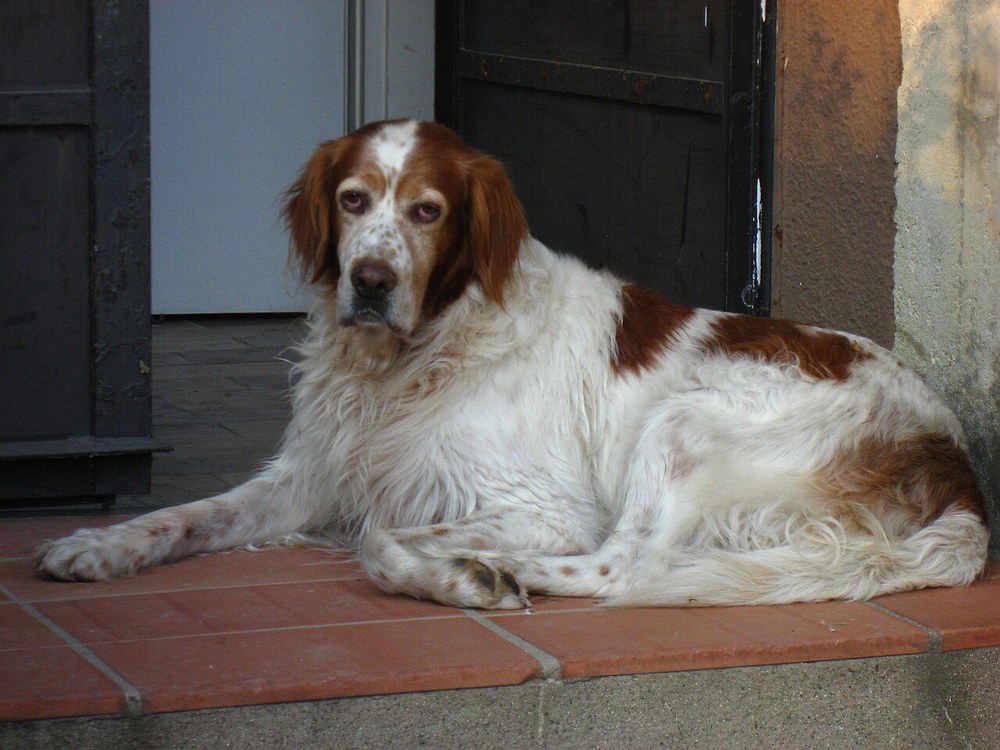
An Irish Red and White Setter resting at home: adult dogs are often calm and gentle indoors once they have had a good run.
What the breed was bred for
Sweet, sociable and slow to grow up
At home a well-exercised Irish Red and White Setter is friendly, gentle and affectionate with everyone, and usually good with other dogs. Many people find it a little steadier than the red setter.
Outside the bird dog wakes up. It runs wide, follows scent and can ignore its name near birds. Young dogs stay bouncy for a long time, so recall, lead walking and house manners need a plan from the start.
A good day has a real run, a searching game, a short lesson and a long nap
An adult Irish Red and White Setter usually needs a good hour or more of exercise a day, with some free running in a safe place, a searching or retrieve game, a short training session and then a long rest. Trouble usually comes from walks only on a short lead, off-lead running before recall is ready and a young dog left bored at home.
Morning · run
Running on a long line
Use a long line in open fields so the dog can stretch out and sniff without the chance to vanish after a bird. Practise recall with high-value food and let the run itself be part of the reward.
Setters are soft and willing but easily distracted. Use food and a kind voice, keep lessons short and end while the dog is still keen. A name check-in and a hand target are good first skills.
Reward the dog for looking at a bird and then back at you. Teach leave it on walks and a loose lead in quiet places first, then near ducks, pigeons and game birds.
Hide treats or a toy around the house or garden and let the dog search. A setter that has used its nose for ten minutes settles much more easily for the evening.
Young setters do not always calm down by themselves. A bed in a quiet spot, a chew and the same evening routine every day teach the dog that the day is over.
General awareness only. I am not a veterinarian. With an Irish Red and White Setter, owners often notice trouble first as limping after a hard run, cuts on the pads or legs from rough ground, red or smelly ears under the long ear hair, burrs and mats in the feathering, or a dog that suddenly gets grumpy when touched. For red flags, leave this page and open
when to call the vet.
Silky coat
Brush two or three times a week and check the feathering for burrs and mats after walks.
Ears
Check and dry the long ears after swimming and wet walks.
Growing joints
Build fitness gradually and avoid long hard runs for growing puppies. See walk length by age.
Teach calm handling of paws, ears and mouth with food while the puppy is small.
Ask the breeder
Ask which screenings the national breed club recommends for the parents and see the results. Do not invent disease claims from a blog.
Lines and types
Choose a steady, healthy dog, not just the prettiest markings
No bloodline selling. Some lines come from field trial and shooting homes and some from show homes, but every red and white setter has bird drive. Meet the mother, watch how she copes with a stranger, a noise and another dog, and ask what health checks the parents have had.
Active family homes
An hour or more of exercise a day.
Safe places for free running.
A long line for recall practice.
Patience through a long teenage phase.
Suits an active family that walks a lot and wants a gentle, friendly dog at home.
Field and sport homes
Gundog training or field trials.
Scent work, canicross or agility.
Rest days between hard sessions.
A calm place to switch off.
Suits owners who shoot over dogs or want a keen partner for a dog sport.
Socialization windows
What to introduce — and what not to overload — by age
AVSAB-aligned in spirit: short, clean exposures at a distance the puppy can still eat,
with hygiene while vaccines finish. See the
puppy socialization schedule.
2–4 months
Settling in and meeting the world
Introduce: calm visitors, gentle handling, the toilet spot, short car rides, short spells alone, quiet meetings with friendly adult dogs.
Do not overload: long runs, jumping in and out of the car, rough play with hands.
~6 months
Busy puppy
Introduce: name check-in, recall games on a long line, loose lead walking, a bed cue, retrieve games that end on cue.
Do not overload: letting it chase birds off lead, long repetitive drills.
~9–24 months
Long teenage phase
Introduce: long line recall in new places, leave it near birds, calm greetings, a gundog or scent class.
Do not overload: trusting off-lead recall near birds too soon, expecting a calm adult.
~2–3 years
Settling down
Introduce: a steady routine, harder searching games, more off-lead time where it is safe.
Do not overload: stopping training because the dog seems grown up.
~3 years+
Maintenance
Introduce: daily running and games, weight checks, yearly vet visits.
Do not overload: skipping exercise on busy days.
Before you buy
Who a Irish Red and White Setter usually fits
Fit comes down to time, space to run, patience with a slow-growing young dog, and whether you can train recall around birds.
Good match
More likely a good fit if you…
You want a friendly, gentle, active dog
You can give an hour or more of exercise every day
You have safe places for free running
You would enjoy gundog work or a dog sport
You are patient with a bouncy teenager
Mismatch risk
A Irish Red and White Setter may be a poor choice if…
You want a calm dog from the start
You have little time for daily exercise
You expect reliable off-lead recall near birds without training
You want a guard dog
You prefer correction-based or force training
If you are torn between breeds
Irish Red and White Setter vs Irish Setter and English Setter
All three are tall, friendly setters bred to find birds. The Irish Setter is solid red, often a little more flighty and with more coat, the English Setter has white with flecks of colour and a calmer manner, and the Irish Red and White Setter has white with solid red patches, a little less feathering and a sturdier build.
Coat
Irish Red and White Setter
White with solid red patches.
Irish Setter
Solid rich red with more feathering.
Energy
Irish Red and White Setter
High; long teenage phase.
Irish Setter
High; often even more bouncy.
Colour pattern
Irish Red and White Setter
Patches.
English Setter
Flecks of colour on white.
Bird drive
Irish Red and White Setter
Strong.
Both compares
All three need recall work and running.
Ownership without surprises
Where a Irish Red and White Setter owner’s budget goes
Costs depend on country, city and your choices. These are themes to plan for, not quotes.
Veterinary
Annual vet visits, the vaccines your vet recommends and the health tests the breed club recommends.
Food
A large, active dog; good food and plenty of training treats.
Training
Puppy class, then recall, gundog or dog sport classes for a busy adult.
Gear
A long line, a harness, a car crate, a brush and comb and towels for wet walks.
Finding a puppy
A rare breed, so plan for waiting lists and travel to a breeder.
Money spent on early recall training and safe running places saves far more than fixing a teenage dog that runs off.
Before day one at home
What to prepare for a Irish Red and White Setter puppy
An Irish Red and White Setter puppy is friendly, soft and full of play, and it grows into long legs fast. Have gates, a crate, chews, a soft retrieve toy and a long line ready before it comes home.
Training an Irish Red and White Setter means running, a long line and patience
Five skills cover most of daily life: a name check-in, recall on a long line, leave it near birds, walking on a loose lead and going to a bed to settle.
Setters learn with food, play and a soft voice. They are gentle and willing, but easily pulled away by a scent. Harsh handling tends to make a setter worried or shut down.
Be realistic about recall. A setter that winds a bird may run before it hears its name. Train recall seriously, but keep the long line on until the dog has proved it in that exact place.
Load balance
Running and searching count as exercise
Go easy with growing puppies and keep long runs and hard jumping for adult dogs. A limp, a change in mood or a dog that suddenly hates being touched means a vet visit before more training.
Long line runFind it gameThree-minute lessonRetrieve that endsQuiet nap
For this breed, a run with time to quarter and sniff often settles the dog far more than a longer walk on a short lead.
A setter that has run and searched is a gentle dog at home; one that has not will run round the house.
Recall
How to teach an Irish Red and White Setter to come back
Start at home with a cue and the best food, move to a long line in open fields, reward every return with food or a release to run again, add birds and smells step by step, and keep the line on where birds are about.
01
Start at home
Say the cue once and give the best food.
02
Long line in fields
Practise in open spaces with the line on.
03
Reward every return
Food or a release to run again.
04
Add birds slowly
One small step harder at a time.
05
Keep the line near birds
Use it until the dog has proved it there.
One scene close-up
Why setter recall needs a long line
A setter was bred to run wide and find birds without waiting for its handler. When it picks up a scent, its head goes up and it is gone. Each successful run after a bird makes the next one more likely.
Teach the recall cue at home first, with the best food you have. Then practise in open fields on a long line, rewarding every return with food or a release to run again. Add distractions slowly, and use the line until the dog has proved it in that place.
A dog that cannot settle, bites when handled or seems frightened needs a qualified professional; a vet check helps rule out pain.
“With an Irish Red and White Setter, I begin with real running on a long line, searching games and a bed cue. Give this gentle bird dog room to run and clear house rules, and you get a sweet, loyal friend.”
We work on what your days look like: walks, recall, birds, guests and the evening at home. I am a trainer, not a veterinarian.
Andrew DarovProfessional dog trainer and instructor
Write down the dog's age, how much running and searching it gets, what happens when it sees or smells a bird, and the first thing that goes wrong: recall, pulling, jumping up or settling. Opens WhatsApp to Andrew.
Is an Irish Red and White Setter a good family dog?+
For an active family, often yes. It is friendly, gentle and loves people. It needs lots of exercise, and a bouncy young dog can knock over small children.
Is an Irish Red and White Setter a good first dog?+
It can be for an active first-time owner who is ready to train recall and give daily running. It is a lot of dog for someone who wants an easy walk around the block.
Do Irish Red and White Setters bark a lot?+
Usually not much. They may bark at the door or when bored. Enough exercise makes a big difference.
How big does an Irish Red and White Setter get?+
AKC: males 24.5–26 in, females 22.5–24 in at the shoulder. Most adults weigh roughly 50–70 lb (about 23–32 kg).
Do Irish Red and White Setters shed?+
They shed a moderate amount. Brush two or three times a week and check the feathering after walks.
Irish Red and White Setter vs Irish Setter: what is the difference?+
The Irish Setter is solid red with more feathering and is often even more bouncy. The Irish Red and White Setter is white with red patches and a little sturdier.
Irish Red and White Setter vs English Setter: what is the difference?+
The English Setter has flecks of colour on white and is often calmer. The Irish Red and White Setter has solid red patches and a busier teenage phase.
Can an Irish Red and White Setter be off lead?+
In safe, open places once recall is well trained, yes, and free running is important for the breed. Near birds, roads or livestock, keep the long line on until recall is proven.
Are Irish Red and White Setters good with other dogs?+
Usually very good. Some young dogs are rude and bouncy in greetings, so teach calm meetings.
How much exercise does an Irish Red and White Setter need?+
An adult usually needs an hour or more a day, with some free running in a safe place and a searching or retrieve game.
What health themes should I ask about?+
Ask the breeder which screenings the national breed club recommends for the parents and see the results. Tell your vet the breed. This is general awareness, not a diagnosis.
How long do Irish Red and White Setters live?+
Public breed references usually give about 11–15 years. Individual dogs vary.
If an Irish Red and White Setter seems like more running than your life allows
Many people fall for the gentle face and the red and white coat. The daily running, the bird drive and the long teenage phase are what to be sure about first.
A Dutch duck-decoy spaniel-type with a quick mind and soft family manners. Needs gentle stranger practice, games that end and a settle after excitement.
Dog stealing socks, underwear or laundry? Why dogs take worn clothes, how to stop the chase game, and how to teach a trade so your dog brings things back.
Dog jumps on people? Stop rewarding the jump, reward four paws on the floor, and manage the door. A kind, step-by-step plan that works.
Need a read on your exact situation?
Send me a few lines about your Irish Red and White Setter: its age, how much running it gets, what happens when it smells a bird and what goes wrong first. We rule out health issues first, then pick one skill to start with.