
Canadian breed → sport and family dog
A national favourite
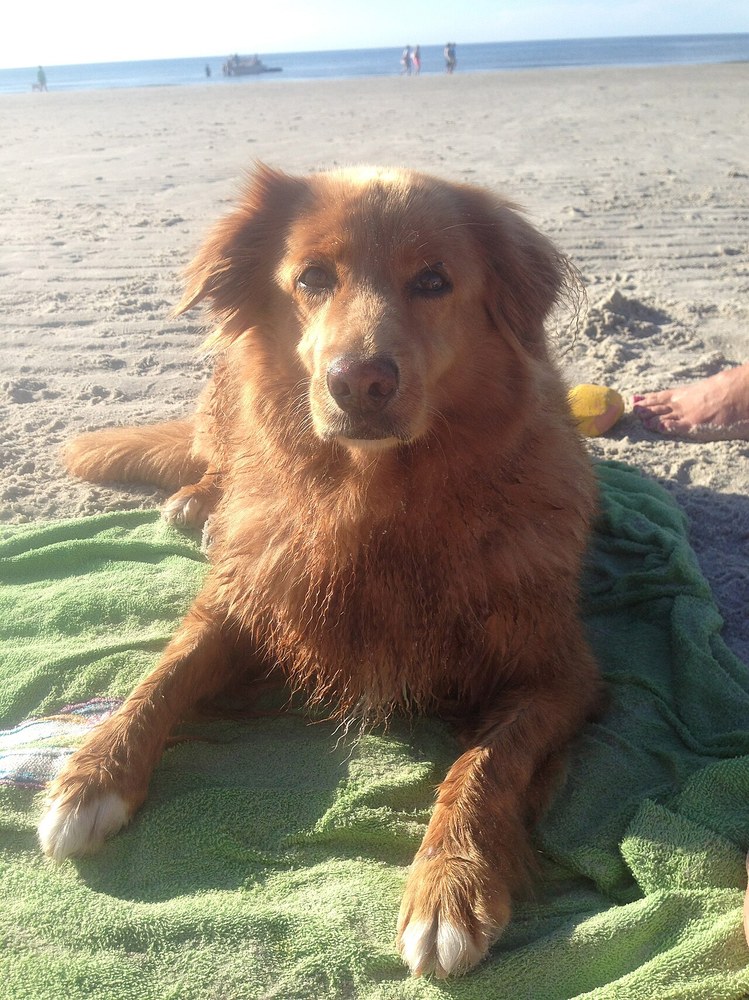
The Toller is the provincial dog of Nova Scotia and is popular in agility, obedience and dock diving.
Meet the parents and see their energy, their voice and how calmly they settle.
Nova Scotia Duck Tolling Retriever · Sporting
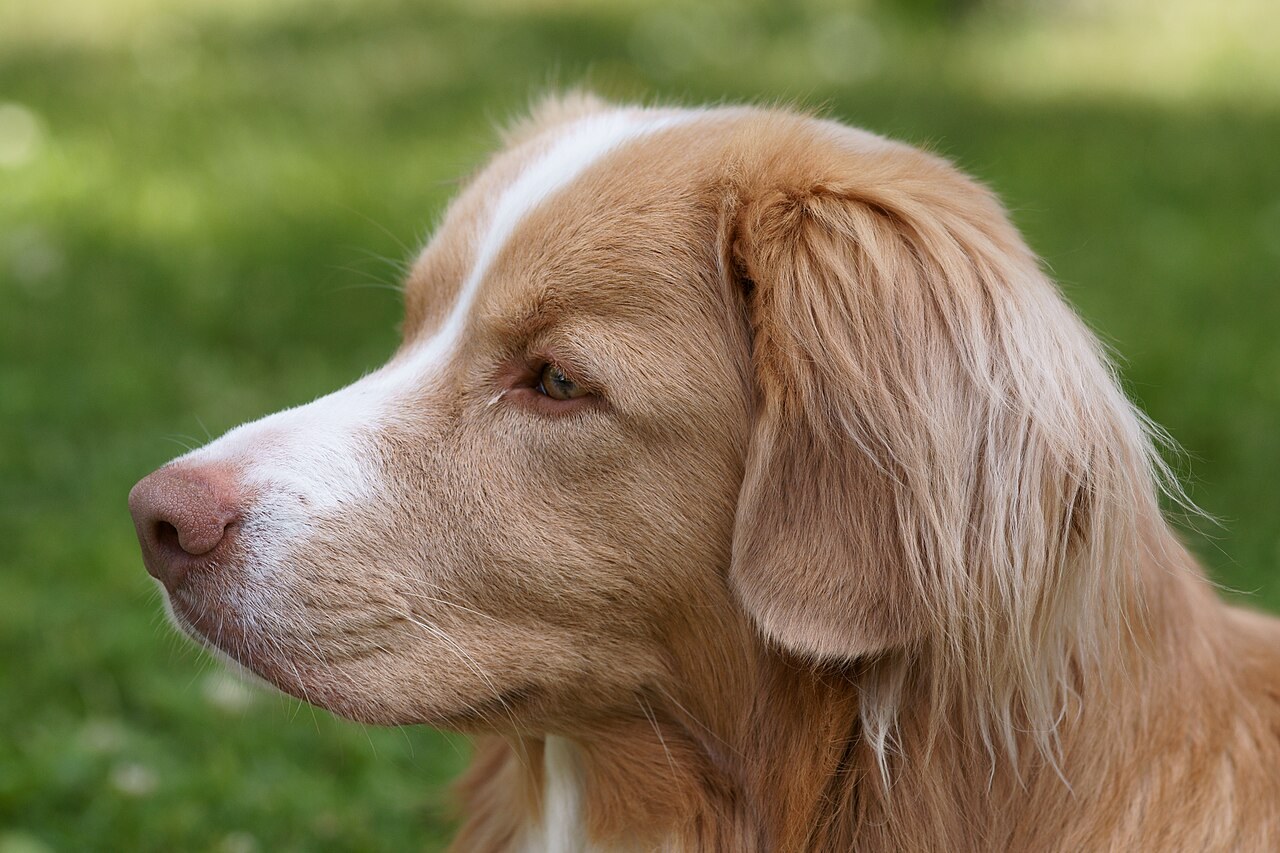
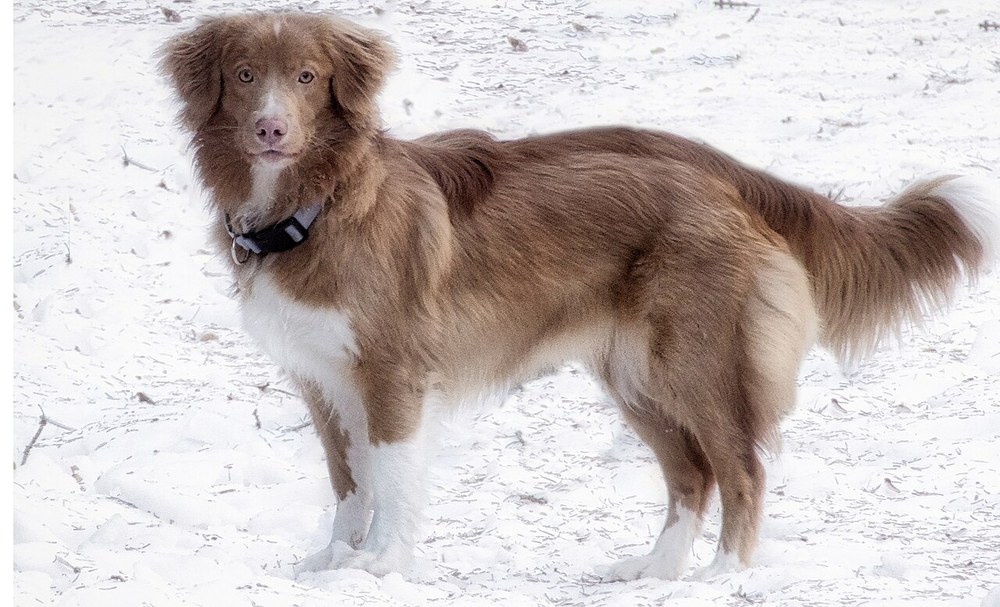
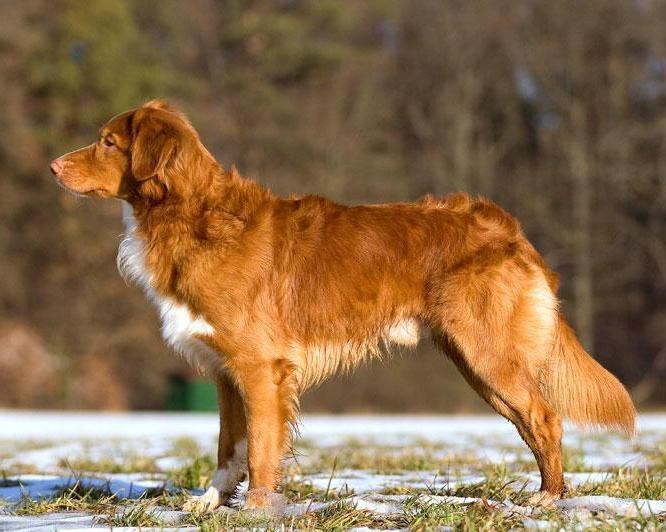
The Nova Scotia Duck Tolling Retriever is the smallest retriever, a red Canadian water dog with white markings and a busy tail. Most are clever, playful and keen to work, and some are vocal and reserved with strangers. Life goes well with varied training, retrieve games with an end, a taught settle and calm visitor routines.
First, the point
Public breed histories describe a Nova Scotia dog that played on the shore to lure ducks, then retrieved them.
Most Tollers are smart and affectionate. Typical struggles are the high-pitched scream, restlessness, chasing and endless fetch.
In the first months I teach a settle, trades, recall and calm meetings with strangers.
Breed history
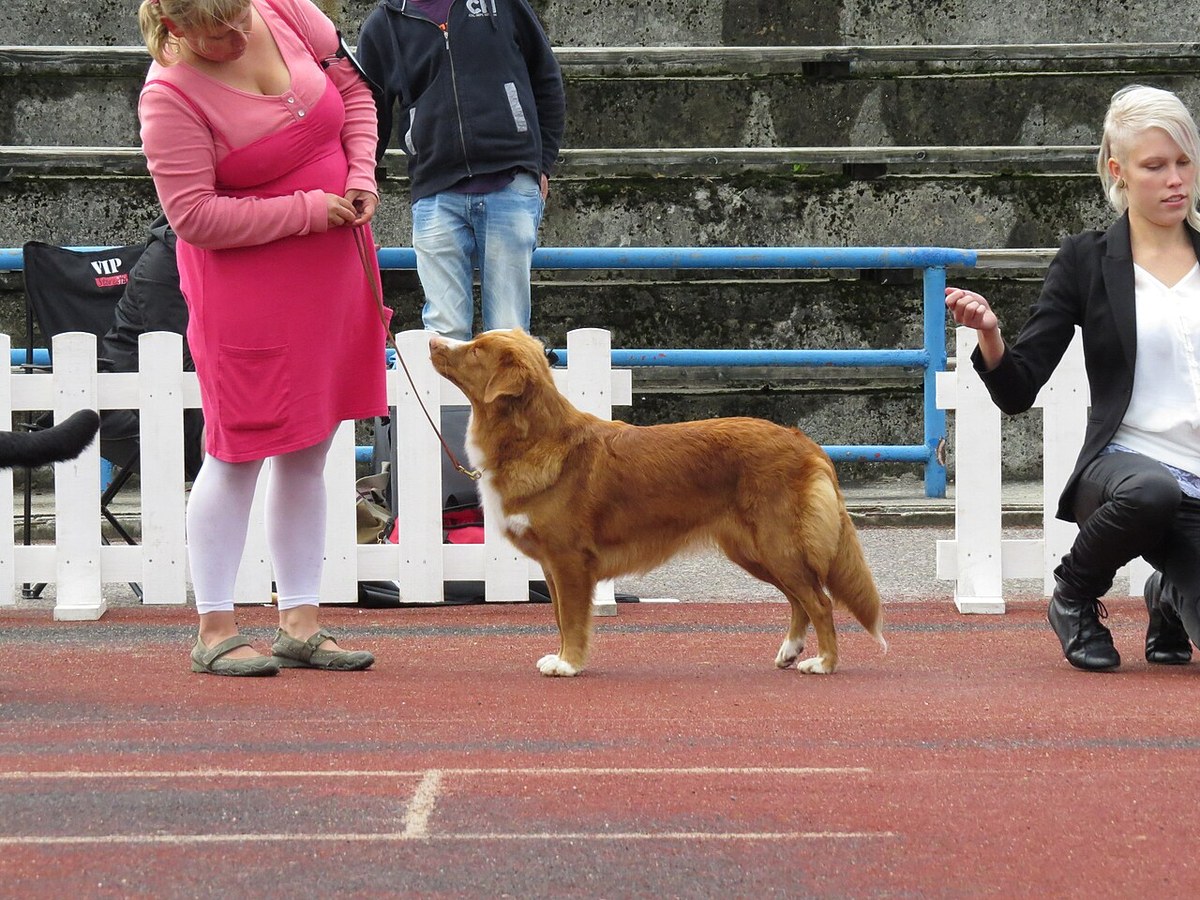
The Nova Scotia Duck Tolling Retriever comes from Nova Scotia in eastern Canada. Hunters used it to “toll” ducks: the dog played along the shore, and curious ducks swam closer. Then it retrieved the birds from cold water. That job made a clever, playful, busy dog.
Nova Scotia, 1800s → duck tolling dog
Public breed histories describe hunters in the Yarmouth area of Nova Scotia using lively red dogs to draw ducks in.
The dog ran and played at the water’s edge, then swam out to retrieve.
Canadian breed → sport and family dog
The Toller is the provincial dog of Nova Scotia and is popular in agility, obedience and dock diving.
Meet the parents and see their energy, their voice and how calmly they settle.
What the breed was bred for
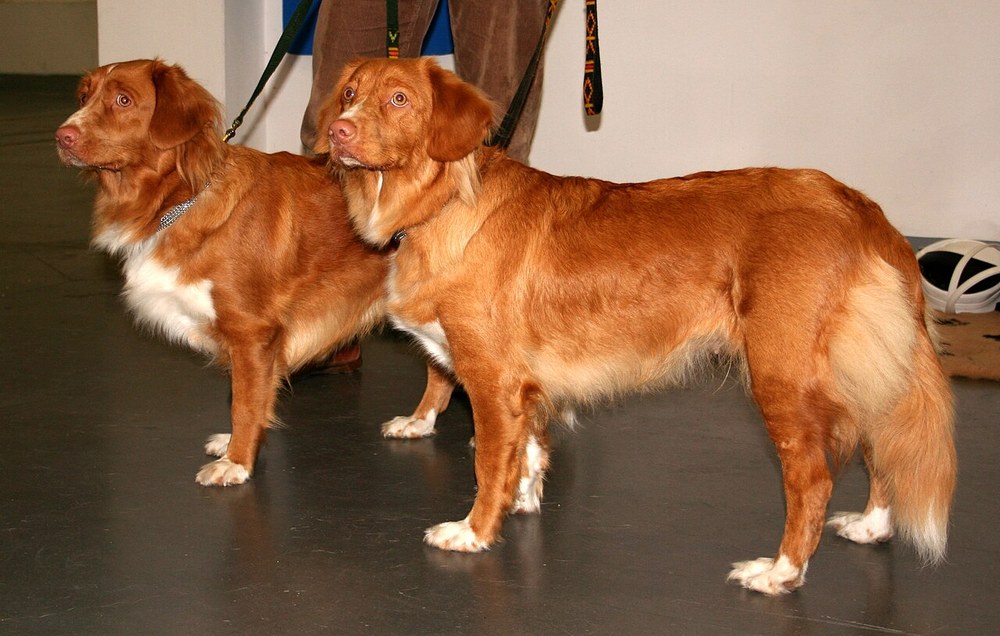
In plain trainer language: Tollers are smart, keen and love to work with you, but they get bored fast.
The hard parts are the high-pitched “Toller scream” when excited, restlessness, chasing, wariness with strangers and endless fetch. Varied training, a taught settle and retrieve games with an end help most.
Public references: FCI 312, AKC Nova Scotia Duck Tolling Retriever, RKC.
Life together
Tollers need exercise for body and brain. After that, most are affectionate and cuddly.
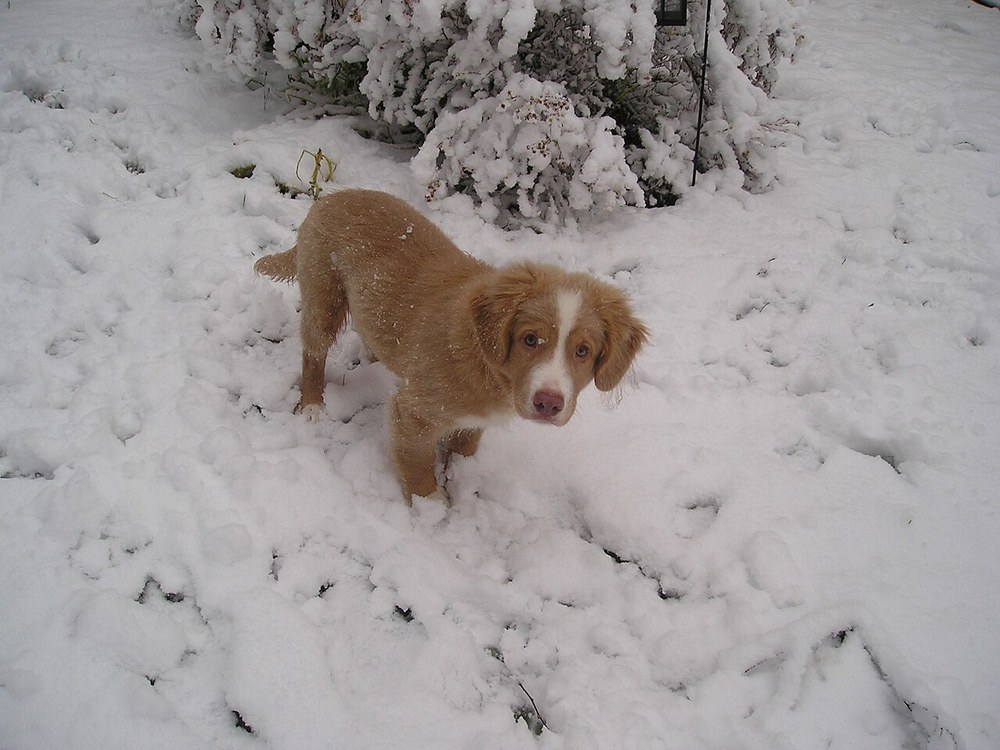
The double coat handles cold. Keep the long line on near water.
See long-line recall.
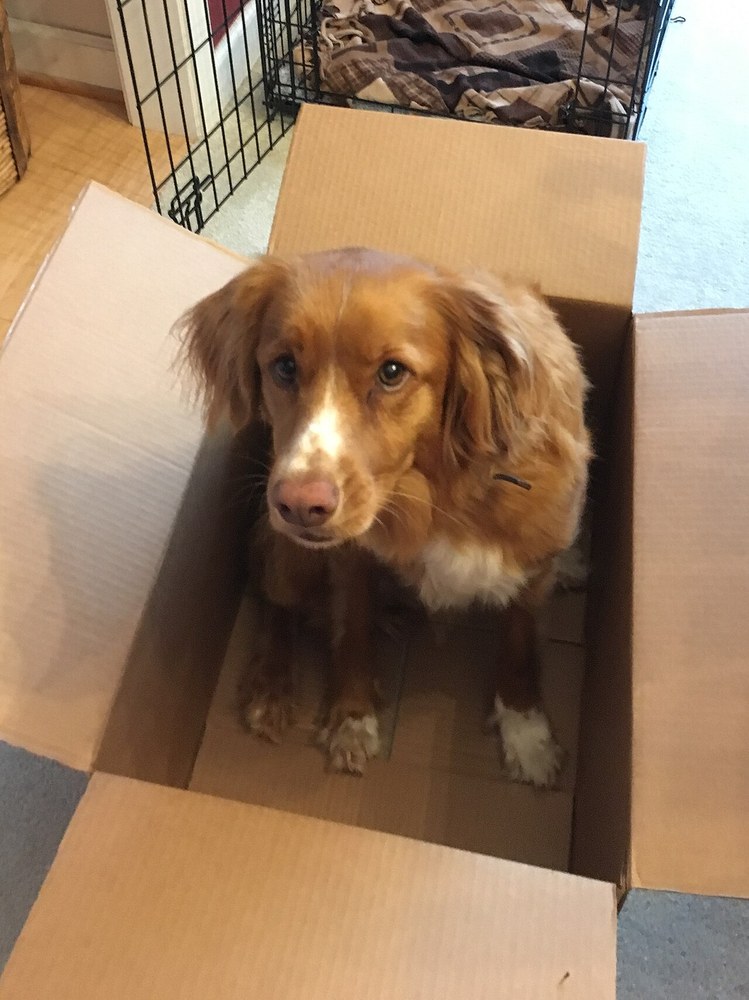
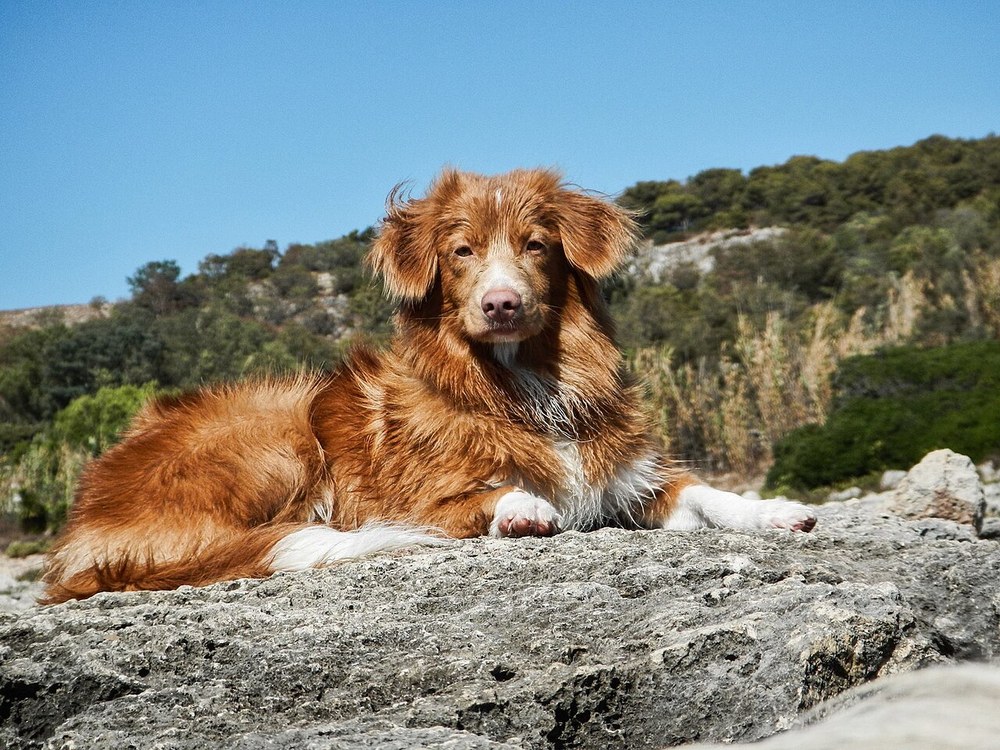
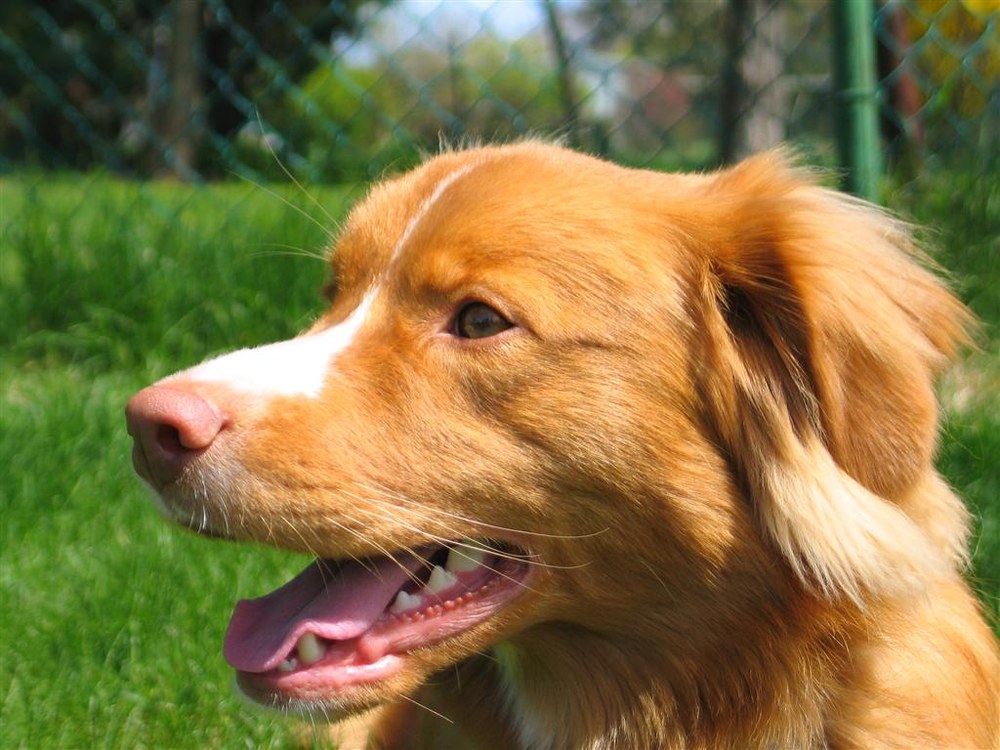
Tollers learn fast. Short, varied sessions keep them keen.
See name check-in.
Care and health themes
A trainer’s checklist, not veterinary advice. See a vet for ear smell, limping, itching, eye changes or low energy. For urgent signs, see when to call the vet.
Brush weekly, more during seasonal shedding.
Dry after swimming; check for smell.
Watch for redness or cloudiness.
Keep lean and fit.
Ask the breeder which screenings the national breed club recommends, including eye and DNA tests, and see results for both parents.
I do not publish toxin amounts. Call a vet or poison-control line if the dog eats something dangerous.
Lines and types
All Tollers are red or orange with white markings. Some lines are bred for field work, others for sport and family life.
Best for very active homes.
Still a busy dog.
Socialization windows
AVSAB-aligned in spirit: short, clean exposures at a distance the puppy can still eat, with hygiene while vaccines finish. See the puppy socialization schedule.
Introduce: calm people, handling, trades, toilet routine.
Do not overload: endless fetch.
Introduce: recall on a long line, settle, calm greetings.
Do not overload: rewarding screaming.
Introduce: agility basics, scent games, door routine.
Do not overload: long, repetitive drills.
Introduce: dock diving, agility, hunting.
Do not overload: too little brain work.
Introduce: refreshed settle and recall.
Do not overload: boredom.
Before you buy
A Toller suits active people who enjoy training and want a clever, medium-sized partner.
Good match
Mismatch risk
If you are torn between breeds
Tollers are compared with Golden Retrievers and Brittanys.
Nova Scotia Duck Tolling Retriever Medium, the smallest retriever.
Golden Retriever Larger.
Nova Scotia Duck Tolling Retriever Often reserved.
Golden Retriever Usually very friendly.
Nova Scotia Duck Tolling Retriever Can scream when excited.
Brittany Usually less vocal.
Nova Scotia Duck Tolling Retriever Retrieving from water.
Brittany Pointing birds.
Nova Scotia Duck Tolling Retriever High.
Both compares All need daily exercise.
Ownership without surprises
Prices vary by country. These are the spending themes, not figures.
Agility, dock diving or gundog clubs.
Ask which screenings the national breed club recommends.
Retrieve toys and puzzles.
Brushes for shedding seasons.
Classes and sport coaching.
Consider it early.
With a Toller, time for training and games matters most.
Before day one at home
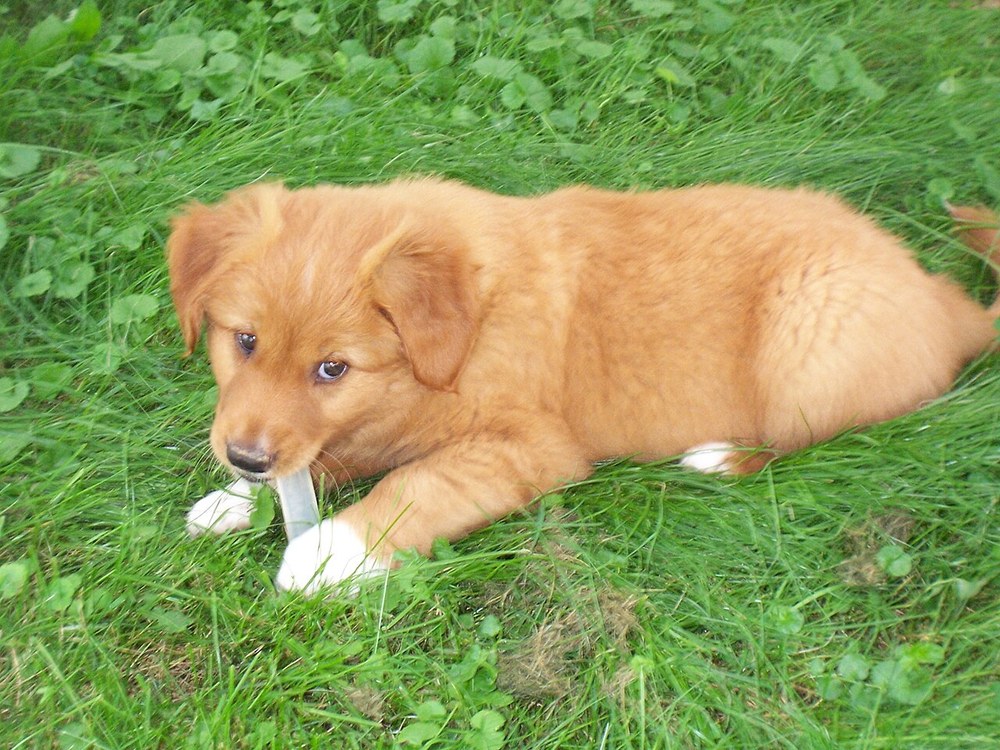
A Toller puppy is bright and busy. Start a settle, trades and calm meetings early.
See calm reinforcer.
See drop it.
See enforced naps.
Follow potty training.
See biting and nipping.
If the dog is already yours
Tollers learn very fast but get bored with repetition. Change the game often.
My core list: a settle, recall, trades and calm visitor routines.
Agility, dock diving and scent work are ideal outlets.
Load balance
A mix of brain work, exercise and a taught settle suits most Tollers.
Retrieves, swimming, short training and a taught settle suit most Tollers.
A Toller with a job and an off-switch is a joy to live with.
Fetch with an end
Use a cue to start and a cue to finish, then give a chew or a rest.
Fetch begins when you say.
A few throws only.
Same word every time.
Out of sight.
Calm activity next.
One scene close-up
Tollers were bred to retrieve again and again from cold water.
Start fetch on a cue and finish with a clear word, then put the toy away.
Give a chew or a sniff game after the last throw.
Typical household scenes
A breed page is only a starting point; the fix depends on health, environment, and the dog in front of you. Each row opens a step-by-step guide.
Cannot switch off.
High-pitched noise when excited.
Never wants to stop.
Birds and small animals.
Needs time to warm up.
Bouncy hellos.
Unsettled when left.
Limping, itching or low energy — vet first.
Practical view
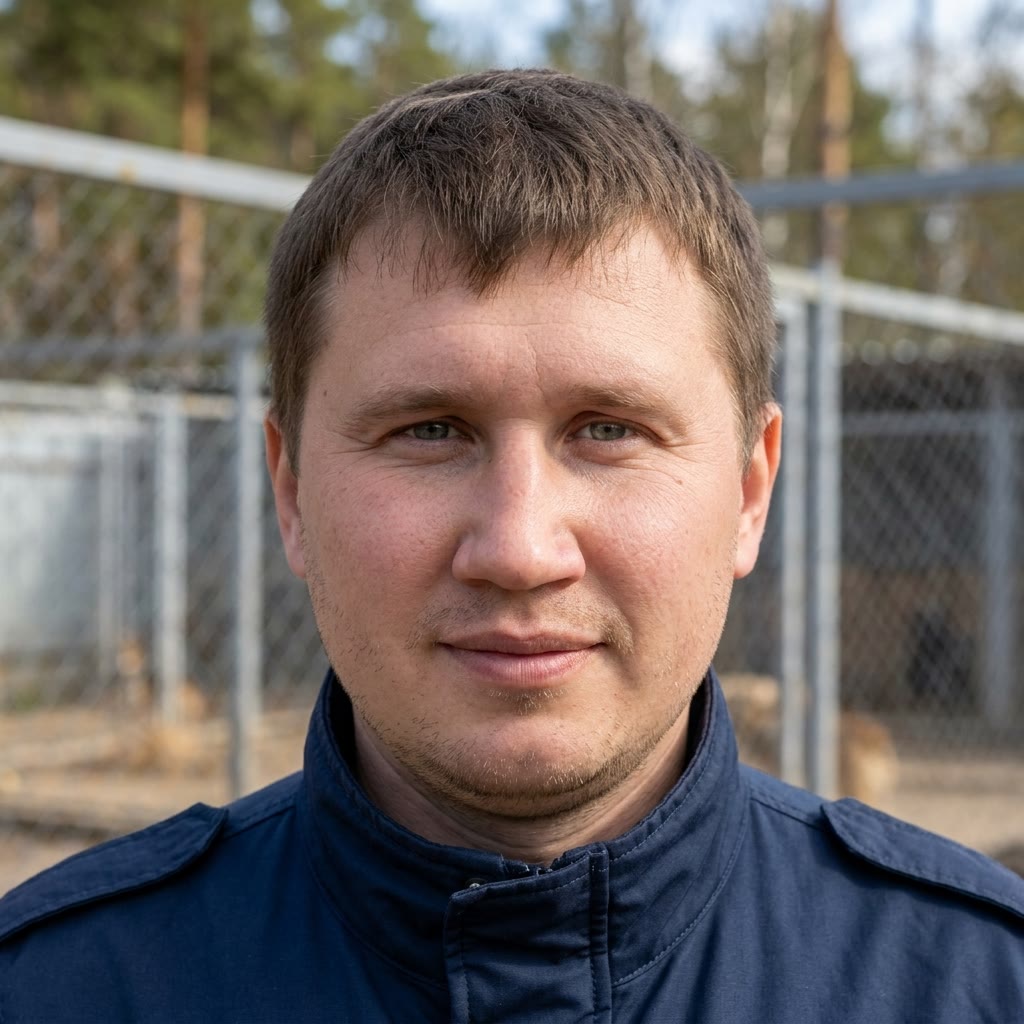
“With a Toller, I keep training short and varied. We build a settle, fetch with an end and calm visitor routines — because a clever dog gets bored fast.”
Sessions cover real scenes: screaming when excited, restlessness, endless fetch, and wariness with strangers. I am a trainer, not a veterinarian. No invented reviews.
Describe age, living setup, and where the dog breaks first — restlessness, screaming when excited, endless fetch, or wariness with strangers. Opens WhatsApp to Andrew.
Short answers
If you want a gentle, affectionate dog with lower exercise needs, consider this one.
A fetching, people-facing sporting dog whose gold coat does not lower the daily mileage.
A cheerful, glossy British retriever that stays playful for years and needs daily exercise, retrieve games and calm greeting practice.
A friendly, food-loving retriever that needs daily exercise, training and a job for its nose and mouth.
Gentle, affectionate small spaniel that loves company.
Other guides from the same group in the breed library. Same group does not mean same dog: read the fit and the failure modes, not only the outline.
A gentle, patient Italian hunting dog with a rough coat that needs sniffing walks, kind training and kitchen manners.
An affectionate, sensitive Hungarian pointer that needs daily running, slow alone-time training and a taught settle.
A strong, loyal German hunting dog with a sleek grey coat that needs hard daily exercise, slow alone-time training and solid recall.
A loyal, active red and white Welsh spaniel that needs daily sniffing walks, slow alone-time training and calm social outings.
A friendly, loyal rough-coated gundog that needs daily walks and swims, slow alone-time training and regular coat care.
A gentle, affectionate American spaniel with a long silky coat that needs kind handling, regular grooming and ear care.
Describe your Nova Scotia Duck Tolling Retriever’s age and the scene that repeats most: restlessness, screaming when excited, endless fetch, or wariness with strangers. We check safety first, then pick the first skill.
Written by Andrew Darov, professional dog trainer. Not veterinary advice and not a diagnosis.
Not a kennel club. No invented reviews. No vaccine schedules or toxin doses. Photo credits in
/images/breeds/nova-scotia-duck-tolling-retriever-guide/credits.md.