dogmindlab
Work with me

English Setter · Sporting

English Setter: temperament, training & bird-dog elegance

The English Setter is an elegant British bird dog with a speckled “belton” coat and long, silky feathering. Most are gentle, sociable and playful. Life goes well with long-line freedom every day, kind and patient training, regular brushing and calm greeting practice.

  • Job: British setting dog that found and held birds.
  • Energy: High; daily running on a long line.
  • Home: Best with active, patient owners and space to run.
WhatsApp consult

First, the point

An English Setter is a gentle bird dog that needs long-line freedom, patient recall work and regular brushing

Public breed histories describe an old British setting dog that found birds and froze in a crouch.

Most English Setters are friendly and soft. Typical struggles are recall around birds, pulling, jumping up and a long puppyhood.

In the first months I teach recall games, loose-lead walking, calm greetings and a settle.

Talk through your situation

Height
23–27 in (58–69 cm)
Weight
45–80 lb (20–36 kg)
Energy
High (run then rest)
Coat / shed
Long feathered coat — sheds; brush a few times a week
Job
British setting dog that found and held birds

Breed history

A gentle bird dog with a speckled coat

The English Setter is one of the oldest gundogs in Britain. It was bred to find birds and then crouch or “set” so hunters could net or shoot them. That job made a gentle, sociable dog with a strong nose and a love of running.

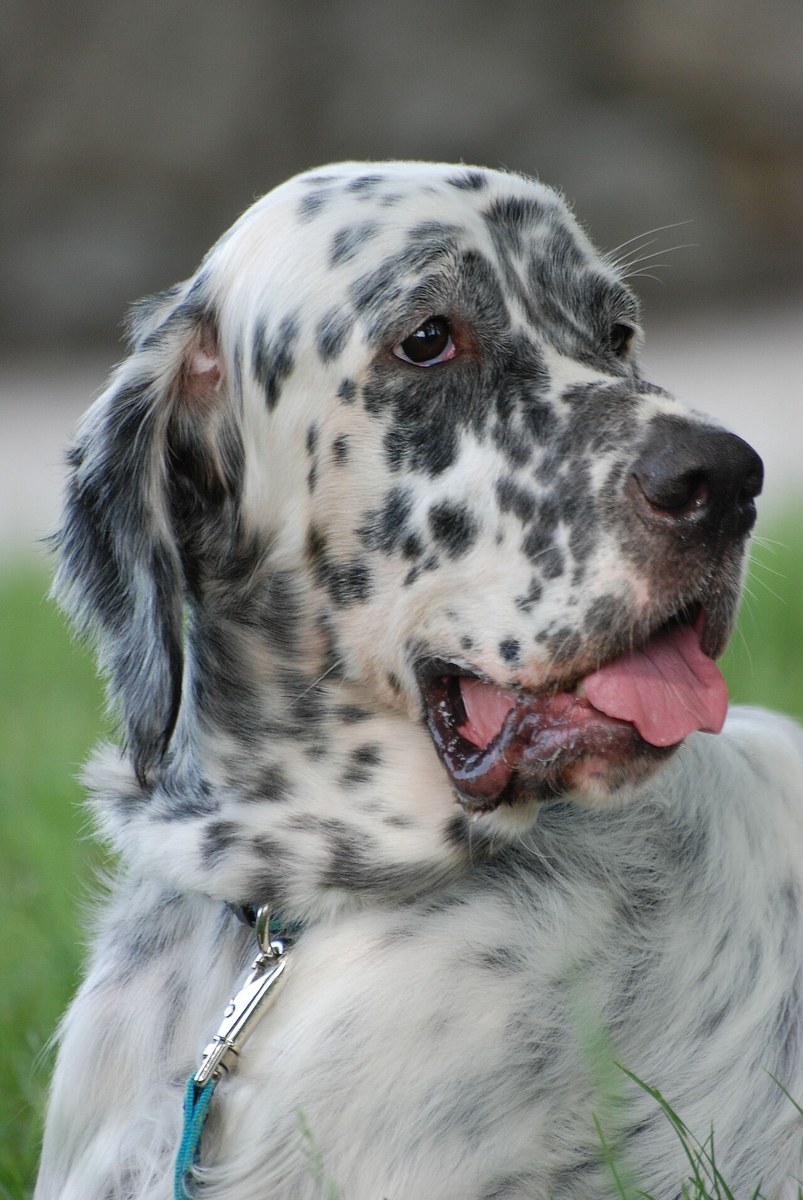
A young blue belton setter in the garden (modern photograph). Setters keep their puppy playfulness for a long time.

Britain, 1500s–1800s → setting bird dog

Built to find and hold birds

Public breed histories describe setting dogs in Britain for centuries. In the 1800s, breeders such as Edward Laverack and Purcell Llewellin shaped the modern English Setter.

The dog ranged wide, found birds by scent and froze until the hunter arrived.

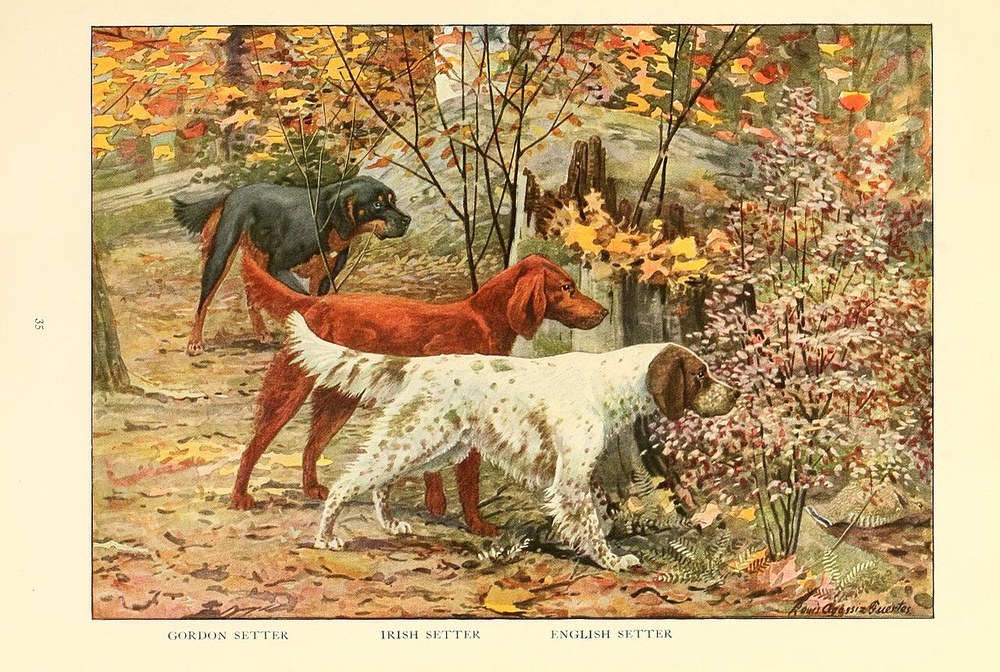
Old illustration of English, Irish and Gordon setters in an autumn wood
English, Irish and Gordon setters in an early illustration (historical image). The English Setter is the speckled one.

Field and show lines → family dog

Speckles called belton

The speckled pattern is called belton. Show setters are often larger with more coat; field setters are lighter and faster.

Meet the parents and see their energy and how gently they greet people.

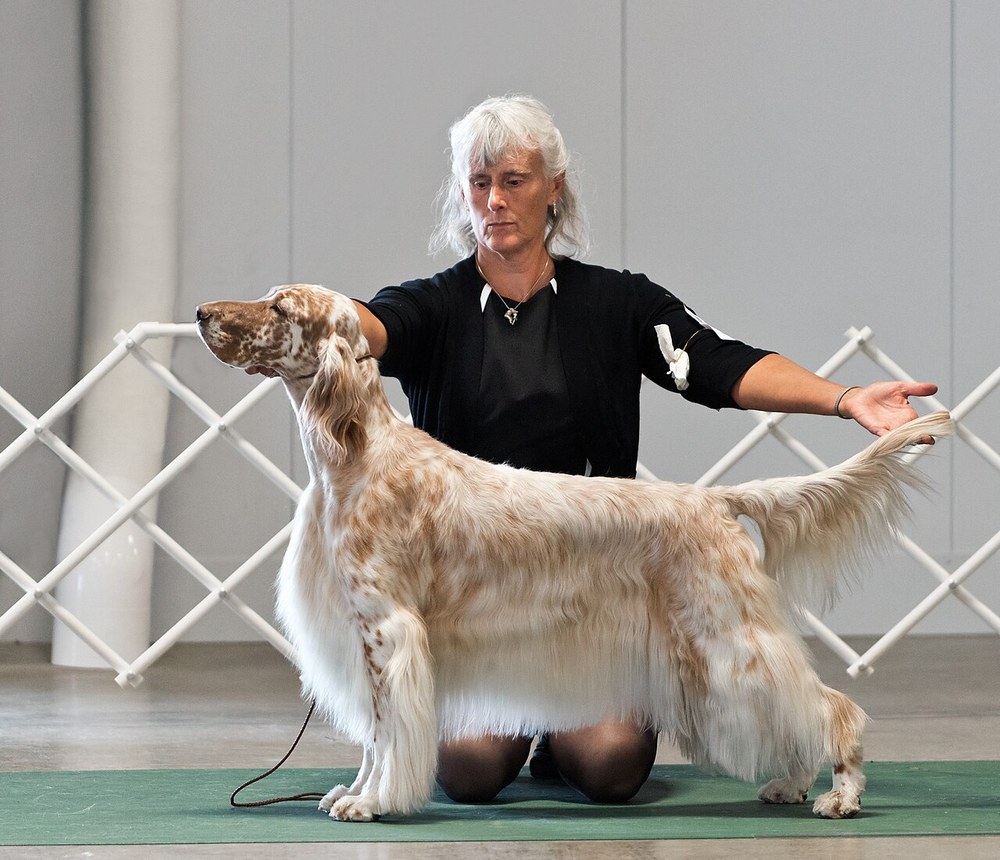
Orange belton English Setter stacked at a dog show
An orange belton setter in the show ring (modern photograph). The long feathering needs regular brushing.

What the breed was bred for

Gentle, sociable and playful

In plain trainer language: English Setters are soft, friendly and slow to grow up.

The hard parts are recall around birds, pulling, jumping up, a long puppyhood and coat care. Long-line freedom and kind, patient training help most.

  • Long-line freedom every day
  • Kind, patient training
  • Regular brushing
  • Calm greeting practice

Public references: FCI 2, AKC English Setter, RKC.

Life together

An English Setter’s day is a long run and a soft sofa

Setters need room to stretch their legs. After that, most are gentle and cuddly at home.

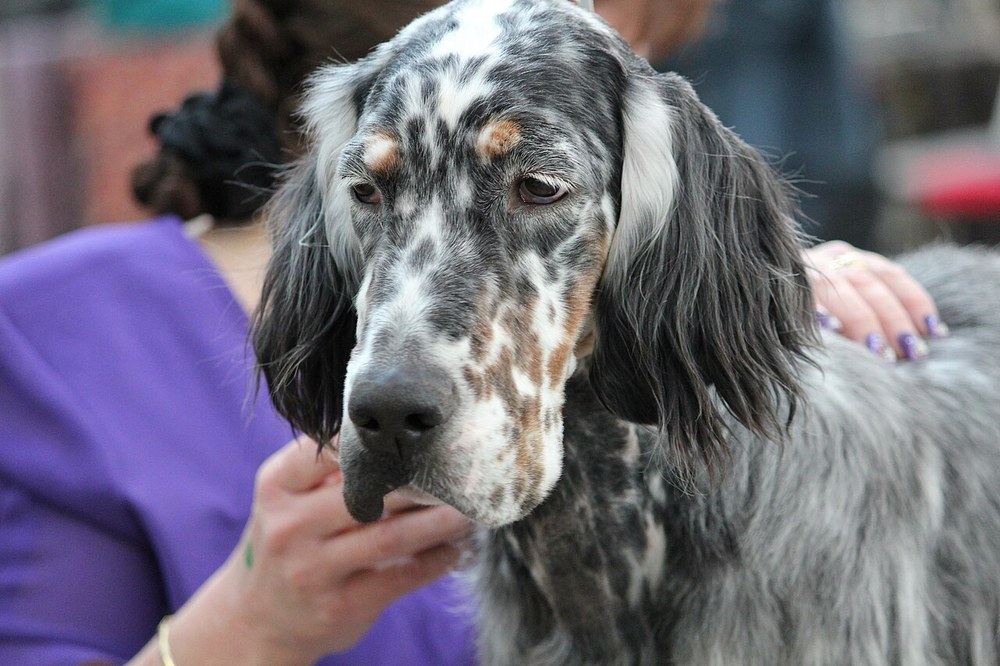
Tricolour English Setter head at a show
Show · head

A gentle face

Setters are usually friendly with everyone. Teach a calm hello.

See sit for greeting.

Orange belton English Setter standing at a dog show
Ring · orange belton

Graceful and calm in the ring

Standing still for handling is a useful skill at the vet too.

See puppy handling.

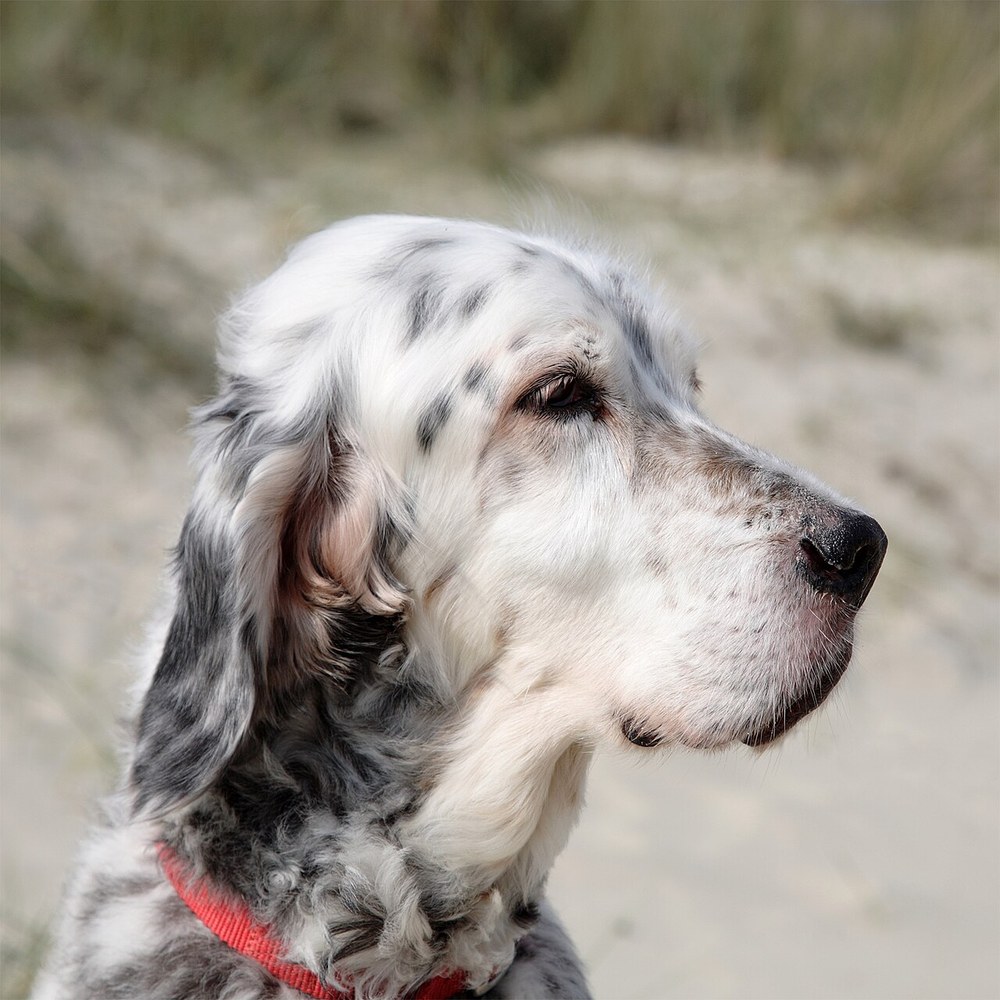
Blue belton English Setter head in profile
Outdoors · profile

Nose in the air

Setters follow bird scent. Recall needs patient practice.

See emergency U-turn.

Care and health themes

Monthly checks: coat, ears, weight and hearing

A trainer’s checklist, not veterinary advice. See a vet for ear smell, limping, itching or low energy, or if the dog seems not to hear you. For urgent signs, see when to call the vet.

Coat

Brush feathering a few times a week; check for burrs.

Ears

Check for seeds and smell.

Weight

Keep lean and athletic.

Hearing

Ask the breeder about hearing tests for the puppies.

Health screening (not a diagnosis)

Ask the breeder which screenings the national breed club recommends, including hip scores, and see results for both parents.

Toxins

I do not publish toxin amounts. Call a vet or poison-control line if the dog eats something dangerous.

Lines and types

Blue, orange, lemon, liver or tricolour belton

English Setters are white with speckles called belton, in several colours.

Blue or tricolour

  • Black speckles; tricolour adds tan.
  • Same coat care.
  • Same gentle nature.
  • Same needs.

The classic speckled look.

Orange, lemon or liver

  • Warm-coloured speckles.
  • Same coat care.
  • Same gentle nature.
  • Same needs.

A softer, warmer look.

Socialization windows

What to introduce — and what not to overload — by age

AVSAB-aligned in spirit: short, clean exposures at a distance the puppy can still eat, with hygiene while vaccines finish. See the puppy socialization schedule.

8–16 weeks

Gentle start

Introduce: name games, handling, brushing, toilet routine.

Do not overload: rewarding jumping.

~5–7 months

Long-line walks

Introduce: long-line freedom, loose-lead walking, calm greetings.

Do not overload: off-lead near birds and roads.

~9–12 months

Long puppyhood

Introduce: recall games, scent work, place.

Do not overload: expecting adult calm.

~1.5–2 years

Adult running

Introduce: field work, canicross, long hikes.

Do not overload: running before growth ends without vet advice.

2 years+

Gentle adult

Introduce: refreshed recall and greetings.

Do not overload: too little running.

Before you buy

Who an English Setter usually fits

An English Setter suits active, gentle people who want a friendly, beautiful dog and have space to let it run.

Good match

More likely a good fit if you…

  • Walk or run long distances
  • Have safe places for free running
  • Like a gentle, sociable dog
  • Will brush regularly
  • Can be patient with a slow-maturing dog

Mismatch risk

An English Setter may be a poor choice if…

  • Walks are short and rare
  • Pet birds or poultry roam freely
  • You want quick obedience
  • Long hours alone are routine
  • Grooming time is short

If you are torn between breeds

English Setter vs Irish Setter and Gordon Setter

English Setters are compared with the Irish and Gordon setters.

Colour

English Setter White with belton speckles.

Irish Setter Solid red.

Energy

English Setter High but gentle.

Irish Setter Very high, bouncy.

Colour

English Setter Speckled.

Gordon Setter Black and tan.

Build

English Setter Elegant.

Gordon Setter Heavier, sturdier.

Running

English Setter Needs a lot.

Both compares All setters need room.

Ownership without surprises

What an English Setter costs to keep

Prices vary by country. These are the spending themes, not figures.

Grooming

Brushes and occasional trims.

Long line and harness

For safe freedom.

Health checks

Ask which screenings the national breed club recommends.

Secure field hire

Safe running space.

Training

Classes and field clubs.

Insurance

Consider it early.

With an English Setter, safe running space is the biggest need.

Before day one at home

What to prepare for an English Setter puppy

An English Setter puppy is soft, curious and slow to grow up. Start recall games and calm greetings early.

If the dog is already yours

Training a setter is gentle and patient

English Setters are soft and easily worried by harsh words. Use food, praise and patience.

My core list: recall, loose-lead walking, calm greetings and a settle.

Field work, scent games and long hikes suit them well.

Load balance

A long run, then rest

A long run followed by rest suits most English Setters.

Run Sniff Train Brush Sleep

Running, scent games, short training and a brush suit most English Setters.

A setter that runs daily is a gentle family dog.

Recall

How to build recall with an English Setter

Long line, patient practice and a big reward for every return.

  1. 01

    Long line on

    Freedom with safety.

  2. 02

    Call once

    Then encourage.

  3. 03

    Reward big

    Food or play.

  4. 04

    Add birds slowly

    Distance first.

  5. 05

    Practise daily

    Short sessions.

One scene close-up

Why your setter runs off

Setters were bred to range wide and find birds.

Practise recall on a long line and reward with food or a game.

Add bird scent slowly, and keep the line on in open country.

Long-line recall Emergency U-turn Name check-in

Typical household scenes

Where English Setter owners most often need help

A breed page is only a starting point; the fix depends on health, environment, and the dog in front of you. Each row opens a step-by-step guide.

Practical view

“With an English Setter, I give freedom on a long line first. We build recall, calm greetings and a settle — because a setter that runs every day is a gentle housemate.”

Sessions cover real scenes: running off after birds, pulling on the lead, jumping up, and counter surfing. I am a trainer, not a veterinarian. No invented reviews.

Andrew Darov Professional dog trainer and instructor
WhatsApp consult

Talk through your English Setter

Describe age, living setup, and where the dog breaks first — running off after birds, pulling on the lead, jumping up, or counter surfing. Opens WhatsApp to Andrew.

Short answers

FAQ

Is an English Setter a good first dog?
Yes for patient, active owners.
Are English Setters good with children?
Usually gentle and playful.
Do English Setters shed?
Moderately; brush the feathering.
How much exercise does an adult need?
A lot: daily running.
What does belton mean?
The speckled pattern on the coat.
When do setters calm down?
Often around two to three years.
Can an English Setter live in a flat?
Only with lots of daily running.
Are setters good with cats?
Many are; supervise at first.
What about health?
Ask which screenings the national breed club recommends and see the parents' results.
What is the typical lifespan of an English Setter?
Public breed references often give about 10 to 12 years. Individual dogs vary.
Field or show setter?
Field setters are lighter and busier; show setters have more coat.

If a setter’s running needs are too much

If you want a gentle, elegant dog with short bursts of speed and an easy coat, consider this one.

Irish Setter

A joyful, friendly red setter from Ireland that needs daily running, patient recall practice and a taught settle.

Brittany

A keen, friendly French bird dog that needs daily running, long-line recall training and a taught settle at home.

English Springer Spaniel

A friendly, eager British flushing spaniel that needs daily exercise, scent work, long-line recall and a taught settle.

Whippet

Gentle, quiet sighthound that sprints, then naps.

More Sporting group breeds

Other guides from the same group in the breed library. Same group does not mean same dog: read the fit and the failure modes, not only the outline.

Flat-Coated Retriever

A cheerful, glossy British retriever that stays playful for years and needs daily exercise, retrieve games and calm greeting practice.

German Shorthaired Pointer

An energetic, affectionate German hunting dog that needs hard daily exercise, long-line recall and a taught settle at home.

German Wirehaired Pointer

A tough, loyal German hunting dog with a wiry coat that needs hard daily exercise, early socialising and a taught settle.

Golden Retriever

A fetching, people-facing sporting dog whose gold coat does not lower the daily mileage.

Gordon Setter

A loyal, steady Scottish setter with a black and tan coat that needs long-line freedom, calm socialising and regular brushing.

Labrador Retriever

A friendly, food-loving retriever that needs daily exercise, training and a job for its nose and mouth.

Need a read on your exact situation?

Describe your English Setter’s age and the scene that repeats most: running off after birds, pulling on the lead, jumping up, or counter surfing. We check safety first, then pick the first skill.

Written by Andrew Darov, professional dog trainer. Not veterinary advice and not a diagnosis. Not a kennel club. No invented reviews. No vaccine schedules or toxin doses. Photo credits in /images/breeds/english-setter-guide/credits.md.