Thai Ridgeback: temperament, prey drive, recall and training
The Thai Ridgeback is an old village and hunting dog from eastern Thailand, with a short, sleek coat and a strip of hair along the spine that grows the wrong way. For centuries it lived with little human control: it hunted small game, followed carts and warned the household about strangers. That past still shows. Expect a clean, quiet, athletic dog that bonds deeply with its family, makes its own choices, jumps fences with ease, chases anything small that runs and takes its time to trust people it does not know.
Job: A medium-sized primitive hunting dog from Thailand; FCI Group 5 (Spitz and primitive types), AKC Foundation Stock Service.
Energy: Independent, alert and devoted to its own family, reserved or suspicious with strangers.
Home: Suits an experienced owner who will build trust slowly and keep this escape artist safe.
A free-thinking village dog that chooses its people
Owners often describe their first Thai Ridgeback as a cat in a dog's body. It is clean, quiet and dignified at home, and then it clears the garden fence after a squirrel and does not come back for an hour.
Most calls about this breed are about trust and freedom. A young dog that ignores recall in open fields, a dog that hides or growls when guests arrive, tension with other dogs, chasing the neighbour's cat and a puppy that will not be handled at the vet.
My plan respects the independent mind. A long line or a fenced field instead of off-lead hopes, slow and calm handling, guests who leave the dog alone, short reward-based lessons and daily chances to run and hunt in a safe way. With that, the Thai is a loyal, funny and very rewarding companion.
FCI: males about 56–61 cm, females about 51–56 cm at the shoulder
Weight
Roughly 16–34 kg (35–75 lb)
Energy
High in bursts, calm indoors
Coat / shed
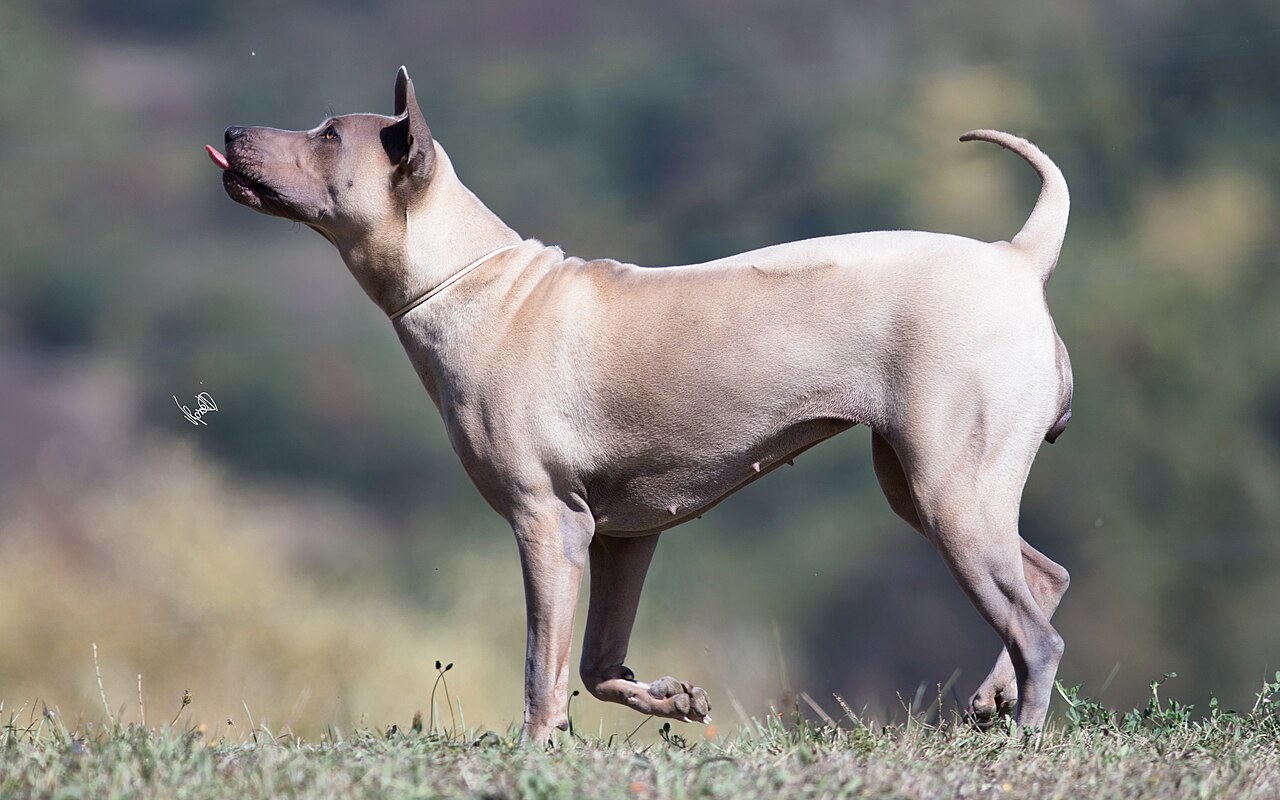
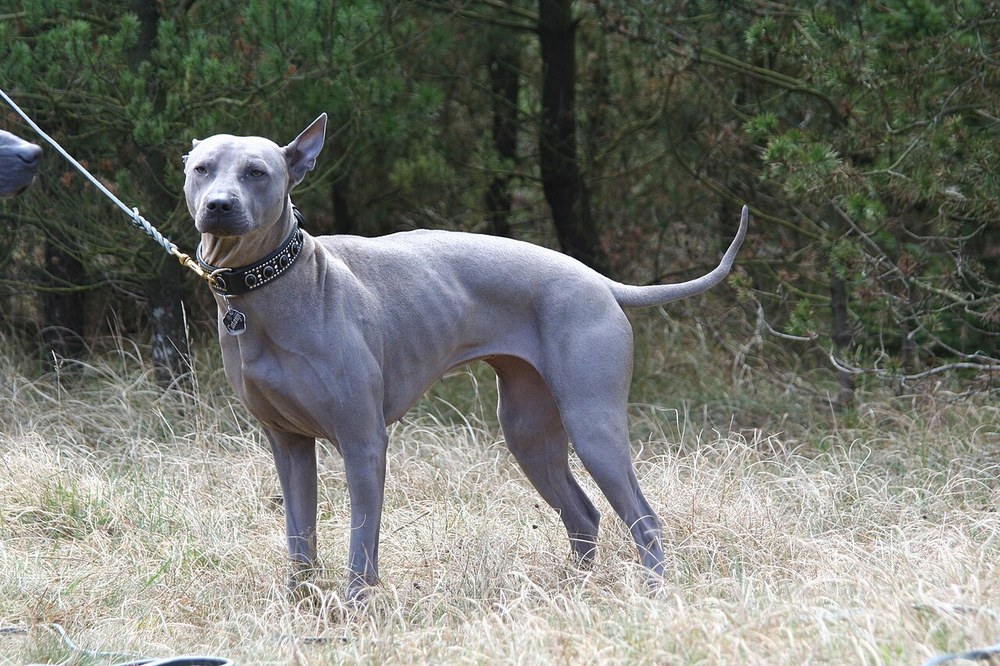
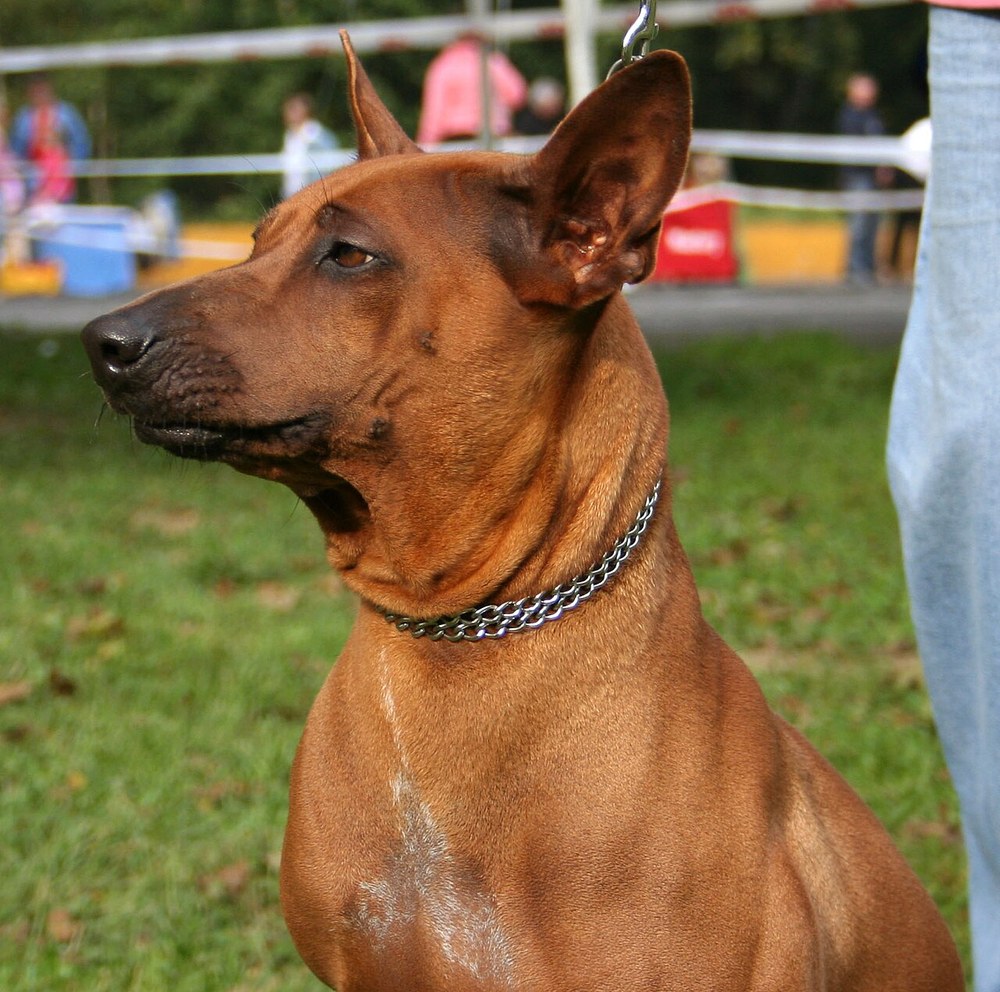
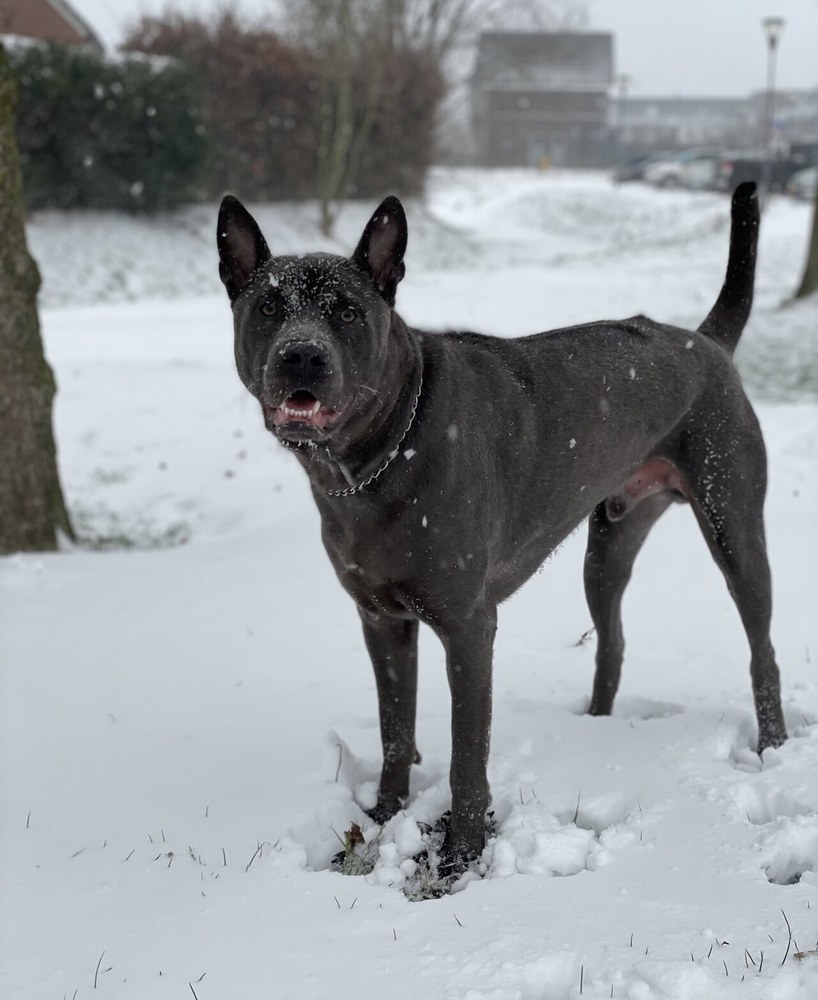
Very short, smooth, single coat with a ridge of reversed hair along the back. Red, black, blue or light fawn (isabella); a black mask is allowed on red dogs
Job
Village watchdog and hunting dog of eastern Thailand; hunted small game and followed travellers and carts
Temperament in one minute
Thai Ridgeback temperament: what they are like at home
Short answer: Thai Ridgebacks are medium-sized, short-coated hunting dogs from Thailand with a ridge of reversed hair on the back. They are clean, quiet and loyal at home, independent and sensitive, wary of strangers and keen to chase small animals. They need about an hour to an hour and a half of activity a day, a long line or fenced area for running, patient, reward-based training and calm, unforced meetings with new people.
Are Thai Ridgebacks affectionate?
Yes, with their own family, often very close. Build short absences early.
The usual four are running off, wariness with guests, fighting handling and escaping. The list below links a guide for each.
Living with a Thai Ridgeback in an apartment
Often fine: quiet indoors, with daily safe runs and careful visitors.
Breed history
From Thai villages to the show ring
Its past as a half-free village hunter explains the independence, the jumping and the slow trust.
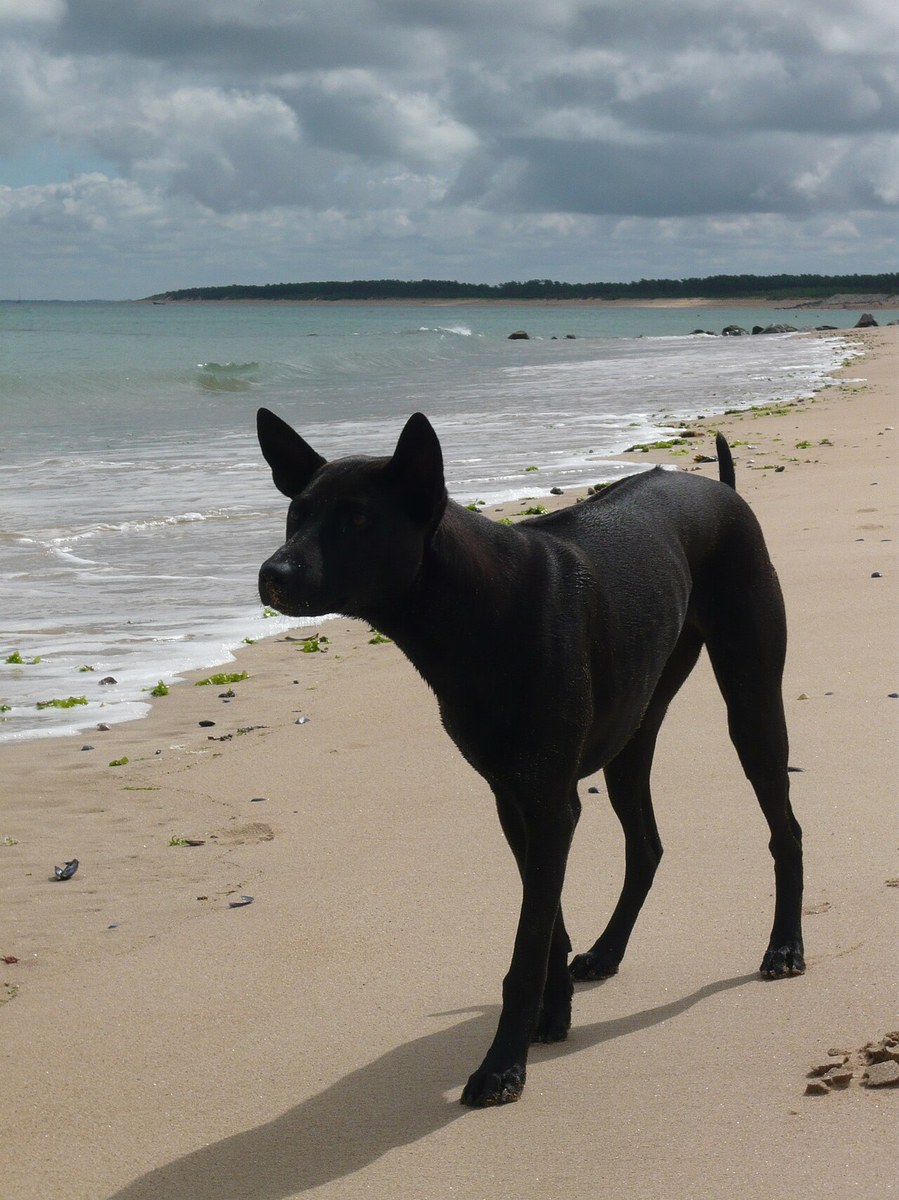
A six-month-old Thai Ridgeback on the beach: young dogs need safe places to run off steam.
Eastern Thailand · centuries of village life
A dog that looked after itself
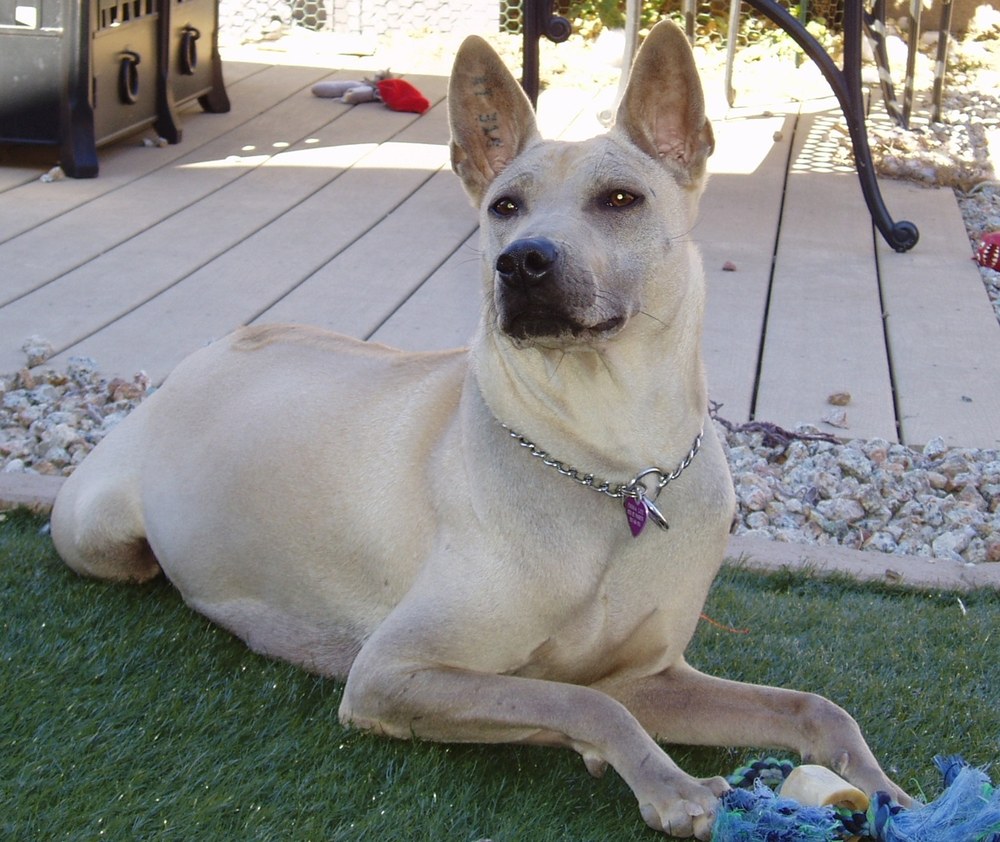
For a very long time ridged dogs lived in the villages of eastern Thailand. Few outsiders saw them, so they kept a primitive build: a wedge-shaped head, upright ears, a sickle tail and a tough, lean body.
These dogs hunted rats, birds and other small game, guarded homes at night and trotted alongside carts. Owners did not control their breeding much, so the dogs that survived were alert, quick, healthy and good at finding their own food.
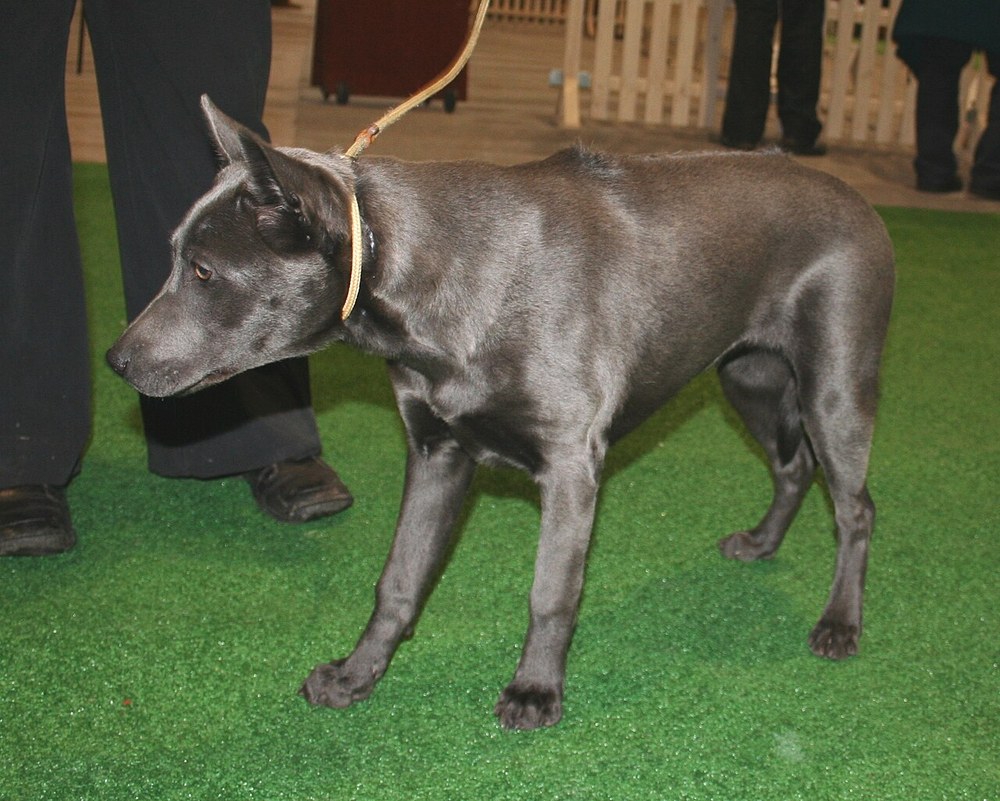
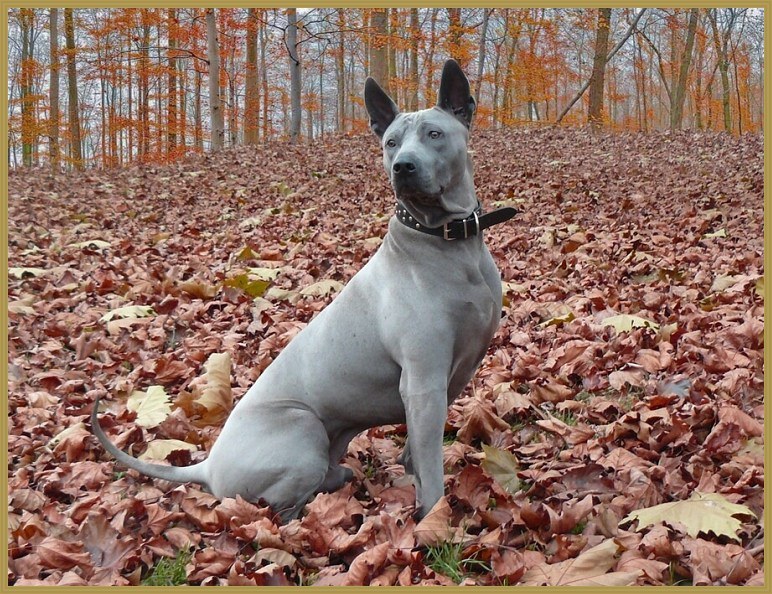
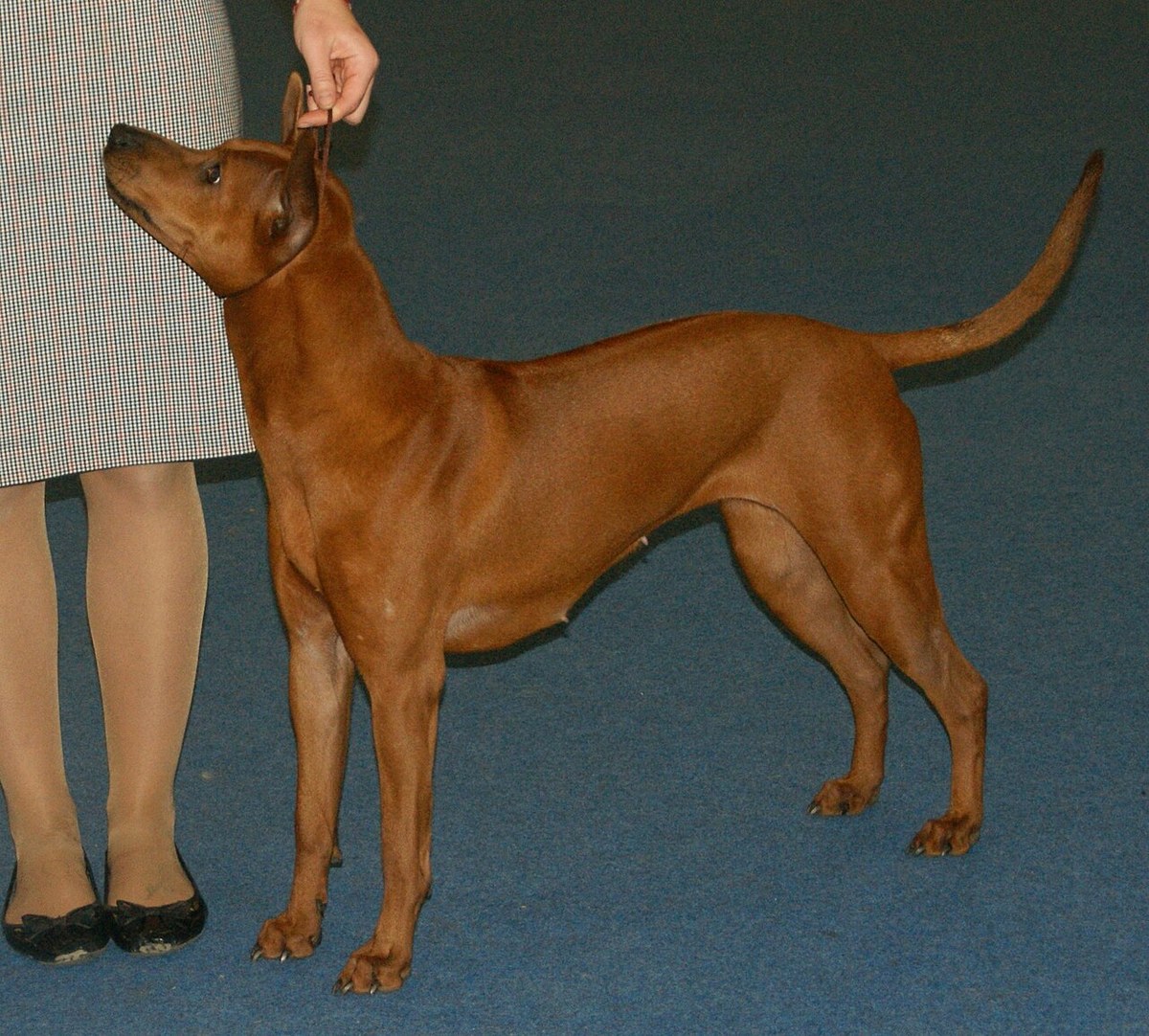
A blue Thai Ridgeback at an international show in Katowice, Poland, in 2009; the breed reached Europe and America only in recent decades.
From the 1990s
A national breed goes abroad
The Thai breed club began registering dogs in the late 20th century, and the FCI recognised the Thai Ridgeback Dog in 1993. Small numbers went to the United States and Europe in the 1990s.
The AKC records the breed in its Foundation Stock Service. It is still rare outside Thailand, so finding a careful breeder takes time, and some waiting lists are long.
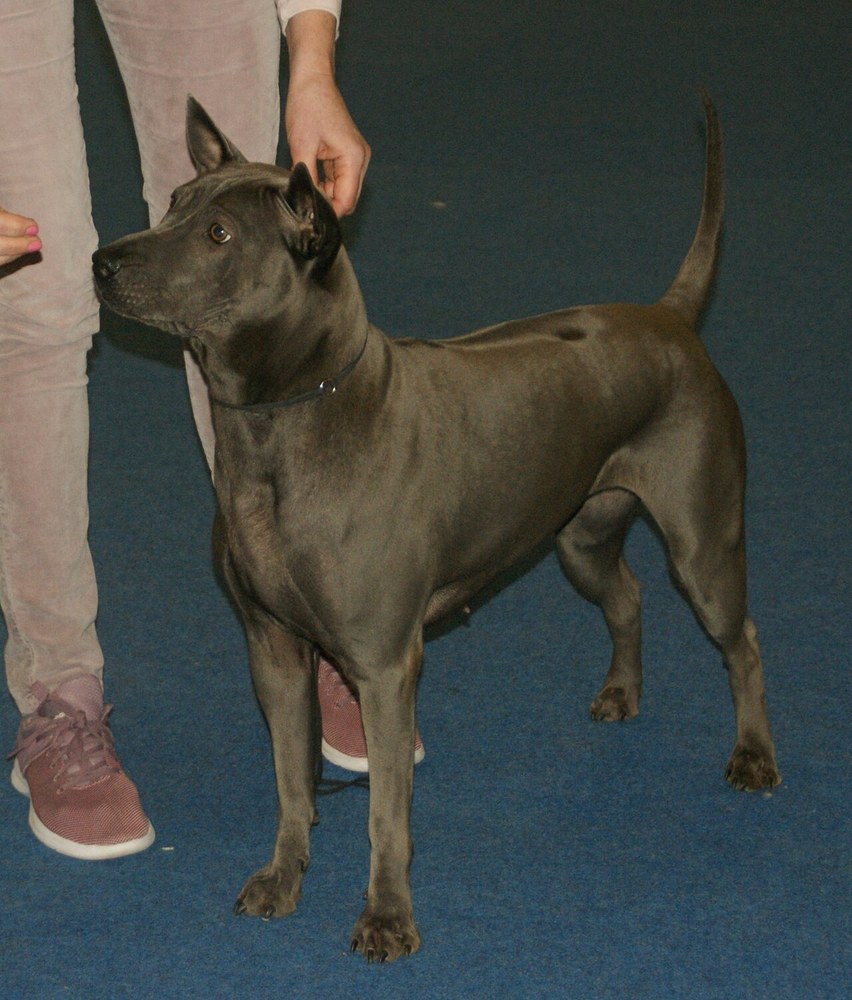
A blue Thai Ridgeback at a show: the four colours are red, black, blue and the pale fawn called isabella.
What the breed was bred for
Loyal, alert and its own boss
A well-raised Thai Ridgeback is affectionate and playful with its own family, quiet indoors and very clean. It learns fast when it sees the point.
It is also independent, sensitive to rough handling, wary of strangers and keen to chase small animals. Many are good at climbing or jumping fences, and some are choosy about other dogs.
A good day has a safe run, a sniff and a lot of quiet time with you
An adult Thai Ridgeback needs about an hour to an hour and a half of activity a day: brisk walks, a free run in a securely fenced area and some sniffing or chase games. Indoors, it is usually calm and happy to doze near its people.
Morning · the walk
Sniffing on a long line
Give the morning walk time and space. A long line in a quiet field lets the dog explore while you stay in control, and every glance back at you earns a treat.
Thai Ridgebacks switch off when training feels like drilling. Keep sessions to a few minutes, use good food and change the game often: a hand target, a sit at the door, a short stay.
Ask guests not to reach for the dog or stare at it. Let it watch from its bed and come over in its own time. Many Thais warm up to regular visitors after a few calm meetings.
Most Thais like to sleep close to their family. Give a padded bed in the room where you are and keep the routine steady; this breed copes better with a calm, predictable house.
General awareness only. I am not a veterinarian. With a Thai Ridgeback, owners often first notice a small lump or opening along the spine of a puppy, shivering on cold walks, scrapes on the thin skin, a limp after a jump or a dog that hates having its paws handled. For red flags, leave this page and open
when to call the vet.
The ridge and the spine
Ask the breeder whether the puppies were checked for dermoid sinus, a skin problem along the spine known in ridged breeds.
Parent checks
Ask which hip, elbow and other checks the national breed club recommends for both parents, and look at the results yourself.
Cold and sun
A very short coat gives little protection; use a dog coat in winter and shade in strong sun.
Skin
Check for scrapes and bumps after runs through brush.
Handling
Start paw, ear and mouth handling early; it makes vet visits far easier. See fear of vet handling.
Do not rely on blogs
Take health claims from your vet and the breed club, not from websites.
Lines and types
Choose a confident puppy from a breeder who socialises early
No bloodline selling. This is a rare breed, so ask how the parents behave with strangers, meet the mother if you can, ask about checks for dermoid sinus and other club-recommended tests, and ask how the puppies meet new people before they leave.
Show and family lines
Bred for the FCI standard.
Often raised in homes.
Still independent and watchful.
Easier if the breeder handles the puppies daily.
Suits most first-time Thai owners who already have dog experience.
Dogs from Thailand
Closer to village and hunting dogs.
Often more wary and quicker to chase.
Background may be less known.
Need extra patience with handling and visitors.
Suits very experienced owners with a calm, quiet home.
Socialization windows
What to introduce — and what not to overload — by age
AVSAB-aligned in spirit: short, clean exposures at a distance the puppy can still eat,
with hygiene while vaccines finish. See the
puppy socialization schedule.
2–4 months
Trust first
Introduce: gentle handling, quiet visitors who let the puppy approach, a harness, short times alone, a toilet routine, new floors and sounds.
Do not overload: passing the puppy from hand to hand at a party.
~6 months
Busy youngster
Introduce: name check-in, recall on a long line, a drop cue, calm meetings with known dogs.
Do not overload: off-lead walks in open country.
~8–18 months
Teenage phase
Introduce: more practice with visitors, fence checks, safe chase games with a flirt pole, longer times alone.
Do not overload: letting it chase cats or wildlife even once.
~2 years
Settled adult
Introduce: longer outings, lure coursing or other dog sports, travel, a steady routine.
Do not overload: assuming recall is now reliable near animals.
~3 years+
Maintenance
Introduce: daily walks and runs, skin checks, weight checks, regular vet visits.
Do not overload: skipping the winter coat on cold days.
Before you buy
Who a Thai Ridgeback usually fits
Fit comes down to patience, a safe garden and how much you value a dog with its own mind.
Good match
More likely a good fit if you…
You have trained an independent dog before
You have a high, secure fence
You like a quiet, clean dog in the house
Your home is calm with few strangers
You enjoy slow, patient training
Mismatch risk
A Thai Ridgeback may be a poor choice if…
You want a dog that loves every guest
You want off-lead walks in open country
You keep cats or small pets the dog has not grown up with
You live somewhere very cold and do not like dog coats
You want an easy first dog
If you are torn between breeds
Thai Ridgeback vs Rhodesian Ridgeback and Basenji
All three are short-coated hunters with a strong will. The Rhodesian Ridgeback is a larger African hound bred to track and hold lions at bay, with a ridge too. The Basenji is a small African hunting dog known for yodelling instead of barking. The Thai Ridgeback sits between them in size, has the ridge and the primitive mind, and is usually the most reserved with strangers.
Size
Thai Ridgeback
Medium, about 51–61 cm.
Rhodesian Ridgeback
Larger and heavier.
Ridge
Thai Ridgeback
Ridge of reversed hair; many shapes.
Rhodesian Ridgeback
Ridge with two crowns.
Voice
Thai Ridgeback
Usually quiet, barks to warn.
Basenji
Rarely barks; yodels.
Origin
Thai Ridgeback
Thai village hunting dog.
Basenji
Central African hunting dog.
Ownership without surprises
Where a Thai Ridgeback owner’s budget goes
Prices differ a lot between countries and cities, so treat these as budget headings rather than numbers.
Veterinary
A yearly check-up, whatever vaccines your own vet recommends and any checks the breed club advises.
Fencing
A high, solid fence; many Thais climb or jump.
Clothing
A warm coat for winter and a soft, padded bed.
Training
A small puppy class with a patient trainer, later lure coursing or another sport.
Finding a puppy
A rare breed: expect to wait and possibly travel to a careful breeder.
A long line, a secure field to rent and patient handling cost little and prevent the escapes and vet-visit fights owners ask me about.
Before day one at home
What to prepare for a Thai Ridgeback puppy
A Thai Ridgeback puppy is bright, bold at home and often cautious with new people. Plan quiet handling, visitors who let the puppy come to them, a harness, short times alone and safe play from the first days, and never force it into a stranger's arms.
Training a Thai Ridgeback means trust, a long line and short, smart lessons
Most daily trouble with this breed shrinks once five things are in place: calm handling, a long line in open places, a name check-in, a plan for visitors and a safe way to run and chase.
Thais are clever but independent and sensitive. Force, loud voices or rough corrections make them shut down, hide or defend themselves. Good food, short sessions and a reason to work with you get far better results.
Be realistic about recall. Many Thais will come back well in a garden and badly when a cat runs. Plan walks so you do not need to test recall near animals.
Load balance
Fast bursts, careful build-up
Young dogs should not do long runs or high jumps while they grow. Build fitness slowly, warm up before sprints and see a vet about any limp before doing more.
For this breed, a few minutes of chasing a lure on a flirt pole often settles the urge better than a long walk.
A Thai Ridgeback that runs safely and is never forced is usually calm and gentle at home.
Recall and chasing
How to keep a Thai Ridgeback safe and coming back
Use a long line in open places, practise recall at home and in the garden first, reward every look back, give the urge to chase a safe outlet with a flirt pole and check your fence for gaps and climbing spots.
01
Long line
In every open place.
02
Name game
Reward each look back.
03
Recall ladder
Home, garden, quiet field, then busier places.
04
Safe chase
A flirt pole game every day.
05
Fence check
Height, gaps and footholds.
One scene close-up
Why a Thai Ridgeback runs off
For centuries these dogs found their own food and moved freely around their villages. A fast cat or bird is a strong pull, and the dog was never bred to wait for permission.
Manage first: a long line outside fenced areas, a fence high enough and without footholds, and doors that close behind you. Then build recall slowly, starting where nothing interesting happens, and give the dog a safe chase game every day.
A dog that bites when handled, panics when alone or guards food hard should be seen by a qualified behaviour professional, with a vet first ruling out pain.
“With a Thai Ridgeback, I start with trust: calm handling, guests who leave the dog alone and a long line on every open walk. Respect its independence, and you get a loyal, clean and very loving dog.”
We look at your real days: walks, visitors, handling, other dogs and time alone. Medical questions belong with your vet; I deal with behaviour.
Andrew DarovProfessional dog trainer and instructor
Before we talk, note the dog's age, where you walk, how it reacts to visitors and to handling, and the first thing that goes wrong. Opens WhatsApp to Andrew.
For a calm, experienced family, often yes. It is affectionate and playful with its own people. It is wary of guests and should not be grabbed or teased, so it suits older children best.
Is a Thai Ridgeback a good first dog?+
Usually not the easiest choice. Its independence, chase drive and caution with strangers suit someone who has trained a dog before.
Are Thai Ridgebacks aggressive?+
They are often suspicious of strangers and may defend themselves if pushed or cornered. Early calm meetings, kind handling and no forced contact make a big difference. A dog that bites needs a professional.
How big does a Thai Ridgeback get?+
FCI: males about 56–61 cm (22–24 in), females about 51–56 cm (20–22 in) at the shoulder; roughly 16–34 kg (35–75 lb).
What is the ridge?+
A strip of hair along the back that grows in the opposite direction to the rest of the coat. It comes in several shapes.
Do Thai Ridgebacks shed?+
Lightly. The coat is very short and needs little grooming, but it gives little protection against cold.
Thai Ridgeback vs Rhodesian Ridgeback: what is the difference?+
The Rhodesian is larger, heavier and usually friendlier with strangers. The Thai is smaller, more primitive and more independent.
Thai Ridgeback vs Basenji: what is the difference?+
The Basenji is smaller and yodels rather than barks. The Thai is larger, has a ridge and barks to warn.
How much exercise does a Thai Ridgeback need?+
About an hour to an hour and a half a day, including a safe run in a fenced area and sniffing time.
Can a Thai Ridgeback live in an apartment?+
Yes, it can, as it is quiet and calm indoors, if it gets daily runs in a safe place and visitors are handled carefully.
What health themes should I ask about?+
Ask about checks for dermoid sinus and which hip, elbow and other tests the national breed club recommends for both parents. This is general awareness, not a diagnosis.
How long do Thai Ridgebacks live?+
Breed clubs usually quote about 12–13 years, though each dog is different.
If a Thai Ridgeback seems too independent for your home
Many people fall for the ridge and the sleek look. The chase drive, the escape skills and the slow trust with strangers are what to think through before you commit.
A tall, lean Sahel sighthound and one-family watchdog. Needs fenced sprints, a long line in open country, slow meetings with strangers and a jacket in the cold.
A calm German blood-tracking hound with a world-class nose. Gentle at home, single-minded on a trail; needs weekly scent work and a long line outdoors.
Training problems Thai Ridgeback owners ask about
Step-by-step guides for the issues that come up most with this kind of dog.
Dog begging at the table? Stop all food from plates, give your dog a mat and a long chew during meals, brief kids and guests, and expect a short spike.
Teach a reliable recall: one cue, a reward at your legs and one thing harder at a time on a long line until your dog comes around distractions.
Need a read on your exact situation?
Tell me about your Thai Ridgeback in a short message: its age, where you walk, how it reacts to visitors, handling and other dogs, and what goes wrong first. We rule out health issues first, then pick one skill to start with.