Bavarian Mountain Hound: temperament, tracking drive, recall and training
The Bavarian Mountain Hound is a German blood-tracking hound, bred to follow the trail of a wounded deer for hours over rough mountain ground, on a long lead, until it finds the animal. At home many are quiet, gentle and close to their person. Outside, the nose takes over: a fresh scent on the path can switch off hearing, recall and manners in one second. This breed does best with an owner who gives it real tracking work, keeps it on a long line in open country and accepts that it will always be a hunter first.
Job: A medium-sized German blood-tracking hound; FCI Group 6 (scent hounds, leash hounds section), AKC Foundation Stock Service.
Energy: Calm and devoted at home, single-minded and tireless on a trail.
Home: Suits a hunter or a patient owner who will do tracking or scent work every week.
People often see this hound on a hunting trip in Britain or Germany and fall for the soft face and the calm way it lies by the fire. Then they take it to a field and lose sight of it for an hour.
The calls I get about Bavarians are mostly about the outdoors. A dog that will not come back once it has a trail, pulls hard on the lead with its nose glued to the ground, eats things on walks and howls or digs when it gets no proper work.
My plan respects the job the dog was bred for. Long-line walks in open places, real tracking or mantrailing sessions, a recall built step by step, calm rest in the house and a clear routine. Given that, a Bavarian is a loyal, gentle and very rewarding partner.
FCI: males about 47–52 cm, females about 44–48 cm at the shoulder
Weight
About 20–30 kg (about 44–66 lb)
Energy
High outdoors; calm indoors after work
Coat / shed
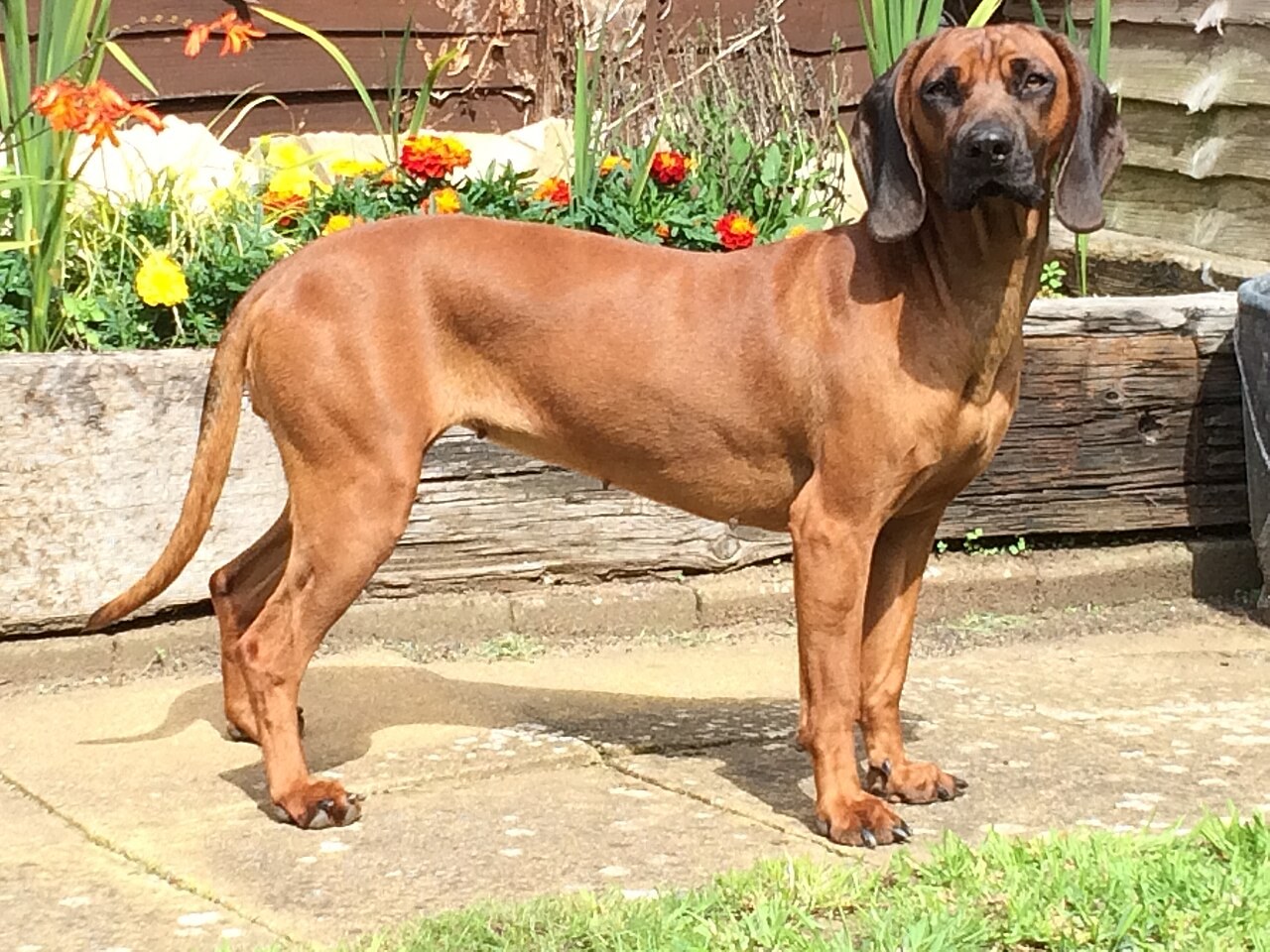
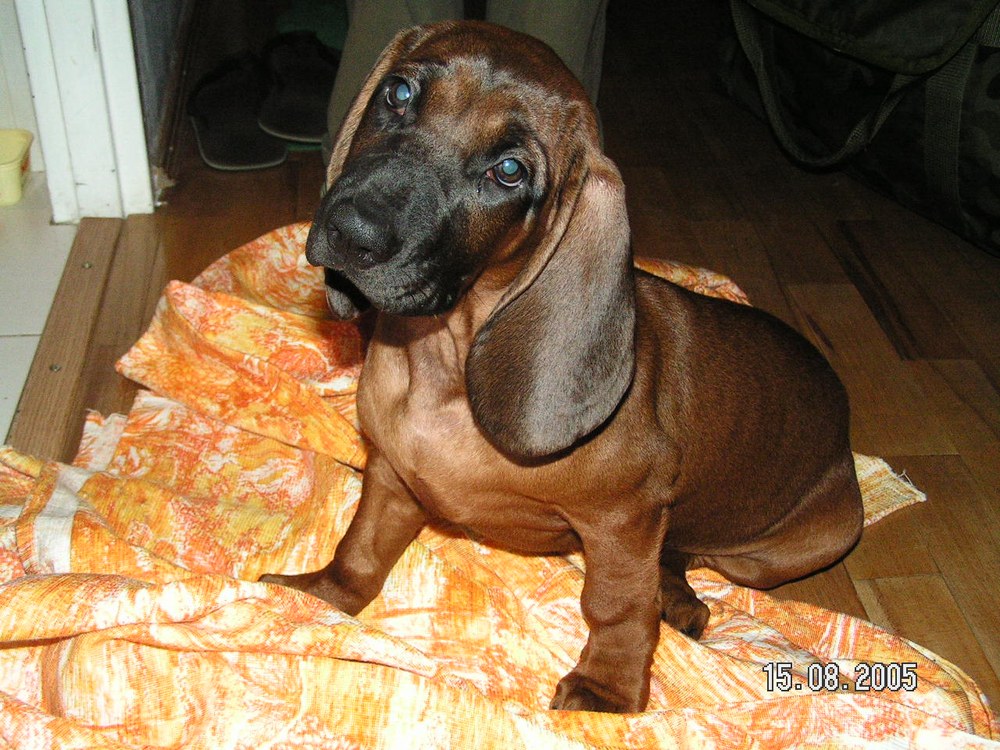
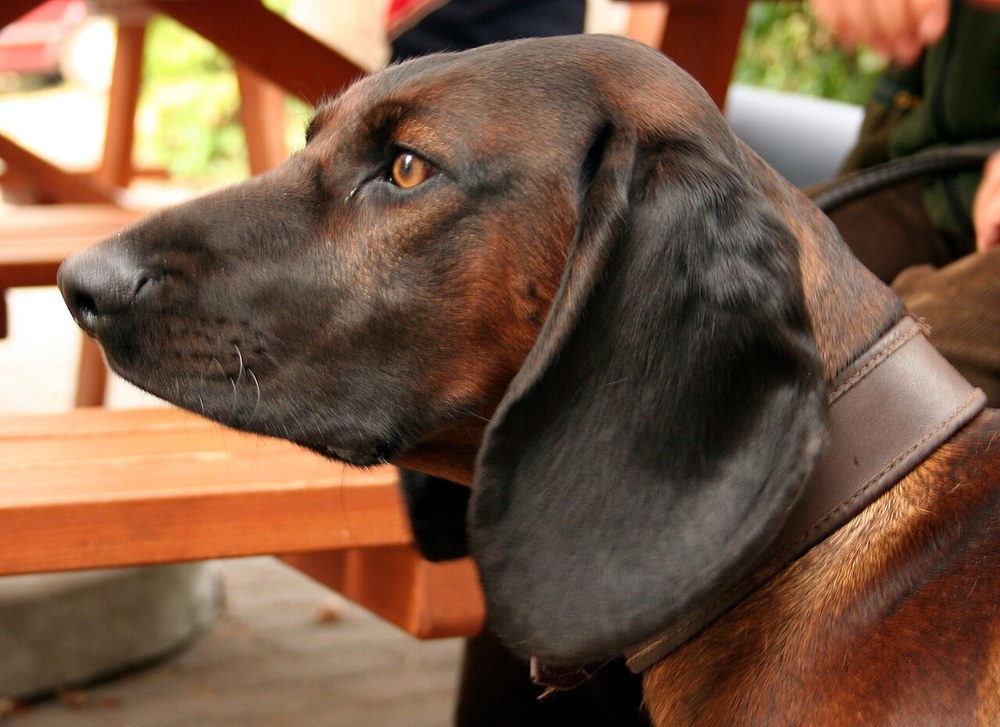
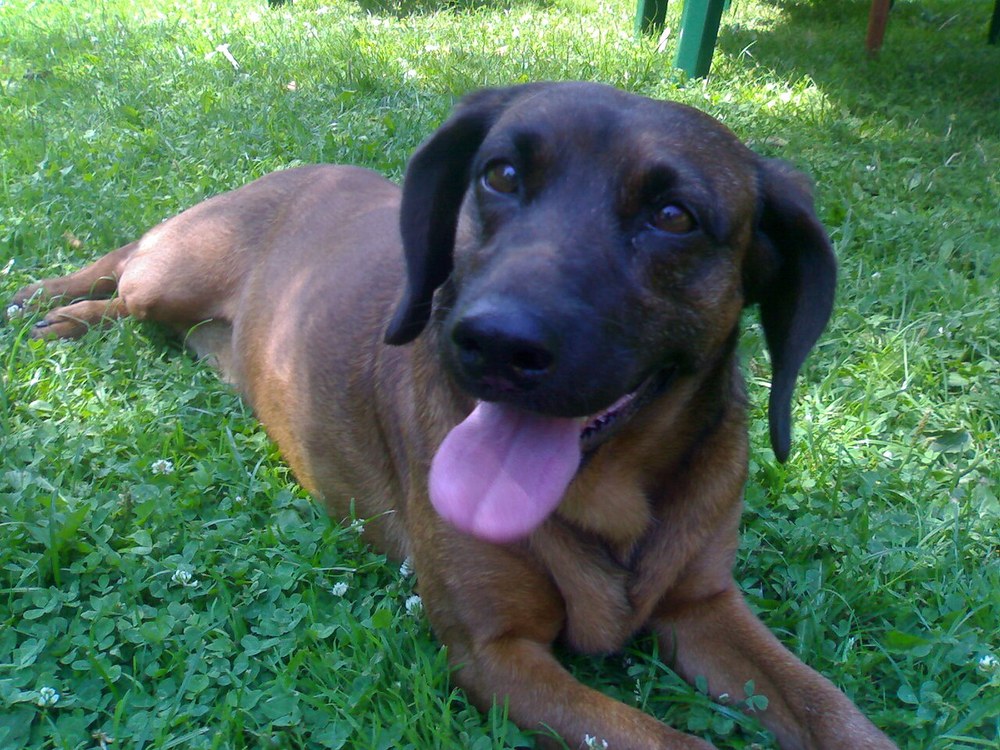
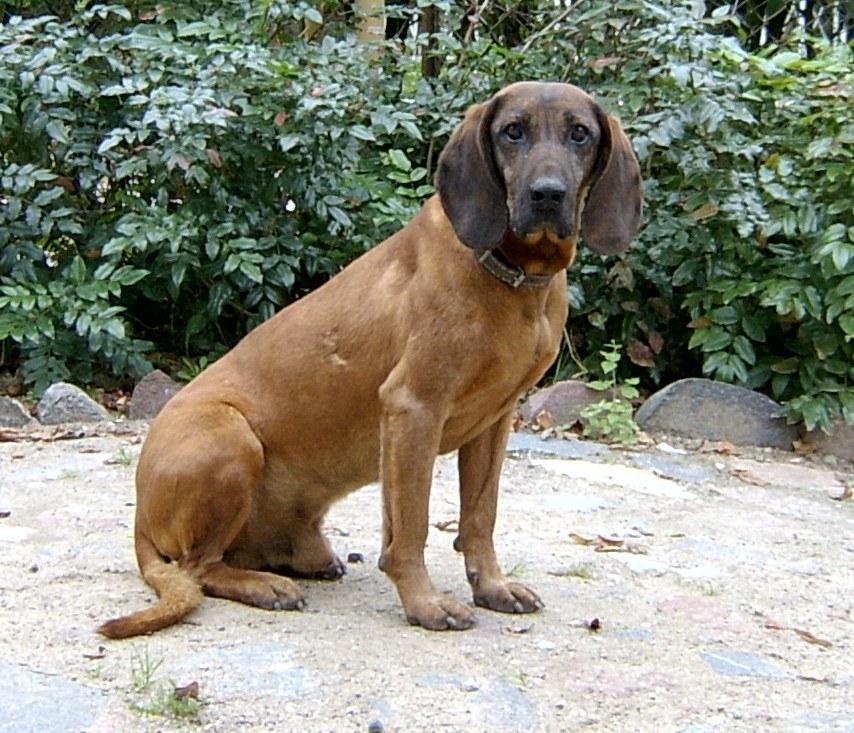
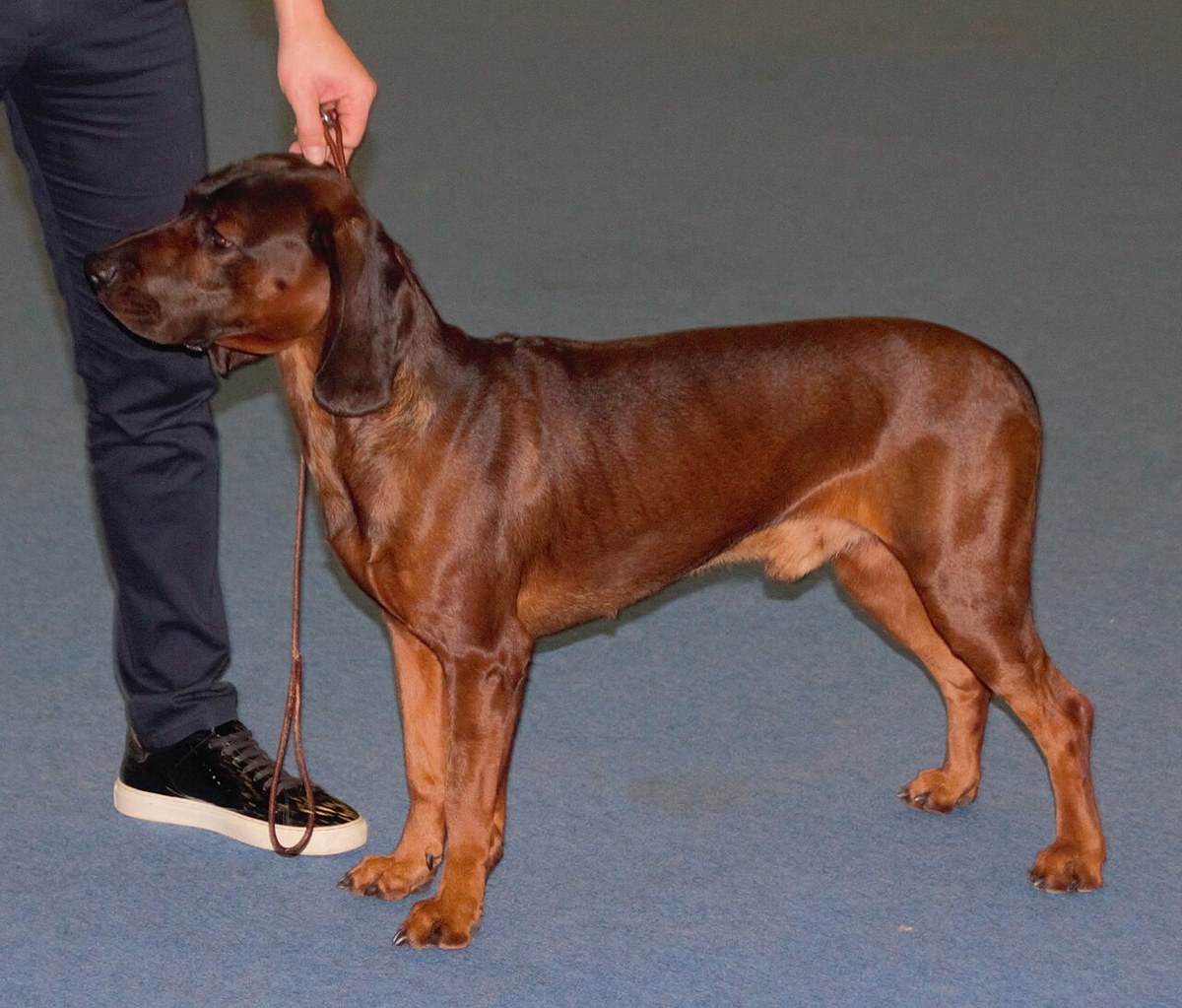
Short, dense, close-lying coat in shades of deer red, fawn or brindle, often with a dark mask around the muzzle and eyes
Job
Blood-tracking hound used by German and Austrian hunters to find wounded deer and boar after the shot; still a working tracker in many countries
Temperament in one minute
Bavarian Mountain Hound temperament: what they are like at home
Short answer: Bavarian Mountain Hounds are medium-sized German blood-tracking hounds, bred to follow the trail of wounded deer for hours on a long line. They are calm, gentle and devoted at home, often reserved with strangers, and completely focused once they find a scent. They need about one and a half to two hours of activity a day, real tracking or scent work every week, a long line in open country and patient, reward-based training.
Are Bavarian Mountain Hounds affectionate?
Yes, often very close to one person. Build time alone early so the bond does not turn into worry.
Are Bavarian Mountain Hounds friendly with strangers?
Many are reserved and need time. Let visitors ignore the dog at first; see scared of visitors.
Are Bavarian Mountain Hounds good with kids and other dogs?
Usually gentle with calm children and fine with other dogs. Small pets may trigger a chase; see children and guests.
Bavarian Mountain Hound behavior problems to expect
The usual four are running off after scent, pulling on the lead, eating things on walks and restlessness without nose work. The list below links a guide for each.
Living with a Bavarian Mountain Hound in a city
Possible with daily trips to open places and weekly scent work; street walks alone are not enough.
Breed history
From Bavarian forests to tracking teams across Europe
Knowing why the breed exists tells you what it will do the moment it smells a trail.
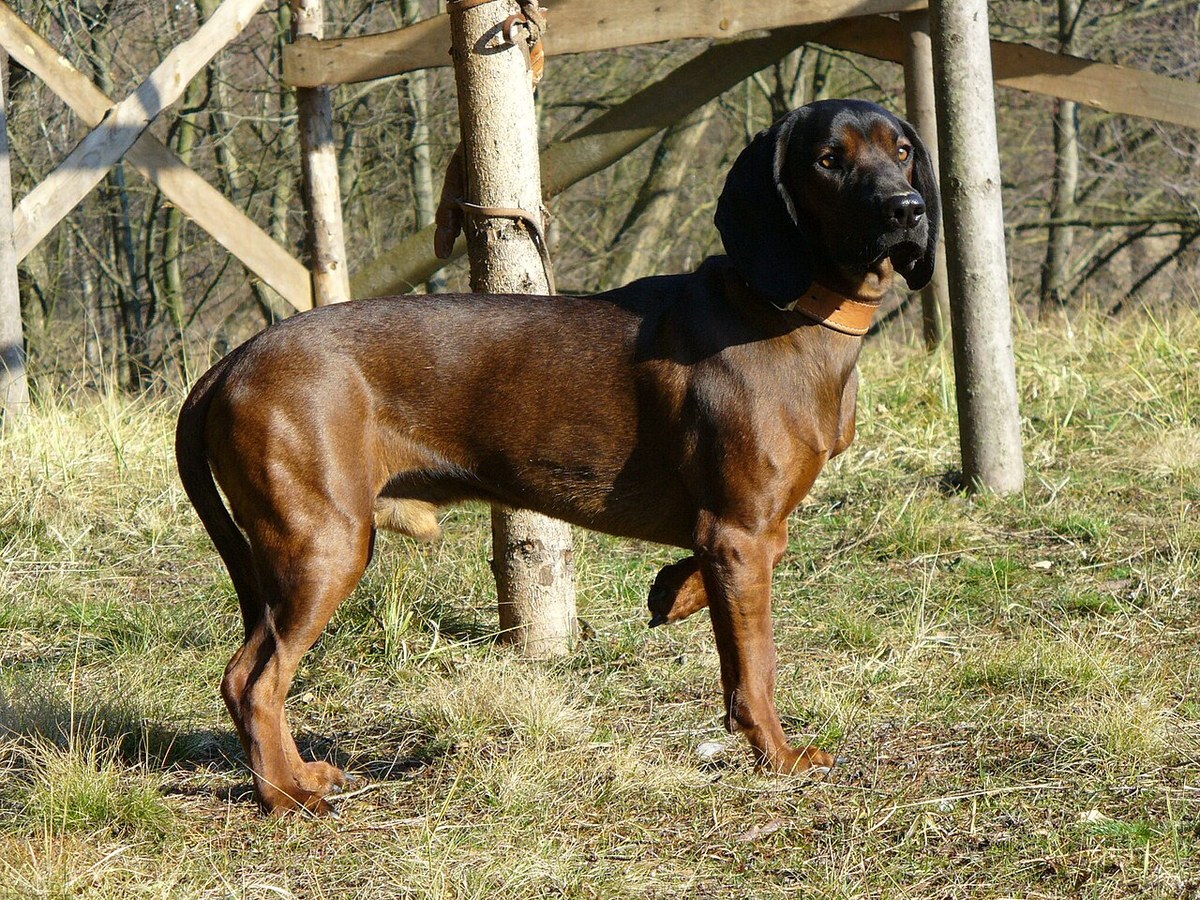
A Bavarian on woodland ground, the kind of terrain the breed was made to work on behind a hunter.
Bavaria · from the 1870s
A lighter tracker for the mountains
German hunters already had the heavy Hanoverian Scent Hound for following blood trails in the lowlands. In the steep Bavarian and Austrian mountains they wanted something lighter and more nimble, so from the second half of the 19th century they crossed Hanoverian dogs with local mountain hounds.
The result was a medium hound that can climb, keep going all day and stay on an old, cold trail of a wounded animal. In 1912 a breed club was founded in Munich, and the breed has been kept mainly for hunters ever since.
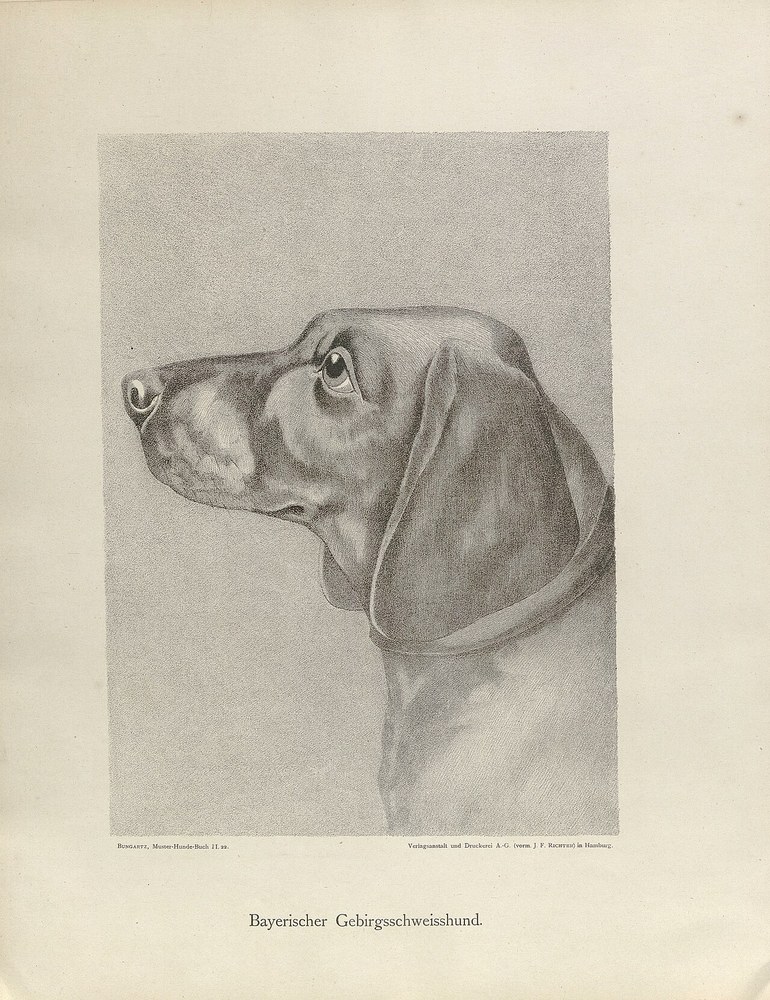
A Bavarian Mountain Hound head drawn for a German dog book published in Hamburg in 1890.
The job today
Finding wounded game, not chasing it
The breed is a leash hound. It does not hunt freely ahead of the guns; it works after the shot, on a long tracking line, leading the handler along a trail that may be many hours old until it finds the injured deer. Only near the end may it be let off to hold the animal at bay.
In Germany and Austria breed clubs still prefer to place puppies with active hunters. In Britain, the Kennel Club now lists the breed in the Hound Group, and more pet homes are taking it on, often through mantrailing and scent-work clubs.
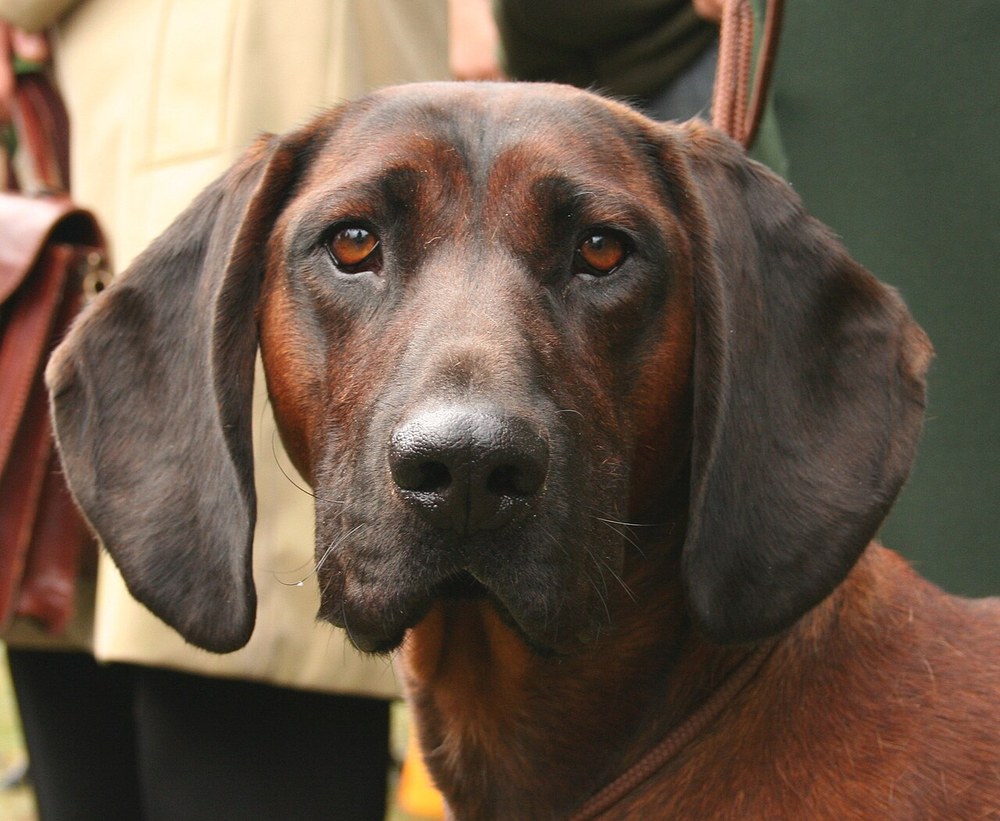
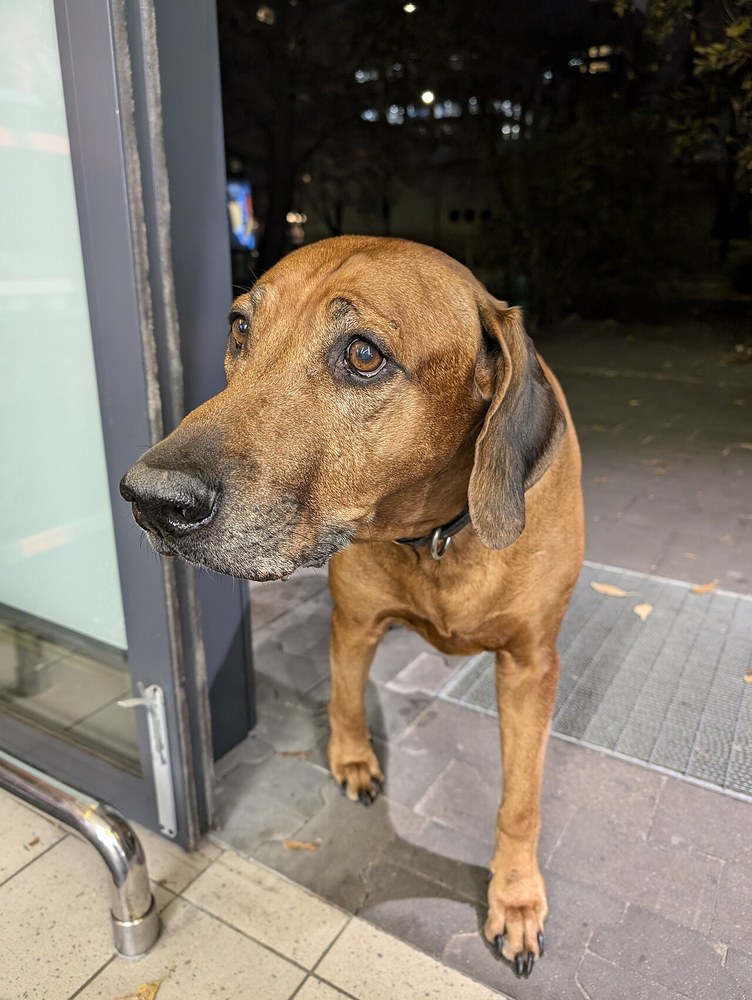
The face of a Bavarian: dark mask, soft ears and a deep, thoughtful look.
What the breed was bred for
Gentle with family, reserved with strangers
A well-raised Bavarian is calm, affectionate and often attached to one person in particular. Many are reserved or a little shy with strangers and need time to warm up.
It is also stubborn on a trail, quick to wander off when bored and able to howl or bay loudly. Without regular nose work it can become restless and destructive at home.
A good day has a long-line walk, a short track and a quiet evening
A grown Bavarian needs about one and a half to two hours of activity a day, and the most tiring part is not running but thinking with the nose. A 20-minute track can settle it better than an hour of jogging. Trouble starts when this dog only ever gets short pavement walks on a tight lead.
Morning · the first months
A puppy follows its nose from day one
Hide a few treats in the grass and let the puppy find them. Short, easy sniff games build the tracking brain, and plenty of naps keep the young legs and joints from doing too much.
Lay a simple trail in a meadow with a few treats and a toy at the end, wait ten minutes, then let the dog work it on a harness and a long line. Ten to twenty minutes of this tires a Bavarian more than a run.
In fields and woods, use a 10 metre line clipped to a harness, so the dog can sniff and move while you stay in control. Reward every look back at you with a treat or a short game.
After work outside, teach the dog to lie on its bed with a chew while the house moves around it. Many Bavarians are wonderfully calm indoors once their nose has had a real job.
Night smells are strong and the dog will want to follow them. Keep the late walk on a lead, let it sniff a familiar route for ten minutes, then home to a quiet bed in the same spot.
General awareness only. I am not a veterinarian. With a Bavarian, owners often first notice sore pads or small cuts after rough ground, ears that smell or get scratched a lot, a dog that swallows things found on walks, weight that drops fast in a busy hunting season or a stiff walk after a long day. For red flags, leave this page and open
when to call the vet.
Feet after work
Check pads and between the toes after woods, stubble and rocks.
Ears
Long, low-set ears trap heat and dirt; look at them each week and see your vet if they smell or the dog shakes its head often.
Things found on walks
A scent hound tastes the trail too. Teach a drop cue and watch it in places with litter. See drop it with trash.
Growth and joints
Keep young dogs off long runs and jumps while they grow; build tracking time gradually.
Weight
Feel the ribs once a month and adjust food to the work. See body condition check.
Ask the breeder
Ask which hip, eye and other checks the national breed club recommends for both parents, and look at the results yourself. Do not take health claims from a blog.
Lines and types
Working tracker or companion: choose the breeder with care
No bloodline selling. In this breed, many litters are bred by hunters for hunters, and some clubs will only place puppies in hunting homes. Be honest about what you will do with the dog. Meet the mother, watch how she reacts to a stranger, ask whether the parents track, and ask about health checks on both of them.
Hunting and tracking homes
Blood-tracking tests and real searches.
Work on old trails over hours.
A handler who hunts or joins a tracking team.
A club mentor for the first season.
Suits hunters and people who want to train for official tracking tests.
Active companion homes
Weekly mantrailing or scent work.
Long-line walks in open country.
A safely fenced garden.
A calm, quiet house.
Suits a patient, outdoor person who will give the nose a real job every week.
Socialization windows
What to introduce — and what not to overload — by age
AVSAB-aligned in spirit: short, clean exposures at a distance the puppy can still eat,
with hygiene while vaccines finish. See the
puppy socialization schedule.
2–4 months
Nose and trust
Introduce: easy sniff games, gentle handling, calm meetings with people, a harness, car rides, a toilet routine.
Do not overload: long free runs off lead in open fields.
~6 months
First tracks
Introduce: short scent trails, a name check-in, recall on a long line, loose lead walking basics.
Do not overload: letting the puppy learn that chasing a smell always wins.
~8–18 months
Teenage hound
Introduce: longer and older trails, a stronger recall, a drop cue, time alone in steps.
Do not overload: trusting the dog off lead because it came back twice.
~2 years
Working adult
Introduce: full tracking sessions, mantrailing or hunting work, new places and travel.
Do not overload: stopping the long-line rule in open country.
~3 years+
Steady partner
Introduce: weekly nose work, daily long walks, foot and ear checks, weight checks.
Do not overload: cutting the scent work because the dog seems calm.
Before you buy
Who a Bavarian Mountain Hound usually fits
Fit comes down to whether you can give this nose a real job, and live with a dog that may never be safe off lead near game.
Good match
More likely a good fit if you…
You hunt, or want to learn tracking or mantrailing
You enjoy long walks in fields and woods every day
You are fine with a long line in open country
You want a calm, close companion at home
You have a well-fenced garden
Mismatch risk
A Bavarian Mountain Hound may be a poor choice if…
You want a dog that runs free off lead everywhere
You only have time for short street walks
You want an outgoing dog that loves every stranger
You are away from home most of the day
You live with small pets that may trigger a chase
If you are torn between breeds
Bavarian Mountain Hound vs Bloodhound and Beagle
All three are scent hounds, but they live very differently. The Bloodhound is a much larger, heavier tracker with loose skin and a deep voice. The Beagle is a small, sociable hound bred to hunt hares in a group. The Bavarian sits in the middle: a medium, light, agile tracker bred to work alone with one handler.
Size
Bavarian Mountain Hound
Medium; about 44–52 cm.
Bloodhound
Large; far heavier.
Work style
Bavarian Mountain Hound
Alone with one handler, on a line.
Beagle
In a pack, often loose.
With strangers
Bavarian Mountain Hound
Often reserved.
Beagle
Usually friendly with everyone.
Voice
Bavarian Mountain Hound
Can bay on a trail.
Both compares
Both are vocal hounds.
Ownership without surprises
Where a Bavarian Mountain Hound owner’s budget goes
Prices differ a lot between countries and cities, so treat these as budget headings rather than numbers.
Veterinary
A yearly check-up, whatever vaccines your own vet recommends and any parent checks the club asks for.
Tracking gear
A good harness, a 10 metre long line, a tracking line and gloves.
Training
A puppy class, then a mantrailing, scent-work or tracking club.
Fencing
A secure garden fence; scent hounds find gaps.
Finding a puppy
Litters are small and many go to hunters, so plan for a waiting list and a long talk with the breeder.
A weekly tracking session and a long line cost little and prevent most of the problems owners ring me about.
Before day one at home
What to prepare for a Bavarian Mountain Hound puppy
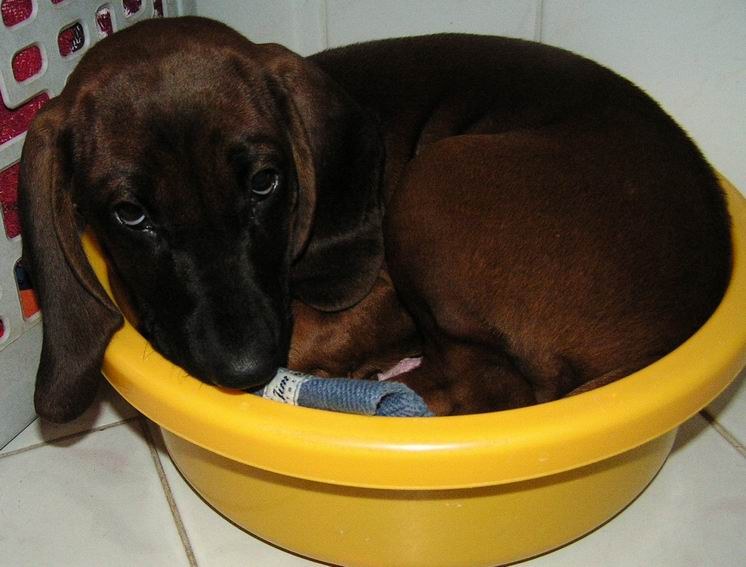
A Bavarian puppy is soft, sleepy and sweet one minute, and nose-down in the garden the next. Plan easy sniff games, calm handling, a harness, short times alone and a lot of sleep from the first days, because the drive to follow scent appears very early.
Training a Bavarian means real nose work, a long line and a recall built slowly
Most daily trouble with this breed shrinks once five things are in place: weekly tracking or scent work, a long line in open places, a name check-in, a drop cue and calm rest at home.
Bavarians are sensitive and think for themselves. They were bred to make their own decisions on a trail, so harsh corrections make them shut down or avoid you. Short, clear sessions with good food and a lot of patience work far better.
Be realistic about recall. Many Bavarians can learn to come back well in calm places, but a fresh deer trail is the strongest pull a dog can feel. Plan your walks so you never need to test it near game.
Load balance
Nose work tires more than running
Young dogs should not do long runs or steep climbs while they grow. Build up tracking time and distance slowly, and see a vet about any limp or stiffness before adding more.
For this breed a 15-minute trail with a toy at the end often does more than a long walk round the block.
A Bavarian that tracks every week is usually calm and easy at home.
Recall and scent
How to keep a Bavarian Mountain Hound safe and coming back on walks
Use a long line in open country, reward every check-in, practise recall away from fresh trails first, give the nose a planned track every week and never let a chase become a habit.
01
Long line
A 10 metre line on a harness in open country.
02
Reward check-ins
Every look back earns a treat.
03
Recall ladder
Practise at home, then in calm fields.
04
Weekly track
A planned trail gives the nose its job.
05
Avoid fresh game
Walk away from deer areas at dawn and dusk.
One scene close-up
Why a Bavarian ignores you on a trail
This breed was made to follow one scent for hours, through noise and distraction, without giving up. A dog that tunes out your voice when it finds a trail is doing exactly what it was bred for.
Manage first: a harness and long line in every open place, and walks away from areas full of deer at dawn and dusk. Then build recall like a ladder, starting at home, and give the dog planned tracking sessions so it has a proper outlet for the nose.
A dog that panics when alone, guards food hard or snaps when touched should be seen by a qualified behaviour professional, with a vet first ruling out pain.
“With a Bavarian, I start with the nose: a weekly track, a long line in open country and a recall built one small step at a time. Respect the hunter in the dog, and you get a calm, loyal and very gentle friend at home.”
We look at your real days: walks, tracking time, time alone, recall and how the dog copes with visitors. Medical questions belong with your vet; I deal with behaviour.
Andrew DarovProfessional dog trainer and instructor
Before we talk, note the dog's age, where you walk, how often it tracks, what happens with recall and the first thing that goes wrong. Opens WhatsApp to Andrew.
For an active family that gives it nose work and long walks, often yes. It is calm and gentle at home and close to its people. It needs a secure garden and a long line outdoors.
Is a Bavarian Mountain Hound a good first dog?+
Usually not, unless the first-time owner is ready to learn tracking and to keep the dog on a line in open places. Recall around scent is the big challenge.
Can a Bavarian Mountain Hound be off lead?+
In fenced areas, yes. In open country near game, most are safer on a long line for life, because a fresh trail can override any recall.
How big does a Bavarian Mountain Hound get?+
FCI: males about 47–52 cm and females about 44–48 cm at the shoulder. Most weigh about 20–30 kg (about 44–66 lb).
Do I need to hunt with a Bavarian Mountain Hound?+
No, but the dog needs a real job for its nose. Mantrailing, scent-work classes or laid tracks every week can replace hunting for many dogs.
Do Bavarian Mountain Hounds bark or howl?+
They are not constant barkers, but they can bay on a trail and howl when bored or left alone too long.
Bavarian Mountain Hound vs Bloodhound: what is the difference?+
Both are blood-tracking hounds. The Bloodhound is much larger and heavier; the Bavarian is medium-sized, lighter and built to climb mountain ground.
Bavarian Mountain Hound vs Beagle: what is the difference?+
The Beagle is a small, sociable hound that hunts in a group. The Bavarian is bigger, works alone with one handler and is more reserved with strangers.
How much exercise does a Bavarian Mountain Hound need?+
About one and a half to two hours a day for an adult, including sniffing time and regular tracking or scent work.
Can a Bavarian Mountain Hound live in an apartment?+
It can live calmly indoors, but it needs long walks in open places and weekly nose work. A city flat with only street walks is a poor fit.
What health themes should I ask about?+
Ask the breeder which hip, eye and other checks the national breed club recommends for both parents, and mention the breed to your vet. This is general awareness, not a diagnosis.
How long do Bavarian Mountain Hounds live?+
Breed clubs usually quote about 12–14 years, though each dog is different.
If a Bavarian Mountain Hound seems too driven for your life
Many people fall for the soft face and the calm manner at home. The tracking drive, the recall limits and the need for real nose work are what to think through before you commit.
A light, gentle rabbit hound from Mount Etna. Quiet and loving at home; follows scents, chases, jumps well and needs a long line, high fences and a coat in winter.
A gentle Spanish sighthound, often adopted from rescue: quiet and sleepy at home, a strong chase outside. Needs secure fencing, a long line and a warm coat.
Why dogs dig (boredom, hunting, heat) and how to stop it: manage yard access, give your dog an allowed digging spot and supervise.
Need a read on your exact situation?
Tell me about your Bavarian in a short message: its age, where you walk, how often it tracks, how recall goes and what goes wrong first. We rule out health issues first, then pick one skill to start with.