Polish Lowland Sheepdog: temperament, watchfulness, training and coat care for the shaggy Polish herder
The Polish Lowland Sheepdog, or PON in Poland, is a medium-sized, shaggy herding dog from the plains of Poland, bred to move sheep and keep an eye on the farm. You get a lively, clever dog with a long memory and strong opinions, loyal to its family and watchful with strangers. It barks to report news, may nip at moving legs and needs a long coat brushed to the skin. What works is daily exercise for body and brain, clear and friendly rules, calm meetings with new people and a grooming routine you keep up.
Job: A Polish herding dog, FCI Group 1 and AKC Herding Group; long shaggy double coat in any colour.
Energy: Lively, clever and self-confident; loyal at home, wary of strangers.
Home: Suits an active owner who likes training and will brush a big coat every week.
A PON looks like a shaggy toy and thinks like a working herder
People see a walking mop with hair over its eyes and expect an easy lap dog. What arrives is a sturdy, quick-thinking farm dog that watches everything and likes to be in charge of it.
In family homes I meet a dog that follows its people, learns new tricks in a few tries and remembers every person who ever annoyed it. The hard parts are barking at every sound outside, nipping at running children or ankles, testing the house rules and a coat that mats fast if brushing is skipped.
My plan has four parts. Exercise and small jobs every day, because a bored herder invents its own. Friendly, consistent rules that everyone in the house uses. Calm, step-by-step meetings with strangers. And a brushing routine started in the first week.
FCI: males 45–50 cm (about 17.5–19.5 in), females 42–47 cm (about 16.5–18.5 in)
Weight
About 30–35 lb (about 14–16 kg)
Energy
Medium to high; lively outdoors, settles at home with enough to do
Coat / shed
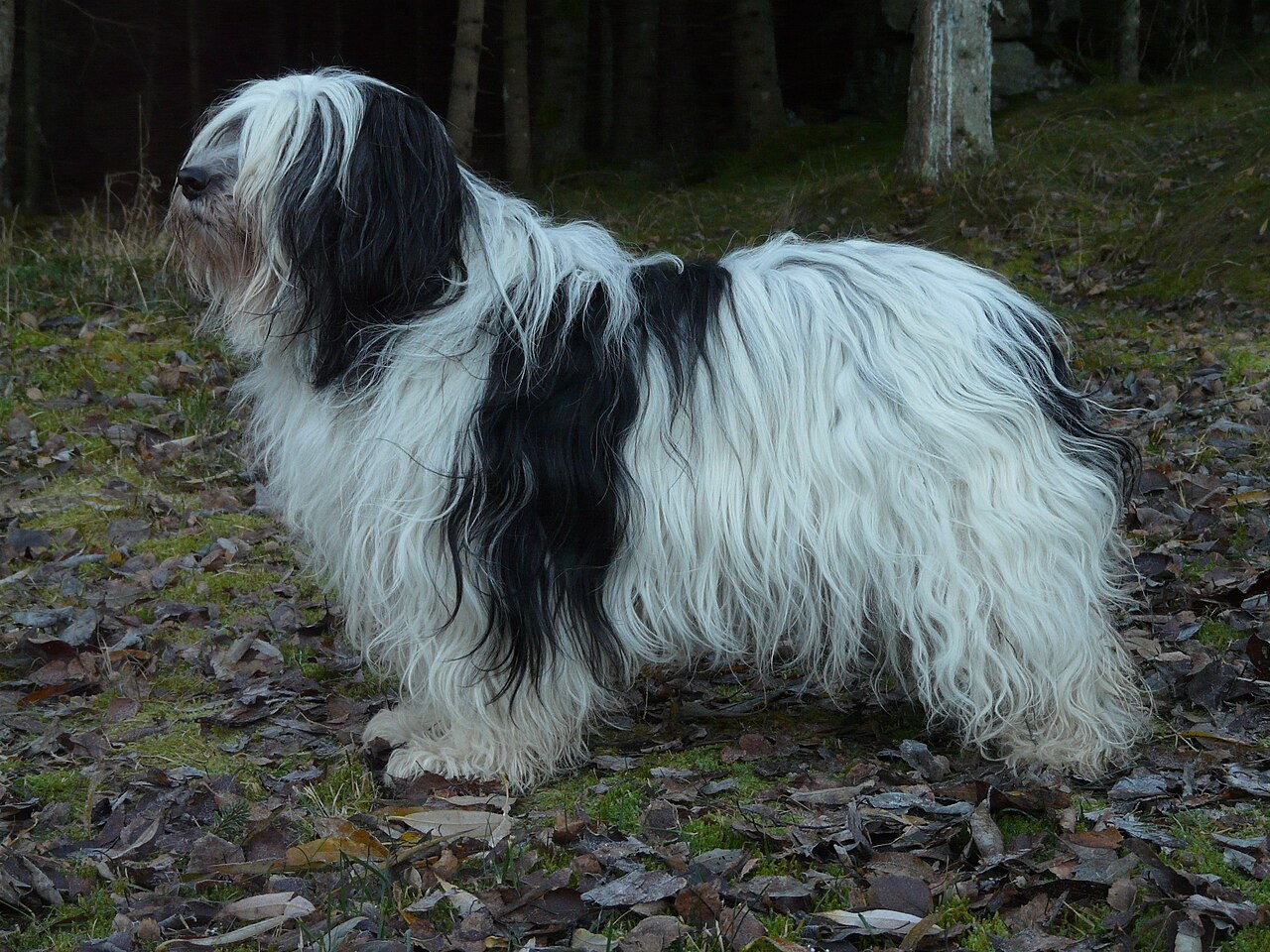
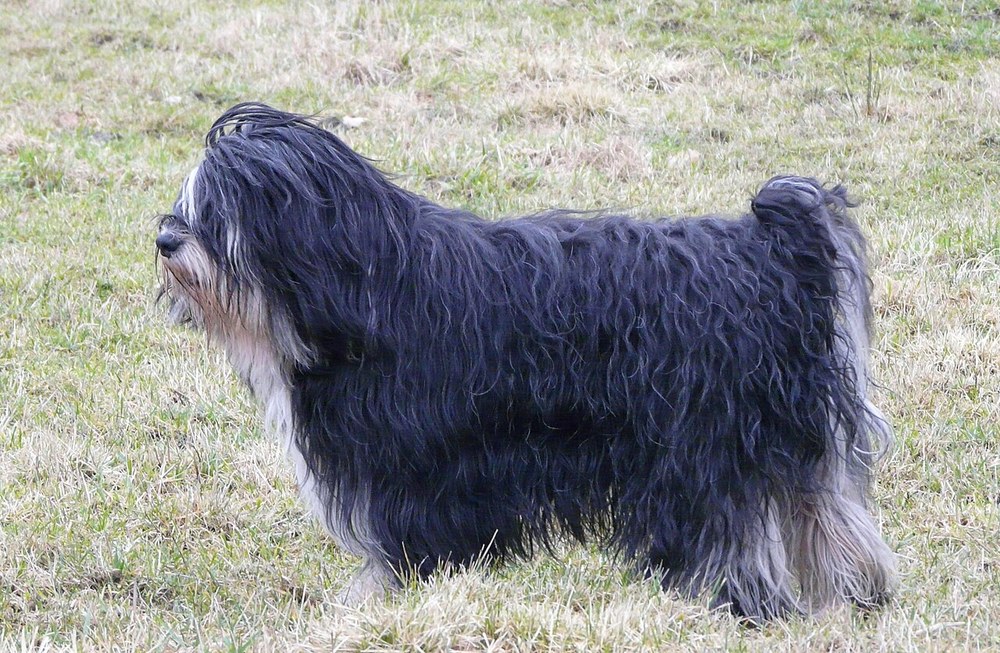
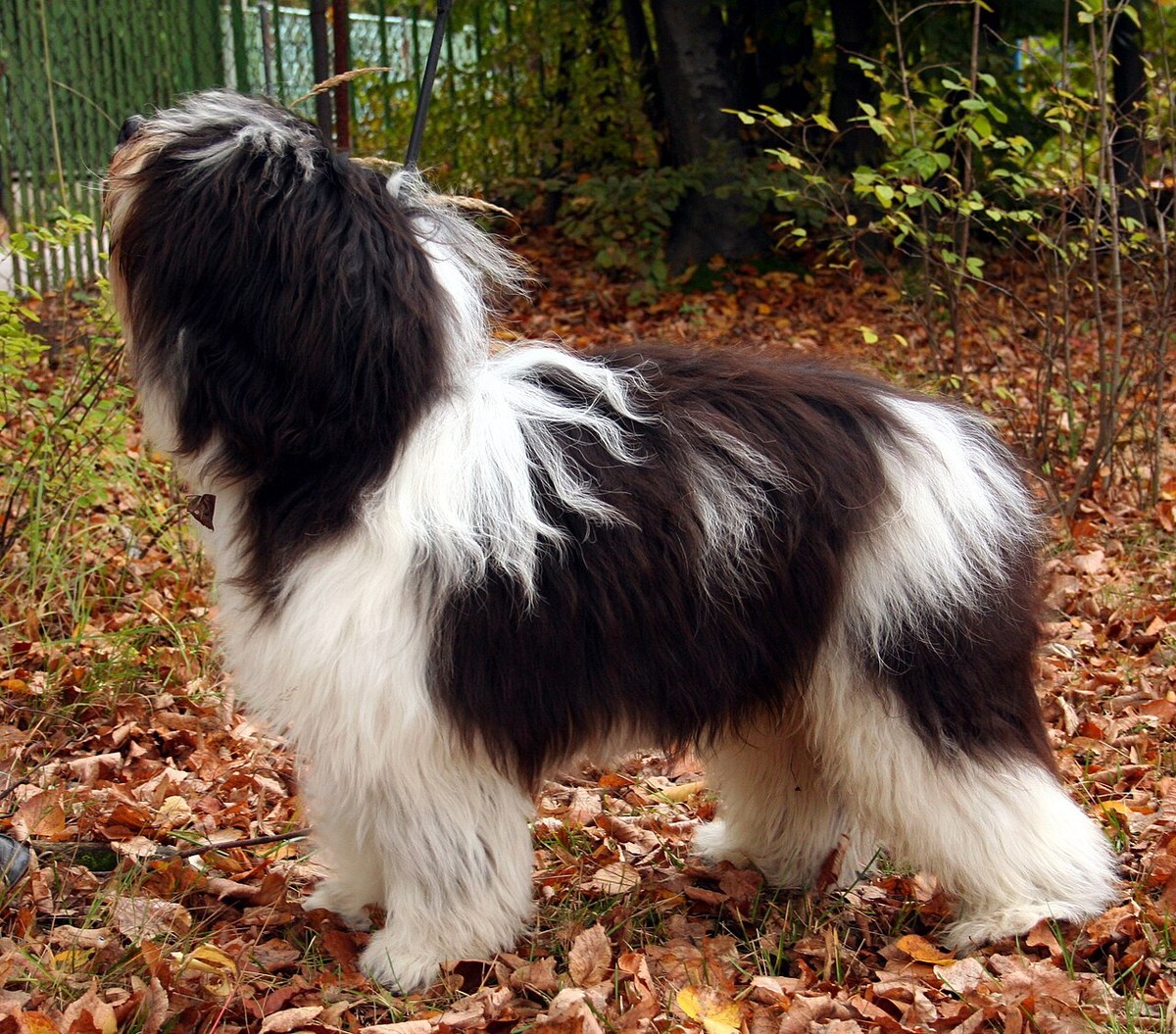
Long, dense, shaggy double coat with hair falling over the eyes; any colour, often white with grey, black or brown patches
Job
Herding and farm dog (FCI Group 1)
Temperament in one minute
Polish Lowland Sheepdog temperament: what they are like at home
Short answer: Polish Lowland Sheepdogs are lively, clever and self-confident herding dogs that are loyal and affectionate with their family and watchful with strangers. They learn fast and remember well, but test unclear rules and can be strong-willed. Most are alert barkers and some nip at running feet. They need daily exercise and brain work, calm socialization with new people and regular brushing of a long, shaggy coat.
Are PONs affectionate?
Yes, with their own people. Most want to be where the family is. Build short absences early.
Are PONs easy to train?
They learn very fast with food and play but test rules. Keep sessions short; start with a hand target and a door wait.
Are PONs friendly with strangers?
Reserved at first. Guests who sit down and leave the dog alone get the best result; see guest entry steps.
Are PONs good with kids and other dogs?
Usually yes with children and dogs they know, but running kids can trigger herding nips. See children and guests.
Polish Lowland Sheepdog behavior problems to expect
The usual four are barking at the door, nipping heels, testing house rules and dislike of grooming. The list further down links a guide for each.
How a shaggy farm dog from the Polish plains survived the war
The history will not train your dog, but it explains the watchfulness, the herding nips and the strong will.
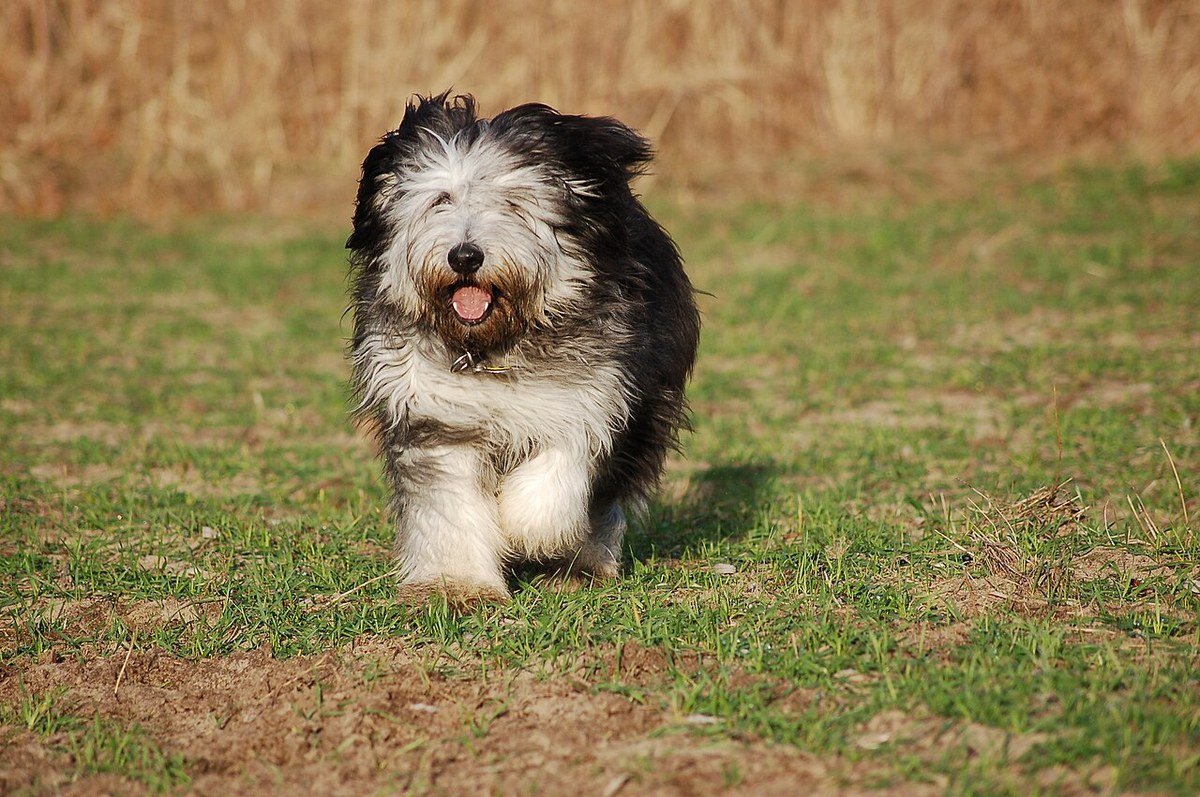
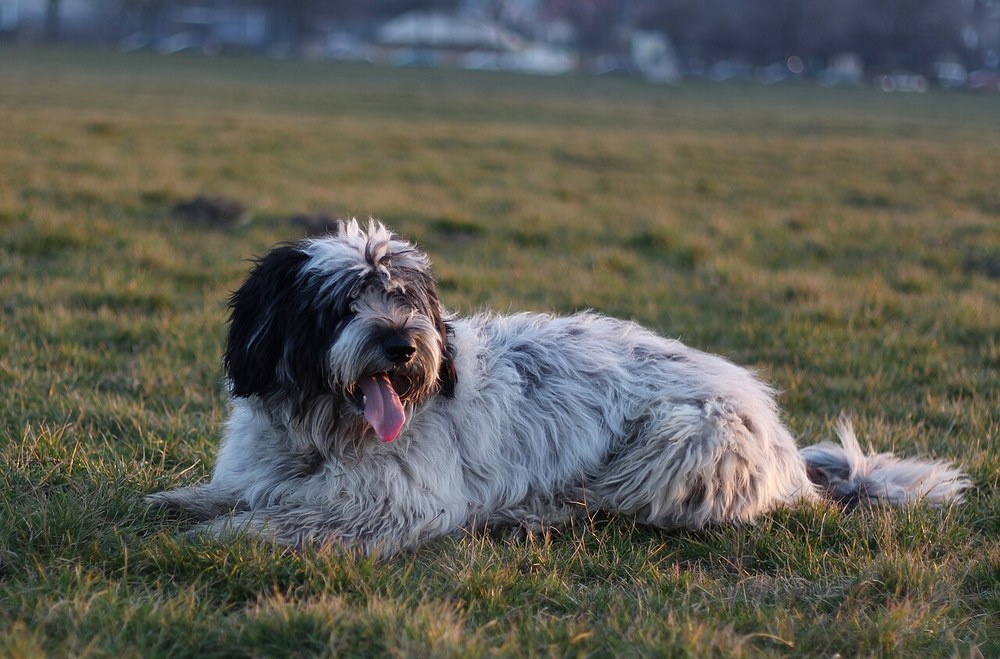
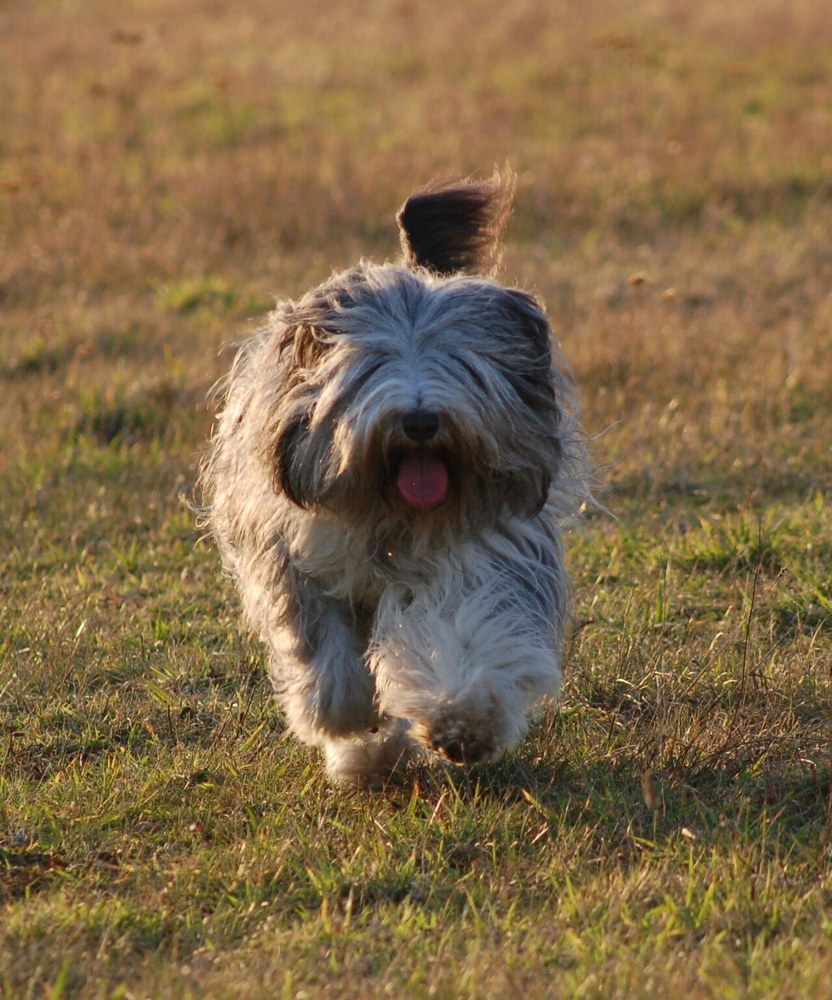
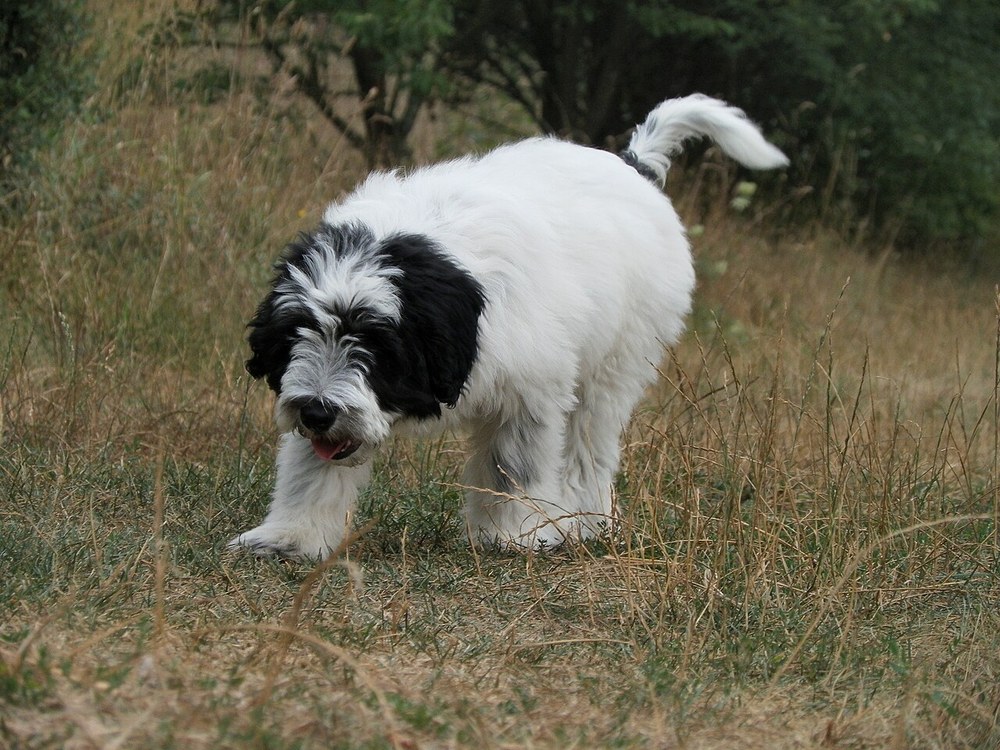
A young PON on the move: medium-sized, sturdy and quick, made for long days with a flock.
Polish lowlands · centuries of farm work
A flock dog of medium size
Shaggy herding dogs worked with sheep on the Polish plains for centuries. Shepherds liked a medium-sized dog: big enough to move stubborn sheep, small enough not to frighten them, and alert enough to warn of strangers.
A popular story tells of a Polish merchant who traded grain in Scotland in 1514 and left some of his dogs there, and it is often linked to the Bearded Collie. It is a nice legend; treat it as a story, not a record.
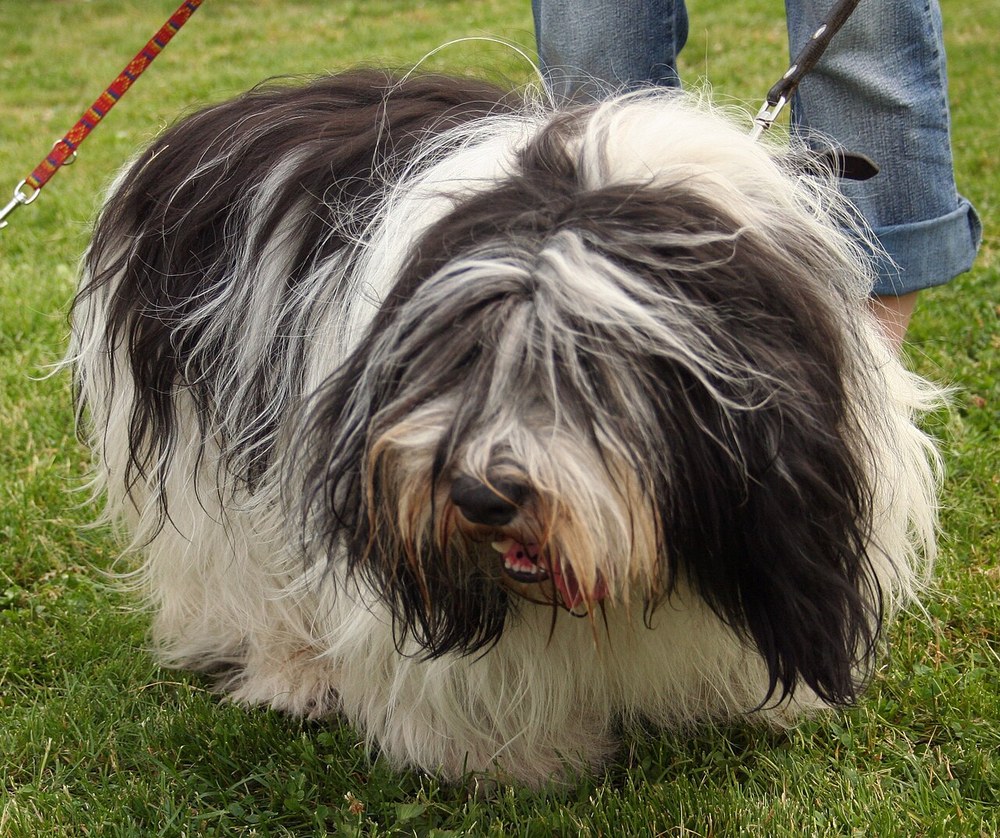
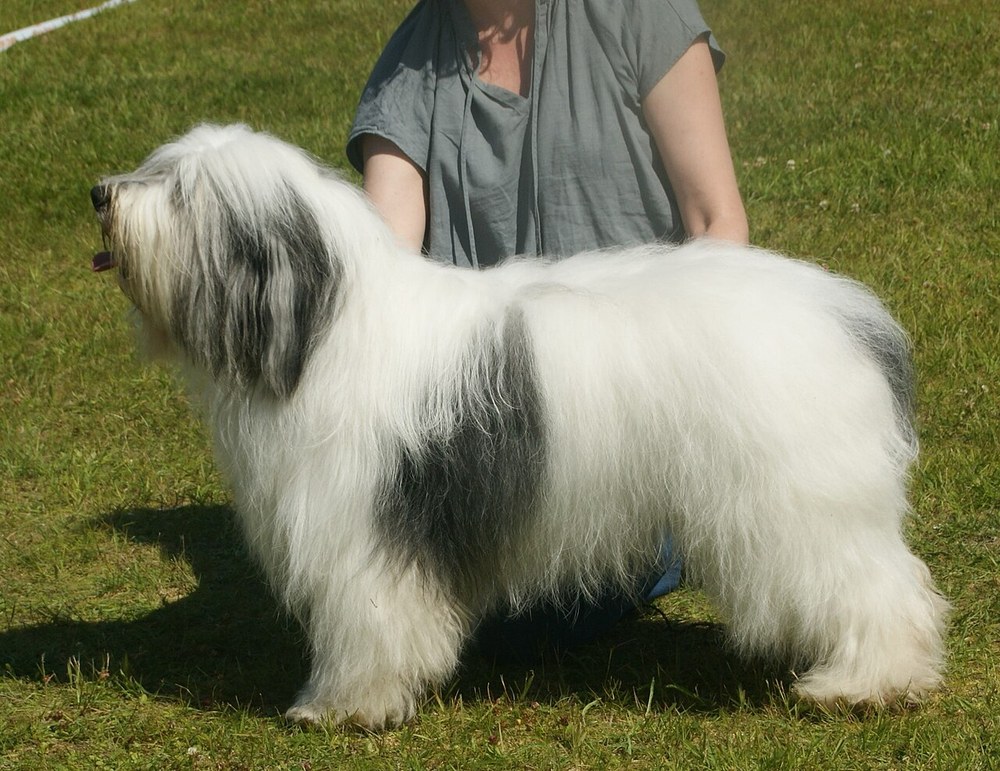
A PON at a show in Racibórz, Poland: the hair over the eyes is part of the breed's classic look.
After 1945
Rebuilt from a handful of dogs
The Second World War nearly ended the breed. Afterwards a Polish vet, Dr Danuta Hryniewicz, gathered the few remaining dogs and bred them again. Her male Smok became the model for the first breed standard.
The FCI accepted the breed in 1959, and the AKC added it to the Herding Group in 2001.
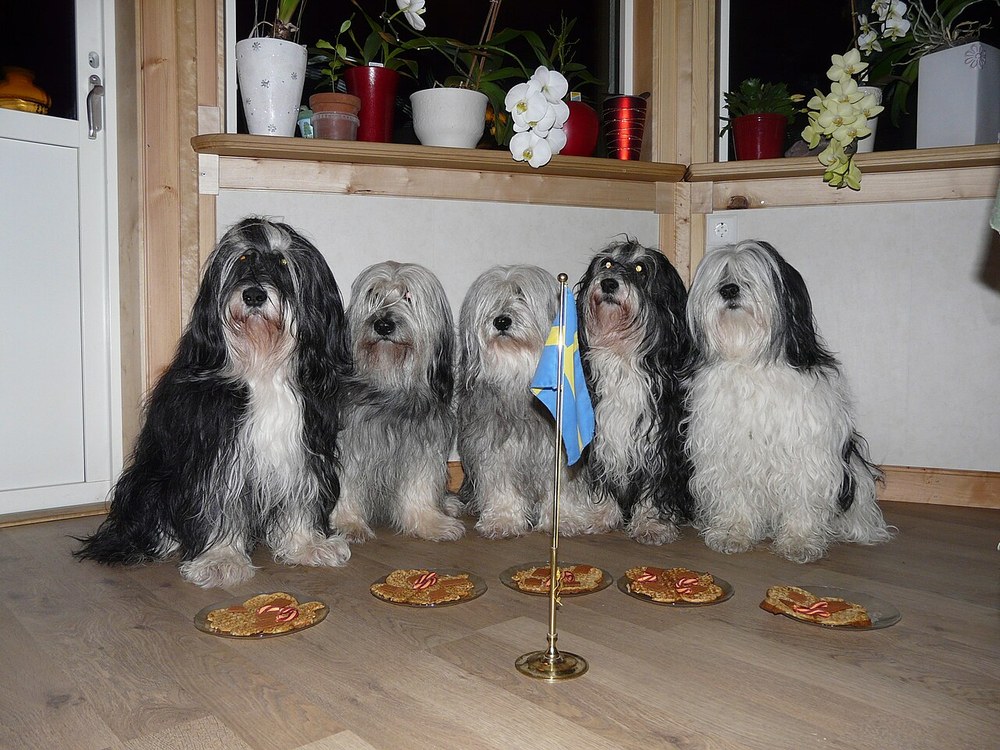
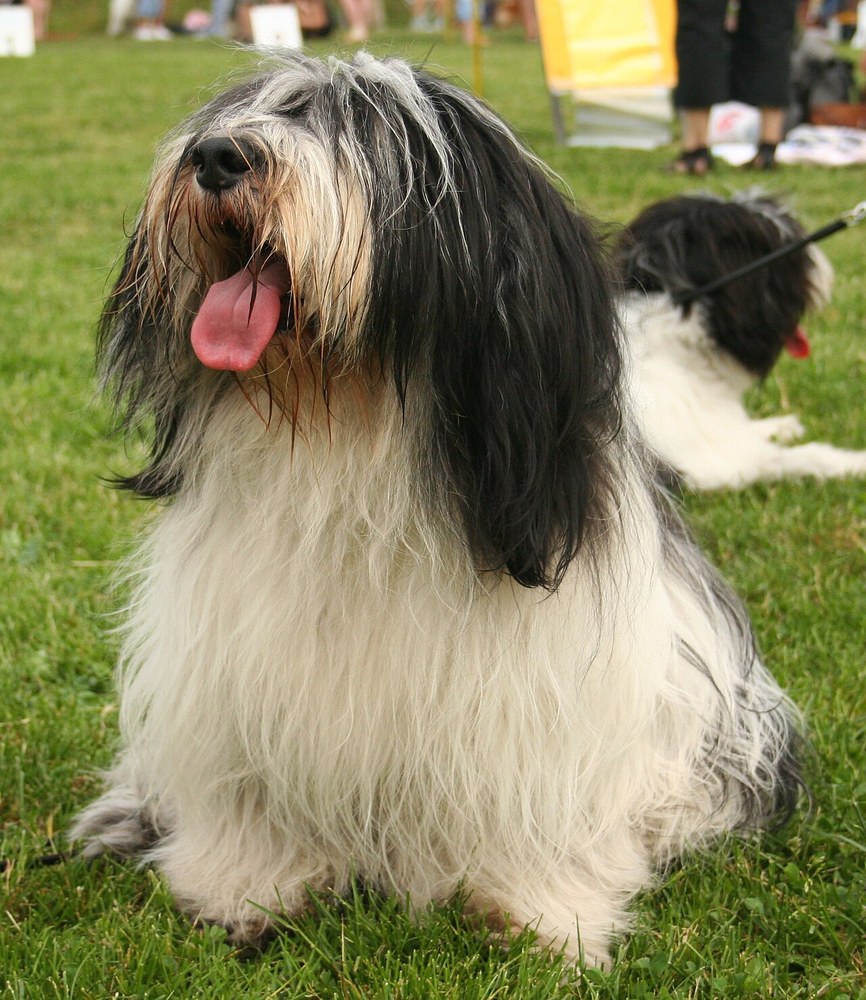
Five PONs at a Swedish kennel: from its Polish home the breed has spread across Europe and North America.
What the breed was bred for
Loyal at home, a watchdog at heart
Day to day you live with a cheerful, affectionate dog that wants to be part of everything. Many are good with children they know, and most enjoy games and learning.
The same dog keeps watch. It notices strangers, cars and noises and tells you about them. It also has its own ideas, so rules work best when they are clear and kind.
A good day has a brisk walk, a brain game and a short brushing session
Most adult PONs do well with an hour or more of walking and play, plus ten minutes of training or a search game. Trouble usually starts when the dog has nothing to do: barking at the window, herding the children, chewing or pushing the house rules.
Morning · walk
Exercise with a little job
A walk with tasks suits a herder: a few recalls, a sit at the kerb, a toy to carry, a short search for a treat in the grass. The dog comes home tired in body and in head.
A PON tests rules to see if they hold. Agree as a family where the dog may lie, what happens at the door and when food is shared, then keep it the same every day. Reward the right choice instead of arguing.
Running kids and swinging legs can trigger herding nips. Give the dog a calm job during wild games, such as lying on its bed with a chew, and teach the children to stop and stand still if the dog circles them.
Expect barking when someone comes to the door or walks past the house. Thank the dog for one or two barks, call it to you and reward quiet. Visitors should ignore it until it settles and sniffs them.
The long coat mats quickly behind the ears, under the legs and on the belly. Brush in layers down to the skin a few times a week and use a comb on problem spots. A quiet evening session works best.
General awareness only. I am not a veterinarian. With PONs, owners often spot trouble first as irritated eyes under the fringe, sore skin under mats, an odd gait or extra weight the coat hides. For red flags, leave this page and open
when to call the vet.
Eyes
Keep the hair around the eyes clean and ask your vet about squinting, tears or redness.
Coat and skin
Brush to the skin and check for mats, burrs and sore spots, especially after wet walks.
Joints and movement
Stiffness after rest or a change in gait should see a vet. See limping stop list.
Weight
The coat hides the body shape. Feel the ribs and count treats. See BCS check at home.
Heat
A thick coat holds heat. Walk early on hot days and give shade and water.
Ask the breeder
Ask which screenings the national breed club recommends for the parents, and ask to see the results. Do not invent disease claims from a blog.
Lines and types
Every PON needs work for its brain and calm, early socialization
No bloodline selling. Some PONs are bolder and busier, others softer; some come from show homes, a few from working or sport homes. Every one of them is watchful, clever and coated. Meet the mother if you can and see how she greets a stranger.
Family companion homes
Daily walks with small tasks.
Short training games at home.
Calm meetings with visitors.
Brushing in the weekly plan.
Suits a family that enjoys training and will keep house rules consistent.
Sport and herding homes
Agility, obedience or rally.
Herding lessons where available.
Scent games and tricks.
Rest after busy days.
Suits an owner who wants a clever partner for dog sports and enjoys a dog with opinions.
Socialization windows
What to introduce — and what not to overload — by age
AVSAB-aligned in spirit: short, clean exposures at a distance the puppy can still eat,
with hygiene while vaccines finish. See the
puppy socialization schedule.
2–4 months
Settling in and friendly visitors
Introduce: calm visitors who let the puppy come to them, short car rides, one-minute brushing, the toilet spot, short spells alone.
Do not overload: rough handling, crowds pushing in to touch the puppy, running games that end in nipping.
~6 months
Testing the rules
Introduce: clear routines, recall and wait at doors, play with steady adult dogs, short daily brushing.
Do not overload: changing the rules from day to day, rewarding barking at the window, letting it herd the children.
~12 months
Teenage watchdog
Introduce: calm practice at the door, new places at quiet times, a bed cue during visits, puzzle games.
Do not overload: long days with nothing to do, skipping brushing as the adult coat grows in.
~18–24 months
A settled young adult
Introduce: agility, rally or herding lessons if you like them, longer walks, café visits with a quiet corner.
Do not overload: deciding the dog is aggressive because it still watches strangers first.
~3 years+
Maintenance
Introduce: daily walks with tasks, regular training games, weekly brushing to the skin, yearly vet checks.
Do not overload: letting brushing slide until the coat must be shaved.
Before you buy
Who a Polish Lowland Sheepdog usually fits
Fit comes down to your time for exercise and training, how you handle a clever dog that tests rules, how much barking your home can take and whether you will brush a long coat every week.
Good match
More likely a good fit if you…
You enjoy training and like a dog that learns fast
You will keep clear, friendly rules in the house
You want an alert dog that tells you when someone comes
You have time for daily walks and brain games
Regular brushing sounds fine to you
Mismatch risk
A Polish Lowland Sheepdog may be a poor choice if…
You want a quiet dog that ignores the doorbell
Your house rules change with each family member
You have very young children who run and scream a lot
You have no time for weekly grooming
The dog would be alone most of the day
If you are torn between breeds
Polish Lowland Sheepdog vs Bearded Collie and Old English Sheepdog
All three are shaggy British or European herders. The Bearded Collie is bouncier and more openly friendly; the Old English Sheepdog is much bigger. The PON is the medium, more watchful one with a strong will.
Strangers
Polish Lowland Sheepdog
Watchful, warms up slowly.
Bearded Collie
Usually more outgoing with new people.
Size
Polish Lowland Sheepdog
Medium, sturdy.
Old English Sheepdog
Much larger and heavier.
Barking
Polish Lowland Sheepdog
Alert barker.
Bearded Collie
Also vocal, often more from excitement.
Coat
Polish Lowland Sheepdog
Long double coat; mats if skipped.
Both compares
All three need a lot of brushing.
Ownership without surprises
Where a Polish Lowland Sheepdog owner’s budget goes
Costs depend on country, city and your choices. These are themes to plan for, not quotes.
Veterinary
Annual vet visits, the vaccines your vet recommends and the health tests the breed club asks breeders for.
Grooming
A pin brush, a slicker, a metal comb and a mat splitter, or regular visits to a groomer who knows long coats.
Training
A puppy class, then sport or obedience classes to keep the brain busy.
Food and treats
A medium-sized active dog; training treats add up.
Company
A neighbour, sitter or day care for long workdays, so the dog is not left for hours.
A grooming habit started in puppyhood saves money and stress later: matted coats often end in a full shave.
Before day one at home
What to prepare for a Polish Lowland Sheepdog puppy
A PON puppy is bold, busy and watching everything. Have a brush and comb, a bed spot, chews and a few calm visitors lined up before it comes home.
Training a PON means clear rules, brain work and a plan for barking
Five skills cover most of daily life: a quick recall, waiting at the door, settling on a bed when visitors come, one or two barks and then quiet, and calm walking past people and dogs.
PONs learn very fast and remember mistakes just as fast. Keep sessions short and varied, use food and play, and avoid repeating the same exercise until the dog gets bored and makes up its own version.
The rest is consistency: everyone in the house uses the same words and the same rules, and the dog earns what it wants by choosing calm behaviour.
Load balance
Walks and brain games first, then visitors
Go easier with puppies, older dogs and hot weather. A limp, a squint or sudden bad temper means a vet visit comes before more training.
Brisk walkRecall gameSearch for treatsChew on the bedQuiet nap
For this breed, ten minutes of thinking work tires the dog more than another lap of the park.
A PON with a busy head is much easier to keep quiet at the door.
Barking at the door
How to help a PON bark once and then settle when someone comes
Thank the first bark, call the dog away, reward quiet on a bed, let the visitor ignore the dog, and practise with friends before real guests.
01
Thank the first bark
Let the dog bark once or twice and say a calm thank you.
02
Call it away
Call the dog to you or to its bed, away from the door.
03
Reward quiet
Treats for every few seconds of quiet on the bed.
04
Visitor ignores the dog
The guest comes in and sits down without reaching for the dog.
05
Practise with friends
Friends ring the bell on purpose before real guests do.
One scene close-up
Why a PON barks at every visitor
This breed was kept on farms to watch the flock and the yard. Telling the family about strangers is part of the job it was bred for, so a few barks at the door are normal.
The aim is not silence but a short report. Let the dog bark once or twice, say thank you, call it to you or to its bed and reward it for being quiet. Practise with friends who ring the bell on purpose, so the routine is easy before real guests arrive.
A dog that growls, snaps or cannot calm down for a long time needs a qualified professional; a vet check helps rule out pain.
“With a PON, I begin with three things: daily work for its brain, clear and friendly house rules, and a door routine that turns barking into a short report. This dog wants a job; give it one and it becomes a loyal, funny partner.”
We work on what your days actually look like: visitors, barking, nipping, the house rules and grooming. I am a trainer, not a veterinarian.
Andrew DarovProfessional dog trainer and instructor
Write down the dog's age, what it does when the bell rings and the first thing that goes wrong: barking, nipping, house rules, strangers or the brush. Opens WhatsApp to Andrew.
Often yes, for an active family that trains. Most are loyal and playful with children they know. Watch for herding nips with running kids.
Is a PON a good first dog?+
It can be, for a first-time owner who enjoys training and keeps rules consistent. It is clever and tests limits.
Do Polish Lowland Sheepdogs bark a lot?+
They are alert barkers and report visitors and noises. Teach one or two barks and then quiet.
PON vs Bearded Collie: what is the difference?+
The Bearded Collie is usually bouncier and friendlier with strangers. The PON is more watchful and strong-willed.
PON vs Old English Sheepdog: what is the difference?+
The Old English Sheepdog is much larger. The PON is medium-sized, quicker and more of a watchdog.
How much exercise does a PON need?+
About an hour or more of walks and play each day, plus short training or search games.
Are PONs good with strangers?+
They are usually reserved at first. Calm, slow meetings in puppyhood help them accept visitors.
Do PONs shed?+
Moderately, but loose hair stays in the coat and forms mats. Brush to the skin several times a week.
Can a PON live in an apartment?+
Often yes with daily exercise and a plan for barking at sounds in the hallway.
Can a PON be left alone?+
Short absences are fine once practised. Long days alone lead to barking and boredom.
What health themes should I ask about?+
Ask the breeder which health checks the national breed club recommends for parents and see the papers. Tell your vet the breed. This is general awareness, not a diagnosis.
How long do Polish Lowland Sheepdogs live?+
Public breed references often mention about 12–14 years. Individual dogs vary.
If a PON seems like more dog than your home can handle
Most people fall for the shaggy face and the hair over the eyes. The barking, the strong will and the coat care are the parts to be sure about first.
A curly Hungarian herder with tipped ears. Lively, clever and devoted; barks a lot and needs daily brain work, a quiet cue and calm meetings with strangers.
Dog barking in the car at other dogs, bikes or the park? Why car barking starts and how to stop it: cover the view, use a crate, and do short quiet drives.
Place is a mat the dog goes to, lies on, and stays on until released. Build the park first, then duration, then real kitchen noise and guests.
Need a read on your exact situation?
Send me a few lines about your Polish Lowland Sheepdog: how old it is, how it reacts to visitors and what goes wrong first. We rule out health and safety issues first, then choose one skill to start with.