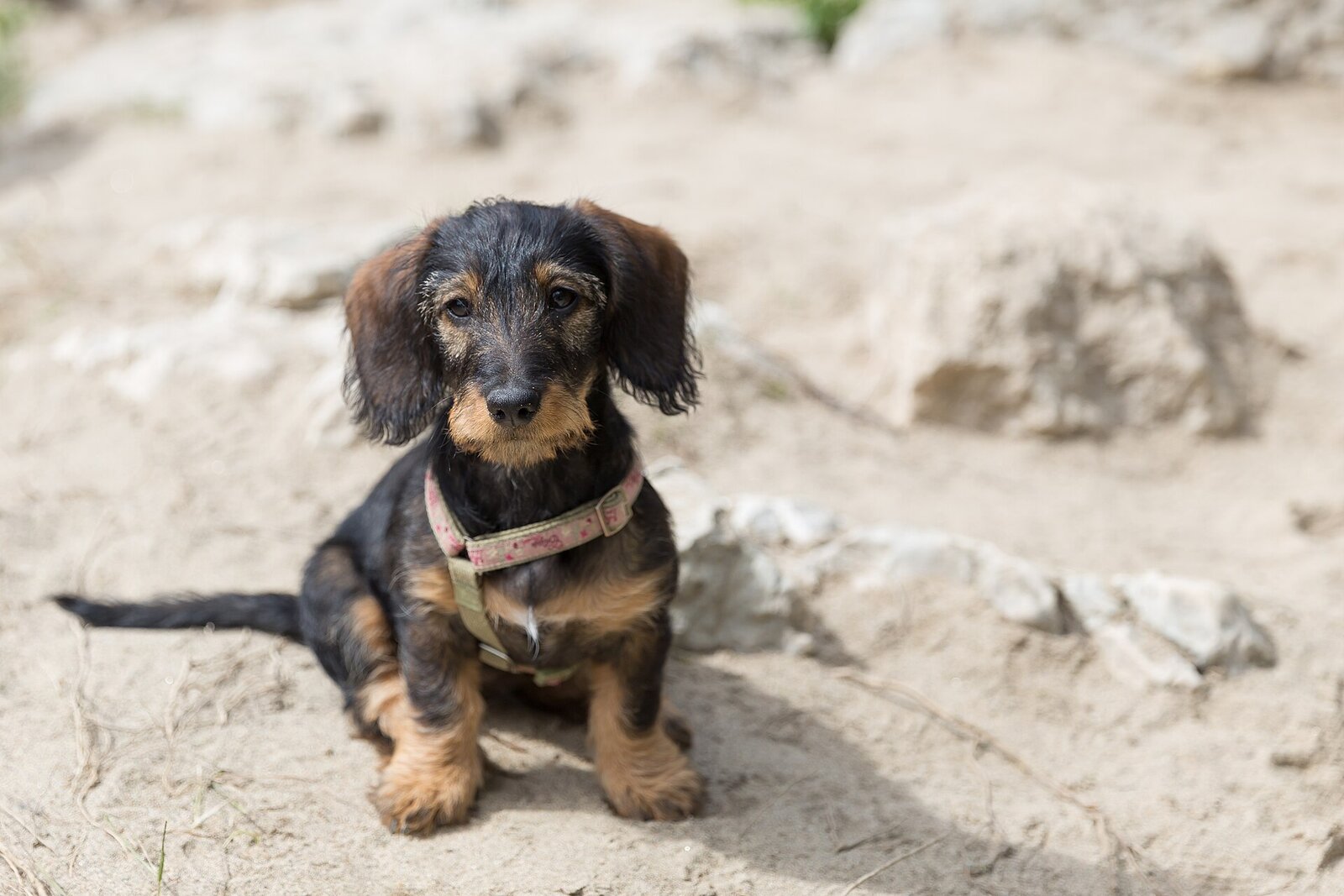
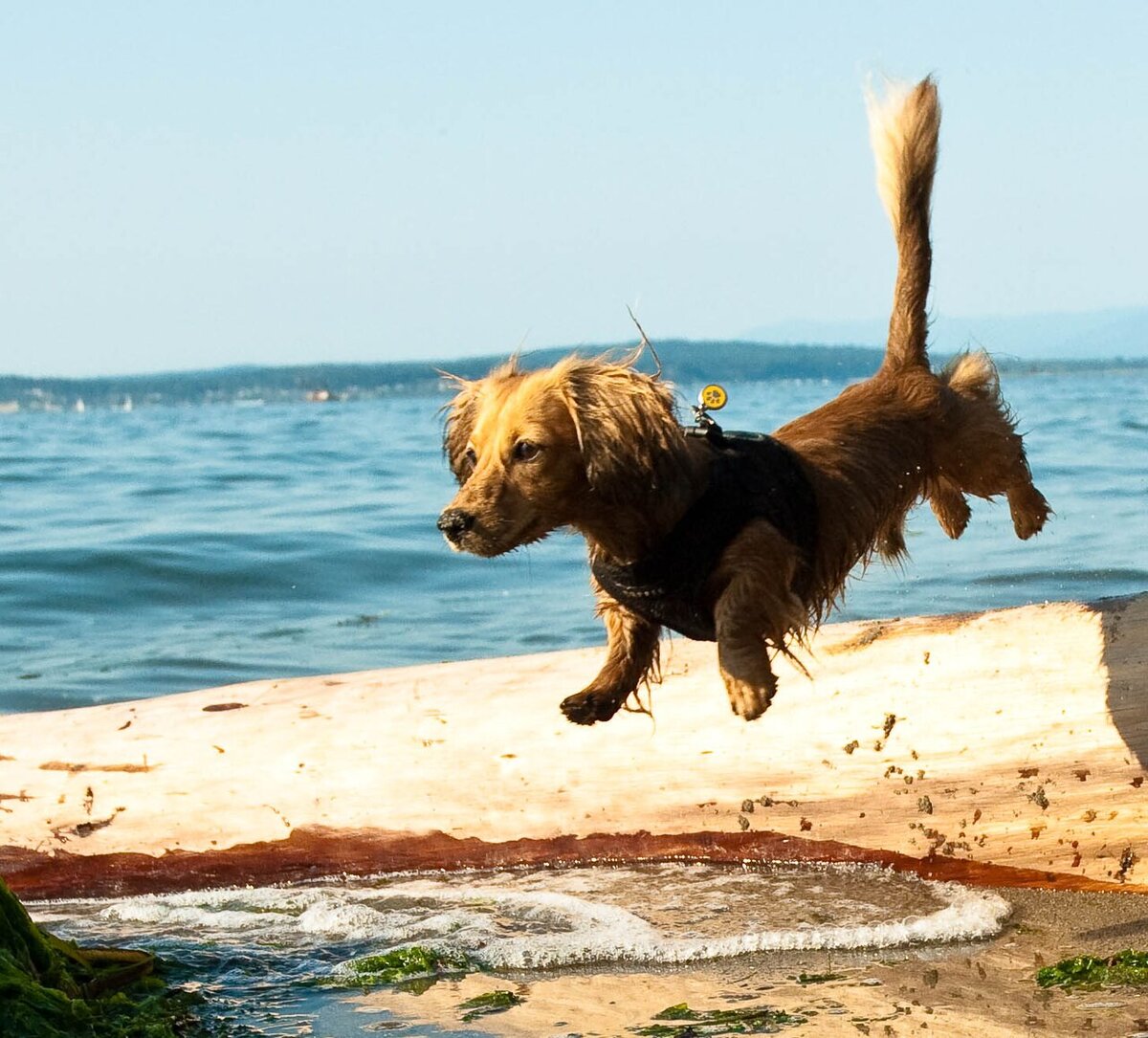
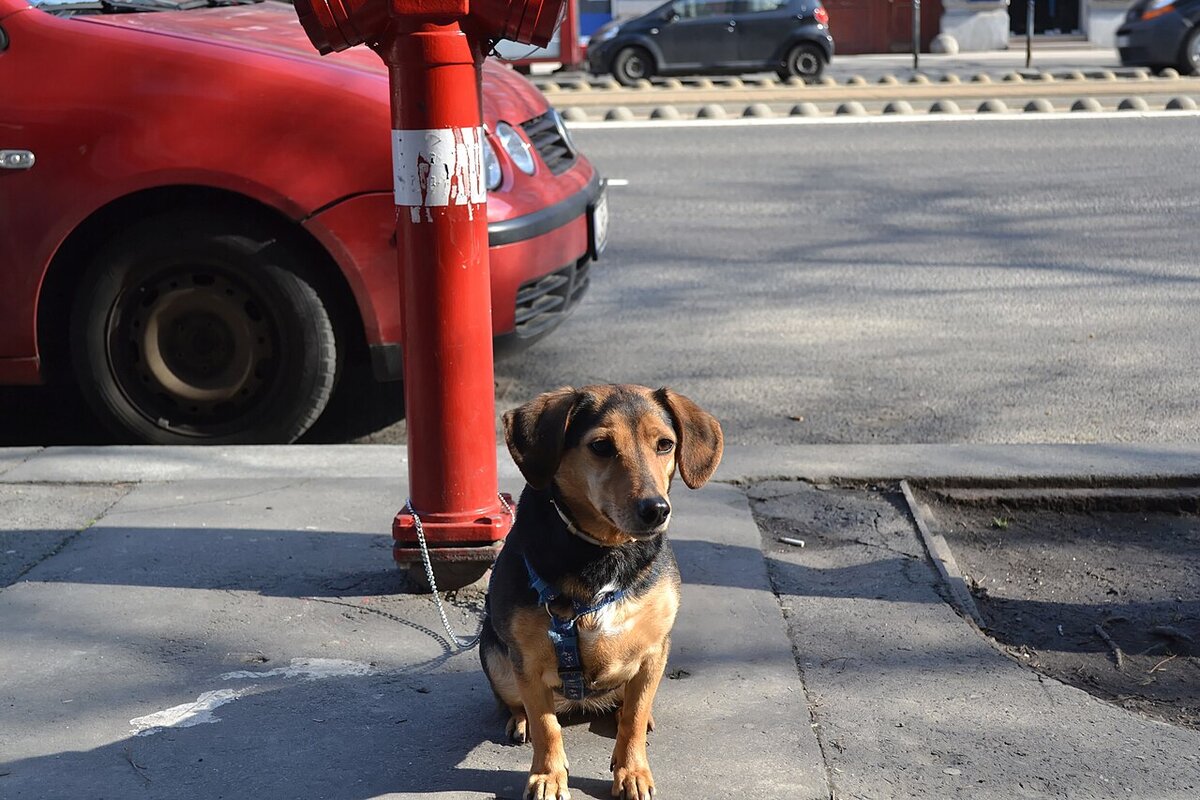
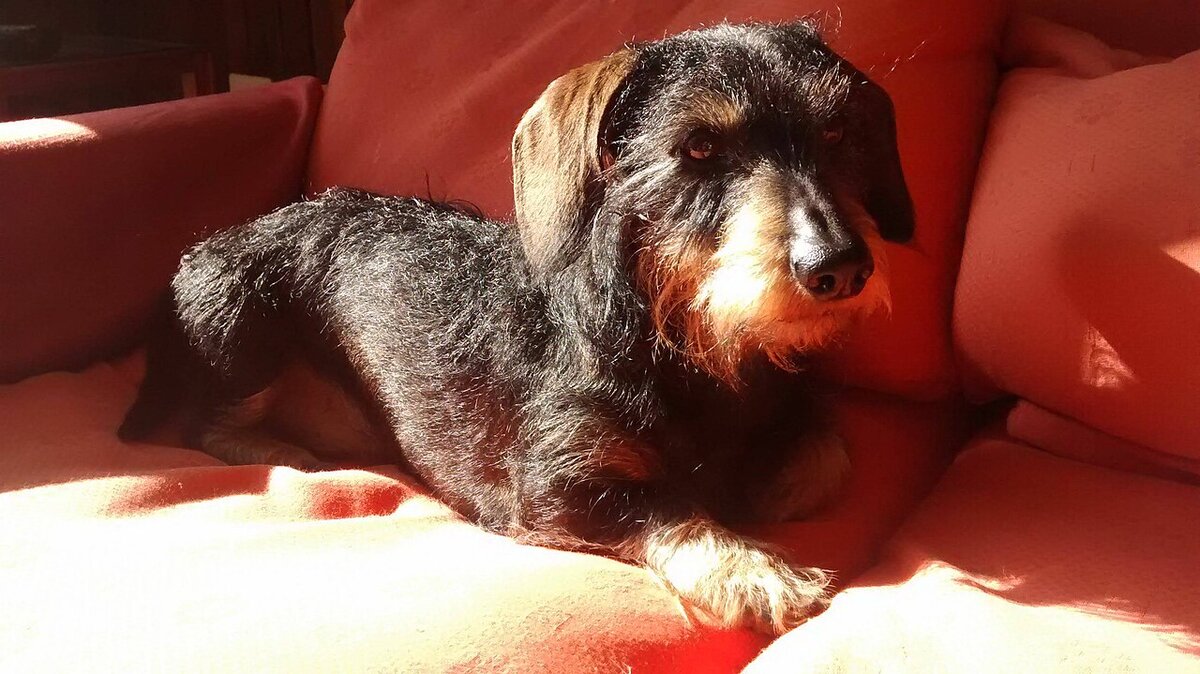
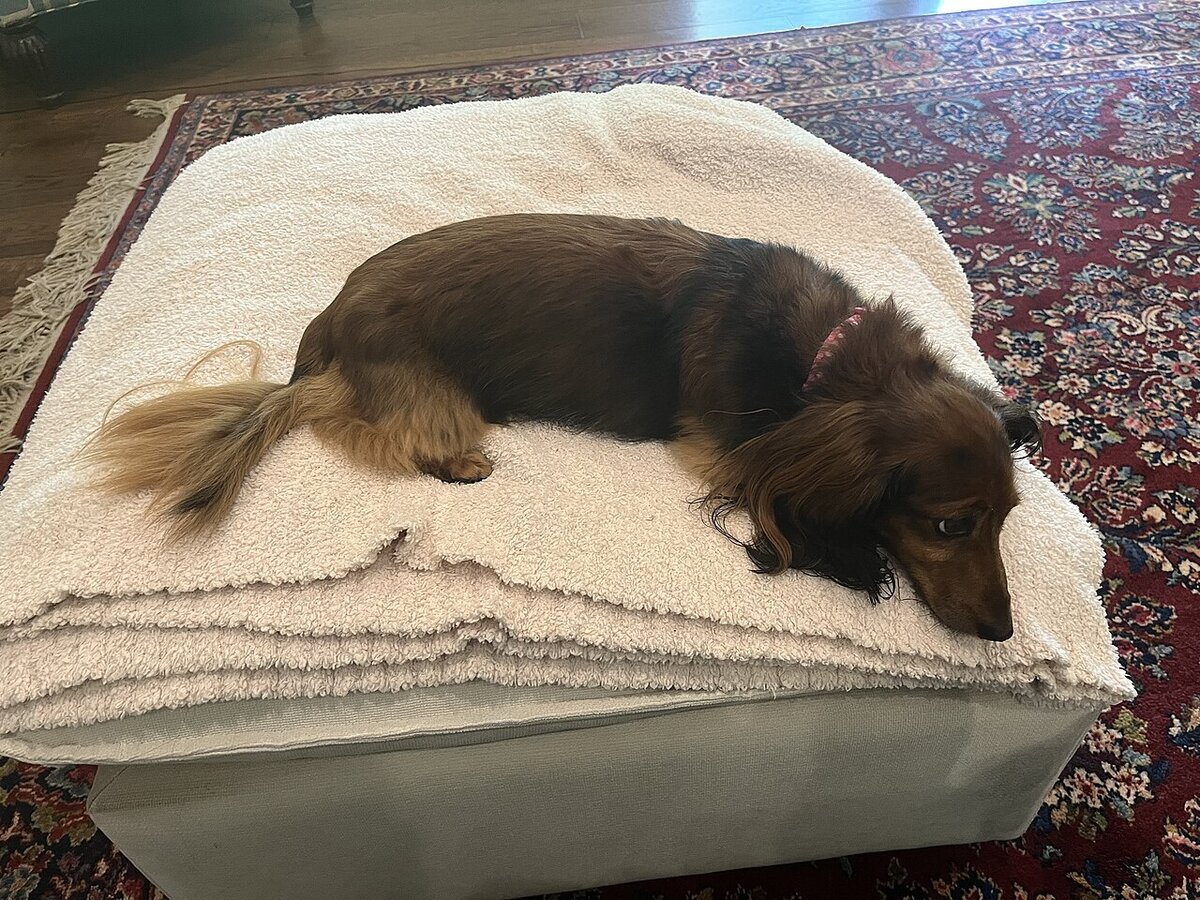
A Dachshund is a short-legged German hunting dog bred to go underground after badgers. Most are brave, independent, loud for their size, devoted to their people, and suspicious of strangers. City life works with sniff walks, a quiet cue for the bark, patient house-training, and sensible care for the long back.
Job: German badger hunter — brave, vocal and determined.
Energy: Moderate; walks, sniffing and games.
Home: Needs ramps or steps, barking help and patient house training.
A Dachshund is a brave little hunter that needs a digging and sniffing outlet
Public breed histories describe a badger and fox hunter that worked in dens, and a tracker of wounded game. The modern pet kept the courage, the nose, the voice, and the long back.
Training works with food and short games. The common problems are barking, guarding of food or toys, slow house-training, and recall when a smell is interesting.
From the first month, build two habits. First: noise or visitor, one bark, then come to you for a reward. Second: going outside to toilet is rewarded every time, in all weather.
Standard ~8–9 in; Miniature smaller (varies by registry)
Weight
Standard ~16–32 lb; Miniature under ~11 lb (typical ranges)
Energy
Moderate
Coat / shed
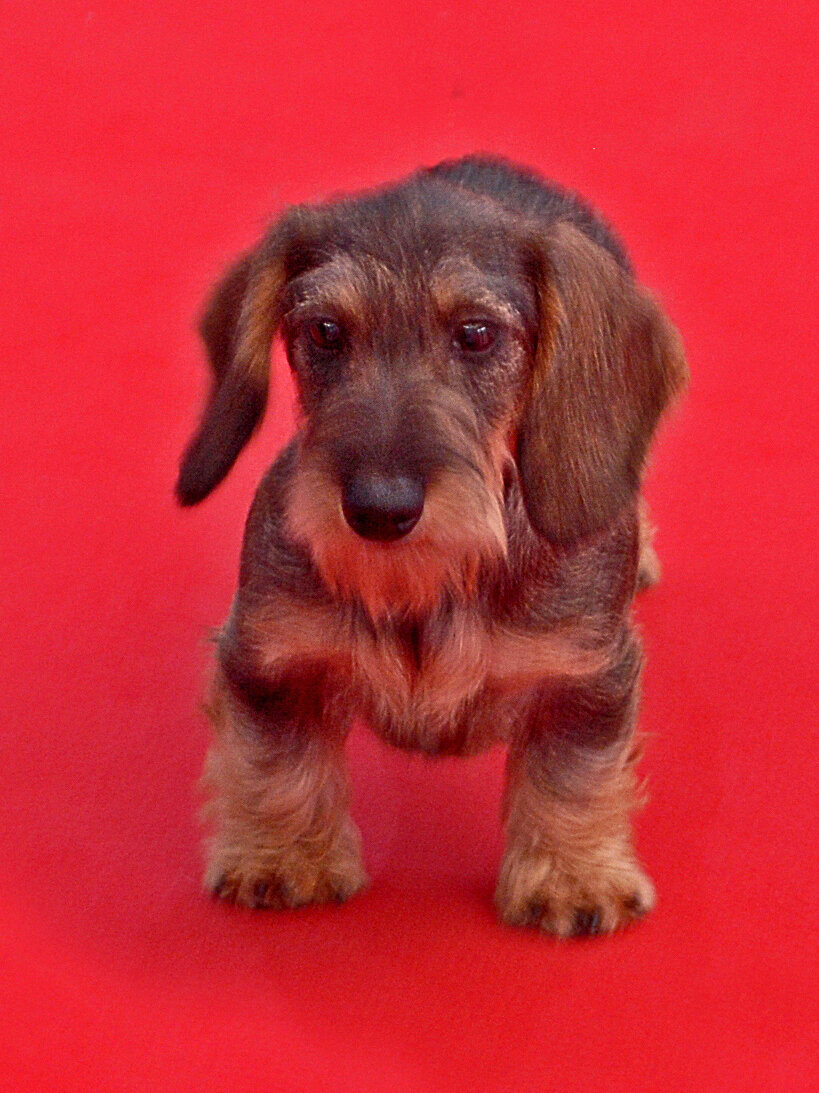
Smooth, long or wire coat — care depends on type
Job
German badger hunter
Breed history
Why the Dachshund was built to go underground after badgers — and to bark about it
Ancestry does not decide one puppy, but it explains the Dachshund: brave, stubborn, loud for its size, devoted to its people, and built with a long back that needs sensible care.
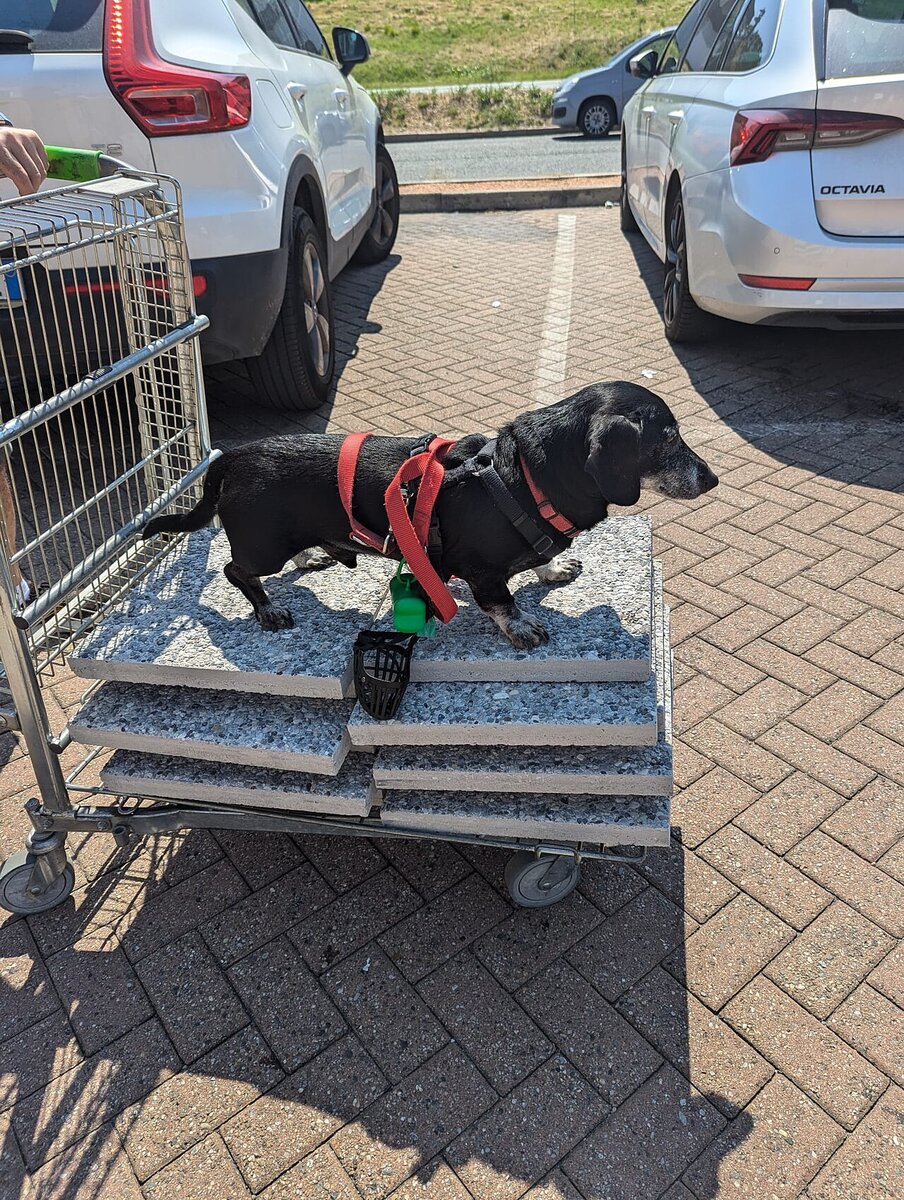
A smooth Dachshund supervising a load of paving slabs (modern photograph). Small dog, big confidence.
Germany → earth work and tracking
A badger dog with a big voice
The name is German for “badger dog”. Public breed histories describe short-legged hunting dogs that followed badgers and foxes into their dens, and others used to track wounded game. Short legs and a deep chest suited work underground.
Going to ground alone takes courage and independence. A Dachshund that keeps barking at a hole or refuses to leave a smell is doing what it was bred for. Training gives it something better to do.
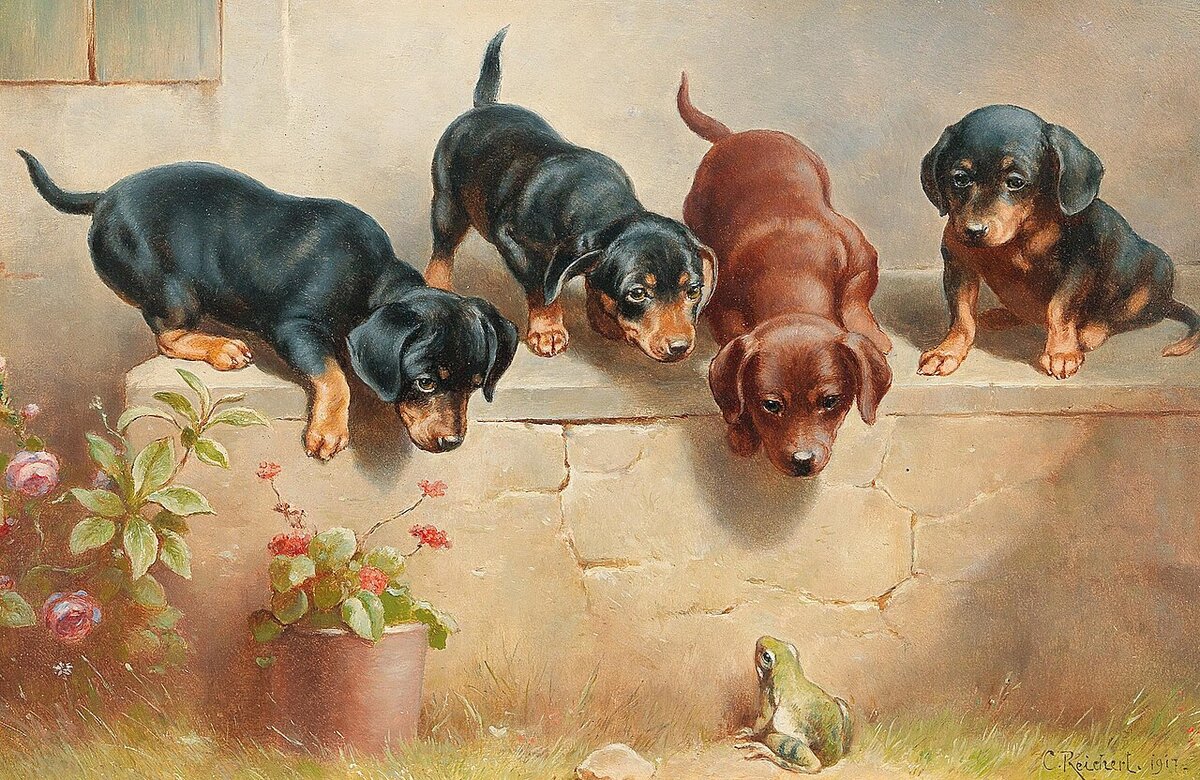
Vintage painting of Dachshund puppies watching a frog (illustration). The breed has been a favourite subject of artists for well over a century.
Three coats, several sizes → companion
From hunting dog to one of the most popular companions
Over time breeders developed three coat types — smooth, wirehaired, and longhaired — and standard and miniature sizes; FCI also recognises a smaller rabbit size. In many countries Dachshunds are still used for hunting and tracking.
Most Dachshunds today are family dogs. The courage, the voice, and the nose came with them, and so did the long back.
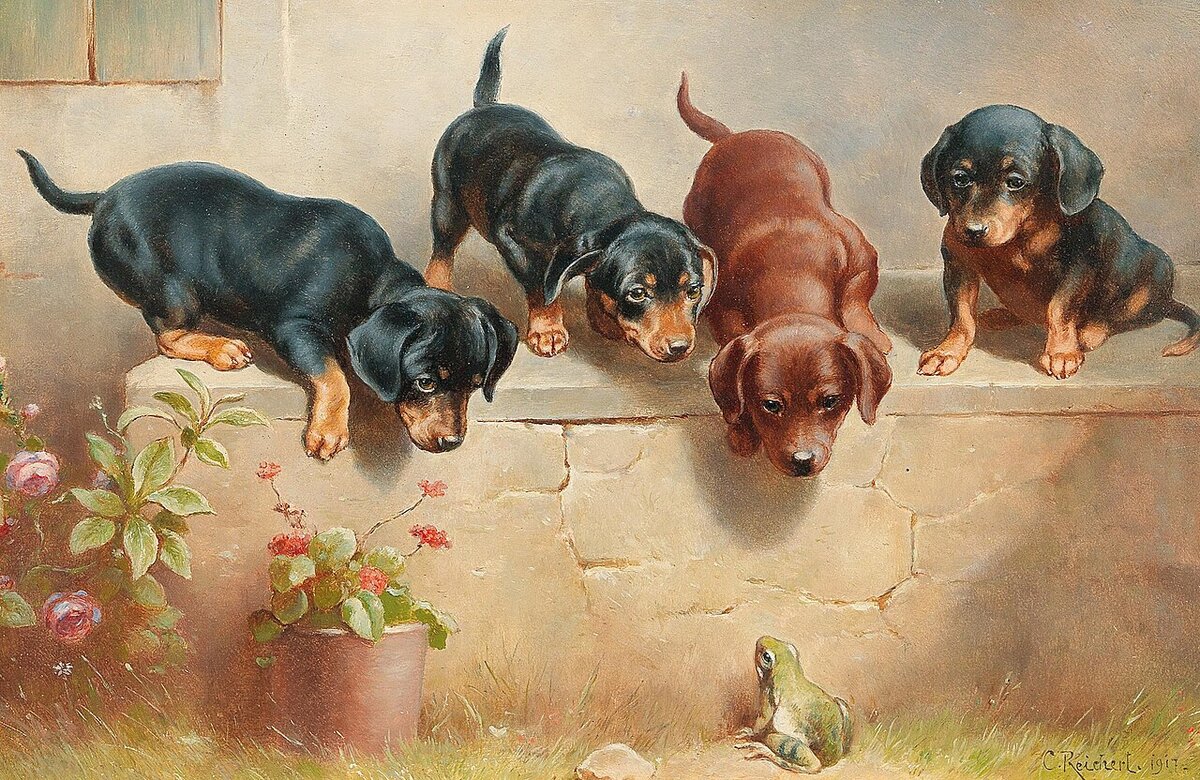
Dachshund puppies in a vintage illustration. Charming in art; in real life, puppies need training from day one.
What the breed was bred for
Courage, independence, and a nose that leads
In plain trainer language: the type was selected for courage, persistence, and independent work underground. That is why a Dachshund with clear rules and short, fun training is an entertaining companion — and why a spoiled one barks, guards, and refuses to come back.
Many Dachshunds bark at noises and visitors, guard food or toys, and resist house-training in bad weather. Patience, food rewards, and consistency beat scolding every time.
Back care: lean body, fewer jumps, ramps where useful
A day is sniffing, short training games, and sensible back care
In a city the Dachshund’s hunting past shows up as barking at noises, digging, stubborn sniffing on walks, and guarding things it likes. Most are affectionate with family. The work is giving the nose and voice outlets, and protecting the back.
Morning · first outing
Sniff walks are proper exercise
Let the dog sniff on a comfortable harness. A twenty-minute nose walk often tires a Dachshund more than a fast march.
Many owners use ramps or steps for sofas and beds and lift the dog properly, supporting chest and rear. Keep the dog lean; extra weight loads the back.
What to watch monthly: back, weight, coat type, and ears
General awareness only. I am not a veterinarian. Early signals are changes in movement, posture, appetite, or willingness to jump or climb. For red flags, leave this page and open
when to call the vet.
The long back
Keep the dog lean, limit jumping off furniture, and lift with support under chest and rear. Sudden pain, a hunched back, wobbling, or reluctance to move is a same-day vet call.
Coat by variety
Smooth coats need a quick rub; longhaired coats need regular brushing behind the ears and legs; wirehaired coats usually need hand-stripping or trimming a few times a year.
Ears
Dachshunds have long drop ears. Look and sniff weekly, especially after digging or rain. Redness, smell, or head shaking is a vet visit.
Ask the breeder which health screenings the national breed club recommends and see both parents’ results. A breed page cannot diagnose your dog; your veterinarian can.
Toxins and scavenging
I do not publish toxin amounts. If the dog ate something dangerous, call a veterinarian or a poison-control line; the footer lists public numbers.
Sizes and coats
Standard and miniature Dachshunds share the same hunter
Dachshunds come in standard and miniature sizes (FCI also has a rabbit size) and three coats: smooth, wirehaired, and longhaired. Size and coat change grooming and handling. Courage, voice, and back care apply to all.
Standard
Larger and stronger; often bred from hunting or working lines.
Can handle longer walks once mature.
Bark and dig drive are often strong.
Ask what the parents do and how they behave at home.
Fits an owner who wants a sturdier dog for walks and is ready for a loud, independent companion.
Miniature
Small and light, easily injured by falls or rough play.
Still brave, vocal, and independent.
Lifting and ramps matter even more.
Meet the parents and see how they cope with visitors.
Fits a calm household that will protect a small dog’s back and still train it like a real dog.
Socialization windows
What to introduce — and what not to overload — by age
AVSAB-aligned in spirit: short, clean exposures at a distance the puppy can still eat,
with hygiene while vaccines finish. See the
puppy socialization schedule.
2–4 months
House-training and gentle handling
Introduce: a toilet routine with rewards in all weather, gentle handling, lifting with support, a crate or pen.
Do not overload: jumping off sofas, free access to stairs, punishing accidents.
~6 months
The world on a harness
Introduce: sniff walks, calm dog meetings, a quiet cue, trades for found items.
Do not overload: being picked up by strangers, rough play with big dogs, off-lead near roads.
~12 months
Adolescent voice and digging
Introduce: a dig box, door routines, long-line recall, ramps for furniture.
Do not overload: letting barking run all day, extra treats that add weight.
~18 months
Adult routines
Introduce: scent games, longer sniff walks, regular nail and coat care.
Do not overload: repeated jumping off furniture, skipping recall practice.
~24 months
Protect the back, keep the brain busy
Introduce: refreshed recall, quiet, and handling routines; nose work.
Do not overload: weight creep, assuming a small dog needs no training.
Before you buy
Who a Dachshund usually fits
A Dachshund suits owners who love a bold, funny little dog with a big voice, and will protect its long back while giving it enough to do.
Good match
More likely a good fit if you…
Want a small dog with a big personality and plenty of courage
Can teach a quiet cue and manage barking at doors and windows
Will use ramps, carry the dog on stairs when advised and keep it lean
Enjoy sniffing walks and scent games
Are patient with house training in bad weather
Mismatch risk
A Dachshund may be a poor choice if…
Barking would cause trouble with neighbours
You want a dog that is easy to house-train
You expect reliable off-lead recall near wildlife
There are many stairs and high furniture without ramps
You want a dog that obeys instantly without negotiation
If you are torn between breeds
Dachshund vs Cavalier King Charles Spaniel and Jack Russell Terrier
Dachshunds are often compared with other small breeds. The Cavalier is softer and more of a lap dog; the Jack Russell shares the hunting fire.
Origins
Dachshund
German hunting dog bred to follow badgers and other animals underground.
Jack Russell Terrier
English terrier bred to bolt foxes from their dens.
Temperament
Dachshund
Bold, independent and sometimes stubborn.
Cavalier King Charles Spaniel
Gentle, affectionate and eager to please.
Voice
Dachshund
Loud bark for its size; alert and vocal.
Cavalier King Charles Spaniel
Usually much quieter.
Body
Dachshund
Long back and short legs; needs back-friendly living.
Jack Russell Terrier
Compact, athletic and very energetic.
Training
Dachshund
Clever but self-directed; works for food and fun.
Both compares
Cavaliers are usually easiest; Jack Russells are just as independent and even more energetic.
Ownership without surprises
Where a Dachshund owner’s budget goes
Costs depend on your area and choices. These are the main areas to plan for before getting a Dachshund — not exact prices.
Back-friendly home
Ramps for sofas and beds, non-slip rugs and a harness instead of a collar for walks.
Veterinary care
Routine care plus a vet you can call quickly if the dog shows back pain. Ask the breeder which screenings the national breed club recommends.
Food
Small dog that gains weight easily; measure meals carefully.
Training
Puppy classes and possibly help with barking and house training.
Grooming
Depends on coat: smooth, long or wire. Wire coats may need hand-stripping.
Coats and comfort
A coat for cold weather and a warm bed.
With a Dachshund, back-friendly living and weight management are the costs that matter most.
Before day one at home
What to prepare for a Dachshund puppy
A Dachshund puppy is bold, curious and loud for its size. Start back-friendly habits, house training and quiet cues from day one.
01
Set up ramps and rules
Use ramps for sofas and beds and lift the puppy safely with support under chest and rear. See puppy handling.
“With a Dachshund, I accept the badger dog in the room. We give legal digging and sniffing, teach a quiet cue for the alarm bark, carry instead of stairs where the vet advises, and keep recall on a line — because big courage in a long, low body needs good management.”
Sessions cover real scenes: barking at the door, recall in scent-rich parks, handling and nail care, housetraining in bad weather, and rest after effort. I am a trainer, not a veterinarian. No invented reviews.
Andrew DarovProfessional dog trainer and instructor
Describe age, living setup, and where the dog breaks first — barking, digging, jumping on and off furniture, or settling after walks. Opens WhatsApp to Andrew.
A gentle Highland giant built to course deer — soft temperament, big joints to protect, and a sight-chase that still needs secure ground.
Need a read on your exact situation?
Describe your Dachshund’s age and the scene that repeats most: barking, digging, jumping on and off furniture, or settling after walks. We check safety first, then pick the first skill.
Written by Andrew Darov, professional dog trainer. Not veterinary advice and not a diagnosis.
Not a kennel club. No invented reviews. No vaccine schedules or toxin doses. Photo credits in
/images/breeds/dachshund-guide/credits.md.