Barbet: temperament, energy, grooming and training for the French water dog
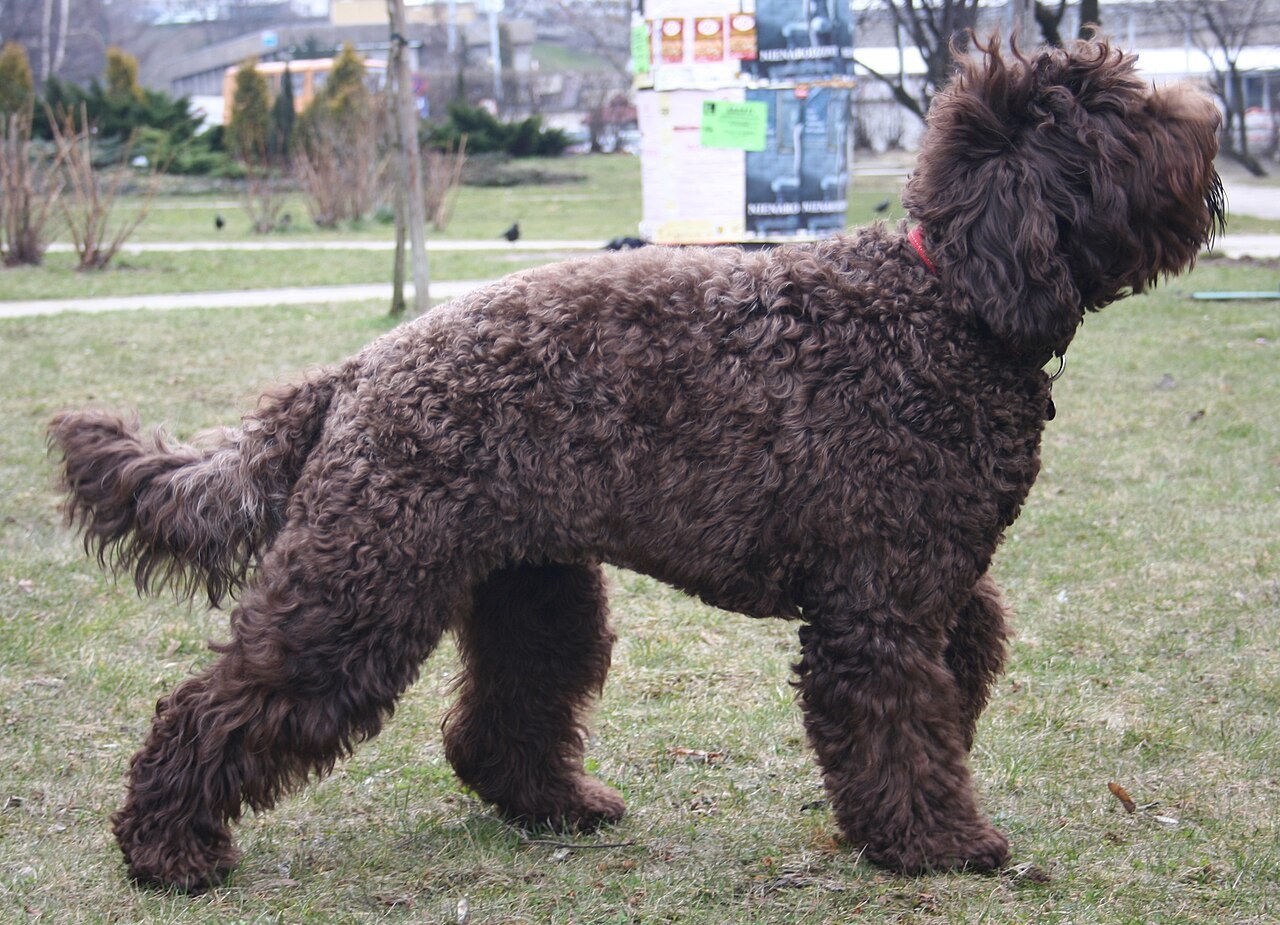
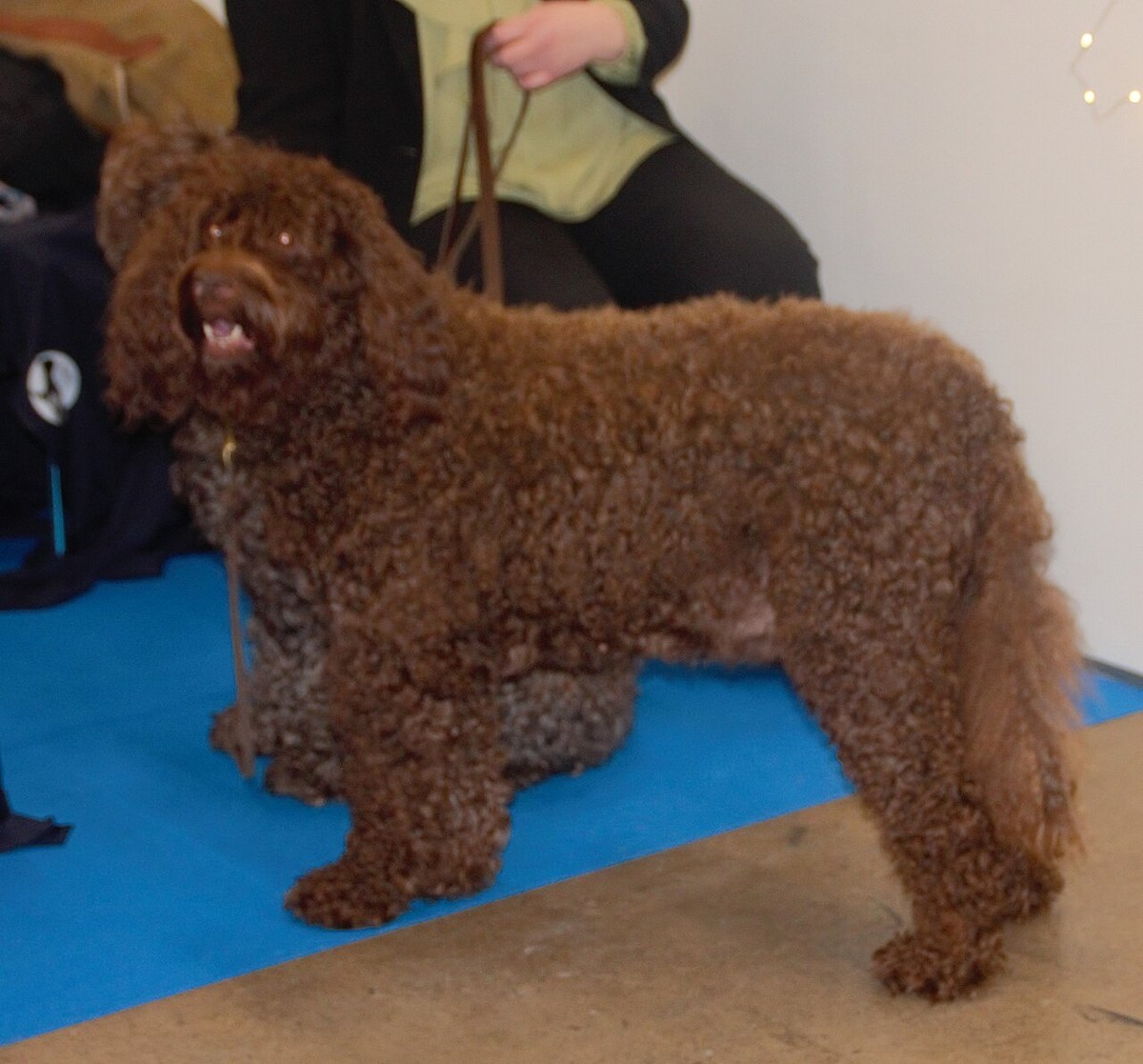
The Barbet is a medium to large French water dog with a thick, woolly, curly coat and a beard that gives the breed its name (barbe is French for beard). For centuries it was used to retrieve ducks and other water birds from marshes and rivers, swimming in cold water all day. Living with one means a cheerful, sociable dog that loves people, water and mud, carries everything in its mouth and needs serious coat care. What works is daily exercise with swimming or retrieving, kind training with food and play, calm greetings taught early, time alone built up slowly and brushing and combing to the skin every week.
Job: A French curly-coated water dog; AKC Sporting group, FCI Group 8.
Energy: Friendly, joyful, clever and very attached to its people.
Home: Suits an active owner who likes water, mud and grooming.
A Barbet is a muddy water retriever in a teddy-bear coat
Many people see a curly brown dog with a beard and think of a fluffy, quiet house pet. The Barbet is friendly and often calm indoors as an adult, but it is a working gundog first.
This is a French water dog bred to swim out, find a bird in the reeds and bring it back. The problems I meet at home are about energy, a busy mouth and closeness: a young dog that jumps on everyone, grabs hands and sleeves, runs off to the nearest pond, cries when left alone and screams at the brush.
My approach is to give the retriever a job and the coat a routine. Swimming and retrieve games with clear rules, calm greetings, time alone in small steps, short, kind lessons and grooming practice every day. A Barbet that has worked and been brushed is a sweet and easy friend.
FCI: males 58–65 cm (about 23–25.5 in), females 53–61 cm (about 21–24 in)
Weight
Usually about 17–28 kg (roughly 37–62 lb)
Energy
Moderate to high; needs daily exercise, ideally with swimming or retrieving
Coat / shed
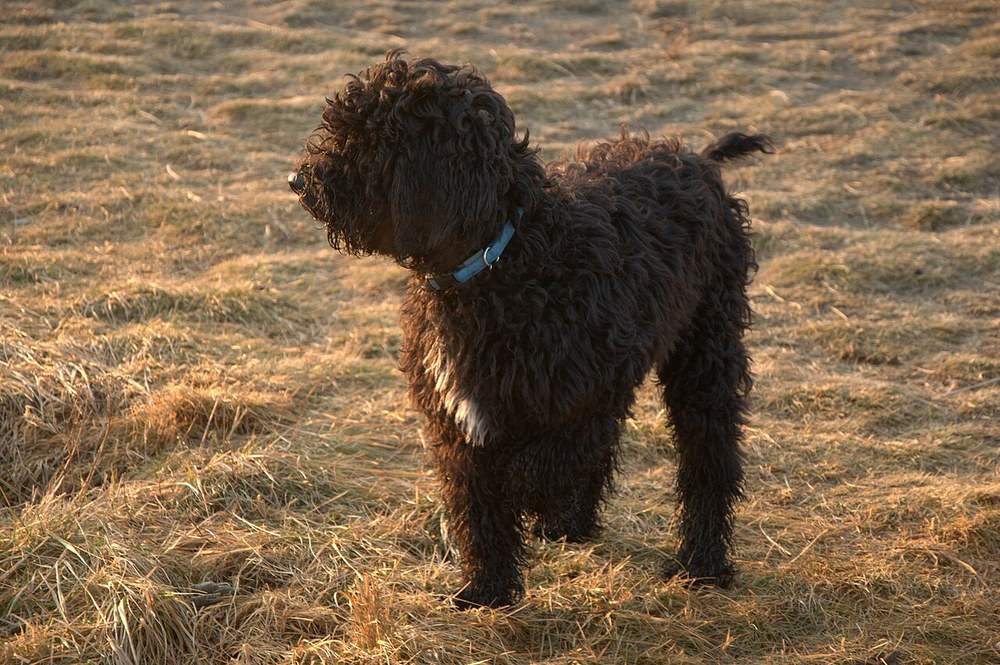
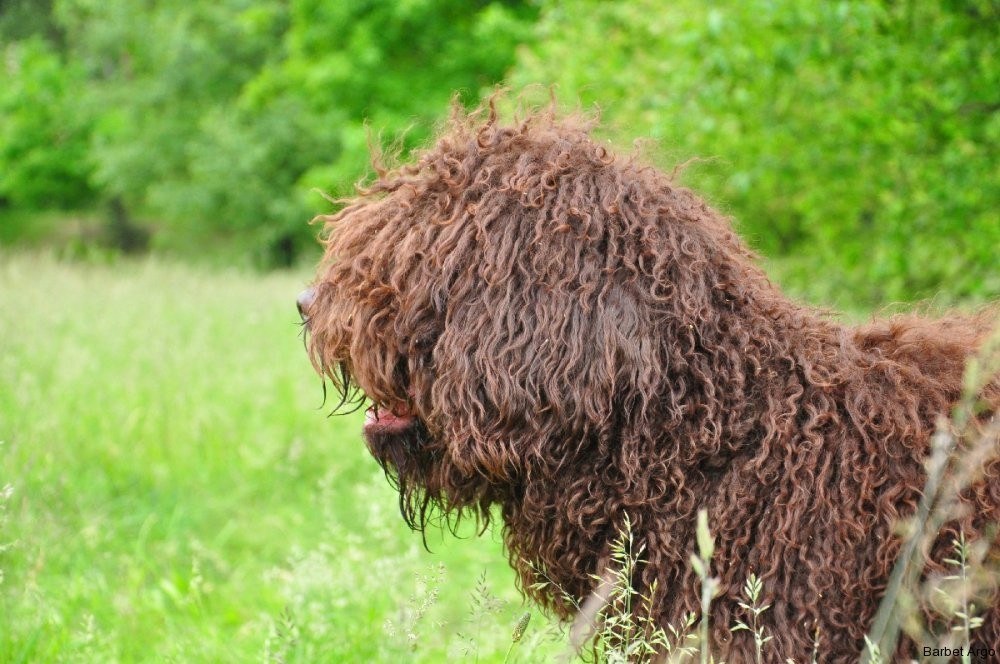
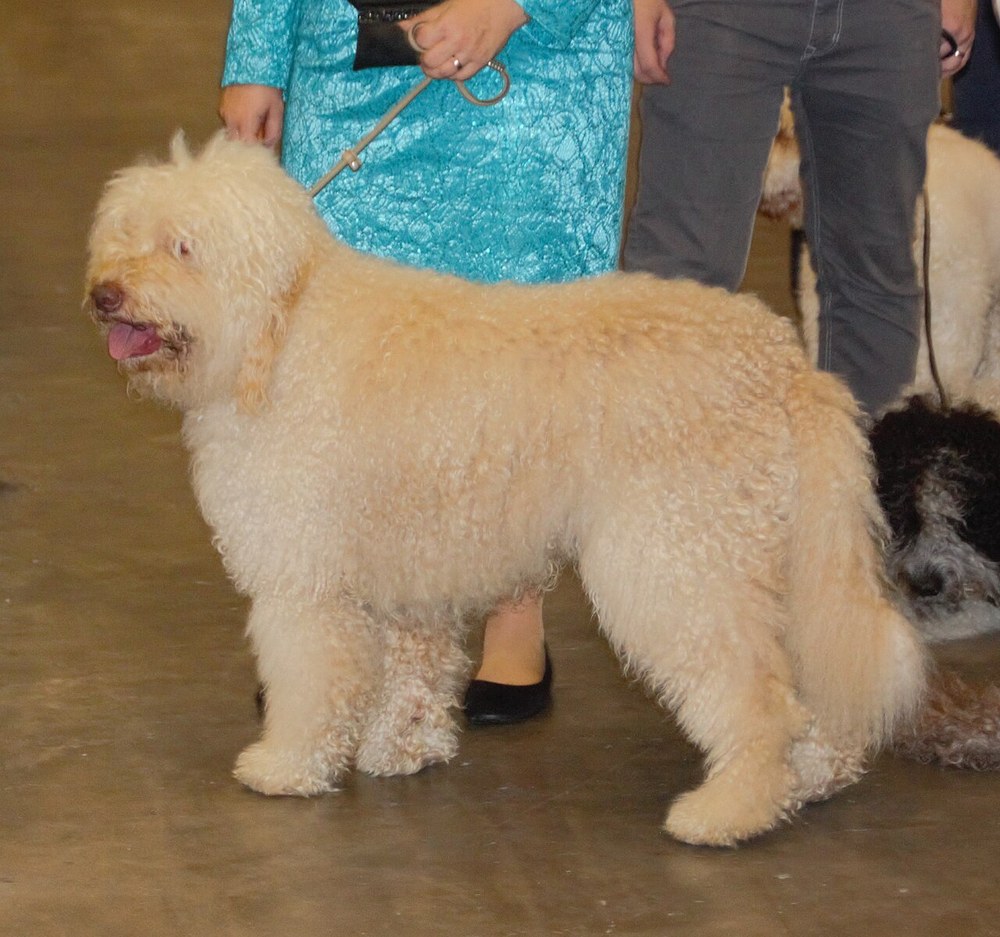
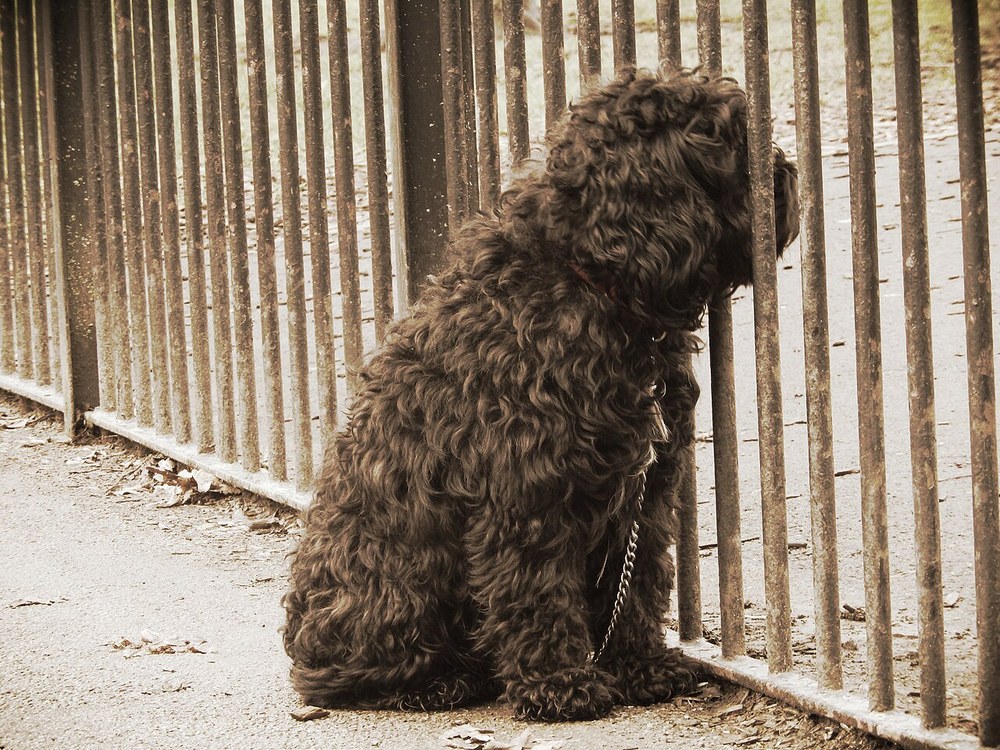
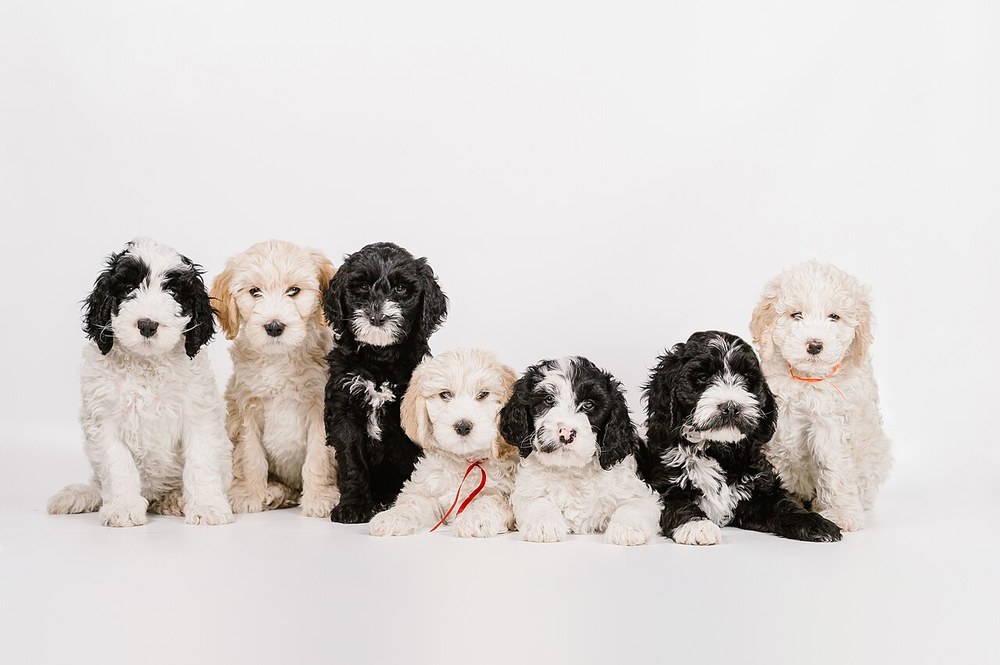
Long, thick, woolly curly coat that covers the whole body, with a beard and moustache; black, grey, brown, fawn, sand, white or pied
Job
French water dog that retrieves ducks and other birds from marshes and rivers (FCI Group 8, water dogs)
Temperament in one minute
Barbet temperament: what they are like at home
Short answer: Barbets are friendly, joyful, affectionate dogs that love people and are usually good with children and other dogs. They are French water retrievers with a busy mouth, a love of water and mud and a strong wish to be near their people, so young dogs often jump up, mouth hands, steal things and struggle when left alone. They need about an hour or more of exercise a day, ideally with swimming or retrieving, kind training, calm greetings, time alone built up slowly and weekly combing to the skin.
Are Barbets affectionate?
Very, and they want to be close all day. Build short absences from the first week.
Are Barbets easy to train?
Yes, with food, play and a kind voice. Keep it short; start with a hand target and a name check-in.
Are Barbets friendly with strangers?
Usually very friendly, sometimes too bouncy. Guests should greet only a calm dog; see guest entry steps.
Are Barbets good with kids and other dogs?
Usually both, though a bouncy young Barbet can bowl over a toddler. See children and guests.
Barbet behavior problems to expect
The usual four are jumping up, mouthing and stealing, stress when left alone and fighting the comb. The list further down links a guide for each.
Living with a Barbet in an apartment
Possible with daily exercise, a swim when you can and a calm indoor routine. Plan where a wet, muddy dog will be dried.
Breed history
From French marshes to a rescued old breed
The history will not train your dog, but it explains the love of water, the busy mouth and the coat.
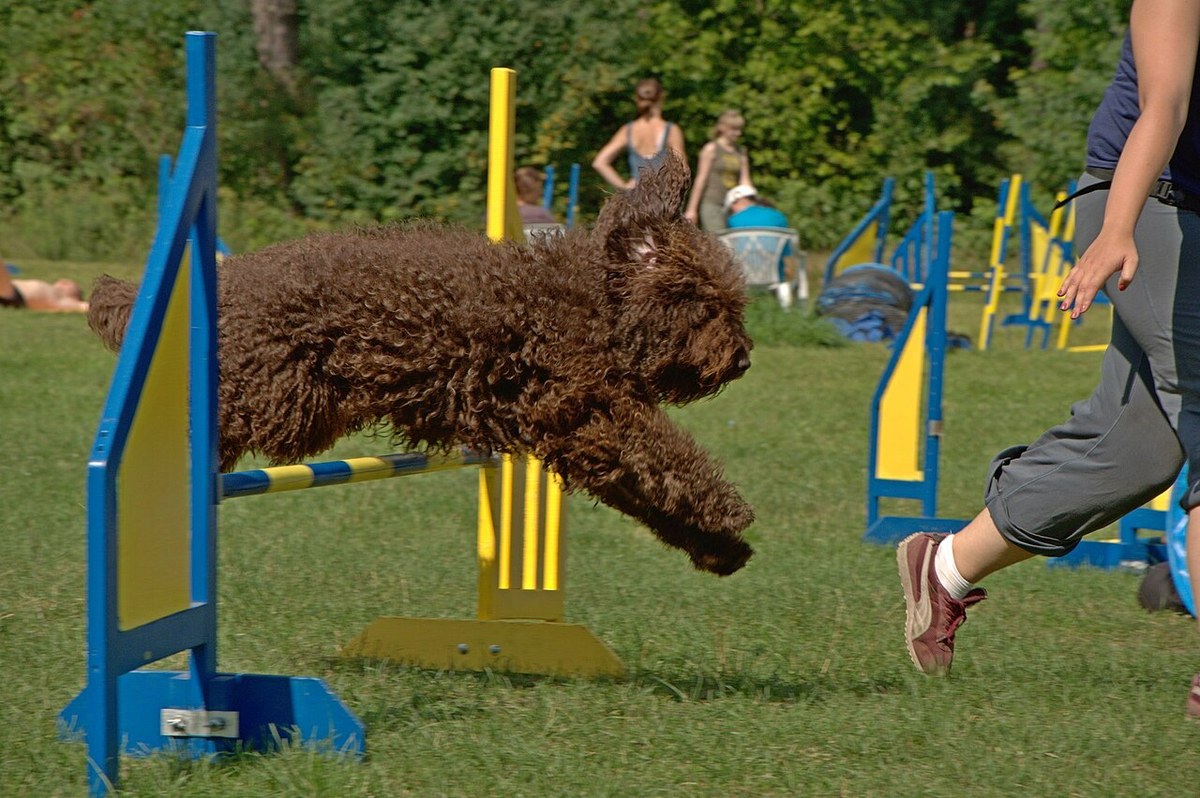
A Barbet jumping a hurdle on an agility course: the breed is quick, keen and enjoys dog sports as well as swimming and retrieving.
France · 1500s–1800s
A duck dog of the marshes
Curly-coated water dogs were used in France for hundreds of years to retrieve ducks and other birds shot over marshes, lakes and rivers. French writers described the barbet by the 1500s.
The thick, woolly coat kept the dog warm in cold water, and the dog worked close to the hunter. Many people think the barbet type is one of the old roots of several other water dogs, including the poodle.
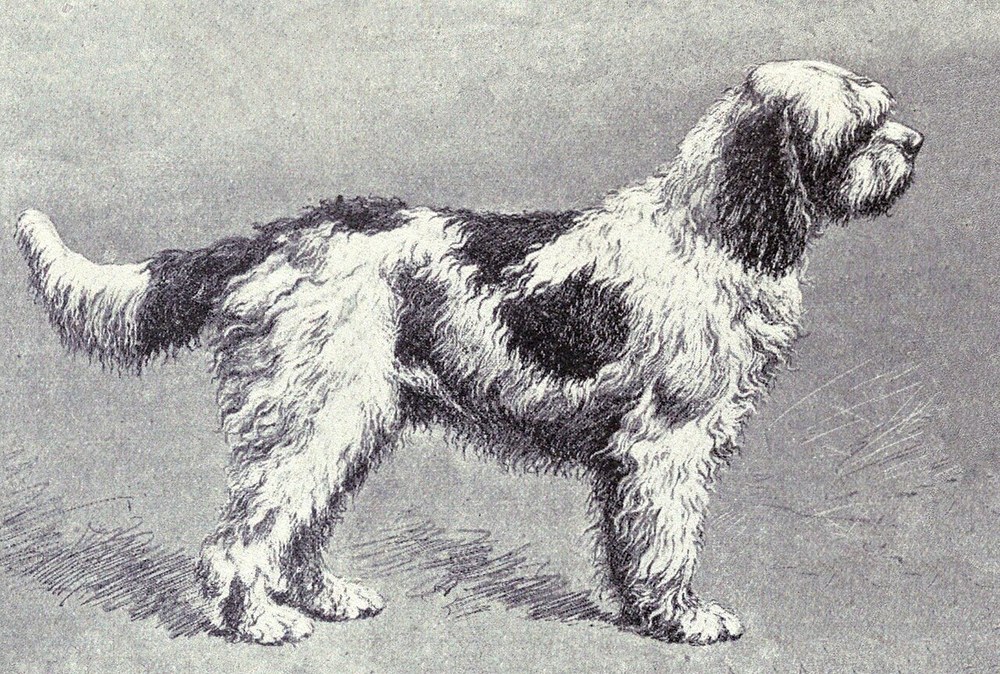
A Barbet photographed in 1915, from an old dog book: a historical photo of the breed type of the time.
From the 1980s
Almost lost, then rebuilt
After the two World Wars the Barbet became very rare. A small group of French breeders worked from the 1970s and 1980s to rebuild it from the few dogs left.
The FCI lists the Barbet as a French breed in Group 8 with the water dogs. The AKC added it to the Sporting group in 2020, and the Kennel Club in the UK lists it in the Gundog group. It is still uncommon, so puppies often mean a waiting list.
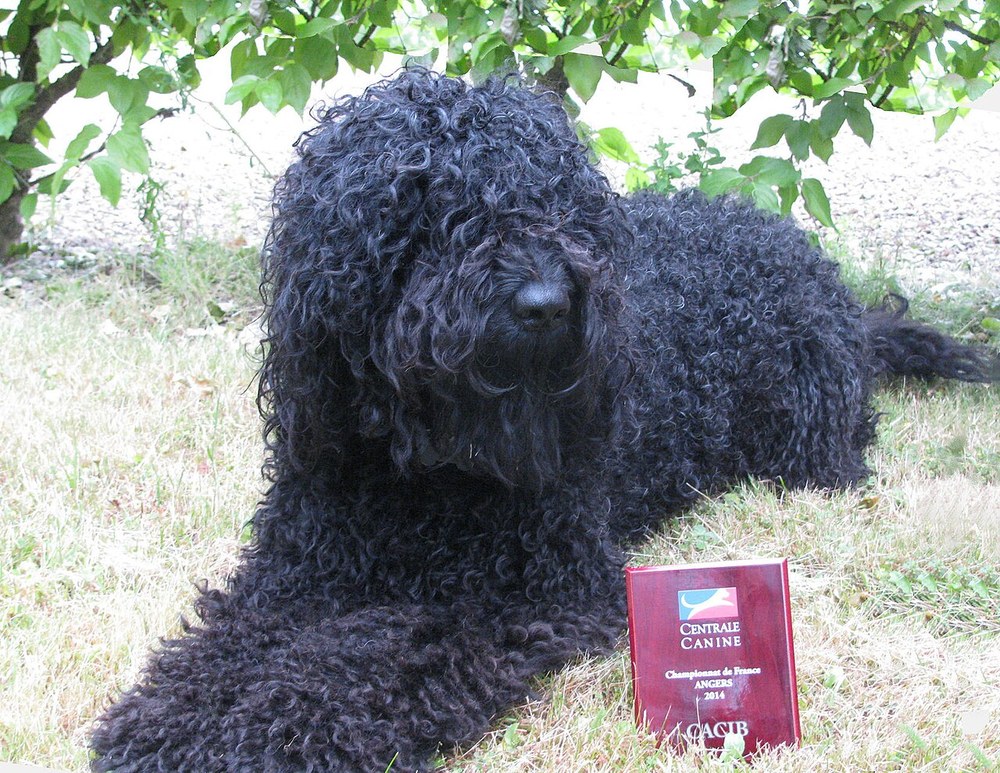
A black Barbet female resting after winning best female of the breed at a French national show: adult dogs are often calm once they have had their exercise.
What the breed was bred for
Joyful, social and close to its people
At home a well-exercised Barbet is cheerful, affectionate and gentle, and it usually wants to be wherever its people are. Most are friendly with visitors, children and other dogs.
It is also a retriever with a busy mouth and a love of water. Young dogs can be bouncy, mouthy and slow to settle, and some find time alone hard, so greetings, a swap game and short absences need work from the start.
A good day has a swim or a retrieve, a short lesson, a brush and time with you
An adult Barbet usually needs about an hour or more of activity a day, with some free running or swimming, a retrieve or searching game, a short training session, a few minutes of grooming and plenty of time near its people. Trouble usually comes from too little exercise, never learning to be alone and a coat that is left to mat.
Morning · run
A run or a swim before the day starts
A young Barbet that has run, sniffed or swum in the morning is far calmer at home. Use a long line in open places until recall is solid, and reward every return with food or a throw of its toy.
Barbets learn quickly with food, play and praise, but they are sensitive and switch off with harsh words. Keep lessons to a few minutes and end while the dog is still keen.
A Barbet loves people and wants to greet them face to face. Ask guests to wait until the dog has four paws down before they say hello, and give it a toy to carry so its mouth has a job.
Leave for a minute while the dog has a chew, come back calmly and carry on. Build up very slowly. A Barbet that learns you always come back copes far better with a working day later.
Comb one small area each evening with a treat after each section, starting with the youngest puppies. Then a bed or crate in a quiet spot and the same bedtime routine every day.
General awareness only. I am not a veterinarian. With a Barbet, owners often notice trouble first as felted mats against the skin, warm or smelly ears under the hair, grass seeds and burrs buried in the curls, sore skin under a coat left damp after a swim, or a dog that flinches or growls when one spot is touched. For red flags, leave this page and open
when to call the vet.
Curly coat
Brush and comb right down to the skin every week, and more during the change to the adult coat. Many owners keep a shorter clip.
After swimming
Rinse and dry the coat and ears after swims in lakes and the sea.
Ears
Check the ears weekly; the hair inside can trap dirt and water.
Weight
Keep the dog lean and active under all that hair. See BCS check at home.
Handling for the vet
Hold a paw, lift an ear, part the beard and peek at the teeth for a second or two, then give a treat. Do it daily while the puppy is little.
Ask the breeder
Ask to see the health results the breed club expects for both parents, in writing. Questions about illness belong with your vet.
Lines and types
Choose a steady, healthy dog, not just the cutest curls
No bloodline selling. Barbets are a small breed worldwide, so ask how the breeder keeps the line healthy and varied. Sit with the mother for a while, watch her with a visitor, a dropped pan and a strange dog, and ask to see the parents' health results.
Active family homes
About an hour or more of exercise a day.
Water nearby for swimming.
Time every week for coat care.
Someone home for much of the day.
Suits a family that walks a lot, likes muddy outings and wants a friendly, cuddly dog at home.
Gundog and sport homes
Retrieving from water and land.
Agility, scent work or obedience.
Rest days between hard sessions.
A calm place to switch off.
Suits owners who hunt waterfowl or want a keen, happy partner for a dog sport.
Socialization windows
What to introduce — and what not to overload — by age
AVSAB-aligned in spirit: short, clean exposures at a distance the puppy can still eat,
with hygiene while vaccines finish. See the
puppy socialization schedule.
2–4 months
Settling in and meeting the world
Introduce: calm visitors, gentle handling and combing, the toilet spot, short car rides, short spells alone, paddling in shallow water.
Do not overload: long runs, rough play with hands, being lifted by every guest.
~6 months
Busy puppy
Introduce: name check-in, recall games on a long line, a swap game, loose lead walking, a bed cue, short retrieves that end on cue.
Do not overload: letting it jump on people, long sessions of throwing a ball.
~9–18 months
Teenage phase and coat change
Introduce: long line recall in new places, calm greetings, daily combing through the coat change, a sport or gundog class.
Do not overload: skipping grooming while the coat changes, trusting recall near water too soon.
~2–3 years
Settling down
Introduce: longer retrieves from water, harder searching games, more off-lead time where it is safe.
Do not overload: stopping training because the dog seems grown up.
~3 years+
Maintenance
Introduce: daily exercise and games, regular grooming and trims, weight checks, yearly vet visits.
Do not overload: letting the coat mat between trims.
Before you buy
Who a Barbet usually fits
Fit comes down to time for exercise, time for grooming, how often the dog will be alone and whether you are happy with a wet, muddy dog.
Good match
More likely a good fit if you…
You want a friendly, cuddly, active dog
You can give about an hour or more of exercise every day
You enjoy water, mud and long walks
You will brush and comb every week or book a groomer
Someone is home for much of the day
Mismatch risk
A Barbet may be a poor choice if…
You want a dog that stays clean and tidy
You have little time for exercise or grooming
The dog would be alone for long working days
You want a guard dog
You prefer correction-based or force training
If you are torn between breeds
Barbet vs Portuguese Water Dog and Lagotto Romagnolo
All three are curly-coated water dogs with low shedding and a lot of grooming. The Portuguese Water Dog is a strong fisherman's dog with a tighter coat, often even more energetic. The Lagotto Romagnolo is smaller and today hunts truffles with its nose. The Barbet is the French duck dog with the longest, woolliest coat and a soft, sociable nature.
Coat
Barbet
Long, woolly curls and a beard.
Portuguese Water Dog
Curly or wavy, often clipped.
Size
Barbet
Medium to large.
Lagotto Romagnolo
Medium; smaller and lighter.
Original job
Barbet
Retrieving water birds.
Portuguese Water Dog
Helping fishermen in the water.
Grooming
Barbet
Heavy; weekly combing to the skin.
Both compares
All three mat without regular care.
Ownership without surprises
Where a Barbet owner’s budget goes
Costs depend on country, city and your choices. These are themes to plan for, not quotes.
Veterinary
A check-up every year, whichever vaccines your own vet suggests, and the parent health tests the club lists.
Grooming
Good combs, brushes and a dryer, or regular visits to a groomer for clips.
Training
Puppy class, then recall, sport or gundog classes for a busy adult.
Gear
A long line, a harness, a car crate, towels and retrieve toys that float.
Finding a puppy
An uncommon breed, so plan for waiting lists and travel to a breeder.
Time spent on early grooming practice and calm greetings saves far more than fixing a matted, jumping teenager.
Before day one at home
What to prepare for a Barbet puppy
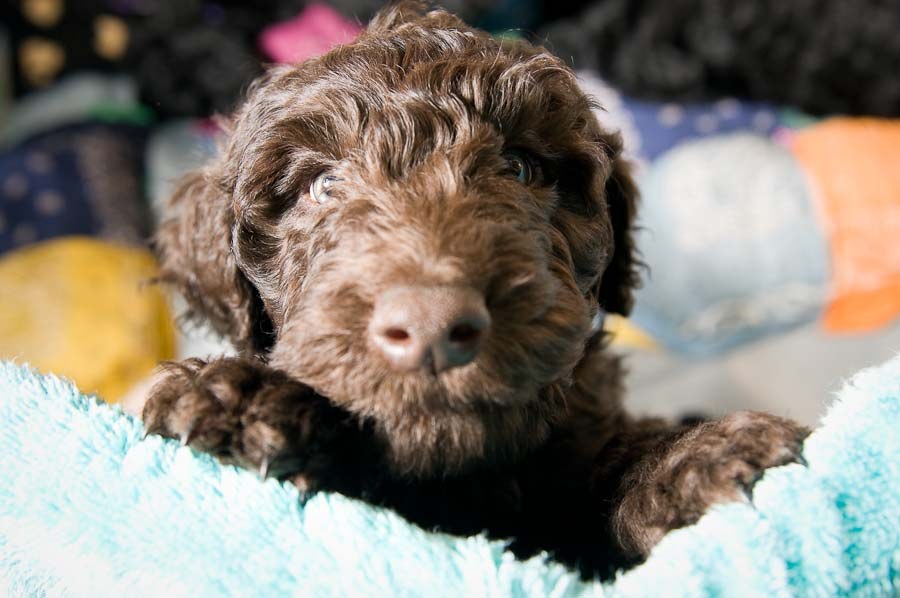
A Barbet puppy is soft, friendly, curious and always picking things up in its mouth. Have gates, a crate, chews, soft toys to carry, a wide-tooth comb and towels ready before it comes home.
01
Friendly strangers
Visitors kneel or sit, roll a treat across the floor and let the puppy come to them. See puppy socialization schedule.
02
Handling and combing
Touch paws, ears and beard and comb a little every day with food. See puppy handling.
03
Gentle mouth
Swap hands for toys and pause play if teeth touch skin. See biting and nipping.
04
Naps
Curly puppies crash hard; plan sleeps in a pen after play. See enforced naps.
05
Alone for a minute
Close a door for a few seconds, come back, repeat through the day. See first absences.
06
Toilet trips
Carry or lead the puppy out as soon as it wakes, eats or finishes a game. See potty training.
If the dog is already yours
Training a Barbet means retrieve games, calm greetings and a kind voice
Most of life with a Barbet runs on five habits: a glance at you when its name is said, a happy return on the long line, letting go of whatever it holds, greeting with feet on the floor and resting on its mat.
Barbets learn fast with food, play, retrieves and praise. They are clever, social and eager to please, but sensitive, and harsh handling tends to make them worried or silly.
Be realistic about water. A Barbet that sees a pond or a duck may be in it before you can call. Train recall near water on a long line, and choose safe places to let it swim.
Load balance
Swimming and retrieving count as exercise
Leave long runs and jumps off the sofa or out of the car until the dog is grown. Limping, a new grumpy streak or a dog that pulls away from your hand is a vet visit first, training later.
Swim or long line runRetrieve that endsThree-minute lessonFind it gameQuiet nap
For this breed, a short swim and a few clean retrieves often settle the dog far more than a longer walk on a short lead.
A Barbet that has swum and carried is a cuddly dog at home; one that has not will carry off your shoes.
Greetings
How to teach a Barbet to greet without jumping
Start at home with family, reward four paws on the floor, give the dog a toy to carry when people arrive, ask guests to greet only a calm dog, and practise with friends before strangers.
01
Start with family
Reward four paws on the floor at home.
02
Drop food low
Treats go on the floor, not up at faces.
03
Hand it a toy
Something to carry when people come in.
04
Guests greet calm only
Turn away if the dog jumps.
05
Add people slowly
Calm friends first, then new guests.
One scene close-up
Why a Barbet jumps up and grabs
A Barbet is a social retriever. It wants to be close to faces and to hold something in its mouth, so a happy hello easily turns into jumping, grabbing sleeves and mouthing hands. Each time jumping gets attention, it happens more.
Teach a calm greeting at home first. Reward four paws on the floor with food dropped low, hand the dog a toy as people come in and ask guests to turn away if it jumps. Add new people slowly, starting with calm friends.
A dog that cannot settle, bites hard when handled or seems frightened needs a qualified professional; a vet check helps rule out pain.
“With a Barbet, I begin with swimming or retrieve games, calm greetings, short absences and a little combing every day. Give this happy water dog a job and a routine, and you get a sweet, loyal friend.”
We work on what your days look like: walks, water, guests, time alone and grooming. I am a trainer, not a veterinarian.
Andrew DarovProfessional dog trainer and instructor
Write down the dog's age, how much exercise and swimming it gets, what happens when guests arrive or you leave, how grooming goes and the first thing that goes wrong. Opens WhatsApp to Andrew.
For an outdoor family, often yes. Barbets are cheerful, gentle and people-loving, and usually kind with children. Plan for daily exercise and a lot of coat care, and remember a bouncy youngster can bowl over a toddler.
Is a Barbet a good first dog?+
For a first-time owner who will teach calm hellos, build time alone and keep up with combing, yes, it can be.
Do Barbets bark a lot?+
Usually not much. Some bark at the door or when bored or left alone. Exercise and a door routine help.
How big does a Barbet get?+
FCI: males 58–65 cm (about 23–25.5 in), females 53–61 cm (about 21–24 in). Most adults weigh roughly 17–28 kg (about 37–62 lb).
Do Barbets shed?+
Very little, but the curly coat mats easily and needs brushing and combing to the skin every week.
Are Barbets hypoallergenic?+
No dog is fully allergy-free. Barbets shed little, which some people with allergies find easier, but spend time with the breed before you decide.
Barbet vs Portuguese Water Dog: what is the difference?+
Both are curly water dogs. The Portuguese Water Dog was a fisherman's helper with a tighter coat and is often more intense; the Barbet is a duck retriever with a longer, woollier coat and a softer manner.
Barbet vs Poodle: what is the difference?+
They are related water dog types. The Standard Poodle has a denser, finer curl and is usually lighter in build; the Barbet has a woolly, shaggier coat and a beard.
Can a Barbet be left alone?+
For a few hours, once it has been taught in small steps. It is a people dog and copes badly with long days alone.
How much exercise does a Barbet need?+
An adult usually needs about an hour or more a day, with some free running or swimming and a retrieve or searching game.
What health themes should I ask about?+
Ask the breeder for the parents' health results that the breed club lists, and mention the breed to your vet. This is general awareness, not a diagnosis.
How long do Barbets live?+
Public breed references usually give about 12–14 years. Individual dogs vary.
If a Barbet seems like more mud and grooming than your life allows
Many people fall for the curls, the beard and the happy face. The daily exercise, the love of water, the need for company and the coat care are what to be sure about first.
A large, gentle Italian pointing gundog. Needs daily walks with sniffing, weekly nose or field work, patient training and a long line until recall holds near birds.
Dog stealing socks, underwear or laundry? Why dogs take worn clothes, how to stop the chase game, and how to teach a trade so your dog brings things back.
Teach leave it on walks for street food and rubbish: start on a short lead or long line, cue once, add distance, and know when to pick up instead.
Need a read on your exact situation?
Write to me about your Barbet: its age, its daily exercise, what happens at the door when guests come or you leave, how combing goes and what goes wrong first. Health comes first; after that we choose a single skill to begin with.