
Early show dog → rare companion
Old breed, rare today
Curlies were among the first retrievers shown at dog shows. Today they are uncommon and slow to mature.
Meet the parents and see how they greet strangers and handle excitement.
Curly-Coated Retriever · Sporting
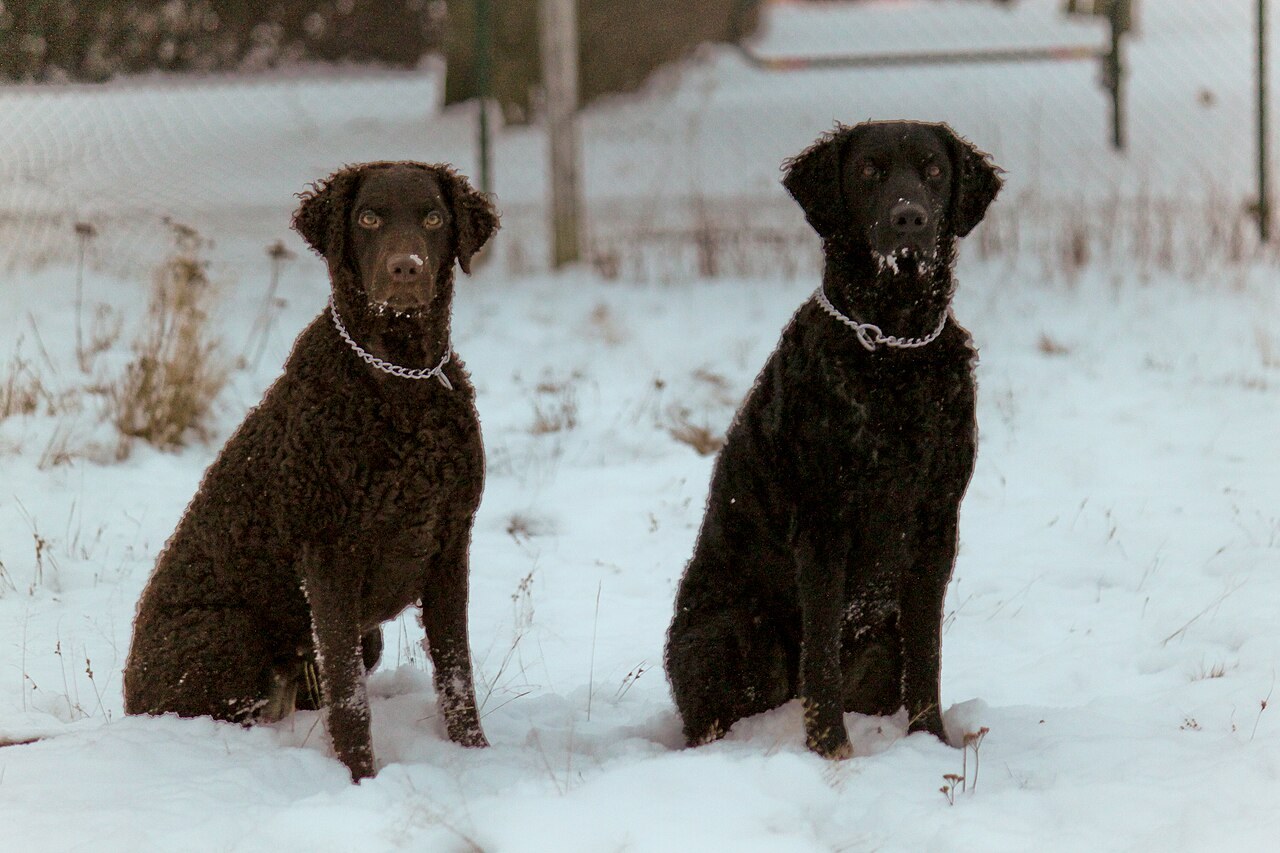
The Curly-Coated Retriever is a tall, athletic English retriever covered in tight black or liver curls. Most are independent, clever and loyal. Life goes well with varied training, daily exercise and swimming, calm socialisation and patience through a long adolescence.
First, the point
Public breed histories describe one of the oldest English retrievers, used on land and water.
Most Curlies are bright and loyal. Typical struggles are a long puppyhood, independence, boredom and wariness of strangers.
In the first months I teach calm meetings, a retrieve with a finish and recall on a long line.
Breed history
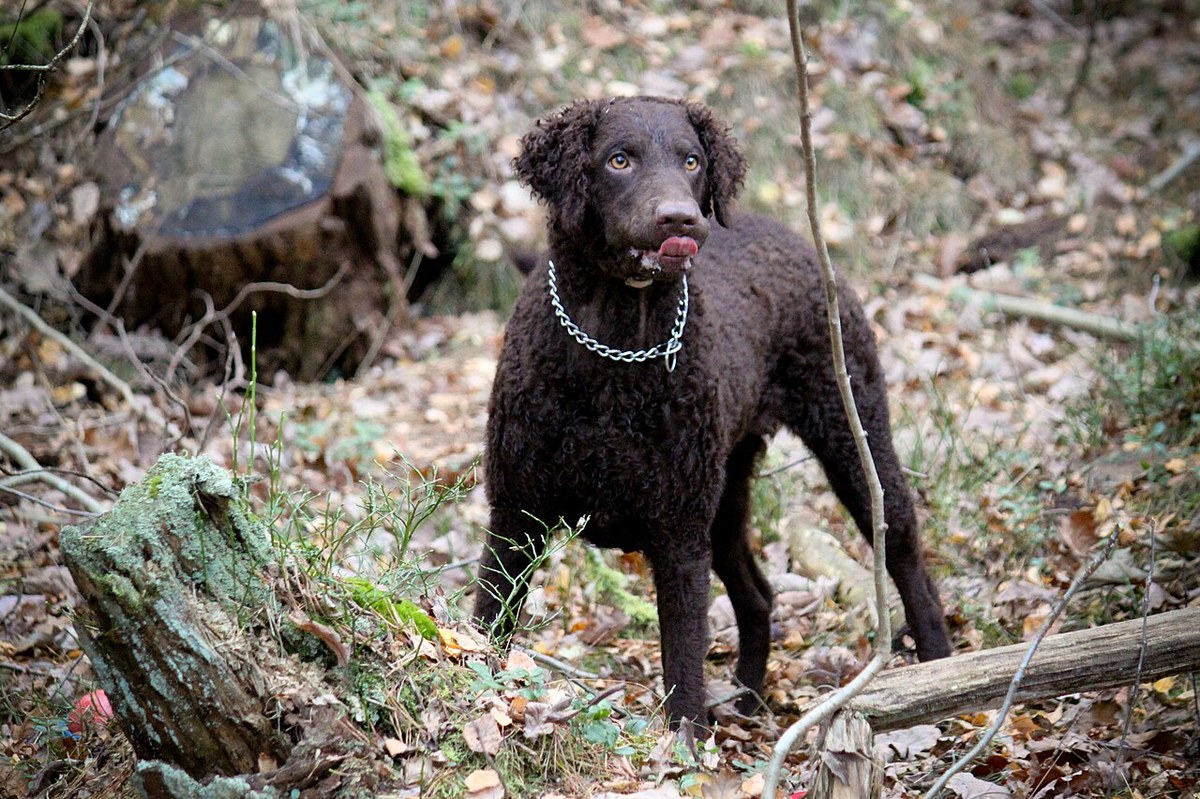
The Curly-Coated Retriever is one of the oldest retriever breeds, developed in England for retrieving game on land and in water. The tight curls shed water and brambles, and the breed grew into an independent, clever, athletic dog.
England, 1800s → land and water retriever
Public breed histories describe Curlies as popular with English gamekeepers and poachers in the 1800s, before Labradors and Goldens took over.
They retrieved from water and land, often working on their own initiative.
Early show dog → rare companion
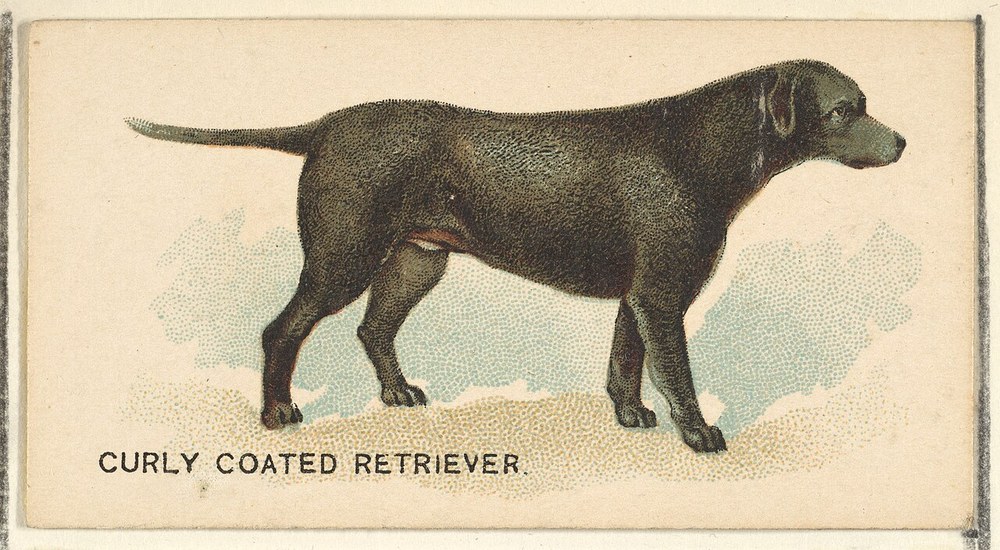
Curlies were among the first retrievers shown at dog shows. Today they are uncommon and slow to mature.
Meet the parents and see how they greet strangers and handle excitement.
What the breed was bred for
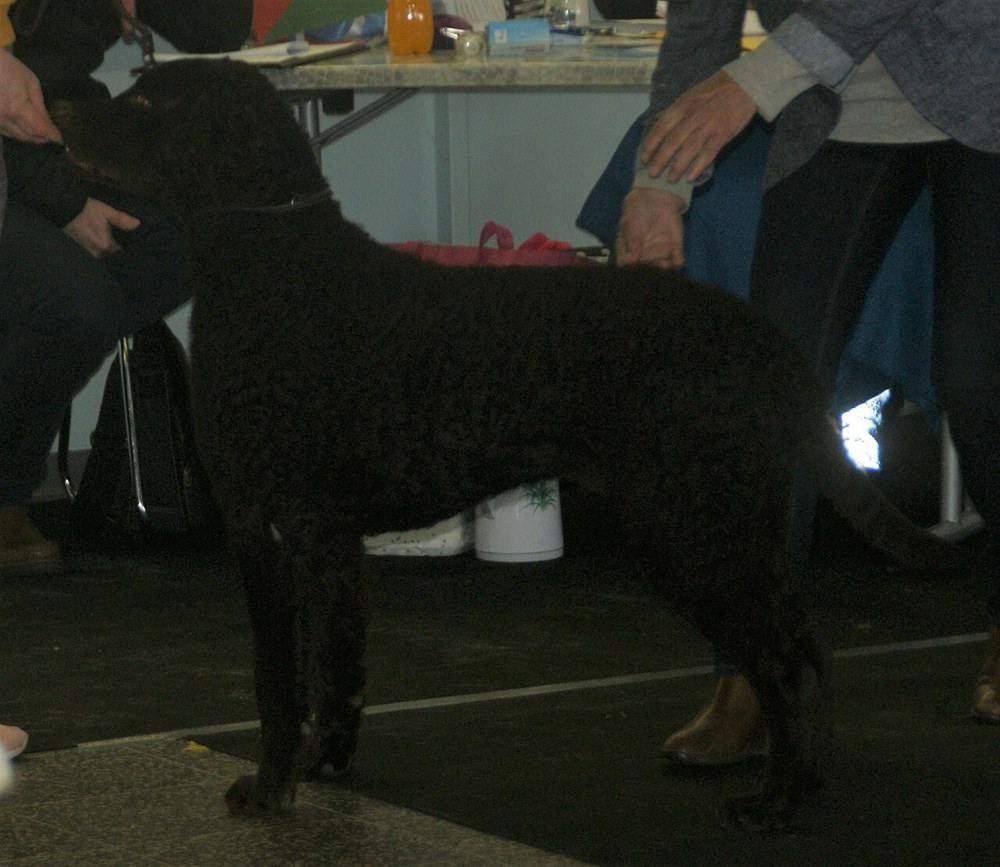
In plain trainer language: Curlies are bright, loyal and often reserved with strangers. They mature slowly.
The challenges are a long puppyhood, independence, boredom and wariness of new people. Varied training and plenty of exercise help most.
Public references: FCI 110, AKC Curly-Coated Retriever, RKC.
Life together
Curlies enjoy long walks, swims and retrieves. Repetitive drills bore them quickly.
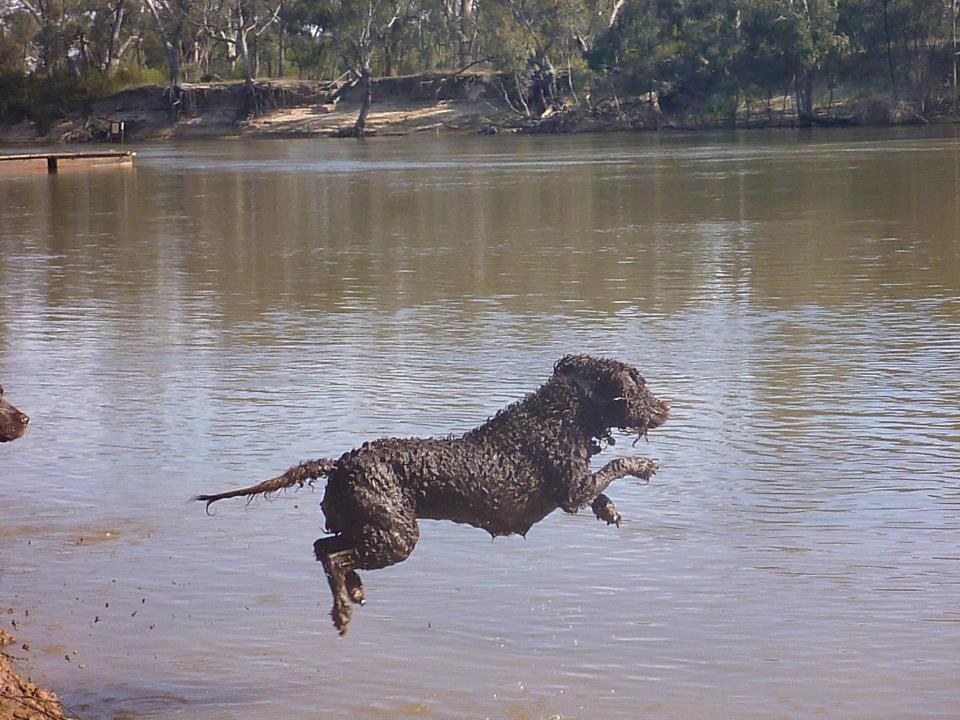
Curlies love to swim. Teach a clear way in and out.
See water after exercise.
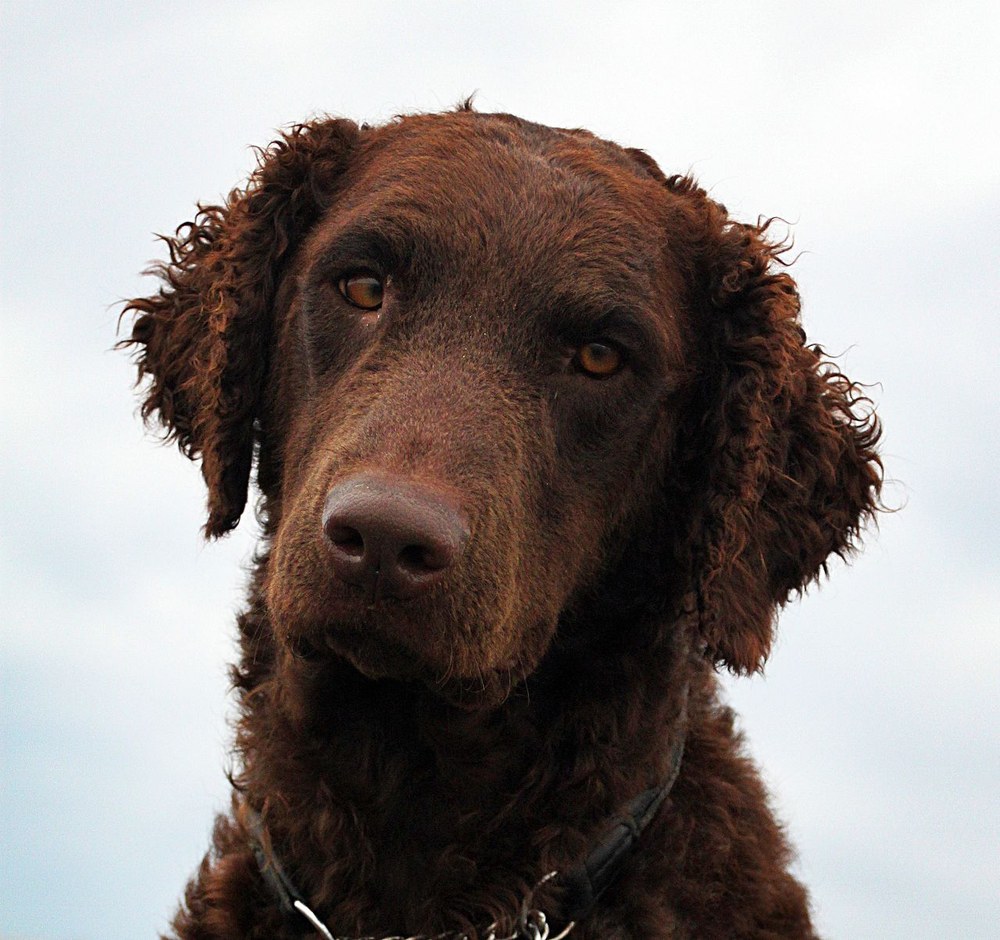
Curlies like to think. Short, varied sessions keep them keen.
See hand target.
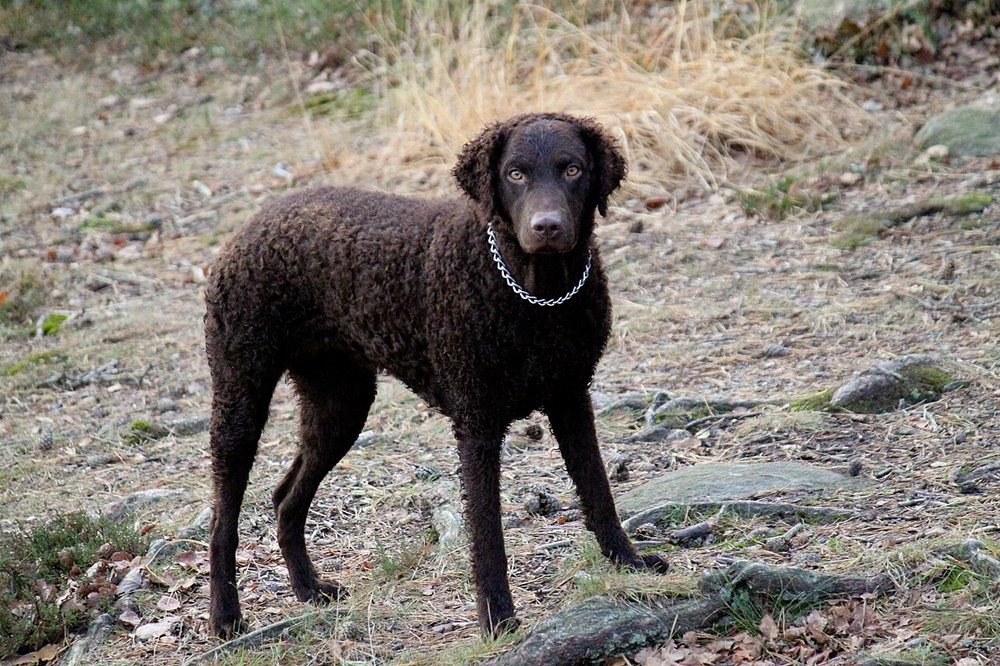
Many Curlies are reserved with strangers. Let them choose to approach.
See children and guests.
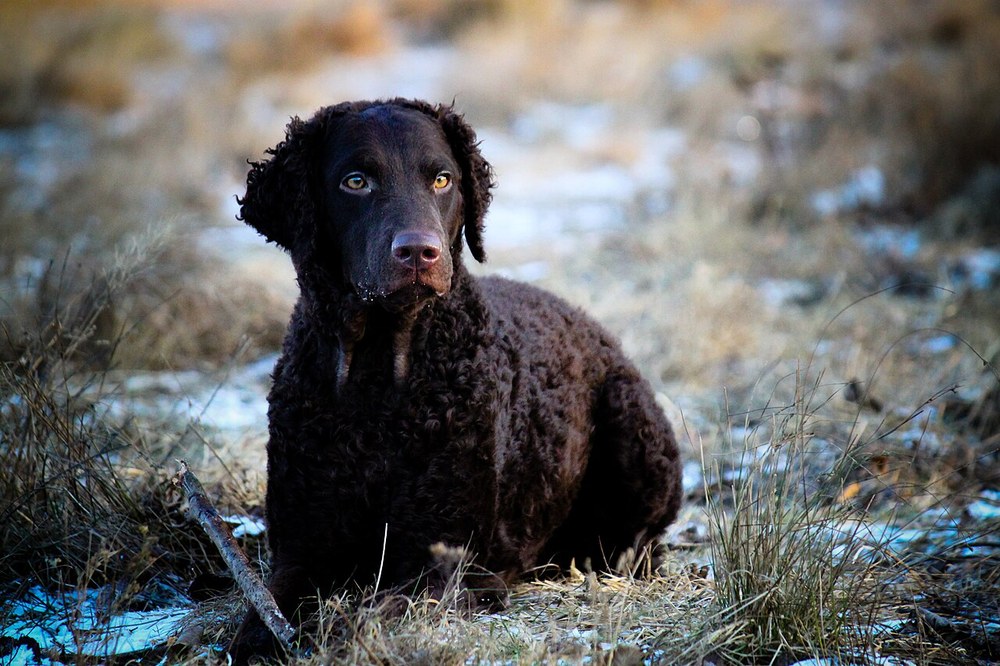
Care and health themes
A trainer’s checklist, not veterinary advice. See a vet for hair loss, ear smell, limping or low energy. For urgent signs, see when to call the vet.
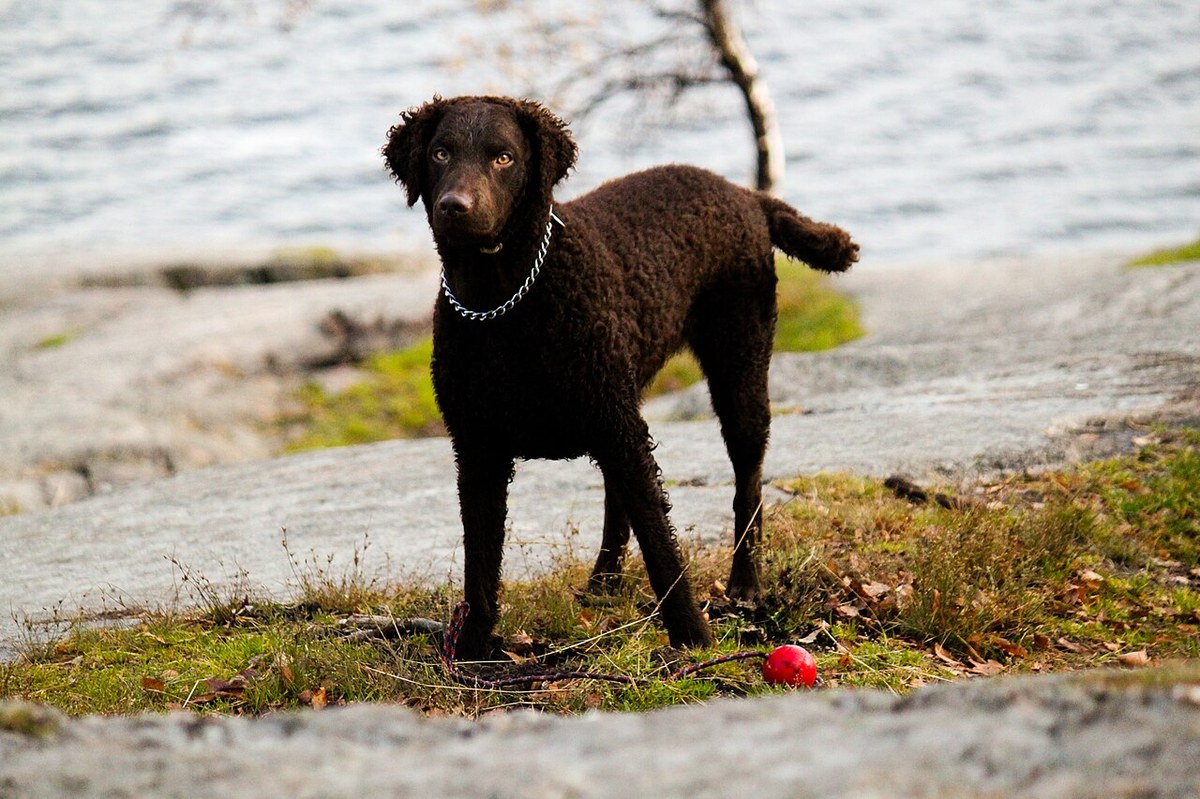
Do not brush the curls; wet them and let them dry. Trim stray hair.
Dry after swimming; check for smell.
Notice stiffness after exercise.
Keep lean; measure meals.
Ask the breeder which screenings the national breed club recommends, including hip and eye checks, and see results for both parents.
I do not publish toxin amounts. Call a vet or poison-control line if the dog eats something dangerous.
Lines and types
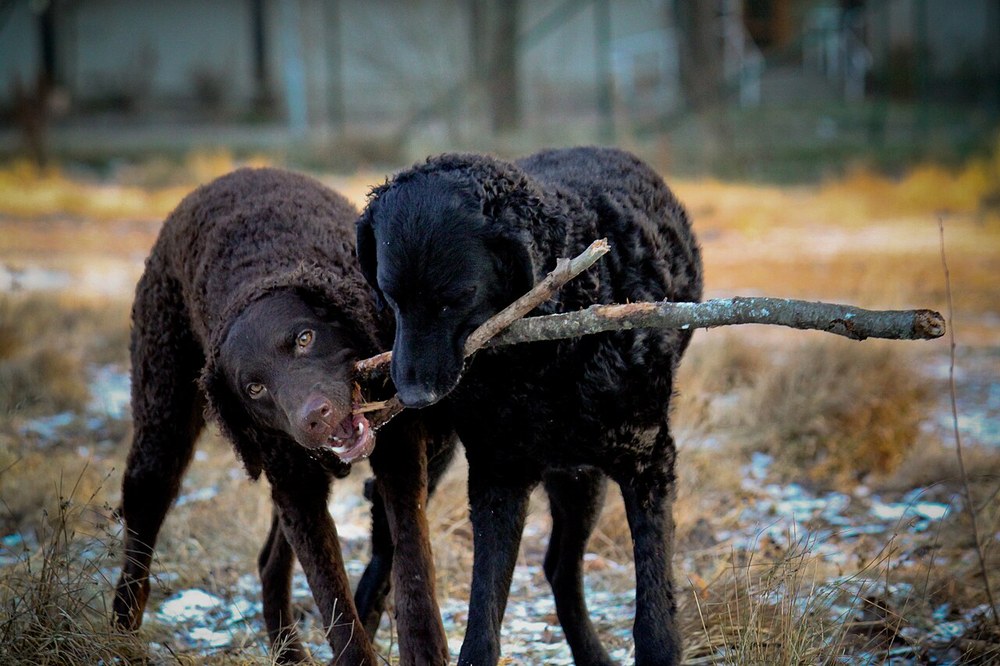
Curlies come in solid black or solid liver, with the same tight curls.
The more common colour.
A warm brown look.
Socialization windows
AVSAB-aligned in spirit: short, clean exposures at a distance the puppy can still eat, with hygiene while vaccines finish. See the puppy socialization schedule.
Introduce: meeting people calmly, handling, toilet routine, crate naps.
Do not overload: forcing strangers to touch.
Introduce: retrieve and trade, long-line recall, short absences.
Do not overload: keep-away games.
Introduce: varied training, swimming, place.
Do not overload: repetitive drills.
Introduce: field work, scent work, dock diving.
Do not overload: expecting adult calm too early.
Introduce: refreshed recall and visitor routine.
Do not overload: boredom.
Before you buy
A Curly suits active, patient owners who want a clever, independent retriever and enjoy varied training.
Good match
Mismatch risk
If you are torn between breeds
Curlies are compared with Flat-Coats and Chesapeakes.
Curly-Coated Retriever Tight curls.
Flat-Coated Retriever Flat, glossy, feathered.
Curly-Coated Retriever Often reserved.
Flat-Coated Retriever Usually very friendly.
Curly-Coated Retriever Tall, elegant.
Chesapeake Bay Retriever Powerful, wavy-coated.
Curly-Coated Retriever Independent, loyal.
Chesapeake Bay Retriever Determined, protective.
Curly-Coated Retriever Slow.
Both compares Both stay playful for years.
Ownership without surprises
Prices vary by country. These are the spending themes, not figures.
Field, scent or dock clubs.
Ask which screenings the national breed club recommends.
Classes through adolescence.
For a busy brain.
An active, tall dog.
Consider it early.
With a Curly, training through a long adolescence is the key cost.
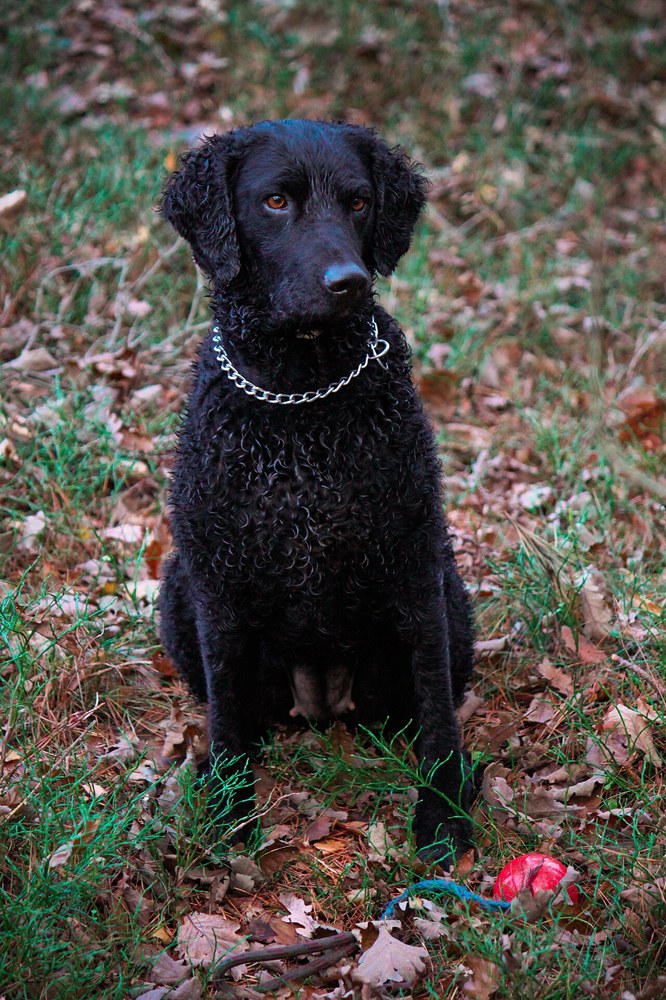
Before day one at home
A Curly puppy is bold and clever. Calm meetings and varied games come first.
See drop it.
See biting and nipping.
See the name game.
Follow potty training.
See enforced naps.
If the dog is already yours
Curlies learn fast and get bored fast. Mix it up.
My core list: recall, trades, calm visitor routines and loose-lead walking.
Field work, scent games and dock diving suit them well.
Load balance
Exercise plus short, varied training suits most Curlies.
Swimming, retrieves, scent work and short training games suit most Curlies.
A Curly with variety is a clever, loyal partner.
Recall
Make coming back the best game, and keep sessions short and varied.
Safe freedom.
Run away as you call.
Or food.
New places and games.
Before boredom.
One scene close-up
Curlies were bred to work on their own initiative.
Use a long line, reward with a retrieve or food and vary the game.
Stop before the dog gets bored.
Typical household scenes
A breed page is only a starting point; the fix depends on health, environment, and the dog in front of you. Each row opens a step-by-step guide.
Aloof or worried with new people.
Comes back when it chooses.
Chews when bored.
Will not give items back.
Bouncy greetings as a teen.
Pulls towards water and smells.
A long, busy adolescence.
Hair loss, limping or low energy — vet first.

Practical view
“With a Curly, I keep training varied and short. We build recall, trades and calm visitor routines — because a clever, independent retriever gets bored fast.”
Sessions cover real scenes: wariness with visitors, independent recall, chewing, and keep-away games. I am a trainer, not a veterinarian. No invented reviews.
Describe age, living setup, and where the dog breaks first — wariness with visitors, independent recall, chewing, or keep-away games. Opens WhatsApp to Andrew.
Short answers
If you want a retriever that is friendlier with strangers and keener to please, consider this one.
A cheerful, glossy British retriever that stays playful for years and needs daily exercise, retrieve games and calm greeting practice.
A friendly, food-loving retriever that needs daily exercise, training and a job for its nose and mouth.
A tough, loyal American water retriever with an oily wavy coat that needs early socialising, clear rules and plenty of swimming.
Friendly, food-loving retriever that needs exercise and training.
Other guides from the same group in the breed library. Same group does not mean same dog: read the fit and the failure modes, not only the outline.
A merry, busy British spaniel that needs scent games, retrieve and trade practice, ear care and a taught settle.
A gentle, elegant British bird dog with a speckled belton coat that needs long-line freedom, patient recall work and regular brushing.
A friendly, eager British flushing spaniel that needs daily exercise, scent work, long-line recall and a taught settle.
An energetic, affectionate German hunting dog that needs hard daily exercise, long-line recall and a taught settle at home.
A tough, loyal German hunting dog with a wiry coat that needs hard daily exercise, early socialising and a taught settle.
A fetching, people-facing sporting dog whose gold coat does not lower the daily mileage.
Describe your Curly-Coated Retriever’s age and the scene that repeats most: wariness with visitors, independent recall, chewing, or keep-away games. We check safety first, then pick the first skill.
Written by Andrew Darov, professional dog trainer. Not veterinary advice and not a diagnosis.
Not a kennel club. No invented reviews. No vaccine schedules or toxin doses. Photo credits in
/images/breeds/curly-coated-retriever-guide/credits.md.