Expert Advice · Skills · 13 min read
Food bowl manners: teach wait before eating
The criterion is still feet while the bowl travels. Release is a cue, not a free dive.

Food bowl manners are a wait while the bowl travels, then a release before eating. A scramble the moment the cupboard opens is unpaid access. A speech after the dog has already face-planted the bowl is not a protocol. Build still feet first. Open the meal second.
This is a skills page. Door threshold wait stays on wait at the door. Guarding over food is a stop list on resource guarding. I board dogs for a month and longer as a trainer from Russia. I am not a veterinarian. No fake meal testimonials here.
What are food bowl manners?
Still feet near the bowl spot until you release.
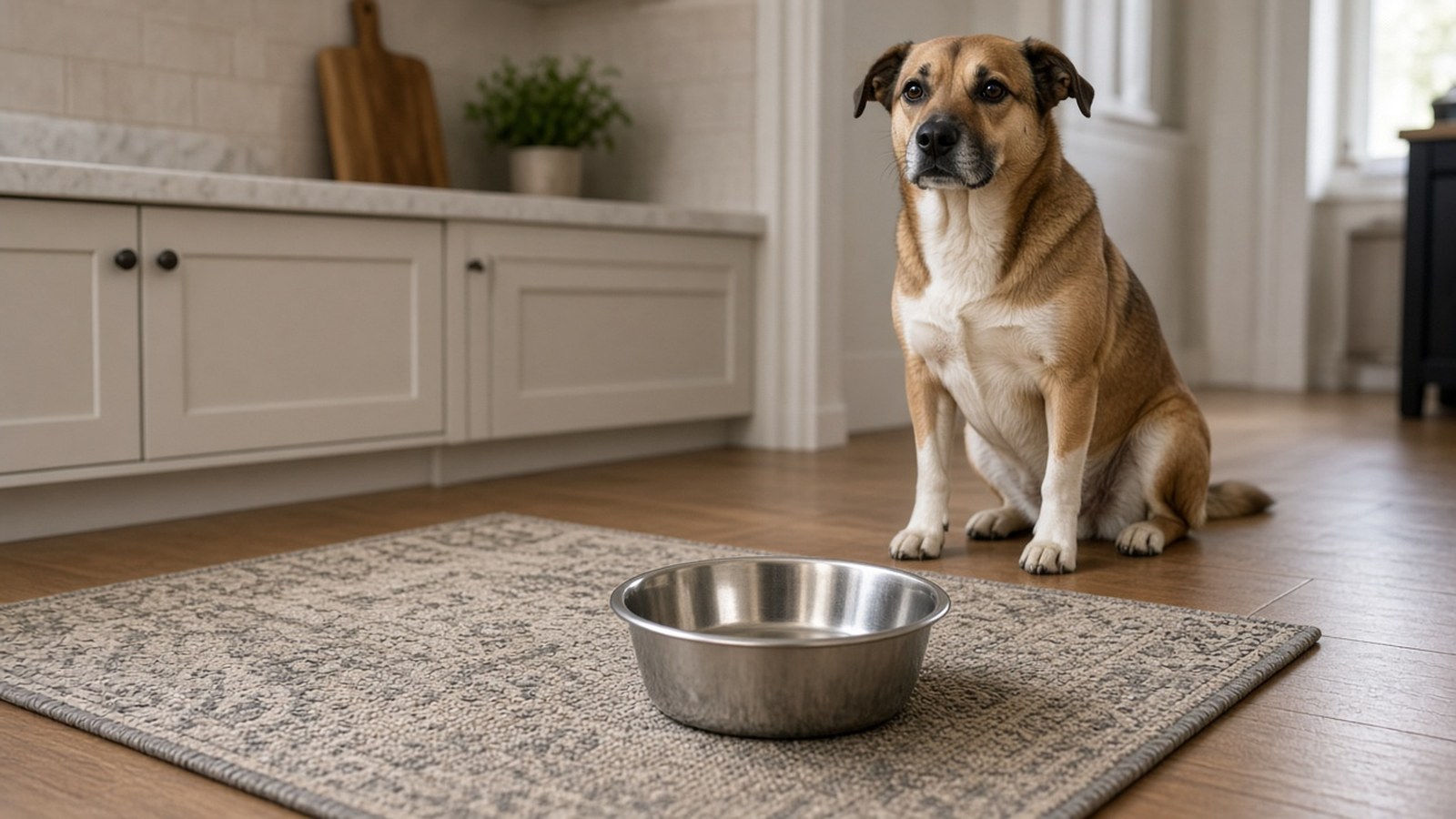
The dog may sit or stand. You pick one picture and pay it. The bowl lowers. Feet stay back. You mark calm. You release with one cue you own. Then the dog eats in peace. You do not hover and snatch the bowl for theatre.
Common unpaid pictures:
- bouncing at the cupboard
- slamming into the bowl as it descends
- spinning and vocalizing until food hits the floor
- children waving the bowl as a game
US kitchens with a wide island and UK galley kitchens with no spare floor use the same criterion. Space changes. The wait does not disappear because the room is small.
If the bowl drops while feet are rushing, you paid the rush.
How do you teach a wait at the food bowl?
Train when you can still win, not only at 7pm chaos.
- Pick the bowl spot and the body picture. A mat edge or a tape mark helps. Sit or stand. One picture.
- Start empty or boring. Lower an empty bowl or a bowl with a few low-value crumbs. If feet cross the line, lift the bowl and reset. Mark and feed for still feet (hand feed away from the bowl if needed).
- Add the release. When still is cheap, say your release once, set the bowl, and let the dog eat. Do not repeat the cue like a drum.
- Raise to the real ration. Full meals only after short reps work. If dinner fails, drop back to empty-bowl reps at a quieter hour.
- Manage multi-dog homes. Separate stations. No free-for-all. Parallel waits beat a shared scramble.
If you need the dog parked while you cook, that is place, not bowl wait. Keep the jobs separate so the cues stay clean.
Should you take the bowl away to teach respect?
No. That is not this protocol.
Random mid-meal removals can teach that hands near food predict loss. Some dogs get quieter. Some dogs get tighter. If the dog already freezes, hard-stares, or growls over food, stop DIY manners work. Manage separate feeding, and read the resource guarding stop list. Reward-based training is the method on this site. AVSAB’s public training position is the standard behind that sentence.
Children do not run this ladder unsupervised. An adult owns the bowl path. See children and guests for household management.
How do US and UK kitchens differ?
Counter height and floor space change. The learning rule does not.
A US laundry-and-kitchen open plan may need a baby gate so the dog cannot rehearse cupboard dances while you prep. A UK flat may feed in the hall end of the kitchen; use a mat so the wait line is visible. Plastic bowls and steel bowls are tools, not a brand lesson. No affiliate URL on this page.
Hand-feeding as a temporary management tool is fine when the floor wait is still weak. It is not a forever substitute for a released bowl meal if that is your household goal.
When is bowl manners not a DIY skill?
This ladder: loose body, can take food from your hand, resets when you lift the bowl, no freeze over the dish.
Not this ladder: stiff body, hard stare, growl, snap over the bowl, or a child holding food in a doorway unsupervised. Manage. Get qualified help. Pain that showed up overnight (sudden protectiveness around meals) is a veterinary question first. See not veterinary advice.
What are the usual failure modes?
- You released while feet were still rushing. You paid the rush. Lift and reset.
- You stacked sit, down, and wait as three new words at dinner. One picture.
- You grabbed the bowl mid-meal for “leadership.” Rebuild trust with a clean pre-meal wait instead.
- You mixed door wait and bowl wait into one cue. Different jobs. Different pages.
- Multi-dog scramble. Separate stations until each dog can wait alone.
- A child was the feeder. Adults own the ladder. Kids watch from behind a gate.
Sources
AVSAB position statements on humane dog training. ASPCA overview of common dog behavior issues. Paraphrased as public standards. avsab.org/resources/position-statements/ · aspca.org — common dog behavior issues
Questions on this page
What are food bowl manners for a dog?
A clear wait while you prepare and set the bowl, then a release cue before eating. Feet stay back until you say so. Door threshold wait is a different skill. This page owns the bowl.
How do you teach a dog to wait at the food bowl?
Start with an empty bowl or a boring bowl. Mark still feet as you lower it. Lift if the dog rushes. Release on one cue, then let them eat. Raise criteria to a full meal only when the picture is cheap.
Should you take the bowl away mid-meal to "show leadership"?
No. Random bowl grabs can build worry around food. Teach a wait before the meal starts. If you need to approach a dog who freezes or growls over food, that is resource guarding territory, not this manners ladder.
Sit or stand for food bowl wait?
Either. Sit is easy to see. A stand-wait works for tall dogs and slick floors. Name one picture and pay that. Do not stack three new words at the same busy dinner hour.
When is bowl manners not DIY?
When the dog stiffens, hard-stares, or growls over food; when a child is feeding unsupervised; when the dog cannot come down even with an empty bowl. Manage and see a qualified professional. This page is not a clinic.
Work with me
A $150 consultation or $500 monthly curatorship. Opens WhatsApp to Andrew.