Small Münsterländer: temperament, hunting drive, recall and training for the German all-round gundog
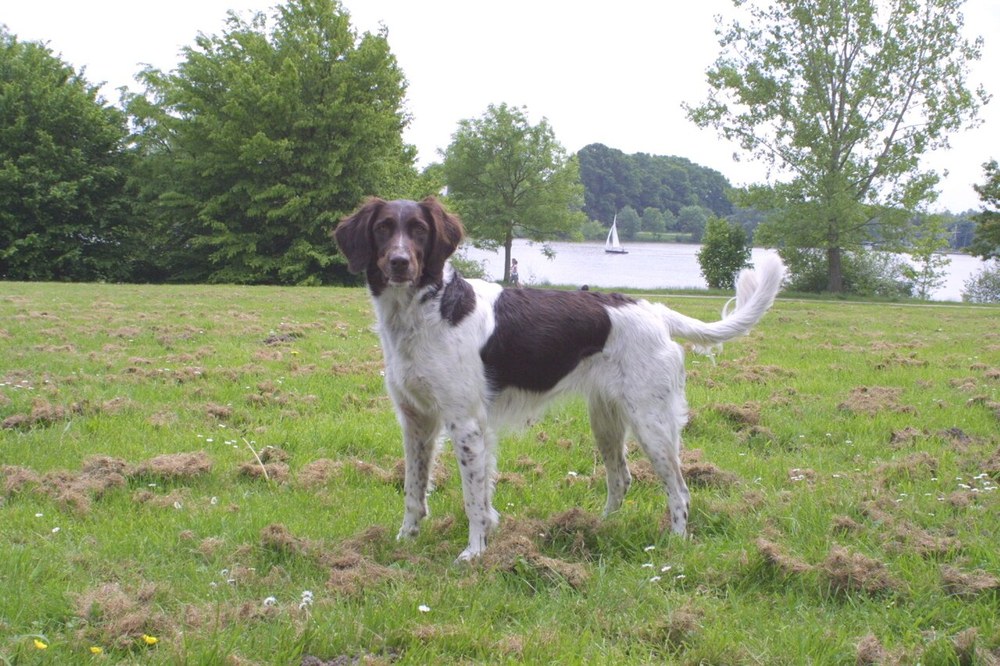
The Small Münsterländer is a medium-sized German gundog with a feathered brown-and-white or brown-roan coat, a spaniel-like face and the brain of a pointer. Hunters around Münster bred it to search, point, track and retrieve on land and in water, all in one dog. At home that means an affectionate, soft and clever companion with a nose that rules its walks, a love of birds and anything that flutters, and a real need for work. What works is daily free running in safe places, search and retrieve games, a long line until recall is solid, kind and steady training and a calm evening routine.
Job: A versatile German pointing and retrieving dog; FCI Group 7 (Pointing Dogs), spaniel-type continental pointers.
Energy: Friendly, gentle, keen to learn and very driven by scent and birds.
Home: Suits an active owner who will give it field work, nose games or a sport.
A family-sized gundog that still thinks like a hunter
People often meet a Small Münsterländer and think they have found a calm, pretty spaniel for country walks. It is gentle and sweet in the house, but outside it was bred to quarter a field for hours, freeze on point at a bird and fetch what was shot from land or water.
The calls I get tend to sound alike. A young dog that vanishes into the hedge after a pheasant, ignores its name once its nose is down, steals socks, pulls towards every pigeon and whines at the window in the evening because nobody gave it a job.
My plan gives the hunter something real to do. Safe free running, search games, retrieve practice with rules, a long line for recall and short lessons that end on a win. With that in place, a Small Münsterländer is a loyal, clever and very loving family dog.
FCI: males 52–56 cm (about 20.5–22 in), females 50–54 cm (about 19.5–21 in)
Weight
About 18–27 kg (about 40–60 lb)
Energy
High; needs daily free running and nose work
Coat / shed
Medium-long, dense, flat or slightly wavy coat with feathering on ears, legs and tail; brown and white, brown roan or brown ticked
Job
All-round hunting dog for searching, pointing, tracking and retrieving on land and water (FCI Group 7, Continental Pointing Dogs)
Temperament in one minute
Small Münsterländer temperament: what they are like at home
Short answer: Small Münsterländers are gentle, affectionate and clever German gundogs bred to search, point, track and retrieve. They are usually soft and friendly at home, good with children and other dogs, but driven by scent and birds outside, so recall takes real work. They need one and a half to two hours of activity a day with free running in safe places, nose work or retrieving, short and kind training and a calm evening routine.
Are Small Münsterländers affectionate?
Very, and they like to stay close at home. Build short absences early.
Are Small Münsterländers good with kids and other dogs?
Usually gentle with children and sociable with dogs. Small pets need care; see leave it.
Small Münsterländer behavior problems to expect
The usual four are poor recall near birds, pulling, stealing things to carry and restlessness without enough work. The list below links a guide for each.
Living with a Small Münsterländer in an apartment
Hard unless the dog gets long outdoor work every day. A house near fields is easier.
Breed history
From the heath dogs of Münster to a modern gundog
The past will not train your dog, but it explains the nose, the pointing and the love of carrying things.
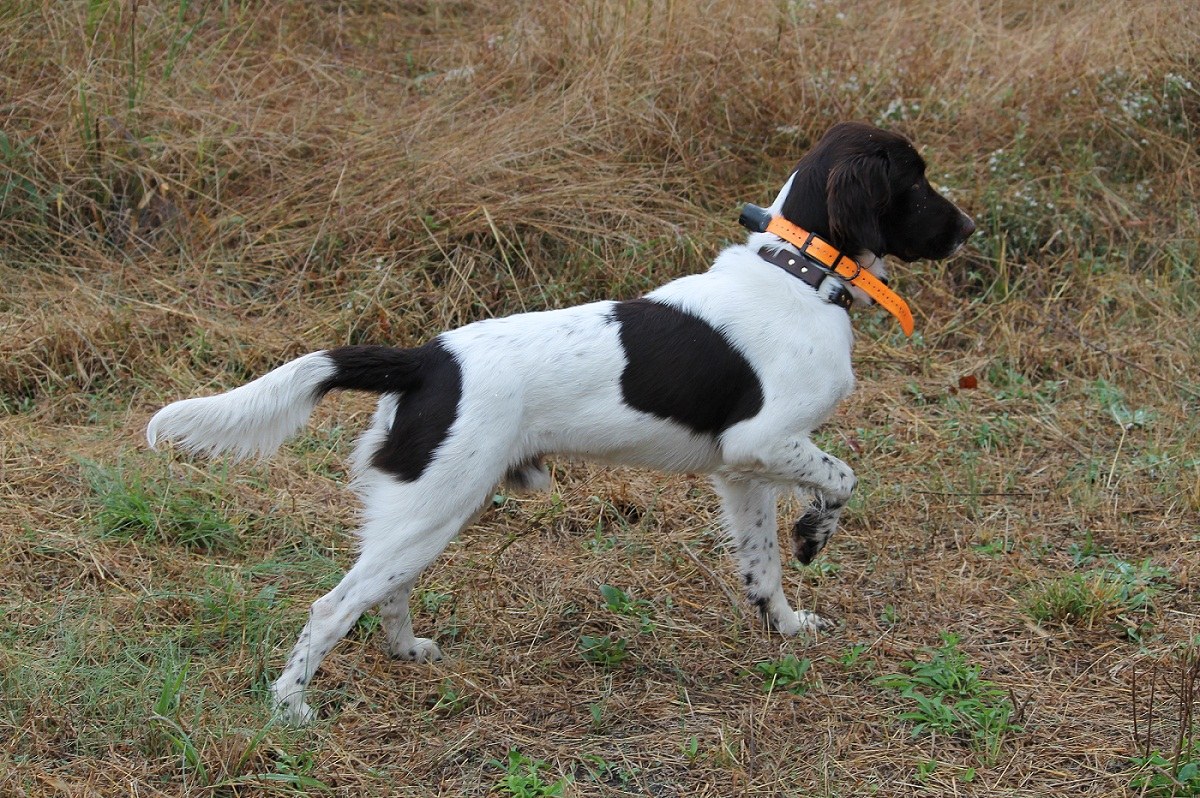
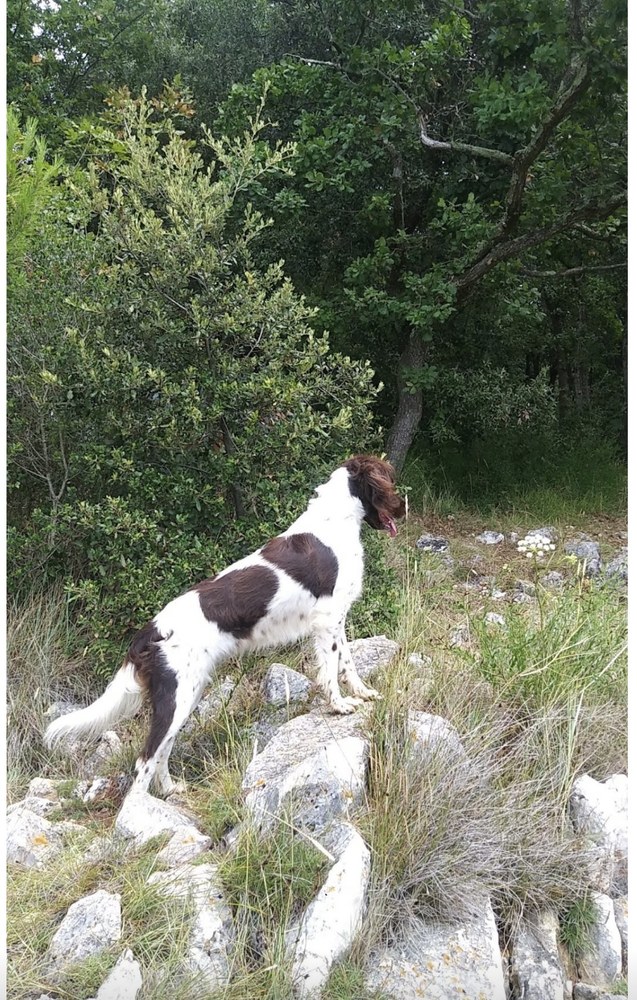
A Small Münsterländer on point: freezing at the scent of a bird is the core of this breed, and it often shows up on ordinary walks.
Westphalia, Germany · bird dogs
The old long-haired bird dog
For centuries, farmers and foresters in north-west Germany kept small long-haired bird dogs, often called heath quail dogs. They searched close to the hunter, pointed or flushed birds and brought back game.
Around 1900 the forester Edmund Löns and his brothers started collecting the best of these dogs around Münster, and in 1912 a breed society was founded. Despite the shared name, the Large Münsterländer comes from different stock, so the two are cousins in name more than in blood.
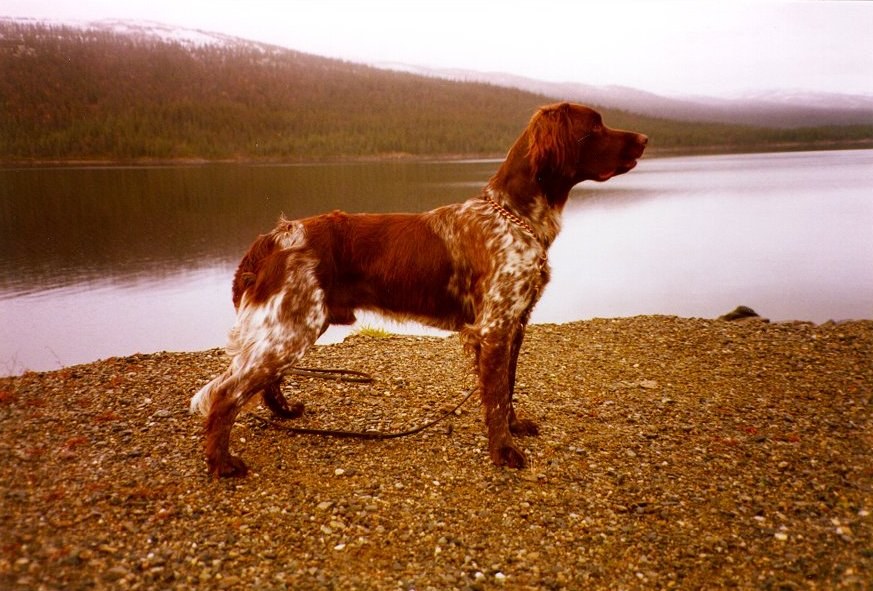
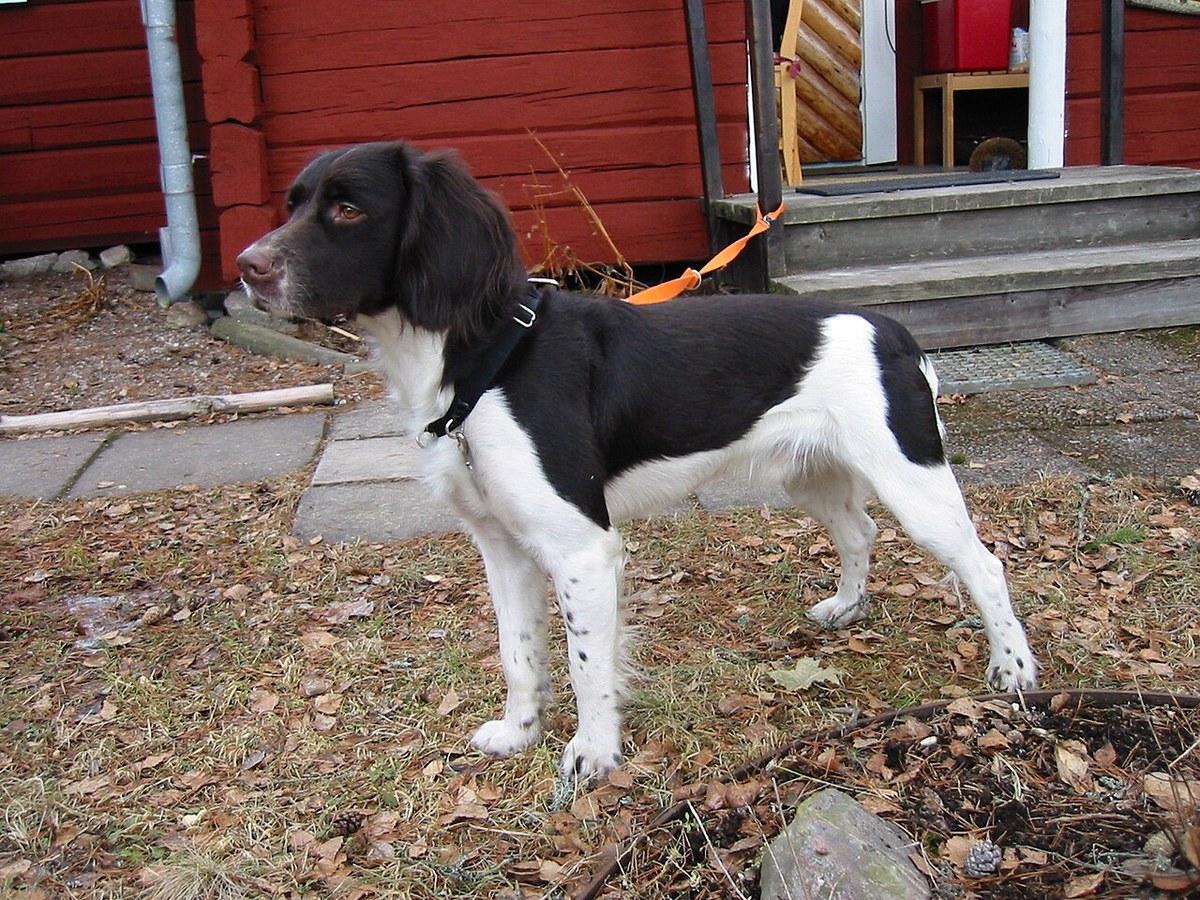
A Small Münsterländer male on a Swedish lakeshore: hunters across Scandinavia and Europe use the breed for birds, tracking and water work.
From 1912
A tested working breed
German breeders kept the Small Münsterländer a working dog first. Many dogs still take field and water tests before they are bred, and the FCI lists the breed in Group 7 with the spaniel-type continental pointing dogs.
Outside Germany it is still uncommon. The Kennel Club in Britain places it in the Gundog group, and in North America it is known through the AKC and UKC, mostly in hunting homes.
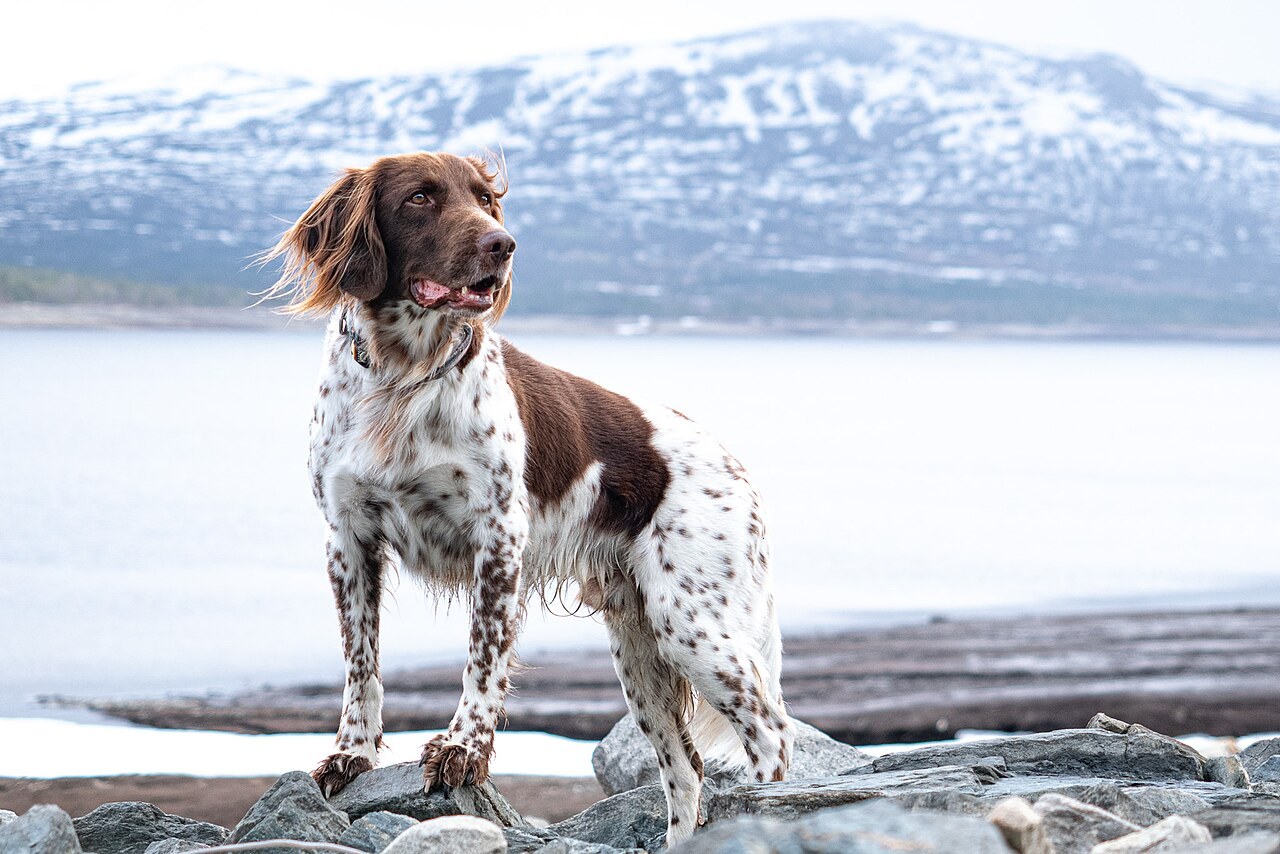
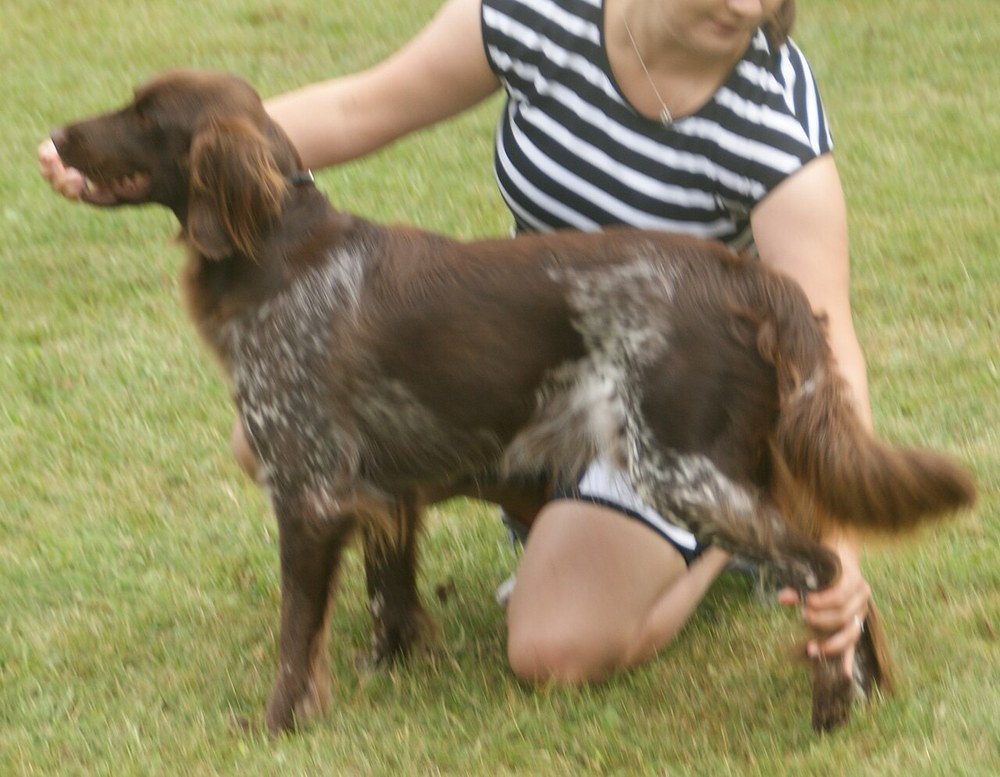
A Small Münsterländer in full coat: the feathering and soft expression hide a strong, tireless working dog.
What the breed was bred for
Gentle at home, keen outside
With its own people a well-raised Small Münsterländer is affectionate, gentle and easy to live with. It is usually friendly with visitors and good with other dogs, and many are soft-natured enough to be hurt by a harsh voice.
Outside, the nose and the bird drive switch on. Without enough searching and retrieving, many dogs hunt on their own, chase birds and cats, carry off household items or get noisy and restless at home.
A good day has a free run, a search game, a retrieve and a long rest
An adult Small Münsterländer usually needs one and a half to two hours of activity a day, and at least part of it should use the nose: free running in a safe field, a search, a retrieve, time to sniff. A dog that only walks on a short lead past hedges full of birds tends to make its own fun.
Morning · free running
A field run with check-ins
Let the dog run where it is safe and legal for dogs, on a long line until recall is solid. Reward it every time it swings back towards you, so coming close becomes part of the hunt.
Hide a toy or a bag of treats in the garden or the house and send the dog to find it. Ten minutes of searching tires this breed more than an extra lap of the park.
Birds and cats switch on the hunter. Keep the dog on a lead where wildlife is about, reward it for looking back at you, and let it chase a thrown toy instead.
After a good run, a chew on a bed and the same bedtime routine tell the dog the day is done. Young dogs often need this off-switch taught as carefully as the recall.
General awareness only. I am not a veterinarian. With a Small Münsterländer, owners often first notice burrs and seeds in the feathering after a field run, red or smelly ears, cut pads, a dog that keeps going while it is sore, or a young dog that is stiff after too much hard running. For red flags, leave this page and open
when to call the vet.
Feathered coat
Brush once or twice a week and comb out the ears, legs and tail after field walks.
Ears
Check and dry the ears after swimming and wet walks; ask your vet about anything red or smelly.
Paws and seeds
Look between toes and in the ears for grass seeds after summer runs.
Young joints
Keep long, hard runs and big jumps for when the dog is fully grown; ask your vet when that is.
Weight
A working dog should stay lean; feel for the ribs and a waist once a month. See body condition check.
Ask the breeder
Find out which hip, eye and other checks the national breed club expects for the parents, and look at the results yourself. Do not take health claims from a blog.
Lines and types
Choose a steady, healthy dog from tested working parents
No bloodline selling. Most Small Münsterländer breeders breed for hunting, and many parents have passed field and water tests. Meet the mother, see how she reacts to a stranger and a sudden bang, how quickly she settles in the house and ask about health checks and work tests on both parents.
Hunting homes
Bird, tracking and water work.
Field and water tests.
A trainer or club for gundogs.
Rest days in the season.
Suits a hunter who wants one dog to search, point, track and retrieve.
Active family homes
Long daily outings.
Nose games or a sport.
A long line near wildlife.
A calm evening routine.
Suits an outdoor family that will train and give the dog a real job.
Socialization windows
What to introduce — and what not to overload — by age
AVSAB-aligned in spirit: short, clean exposures at a distance the puppy can still eat,
with hygiene while vaccines finish. See the
puppy socialization schedule.
2–4 months
Meeting the world
Introduce: calm meetings with people, dogs, traffic, water and woodland; gentle handling; a toilet routine; short times alone; carrying soft toys.
Do not overload: letting the puppy chase birds or cats as a game.
~6 months
Nose wakes up
Introduce: name check-in, recall on a long line, retrieve and swap games, a bed cue, lead walking past birds.
Do not overload: off-lead running near roads or wildlife.
~8–18 months
Teenage phase
Introduce: more distance on the long line, a gundog or scent class, calm water work, practice around game.
Do not overload: long hard runs or repeated jumps while the body is still growing.
~2 years
Working adult
Introduce: field work or a sport, longer free runs where safe, more freedom as recall proves itself.
Do not overload: stopping recall practice because the dog came back last time.
~3 years+
Maintenance
Introduce: daily exercise with nose work, coat and ear checks, weight checks, yearly vet visits.
Do not overload: letting the dog self-hunt when training slips.
Before you buy
Who a Small Münsterländer usually fits
Fit comes down to time outdoors, wildlife on your walks and how you feel about a dog that wants a job every day.
Good match
More likely a good fit if you…
You want a medium-sized, affectionate gundog
You can give one and a half to two hours of activity a day
You enjoy training, nose work or hunting
You have safe places for free running
You like a gentle dog in the house
Mismatch risk
A Small Münsterländer may be a poor choice if…
You want a low-energy family pet
You walk only on busy streets
You keep pet birds or rabbits loose at home
You are out at work all day
You like to train with harsh corrections
If you are torn between breeds
Small Münsterländer vs Brittany and English Setter
The Brittany is a fast, compact French pointing dog with a lot of run and a sharp, busy mind. The English Setter is a bigger, softer bird dog that covers ground in a wide, elegant search. The Small Münsterländer sits between them in size and adds more tracking, water work and retrieving to the pointing.
Size
Small Münsterländer
Medium, about 50–56 cm.
Brittany
Slightly smaller and lighter.
Work
Small Münsterländer
Search, point, track and retrieve.
English Setter
Mainly a wide-ranging bird finder.
Coat
Small Münsterländer
Medium-long with feathering.
Brittany
Shorter, flatter coat.
At home
Small Münsterländer
Gentle, soft and loyal.
Both compares
Gentle too; the Brittany is often busier.
Ownership without surprises
Where a Small Münsterländer owner’s budget goes
Prices differ a lot between countries and cities, so treat these as budget headings rather than numbers.
Veterinary
A yearly check-up, whatever vaccines your own vet recommends and any parent checks the club asks for.
Grooming
A slicker brush, a comb and the odd trim of the feet and ears.
Training
A puppy class, then a gundog, scent or obedience club.
Gear
A long line, a harness, dummies and toys for retrieving, a crate and a towel for wet walks.
Finding a puppy
A rare breed outside Germany, so plan for a waiting list or an import.
Time and money spent early on recall and retrieve training save far more than chasing a self-hunting teenager later.
Before day one at home
What to prepare for a Small Münsterländer puppy
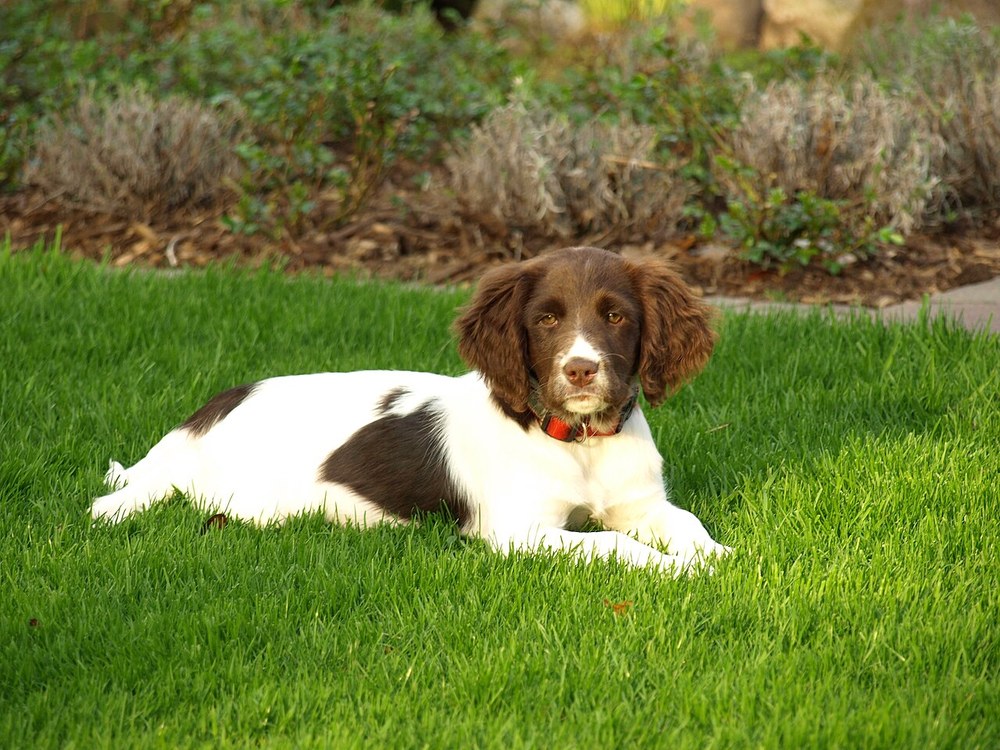
A Small Münsterländer puppy is soft, cuddly, curious and already led by its nose. Expect it to carry everything it finds, follow scent trails across the garden and get excited by birds. Have soft toys for carrying, a long line, chews and a quiet bed ready before it comes home.
Training a Small Münsterländer means work for the nose, a reliable recall and a gentle hand
Most daily trouble with this breed shrinks once five things are solid: a name check-in, recall on a long line, a retrieve with a clean release, a stop or wait on cue and settling on a bed.
Small Münsterländers learn fast with food, toys and retrieves. They are soft dogs, and a harsh voice or rough handling can make them worried and slow. Short, varied sessions with clear rewards work best.
Be realistic about the hunter in the dog. It will always notice scent and birds. The goal is a dog that can point at a pigeon, look back at you and come when called, and that takes its urge to hunt into games and work you give it.
Load balance
A nose is part of the dog
For a growing dog keep long runs and jumps short and build up slowly. A limp, stiffness after rest or a sudden change in mood means a vet visit before more exercise.
Safe free runSearch gameRetrieve with a swapRecall practicePlanned rest
For this breed a search in long grass often settles the dog better than a long walk on a short lead.
A Small Münsterländer that hunts with you stops hunting without you.
Birds and recall
How to build a recall that works when a Small Münsterländer smells birds
Use a long line, reward every check-in, practise recalls when the dog is mildly interested in a scent, step up to more tempting places slowly and finish with a game the dog loves.
01
Use a long line
Freedom with safety while you train.
02
Reward each check-in
Every look back earns something good.
03
Practise near scent
Call when the dog is only mildly busy.
04
Raise the bar slowly
More tempting places step by step.
05
Let it go back
Sniffing again is the best reward.
One scene close-up
Why a Small Münsterländer ignores you near birds
This breed was bred to find birds and hold on them, then to track and fetch what was shot. Scent pulls its whole attention away, so the dog is not being rude when it does not hear you; it is busy doing its job.
Manage first: a long line in fields and woods, no off-lead time near roads or livestock. Then reward every check-in, practise recall near gentle scent, call the dog away and let it go back to sniffing as the reward, and give it real searches and retrieves to do.
A dog that cannot settle at home, guards toys or food hard, or seems stressed most of the time should be seen by a qualified behaviour professional, with a vet first ruling out pain.
“With a Small Münsterländer, I start with real nose work, a long line for recall and a retrieve with a clear swap. Give this gentle gundog a job and a fair trainer, and you get a loyal, clever and very loving partner.”
We look at your real days: walks, wildlife, recall, home life and time alone. Medical questions belong with your vet; I deal with behaviour.
Andrew DarovProfessional dog trainer and instructor
Before we talk, note the dog's age, how much free running and nose work it gets, what it chases, how recall goes and the first thing that goes wrong. Opens WhatsApp to Andrew.
For an active family that will give it work and training, often yes. It is gentle and affectionate at home and usually good with children and other dogs. It needs much more exercise and nose work than a typical pet.
Is a Small Münsterländer a good first dog?+
It can be, for a keen first-time owner who joins a class and spends real time outdoors. A casual owner usually struggles with the recall and the energy.
Is a Small Münsterländer related to the Large Münsterländer?+
Only in name and region. Both come from around Münster, but the Large Münsterländer was developed from different stock and is a bigger, black and white dog.
How big does a Small Münsterländer get?+
FCI: males 52–56 cm (about 20.5–22 in), females 50–54 cm (about 19.5–21 in). Most weigh about 18–27 kg (about 40–60 lb).
Do Small Münsterländers shed?+
Yes, moderately, with more in the spring and autumn. Brushing once or twice a week keeps the feathering tidy.
How much exercise does a Small Münsterländer need?+
An adult usually needs one and a half to two hours a day, with some free running in safe places and nose work or retrieving.
Small Münsterländer vs Brittany: what is the difference?+
Both are medium pointing dogs. The Brittany is lighter, shorter-coated and often faster and busier; the Small Münsterländer has a longer, feathered coat and does more tracking and water retrieving.
Small Münsterländer vs English Setter: what is the difference?+
The English Setter is larger and searches wide for birds. The Small Münsterländer works closer to the hunter and is used to point, track and retrieve.
Can a Small Münsterländer live with cats?+
Many can if raised with them and taught early rules, but the hunting drive is real. Watch closely and keep small pets safe.
Can a Small Münsterländer live in an apartment?+
It is possible with a lot of outdoor work every day, but a house with a garden near fields is a far easier fit.
What health themes should I ask about?+
Ask the breeder for hip, eye and other results on both parents and which tests the breed club expects, and mention the breed to your vet. This is general awareness, not a diagnosis.
How long do Small Münsterländers live?+
Breed clubs and kennel clubs usually quote about 12–14 years, though each dog is different.
If a Small Münsterländer seems too much hunting dog for your home
Many people fall for the soft face and the feathered coat. The nose, the bird drive and the daily need for real work are what to think through before you commit.
A gentle, patient Frisian farm gundog. Calm and loving at home, independent and keen on small animals outdoors; needs kind training, a leave it and a long line for recall.
Dog stealing socks, underwear or laundry? Why dogs take worn clothes, how to stop the chase game, and how to teach a trade so your dog brings things back.
Teach leave it on walks for street food and rubbish: start on a short lead or long line, cue once, add distance, and know when to pick up instead.
Need a read on your exact situation?
Tell me about your Small Münsterländer in a short message: its age, how much free running and nose work it gets, what it chases, how recall goes and what goes wrong first. We rule out health issues first, then pick one skill to start with.