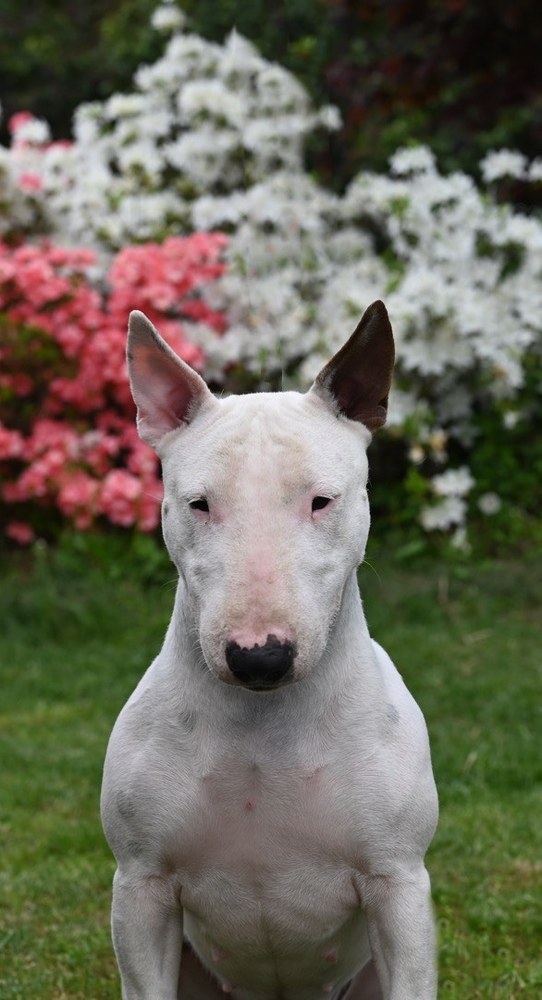
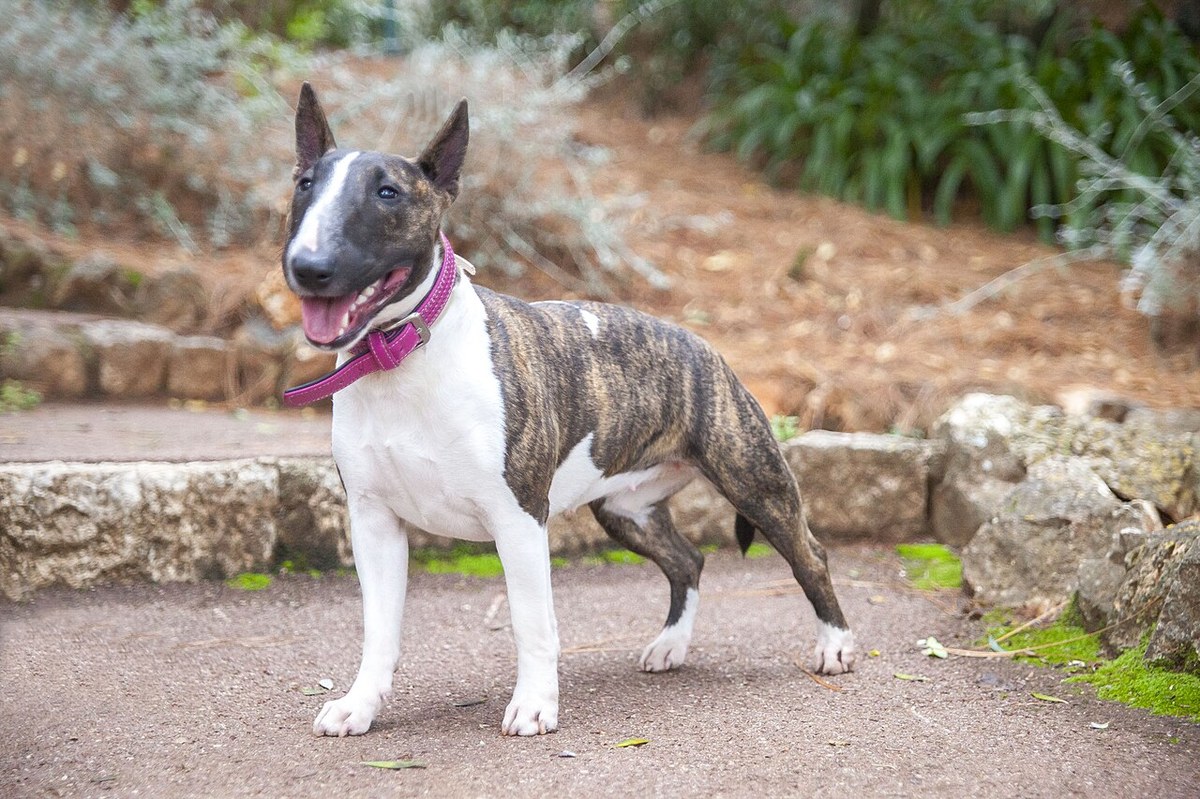
Miniature Bull Terrier: temperament, toy obsession and dog manners for the small bull terrier
The Miniature Bull Terrier is the smaller version of the Bull Terrier, with the same egg-shaped head, the same clown streak and the same stubborn mind in a body about 10–14 inches tall. You get a funny, strong little dog that can fixate on toys, push into other dogs and ignore cues it finds boring. What works is short, food-rich lessons, toy games with clear endings, careful dog introductions and a bed cue that ends the evening zoomies.
Job: A small bull-and-terrier dog; same head shape as the Bull Terrier in a body about 10–14 in tall.
Energy: Clownish, strong and stubborn; many are obsessed with balls and squeaky toys.
Home: Suits a home that likes a comedian, trains with food and manages meetings with other dogs.
A Miniature Bull Terrier is a full bull terrier in a smaller package
People see a small dog and expect a lap pet. The Miniature Bull Terrier is a compact, muscular bull-and-terrier dog with the same head, the same grip on toys and the same opinion about being told what to do as its bigger cousin.
What I meet in family homes is usually a loving clown that follows its people from room to room. The hard parts are toy fixation, rough play, pulling on the lead, pushy greetings with other dogs and a dog that decides a cue is optional when something more fun is on offer. None of that is spite. It is what this type of dog does when nobody sets the rules.
My plan has four parts. Toy games with an ending you decide. Short training sessions rewarded with food the dog loves. Calm, planned meetings with other dogs. And a bed cue after play so the house gets quiet.
Medium to high; bursts of play and evening zoomies
Coat / shed
Short, flat and harsh to the touch; white, or coloured such as brindle, red, fawn or tricolour
Job
Bull-and-terrier companion (AKC Terrier; FCI Group 3; RKC Terrier)
Breed history
How the small bull terrier became its own breed
The history will not train your dog, but it explains the solid body, the grip on toys and why this little dog has big-dog confidence.
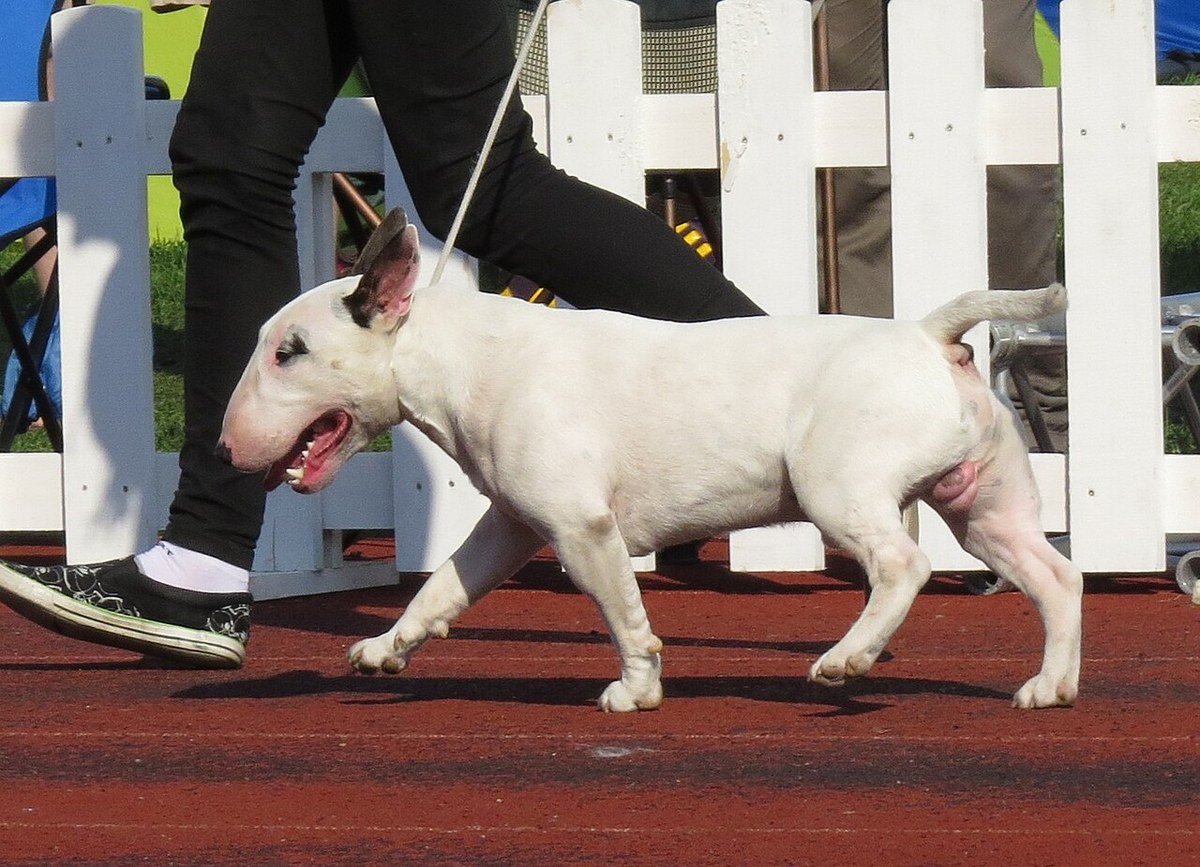
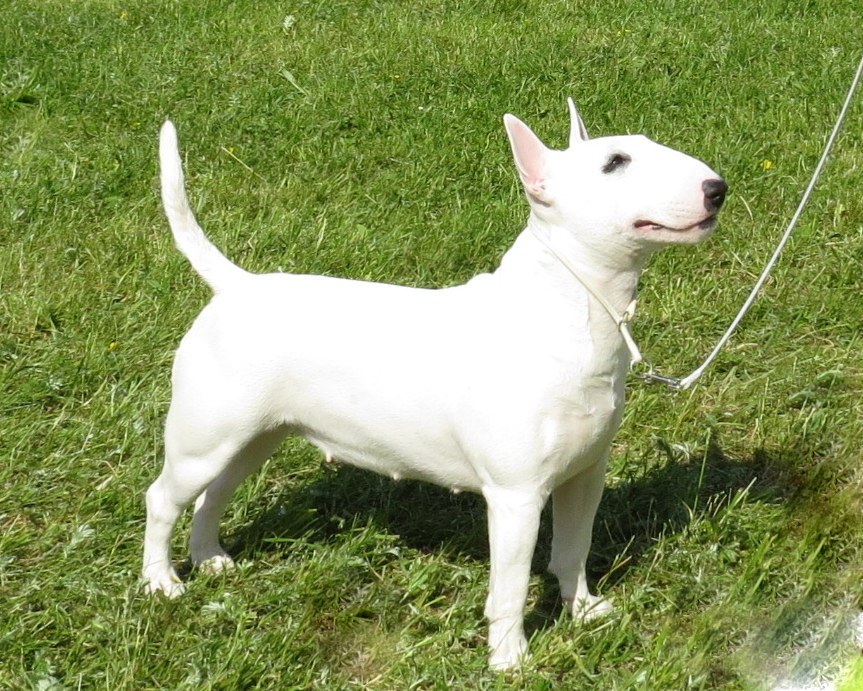
A white Miniature Bull Terrier moving at a show in Tallinn: a small, solid body built like a Bull Terrier.
England → bull and terrier dogs
Small bull terriers have been around since the 1800s
Breed histories trace the Miniature Bull Terrier to the same English bull-and-terrier stock as the Bull Terrier. Smaller dogs appeared in litters from the start, and breeders later kept them as a separate size with the same head and body shape.
What matters for an owner is that the mini kept the bull terrier mind: strong, persistent, quick to grip a toy and slow to let go. Size changed. Character mostly did not.
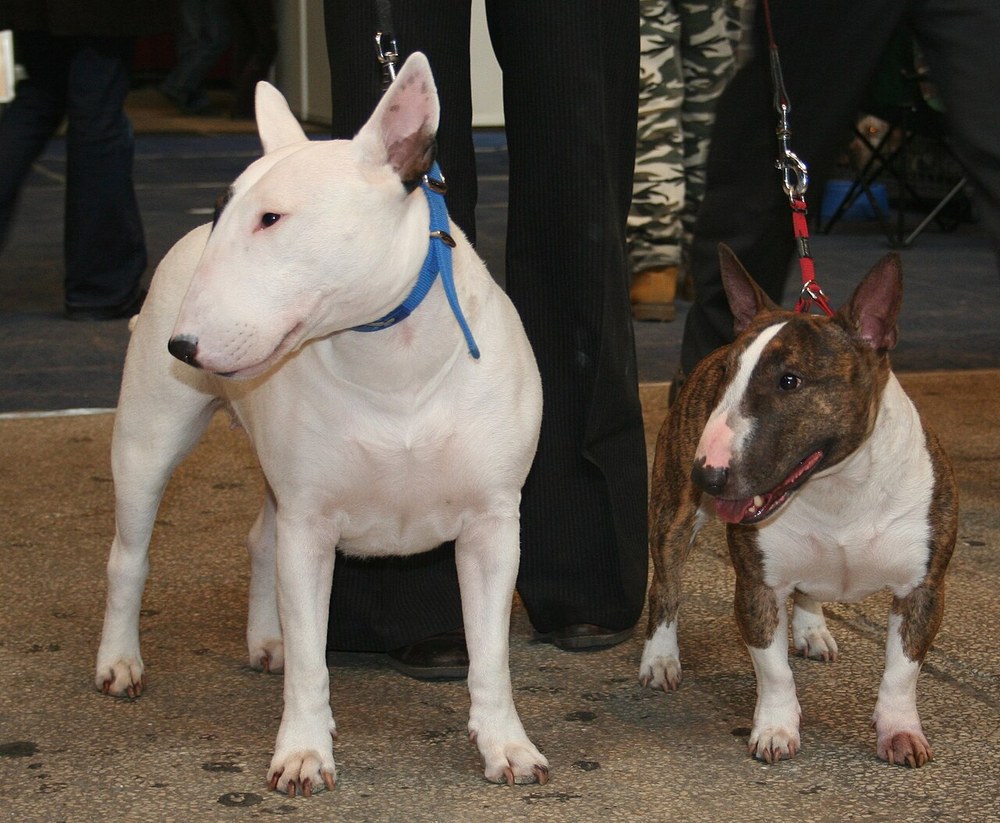
A standard Bull Terrier (white) beside a brindle Miniature Bull Terrier at a show in Poland: the same shape in two sizes.
Separate breed, shared standard
From a size variety to a recognized breed
Kennel clubs now list the Miniature Bull Terrier as its own breed, with a height range rather than the open size of the Bull Terrier. The look is meant to be the same dog in miniature, with no toy-breed fineness.
Because of that, the training needs are the same as for a Bull Terrier: clear rules, patient lessons and outlets for that strong grip and busy brain.
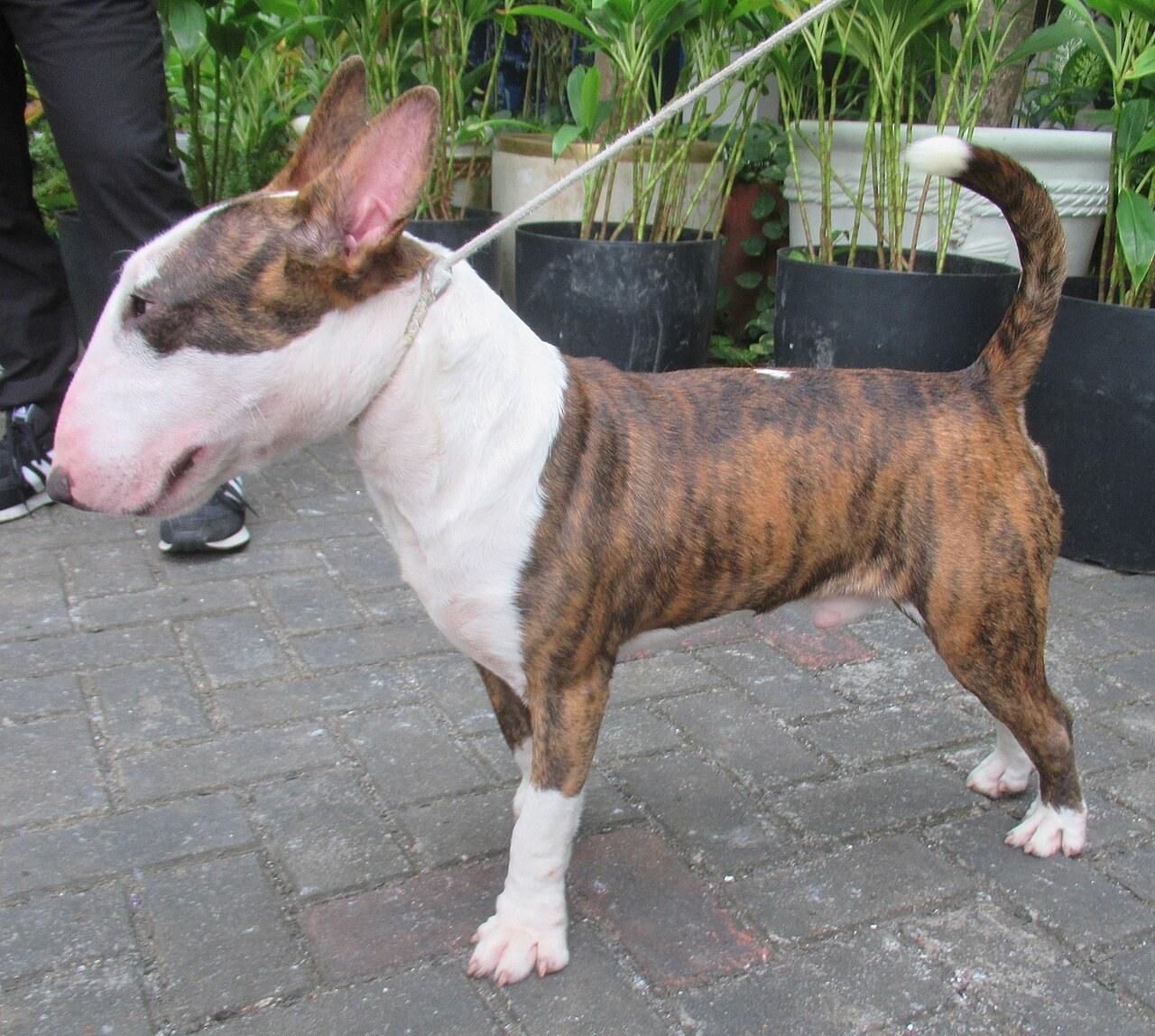
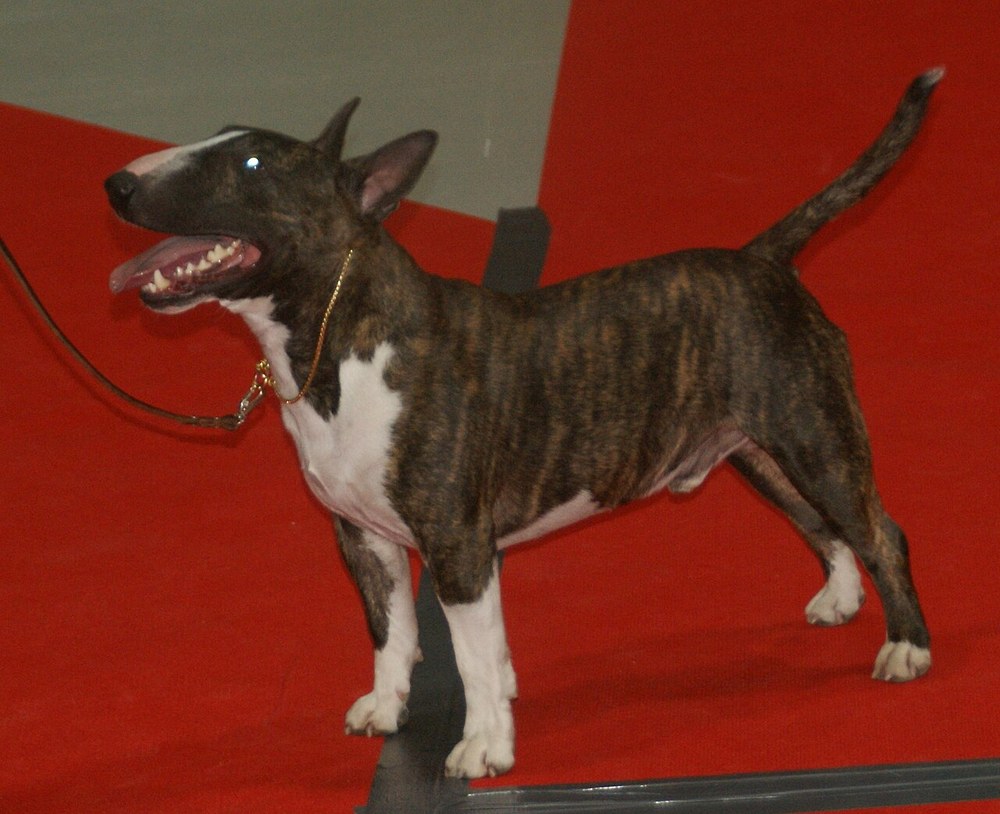
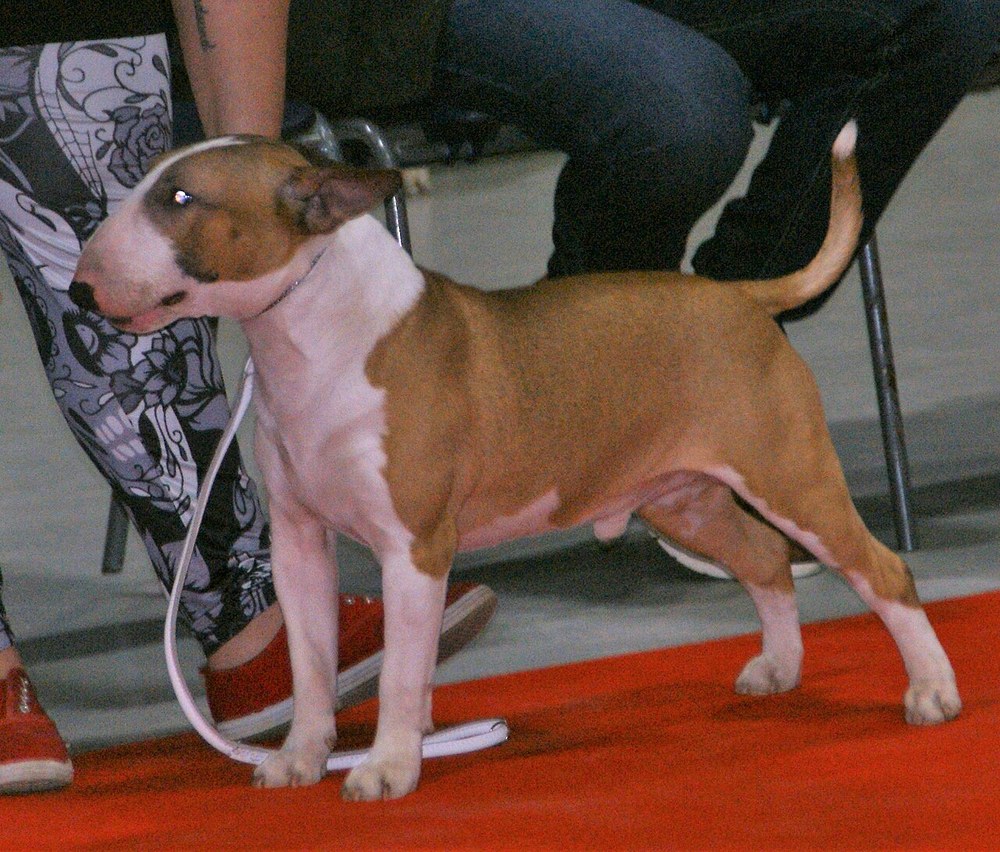
A brindle and white Miniature Bull Terrier male at a show: the egg-shaped head and muscular body of the breed.
What the breed was bred for
A clown at home, a bulldozer with other dogs
Day to day you live with a dog that is affectionate, funny and often loud in play. Many love people and want to be touching someone on the sofa.
The same dog can be pushy with other dogs, especially same-sex dogs, and can play too rough for small or shy dogs. Plan meetings instead of hoping.
A good day is a sniff walk, a toy game with an ending, a short lesson and a long nap
Most Miniature Bull Terriers settle well with steady daily exercise, toy games that stop on cue and short food-based lessons. Trouble usually starts with endless ball throwing, off-lead dog parks or no plan for calm in the evening.
Morning · walk
A sniff walk before any games
Start the day with a slow walk where the dog can sniff. It takes the edge off before toys come out and makes a loose lead easier to reward.
Many minis would chase a ball until they drop. Play a few rounds, swap the toy for food, then put it away and send the dog to its bed. Teach drop it early, with a trade, never a tug of war you lose.
Walk side by side first, keep greetings short and pick calm dogs of a similar size and play style. Busy dog parks are where a pushy mini learns bad habits fast.
A weekly wipe or rubber brush is enough for the short coat. White dogs can burn in strong sun, so give shade. Handle paws and ears often so vet visits stay simple.
General awareness only. I am not a veterinarian. With Miniature Bull Terriers, owners often notice trouble first as a change in how the dog moves, eats or plays, or as repetitive tail chasing that will not stop. For red flags, leave this page and open
when to call the vet.
Repetitive behaviour
Tail chasing or spinning that is hard to interrupt is a vet question first, then a behaviour question. Do not laugh it off or film it for fun.
Skin and sun
Check the skin after walks and give shade to white dogs in summer.
Weight
Keep a solid but lean shape. Ask your vet to judge condition. See BCS check at home.
Joints and play
Rough play and jumping off furniture add up. Any limp is a vet question. See limping stop list.
Vet visits
Tell the vet the breed and practise handling at home so exams stay calm.
Ask the breeder
Ask which screenings the national breed club recommends for the parents, and ask to see the results. Do not invent disease claims from a blog.
Lines and types
Show and pet Miniature Bull Terriers need the same rules
No bloodline selling. Dogs differ in how intense they are with toys and how they get on with other dogs. All of them need clear rules, steady exercise and calm meetings. Meet the parents and watch how they handle a toy, a stranger and another dog.
Family companion homes
Daily walks and short games, not hope.
Toys put away after play.
Planned dog meetings.
A bed cue every evening.
Suits a home that wants a funny, cuddly dog and can stay patient with a stubborn learner.
Show and sport homes
Short, food-rich training sessions.
Rally and trick work suit many minis.
Build fitness slowly.
Rest after busy days.
Suits an owner who enjoys training a strong-minded dog and keeps sessions short.
Socialization windows
What to introduce — and what not to overload — by age
AVSAB-aligned in spirit: short, clean exposures at a distance the puppy can still eat,
with hygiene while vaccines finish. See the
puppy socialization schedule.
2–4 months
Home, soft mouth and first toy rules
Introduce: name game, short toy games that end, drop it with a trade, gentle handling, toilet plan.
Do not overload: endless ball throwing, rough wrestling with hands, skipping alone-time steps.
~6 months
Teenage clown
Introduce: loose-lead practice, calm meetings with known dogs, longer sniff walks, bed cue.
Do not overload: busy dog parks, letting the puppy body-slam older dogs.
~12 months
Strength arrives
Introduce: solid drop it, wait at doors, polite greetings with people, lead manners in town.
Do not overload: pulling contests on a flat collar, hoping same-sex dog tension will fade on its own.
~18–24 months
Growing up
Introduce: steady settle after play, reliable recall in safe places, trick or rally work if you enjoy it.
Do not overload: dropping the toy rules because the dog looked calm for a week.
~3 years+
Keep what works
Introduce: regular exercise, refresh drop it and recall, yearly checks.
Do not overload: assuming a small dog needs no more training.
Before you buy
Who a Miniature Bull Terrier usually fits
Fit comes down to patience with a stubborn learner, a plan for other dogs and whether you enjoy a loud, funny dog that wants to be in the middle of everything.
Good match
More likely a good fit if you…
You want a sturdy, funny companion in a smaller body
You like training with food and keeping lessons short
You can plan meetings with other dogs instead of dog parks
You are home enough for a dog that loves company
You can put toys away and keep games under control
Mismatch risk
A Miniature Bull Terrier may be a poor choice if…
You want an easy, eager-to-obey first dog
You need a dog that mixes with every dog in the park
You are out all day most days
You prefer a delicate toy breed
You dislike rough play and loud zoomies
If you are torn between breeds
Miniature Bull Terrier vs Bull Terrier and Staffordshire Bull Terrier
All three come from English bull-and-terrier dogs. The Miniature Bull Terrier is the Bull Terrier head and body in a smaller size. The Bull Terrier is the bigger version with the same clown mind. The Staffordshire Bull Terrier has a different head, a stockier body and is often more people-soft and dog-selective.
Size
Miniature Bull Terrier
About 10–14 in tall.
Bull Terrier
Larger and heavier; no fixed size limit in many standards.
Head
Miniature Bull Terrier
Long, egg-shaped head.
Staffordshire Bull Terrier
Short, broad head with a clear stop.
Toys
Miniature Bull Terrier
Often obsessed with balls and squeakers.
Both compares
All three need games with clear endings.
Other dogs
Miniature Bull Terrier
Can be pushy; plan meetings.
Both compares
All three need careful introductions.
Ownership without surprises
Where a Miniature Bull Terrier owner’s budget goes
Costs depend on country, city and your choices. These are themes to plan for, not quotes.
Veterinary
Routine care plus checks the breeder and breed club suggest.
Toys
Strong toys get destroyed fast; budget for replacements.
Training
Class or private help with lead manners, drop it and dog meetings.
Gear
Well-fitted harness, lead, sturdy bed, sun shade for white dogs.
Time
Daily walks and short lessons are the cost that never stops.
Rules around toys and other dogs matter more than anything you buy: a mini that knows when games end is far easier than one guarding every ball.
Before day one at home
What to prepare for a Miniature Bull Terrier puppy
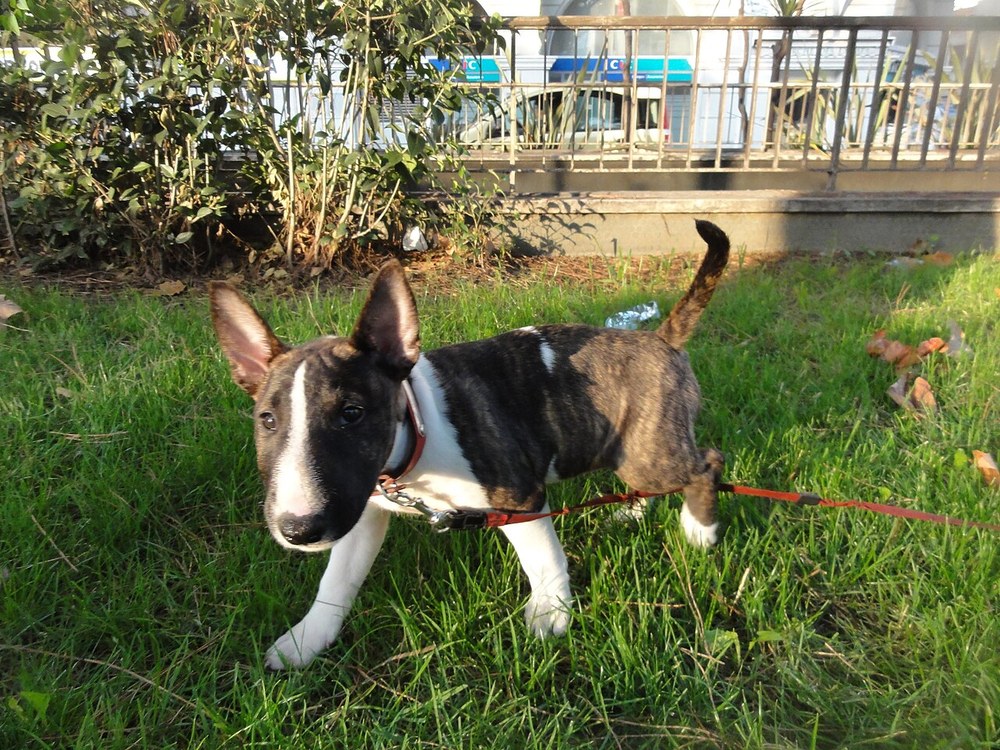
A Miniature Bull Terrier puppy is bold, mouthy and quick to grab toys. Have trade treats, a bed spot and short games that end before it comes home.
01
House rules
Choose the sleeping spot and where toys live.
02
Soft mouth
Praise soft play and pause games when teeth land on skin. See biting and nipping.
03
Drop it
Trade every toy for food from day one. See drop it.
04
Recall as a game
Indoors first, then on a long line. See recall ladder.
Training a Miniature Bull Terrier means short lessons, toy rules and calm dog meetings
The skills that matter most are few: drop it, a loose lead, a recall built on a long line, calm greetings and a bed after play.
This breed works for food and toys when lessons stay short and fun. Repeating a boring cue ten times teaches it to ignore you. Heavy hands make a stubborn dog dig in harder.
A lot of the work is set-up: toys put away, meetings with chosen dogs, and enough exercise that the dog can think.
Load balance
Exercise and play first, then ask for calm
Age, heat and joints all change what is safe. A limp, heavy panting or sudden short temper means a vet visit before more work.
Sniff walkShort training sessionToy game that endsBed with a chewLong nap
Sniffing, short lessons and controlled toy play all count. Hours of ball throwing wind a mini up more than they tire it.
A Miniature Bull Terrier that has walked, trained for five minutes and played a game that ended will sleep instead of hunting for trouble.
A drop it that holds
How to teach a Miniature Bull Terrier to drop a toy
Start with a low-value toy, trade for great food, give the toy back often, add the cue, then practise with favourite toys and end each game on your terms.
01
Start with a low-value toy
Offer great food next to the dog’s nose and reward the moment the toy drops.
02
Give the toy back
Return the toy most of the time so letting go keeps the game going.
03
Add the cue
Say "drop" once, just before you show the food.
04
Use better toys
Practise with favourite balls and squeakers, a little at a time.
05
End on your terms
After the last drop, put the toy away and send the dog to its bed.
One scene close-up
Why a Miniature Bull Terrier will not let go of a toy
Most minis that hold on have learned that letting go ends the fun. Grip is part of the breed, and chasing the dog for the toy makes the game better from its point of view.
Start with set-up: fewer toys lying around, trades for food and the toy coming back often. Then make the cue easy before you make it hard.
If the dog stiffens, growls or snaps over toys or food, get help from a qualified professional.
“With a Miniature Bull Terrier, I begin with three things: toy games that end on your cue, short food-based lessons, and planned meetings with other dogs. Once those are in place, the mini turns into the funny house companion people hoped for.”
Sessions cover the scenes that matter: toy guarding, lead pulling, dog meetings, greetings with guests and being left alone. I am a trainer, not a veterinarian.
Andrew DarovProfessional dog trainer and instructor
It can suit a patient first-time owner who trains with food and plans dog meetings. It is a hard match if you expect quick, eager obedience.
Miniature Bull Terrier vs Bull Terrier: what is the difference?+
Mostly size. The mini has the same head, body shape and temperament in a smaller frame, about 10–14 inches tall.
Are Miniature Bull Terriers good with other dogs?+
Many live well with a dog they grew up with. Some are pushy or selective, especially with dogs of the same sex. Plan introductions and skip busy dog parks.
Are they good with children?+
Often fun and tolerant with calm, respectful kids. Supervise rough play, because a strong mini can knock small children over.
How much exercise does a Miniature Bull Terrier need?+
Daily walks with sniffing plus short games and lessons. Steady exercise beats long ball sessions.
Can a Miniature Bull Terrier be off lead?+
Only in safe, enclosed places with a solid recall. Near traffic, cats or unknown dogs, keep a lead or long line on.
Do they shed?+
Yes, a little all year and more at seasonal changes. A rubber brush once a week helps.
Are they good apartment dogs?+
Size works for flats if the dog gets daily walks and calm routines. Loud zoomies and barking at noises still need training.
Why does my Miniature Bull Terrier chase its tail?+
Some do it in play, but repeated spinning that is hard to stop needs a vet check first and then a behaviour plan.
What health themes should I ask about?+
Ask breeders which screenings the national breed club recommends, and tell your vet the breed. This is general awareness, not a diagnosis.
How long do Miniature Bull Terriers live?+
Public breed references often mention about 11–14 years. Individual dogs vary.
If a Miniature Bull Terrier seems like more dog than you expected
It is loving and funny, but the stubborn streak, toy grip and dog-to-dog care do not fit every household.
Dog fence fighting or running the fence with the neighbor’s dog? Add visual barriers, supervise yard time and train calm alternatives step by step.
Need a read on your exact situation?
Tell me your Miniature Bull Terrier’s age and the scene that keeps repeating: toys, other dogs, pulling, jumping or alone time. We check safety and health first, then pick the first skill.