Wirehaired Vizsla: temperament, field and water work, and calm at home for the Hungarian gundog
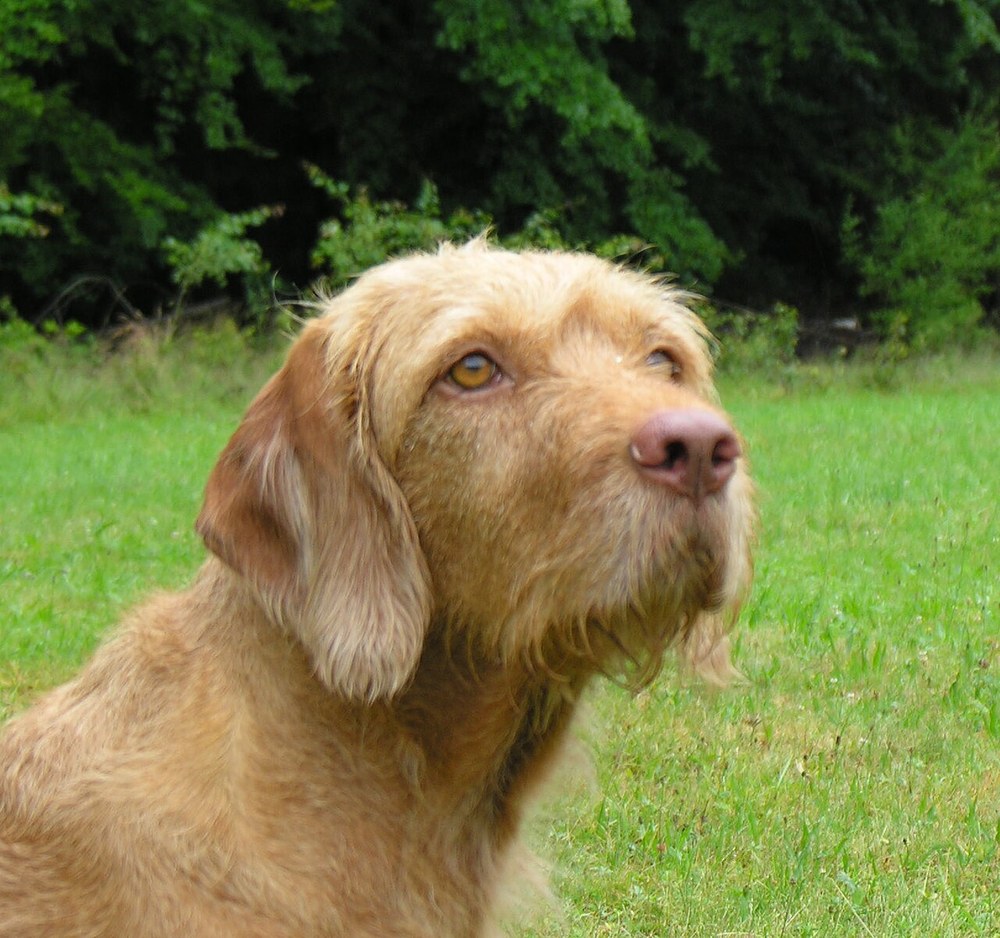
The Wirehaired Vizsla is a golden-rust Hungarian gundog with a harsh wire coat, a beard and bushy eyebrows. It was made to hunt in cold, wet country: search fields, point birds, retrieve from land and water and follow a trail. At home it is usually gentle, soft and very attached to its people, and it does not like being left out of family life. The fair plan is real field or water work, a recall on a long line, a clear switch from busy outdoor time to calm indoor time, alone-time steps and regular coat care.
Job: Hungarian all-round gundog: searches, points, retrieves on land and water.
Energy: High energy and stamina; needs daily exercise and a real job most weeks.
Home: Fits an active, outdoor home that wants a close, gentle dog and can give it field or water time.
A Wirehaired Vizsla looks like a cuddly bearded gentleman. It works like a tough, all-weather gundog
The beard, the eyebrows and the warm eyes make people expect a calm, shaggy house dog. In Hungary the breed was made for a harder job: hunt fields and reed beds in cold, wet weather, point game, retrieve from icy water and keep going all day. That working dog is still in the one on your sofa.
In real homes I usually find a soft, cuddly dog that wants to be in the same room as you all day. The hard parts are a nose that locks on to deer and birds, a recall that disappears in the woods, crying or chewing when left, a restless evening after a lazy day, and a beard that drips on the floor. That is a working gundog without enough to do, and it is easy to see coming if the plan is only short pavement walks.
Four things keep this breed happy. Exercise every day with time to sniff. A real outing most weeks: field, scent or water. A long line until the recall works near game. And practice being alone, starting in the first week.
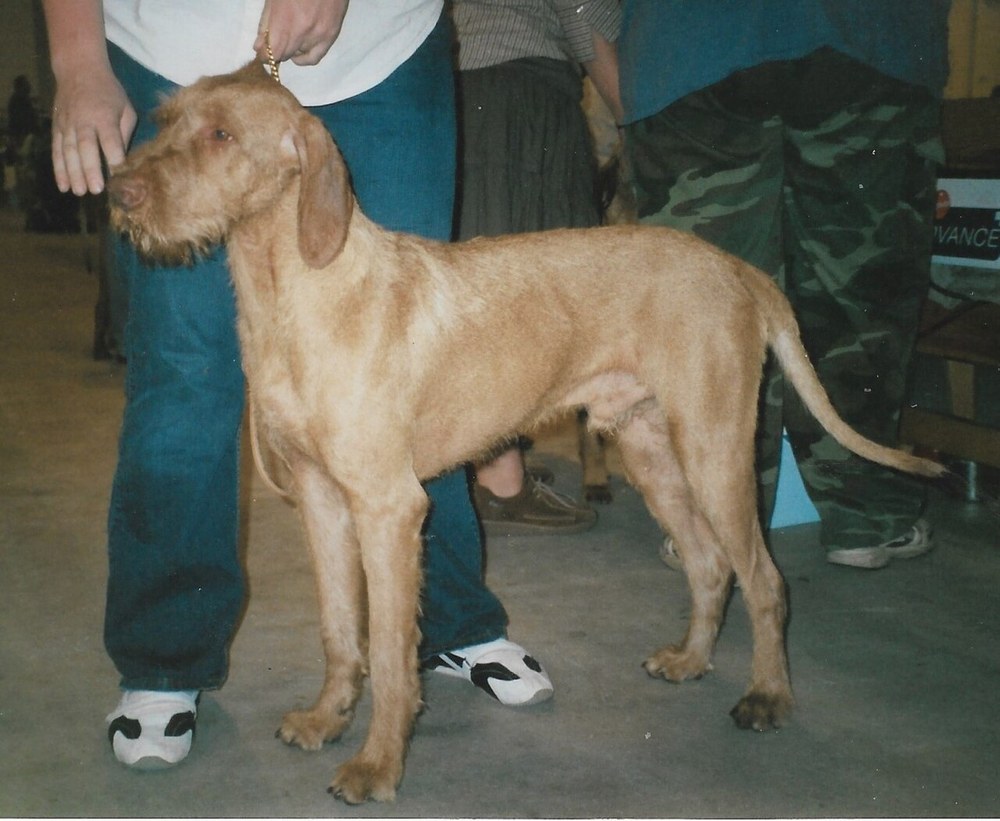
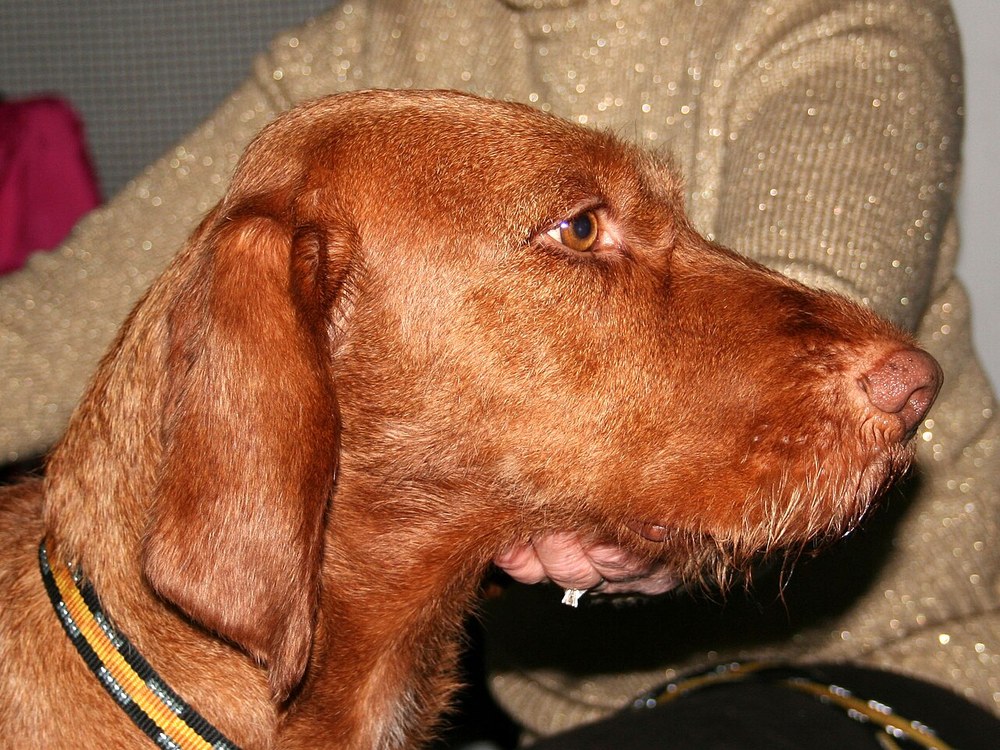
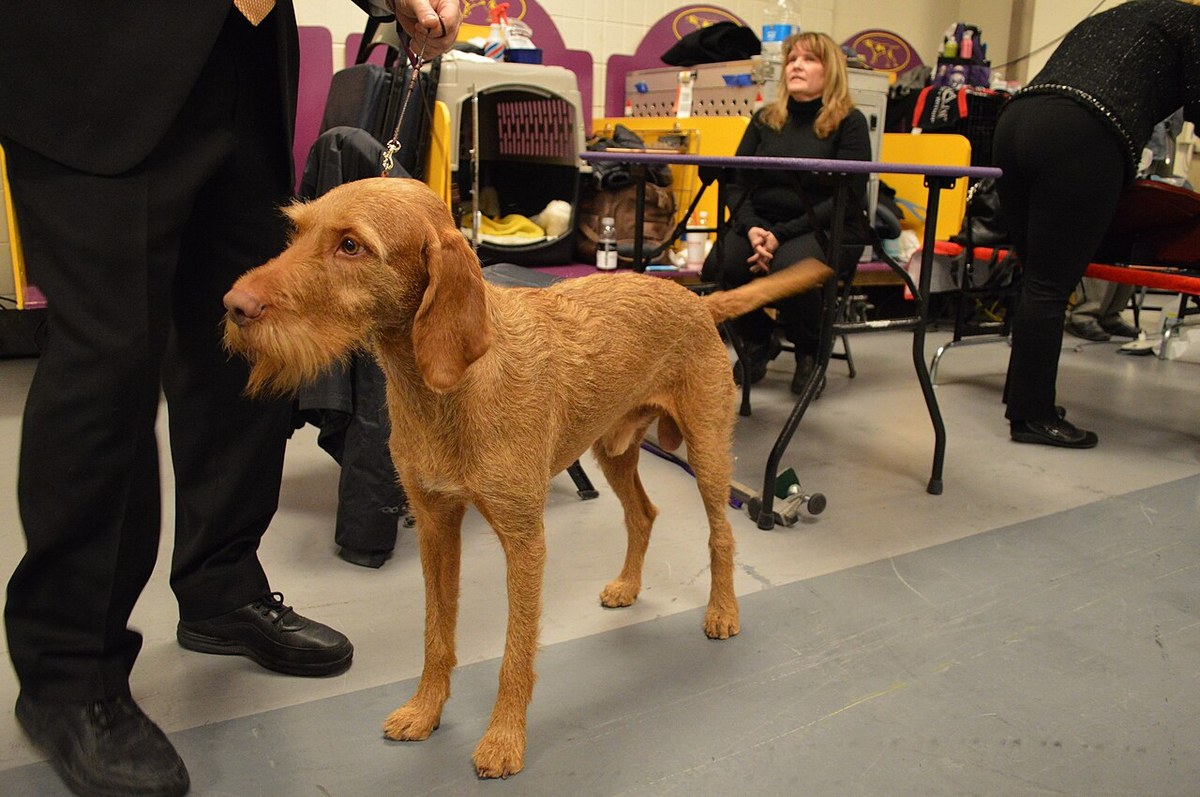
Harsh, dense wire coat with a beard and eyebrows; golden rust in shades
Job
Hungarian versatile gundog, hunt, point and retrieve (FCI Group 7, Pointing dogs; AKC Sporting; RKC Gundog, HPR)
Breed history
How a Hungarian gundog got its wire coat for cold, wet work
Breed history will not walk the dog for you, but it explains the love of water, the nose and the wish to stay close to its handler.
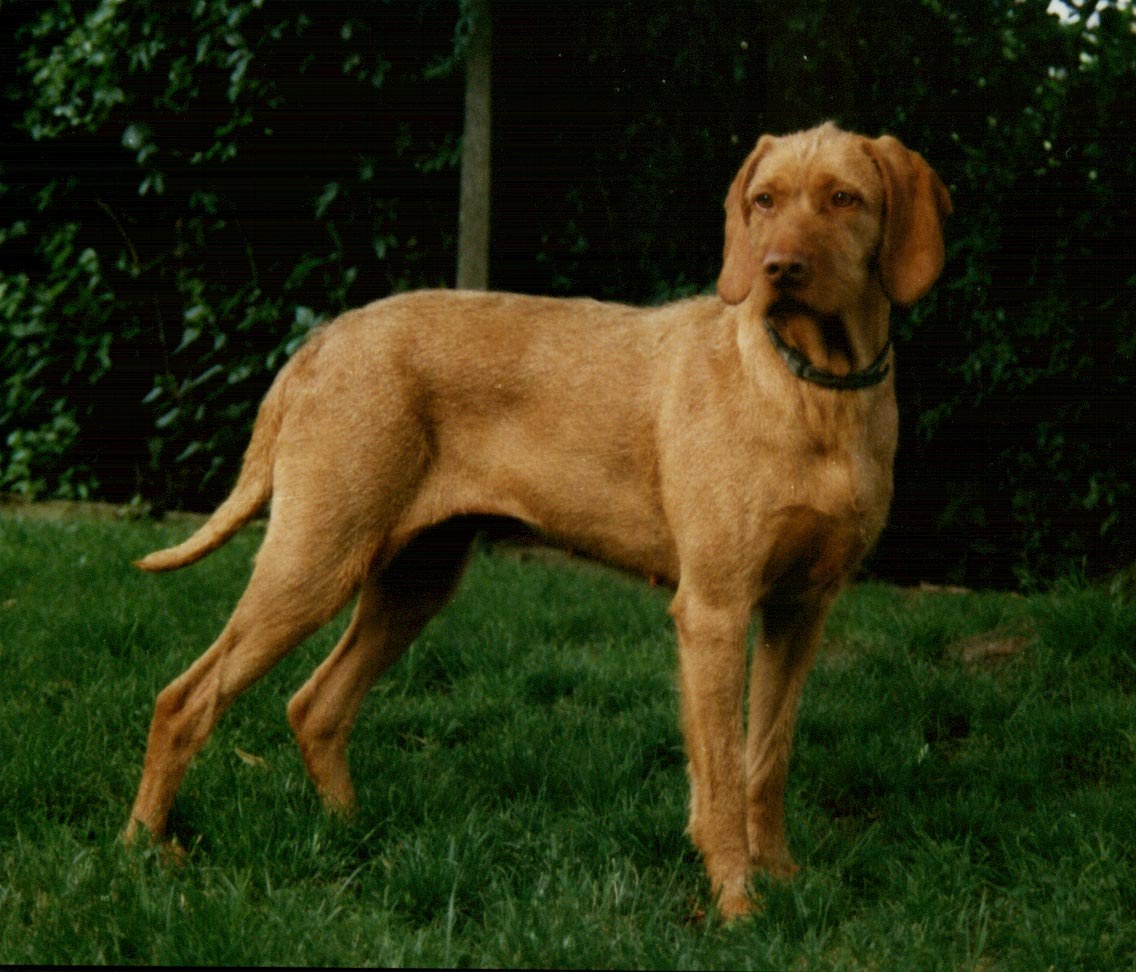
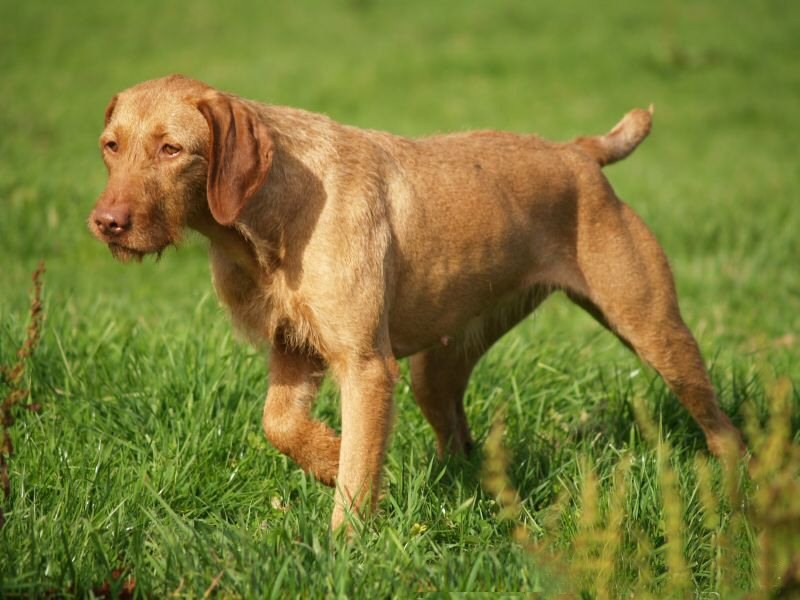
A Wirehaired Vizsla focused on game in long grass. Searching, pointing and retrieving are the job the breed was made for.
Hungary → a tougher coat
Bred to hunt in cold water and rough cover
Breed histories describe Hungarian hunters in the first half of the 20th century crossing the smooth Vizsla with German Wirehaired Pointers. They wanted a dog with the Vizsla’s nose and soft nature, but with a wire coat that could handle cold water, frost and thorny cover.
What matters for an owner is that the Wirehaired Vizsla is still an all-round gundog. Daily life should give that nose and that love of water a job, or the dog will find its own on every walk.
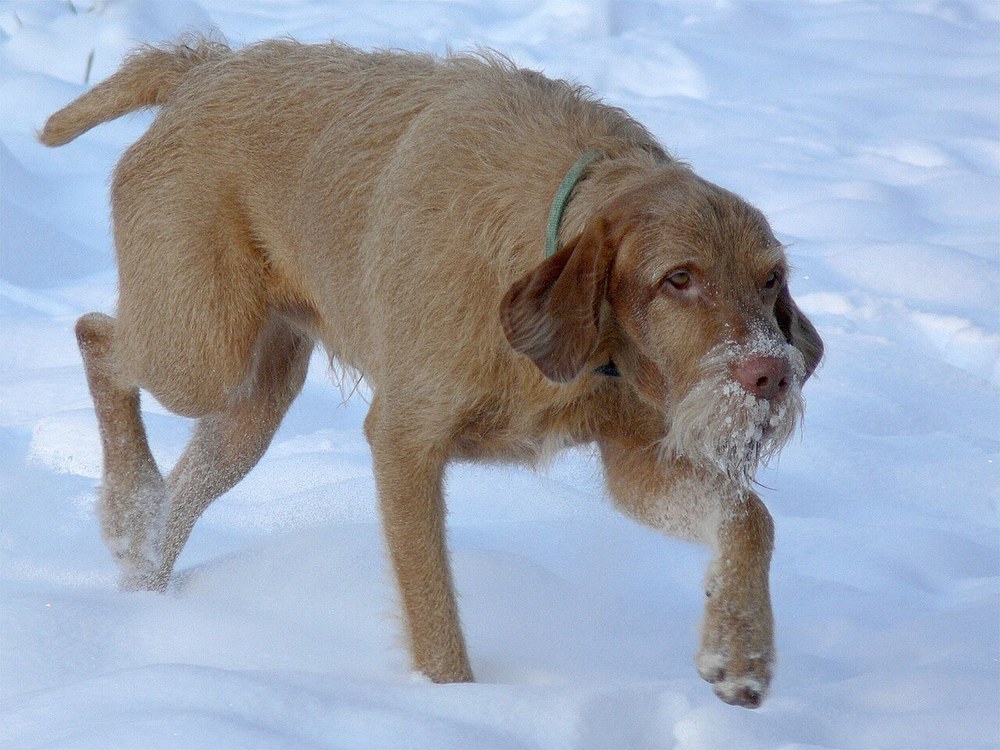
A Wirehaired Vizsla in snow. The wire coat was bred for cold, wet field work, so winter walks suit it well.
From Hungarian fields to many countries
From Hungarian hunting to family and sport homes
The breed is listed by the FCI as a Hungarian pointing dog and became known in Europe and North America over the late 20th century. The AKC added it to the Sporting group in 2014.
Many Wirehaired Vizslas now live as family dogs with hunting, scent work, retrieving or dog sport hobbies. They still carry a strong nose, a love of water and a deep need to be close to their people.
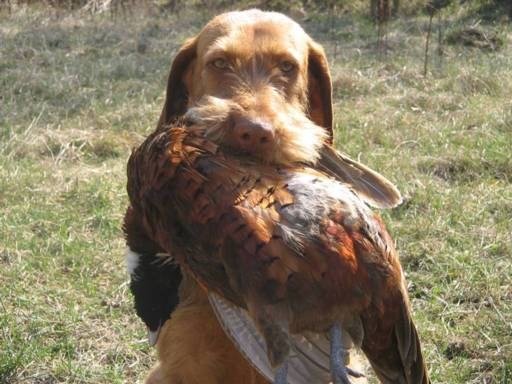
A Wirehaired Vizsla bringing back a pheasant. Retrieving to hand is part of the breed’s working job.
What the breed was bred for
Gentle, soft and very close to its people
Living with one, you notice three things: a nose that is always working, a gentle character that takes a harsh word badly, and a constant wish for company. Food, retrieves and quick lessons work well; rough handling makes it anxious and clingy.
Because it is so affectionate at home, many families skip the outdoor jobs and never practise leaving it. That is the usual road to a bored dog that whines, chews the door frame and runs off after the first deer.
A good day is a long sniffing walk, a swim or field game, a short training session and a calm evening
Most Wirehaired Vizslas do well with a long walk every day, a real outing most weeks and people around for much of the day. The usual friction is a recall that fades near deer, crying when the door closes, a wound-up dog after a quiet day and a wet beard on the cushions. A predictable day with clear work times and rest times suits the breed.
Morning · walk
Harness in town, long line in the woods
Use a well-fitted harness on pavements and reward the dog for keeping slack in the lead, with sniff stops as the reward. In fields and woods clip on a long line: the nose picks up deer or birds long before you see them.
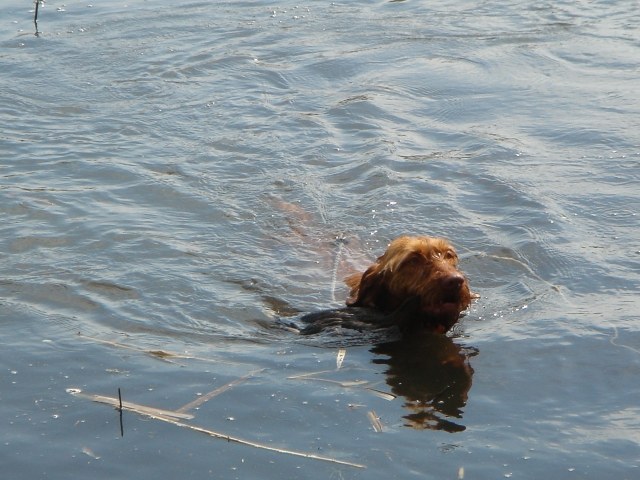
Most love water. Choose safe, calm water with an easy way out, throw a dummy for a few retrieves and stop while the dog is still keen. Dry the beard and ears afterwards.
Most Wirehaired Vizslas are friendly with visitors and gentle with family children, and many lean on people for comfort. Teach sit for greeting early so a big, happy dog keeps four feet on the floor.
A weekly brush keeps the wire coat in order; pluck out the loose dead hair by hand every so often and wipe the beard after food and water. Look inside the ears after swims. Teach the dog to stand still for the brush and for paws and nails, with treats.
After the walk and the job, lead the dog to its bed with a chew and keep the house quiet. A Wirehaired Vizsla that never learned to wind down follows you from room to room all evening. A trained bed spot, with the place cue, gives it somewhere to land.
General awareness only. I am not a veterinarian. With this breed, owners tend to spot trouble first as smelly ears after swimming, a limp or a cut after the field, sore skin hidden under the wire coat, a change in weight or a dog that pulls away from touch. For red flags, leave this page and open
when to call the vet.
Ears after water
Dry them after each swim and look inside weekly. A bad smell, red skin or head shaking is a vet visit.
Joints and field work
Build fitness over weeks, warm up before hard work and let a vet check any limp. See limping stop list.
Skin and coat
Part the wire coat as you brush to find ticks, grass seeds and sore patches.
Weight
An athletic, trim dog is kinder on the joints. See BCS check at home.
Vet visits
Mention the breed and the kind of work it does at every appointment.
Ask the breeder
Ask which screenings the national breed club recommends for the parents. Do not invent disease claims from a blog.
Lines and types
Hunting and family Wirehaired Vizslas share the same nose, energy and need for company
No bloodline selling. Dogs differ in hunting keenness, in how much exercise they need and in how hard they work in the field. Every one of them needs real jobs, a long line in open country and a kind trainer. Compared with the smooth Vizsla it has a tougher coat for cold work; compared with the German Wirehaired Pointer it is usually softer and more people-focused.
Family and sport homes
Affectionate; wants company most of the day.
Still a gundog: plan scent, swim or retrieve outings.
Scent work, retrieving games and canicross help.
Ask how the parents cope when their owners go out.
Fits an outdoorsy family where someone is home a lot.
Hunting and field trial homes
Many search, point and retrieve with real talent.
Water retrieves are often the favourite part.
Steadiness takes patient, well-timed training.
Heavy-handed training tends to backfire.
Fits a hunter or trialler who trains gently and gives the young dog time.
Socialization windows
What to introduce — and what not to overload — by age
AVSAB-aligned in spirit: short, clean exposures at a distance the puppy can still eat,
with hygiene while vaccines finish. See the
puppy socialization schedule.
2–4 months
Home, gentle mouth and routines
Introduce: name game, recall games on a line, four paws on the floor for greetings, toilet routine, a few minutes alone behind a gate, first sniffing games.
Do not overload: never leaving the puppy for a minute, letting it chase birds, long walks on hard ground.
~6 months
First water and new places
Introduce: new places from a distance, slack-lead practice, paddling in calm, shallow water, short brushing sessions.
Do not overload: throwing the puppy in the water, forced greetings, dropping the line.
~12 months
Teenage energy
Introduce: long line work, turning away from game scent, winding down after exercise, longer stretches alone.
Do not overload: unclipping because it seems reliable, harsh corrections, hours of ball throwing.
~18–24 months
Growing up
Introduce: steadiness on point and retrieve if you hunt, calm greetings, a dependable off-switch at home.
Do not overload: trusting recall near deer, missed outings with nothing to replace them.
~3 years+
Keep it going
Introduce: line recall refreshers, a weekly field or water outing, yearly health checks.
Do not overload: letting the outings lapse because it seems settled.
Before you buy
Who a Wirehaired Vizsla usually fits
Fit depends on how much real work you can offer, how many hours the dog would spend alone, whether you have fields and water nearby, and whether you want a dog that follows you everywhere.
Good match
More likely a good fit if you…
You want a gentle, loving and sporty gundog
You like long walks, scent games, swimming or hunting
Someone is home for much of the day
You enjoy training with treats and retrieves
A damp beard and a weekly brush do not bother you
Mismatch risk
A Wirehaired Vizsla may be a poor choice if…
The dog would spend most workdays alone
Walks would be short and on pavement
You expect off-lead freedom everywhere
You lean on harsh corrections
You are looking for a calm, low-energy house dog
If you are torn between breeds
Wirehaired Vizsla vs Vizsla and German Wirehaired Pointer
All three are continental pointing gundogs with a strong nose and plenty of energy. The Wirehaired Vizsla is a Hungarian gundog with a wire coat, a beard and a soft, people-focused nature. The smooth Vizsla is lighter, short-coated and feels the cold more. The German Wirehaired Pointer is a tougher German gundog that is often more independent and can be wary of strange dogs.
Size
Wirehaired Vizsla
Medium-large; often about 21.5–25 in.
Vizsla
A little lighter in build; often 21–24 in.
Coat
Wirehaired Vizsla
Harsh wire coat with beard and eyebrows; golden rust.
Vizsla
Short, smooth golden-rust coat; feels the cold more.
Temperament
Wirehaired Vizsla
Gentle, soft and very close to people.
German Wirehaired Pointer
Tougher, more independent and often more guarded.
Work
Wirehaired Vizsla
Search, point, retrieve on land and water.
Both compares
Also all-round gundogs with high energy.
Home fit
Wirehaired Vizsla
Active home with company most of the day.
Both compares
The Vizsla is even more clingy; the German Wirehaired Pointer needs firm, fair structure.
Ownership without surprises
Where a Wirehaired Vizsla owner’s budget goes
Costs depend on country, city and your choices. These are themes to plan for, not quotes.
Veterinary
Routine care with a vet who sees working dogs. Keep the emergency clinic number handy.
Training
Puppy class, recall help, and gundog, scent or retrieving classes.
Gear
Harness, long line, dummies, towels, a drying coat and a crate that fits the car.
Grooming
A brush and a stripping comb; some owners book a groomer a few times a year.
Dog care
A walker, a sitter or daycare for long days away from home.
Time
A long daily walk and a weekly outing are the real cost, counted in hours.
Company and time cost more than any gear: a Wirehaired Vizsla that works and is rarely left for long is calm and sweet, and one that is bored and lonely lets the whole street know.
Before day one at home
What to prepare for a Wirehaired Vizsla puppy
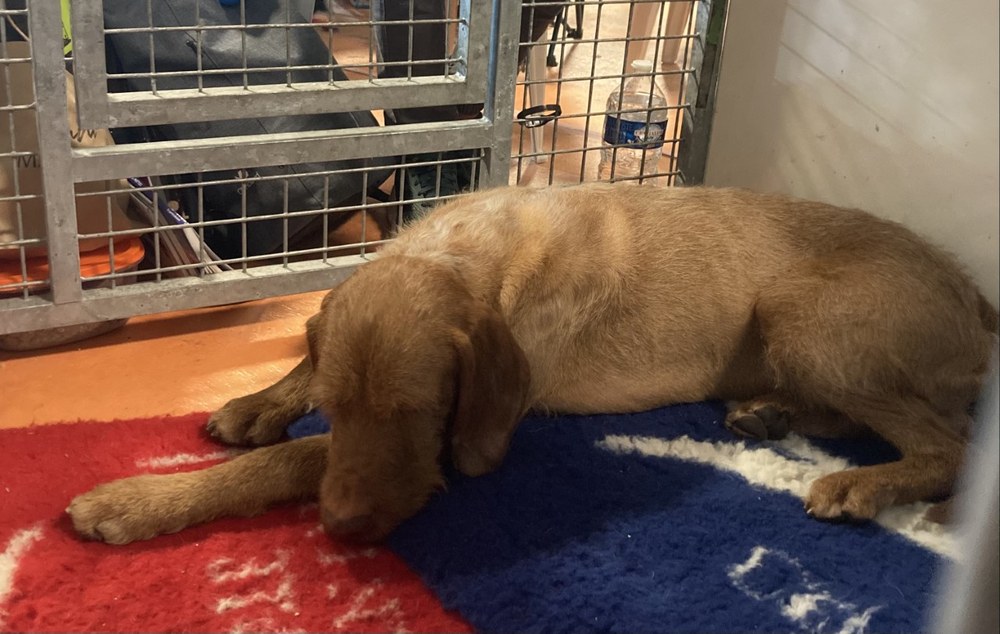
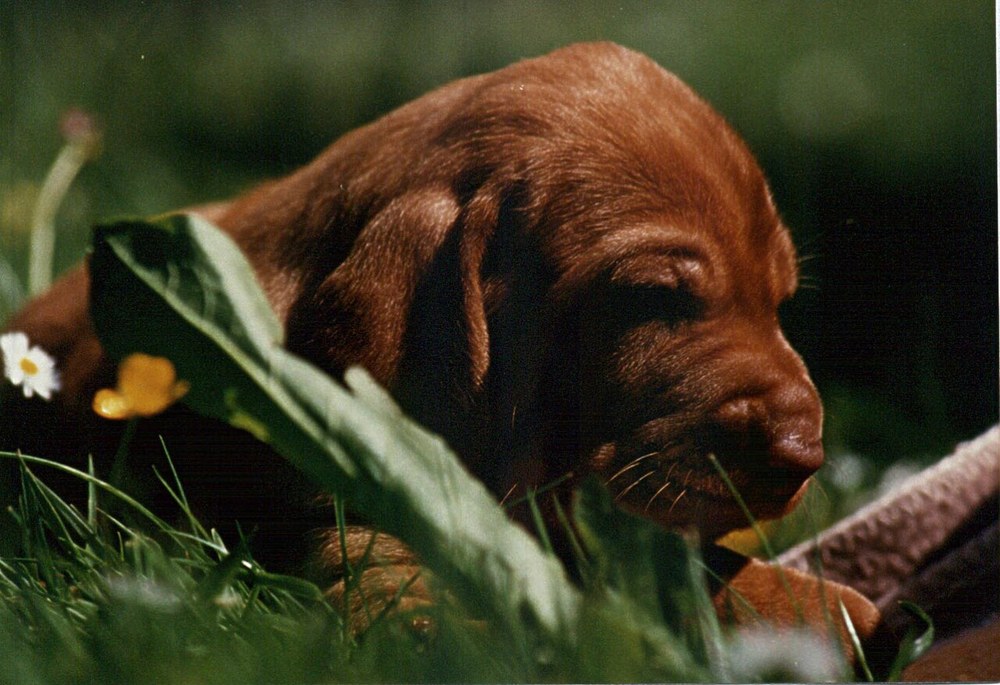
A Wirehaired Vizsla puppy is soft, curious, nose-first and wants you in sight at all times. Have a long line, a simple daily routine and a plan for tiny alone-time steps ready before pickup day, so the hunting nose grows into games you control and the clinginess grows into calm confidence.
01
Decide the rules
Pick the sleeping spot, decide on sofas and agree how greetings happen.
02
Gentle mouth
Keep playing while it is soft and stop the moment teeth press on skin. See biting and nipping.
03
Recall as a game
Name-and-treat games in the kitchen, then the garden, then on a long line. See recall ladder.
04
Alone in tiny steps
A few minutes behind a gate while you potter nearby. See first absences.
Training a Wirehaired Vizsla means real work, a recall on a long line and a clear off-switch
The everyday skills are a slack lead with sniff stops as the reward, leave-it around food and game scent, a recall on a long line, a retrieve that comes back to your hand, four paws down for greetings, a bed it goes to on cue and the ability to switch off after work. Agree as a family on the words and on what earns a treat.
This dog will work hard for food, a retrieve or simple praise if lessons stay short and cheerful. Harsh handling makes a soft gundog anxious and clingy. Two or three short sessions a day beat one long one.
Much of the job is set-up: the long line in fields and woods, safe water only, a gate and a chew when you go out, and a quiet evening routine. Both busy days and rest days need a plan, so the dog learns that the house is for resting.
Load balance
Work first, then rest
Age, joints and the weather change what is sensible. A limp, sore ears after swimming or a sudden short temper means a vet visit before more training.
Sniffing walk on leadLong line in a fieldA few retrieves or a swimBed and a chewQuiet evening nap
Long line field walks, scent games, a few retrieves and a swim all count. Pavement walks alone rarely satisfy a dog bred to hunt for a whole day.
A Wirehaired Vizsla that has sniffed, swum or retrieved, and then been shown to its bed, can relax instead of trailing you round the house.
A recall that holds near game
How to build a Wirehaired Vizsla recall on a long line
Begin in the house, move outside on a long line, make every return worth it, bring in game scent a little at a time and keep the line on wherever deer and birds live.
01
In the house first
Say the name once and reward the dog for arriving. Keep it cheerful.
02
Outside on a long line
Play the same game outdoors with a long line, somewhere quiet.
03
Make each return count
A top treat or a quick retrieve of its favourite toy every time.
04
Bring in game scent slowly
Practise where birds or deer have been, from far off. Move away if the dog cannot turn.
05
Line on where game lives
Free running only where recall is proven; keep the line on in woods and fields with deer or birds.
One scene close-up
Why a Wirehaired Vizsla does not come back when it finds game scent
A Wirehaired Vizsla that ignores you in the woods has usually learned that scent wins: the breeze brought deer or birds, the dog went, and calling did nothing. That is a gundog nose doing its job.
Set things up first: a long line in fields and woods, plus regular scent games, retrieves or swims so the urge to hunt has somewhere to go. Then rebuild the recall in small steps with rewards it really wants, starting well away from game.
If your dog escapes often or seems anxious, get help from a qualified professional.
“With a Wirehaired Vizsla, I begin with a real job, a long line plan and a clear route from work to rest. Give it a weekly field or water outing and alone time in small steps, and you get the gentle, loving companion you hoped for instead of a bored dog crying at the window.”
Sessions cover the scenes that matter: recall near game, being left, pulling, greetings and winding down. I am a trainer, not a veterinarian.
Andrew DarovProfessional dog trainer and instructor
It can suit an active first-time owner who is often at home, loves long outdoor walks and will train gently. It is a hard match for a home where the dog is alone all day.
Is the Wirehaired Vizsla a separate breed from the Vizsla?+
Yes. It is a separate Hungarian breed with a wire coat, made by crossing the Vizsla with German Wirehaired Pointers in the 20th century.
Wirehaired Vizsla vs Vizsla: what is the difference?+
The Wirehaired Vizsla has a harsh wire coat with a beard, a slightly heavier build and copes better with cold water. The smooth Vizsla is lighter and short-coated.
Wirehaired Vizsla vs German Wirehaired Pointer: which fits better?+
The German Wirehaired Pointer is often tougher, more independent and more guarded. The Wirehaired Vizsla is usually softer and more people-focused.
Do Wirehaired Vizslas shed?+
They shed lightly to moderately. Weekly brushing and pulling out dead hair now and then keep the coat tidy.
How much exercise does a Wirehaired Vizsla need?+
Daily walks with plenty of sniffing, plus field, scent or water work most weeks. Puppies need shorter outings that grow with age.
Can a Wirehaired Vizsla be left alone?+
Many find it hard. Teach alone time in small steps from puppyhood, and plan a walker or daycare for long days.
Do Wirehaired Vizslas like water?+
Most love it. They were bred to retrieve from water, so plan safe swimming spots and dry the ears afterwards.
Can a Wirehaired Vizsla be off lead?+
Many can in safe places once recall is trained, but game scent can pull a young dog away. Use a long line until recall works near deer and birds.
Are Wirehaired Vizslas good with children?+
Most are gentle and friendly with family children. A bouncy young dog can still knock small kids over, so teach calm greetings and supervise.
What health themes should I ask about?+
Ask breeders which screenings the national breed club recommends, and tell your vet the breed. This is general awareness, not a diagnosis.
How long do Wirehaired Vizslas live?+
Public breed references often mention about 12–14 years. Individual dogs vary.
If a Wirehaired Vizsla seems too busy or too clingy for your home
It is loving and gentle, but the energy, the need for real work and the need for company rule it out for some households.
A small brown curly gundog from the Great Lakes. Eager, affectionate and sensitive; loves water and fetch, often shy with strangers and needs daily exercise.
A large, gentle Italian pointing gundog. Needs daily walks with sniffing, weekly nose or field work, patient training and a long line until recall holds near birds.
Dog scavenging on walks? Short lead, head position and route planning around bins and street food, plus links to the leave-it training plan.
Need a read on your exact situation?
Send me your Wirehaired Vizsla’s age and the moment that keeps going wrong: the woods, the front door, the lead, visitors or the evening. We rule out pain and safety issues first, then choose the first skill.