Expert Advice · Skills · 9 min read
How to teach a dog to lie down: lure, signal, word
Food from the nose straight down to the floor, then slowly forward. Reward low. Hand signal next, word last. Duration and mats live elsewhere.

How to teach a dog to lie down comes down to one movement: food from the nose straight down to the floor, then a little forward, until the elbows and belly touch the ground. Build it in order: lure, then hand signal, then word. This page owns the down position from scratch. Holding a down for longer, or choosing between a free down-stay and a mat, lives on down-stay vs place.
I am Andrew Darov, a dog trainer. I am not a veterinarian. Down is a calm, useful position, and almost every dog can learn it with food and patience.
How do you lure a dog into a down?
Nose to floor, then a slow creep forward. Elbows down, mark, reward on the floor. The word comes last.
Most dogs find it easiest to start from a sit. If your dog does not sit reliably yet, start with how to teach a dog to sit. A rug or mat helps too, whether you train in a US apartment or a UK flat. Short-coated and thin dogs often do not want to lie down on a cold tiled floor.
- Ask for a sit, or lure one.
- Hold a small treat right at the dog’s nose.
- Move it straight down to the floor, close to the front paws. The head follows.
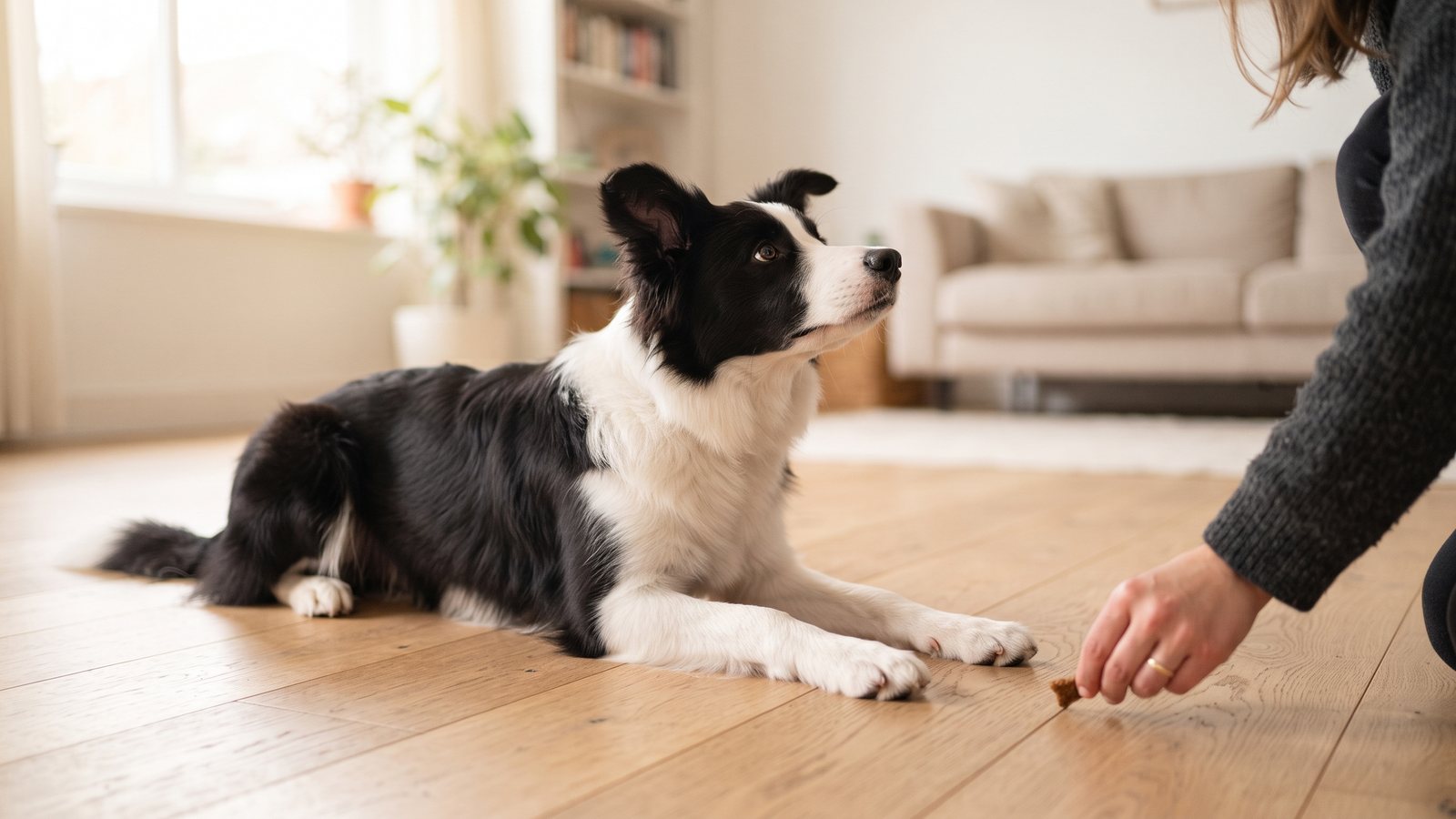
- Pause. Then move the hand slowly forward along the floor, a few centimetres (an inch or two). The front legs slide forward and the elbows fold.
- The moment the elbows and belly are on the floor, mark (“yes” or a click) and give the treat on the floor between the paws.
The path looks like the letter L: down first, then forward. If the hand goes forward first, the dog stands and walks after it.
Two or three good reps, then a break. Puppies and young dogs do better with a few short sessions a day than one long one.
How do you run a short down session?
- Warm up with two easy sits so the dog is with you and interested in the food.
- Lure one down along the L path. Mark when the elbows land. Reward on the floor. Use a release word (“free” or “okay”) so the dog knows it can get up.
- Repeat until the dog folds down quickly for a smaller hand movement.
- Now use an empty hand on the same path, palm flat and moving down. The treat comes from your other hand after the mark.
- When the hand signal works easily, say your word once, wait a second, then give the signal. Stop while the dog is still getting it right.
Over the next days, make the hand movement smaller until a flat palm lowered part-way is enough. Then the word alone, with the hand ready to help if needed.
What if your dog pops up or will not go down?
The dog stands up and walks forward. The lure moved forward too soon or too fast. Go straight down, pause, then creep forward only a little.
The dog lies down and pops straight back up. You are rewarding too high, so the head comes up to meet the hand and the body follows. Put the treat on the floor between the paws. Reward again quickly while the dog is still down, then release.
The dog folds half-way, with the rear in the air. That is a play bow, not a down. Wait a moment; many dogs then lower the back end. If not, reward the closest try and keep the next lure slower.
You are leaning over the dog. Bending forward over a dog can make it back away or stand up, especially small or shy dogs. Kneel or sit on the floor beside the dog instead. This is the most common reason a down will not happen.
The dog only goes down for food it can see. Fade the lure sooner. Use an empty hand and reward from the other hand or a pouch.
How do you teach a small dog to lie down?
Get low. Sit on the floor so your hand does not have far to travel and you are not looming over the dog.
Some small dogs learn faster with capturing: put a mat on the floor, sit quietly nearby, and when the dog lies down on its own, mark and drop a treat between its paws. After a few days of this, many dogs start lying down on purpose to see if it works. Then add the hand signal and word as above.
A third option for some dogs is a hand target game first, so the dog is used to following your hand calmly before you start luring down.
Which word should you use, and what comes next?
If “down” already means “get off the sofa” or “don’t jump up” in your house, pick one word for each job. Many owners use “down” for lying down and “off” for leaving furniture. Everyone in the family uses the same words.
Once the dog lies down on a word, you can start building time in the position: a few seconds, then longer, then with you stepping away. That is stay work, and it has its own page: how to teach a dog to stay. If you want the dog to go to a bed and lie there, that is place.
When is lying down not a training problem?
If your dog lies down easily on the sofa but not on the floor, try a softer surface first. But if the dog seems reluctant to lie down anywhere, gets up stiffly, shifts around a lot before settling, or a down that used to be easy is now hard, stop training it and ask your vet. This page is about manners, not about pain or joints.
What are the usual mistakes?
- Pushing the shoulders or pulling the legs. Lure it or capture it instead.
- Moving the lure forward first. Straight down, then forward.
- Rewarding in the air. Treat on the floor between the paws.
- Leaning over the dog. Kneel or sit on the floor.
- Saying “down, down, down” before the dog knows it. Lure, then hand signal, then the word once.
- Long sessions on a hard, cold floor. Short sessions on a rug.
Keep this page next to how to teach a dog to sit for the starting position, down-stay vs place for holding a down, and place for mat work. More skills are on the skills hub.
Questions on this page
How do you teach a dog to lie down?
Start from a sit. Hold a treat at the nose, move it straight down to the floor between the front paws, then slowly forward along the floor. When the elbows and belly touch down, mark and reward on the floor. Fade the food into an empty hand signal, then add the word. Short sessions, a few clean reps.
Why does my dog stand up instead of lying down?
Usually the lure moves too far forward or too fast, so the dog walks after it. Go straight down first, pause, then creep forward a few centimetres. Reward on the floor, low, so the head stays down. If you are leaning over the dog, kneel or sit on the floor instead.
How do you teach a small dog to lie down?
Get lower yourself. Sit or kneel on the floor so you are not bending over the dog, and lure only a short way. Some small dogs learn faster if you capture the down: wait for the dog to lie down on its own on a mat, and reward it calmly when it does.
Should I push my dog into a down?
No. Pushing on the shoulders or pulling the front legs out makes many dogs brace, and it can hurt. Lure it or wait for it. If your dog seems reluctant to lie down on any floor, gets up stiffly, or the down used to be easy and is now hard, ask your vet before more training.
Is teaching down the same as down-stay?
No. This page teaches the down position from scratch. Holding a down for longer, at a distance, or away from a mat is a stay skill. Down-stay vs place compares a free down-stay with a mat station; teach stay covers duration and release.
Work with me
A $150 consultation or $500 monthly curatorship. Opens WhatsApp to Andrew.