Expert Advice · Skills · 13 min read
How to teach a dog to sit
Lure the hip down, add a hand signal, then the word. Sit as everyday manners — not a second sit-for-greeting page.
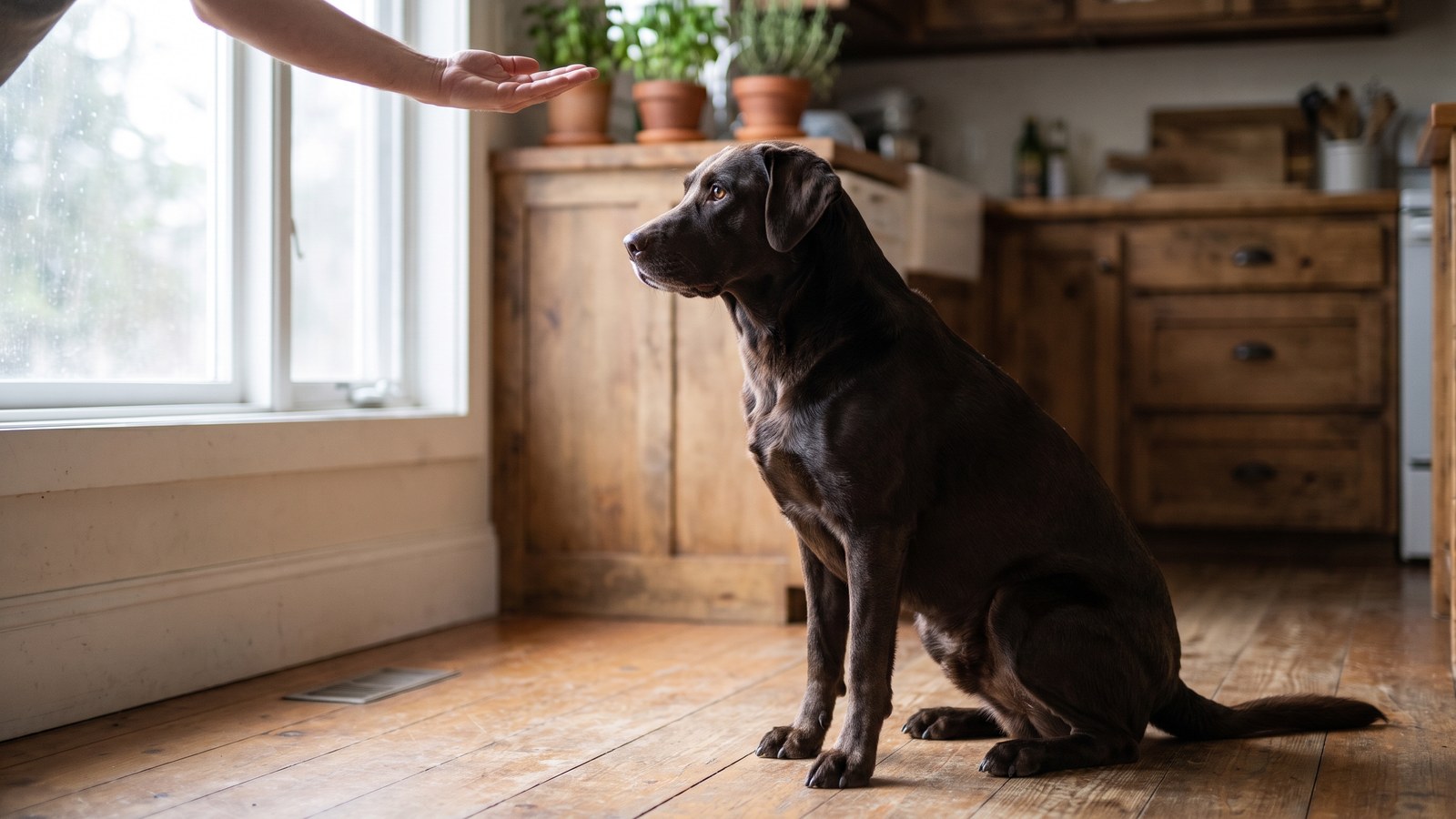
How to teach a dog to sit is a clear picture: hip on the floor, four paws planted, then a release into the next thing. Build it in order — lure, then hand signal, then word. Greeting sits as optional polish live on sit for greeting. Marker timing and how you raise the bar live on markers and rules. A nose touch that moves the dog without a sit lives on hand target. Stay here for sit from scratch as default manners.
I am Andrew Darov, a trainer from Russia. I am not a veterinarian. Sit is a useful default, not a moral exam.
How do you lure a sit without stacking hard raises?
Food at the nose, up and slightly back. Hip folds. Mark. Reward in position. Word comes last.
Quiet kitchen or living room. Dog already interested in food. Hold a treat at the nose. Move the hand up and slightly toward the dog’s rear so the head tips back and the hip folds to the floor. The moment the hip lands, mark, then deliver the food on the floor between the front paws so the head does not leap into a stand.
If the dog backs up, jumps, or spins, the lure was too high, too fast, or too far forward. Reset closer. Smaller dogs often need a gentler lean so you do not tip them off balance. Tall dogs need the hand not to float out of reach.
Two or three clean reps beat ten messy ones. End while the dog is still winning. US open kitchens and UK narrow halls change the furniture, not the order.
How do you run a short sit practice block?
- Warm up with two easy food takes so the dog is with you.
- Lure one sit. Mark. Reward on the floor between the paws. Pause.
- Repeat until the hip drops for a tiny hand motion. Then use an empty hand on the same path; food arrives after the mark from the other hand.
- When the signal is cheap, say the word once, then give the signal you already own. Do not chant the cue.
- Stop while the dog is still successful. Log lure → signal → word so tomorrow is clear.
The skill fails when owners name the cue on guesswork, or when they reward a half-squat that turns into a jump the moment a guest appears.
How do lure, signal, and word stay in order — and where does greeting sit live?
Think of three layers. Lure teaches the body. Hand signal keeps the picture when food leaves the teaching hand. Word names a picture the dog already offers. Stacking the word first is how you get a cloudy cue and a dog who stares at your mouth.
Hand target is a different skill: nose to palm to move the dog. You can use a target later to set up positions, but early sit usually needs the up-and-back lure so the hip folds. Markers and rules own when you mark and how you raise the bar — keep sessions short and winnable.
Sit for greeting is not this page. Once four paws on the floor is already cheap at the door, an optional planted sit during hellos lives on sit for greeting. Jumping management stays on jumping up. Teach everyday sit here in a quiet room first. Real front doors are a final exam, not lesson one.
Default manners uses. Sit before the lead or leash clips on, sit before a food bowl lands, sit at a kerb while you check the street. Those are short holds with a clear end — not a stare-down. Long holds and distance belong with stay work on how to teach a dog to stay once sit is cheap.
What are the usual failure modes?
- Cloning sit for greeting. Door hellos live there; sit from scratch lives here.
- Saying the word before the picture exists. Lure, then signal, then word.
- Rewarding a jump for the hand. Deliver on the floor. Reset.
- First practice at the front door. Quiet room first.
- Pushing the rump down. Teach the fold; do not force the hips.
- Using sit to fix panic or pain. Manage, ask your vet if movement looks wrong, get qualified help.
Keep this tab next to sit for greeting, markers and rules, and hand target. One owns greeting polish, one owns the mark and the bar, one owns the nose touch, one owns sit from scratch — that is how the skills cluster stays useful. If hips or movement look wrong, ask your vet.
Questions on this page
How do you teach a dog to sit?
Lure a food hand from the nose up and back so the hip folds to the floor. Mark and reward in position. Fade the lure into an empty hand signal, then add the word. Short clean reps beat long failed ones. Greeting use of sit lives on sit for greeting.
Should you say “sit” before the dog understands the picture?
No. Build the picture first with a lure, then a hand signal, then attach the word when the hip already drops. Naming a guess early creates a cloudy cue. Marker timing and how you raise the bar live on markers and rules.
How is teach sit different from sit for greeting?
This page owns sit from scratch as default manners. Sit for greeting owns an optional planted sit during hellos once four paws on the floor is already cheap. Door jumping management lives on jumping up. Cross-link; do not clone.
What if the dog stands or jumps for the food hand?
The lure is too high, too fast, or too far forward. Keep the hand close to the nose, move up and slightly back, and reward on the floor between the paws so the head does not leap. Reset. Shorter reps.
When is sit the wrong DIY project?
A stiff freeze, inability to take food, pain when the hips bend, or a dog who only “sits” by slamming into people. Manage, check the body with your vet if movement looks wrong, and get qualified help. This page is a manners ladder, not a clinic.
Work with me
A $150 consultation or $500 monthly curatorship. Opens WhatsApp to Andrew.