
Expert Advice · Skills · 14 min read
How to teach a dog to stay
Build stay in three lanes — time, space, distraction — one raise at a time. Release ends the picture. Not a second down-stay-vs-place clone.

How to teach a dog to stay is a hold-until-you-release picture: sit or down, stillness, then a clear release. Build duration, then distance, then distraction — one lane at a time. The comparison between a free down-stay and a mat station lives on down-stay versus place. Mat send-and-park lives on place. Door sill waits live on wait at the door. Stay here for teaching stay from scratch.
I am Andrew Darov, a trainer from Russia. I am not a veterinarian. Stay is a skill with a release, not a stare-down contest.
How do you start stay without stacking hard raises?
Seconds first. Steps second. Noise last. A release word ends every clean picture.
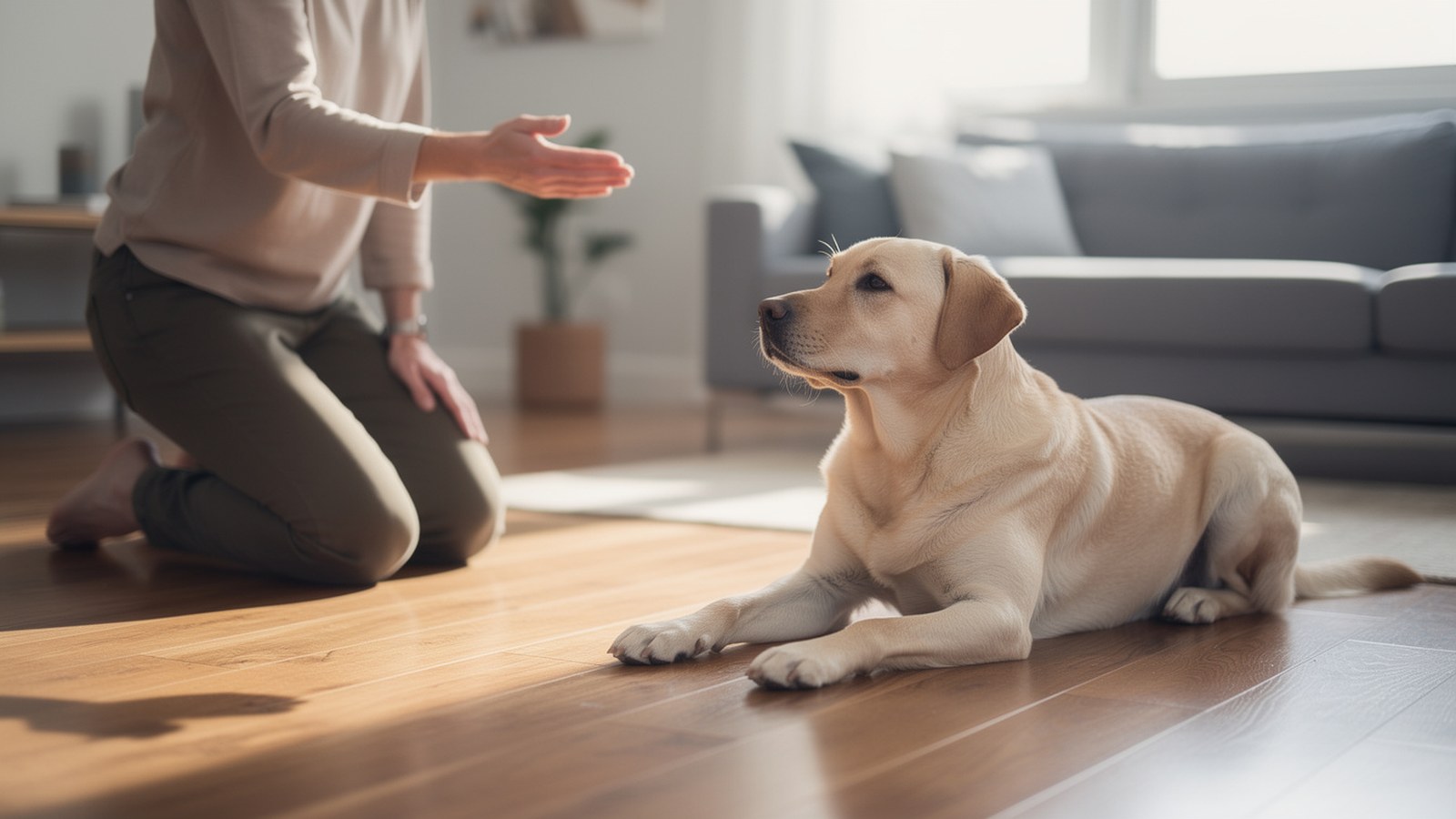
Pick a position the dog already offers — sit or down. Quiet kitchen or living room. Mark stillness and reward at the chest or on the floor so the head does not leap for your hand. Count one or two seconds. Reward again. Release with a word you will always use, then invite the dog up. Repeat until those seconds are boring.
Only then take one step back, pause, return, reward in position, release. If the dog follows you, the distance was too hard — reset closer. Mild distraction (a soft sound, a person walking past at a distance) comes after time and space are cheap. Marker timing and how you raise the bar sit on markers and rules. Door manners that look like a stay but are really a sill wait stay on wait at the door.
US open-plan rooms and UK narrow halls change the hardware, not the order. Practice in short blocks after a toilet break, not when the dog is exploding with evening energy. A tired, empty dog learns a hold; a wired dog practices breaking. A hallway that is one body wide is a reason to keep early distance tiny, not a reason to hope.
How do you run a short stay practice block?
- Warm up with two easy sits or downs that already earn food.
- Ask for stay. Count seconds you can win. Reward in position at least once before release.
- Release on your word. Pause. Reset. Do not turn the release into a chase game.
- When seconds are cheap, add one step away and return. Still reward in position.
- Stop while the dog is still winning. Log which lane you raised so tomorrow is honest.
The skill fails when owners add open door plus guest plus food in hand in one jump, or when they never teach a release and the dog invents its own end.
How do duration, distance, and distraction stay separate?
Think of three lanes on a road. Duration is how long the dog holds still while you stand close. Distance is how far you move while the clock stays short. Distraction is mild noise or motion while time and space stay easy. Crossing all three lanes in one rep is how stays collapse at the front door.
A useful week-one map: three clean days of five-second stays with you one step away, then five seconds at three steps, then five seconds at three steps with a soft clap across the room. If the dog breaks, drop one lane — usually distance — and rebuild. Food lands in position so the head does not leap. The release word is the same every time.
Sit stay versus down stay. Either position is fine if the dog already offers it. Down often holds longer for long guest waits; sit is handy for short pauses. Do not switch mid-rep. If you want a mat address as well, that is place, taught as a send-to-station skill with its own cue. If you need to know which job you are hiring, read down-stay versus place — then come back here to build the hold.
Where not to start. Real front doors, kids running, and food on the counter are final exams. Kitchen quiet first. Then a known person walking past at a distance. Then a staged latch sound with the dog already on a lead. Door sill waits that look like stays but mean “feet behind the line until release” live on wait at the door.
What are the usual failure modes?
- Cloning down-stay versus place. Job comparison lives there; teach-from-scratch lives here.
- Stacking time, space, and noise. One raise per block.
- No release word. The dog guesses; you get random stand-ups.
- Rewarding a self-release. Calm reset instead.
- First practice at the front door. Wrong desk — build in a quiet room first.
- Using stay to fix panic. Panic needs management and qualified help, not a louder cue.
Keep this page next to down-stay versus place, place, and wait at the door. One owns the comparison, one owns the mat address, one owns the sill, one owns stay from scratch — that is how the skills cluster stays useful.
Questions on this page
How do you teach a dog to stay?
Start with a sit or down the dog already offers. Mark stillness, reward in position, add seconds before you step away. Raise duration, then distance, then mild distraction — never all three at once. End every rep with a release word.
What is a release word and why does it matter?
A release (for example “free” or “ok”) tells the dog the stay is over. Without it, the dog guesses when to get up, and the picture falls apart. Say the release, then invite movement. Do not reward a self-release.
How is stay different from place or a free down-stay?
Stay is the hold-until-release rule on a sit or down wherever you asked. Place is a send to a mat station. A free down-stay comparison lives on down-stay versus place. Door sill waits live on wait at the door. This page owns teaching stay from scratch.
How long should early stay sessions be?
Short and winnable. A few clean reps of three to five seconds beat one failed thirty-second attempt. End while the dog is still successful. Markers and how you set the bar live on markers and rules.
When is stay the wrong DIY project?
Panic when you step away, inability to take food, a stiff freeze, or a dog who explodes the moment distance appears. Manage, check rest and pain, and get qualified help. This page is a manners ladder, not a clinic.
Work with me
A $150 consultation or $500 monthly curatorship. Opens WhatsApp to Andrew.