Expert Advice · Behavior · 9 min read
Halloween trick or treat with a dog: a calm door plan
Trick or treat means hours of knocks, masks and an open door. Set up the room, move the doorbell outside and keep the sweets high, and the evening gets much easier for your dog.

Halloween trick or treat with a dog goes best when you plan the door before it starts: a gate or quiet room for your dog, the sweet bowl moved outside so the doorbell rings less, and every sweet and wrapper kept out of reach. Training the doorbell itself is a longer job that lives on how to stop a dog barking at the door. This page covers the one evening, 31 October, when management does the heavy lifting.
I am Andrew Darov, a dog trainer. I am not a veterinarian. This is a behavior page about setting up the house for a busy night.
What makes Halloween hard for dogs?
Plan for three hours of knocks and an open door, and your dog spends the evening behind a gate with a chew.
Most dogs hear a knock a few times a day. On Halloween it can be dozens of times in an evening, often with children shrieking, people in masks and the front door standing open while sweets are handed out.
That mix causes four problems:
- Barking and alarm. Every knock starts the dog up again, and there is no time to calm down in between.
- Strange shapes. Masks, capes and hats can make people look odd to a dog, family members included.
- Escape. An open door, a busy street and an excited dog is how dogs get lost on 31 October.
- Sweets everywhere. Bowls by the door, bags on the floor and wrappers in coat pockets.
Fireworks in some areas add a fifth. If your dog is afraid of bangs, run the fireworks fear plan alongside this one.
How do you plan the evening?
Set the room up a few days early and keep the evening timeline simple.
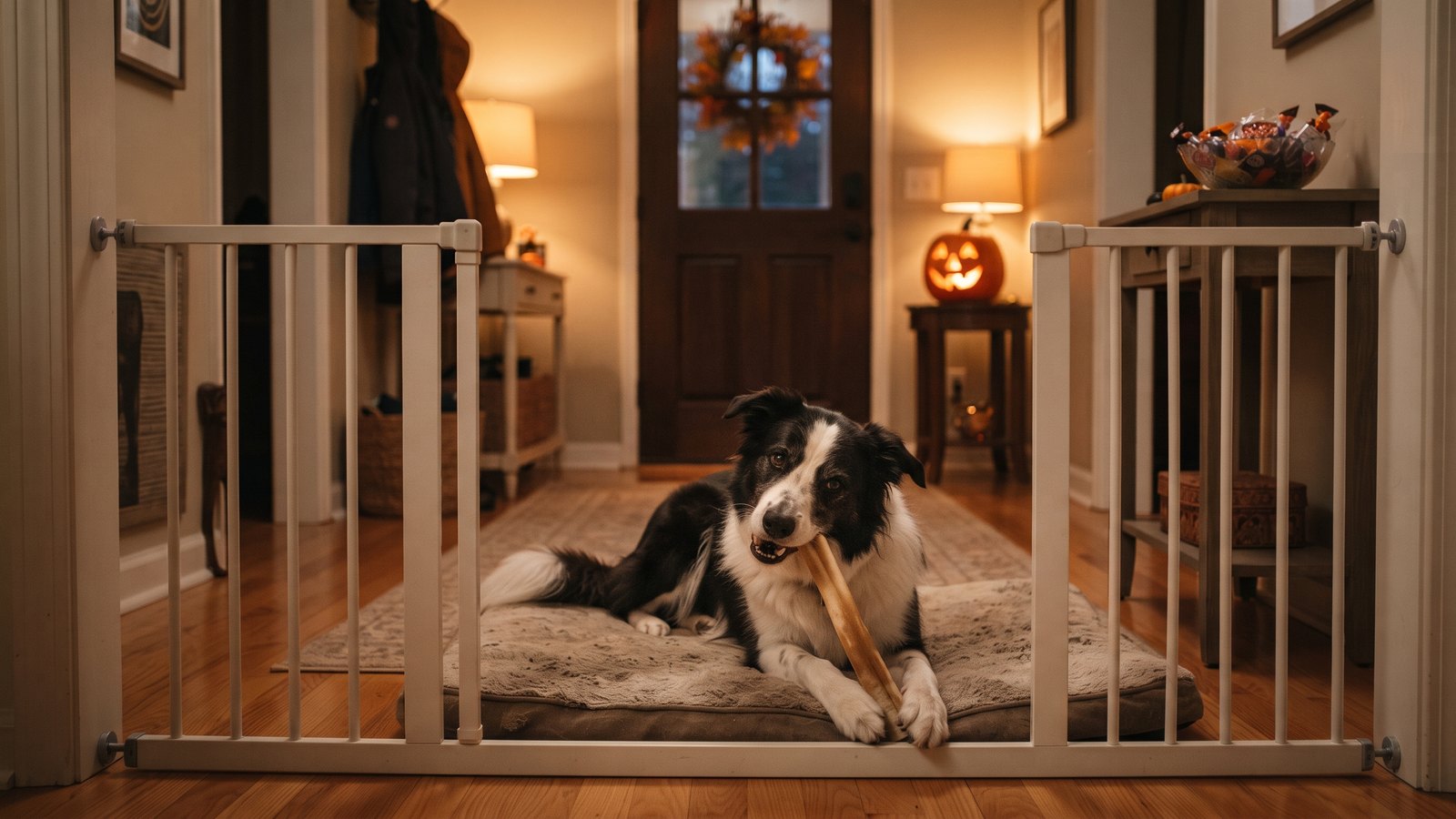
- A week before: put a gate across the hallway or choose a quiet back room. Feed meals and give long chews there so your dog already likes the space. Setup ideas sit on baby gates.
- Afternoon: a longer walk with plenty of sniff time while it is still light. Trick-or-treaters start around dusk in most US and UK streets.
- Early evening: dinner early, then a toilet trip on lead in the garden or yard before the first knock.
- From dusk: your dog goes into the safe room or behind the gate with a long chew or a stuffed food toy. Turn on a radio or the TV at normal volume to soften the noise from the door.
- Every half hour: look in, refresh the chew, and keep your voice calm. If your dog is settled, leave it be.
If your dog already loves a crate, the crate in a quiet room works too. A crate that still feels like a punishment is a poor choice for a loud night.
Where should your dog be when the door opens?
Out of sight of the door, with at least one closed door or gate between the dog and the street. A gate across the hall stops the dashing and the jumping. A back room with the door shut also cuts most of the sound.
If your dog has to stay near the door, keep a lead on and stand on it, or hold it short, before you open up. The same rules you use for visitors apply here, just many times over. The guest entry plan covers the basics.
Check your dog’s ID tag is on the collar and your contact details on the microchip record are up to date. That takes two minutes and makes a lost dog much easier to bring home.
How do you cut down the knocking?
You have a few options. Pick the one that fits your street.
Bowl outside. Put the sweet bowl on the step or by the gate with a note. Children help themselves and the door stays shut.
Sit outside. One adult sits on the step or the drive with the bowl. Another adult stays inside with the dog. This works well for families who enjoy seeing the costumes.
Lights off. In many US and UK neighbourhoods, a dark porch or no pumpkin in the window tells trick-or-treaters to skip the house.
Doorbell off. Tape over the bell or switch it off for the night if your dog reacts to the sound more than the knock.
Halloween week is a poor time to start doorbell training, because the real thing happens too often to set up easy practice. Manage this year, then start doorbell practice in November with one knock at a time.
What about costumes, pumpkins and sweets?
Your costumes. Some dogs bark at a family member in a mask. Let your dog see you put it on, toss a treat, and take it off again. Or keep masks for outside the house.
Your dog’s costume. Optional. Try it for a few seconds on an ordinary day first and watch your dog. A tucked tail, freezing, scratching or hiding means no costume. Never leave a dog alone in one.
Pumpkins. A candle in a pumpkin on the floor sits at tail height. Use battery lights, or put the pumpkin somewhere the dog cannot reach.
Sweets and wrappers. Chocolate, sugar-free sweets and gum that may contain xylitol, and the wrappers all need to stay out of reach. Bowls go on a high shelf, children’s bags go in a closed cupboard, and you check coat pockets and the floor at the end of the night. If your dog eats any, call your vet or an animal poison line straight away, even if your dog seems fine. Keep the wrapper so you can say what it was. See when to call the vet.
How do you help your dog settle afterwards?
When the knocking stops, give your dog a calm half hour before bed. A scatter of food on a rug for a sniffing game, a chew, and low lights help the body come down. Take the last toilet trip on lead, because late fireworks or passing groups can still spook a dog in the garden or yard.
If your dog stays restless and alert, the settle after guests page has more ways to bring the evening to an end. Expect a sleepier dog the next day.
When does your dog need more than a plan?
Some dogs shake, pant, hide or refuse food for hours, even in a quiet back room. Others growl or snap when the door opens. That is more than a busy evening. Keep the management in place, ask your vet about the fear early, well before next year’s Halloween or Bonfire Night, and get help from a qualified trainer or behaviour professional for the growling.
What are the usual mistakes?
- Holding the dog at the door “to meet the children”. Excited dogs jump, scared dogs snap, and both can slip out.
- Setting up the room on the night. A new space on a loud evening feels like being shut away. Start a week early.
- Sweet bowls on low tables. Dogs find them within minutes. Keep everything high or closed away.
- Telling the dog off for barking at every knock. Your voice joins the noise. Move the bowl outside instead.
- Off-lead toilet trips after dark. One firework or group of teenagers and the dog is over the fence.
- Trying to train the doorbell this week. Manage now and train in a quiet month.
Use this evening plan with barking at the door for the long-term training, baby gates for the setup and settle after guests for the wind-down. More behaviour guides sit on the behavior hub.
Questions on this page
How do I keep my dog calm on Halloween?
Plan the evening before it starts. Give a long sniffy walk in daylight, feed dinner early, and set up a quiet room or a gated area away from the front door with a long chew and some background sound. Move the sweet bowl outside so the doorbell rings less often.
Should I leave the sweet bowl outside?
For many homes it is the easiest fix. A bowl on the step, or one adult sitting outside with it, keeps the door closed and the dog away from the noise. If you do open the door, put your dog behind a gate or in another room first.
Is it a good idea to put my dog in a costume?
Only if your dog stays relaxed in it. Skip it if your dog freezes, scratches at it, hides or tucks the tail. Keep the face, ears and legs free, check it does not press on the throat, and take it off before the dog is left alone. A bandana is plenty for most dogs.
What should I do if my dog eats Halloween sweets or chocolate?
Call your vet or an animal poison line straight away, even if your dog seems fine. Tell them what was eaten, when, and keep the wrapper. Chocolate, sugar-free sweets and gum that may contain xylitol, and the wrappers themselves all need a call. Prevention is simple: keep every bag and bowl out of reach.
Should my dog greet trick-or-treaters?
Most dogs are better off staying away from the door. Masks, costumes, squeals and a door that keeps opening are a lot for any dog, and friendly dogs can still jump up or slip out. Save greetings for a normal day with one calm visitor.
Work with me
A $150 consultation or $500 monthly curatorship. Opens WhatsApp to Andrew.