
Expert Advice · Expert Advice · 8 min read
When to get a second dog: timing, space and a good match
The best time for a second dog is when the first one is settled: house trained, calm when left, easy on walks, and usually past the first year or two. Then check your time, space and budget, and pick a dog whose energy and play style fit.

The best time to get a second dog is when your first dog is settled: house trained, calm when left alone, easy on walks and relaxed with other dogs, which for most dogs means at least one to two years old. Then check that you have the time, space and budget for two, and choose a dog whose energy and play style suit your first. Once you have chosen, the step-by-step meeting plan is on how to introduce a new dog.
I am Andrew Darov, a dog trainer. I am not a veterinarian. This is a life page about planning a home with two dogs.
When is the right time to get a second dog?
Get a second dog when your first dog is easy to live with, not to fix a problem.
A second dog often learns from the first, good habits and bad ones. If your dog pulls hard on the lead, barks at the door or struggles when left alone, the new dog may pick that up too, and now you have two dogs to work on. So the first question is about the dog you already have:
- House trained? No accidents in the house for several months.
- Calm when left? Can stay home alone for a normal stretch without barking, chewing or messing.
- Manageable on walks? Walks on a loose lead most of the time and comes back when called in safe places.
- Relaxed with other dogs? Greets and plays nicely, can share space without guarding food, toys or beds.
Most dogs reach this point after the puppy and teenage months, often somewhere between one and two years old. Some take longer. That is fine. There is no deadline.
Think about the other end of life too. If your dog is a senior, a lively puppy may be too much for it. Some older dogs enjoy a calm adult companion; others prefer to be the only dog. Watch your dog with visiting dogs before you decide.
Will a second dog keep my first dog company?
Sometimes, but not always. Many dogs enjoy a companion. But a dog who barks or panics when left alone is usually upset about being apart from its people, and another dog in the house often does not help. Work on time alone first. The how long can a dog be left alone page has the basics.
A second dog is also not a cure for a bored dog. Two bored dogs make more trouble together. A good companion adds to a home where the first dog already gets enough walks, sniffing, play and training.
What should you check before getting a second dog?
- Check your first dog. Go through the list above honestly. If two or more points are shaky, put the time into your first dog for a few more months. You will thank yourself later.
- Check your time and budget. Two dogs means two sets of walks (often separate at first), two sets of training, two vet visits, two lots of food, grooming, insurance and care when you travel. Write down what a normal week looks like with two dogs and what your monthly costs would be.
- Check your home. You need room for two beds in different spots, separate places to eat, and a way to split the dogs with a gate or a closed door. In a small flat or apartment, a calm adult may suit better than a young, bouncy dog. See feeding two dogs for how to set up food stations.
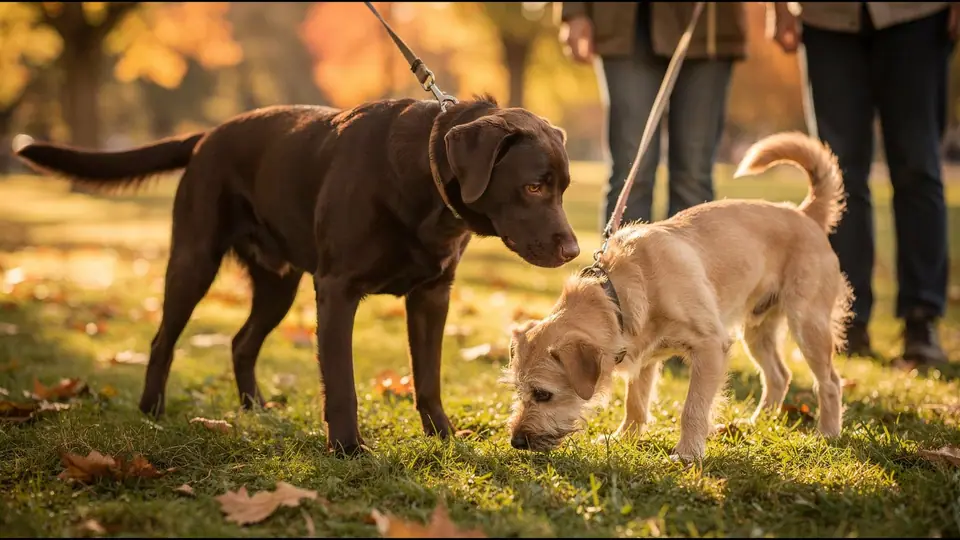
- Look for a good match. Size, energy and play style matter more than breed. A gentle older dog may not enjoy a puppy that hangs off its ears. A rough player may be too much for a small or shy dog. Ask the breeder or rescue about the new dog’s behavior with other dogs, and arrange to meet with your dog on neutral ground, such as a quiet park, before you commit.
- Plan the first weeks. Plan calm introductions, separate meals and chews, short supervised time together and time alone with each dog every day. Keep visitors and big changes to a minimum for the first weeks.
Is a puppy or an adult dog the better second dog?
Both can work. A puppy can grow up with your first dog, but it means a few months of toilet training, chewing and broken sleep, and your first dog has to put up with a lot of puppy energy. Puppies and adults need clear play rules: short sessions, breaks, and an adult dog who is allowed to walk away. See puppy and adult dog play.
An adult dog from a rescue or breeder often has a known character. You can see how it behaves with other dogs before it moves in. That can make the match easier, especially if your first dog is older or not sure about puppies.
Two puppies at once is the hardest option for most homes. Each puppy needs its own training and its own time with you, and littermates can become so focused on each other that training gets harder.
What are the usual mistakes?
- Getting a second dog to fix a problem. Barking, separation trouble or pulling on walks usually stay, and the new dog may copy them.
- Choosing on looks alone. Energy and play style decide whether two dogs get on.
- No meeting first. Meet on neutral ground before the new dog moves in.
- Shared bowls and chews from day one. Feed apart and give chews in separate spots, at least at first.
- Always walking them together. Each dog needs its own walks and training time, especially in the first months.
If your first dog has a history of fights with other dogs, guards food or toys seriously, or is very worried around other dogs, talk to a qualified trainer before you get a second dog. If either dog is injured in a scuffle, see your vet.
A second dog works best when the first is settled, you have time and space for two, and the dogs are a good match. Next steps: how to introduce a new dog for the first meetings, feeding two dogs for meal setup, and puppy and adult dog play for play rules. More on the life hub.
Questions on this page
What is the best age gap between two dogs?
Many trainers suggest waiting until the first dog is at least one to two years old and has good everyday manners. A bigger gap also means the dogs are less likely to get old at the same time.
Will a second dog fix my dog's separation problems?
Usually not. Most dogs who struggle alone are upset about being apart from their people, not about being without a dog. Work on time alone first, then think about a second dog.
Should I get a male or a female second dog?
Many pairs of a male and a female get along well, but personality, energy and play style matter more than sex. Meet the dog with your dog before you decide.
Is it a good idea to get two puppies at once?
Two puppies at once is a lot of work. Each needs its own training, walks, sleep and toilet trips, and they can end up more focused on each other than on you. One at a time is easier for most homes.
How do I know if my dog wants a companion?
Look at how your dog behaves with other dogs: relaxed greetings, play that both dogs enjoy, and an easy time sharing space. A dog who is worried around other dogs or guards toys and food may be happier as an only dog.
Work with me
A $150 consultation or $500 monthly curatorship. Opens WhatsApp to Andrew.