Expert Advice · Reactivity · 9 min read
Frustrated greeter dog on leash: calm pass-bys
Some dogs bark and lunge on lead because they want to say hello, not because they are scared. Take a break from on-lead greetings, work at a distance where your dog can still eat, and reward calm looks and easy pass-bys.
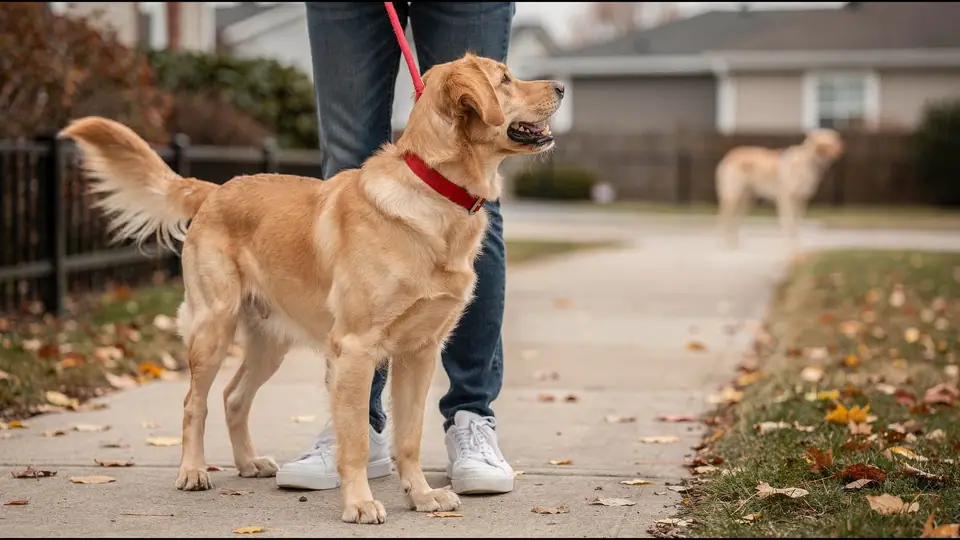
A frustrated greeter dog on leash barks, whines and lunges because it wants to say hello, and the lead stops it. The fix is to take on-lead greetings off the table for a while and teach calm pass-bys at a distance your dog can handle, with plenty of rewards. Over time the other dog becomes a cue to check in with you rather than a reason to pull. Dogs that bark and lunge from fear, or a mix of fear and excitement, are covered on leash reactivity to dogs; this page is about the dog that wants to meet.
I am Andrew Darov, a dog trainer. I am not a veterinarian. This is a reactivity page about lead manners around other dogs and people.
What does a frustrated greeter look like?
The dog is pulling towards the other dog, not away from it. That tells you the lunge is about wanting to get there.
Common signs:
- a loose, wiggly body leaning forward into the lead
- a high tail, often wagging fast
- whining, yelping or a high-pitched bark
- pulling harder as the other dog gets closer
- calm or friendly once it reaches the other dog, or off lead
Compare that with a fearful dog, which tends to stiffen, freeze, back away, tuck the tail, raise the hair along the back or bark deep and then retreat. Many dogs show some of both. Some frustrated greeters are friendly at first, then get snappy when the greeting is clumsy and tight on two short leads. If greetings often end in growling or a scuffle, treat it as a reactivity problem and read leash reactivity to dogs first.
Why does a friendly dog lunge on leash?
Usually because greeting on lead worked in the past. A puppy that met every dog on the street learned that dogs mean play, and that pulling gets it there. As the dog grows, the lead stays the same length and the excitement gets bigger. When the lead stops it, frustration builds into barking and lunging.
People make it stronger without meaning to. Each “oh, he just wants to say hi” that ends in a greeting rewards the lunge. So does letting the dog pull to a friend in the park.
Pain can play a part too. A dog that is sore may tolerate less. If the lunging started suddenly, or came with stiffness or limping, ask your vet. See when reactivity is pain.
How do you teach calm pass-bys?
The aim is a dog that sees another dog, looks back at you and walks on. Keep sessions short, five to ten minutes, on quiet routes.
- Pause on-lead greetings. For a few weeks, no meeting dogs or strangers on lead, for everyone who walks the dog. Cross the road, step into a driveway or turn around. A friendly “sorry, he is in training” is enough.
- Find the working distance. This is the distance where your dog notices the other dog but can still eat, hear its name and take a step away with you. It might be across a field at first. The on-leash threshold page explains how to find it and when to leave.
- Reward the look and the turn back. When your dog looks at the other dog, mark with “yes” and feed. After a few repeats, wait a second and your dog will often turn to you on its own. Mark and feed that. The full steps are on engage-disengage.
- Add pattern games and curves. A simple counting game (“one, two, three”, treat on three) gives the dog something easy to do as another dog passes. See pattern games for reactive dogs. Walk in a wide curve past the other dog instead of straight at it.
- Bring greetings back as a reward. Once your dog can pass calmly at a normal distance, let it say hello now and then, only on a loose lead, only with a calm dog you know, and only for about three seconds. Then call your dog away with a treat. If the lead goes tight on the way in, turn and walk away and try again later.
Move closer only when your dog is easy at the current distance for several sessions. If the dog starts barking, you are too close. Add distance next time instead of pushing through.
What helps on real walks?
Training sessions are short. Walks happen every day, so plan them too:
- Choose quiet times and routes. Early morning, late evening and wide paths give you room to curve.
- Carry good food. Small, soft treats your dog loves. Dry biscuits often lose to another dog.
- Use a well-fitted harness. It lets you turn the dog without pressure on the neck. See harness fit check.
- Have an exit ready. A quick, cheerful U-turn gets you out of tight spots, such as a dog appearing round a corner.
- Keep the lead loose when you can. A tight lead can build frustration. Practise loose leash walking away from other dogs.
On a narrow UK pavement you may need to cross, wait behind a parked car or step into a gateway. On a wide US sidewalk or suburban street, use the space to curve wide.
Can a frustrated greeter still play with other dogs?
Yes, and it often helps. Social time works better off lead, in a safe place, with dogs you know: a friend’s calm dog in a garden or yard, or a planned walk side by side that ends with play in a fenced area. Meeting needs this way means the dog is less desperate to reach every dog on the street.
The same idea applies to people. If your dog lunges to greet strangers, pause those greetings too, and let visitors at home greet the dog only when it has four paws on the floor. See sit for greeting.
When do you need qualified help?
Get help from a qualified trainer or behaviour professional who uses reward-based methods if:
- greetings end in growling, snapping or fights
- your dog turns and grabs the lead, your arm or your leg when frustrated
- your dog cannot take food outside at any distance you can find
- you are being pulled over or cannot hold the dog safely
- the lunging started suddenly, which can point to pain. Ask your vet.
What are the usual mistakes?
- Letting “just this one” greeting happen. One person allowing greetings keeps the lunge alive.
- Working too close. If your dog cannot eat, it cannot learn. Add distance.
- Telling the dog off for lunging. It adds stress and often makes the next pass worse.
- Walking straight at other dogs. Head-on passes are the hardest. Curve wide.
- Greeting on two tight leads. Tight leads and face-to-face meetings are where scuffles start.
- Only training on walks. Practise the look-and-turn at easy distances first, then take it out.
Start with on-leash threshold to find your working distance, engage-disengage for the look-and-turn, and leash reactivity to dogs if fear is part of the picture. More on the reactivity hub.
Questions on this page
What is a frustrated greeter dog?
A frustrated greeter is a dog that pulls, whines, barks or lunges on lead because it wants to reach another dog or person and the lead stops it. The body is usually loose and forward, with a wagging tail and high-pitched noise. Off lead or once it reaches the other dog, it is often friendly.
How can I tell frustration from fear on leash?
A frustrated dog leans forward, wiggles, whines and tries to close the gap. A fearful dog often stiffens, freezes, backs away, tucks its tail or barks deep and then retreats. Many dogs show a mix. If you are unsure, or greetings often end in a scuffle, treat it as a dog-to-dog reactivity problem and get qualified help.
Should I let my frustrated greeter say hello to stop the lunging?
Not for now. Every lunge that ends in a greeting teaches the dog that pulling and barking work. Pause on-lead greetings for a few weeks while you teach calm pass-bys. Later, greetings can come back as a reward for a loose lead, with dogs you know.
How long does it take to fix a frustrated greeter?
Many dogs show calmer passes within a few weeks of daily short sessions, if the greetings stop at the same time. Busy routes, long gaps between sessions or one person still allowing greetings slow it down. Progress comes in steps, with good and bad days.
Does my frustrated greeter need to meet other dogs?
Social time is fine, but it works better off lead in a safe place with dogs you know, such as a friend's calm dog in a garden or yard. That meets the need to play without teaching the dog to drag you towards every dog on the pavement or sidewalk.
Work with me
A $150 consultation or $500 monthly curatorship. Opens WhatsApp to Andrew.