
Expert Advice · Puppy · 13 min read
Wire vs plastic crate: criteria comparison for puppies
Compare jobs, not shopping lists. Visibility, travel shell, chew risk, cleaning, and divider. Introduction still lives on crate training.

Wire versus plastic is a criteria comparison, not a “best crate 2026” shopping article. Crate training owns introduction, protest versus panic, and the open-door start. Crate size owns measurement and the divider. Crate cover owns fabric as a dimmer. This page only compares shell jobs: visibility, travel shape, chewing, cleaning, and how the divider usually fits.
I train on month-plus residential stays from Russia. I am not a veterinarian. No affiliate crate links, no brand scorecards, no fake reviews.
This is a puppy decision page. Nights stay on crate training at night. Duration ceilings stay on how long in a crate. Daytime freedom with a pen is the sister page playpen vs crate.
What jobs does each shell usually take?
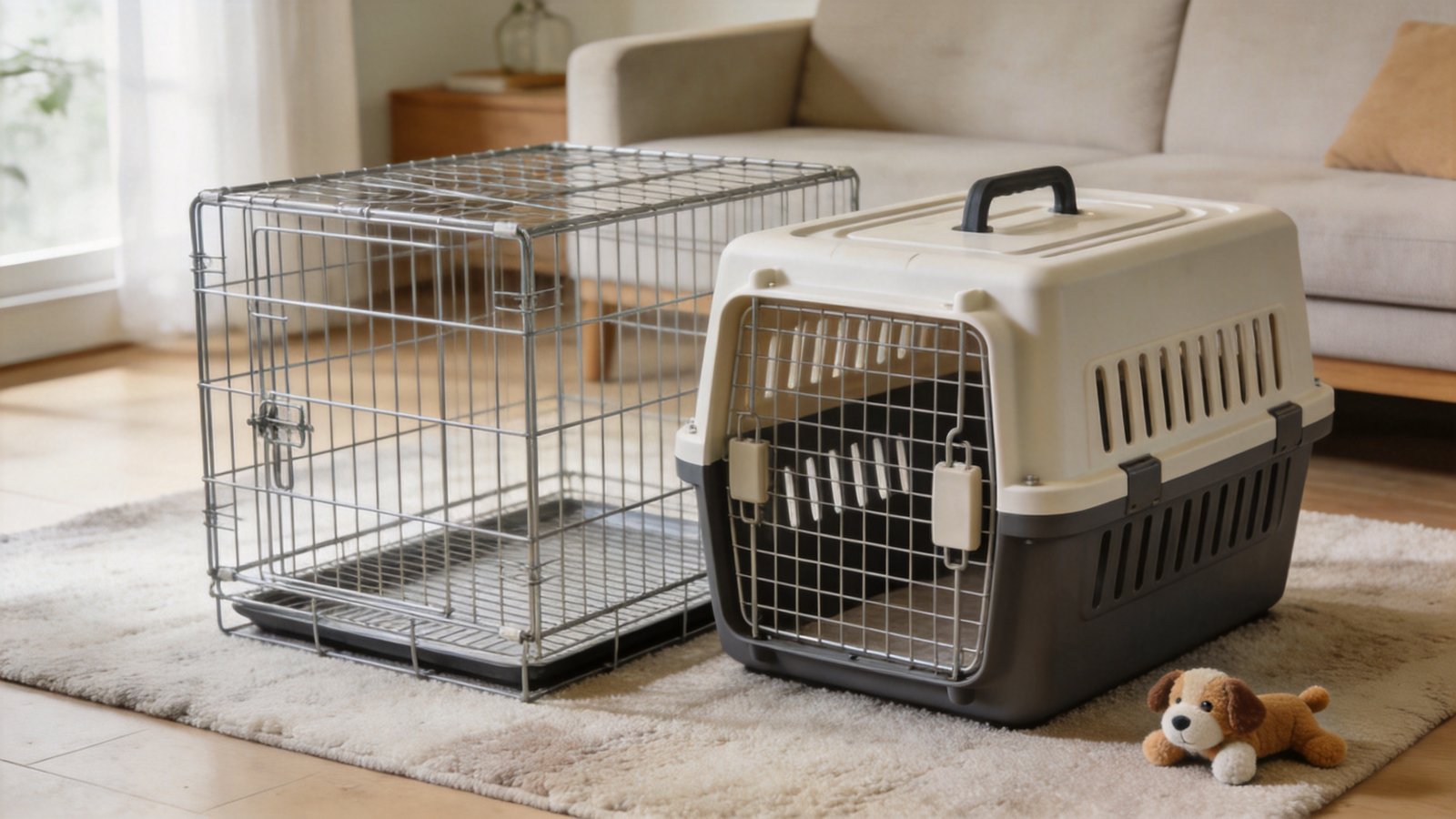
Wire: visibility, airflow, and often a slide-in divider while the puppy grows. You can see whether the dog is settled or spinning without opening the door.
Plastic (airline-style rigid shell): more visual block, a den-like feel for some dogs, and the shape many airlines and car setups expect. Hardware, ventilation holes, and metal fasteners matter for travel rules. Confirm with the carrier. Do not buy from a vibe list on a blog.
Many houses end up with both: a wire for living-room rest and a plastic shell for cars or flights. That is a budget and space decision, not a moral ranking.
Style is a job match. Introduction is still the protocol.
How do travel notes stay high level?
Read the airline. Then measure.
Cabin versus hold, soft versus rigid, and fastener rules change by route and year. A training site cannot certify your booking. If travel is the primary job, start with the airline’s written carrier page, then match length and height to your dog with the same body measures as crate size. Car rides still need the shell secured so it cannot become a projectile. That is management, not a brand endorsement.
Chewing, cleaning, divider?
Chewing: heavy mouths bend wire grids and shred beds in plastic shells alike. Legal chews, short sessions, and not leaving a frustrated puppy unsupervised matter more than the slogan “wire is tougher.” Destroyed doors are a management fail.
Cleaning: wire trays often slide; wipe the grid separately. Plastic wipes as a tub but corner seams hold smell if you rush. Either style needs a dry, washable bed you can pull when it soaks.
Divider: common and easy on many wire kits. Some plastic models include a panel; some do not. If you bought adult size without a divider, you built a toilet foyer. Fix sizing before you argue metal versus plastic.
When is cover the real variable?
When the dog settles in a quieter visual field but spins when the room is busy.
Try cover only after the crate already works open. Airflow stays mandatory. Panic under fabric ends the experiment. Details live on crate cover. Switching from wire to plastic to “fix anxiety” without changing introduction is usually a shopping detour.
US laundry-room wire versus UK flat plastic?
US (typical): spare floor for a wire in a laundry or mud room, plastic shell for road trips. Same introduction rules.
UK (typical): tighter flats often favor one dual-use plastic shell that also fits a car boot, or a compact wire with a cover for evenings. Stairs and landings still need baby gates so the puppy is not free-ranging the cooker.
Geography changes storage. It does not change open-door meals first.
What are the usual failure modes?
- You wanted a best-of shopping list. This page compares jobs, not brands.
- You skipped crate training because the shell looked premium. Introduction still rules.
- Adult crate, no divider. Toilet foyer. See crate size.
- Cover before the dog can settle open. Dimmer later, not first.
- Airline rules from a blog. Read the carrier.
- Affiliate URLs and fake reviews. Not on this site.
Sources
AVSAB position statements on humane dog training. Crate introduction as a voluntary, reward-based rest skill is standard practice; airline hardware rules belong to each carrier’s published guidance. Paraphrased as public training standards. avsab.org/resources/position-statements/
Questions on this page
Wire or plastic crate for a puppy at home?
Match the job. Wire gives visibility and usually easier divider use as the puppy grows. Plastic (vari-kennel style) gives a den-like shell and is the common shape for many airline and car setups. Neither replaces a proper introduction on the crate-training page.
What about airline and car travel at a high level?
Many airlines require a rigid plastic-style carrier that meets size and hardware rules for the route. Rules change by carrier and cabin versus hold. Confirm with the airline before you buy. This page is not a brand review or a booking guide.
Which is easier to clean and which chews worse?
Wire trays usually slide out; plastic shells wipe as one piece but seams can hold smell. Heavy chewers can bend wire doors or destroy soft beds in either style. Management and legal chews matter more than the metal-versus-plastic slogan.
Do I still need a divider and correct size?
Yes. Measure the body and use a divider so the puppy can stand, turn, and lie down without a toilet foyer. See crate size. Style does not cancel sizing.
When does a cover matter more than wire vs plastic?
When visual arousal, not shell material, is the problem. A cover is a dimmer after the crate already works. See crate cover. Panic under fabric is a stop, not a style upgrade.
Work with me
A $150 consultation or $500 monthly curatorship. Opens WhatsApp to Andrew.