
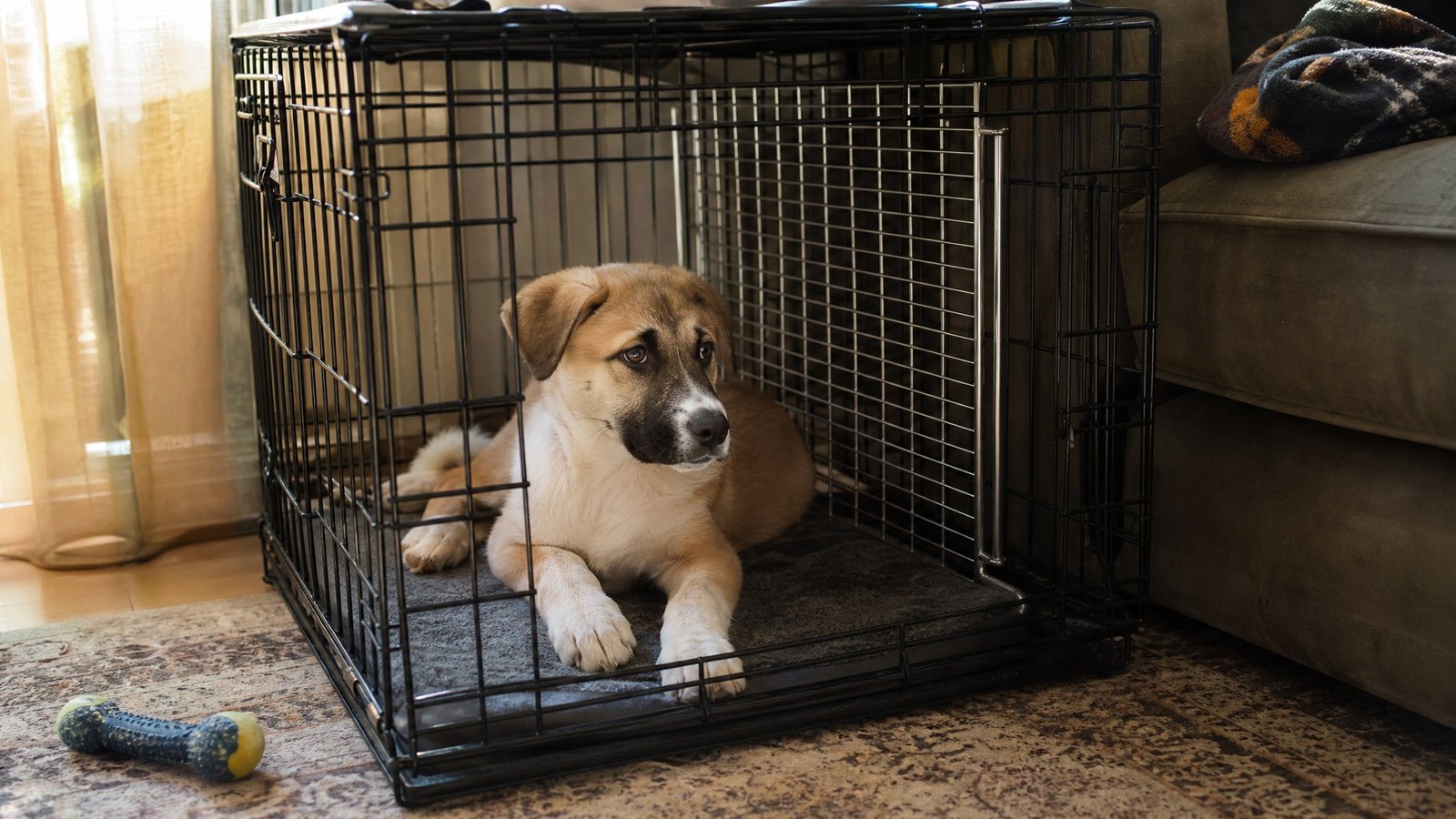
Expert Advice · Puppy · 13 min read
Puppy crate size: measure and use a divider
Adult size with a divider, not a foyer. Recheck when the body jams — not when a chart says month four.

A growing puppy needs a crate sized to the body in the box today, not to the adult you hope to have next year. Stand without a crouch, turn a full 180°, lie on one hip. Extra floor is a toilet corner. If you bought adult size, install the divider and move it when the body is jammed — not when a chart says month four.
This page owns measuring, the divider, when to upsize, and too-small versus too-large. Open-door introduction and protest versus panic live on crate training. Hours live on crate duration. Nights live on crate training at night. Toilet corners live on potty training.
On the boarding floor the pattern repeats: a full-length adult crate that smells of urine at the far end, or a travel carrier jammed into home-nap duty. The fix is a tape measure and a panel that got installed — not a new brand.
What size crate does a growing puppy need?
One that fits the body today. Stand without a crouch, turn around, lie on one hip. That is the working floor. Extra length is a toilet corner, not a growth gift.
Buy for the adult dog if you must, then block the unused length with a divider. Live in the puppy end. A second smaller crate is fine if you will swap it. What is not honest is a giant box “to grow into” with the divider still in the carton.
Wire versus plastic is household, not a brand contest. Wire breathes and lets the puppy see you; plastic darkens the den and travels. Either works if size is honest. A US kitchen and a UK flat hallway use the same stand-turn-lie rule.
Public overviews from the AKC and Humane World treat the crate as a den-sized rest place, not a punishment, and warn against a toilet-sized box. This page is the measuring protocol.
How do you measure a puppy for a crate?
You measure the puppy, not the furniture.
Tape from the tip of the nose to the base of the tail — not the plume. Tape from the floor to the top of the head, ears included if they stand. Add a small clearance so a stand is not a crouch and a turn is not a jam. Do not add a foyer.
US labels often speak in inches (30, 36, 42). UK shelves often speak in centimetres. Both are the outer box. Neither is a fit. A shepherd mix and a spaniel at sixteen weeks are not the same dog. Breed-to-SKU charts skip the body in front of you.
| Picture | What you see | What you do |
|---|---|---|
| Too small | Crouch to stand, hip catches on the turn, spine pressed into the door | Open the divider one slot, or move up if the roof is already short |
| Honest fit | Stand clear, full 180° turn, one hip down with a small clearance | Keep this floor. Recheck after a growth spurt |
| Too large | Three steps of floor, a far corner that stays dry while the bed stays clean | Bring the divider in until the corridor is gone |
Measure the dog in the room. Labels measure the box.
How do you use a divider as the puppy grows?
Install it on day one. Leaving it in the carton is how adult crates become toilets.
Fit so the puppy end allows stand, turn, and lie, and unused length is blocked. Do not stuff the blocked end with towels that become a corridor. Empty floor behind a solid panel is fine.
- Measure nose to base of tail and floor to top of head. Add a small clearance only.
- Buy adult size with a real divider, or an honest current size you will swap. Plastic carriers without a usable panel are a swap plan, not a “grow into it” plan.
- Fit the divider so stand, turn, and lie are possible with no corridor. Door open — you are measuring, not training duration.
- Recheck weekly and after a growth spurt. When the puppy crouches or jams a hip, move the panel one slot and test again.
- If the crate became a foyer toilet, bring the panel back until the unused end is gone. Empty before naps. See potty training.
If you have not introduced the crate yet, run the open-door introduction first. Size is not a substitute for meals inside with the door tied open.
When should you move up a crate size?
When the mechanical picture fails even with the divider fully open, or when a tall breed outgrows the roof. Until then, move the panel inside one adult crate — do not buy a new SKU every month.
Recheck after a growth spurt and whenever the puppy ducks the roof or catches a hip. Move one slot. Do not open the whole unused end because the crate “looks snug from the sofa.”
A second smaller crate you will actually swap is honest. Travel carriers are a different job — size them for the journey, and do not run home naps in a spare-room travel box. Soft fabric crates fail if the mouth is still a project. No affiliate URL here.
Overnight placement stays bedside for a new pup. Correct inches in a US garage or UK cupboard are still exile — see nights 1–7. Crate duration owns how long the door may stay shut.
What if the crate is too big or too small?
Too small: crouch to stand, jammed turn, or spine against the door. Open the divider one slot, or move up if the roof is short. Do not “toughen” a jammed puppy into liking a cell.
Too large: the puppy walks to a far corner, toilets there, and sleeps clean. That is the setup. Bring the divider in until the corridor is gone and stand-turn-lie is still true. Empty before the nap. A wet box after a skipped commute is not a size mystery — see potty training.
Washable beds only, small enough not to eat the floor. If bedding is shredded, go bare for a week. Fibre in the gut is veterinary — see not veterinary advice. If the crate is honest and still a thrashing fight, drop criteria on crate training.
What are the usual failure modes?
- You bought adult size and left the divider in the carton. Extra floor became a toilet. Install the panel today. Measure again.
- You moved the panel because the month changed. The body had not asked. Bring it back one slot. Recheck stand, turn, lie.
- You used the flight carrier as the living-room nap box. Travel size and home size are different jobs. Size each one.
- The crate lives in a US garage or a UK cupboard. Correct inches in exile are still exile. Put it where you live.
- You skipped the toilet and blamed the size. Empty first. A wet snug crate is a commute problem.
- You treated a chart as a fit. Inch and centimetre labels skip the puppy in front of you. Tape the body.
Sources
AKC crate-training overview (step by step). Humane World for Animals, “Crate Training 101.” Both treat the crate as a den-sized rest place, not a punishment, and warn against a box so large it becomes a toilet. Paraphrased as public standards, not quoted as a substitute for reading the originals. akc.org — crate training step by step · humaneworld.org — crate training 101
Questions on this page
What size crate does a growing puppy need?
One where the puppy can stand without a crouch, turn a full 180°, and lie on one hip without being jammed. Extra floor is a toilet corner. Buy adult size with a divider if you must, and live in the puppy end until the body asks for more. Measure the dog in front of you, not a breed chart.
How do you measure a puppy for a crate?
Tape from the tip of the nose to the base of the tail, not the plume, and from the floor to the top of the head. Add a small clearance so stand, turn, and lie are honest. Do not add a foyer. Manufacturer inch or centimetre labels are the outer box, not a fit.
How do you use a divider as the puppy grows?
Install the panel so unused length is blocked. The puppy end must still allow stand, turn, and lie. Recheck weekly and after growth spurts. Move the panel one slot when the puppy crouches or jams — not because the calendar turned. Leave the unused end empty, not full of towels that become a second room.
When should you move up a crate size?
When the current box fails the mechanical picture even with the divider fully open, or when a taller breed outgrows the roof. Until then, move the panel inside one adult crate. A second smaller crate is fine if you will actually swap it. Charts that map week to SKU skip the body in front of you.
What if the crate is too big or too small?
Too small means a crouch, a jammed turn, or a spine against the door. Too large means three steps of floor and a toilet corner. Shrink or open the divider until stand, turn, and lie are true and the unused corridor is gone. Empty the puppy before naps. See potty training if the box is wet after a real commute.
Work with me
A $150 consultation or $500 monthly curatorship. Opens WhatsApp to Andrew.