
Expert Advice · Puppy · 7 min read
Puppy Pad Training Schedule and How to Switch to Outdoors
Run pads on a schedule, not as an all-day option. Then outdoor becomes the paid toilet and the pad shrinks to temporary management before it goes.

Short answer
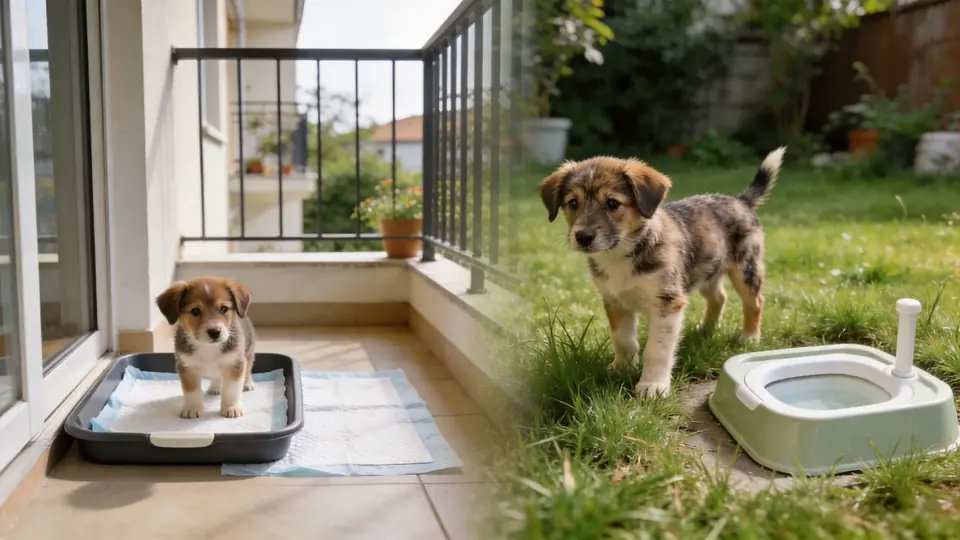
Take your puppy to one fixed pad spot on waking, after meals and drinks, every 1–2 hours while awake and every half hour during play, as VCA suggests for toilet breaks. Reward on the pad at first. Once outdoor trips are possible, reward outdoors, move the pad toward the door, keep it only for nights or absences, then remove it.
Holding it outside, then peeing indoors? See puppy won’t pee outside, then pees inside for a cause-by-cause table and the no-pee, no-freedom reset.
Indoor toilets, pads, and balcony trays buy time. They are not the long-term paid toilet if your household can reach a yard or street. This page sets the criterion: outdoor elimination is what you pay; indoor options shrink from “always available” to temporary management, then fade. Potty training owns the basic toilet loop. Balcony tray then garden owns tray-to-garden logistics. Rain potty for flats owns wet-weather trips. Do not clone those pages here.
I train on month-plus residential stays. I am not a veterinarian.
This is a puppy toilet-transition page. Cross-link potty bells when you want a signal, potty regression when dry days reverse, and crate training when overnight bladder work sits in the box.
Puppy pad training schedule
If you start on pads or a tray, run them on the same schedule as outdoor trips. VCA notes that dogs can be taught to toilet indoors on pads as well as outdoors, and that with an indoor toilet you should bring the puppy to that spot when it is time to go. A pad that is simply “available” all day teaches much less than a pad the puppy is taken to.
| When | Take the puppy to the pad |
|---|---|
| On waking | Straight away, from the night and from every nap |
| After meals and big drinks | Within a few minutes |
| While awake | VCA suggests every 1–2 hours, and every half hour during active play |
| Resting | VCA suggests at least every 4 hours, even when the puppy has been resting |
| Before bed and overnight | Last thing at night; overnight trips as needed (VCA: possibly until about 5 months) |
- One pad spot. Keep it in the same place, away from the bed and food. Pads all over the floor teach that any soft surface will do.
- Pen set-up when you go out. VCA describes an exercise pen with a resting spot, such as a crate, and a toilet surface such as a pad or artificial turf for puppies left longer than 3 hours.
- Reward on the pad, at first. Praise and a treat as the puppy finishes, as AKC advises for any correct toilet spot. Once outdoor trips are possible, the reward moves outside (see below).
- Clean misses with an enzymatic cleaner so the smell does not mark a new toilet.
From pads to outdoors: a week-by-week plan
| Week | Pads | Outdoor trips |
|---|---|---|
| 1 | One fixed pad spot | Outdoor try after waking and after meals, whenever you can reach a toilet place |
| 2 | Move the pad a little closer to the door you use | Outdoor trips at every high-probability moment; outdoor pees get the best rewards |
| 3 | Pad only overnight or when you are out | Outdoor is the main toilet in the day |
| 4+ | Remove the pad once mornings are dry and outdoor trips are reliable | Keep the same trip times; stretch gaps slowly |
Most homes need longer than four weeks; go at your puppy’s pace and step back a week after a run of accidents. Flats starting on a balcony tray can follow balcony tray to garden.
What is the paid toilet criterion?
Outdoor eliminate gets food, praise, or a short play beat. Pad eliminate gets management cleanup, not a party.
If both surfaces pay equally, many puppies keep the easier indoor option. That is not stubbornness; that is economics. Name one paid surface and stick to it once outdoor access is real.
Outdoor pays. Indoor manages gaps — then fades.
How do you run the outdoor loop without flooding the flat?
Wake, meal, nap end, play end: door or lift ritual, short wait, pay outdoor eliminate, return indoors for the next rest block.
- Pick one outdoor surface you can reach daily (yard grass, street verge, communal garden strip).
- On every high-probability moment, go there before the puppy starts circling on the pad.
- Pay the outdoor eliminate richly for the first weeks of the shift.
- If you miss the window, clean the indoor accident without drama; do not add pad parties.
- Shrink pad area weekly once outdoor hits are consistent — fewer sheets, smaller tray, closed old toilet rooms.
Management before manners still applies: baby gates and closed doors stop unpaid rehearsal of the hallway carpet.
US yard versus UK flat street?
US (typical): backyard or side strip after wake and meals. Keep a short leash so the puppy does not rehearse fence running as the toilet cue. Pad use often shrinks faster because access is cheap.
UK (typical): lift keys, stairs, or street verge on lead. Timing must be tighter; a balcony tray may remain temporary management longer. Still fade tray pay once street eliminates are reliable in dry weather — rain logistics stay on rain potty for flats.
Neither layout makes two equal paid toilets a good plan.
What are the usual failure modes?
- Equal pay on pad and grass. Indoor wins on convenience.
- Sudden pad removal with no outdoor loop. Accidents, not preference.
- Cloning rain or balcony pages. Weather and tray ladders live elsewhere.
- Overnight ignore-crate-crying advice. Not this site’s protocol.
- Treating regression as “stubborn.” Check schedule, access, and vet when medical signs appear.
Sources
AVSAB position statements on humane dog training. Management of the environment and reward-based toilet training are standard practice. Paraphrased as public training standards. avsab.org/resources/position-statements/
- VCA Animal Hospitals — Housetraining for Puppies and Dogs
- AKC — How to Potty Train Your Puppy and Prevent Accidents Indoors
- AKC — Puppy Potty Training Timeline and Tips
Pad and indoor-toilet use, trip frequency and pen set-ups follow VCA; reward timing and cleaning follow AKC. The weekly pad-to-outdoor plan is an editorial planning aid. Sources checked 22 November 2026.
Questions on this page
When should outdoor become the paid toilet?
When you can get the puppy to a yard, street verge, or communal garden on a reliable loop and pay elimination there. Pads and trays stay as temporary management for gaps you cannot cover yet — not as equal pay forever.
How is this different from balcony-tray-then-garden?
Balcony tray then garden owns the tray-to-garden ladder for flats that start on a balcony. This page owns the criterion shift: outdoor pays; indoor fades. Rain potty for flats owns wet-weather trips without cloning full toilet training.
Do you remove pads overnight immediately?
No. Shrink access and move paid trips outdoors first. Overnight bladder work still follows potty training and night crate protocols. Sudden pad removal without an outdoor loop creates accidents, not outdoor preference.
US yard versus UK flat street trips?
US yards often allow short leash walks to grass after wake and meals. UK flats usually mean lift, stairs, or street verge on lead — same pay rule, tighter timing. Management walls still matter indoors while you fade.
What if the puppy prefers the pad forever?
You likely kept paying indoors. Stop food or praise for pad eliminates once outdoor trips are available, keep outdoor pay rich, and shrink pad surface. Medical urgency or regression needs a vet check — see potty regression.
How often should I take my puppy to the pad?
On waking, after meals and big drinks, every 1–2 hours while awake, every half hour during active play and at least every 4 hours when resting, as VCA suggests for toilet breaks.
How long does it take to move from pads to outside?
Often a few weeks or more. Move the pad toward the door, reward outdoor pees best, keep the pad only for nights or absences, then remove it once mornings are dry.
Work with me
A $150 consultation or $500 monthly curatorship. Opens WhatsApp to Andrew.