
Expert Advice · Behavior · 9 min read
Dog growling at a child: what to do today
A growl is a warning, and it is the safest one a dog can give. Separate the dog and the child today with gates and a lead, write down what happened just before the growl, ask your vet to check for pain, and get a qualified trainer or behaviour professional to see the dog. Punishing the growl only removes the warning.
If your dog growls at a child, take it as a serious warning and separate them today. Calmly move the child away, keep the dog and child apart with gates and a lead unless an adult is right there, write down what happened before the growl, ask your vet to check for pain, and get a qualified professional to see the dog. Everyday rules for dogs, children and visitors are on children and guests; this page is what to do after a growl.
I am Andrew Darov, a dog trainer. I am not a veterinarian. This is a behavior page about safety, not a training plan you run alone at home.
What does it mean when a dog growls at a child?
A growl means “stop” or “move away.” It is the dog asking for space before it feels it has to snap. That makes it useful, and it means the dog is not comfortable right now.
Most dogs show smaller signs before they growl: turning the head away, licking the lips, yawning, going stiff, showing the whites of the eyes, freezing over a bowl or a toy, or getting up and leaving. Children often miss these. The growl is the louder version. If the child keeps going after that, some dogs snap or bite.
A growl in play is different: loose, wiggly body, play bows, the dog keeps coming back for more. If you are not sure which one you heard, treat it as a warning.
Why do dogs growl at children?
The trigger is usually one of these:
- Being disturbed while resting. A child climbs on the sofa, lies on the dog’s bed or wakes it up.
- Food, chews and toys. The child walks past the bowl, reaches for a chew or picks up a toy. See resource guarding and kids and food zones.
- Hugs, grabs and being held. Many dogs dislike hugs, being picked up, having ears or tails pulled or being kissed on the face.
- Running, shrieking and chasing. Fast, loud play can make some dogs worried or overexcited. Herding breeds may chase and nip instead; see herding dog nipping kids.
- Feeling cornered. The dog is under a table, in a crate or at the end of a hallway with a child in front of it.
- Pain. A sore body makes many dogs more touchy, especially with small children who lean, bump and grab. See when reactivity is pain.
What should I do right after my dog growls at my child?
- Stay calm and move the child away. Call the child to you in a normal voice, or lift a small child up and walk away. Do not shout at, hit or grab the dog. You want both of them to leave the moment without anyone getting closer.
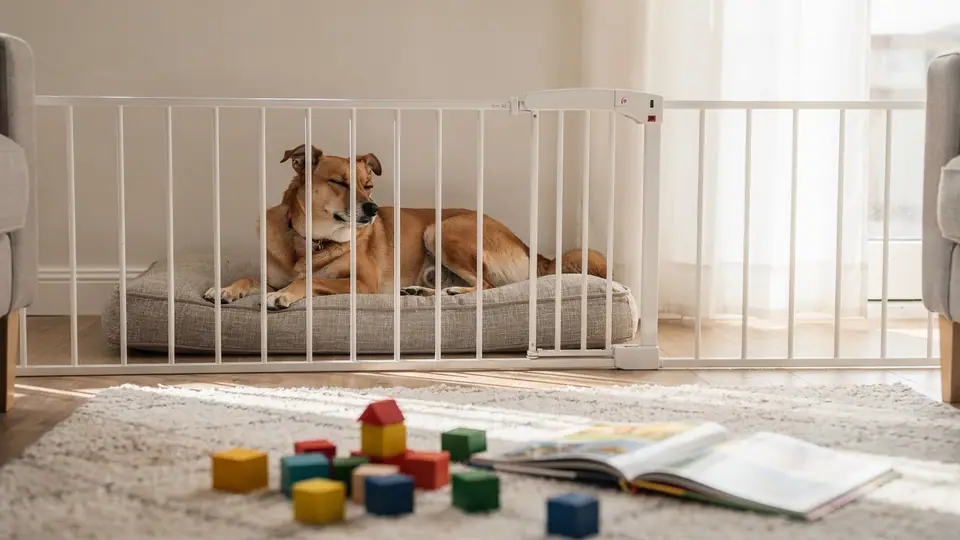
- Separate them today. From now until you have a plan, the dog and the child are only in the same room when an adult is right there and watching both. The rest of the time use baby gates, closed doors, a crate the dog likes or a lead on the dog. See baby gates for set-ups. Give the dog a quiet resting place the child cannot reach.
- Write down the trigger. While you still remember, note the time, the room, where the dog was, what the child was doing, and whether food, a chew, a toy, the sofa or the dog’s bed was involved. Note any earlier growls too. This is the most useful thing you can bring to a professional.
- Book a vet check. Tell your vet the dog growled at a child and ask them to look for pain or other health changes. This matters most if the growling is new or the dog has slowed down, limps, scratches or flinches when touched.
- Get qualified help. Ask a qualified trainer or behaviour professional to see the dog in your home, with the family. They can watch the dog, look at your set-up and make a plan that fits your children’s ages. If your vet is concerned, they may refer you to a veterinary behaviour professional.
Should I punish my dog for growling?
No. Telling the dog off, smacking it or putting it on its back does not make it more comfortable with the child. It teaches the dog that warning is a bad idea. The fear or discomfort stays, and the next time the dog may snap with no growl first. That is far more dangerous for a child.
Thanking the warning does not mean you allow the situation. You take the child away, change the set-up and work on the cause.
How do I keep my child safe while we get help?
Simple rules for the whole family:
- The dog has a resting place (a bed behind a gate, a crate, a room) that children do not enter.
- Children leave the dog alone while it eats, chews or sleeps. Feed the dog behind a gate.
- No hugs, kisses, lifting or riding on the dog. Children can stroke the side of the dog’s body briefly when the dog walks up to them, with an adult there.
- No running games or chasing with the dog until a professional says how.
- When you cannot watch both of them, they are apart. A phone in your hand in the same room is not watching.
- Friends’ children visiting are kept apart from the dog entirely for now.
If a baby is on the way or recently arrived, see dog and new baby as well.
What are the usual mistakes?
- Punishing the growl. It hides the warning and leaves the problem.
- ”He has never bitten, so it is fine.” A growl is the step before a snap. Act now.
- Asking the child to “make friends”. Treats from the child’s hand or forced cuddles push the dog closer than it wants to be.
- Skipping the vet. Pain is a common, treatable reason for new growling.
- Training it alone from videos. With children involved, get someone qualified to see the dog.
A growl at a child is a warning you can still use: separate today, note the trigger, check for pain and get help that sees the dog. Family rules live on children and guests, food rules on kids and food zones, and guarding on resource guarding. More on the behavior hub.
Questions on this page
Why is my dog growling at my child?
Common reasons are being disturbed while resting, guarding food, toys or a sofa spot, being hugged, grabbed or chased, feeling cornered, or pain. A growl means the dog wants the child to stop or move away. It is a warning, and it should be taken seriously every time.
Should I punish my dog for growling at my child?
No. Punishing a growl teaches the dog to skip the warning, so the next time it may snap or bite with no sound first. Calmly move the child away, then separate the dog and the child and work out why it happened.
Is it safe to keep a dog that growled at a child?
Many families keep the dog safely with strict separation, clear rules for the child and help from a qualified professional. Whether that is right for your home depends on what triggers the growl, the child's age and how much supervision you can give. A professional who sees the dog can help you decide.
Can pain make a dog growl at children?
Yes. Sore joints, ears, teeth, skin or tummy can make a dog more touchy, especially around small children who lean on, grab or bump into it. A sudden change in a dog that used to be relaxed with children is a reason to see your vet first.
When should I get professional help?
Now, if the dog has growled at a child. Book a qualified trainer or behaviour professional who will see the dog in person, and a vet check. If there has been a snap or a bite, keep the dog and child fully apart until you have that help.
Work with me
A $150 consultation or $500 monthly curatorship. Opens WhatsApp to Andrew.