
Expert Advice · Behavior · 9 min read
German Shepherd puppy biting: why it is hard and what helps
German Shepherd puppies mouth harder and for longer than many breeds. The fix is the same method as for any puppy, with more sleep, a tug game with clear rules and a few months of patience.
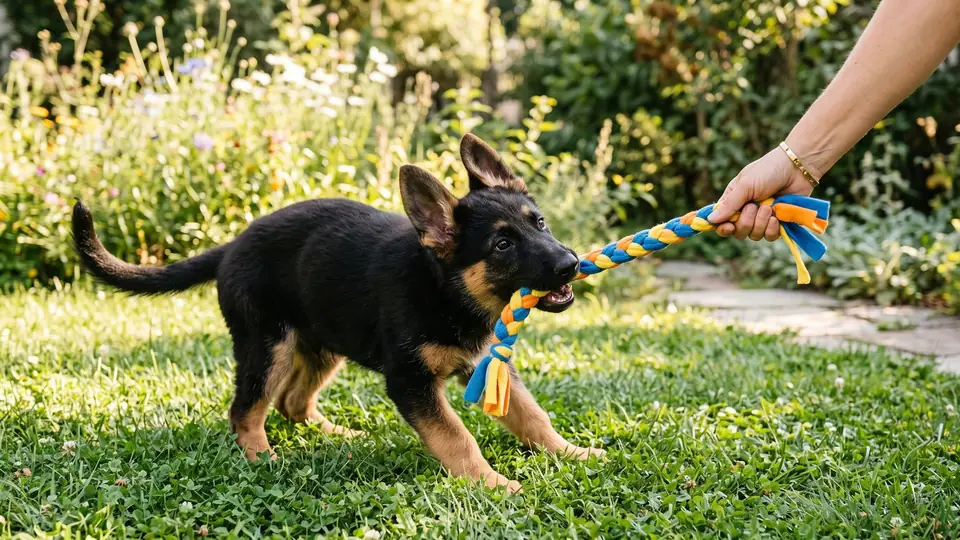
German Shepherd puppy biting is often harder and lasts longer than in many other breeds. Shepherds were bred to grip, carry and guard, they teethe for months, and they are busy puppies who rarely put themselves to bed. The method is the same as for any puppy, laid out on how to stop puppy biting and nipping. This page covers what changes with a Shepherd. For the breed overview, see the German Shepherd Dog breed guide.
I am Andrew Darov, a dog trainer. I am not a veterinarian. This is a behavior page about Shepherd puppies and their mouths.
Why do German Shepherd puppies bite so hard?
A Shepherd puppy bites hard because it has a working dog’s mouth, sore gums and often too little sleep, all at once.
Several things stack up:
- A gripping breed. German Shepherds were bred for herding and later for police and protection work. A full, firm grip on a sleeve or toy is part of the breed. In a 10-week-old puppy that shows up on your ankles.
- Teething. Adult teeth come in from about 3 to 7 months. Gums are sore and chewing feels good.
- A busy brain. Shepherds watch everything and want to join in. Every movement in the house is an invitation.
- Short sleep. Shepherd puppies often stay up long after they should be asleep. The more tired they get, the harder they bite.
- Size. A Shepherd puppy is big early. A grab that was cute at 9 weeks hurts at 14 weeks.
None of this means the puppy is aggressive. It means the teeth need somewhere better to go and the puppy needs more rest.
How much is normal for a Shepherd puppy?
Plenty of mouthing during play, at greetings and in the evening is normal at 8 to 16 weeks. You should see a loose, wiggly body, play bows and a puppy that comes back for more fun.
Get help from a qualified trainer or behaviour professional if you see stiffening, a hard stare, growling over a toy, food or a resting place, or biting when you touch a paw or collar. That is a different problem and needs a different plan.
Why does sleep matter so much?
Tired Shepherd puppies bite harder, grab clothes, and tip into “zoomies” with teeth. Most puppies need the majority of the day asleep at 8 to 12 weeks. Many Shepherd owners only realise how short their puppy’s naps are once they write them down.
Plan the naps. After about an hour awake, a young puppy goes to a crate or pen with a chew, in a quiet room. The full method sits on enforced naps for puppies. If the evening is the worst time, a planned early nap often makes the biggest change.
How do you use tug with a Shepherd puppy?
Tug gives the grip a place to go. With rules, it teaches the puppy to grab the toy, let go and grab again on your say-so. The full rule set lives on tug rules. For a Shepherd puppy, keep these in place:
- Use a long toy. A long fleece or rope toy keeps the grip well away from your hands. Hold it at the far end.
- Start on cue. Say “take it” and present the toy low, moving along the floor. The game starts when you say so.
- Swap to let go. Hold the toy still and show a treat at the nose. When the mouth opens, say “out”, give the treat, then start the game again.
- Teeth on skin ends the round. If teeth touch your hand, the toy goes still and you look away for a few seconds. Then offer it again.
- Stop early. Two or three minutes is plenty for a young puppy. End with a calm chew or a nap, before the puppy gets wild.
Keep tug gentle at this age. Pull side to side along the ground rather than lifting the puppy up, and let the puppy win often.
What helps with handling, grooming and the lead?
Shepherd puppies often grab the brush, the lead or your sleeve. Keep these moments short:
- Brushing. One or two strokes, a treat, done. Spread a lick mat with a little soft food on the floor so the mouth is busy.
- Collar and harness. Put it on while the puppy eats a treat from your other hand. Take a break before the puppy starts to mouth.
- Lead biting. Hold the lead still and close to the clip so there is nothing to tug. Carry a toy on walks and swap the lead for the toy.
- Children. Children should play with the puppy only with an adult close by. Use gates and a pen so the puppy and children can rest apart.
What are the usual mistakes?
- Hand games and wrestling. They teach the puppy that hands are toys.
- Pinning, scruffing or holding the mouth shut. These often make a Shepherd puppy bite harder and can make it wary of hands.
- Long walks to tire the puppy out. A tired body with a busy brain bites more. Short outings and naps work better.
- Tug with no stop. The puppy learns to grip harder, not to let go.
- Waiting for the puppy to grow out of it. Shepherds grow fast. Start the rules on the first day.
- Treating the puppy as a guard dog in training. Encouraging barking at people or “protect” games in a young puppy causes problems later.
Use this page with how to stop puppy biting and nipping for the method, tug rules for the game, and enforced naps for the sleep side. For temperament, size and exercise needs, read the German Shepherd Dog breed guide. More on the behavior hub.
Questions on this page
Why does my German Shepherd puppy bite so much?
German Shepherds were bred to work with their mouths: to grip, carry and guard. Puppies also teethe from about 3 to 7 months. Put that together with a busy brain and a puppy that is often short of sleep, and you get a lot of hard mouthing.
At what age do German Shepherd puppies stop biting?
Most German Shepherd puppies mouth much less once their adult teeth are in, around 6 to 7 months, if they have been taught where teeth can go. Many still grab clothes or hands in excitement until 9 to 12 months, so keep the rules going.
Is my German Shepherd puppy being aggressive?
Hard mouthing during play, with a loose body and a wagging tail, is normal puppy behaviour. Stiffening, a hard stare, growling over food or toys, or biting when handled is a different picture. Get help from a qualified trainer or behaviour professional for that.
Is tug good for a German Shepherd puppy?
Yes, with rules. Tug gives a Shepherd puppy a place to put its grip. Use a long toy, start and stop the game on cue, pause the game the moment teeth touch skin, and keep sessions short so the puppy does not get overexcited.
How much should a German Shepherd puppy sleep?
Young puppies need most of the day asleep, often 18 hours or more in 24 at 8 to 12 weeks. A Shepherd puppy that is biting hard and wild after an hour awake is often overtired. Planned naps in a crate or pen help a lot.
Work with me
A $150 consultation or $500 monthly curatorship. Opens WhatsApp to Andrew.